
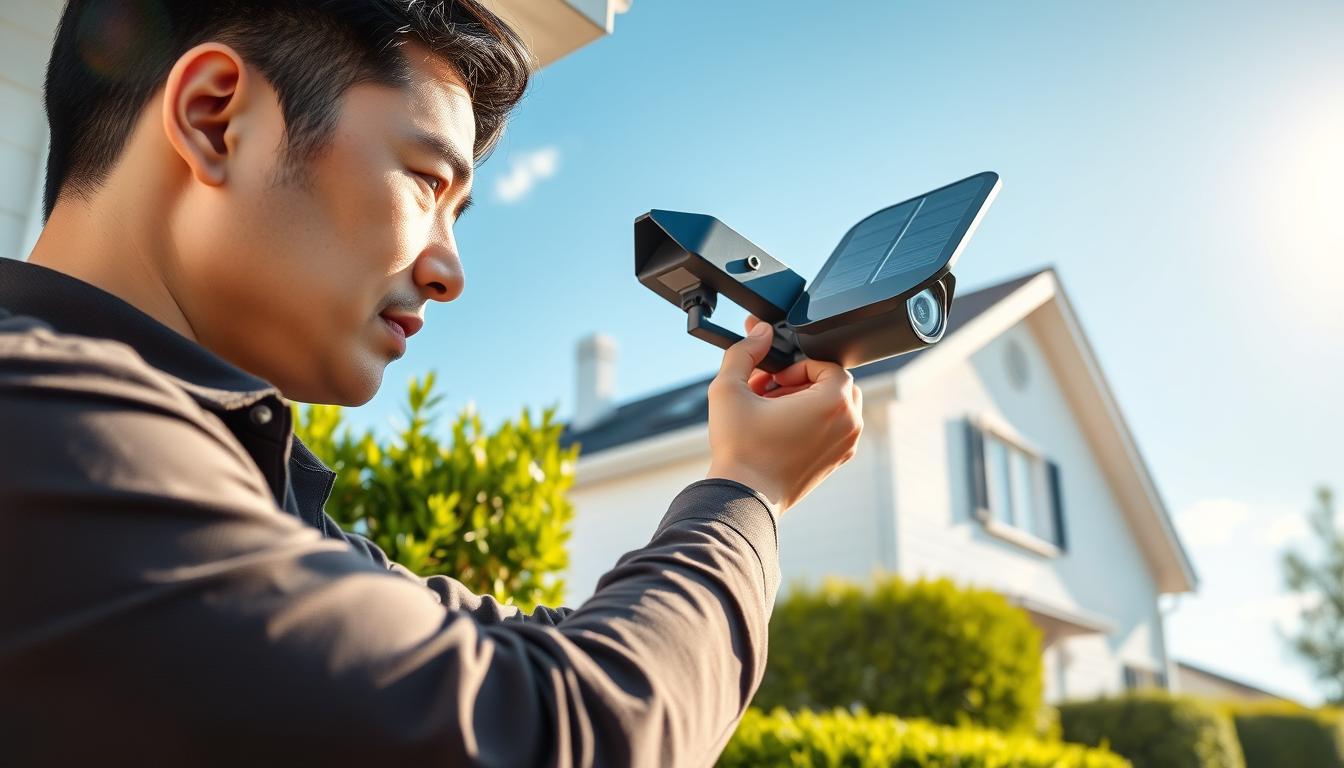
Top Rated Wireless Outdoor Security Camera WiFi Solar Rechargeable Battery
Keeping your property safe has never been easier. Modern solutions now offer complete peace of mind for homeowners in Singapore. These advanced systems provide vigilant monitoring without the traditional hassles.
This innovative technology combines several key components into one sleek unit. A high-definition camera captures clear footage day and night. An integrated power system ensures it never stops working.
The secret is a clever solar panel that tops up the internal battery. Singapore’s abundant sunshine makes this approach particularly effective. You get continuous operation without worrying about power cords or outlets.
This wireless approach is perfect for any outdoor area around your house. Installation takes minutes, not hours. There’s no need for complex electrical work or professional help.
This guide will help you find the best system for your specific needs. We’ll explore the top models available today. You’ll also get practical advice tailored for Singapore’s unique tropical climate.
Key Takeaways
- Modern security systems eliminate the need for complicated wiring during setup.
- Solar power provides reliable, sustainable energy in sunny climates like Singapore.
- These all-in-one units combine monitoring, power, and connectivity seamlessly.
- Easy installation means you can place cameras anywhere around your property.
- Continuous operation is ensured through smart battery management technology.
- High-definition video quality delivers clear footage for accurate monitoring.
- WiFi connectivity allows for remote viewing and alerts on your smartphone.
Why Solar Power is a Game-Changer for Outdoor Security
A quiet revolution is transforming how we protect our homes. Traditional, grid-dependent observation systems are being replaced by autonomous designs. This shift represents more than just a technological upgrade.
It’s a fundamental change in how we think about property monitoring. Modern security cameras now operate independently of household electrical systems. They draw their power directly from the environment around them.
Harnessing Singapore’s Sunlight for Continuous Protection
Singapore’s geographical position offers a perfect environment for sun-powered technology. The nation receives consistent, strong rays throughout the year. This natural resource ensures your protective units rarely run out of energy.
Modern systems are engineered for exceptional reliability. Many top models can function for up to seven days without direct sun exposure. They typically require only five to eight hours of good light for a complete energy replenishment.
This reliability means your surveillance remains active during cloudy periods or rainy seasons. You get continuous coverage without worrying about the unit shutting down. It’s a set-and-forget solution for consistent peace of mind.
Eliminating the Hassle of Electrical Wiring and Outlets
The most immediate benefit is the complete removal of complex wiring. There’s no need to hire electricians or drill through walls for cables. This cord-free approach provides unparalleled flexibility for placement.
You can install these devices virtually anywhere on your property. Think about fences, garden sheds, gates, or remote corners. These areas were previously impractical for traditional wired systems.
This freedom eliminates the old limitation of proximity to power outlets. Your installation options are limited only by your need for coverage and a clear view of the sky. The entire setup process becomes faster and simpler.
You also gain the ability to easily reposition units as your needs evolve. If you want to monitor a new area, simply move the device. There are no cables to reroute or new outlets to install.
The Unmatched Benefits of Solar-Powered Surveillance
Adopting this technology brings a host of advantages that improve your home’s defense. The benefits touch on economics, environmental impact, and operational reliability. This approach represents a smart upgrade for any property.
You gain a system that works for you, not one that creates ongoing chores. The independence from grid electricity alone transforms how you think about property monitoring. Let’s explore the specific advantages in detail.
Significant Reduction in Energy Costs and Carbon Footprint
One of the most compelling benefits is direct financial savings. By removing surveillance devices from your home’s electrical grid, you cut a consistent expense. Each unit typically uses between 5 to 15 watts of power when active.
This might seem small, but it adds up across multiple units and over time. For a typical Singapore home with several monitoring points, annual savings can reach SGD $50 or more. These savings continue year after year, making the initial investment pay for itself.
The environmental benefit is equally important. Traditional grid electricity in Singapore still relies partly on natural gas. By using clean, renewable energy directly, you reduce your household’s carbon emissions.
Each sun-powered unit prevents approximately 10-20 kg of CO2 emissions annually. This contribution to sustainability aligns with broader national goals. You protect your property while also helping protect the environment.
Reliable Operation Through Power Outages and Remote Locations
Perhaps the most critical advantage is uninterrupted operation. When mains electricity fails during storms or outages, traditional wired systems go dark. This creates a dangerous gap in your property’s security.
Autonomous units continue functioning seamlessly. Their internal energy storage keeps them running for days. This ensures continuous vigilance when you need it most.
This reliability extends to areas where running electrical cables is impractical. Think about garden sheds, perimeter gates, or detached structures. These locations often lack convenient power outlets.
With a self-sufficient design, you can place monitoring equipment anywhere. Distance from your main house is no longer a barrier. You get comprehensive coverage without expensive electrical work.
The operational life of these systems is another key benefit. Quality components are built to withstand Singapore’s tropical climate for many years. The battery technology in top models maintains performance with minimal degradation.
This longevity means you won’t need frequent replacements. Your investment continues delivering value long after purchase. It’s a durable solution for lasting peace of mind.
Eco-Friendly Security: A Smart Choice for Sustainable Living
Environmental consciousness is now merging with practical home protection in innovative ways. More people seek green options that don’t compromise on safety. This represents a conscious consumer choice supporting broader environmental goals.
Modern monitoring systems offer a powerful solution. They harness natural energy while delivering reliable vigilance. This approach benefits both your property and the planet.
Aligning with Singapore’s Green Initiatives
Singapore has committed to ambitious sustainability targets. The Singapore Green Plan 2030 outlines a national roadmap for environmental stewardship. Every sector, including home technology, plays a role in this vision.
Choosing sun-powered protection devices directly supports these goals. Each unit operates independently from fossil fuel-based electricity. This reduces household carbon emissions significantly.
Homeowners contribute to national targets right from their property. It’s a practical, tangible action with measurable impact. As one sustainability advocate notes, “Individual choices collectively shape our environmental future.”
This technology represents smart alignment with progressive values. You gain peace of mind while participating in a larger movement. It’s protection that looks toward tomorrow.
Long-Term Sustainability and Reduced Electronic Waste
Durability is a key advantage of quality monitoring systems. Many models are built to last up to ten years with proper care. This extended operational life minimizes replacement frequency.
Contrast this with cheaper, disposable electronics. Those often fail within two to three years. They contribute significantly to landfill problems and e-waste streams.
The internal energy storage in these units is designed for longevity. It eliminates the need for disposable batteries entirely. This further reduces household waste generation.
Fewer replacements mean less manufacturing demand and resource extraction. Your investment continues delivering value year after year. This creates a positive cycle of sustainability.
When the system eventually reaches end-of-life, responsible disposal is easier. Many manufacturers now offer recycling programs for their products. This completes the eco-friendly lifecycle from installation to retirement.
Cost-Effectiveness of Solar Security Camera Systems
Financial wisdom in home protection means looking at the complete picture of ownership costs. The initial price tag tells only part of the story. True value emerges when you consider operational expenses over time.
Modern sun-powered surveillance represents a smart economic choice. It transforms a recurring expense into a one-time investment. This approach delivers peace of mind without ongoing financial drain.
Analyzing Long-Term Savings vs. Initial Investment
Let’s examine the numbers. A quality sun-powered unit typically costs between SGD $250 to $450 upfront. This includes the monitoring device, its integrated power panel, and mounting hardware.
Compare this to traditional wired equipment. Those often require professional installation adding SGD $100-$200. They also create a permanent monthly electricity cost.
A standard wired surveillance device uses about 10-15 watts continuously. In Singapore, this translates to roughly SGD $1.50-$2.50 monthly per unit. Over five years, that’s SGD $90-$150 in electricity alone.
The sun-powered alternative eliminates this completely. Your break-even point typically occurs within 18-24 months. After that, every month of operation represents pure savings.
Consider a property with four monitoring points. The five-year total cost comparison reveals clear advantage:
- Sun-powered system: SGD $1,200 (equipment only, no power bills)
- Traditional wired setup: SGD $1,000 (equipment) + SGD $400 (installation) + SGD $360 (electricity) = SGD $1,760
The autonomous design saves approximately SGD $560 over five years. As one financial advisor notes, “The most expensive option is often the one with hidden recurring costs.”
Minimal Maintenance and No Recurring Power Bills
Operational simplicity is another economic benefit. These autonomous units require very little attention after installation. Your system works quietly in the background.
Maintenance involves simple, infrequent tasks. Clean the power panel surface every 3-4 months to ensure optimal energy collection. Wipe the monitoring lens occasionally for clear video quality.
Check the internal energy storage status through the mobile app. Most quality units provide clear indicators. You’ll know well in advance if attention is needed.
The complete absence of monthly power bills is a fixed saving. Your household electricity consumption drops noticeably. This benefit continues indefinitely throughout the device’s lifespan.
Durable construction further reduces costs over time. Weather-resistant materials withstand Singapore’s tropical climate. You avoid repair expenses from moisture or heat damage.
Quality components are built to last 8-10 years with proper care. This longevity maximizes your investment return. You gain reliable security without constant upkeep or replacement worries.
Essential Features to Evaluate Before You Buy
Before making a purchase decision, focus on the core features that determine real-world performance. Technical specifications separate reliable systems from disappointing ones. Understanding these details ensures your investment delivers consistent protection.
Many products boast impressive marketing claims. The true test lies in their fundamental engineering. Prioritize these three critical areas for lasting satisfaction.
Battery Life and Solar Panel Charging Efficiency
Energy management forms the foundation of any autonomous monitoring system. Look beyond advertised “months of battery life” claims. Examine the actual capacity measured in milliamp-hours (mAh).
A unit with 5,000 mAh storage offers substantial standalone operation. However, true reliability comes from sustained solar replenishment. The panel‘s wattage determines how quickly it can charge the system.
For continuous recording in Singapore’s climate, aim for at least 3-4 watts of solar power. This ensures the unit recovers energy faster than it consumes it. You’ll maintain operation even during consecutive cloudy days.
Advanced lithium-ion technology now provides excellent cycle life. These batteries withstand hundreds of charge cycles with minimal degradation. As one engineer notes, “The synergy between panel efficiency and battery chemistry defines operational autonomy.”
Video Resolution and Night Vision Capabilities
Clarity determines whether you see general activity or identifiable details. Modern systems offer several resolution standards. Each serves different monitoring needs.
Full HD (1080p) provides clear images for general surveillance. For identifying faces or license plates, consider 2K or 4K resolution. Higher resolution captures finer details at greater distances.
Night vision technology has evolved significantly. Traditional infrared illumination creates black-and-white footage. It works well in complete darkness but lacks color information.
Newer color night vision uses advanced sensors and supplemental lighting. This maintains color information for better identification. Some models even offer starlight sensors for exceptional low-light performance.
Your choice depends on specific needs. Infrared works for basic motion detection. Color vision helps when identification matters most. Consider your property’s lighting conditions when evaluating this feature.
Weather Resistance and Durability for Tropical Climates
Singapore’s environment presents unique challenges for electronic devices. Heavy rain, constant humidity, and intense heat test every component. Proper protection ratings are non-negotiable.
The IP (Ingress Protection) rating system indicates environmental sealing. For reliable operation, seek IP66 or IP67 certification. These ratings guarantee protection against powerful water jets and dust ingress.
Build quality matters as much as the rating. Look for housings made from UV-resistant plastics or aluminum alloys. These materials withstand prolonged sun exposure without degrading.
Check the specified operating temperature range. Quality units function from -20°C to 50°C or beyond. This ensures reliability during Singapore’s hottest days and occasional cooler nights.
Internal components should include moisture barriers and corrosion-resistant connectors. These prevent gradual damage from Singapore’s high humidity. They extend the system’s operational lifespan significantly.
Prioritize these core engineering aspects over flashy add-ons. A well-built security camera with solid fundamentals outperforms a feature-packed but poorly constructed model every time.
How to Choose the Right Solar Camera for Your Property
The right choice in surveillance equipment depends on understanding both your property’s layout and your personal priorities. A systematic approach prevents overspending on unnecessary features while ensuring critical needs are met. This framework helps you match technology to your unique situation.
Consider three core areas before making any purchase. First, evaluate your physical space and monitoring requirements. Second, assess your network connectivity capabilities. Third, balance financial constraints with desired functionality.
For personalized guidance, contact Wen Hong at +65 6013 5960. Discuss your specific property, budget, and monitoring objectives.
Assessing Your Coverage Area and Placement Options
Begin with a thorough audit of your living space. Walk around and identify all potential entry points that need observation. Note windows, doors, gates, and any accessible ground-floor areas.
Look for natural blind spots where visibility is limited. These include corners behind structures, dense garden areas, and side passages. Also consider locations of valuable assets like vehicles or storage sheds.
Placement significantly affects energy collection from sunlight. The monitoring unit needs clear exposure to the sky for optimal performance. Avoid positions under deep eaves or thick tree canopies.
Use simple tools to assess sunlight patterns throughout the day. A basic compass helps identify southern exposure in Singapore. Some smartphone apps can simulate sun paths based on your location.
Mark potential installation spots that offer both good visibility and ample light. This dual consideration ensures reliable operation and effective surveillance coverage.
Understanding Connectivity: WiFi Range and Signal Strength
A strong network connection is essential for remote viewing and alerts. Your monitoring device must maintain consistent communication with your home router. Weak signals cause delayed notifications or failed recordings.
Test the WiFi strength at each intended installation location before purchase. Use a free analyzer app on your smartphone to measure signal quality. Walk to each potential mounting spot and check the readings.
Many modern routers show connected device signal strength in their admin interface. Look for at least -70 dBm for reliable performance. Values closer to -50 dBm indicate excellent connectivity.
If signals are weak, consider network expansion solutions. WiFi extenders can boost coverage to distant corners of your property. Mesh systems create a seamless network blanket across larger areas.
Remember that walls, metal structures, and distance all degrade wireless signals. Plan your setup with connectivity as a primary constraint. A well-placed unit with poor connection provides little practical value.
Balancing Budget with Desired Features and Storage Options
Create a clear prioritization matrix for your purchase decision. Separate essential requirements from optional enhancements. This clarifies what you truly need versus what might be nice to have.
Must-have features typically include weatherproof construction and 1080p video resolution. These form the foundation of any reliable monitoring solution. Without them, the system may fail in Singapore’s climate or provide unclear footage.
Nice-to-have enhancements might include pan/tilt capabilities or integrated spotlights. These add convenience but aren’t critical for basic protection. Consider them only after core requirements are satisfied.
Storage presents another key decision point. Local options use SD cards or a dedicated hub within your home. This keeps data on your premises without monthly fees.
Cloud storage offers remote backup and often easier access through apps. However, it usually requires ongoing subscription payments. Consider both the cost and data privacy implications of each approach.
As one industry expert notes, “The most effective system aligns technical capabilities with actual usage patterns rather than marketing claims.”
Finally, develop a shortlist of two or three models that meet your assessed criteria. Compare their specifications against your prioritized needs. This focused comparison leads to a confident, informed selection for your home security.
What is a Wireless Outdoor Security Camera with WiFi and Solar Rechargeable Battery?
This innovative category combines several advanced technologies into one cohesive unit. It delivers continuous surveillance without traditional limitations. The design philosophy centers on complete autonomy and user convenience.
Think of it as a self-sufficient sentinel for your property. It watches over designated areas day and night. All essential functions work together seamlessly.
Defining the All-in-One Modern Security Solution
This represents the current pinnacle of DIY home protection. It’s a fully integrated system designed for maximum convenience. Every element works toward a single goal: reliable, hands-off operation.
Contrast this with older approaches. Traditional wired CCTV requires professional installation and permanent cabling. Battery-only units demand frequent manual charging, creating maintenance chores.
Standard WiFi monitoring devices depend entirely on mains power. They fail during outages and limit placement options. The modern integrated approach solves all these issues simultaneously.
As one industry analyst notes, “The integration of renewable energy with smart connectivity creates a new paradigm for property monitoring.”
You gain a solution that works for you consistently. There’s no need for constant intervention or worry. This autonomy is what makes the technology so compelling for Singapore homes.
Core Components: Camera, Battery, Solar Panel, and WiFi Module
Understanding how this system functions requires examining its four essential parts. Each plays a critical role in the overall performance. Their integration is what delivers the “set it and forget it” promise.
The monitoring device itself contains the image sensor and lens. High-quality optics capture clear footage in various lighting conditions. A durable housing protects these sensitive electronics from Singapore’s weather.
Power comes from a high-capacity lithium-ion energy cell. This rechargeable unit stores sufficient charge for extended operation. Advanced chemistry ensures long cycle life and minimal performance degradation.
Energy collection happens through a photovoltaic panel. Most use mono- or poly-crystalline silicon cells. These efficiently convert Singapore’s abundant sunlight into electrical power.
Connectivity is handled by a dedicated wireless module. This component maintains communication with your home network. It transmits video data to your router and ultimately to your smartphone app.
The harmony between these elements is elegant. The panel continuously charges the energy cell during daylight hours. That stored power then runs the monitoring device and its communication module.
Video data streams to your network for remote viewing. You receive instant alerts when activity is detected. This closed-loop operation requires no external intervention.
For a comprehensive look at how these systems are implemented, explore our guide on solar-powered outdoor wireless security camera systems.
The result is continuous protection without ongoing costs or maintenance headaches. You install the unit in a suitable location with good sun exposure. After that, it manages itself while keeping watch over your property.
Top Contenders in the Solar Security Camera Market
Navigating the landscape of autonomous monitoring systems reveals several standout manufacturers. Each brings distinct strengths to the table. Understanding this competitive field helps you make an informed selection.
The market divides between established industry giants and innovative challengers. Both groups offer compelling solutions for Singapore homes. Your choice depends on which features matter most for your situation.
Industry Leaders and Innovative Brands
Reolink has earned a reputation for delivering excellent value and reliable performance. Their products often balance cost with capability effectively. Many homeowners appreciate this practical approach.
Eufy stands out with its emphasis on local data storage and seamless solar integration. This brand prioritizes privacy and operational independence. Their systems work well without monthly subscriptions.
Arlo builds comprehensive ecosystems with smart home compatibility. Their technology integrates smoothly with other connected devices. This appeals to users wanting a unified smart home experience.
Ring offers deep integration with Amazon Alexa voice controls. This creates convenient voice-activated monitoring. The ecosystem approach simplifies management for some users.
Google Nest focuses on artificial intelligence and user experience refinement. Their systems learn patterns to reduce false alerts. The interface prioritizes simplicity and clarity.
Other notable contenders include Blink, TP-Link Tapo, and Hikvision. These brands provide competitive alternatives at various price points. Each has specific advantages worth considering.
Models Frequently Praised in Singaporean Reviews
Specific units consistently receive positive feedback in local forums and professional recommendations. Singapore’s unique climate and housing types influence which models perform best here.
The Reolink Argus 3 Pro and EufyCam 3 are frequently mentioned as top picks. Users report these security cameras deliver reliable operation in tropical conditions. Their performance matches marketing claims closely.
These particular units can maintain operation for up to seven days without direct sunlight. Just a few hours of good sun exposure each day keeps them functioning. This resilience suits Singapore’s weather patterns well.
Local installers often recommend these camera systems for landed properties and condominiums. Their durability against humidity and heat receives consistent praise. The balance of performance and value resonates with Singaporean homeowners.
For personalized advice on selecting the optimal system, contact Wen Hong at +65 6013 5960. Discuss your property’s specific layout and monitoring requirements. Expert guidance can clarify the technical details.
The following sections will explore these top-rated security cameras in greater depth. We’ll compare their specifications and real-world performance. This detailed analysis will help you identify the best match for your home.
In-Depth Look at Leading Solar-Powered Camera Models
Three major product lines dominate conversations among Singapore homeowners. Each represents a distinct philosophy in design and user experience. Understanding their core differences is key to selecting your ideal match.
We examine the Reolink Argus 3 Pro, Eufy’s EufyCam 3 and E30 series, and Arlo’s Pro 4 and Essential. These models showcase the range of options available today. Your priority—be it price, picture clarity, or smart integrations—guides the best choice.
Reolink Argus 3 Pro: Balancing Performance and Value
This unit is celebrated as a robust all-rounder. It delivers strong video quality without a premium cost. For many, it hits the sweet spot between capability and affordability.
The device captures footage in crisp 2K resolution (1440p). This clarity helps identify important details at a distance. Its 6,000mAh energy cell supports months of operation on a single charge.
Local storage via a microSD card keeps your data on-site. There are no mandatory monthly fees for cloud access. This approach appeals to budget-conscious users seeking control.
Installation is straightforward with its magnetic mount. The overall value proposition is compelling. As one reviewer noted, “It simply works well without complicating things.”
This security camera suits the homeowner who wants reliable performance. It’s ideal if you prefer a one-time purchase without ongoing subscriptions. The reolink argus line is a practical starting point.
EufyCam 3 and E30: Pioneering Extended Battery Life with Solar
Eufy pushes the boundaries of energy independence. Their systems boast remarkable battery life claims, backed by integrated solar tech. The goal is a truly “install and forget” experience.
The EufyCam 3 captures stunning 4K (2160p) resolution. It can reportedly operate for a full year after one complete charge. This is a game-changer for reducing maintenance frequency.
Kits like the E30 and E42 include a HomeBase hub. All video is stored locally on this device, ensuring privacy. The detachable solar panel seamlessly tops up the unit.
This brand is famous for its subscription-free model. You own your data completely. It’s a major draw for users wary of recurring costs.
These camera systems are perfect for those prioritizing longevity and high-definition footage. If avoiding monthly fees is your top concern, Eufy’s ecosystem deserves close attention.
Arlo Pro 4 and Essential: Feature-Rich Options with Solar Add-Ons
Arlo focuses on a rich ecosystem and smart features. Their products often require separate solar panel accessories. This modular approach offers flexibility.
The Arlo Pro 4 delivers 2K HDR video with color night vision. It integrates deeply with platforms like Amazon Alexa and Google Assistant. Advanced AI detection for people, packages, and animals is available.
These capabilities typically come through a subscription service. The more affordable Arlo Essential (2nd-gen) offers solid core functions. Both benefit from add-on solar panels for continuous power.
Ideal users want strong smart home connectivity and advanced analytics. If you don’t mind a service plan for extra intelligence, Arlo provides a polished, integrated experience.
Each brand carves its own path. Your decision hinges on what you value most: straightforward value, maximum independence, or connected intelligence.
Head-to-Head Comparison of Popular Models
A detailed specification comparison helps cut through marketing claims to find the best fit. Looking at technical data reveals which units deliver on their promises.
This analysis focuses on five leading options available in Singapore. Each has distinct advantages for different situations.
Detailed Feature Breakdown: Resolution, Battery, and Smart Features
Key specifications determine real-world performance. The table below compares critical aspects across major brands.
Reolink Argus 3 Pro offers strong fundamentals. It captures 1440p video for clear details.
The unit has a 6,000mAh energy cell. This supports months of operation between charges.
Integrated solar tech maintains continuous power. Infrared night vision provides black-and-white footage after dark.
Smart features include person and vehicle motion detection. You can store footage locally on microSD cards.
Its IP65 rating ensures weather resistance. This makes it suitable for Singapore’s climate.
EufyCam 3 pushes boundaries with 4K resolution. This delivers exceptional image clarity.
The system boasts remarkable energy efficiency. It can operate for a full year on one complete charge.
Solar integration is seamless and effective. Color night vision maintains identification capability.
Advanced AI distinguishes people, pets, and vehicles. All storage happens locally on the HomeBase hub.
With IP67 protection, it withstands heavy rain. This durability ensures long-term reliability.
Arlo Essential (2nd-Gen) provides core functionality affordably. It records in 1080p HD quality.
A removable, rechargeable battery powers the device. Add-on solar panels are available separately.
Infrared illumination handles darkness. Basic motion alerts come standard.
Cloud storage requires a subscription plan. The IP65 certified housing resists weather elements.
This model prioritizes simplicity and smart home integration.
Ring Stick Up Cam Solar works within Amazon’s ecosystem. It offers 1080p HD video capture.
The built-in solar panel eliminates cord concerns. Quick-release battery packs allow easy swapping.
Black-and-white infrared vision operates at night. Person detection reduces false alerts.
Footage uploads to Ring’s cloud service. An IP66 rating provides solid environmental protection.
This unit excels for users already invested in Ring’s platform.
Blink Outdoor 4 emphasizes extreme energy efficiency. It records 1080p footage with good clarity.
Two AA lithium cells power the device for up to two years. An optional solar panel accessory is available.
Infrared night vision covers dark areas. Enhanced motion detection improves accuracy.
Local storage uses the Sync Module 2. Cloud backup requires a subscription.
IP65 weatherproofing ensures operation in various conditions. This model targets budget-conscious users.
Pricing Analysis for the Singapore Market
Current price ranges help you budget effectively. Singapore Dollar figures reflect typical retail values.
The Reolink Argus 3 Pro costs approximately SGD $200-$220 for a single unit. A two-camera kit ranges from SGD $380-$420.
This represents solid value for its capabilities. The package includes the solar panel and mounting hardware.
EufyCam 3 systems start around SGD $550-$600 for a two-pack. This includes the HomeBase 3 hub and necessary accessories.
The premium price reflects 4K quality and extended operation. You get complete local storage without monthly fees.
Arlo Essential (2nd-Gen) is often priced under SGD $150 per camera. Solar panel add-ons cost an additional SGD $60-$80.
This modular approach keeps initial costs low. Subscription plans for cloud services start around SGD $5 monthly.
Ring Stick Up Cam Solar typically sells for SGD $180-$220 each. Bundles with other Ring devices offer better per-unit value.
The Blink Outdoor 4 is one of the most affordable options. Single units cost approximately SGD $100-$130.
A two-camera kit with Sync Module 2 is about SGD $220-$250. The optional solar panel adds SGD $40-$50.
Always check multiple sources for the latest deals. Local electronics stores often have promotions.
Amazon.sg frequently offers bundle discounts. Official brand stores provide warranty assurance.
Consider what each price includes before deciding. Some kits contain base stations or multiple panels.
Others require separate purchases for complete functionality. This affects the total investment required.
Best Solar Security Cameras for Different Home Needs
Not all surveillance needs are identical—selecting equipment designed for specific scenarios maximizes effectiveness. Your property’s layout and vulnerabilities determine which monitoring features will serve you best. This guide matches technology to common residential requirements.
We move from general comparisons to targeted recommendations. Each scenario calls for particular capabilities. The right choice delivers peace of mind without unnecessary complexity.
For Wide Coverage: Pan-and-Track and Floodlight Models
Large areas like driveways or backyards demand extensive visibility. Standard fixed lenses often miss important activity. Specialized units address this limitation effectively.
Consider devices with motorized pan-and-tilt capabilities. These can rotate to follow movement across a wide zone. A 160-degree wide-angle lens also captures broad scenes in one frame.
For darker sections needing illumination, floodlight models are ideal. They combine bright lighting with surveillance in one unit. This dual function deters intruders while recording clear footage.
The Arlo Pro 3 Floodlight excels in this category. It offers impressive features including 2K resolution and color night vision. The integrated lights activate upon detecting motion.
Note that floodlight units typically have higher power requirements. Their solar panels must be sufficiently large to support both lighting and recording functions. Proper placement ensures consistent energy collection.
For Discreet Monitoring: Compact and Low-Profile Designs
Sometimes, the visibility of the monitoring device itself is undesirable. You might need to observe sensitive areas without drawing attention. Subtle designs blend into their surroundings seamlessly.
Compact models like the Blink Mini offer this discretion. Their small size makes them easy to conceal in garden features or under eaves. Many compact solar units maintain full functionality in tiny housings.
These options are perfect for monitoring side gates or secondary entrances. They provide surveillance where a conspicuous device might be tampered with or avoided. The goal is observation without announcement.
Despite their size, these units often include essential capabilities. Many feature reliable motion detection and adequate night vision. Their solar panels are proportionally smaller but still effective.
For Package Security: Integrating with Video Doorbells
Porch and package protection has become increasingly important for home security. Delivery theft is a growing concern in residential areas. A dedicated solution at your entrance provides focused monitoring.
Solar-powered video doorbells like the Google Nest Doorbell Battery Model address this need directly. Installation is straightforward, requiring no complex wiring. The internal power cell easily lasts several months between charges.
These devices capture a perfect view of your doorstep and packages. Two-way audio allows communication with delivery personnel. Instant alerts notify you of all front-door activity.
You can also position a standard solar security camera to cover the entrance area. Ensure it has a clear line of sight to the delivery zone. Adjust the motion detection sensitivity to capture approaching individuals.
Integrating a doorbell with other solar units creates a cohesive system. Your entrance monitoring connects with perimeter surveillance. This comprehensive approach leaves no gaps in your property’s protection.
As one installer notes, “A layered defense with specialized devices at key points provides the most reliable security.”
Solar Camera Systems for Business and Large Property Security
Commercial properties and expansive estates demand surveillance solutions that go beyond residential applications. These environments present unique challenges that require specialized equipment. The right camera system must cover vast areas while operating independently.
Industrial sites, agricultural land, and remote facilities need robust protection. Standard home monitoring units often lack the necessary scale and durability. Professional-grade technology addresses these demanding scenarios effectively.
Scalable Systems with Multiple Camera Support
Large-scale monitoring requires a coordinated network of observation points. Professional systems support connecting eight, sixteen, or more units to a single hub. This centralized approach simplifies management across extensive property.
A network video recorder (NVR) acts as the command center for all devices. You configure settings once and apply them across the entire network. Bulk setup saves considerable time during installation.
Centralized management happens through a single mobile application. View all feeds simultaneously or focus on specific areas. Receive consolidated alerts rather than individual notifications from each unit.
Robust energy collection is critical for continuous operation. Professional solar panels are larger and more efficient than residential versions. They ensure consistent power even during Singapore’s monsoon season.
High-capacity energy cells provide substantial backup. Many industrial units operate for up to seven days without direct sunlight. This resilience ensures uninterrupted surveillance during extended cloudy periods.
Durability meets the highest standards with IP67 environmental sealing. These units withstand heavy rain, dust, and extreme temperatures. They perform reliably in challenging locations like construction sites or coastal areas.
Advanced motion detection minimizes false alerts across large zones. The system can distinguish between vehicles, people, and animals. This intelligence reduces notification fatigue for security personnel.
4G LTE Cellular Backup for Critical Areas Without WiFi
Many commercial sites lack reliable internet infrastructure. Remote storage yards, agricultural plots, and temporary event locations present this challenge. Cellular technology provides a perfect solution.
4G LTE solar cameras operate completely independently of local networks. They use a SIM card to transmit data directly over mobile networks. This approach eliminates dependency on WiFi availability.
Setup is remarkably straightforward thanks to the 4G/Wi-Fi dual design. Install the unit anywhere with cellular coverage and sunlight exposure. The device establishes its own connection without complex configuration.
Data storage options include both local SD cards and cloud services. Local recording ensures footage remains accessible even if cellular signals fluctuate. Cloud backup provides additional redundancy for critical evidence.
These professional systems excel in diverse applications. Farms can monitor livestock and equipment across vast fields. Highway projects can observe construction progress and traffic flow.
Event organizers secure festival grounds and temporary installations. The flexibility to deploy anywhere makes these units invaluable. As one facilities manager notes, “Cellular connectivity turned impossible monitoring locations into fully secured assets.”
Professional-grade equipment comes with higher investment requirements. The unmatched flexibility and reliability justify the cost for business-critical operations. These systems protect assets that standard residential units cannot secure effectively.
For large-scale protection needs, cellular solar surveillance represents the ultimate autonomous solution. It combines energy independence with communication independence. Your remote assets receive continuous vigilance without infrastructure limitations.
What Users Are Saying: Reviews and Real-World Feedback
Beyond technical specifications, the true test of any surveillance system lies in everyday use. Customer experiences reveal how these devices perform in actual homes. This feedback helps potential buyers make informed decisions.
Thousands of homeowners have shared their stories online. Their collective wisdom highlights consistent patterns. These insights are more valuable than any marketing brochure.
The Ring Stick Up Cam Solar demonstrates this well. It holds a 4.6-star rating from over 71,000 reviews. Users consistently praise its dependable operation.
Another popular choice is the SEHMUA model priced at $59.99. It earned 4.3 stars from 5,200 customers. Many appreciate its straightforward installation process.
Common Praises: Ease of Installation and Reliability
Homeowners consistently highlight the simplicity of getting started. Most units require basic screw-and-mount installation. There’s no need for complex electrical work or professional help.
The relief of avoiding wires is a frequent comment. Users enjoy placing devices anywhere without cable limitations. This flexibility transforms how people approach home monitoring.
Many express satisfaction watching the solar panel maintain charge. The technology works quietly in the background. It delivers consistent power without user intervention.
General reliability in various weather conditions receives strong praise. These systems withstand Singapore’s tropical climate effectively. They continue operating through rain, heat, and humidity.
Frequent Considerations: Subscription Plans and App Experience
One common critique involves ongoing costs for cloud storage. Many brands require monthly fees for video history retention. Advanced features like person detection often need subscriptions too.
The quality of brand-specific mobile apps varies significantly. Some interfaces are intuitive and responsive. Others can be clunky or slow to load live feeds.
Motion detection sensitivity sometimes causes false alerts. Passing animals or shifting shadows may trigger notifications. Adjusting zones and sensitivity helps reduce these incidents.
Real-world battery life can differ from advertised claims. Units in high-traffic areas with constant recording drain faster. Limited sun exposure also affects performance.
As one reviewer noted, “My unit needed repositioning to catch more morning light. After that adjustment, it worked perfectly.”
It’s wise to read a mix of professional and user assessments. Pay special attention to comments from people in similar climates. Singapore homeowners should look for feedback from tropical regions.
Consider both the initial setup experience and long-term satisfaction. Look for reviews discussing months or years of use. These provide the most complete picture of value.
The details in customer stories often reveal practical truths. They show how the security system integrates into daily life. This real-world perspective is invaluable for making your choice.
Professional Installation Tips for Optimal Performance
The difference between adequate and exceptional performance often lies in installation details. Getting your monitoring equipment positioned correctly from the start ensures it works as intended. These expert techniques help you achieve reliable operation with minimal fuss.
Follow these guidelines to maximize your system’s effectiveness. Proper setup transforms good technology into great protection. Each step contributes to long-term satisfaction and peace of mind.
Strategic Placement for Maximum Sunlight Exposure
Your unit’s energy independence depends on consistent light collection. Aim for locations receiving direct, unobstructed sunlight for five to six hours daily. This ensures the internal power cell remains adequately charged.
Use tools like sun path trackers to analyze potential spots. These apps simulate the sun’s movement across your property throughout the year. They identify shaded areas during different seasons.
Adjust the solar panel angle to match Singapore’s latitude. A tilt of approximately 1 to 15 degrees facing south typically works best. This orientation captures maximum rays during peak hours.
Seasonal adjustments further optimize energy collection. Increase the angle slightly during our monsoon period. This helps capture weaker, filtered light through cloud cover.
Position the monitoring device at least nine feet above ground level. This height discourages tampering while maintaining a clear surveillance view. It also keeps the power collection surface above most obstructions.
Securing Mounts and Ensuring Weatherproof Seals
Durable mounting prevents movement that could misalign your unit. Select hardware specifically designed for your surface material. Brick, wood, and siding each require different anchors and screws.
For concrete or brick walls, use masonry anchors and corrosion-resistant fasteners. Wood surfaces benefit from longer screws that penetrate deeply into studs. Always follow the manufacturer’s recommendations for load capacity.
Check all cable gaskets and connection seals during installation. Ensure they’re tight and properly seated before finalizing placement. These components prevent moisture ingress that could damage electronics.
Singapore’s tropical weather tests every seal repeatedly. Heavy rain and constant humidity demand perfect protection. A well-sealed unit operates reliably for years without issues.
Establish a simple maintenance routine. Inspect mounts every three months for any looseness or corrosion. Tighten connections if needed to maintain stability and alignment.
Optimizing Motion Detection Zones to Conserve Battery
Intelligent zone configuration significantly extends your system’s operational life. Use the companion app to define specific areas for activity monitoring. Avoid zones with constant movement like busy streets or swaying tree branches.
This precision prevents unnecessary recordings that drain the battery. Each false alert consumes energy for processing and notification. Targeted zones ensure recordings happen only for relevant events.
Set appropriate sensitivity levels based on your property’s activity patterns. High traffic areas may need lower settings to avoid constant triggers. Quiet zones can use higher sensitivity for maximum vigilance.
Schedule recording times if your app allows this feature. Activate full monitoring during hours when activity is most likely. Reduce sensitivity or disable recordings during predictable quiet periods.
These optimizations are crucial for achieving advertised battery performance. They also reduce notification fatigue from constant alerts. Your security camera becomes more efficient and less intrusive.
As one expert notes, “Proper motion detection configuration turns a reactive device into a smart sentinel that conserves resources while maintaining watch.”
Review and adjust these settings periodically. Changes in vegetation or property use may require updates. Regular fine-tuning keeps your system performing optimally season after season.
Maintaining Your Solar Security System for Longevity
The longevity of your protection system depends on simple, periodic attention. A minimal routine transforms your investment into a lasting guardian. This approach guarantees peak performance year after year.
Think of upkeep as insurance for your peace of mind. Regular checks prevent small issues from becoming big problems. They ensure your monitoring solution remains a reliable sentinel.
Data shows this effort pays significant dividends. Keeping components clean can boost efficiency by 15%. Checking the entire setup every three months cuts troubleshooting needs by 40%.
Routine Cleaning of Solar Panels and Camera Lenses
Singapore’s environment deposits dust, pollen, and grime on exposed surfaces. This buildup gradually blocks sunlight and obscures vision. A consistent cleaning schedule counteracts these effects perfectly.
Plan to wipe the solar panel surface every two to three months. Do this more often after heavy dust storms or pollen seasons. Use a soft cloth with mild, soapy water for gentle yet effective cleaning.
Rinse thoroughly with clean water and let it air dry. Avoid abrasive materials or harsh chemicals. They can scratch the protective coating and reduce energy collection.
Similarly, gently clean the monitoring device’s lens dome. Fingerprints, rain spots, and spider webs degrade video clarity over time. A microfiber cloth restores pristine optical performance.

This simple act maintains the high-definition footage you depend on. Clear visuals are crucial for identifying details during an event. As one installer notes, “A clean lens is the difference between seeing a shape and recognizing a face.”
This minimal maintenance directly supports your system’s operational life. It ensures every component functions as the engineers intended. You protect your investment while it protects your home.
Firmware Updates and Battery Health Checks
Modern protection devices are sophisticated computers. Manufacturers regularly release software improvements. Installing these updates is crucial for optimal performance.
Firmware updates often enhance features, improve detection algorithms, and patch vulnerabilities. They keep your security system current with the latest advancements. Most companion apps notify you when new versions are available.
Schedule a quick check of your device’s app every three months. Look for any available updates and install them promptly. This ensures you benefit from ongoing refinements.
Annually, review the battery health indicators in your app. This shows the energy cell’s current capacity versus its original specification. A gradual decline is normal over several years.
Lithium-ion cells have a typical lifespan of three to five years with regular use. Most quality systems are designed for user-replaceable battery packs. When performance noticeably drops, replacement restores full autonomy.
This proactive approach aligns with best practices for camera system care. For comprehensive guidance on sustaining your equipment, explore our resource on solar-powered WiFi CCTV camera maintenance.
Frame this upkeep not as a chore, but as a smart habit. These small actions guarantee maximum system uptime and longevity. Your vigilance ensures your sentinel remains ever-watchful.
Singapore’s tropical weather tests electronics constantly. Consistent care helps your equipment withstand humidity, heat, and rain. This diligence pays off with years of dependable service and continuous protection.
Investing in Peace of Mind for Your Singapore Home
Choosing the right protection for your living space represents a significant decision for any homeowner. The modern approach we’ve explored combines convenience with true sustainability.
Your initial investment pays dividends through lasting savings and environmental care. This forward-thinking choice aligns perfectly with Singapore’s vision for a greener future.
Use the comparisons and guides in this article to select the ideal system for your needs. Tailor the technology to your specific property and family requirements.
The ultimate value is the enhanced peace of mind. You’ll know your home is watched by a resilient security camera solution. This reliable home security works tirelessly for years.
It delivers consistent protection through all conditions. This assurance is the real return on your smart investment in modern security.
FAQ
How long does the battery last on a solar-powered model?
With a good solar panel, the internal power cell can stay charged indefinitely in sunny conditions. During extended cloudy periods, many units, like the Reolink Argus series, can operate for weeks on a single full charge due to efficient power management.
Do these devices work at night and in bad weather?
Yes. They feature infrared or color night vision for clear monitoring after dark. Most are built with an IP65 or higher weatherproof rating, meaning they withstand heavy rain, humidity, and Singapore’s tropical climate without issue.
Is professional installation required for a solar camera system?
A> No. These are designed for easy DIY setup. You mount the unit, connect the solar panel, and sync it with your home’s WiFi network via a mobile app. This eliminates the need for complex electrical work.
What video quality can I expect from a top-rated unit?
Leading models offer crisp 2K or 1080p resolution. This ensures you capture important details like faces or license plates. High-quality sensors and wide dynamic range provide clear footage day and night.
Are there any monthly fees for cloud storage?
It depends on the brand. Some, like Eufy, offer local storage with no subscription. Others, such as Arlo, provide basic cloud services but offer expanded features with a paid plan. Always check the storage options for your chosen model.
Can the motion detection be adjusted to avoid false alerts?
A> Absolutely. Through the companion app, you can define specific activity zones, adjust sensitivity, and set schedules. This smart technology helps conserve battery life and reduces alerts from passing cars or animals.
How reliable is the solar charging in Singapore’s environment?
A> It’s highly reliable. Singapore receives ample sunlight year-round. A properly positioned panel can generate enough power to keep the device continuously operational, making it a sustainable and dependable home security solution.


