
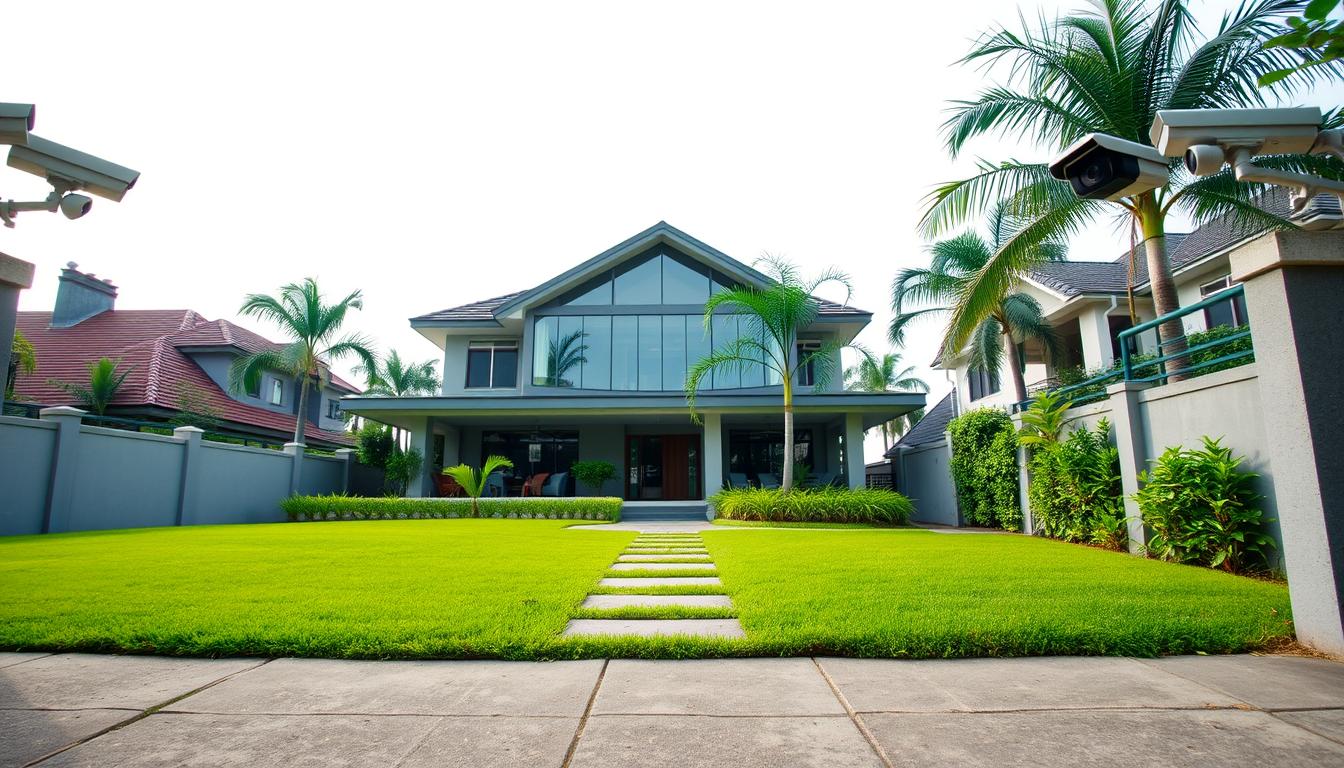
Is it illegal to have cameras around your house in Singapore
In Singapore, the question of whether installing cameras at home is permissible hinges on several factors. With over one million CCTV cameras dotting the landscape, understanding the legal framework becomes crucial for homeowners. The balance between security and privacy is delicate, especially in a densely populated urban environment.
The Personal Data Protection Act (PDPA) governs how personal data collected through surveillance systems must be managed. Recent updates to the Housing & Development Board (HDB) policies, effective May 2023, have simplified the process for homeowners. Now, residents can install corridor-facing CCTV cameras without prior approval, provided they respect their neighbors’ privacy.
While visible security systems can deter burglaries by up to 60%, improper placement can lead to privacy violations and hefty fines. This guide aims to navigate the complexities of residential surveillance, ensuring compliance with local laws while enhancing home security.
Key Takeaways
- Understanding the legal boundaries for camera installation is essential in Singapore’s urban setting.
- The legality of home surveillance depends on placement and compliance with regulations.
- The PDPA outlines how data from security cameras must be handled and protected.
- As of May 2023, homeowners can install corridor-facing cameras without prior approval.
- Improper camera placement can lead to fines under local laws.
Understanding the User Intent Behind Installing Home Security Cameras
The choice to install security cameras in Singapore is influenced by various psychological and practical factors. Modern residential security systems have significantly transformed how homeowners protect their properties. The desire for enhanced security is often at the forefront of these decisions.
The desire for enhanced property security and peace of mind
Homeowners are motivated by a fundamental need to safeguard their property, family, and valuables. In a society increasingly aware of security risks, the presence of surveillance cameras can deter intruders and provide peace of mind. With burglary rates in monitored areas dropping by 50%, many residents view these devices as essential tools for protection.
Concerns about privacy and neighbor relations in Singapore’s dense living environments
Singapore’s high-rise living creates unique challenges. The close proximity of neighbors means that camera placement decisions can impact community dynamics. Residents often worry about inadvertently capturing their neighbors’ private activities. This concern can lead to tensions in interpersonal relationships within buildings.
The need for legal clarity and compliant installation
The legal landscape surrounding residential surveillance can be confusing. Homeowners need clear guidance on what is permissible. Many seek to ensure that their installations comply with the Personal Data Protection Act (PDPA) while effectively deterring crime.
Additionally, parents often install indoor cameras to monitor young children or elderly family members. This adds another layer of motivation for surveillance, as safety and compliance with legal requirements are paramount. The rise of smart doorbells and digital peepholes further complicates the conversation, as these devices blur the lines between traditional CCTV systems and everyday home fixtures.
Understanding user intent is crucial. It helps contextualize why Singapore’s regulatory framework has evolved to accommodate legitimate security needs while protecting individual privacy rights. Homeowners increasingly seek installation methods that are effective and compliant with relevant regulations.
The Importance of Security Cameras for Home Safety in Singapore
Security cameras play a vital role in enhancing home safety in Singapore. Their presence significantly impacts crime prevention efforts. Statistics reveal that visible surveillance systems deter potential intruders effectively.
Statistical evidence consistently demonstrates that the mere presence of visible security cameras creates a powerful psychological deterrent. International studies show that approximately 67% of potential burglars actively avoid targeting properties with visible surveillance equipment. In Singapore, properties equipped with functioning CCTV systems experience approximately 40% fewer break-ins compared to unprotected residences. This makes surveillance one of the most effective crime prevention measures available to homeowners.
Modern technological advances have dramatically improved camera effectiveness. Features like 4K ultra-high-definition resolution and infrared night vision capabilities capture clear footage in complete darkness. Additionally, AI-powered motion detection distinguishes between humans, vehicles, and animals, which helps reduce false alarms.
Cloud storage solutions now enable homeowners to access their surveillance footage remotely through encrypted connections on mobile devices. This ensures that property monitoring continues even when residents are traveling overseas or at their workplace. Singapore law enforcement agencies report an impressive 90% clearance rate for theft cases where video evidence from residential surveillance systems is available. This highlights how camera footage serves as crucial evidence in criminal investigations and prosecutions.
The integration of smart home technology allows seamless voice control through platforms like Amazon Alexa and Google Home. Homeowners can check camera feeds, receive instant alerts, and manage their security devices through simple voice commands. When choosing between wired and wireless options, consider that wired systems offer approximately 98% reliability, while wireless models provide greater installation flexibility.
Advanced features such as two-way audio communication and automated spotlight activation upon motion detection create comprehensive property protection ecosystems. However, it is essential to be aware of security risks; a 2023 global security report indicates that 13% of home camera systems face hacking attempts. Therefore, implementing proper encryption, regular firmware updates, and strong password protocols is critical.
Remote monitoring capabilities provide particular value for families with young children, elderly relatives, or domestic helpers. This allows caregivers to check on vulnerable household members throughout the day without being physically present.
Singapore’s Legal Landscape Governing Residential Surveillance
Understanding the legal aspects of residential surveillance in Singapore is vital for homeowners aiming for compliance. The regulatory framework encompasses several laws and guidelines that dictate how surveillance systems can be installed and operated.
The Personal Data Protection Act (PDPA) and its role
The Personal Data Protection Act (PDPA) serves as the cornerstone of data management in Singapore. It establishes national standards for how personal data, including that collected through surveillance systems, must be handled. While its primary focus is on businesses, homeowners must also consider its implications for personal residential use.
HDB and URA policies for public housing and landed properties
The Housing & Development Board (HDB) enforces specific guidelines for public housing. These rules govern camera placement in common areas, ensuring that residents’ reasonable expectations of privacy are respected. For landed properties, the Urban Redevelopment Authority (URA) outlines additional regulations, such as the 45-degree angle rule for street-facing cameras.
Impact of recent regulatory updates (2023-2026)
Significant updates in May 2023 simplified the approval process for HDB residents. Now, homeowners can install corridor-facing CCTV cameras without prior approval, provided these cameras do not directly point at neighboring flats’ doors or windows. This change reflects a growing recognition of the need for enhanced home security.
Moreover, the Community Disputes Resolution Act (CDRA) mandates that homeowners avoid interfering with their neighbors’ enjoyment of their property. A “neighbor” is defined as anyone living in the same building or within 100 meters of the home. Compliance with these laws is essential for maintaining harmonious community relations.
Additionally, the Private Security Industry Act requires that individuals or companies installing CCTV systems possess a valid Security Service Provider license. This regulation ensures that all installations meet safety and legal standards.
As the regulatory landscape continues to evolve through 2026, it is crucial for homeowners to stay informed about these laws. Understanding the interplay between the PDPA, HDB guidelines, URA rules, CDRA provisions, and Town Council by-laws is essential for implementing a compliant residential surveillance system.
Is it illegal to have cameras around your house in Singapore? The Legal Reality
The legality of residential surveillance in Singapore is defined by specific regulations that homeowners must follow. Understanding these regulations is crucial for anyone considering the installation of security systems.
Key legality factors: placement, consent, and notification
Two primary factors determine whether surveillance is lawful: the placement of the cameras and the purpose behind their use. Cameras should be positioned to avoid infringing on others’ privacy. For instance, monitoring your own driveway is generally acceptable, but pointing a camera towards a neighbor’s window is not.
Additionally, homeowners must provide proper notification if their cameras cover areas within 15 meters of a neighbor’s private space. This requirement emphasizes the importance of consent and transparency in residential surveillance.
Protected private spaces and reasonable expectation of privacy
Singapore’s legal framework recognizes certain areas as protected private spaces. These include bedrooms, bathrooms, and changing rooms. The doctrine of “reasonable expectation of privacy” means that individuals should feel free from surveillance in these areas.
Violating this expectation can lead to serious consequences, including legal action for invasion of privacy. Homeowners must be mindful of where their cameras are directed to avoid infringing on these rights.
Penalties and fines for non-compliance
Failing to comply with the regulations can result in significant penalties. Under Town Council by-laws, unauthorized installations can incur fines of up to SGD 5,000. More severe breaches of the Personal Data Protection Act can lead to fines of up to SGD 10,000, imprisonment for up to three years, or both.
Moreover, the Community Disputes Resolution Tribunal has the authority to enforce compliance, potentially requiring homeowners to remove non-compliant cameras or pay compensation to affected neighbors.
Guidelines for Installing Security Cameras in HDB Flats
Guidelines for installing security cameras in HDB flats are crucial for compliance and neighborly respect. Recent policy changes have made it easier for residents to enhance their home security while adhering to legal requirements.
Recent policy changes easing approval for corridor-facing cameras
Since May 2023, HDB residents can install corridor-facing CCTV devices without needing prior approval. This change simplifies the process significantly. However, homeowners must ensure that cameras face common walkways and not private spaces, such as windows.
Installation height and angle restrictions to protect neighbors
To prevent intrusive angles, cameras must be installed at a minimum height of 2.4 meters. This rule is essential to avoid capturing activities within adjacent flats. Additionally, the 45-degree angle guideline ensures that coverage remains within the common areas.
Mandatory signage and footage retention requirements
Proper signage is legally required within 4 meters of all recording zones. Notices must measure at least 20 centimeters by 30 centimeters and include multilingual content in English, Chinese, Malay, and Tamil. This ensures broad understanding across Singapore’s diverse community.
Under the Personal Data Protection Act (PDPA), footage retention is capped at 30 days. After this period, recordings must be securely deleted unless they are needed as evidence in ongoing legal matters. A notable case in 2022 resulted in a SGD 9,000 fine for capturing a neighbor’s balcony, highlighting the importance of proper camera positioning.
For installations outside the flat in common property areas, such as corridors or stairwells, Town Council by-laws still require prior approval. Residents must file a police report documenting incidents that justify the need for surveillance and submit a formal request to the relevant Town Council. Approvals are granted temporarily for up to 6 months.
Smart doorbells and digital peepholes can be installed without prior approval when mounted on the door itself. These devices are generally viewed as less intrusive. Following these guidelines will help ensure that HDB residents can enjoy enhanced security while respecting their neighbors’ privacy.
Rules for Landed Properties and Condominium Surveillance
Landed properties and condominiums in Singapore face distinct regulations regarding the installation of surveillance cameras. Understanding these rules is essential for homeowners looking to enhance their security while remaining compliant with local laws.
URA 45-degree angle rule and property boundary considerations
The Urban Redevelopment Authority (URA) governs the installation of cameras for landed properties. One key regulation is the 45-degree angle rule for street-facing devices. This rule ensures that cameras do not excessively monitor public areas beyond the property boundary.
Homeowners enjoy greater flexibility within their property boundaries. They can install cameras at front gates, driveways, and garden perimeters. However, it is crucial that these devices do not capture the interiors of neighboring homes or private outdoor spaces.
MCST approvals and shared space regulations in condominiums
For condominium residents, the rules differ significantly. The Management Corporation Strata Title (MCST) establishes specific by-laws governing the installation of external surveillance equipment. It is essential to review these regulations carefully.
Some condominiums prohibit all exterior camera installations, while others allow discreet devices with specific placement conditions. Prior written approval from the MCST is generally required for cameras that capture footage in shared spaces, such as corridors and lift lobbies.
Areas prohibited for camera installations
Across all property types, certain areas are strictly off-limits for camera installation. Bedrooms, bathrooms, and changing rooms are absolute no-monitoring zones. Surveillance in these sensitive areas could lead to serious legal consequences.
Helper’s quarters and adjacent units’ interiors also receive maximum privacy protection. Cameras must never be installed in private or sensitive areas, as doing so could result in charges for outrage of modesty or voyeurism under Singapore law.
Privacy Laws Surrounding Home Security Cameras
Privacy laws in Singapore set clear boundaries for the use of home security cameras. Understanding these laws is essential for homeowners who want to ensure compliance while enhancing their safety. The legal framework focuses on the distinctions between video and audio recording, consent requirements, and the reasonable expectation of privacy.
Distinctions between video and audio recording
Singapore law establishes a critical distinction between video and audio recording. Audio capture faces significantly stricter controls under Section 20 of the Personal Data Protection Act (PDPA). This section prohibits recording conversations without obtaining explicit consent from all parties involved.
In contrast, video surveillance in appropriate areas, such as driveways and common corridors, may only require proper notification through visible signage. This means that homeowners can monitor these areas without needing consent, as long as they respect privacy rights.
Consent requirements and handling personal data
For audio recording, documented written consent from every individual whose conversations might be captured is mandatory. A notable case in 2021 highlighted this when a landlord was fined SGD 7,500 for surveilling tenants’ living areas. This case established clear judicial precedent that residential spaces where families interact are protected zones under the reasonable expectation of privacy doctrine.
Microphone functions on residential security cameras are effectively banned in bedrooms and living spaces, regardless of whether signage is displayed. The law recognizes spoken words and private conversations as particularly sensitive forms of personal data requiring heightened protection.
How the “reasonable expectation of privacy” is applied in court
The Evidence Act Section 116 provides limited exceptions that may allow audio recordings to be admitted in legal proceedings if they relate to genuine crime prevention or investigation. However, this exception applies only to specific security incidents rather than routine monitoring.
Under Sections 21 and 22 of the PDPA, individuals possess the legal right to request access to any CCTV footage containing their personal data. Homeowners must respond to such requests within a reasonable timeframe by providing the relevant recordings. If the footage requested contains the personal data of other identifiable people, the law prohibits releasing unredacted recordings. Masking or blurring techniques may be employed to obscure third parties while still fulfilling the access request.
The Personal Data Protection Commission (PDPC) allows organizations to charge reasonable fees to cover expenses involved in processing access requests. The 30-day maximum retention period for residential surveillance footage under PDPA guidelines ensures that personal data is not stored indefinitely. Automated deletion systems are recommended to manage scheduled purging and maintain ongoing compliance.
The “reasonable expectation of privacy” doctrine is consistently applied by Singapore courts to evaluate whether specific camera placements violate privacy rights. Judges consider factors such as the nature of the space being recorded, the sensitivity of activities captured, and whether individuals would reasonably expect to be free from observation in that location.
Common Legal Pitfalls Homeowners Should Avoid
Homeowners in Singapore must navigate several legal challenges when installing security cameras. Understanding these common pitfalls can help prevent legal disputes and ensure compliance with local laws.
Recording neighbors’ private areas and overlooking signage
One of the most frequent mistakes is positioning security cameras to capture neighboring properties’ windows, balconies, or doorways. This action constitutes a clear violation of privacy rights and has resulted in fines reaching SGD 9,000 in documented legal cases.
Moreover, failing to display proper notification signage within the required 4 meters of recording zones is a compliance oversight. This can undermine the legality of an otherwise properly installed surveillance system and expose homeowners to regulatory action.
Retaining footage beyond legal limits
Another common violation occurs when homeowners retain surveillance footage beyond the 30-day maximum period specified under PDPA guidelines. This often happens when homeowners neglect to implement automated deletion systems or fail to conduct regular reviews of stored recordings to ensure timely purging.
A 2022 legal case highlighted the serious consequences of overlooking bedroom windows during camera installation. Homeowners faced substantial financial penalties after their equipment was found to capture views into neighboring private sleeping quarters.
Unauthorized audio recording and its consequences
Unauthorized audio recording represents a particularly serious violation of PDPA Section 18. Many homeowners activate microphone functions on their security cameras without understanding that capturing conversations requires explicit written consent from all recorded parties.
The landmark 2018 case, where an executive was fined SGD 12,000 for bathroom surveillance, established Singapore’s uncompromising stance on protecting private spaces. This serves as a powerful deterrent against any form of intrusive monitoring.
Homeowners employing domestic helpers should obtain signed consent forms documenting explicit permission for any camera placement in areas where helpers work or spend personal time. Compliant templates are available through the Personal Data Protection Commission website.
Regular self-audits should be conducted quarterly. These audits should examine camera angles and sightlines, verify that data encryption remains properly configured, confirm that neighbor notifications are current, and ensure that footage retention schedules are being followed correctly.
Lastly, the absence of proper notification to neighbors whose private spaces fall within 15 meters of camera coverage areas represents an increasingly enforced requirement since 2023. Failure to provide such notification can escalate minor disputes into formal legal complaints.
Dealing with Security Camera Tampering and Interference
Camera tampering has emerged as a significant concern for homeowners in Singapore. As more residents install surveillance systems, the issue of interference is becoming increasingly prevalent. In 2022, police reports indicated a 22% rise in interference cases, highlighting the need for effective solutions.
Common methods used to disrupt cameras include:
- Infrared lasers: These can disrupt approximately 38% of standard devices.
- Magnetic shields: These block wireless signals, particularly in condominium corridors.
- Spray paint: This remains the most frequent method of vandalism, accounting for one in five interference cases.
Singapore’s Penal Code Section 426 imposes strict penalties for damaging security devices. Offenders can face up to 3 years of imprisonment, with recent cases resulting in fines of SGD 2,000 for spray paint vandalism. Civil courts are also willing to award compensation for system downtime during repairs.
The Infocomm Media Development Authority (IMDA) has banned signal jammers, making their possession illegal. A landmark ruling led to a 6-month jail sentence for a resident who tampered with a neighbor’s security equipment. This establishes a clear precedent that such interference carries serious consequences.
To protect against tampering, homeowners can implement several strategies:
- IK10-rated housings: These vandal-proof camera housings can reduce successful tampering attempts by approximately 90%.
- AI-powered alerts: Modern cameras can detect obstruction attempts in real time, sending immediate mobile alerts to homeowners.
- Backup battery systems: These ensure that recording continues uninterrupted during power interference attempts.
- Motion-activated lights and protective cages: These serve as both physical deterrents and legal compliance measures.
By understanding the risks and taking proactive measures, homeowners can enhance the security of their surveillance systems while remaining compliant with local laws.
Managing Neighbor Relations and Resolving Disputes
Navigating neighbor relations while using security cameras can be challenging for homeowners. The presence of surveillance systems may raise concerns about privacy and boundaries. However, maintaining open communication can significantly reduce potential disputes.
Proactive communication with neighbors before installing security cameras represents the single most effective strategy for preventing disputes. According to HDB surveys, pre-installation notifications reduce the risk of subsequent conflicts by approximately 43%. A structured five-step negotiation process often helps to clarify any concerns.
Effective communication and documenting camera coverage
Start by thoroughly documenting camera angles and coverage areas using timestamped photographs. This evidence can be useful during discussions. Initiate polite in-person conversations using neutral language to explain the legitimate security concerns motivating the installation.
If initial conversations do not fully resolve neighbor concerns, homeowners can present template letters developed by the Singapore Law Society. These letters formally outline the surveillance parameters, data handling practices, and privacy protection measures in place.
Mediation options through the Community Mediation Centre
Offering reasonable compromises can also help. Consider installing privacy filters that reduce visibility at certain angles, limiting recording to specific high-risk hours, or adjusting camera positioning to narrow the field of view. The Community Mediation Centre provides an accessible and affordable dispute resolution pathway.
They offer facilitated mediation sessions at a cost of SGD 50, with typical resolution timelines of approximately three weeks from the initial filing. In 2022, 68% of camera-related disputes were successfully resolved through facilitated discussions that resulted in mutually acceptable adjustments to camera angles and coverage areas.
Legal recourse and tribunal processes for unresolved conflicts
When mediation fails to produce a satisfactory resolution, Singapore’s legal framework provides a clear escalation pathway. The Community Disputes Resolution Tribunal can issue binding orders, including camera removal, installation adjustments, or compensation payments of up to SGD 20,000.
The Small Claims Tribunal and ultimately the Civil Court system remain available for unresolved disputes involving larger claims or more complex legal questions. However, the time, expense, and relationship damage associated with litigation make mediated solutions preferable whenever possible.
Best Practices for Ensuring PDPA Compliance and Camera Security
For homeowners in Singapore, ensuring compliance with the Personal Data Protection Act (PDPA) while installing security devices is crucial. Adopting best practices can help maintain both safety and privacy. Here are some actionable guidelines to follow:
Data protection, encryption, and secure storage guidelines
Implementing robust encryption protocols is essential for protecting stored surveillance footage. AES-256 encryption is the current industry standard for securing data at rest. Meanwhile, TLS 1.3 protocols safeguard live video feeds from interception during transmission.
A concerning 2023 study by the Cyber Security Agency of Singapore (CSA) revealed that 22% of hacked residential camera systems were compromised simply because homeowners had failed to change the default passwords. This highlights the critical importance of basic security hygiene.
Regular audits, firmware updates, and access controls
Regular firmware updates should be applied within 72 hours of critical patch releases. This addresses newly discovered vulnerabilities, as outdated software represents one of the most common entry points for unauthorized access to surveillance systems.
Two-factor authentication should be enabled for all remote access points to camera systems. This adds an essential additional layer of security beyond passwords, significantly reducing the risk of unauthorized viewing of live or recorded footage.
Monthly encryption audits provide homeowners with assurance that their data protection measures remain effective. These audits help identify any security gaps that may develop over time.
Working with certified professionals for lawful installations
The Private Security Industry Act mandates that any individual or company performing CCTV installation must possess a valid Security Service Provider license. This makes professional installation by certified experts a legal requirement rather than merely a recommendation.
Working with certified professionals ensures that installations comply with all applicable regulations from the outset. Professional compliance checks typically cost between SGD 150 and SGD 300, helping homeowners avoid potential fines exceeding SGD 5,000.
How to Legally Install and Operate CCTV Cameras in Singapore
A clear understanding of the installation process for CCTV cameras is crucial for compliance in Singapore. Homeowners must navigate specific regulations and requirements that differ from those applicable to businesses. This guide outlines the necessary steps for both residential and commercial installations.
Differences between residential and business surveillance requirements
The legal requirements for residential surveillance differ significantly from those governing business CCTV systems. Organizations face more stringent obligations under the Personal Data Protection Act (PDPA). This includes:
- Formal consent: Businesses must obtain consent from individuals whose personal data is collected.
- Notification: Clear signage must be displayed in areas where cameras operate.
- Reasonable purpose: Surveillance must serve purposes that a reasonable person would consider appropriate.
Procedures for obtaining necessary approvals and permits
For homeowners in HDB flats wishing to install cameras in common areas, the approval process involves several steps:
- File a police report documenting incidents that justify the need for surveillance.
- Submit a formal request to the relevant Town Council, including the police report as supporting evidence.
- Install the cameras only after receiving approval, which is granted temporarily for up to 6 months.
In contrast, landed property owners can install cameras anywhere within their property without needing external approvals, although they must still comply with URA guidelines.
Recommendations for choosing and positioning cameras responsibly
When selecting CCTV equipment, consider the following:
- Resolution quality: Higher resolution provides clearer images.
- Night vision capabilities: Essential for monitoring in low-light conditions.
- Weather resistance: Important for outdoor installations.
- Audio recording features: Should be disabled to avoid stricter consent requirements.
Responsible camera positioning is also vital. Ensure that cameras capture only the intended security zones without infringing on neighboring properties or private spaces. Maintain proper signage within 4 meters of recording zones and implement a 30-day footage retention schedule with automated deletion.
Looking Ahead: Maintaining Safe, Respectful, and Legal Use of Home Cameras
Looking ahead, maintaining safe, respectful, and legal use of home cameras in Singapore requires ongoing vigilance. Emerging technologies, such as AI-powered face blurring, can help preserve neighbor relations while enhancing security.
Upcoming regulations are set to introduce mandatory cybersecurity ratings for connected devices, reflecting the need for robust data protection. Homeowners should conduct annual audits with certified professionals to ensure compliance with evolving laws.
Community partnerships have shown impressive satisfaction rates, proving that a balance between security needs and privacy rights is achievable. Regular check-ins with neighbors can prevent minor issues from escalating into disputes.
Ultimately, thoughtful installation and responsible management of surveillance systems will empower homeowners to protect their properties while respecting the rights of others.
FAQ
What are the legal requirements for installing security cameras in Singapore?
Homeowners must comply with the Personal Data Protection Act (PDPA) and local regulations. This includes obtaining consent from individuals being recorded and ensuring cameras do not infringe on others’ privacy.
Can I install cameras that record audio?
Recording audio requires explicit consent from all parties involved. The PDPA distinguishes between video and audio recordings, making audio recording more sensitive in terms of privacy laws.
What areas are considered private spaces where cameras cannot be installed?
Protected private spaces include areas where individuals have a reasonable expectation of privacy, such as bathrooms and bedrooms. Surveillance in these areas is typically prohibited.
What should I do if my neighbor complains about my security cameras?
Effective communication is key. Discuss the concerns openly and consider adjusting camera angles or placements to address privacy issues. Mediation options are available through the Community Mediation Centre if disputes arise.
How long can I retain footage from my security cameras?
The PDPA mandates that footage should only be retained for as long as necessary for its intended purpose. Homeowners should establish a clear retention policy and dispose of footage responsibly.
Are there specific guidelines for installing cameras in HDB flats?
Yes, recent policy changes allow for corridor-facing cameras with certain restrictions. Homeowners must ensure compliance with installation height, angle, and signage requirements to protect neighbors’ privacy.
What are the consequences of non-compliance with surveillance laws?
Non-compliance can result in penalties, including fines and potential legal action. It is crucial to understand and adhere to local laws to avoid these repercussions.
How can I ensure my security camera installation is PDPA compliant?
Homeowners should implement data protection measures, such as encryption and secure storage. Regular audits and working with certified professionals can also help ensure compliance.
What steps should I take if my security camera is tampered with?
Document the tampering incident and report it to the authorities. Legal consequences exist for tampering with surveillance equipment, and homeowners should consider technological protections against interference.
How do I handle disputes related to camera coverage with neighbors?
Keep clear records of camera coverage and communicate effectively with neighbors. If necessary, seek mediation or legal recourse through tribunals for unresolved conflicts.


