
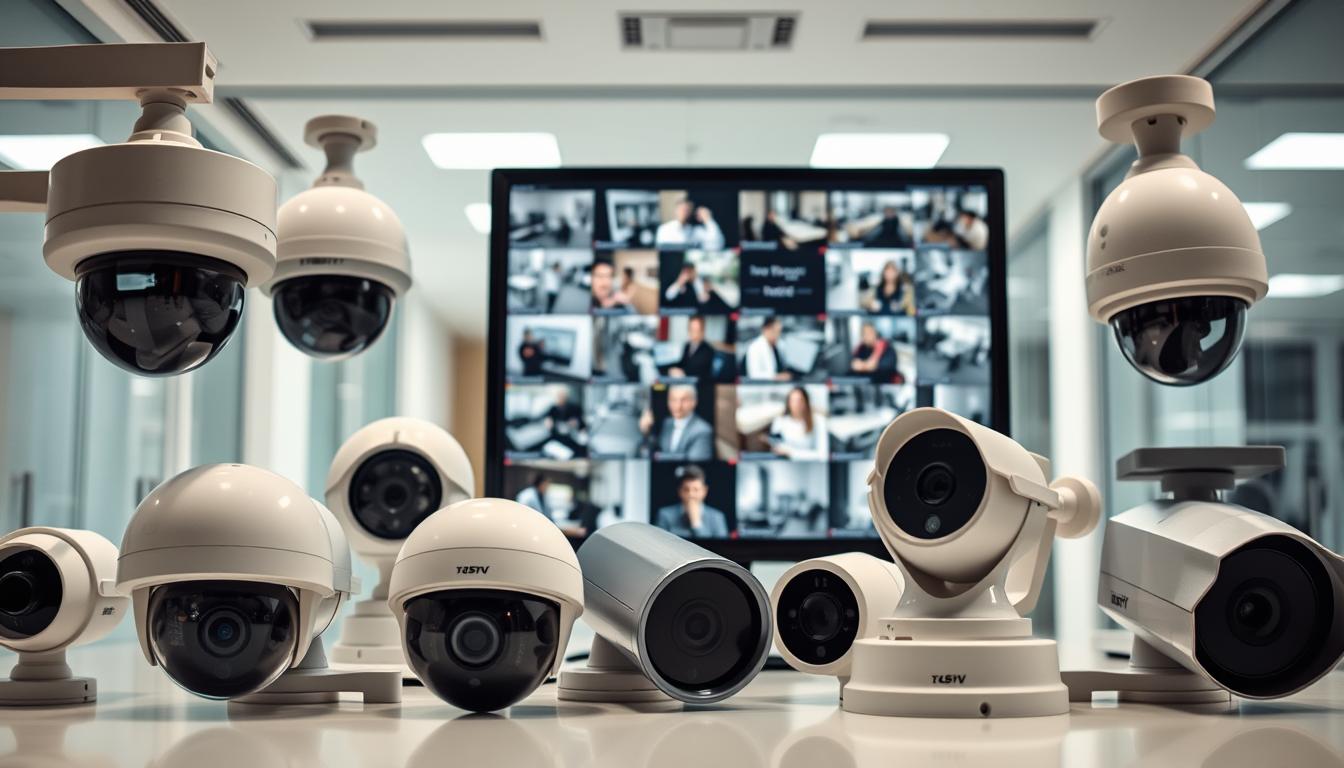
How many security cameras is too much Ultimate Guide
In today’s world, property owners face a significant challenge: finding the right balance between effective surveillance and over-surveillance. This dilemma is especially relevant in Singapore, where urban density and close proximity to neighbors complicate security needs. Visible monitoring can reduce burglary risks by up to 31%, but there is no one-size-fits-all solution.
Each property has unique requirements based on its layout and size. A small apartment may need just two to six units, while larger commercial spaces often require a more extensive setup. Moreover, modern smart features can enhance coverage without needing a vast number of devices.
This guide aims to help you assess your property, understand the factors influencing your needs, and create a tailored plan that ensures safety and peace of mind. By considering both coverage and budget, you can make informed decisions about your home security system.
Understanding the Balance: Why Finding the Right Number of Security Cameras Matters
Navigating the world of surveillance requires a keen understanding of the right number of monitoring devices. Property owners often ask critical questions when planning their security setups. Common inquiries include how many cameras are sufficient, optimal placement, and whether having more devices always equates to better protection.
User intent typically revolves around achieving complete peace of mind. However, this must be balanced with avoiding unnecessary expenditures or privacy issues for family members and neighbors. The risks associated with inadequate coverage can be significant.
Installing too few cameras can create critical blind spots at entry points. This leaves property vulnerable to intrusions. Inadequate coverage may also prevent capturing identifying footage during incidents, allowing experienced intruders to exploit gaps in surveillance.
On the other hand, over-surveillance poses its own challenges. Excessive monitoring can lead to escalating costs for equipment and storage. It can also create overwhelming amounts of footage to review, which can be both time-consuming and stressful.
Moreover, there are potential legal violations of privacy laws to consider. In Singapore’s close-quarter living situations, such as HDB estates and condominiums, excessive monitoring can strain relationships with neighbors. Striking the right balance is essential.
Singapore’s urban environment presents unique challenges. High-density housing and shared corridors require thoughtful surveillance planning. Recent updates to HDB corridor regulations in May 2023 emphasize the importance of compliance. A resident faced a $7.5k fine for overlooking these rules, highlighting the need for careful placement of devices.
Commercial properties face even higher risks, with burglary rates four times greater than residential properties. This necessitates more comprehensive coverage while respecting community privacy norms. Understanding these balances allows property owners to make informed decisions that protect their assets without crossing legal boundaries.
Ultimately, the right number of cameras is not about maximum coverage. It’s about strategic placement that effectively addresses high-risk areas and entry points. Finding this balance requires careful assessment of property layout, crime patterns, and regulatory requirements specific to Singapore.
How Many Security Cameras Is Too Much? Determining Your Ideal Camera Count
The quest for the optimal number of monitoring devices is essential for ensuring property safety. Various factors influence how many units you need for effective coverage. Understanding these elements can help you avoid both under and over-installation.
Factors Influencing Camera Quantity
First, property size plays a crucial role. For landed properties, a good rule of thumb is one device per 20 feet. In contrast, studio apartments may only require a single unit. Multi-level homes typically need 3-4 cameras to cover staircases and different floors effectively.
Mansions, on the other hand, often benefit from 10-20 units to maintain perimeter visibility. For most small to medium-sized homes, starting with one camera at each main entrance and another in the common living area is advisable. This basic coverage usually involves 3 to 4 cameras.
Residential vs. Commercial Security Needs
Residential and commercial properties have distinct requirements. For instance, a typical HDB flat might need 1-2 cameras, while a landed property may require 3-7 units. Larger estates or mansions often need 10-20 cameras for comprehensive surveillance.
Commercial properties, however, can demand significantly more units. A small shopfront may need 8-16 cameras, while larger warehouses could require between 32-64 units. This variation is due to the need to monitor customer areas, employee zones, stockrooms, and loading docks.
Additionally, access points greatly influence the number of cameras needed. Each vulnerable entry point, such as front doors, back doors, and windows, should ideally have dedicated surveillance. This ensures you capture identifying footage of anyone entering or exiting.
Ultimately, the right number of cameras isn’t about blanket coverage. It’s about strategic placement that maximizes each unit’s field of view while minimizing overlap. A thoughtful approach helps prevent security gaps and unnecessary expenditures on excessive equipment.
Property owners should start with a core system that covers the highest-priority areas. As needs evolve, they can expand their systems, choosing scalable solutions that allow for future growth.
Assessing Your Property’s Unique Security Needs and Risk Areas
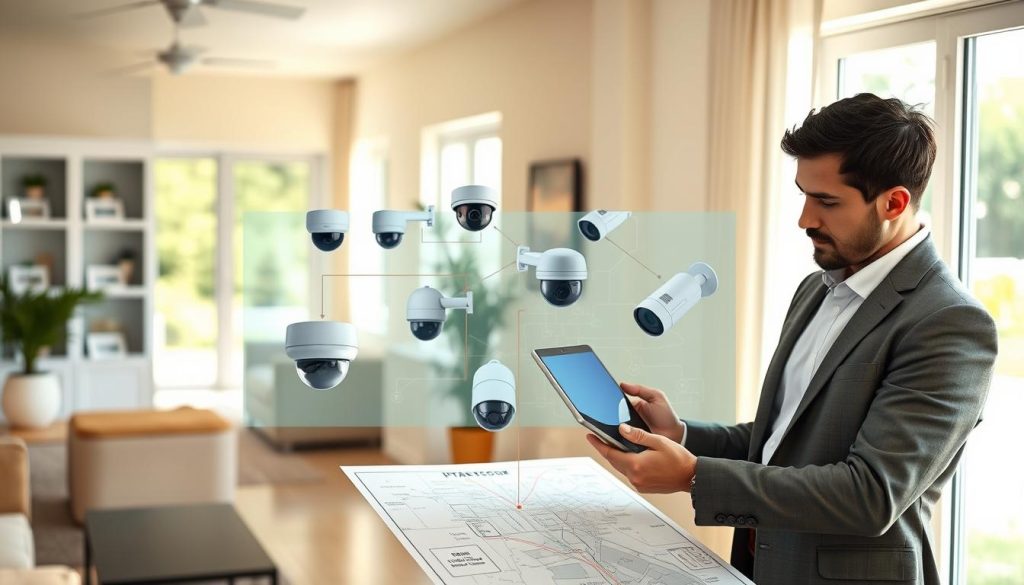
Assessing the specific vulnerabilities of your property is essential for optimal protection. A systematic approach will help you identify areas that require camera coverage. Start by creating a simple sketch or map of your entire property. Mark all structural features, boundaries, and potential access points.
Mapping Entry Points and Vulnerable Zones
Next, identify and map every entry point. This includes all exterior doors—front, back, and side—along with ground-floor windows, garage doors, and any gates or openings in your perimeter fencing. Pay special attention to secluded back entrances, dark pathways, and windows hidden by landscaping. These zones can attract intruders.
Crime statistics reveal that 70% of break-ins target first-floor entry points. Furthermore, 38% occur through off-street windows. Thus, these areas should be the highest priority for camera coverage.
Prioritizing High-Risk Areas for Surveillance
When prioritizing high-risk areas, focus on ground-level windows facing alleys or service areas. Garages with direct access to your home and backyard access points obscured from street view also require attention. For apartments and condominiums, 1-2 well-placed cameras inside the unit typically suffice. These should focus on the main door and living areas, especially when complemented by existing building security measures.
Impact of Property Type: Apartments, Landed Properties, and Larger Estates
Landed properties usually need 3-7 cameras to cover multiple entry points, perimeter walls, outdoor spaces, and common areas across different floors. Larger estates and mansions may require 10 or more cameras arranged in concentric zones. This includes perimeter fence monitoring, driveway coverage, and interior surveillance of valuable storage areas.
Commercial properties must also assess critical monitoring zones. High-traffic areas such as cash registers, stockrooms, and loading docks are essential. Dimly lit alleyways or perimeter fences should not be overlooked.
In conclusion, a thorough property assessment forms the foundation for determining the right number of cameras and their optimal placement. This transforms a vague security concept into a clear, actionable plan.
Camera Specifications That Influence Quantity and Efficiency
Selecting the right specifications for your surveillance devices can greatly impact both the number of units needed and their overall effectiveness. Understanding how various features contribute to security can help you optimize your setup.
Resolution and Field of View Considerations
Camera resolution directly affects the number of units required. For instance, a 2K resolution camera provides 56% better facial recognition than standard 1080p models. This means that one high-resolution camera can cover areas that would typically need multiple lower-resolution units.
Field of view also plays a crucial role. Wider lenses, such as 130°, cover 25% more area than traditional 90° models. This wider coverage allows fewer cameras to effectively monitor the same space without leaving blind spots.
For optimal monitoring, consider these resolution guidelines:
- 4MP: General entry point monitoring.
- 8MP: Critical areas requiring license plate capture or detailed facial identification.
- 12MP: Large commercial spaces where fine details matter.
Night Vision and Low-Light Performance
Night vision capabilities are essential for effective surveillance. Infrared technology can reach up to 30 meters, while color night vision provides clearer video details within 15 meters. This eliminates dark zones without necessitating additional cameras.
Smart Features to Reduce Number of Devices
Smart features can significantly enhance security while reducing the number of cameras needed. For example, AI-powered person detection can reduce false alarms by 73%. This allows property owners to focus on genuine threats, potentially decreasing the total number of units required for comprehensive monitoring.
Additionally, motion-triggered recording can reduce storage needs by 40%. This makes it more practical to operate higher-resolution cameras without overwhelming storage systems.
Consider bandwidth as well; 4K models require 16Mbps, while 1080p units only use 4Mbps. For example, ten 4MP cameras typically require 6TB of monthly storage capacity.
Investing in higher-quality cameras with better specifications often proves more cost-effective than purchasing numerous lower-quality units. Understanding these specifications empowers property owners to make informed purchasing decisions that optimize both security coverage and budget allocation.
Indoor vs. Outdoor Cameras: Strategic Allocation for Maximum Effectiveness
Choosing the right surveillance solutions for both indoor and outdoor environments is crucial for comprehensive property protection. Understanding the differences between indoor and outdoor cameras can help you make informed decisions that enhance security without compromising privacy.
Weatherproof and Durable Outdoor Cameras
Outdoor cameras must be robust enough to withstand Singapore’s tropical climate. Look for models with IP66 or IP67 ratings, which provide protection against heavy rains and high humidity. A great example is the SwitchBot Outdoor Spotlight Cam, designed to operate in temperatures ranging from -20°C to 50°C.
When positioning outdoor cameras, focus on entry points and perimeter walls. Aim for locations that provide 8-meter night vision coverage to effectively monitor driveways and gates after dark. Be mindful of local regulations; for instance, placing cameras in condo hallways is prohibited to protect neighbor privacy.
Discreet Indoor Cameras and Privacy Best Practices
Indoor cameras should prioritize a discreet design to blend seamlessly with your home decor. Consider ceiling mounts at 2.4 meters for wide-angle coverage without obstruction. For retail spaces, shelf placements at 1.8 meters can effectively monitor displays.
It’s essential to adhere to privacy best practices. According to PDPA Section 26, avoid installing cameras in bathrooms and bedrooms. Always inform household members and employees about camera locations to maintain transparency.
Hybrid Systems for Seamless Coverage
A balanced security system might include 4 outdoor and 3 indoor cameras, integrated through a Network Video Recorder (NVR) system. This setup ensures comprehensive monitoring across both indoor and outdoor spaces.
Utilizing motion-triggered recording can significantly reduce storage needs by 40%, making it easier to manage footage while maximizing security efficiency.
In conclusion, strategic allocation between indoor and outdoor cameras is vital. This approach ensures comprehensive property monitoring without unnecessary duplication or privacy violations.
Optimizing Camera Placement Without Over-Surveillance
Maximizing the efficiency of your security system hinges on thoughtful camera placement. Strategic positioning can significantly enhance coverage while minimizing the number of units needed. By focusing on key areas, you can create a robust surveillance setup without overwhelming your space.
Targeting Entryways and Choke Points
Implementing a choke point strategy is an effective way to cover 90% of access routes using 35% fewer cameras. Focus on natural bottlenecks where all traffic must pass, such as main door alcoves and stairwell junctions. Positioning cameras at these critical entry points maximizes efficiency and security.
Mounting Height, Angle, and Field Overlaps
The optimal mounting height for security cameras is between 8-10 feet (approximately 2.4-3 meters). This height prevents tampering while capturing clear facial details. A 15° downward tilt can improve coverage by 60% compared to level installations. Additionally, ensure cameras are positioned opposite light sources to avoid glare and washed-out footage.
Creating intentional field overlaps between adjacent cameras helps eliminate blind spots without redundancy. Using 12°-25° angle limiters near property boundaries ensures effective monitoring without compromising privacy.
Respecting Neighbor Privacy and Avoiding Legal Issues
Respecting neighbor privacy is crucial. Cameras must never point directly at neighboring properties, windows, or private spaces. Compliance with Singapore’s 1.2-meter clearance rule from neighboring windows is essential. Correct angling can reduce false motion alerts by 40%, enhancing system efficiency while maintaining full perimeter coverage.
Common placement mistakes include installing cameras too low, making them vulnerable to tampering, or pointing lenses directly at light sources. Utilizing digital privacy masks can automatically blur adjacent properties, ensuring compliance with privacy regulations while maintaining effective monitoring of your property.
In conclusion, optimized placement is key to achieving maximum protection with minimal cameras. This approach transforms a basic setup into a highly effective security system.
Legal and Regulatory Considerations in Singapore
Understanding the legal landscape for surveillance in Singapore is crucial for property owners. Compliance with regulations is not optional and carries significant penalties for violations. The legal framework governs the use of monitoring devices, ensuring that both safety and privacy are respected.
Personal Data Protection Act (PDPA) Compliance
The Personal Data Protection Act (PDPA) sets strict guidelines for surveillance systems. Under Section 24, a maximum retention period of 30 days for footage is mandated. Additionally, all stored recordings must utilize AES-256 encryption to protect sensitive data.
Furthermore, any data breach involving surveillance footage must be reported to authorities within 72 hours of discovery. This emphasizes the importance of prompt action in maintaining compliance.
It is also crucial to note that audio recording without consent violates PDPA Section 26. Violators can face fines of up to $5,000 per incident, highlighting the need for careful adherence to privacy laws.
HDB Corridor Camera Regulations (Updated 2023)
Since May 2023, HDB residents face stricter limits on corridor camera installations. These regulations include three key criteria:
- No audio recording in shared spaces.
- Cameras must not capture neighbor doors or windows.
- Written approval is required for any corridor-facing units.
A notable case in 2022 involved a resident fined $7,500 for overlooking these rules, illustrating the serious consequences of non-compliance.
Penalties for Non-Compliance and Best Practices
Businesses must also adhere to workplace surveillance laws. This includes displaying visible CCTV notices within 3 meters of all monitored zones. Following best practices is essential for legal compliance.
Consulting the PDPC’s IMDA-approved vendor list for compliant equipment is advisable. Regular audits of camera positioning and data handling procedures will help maintain compliance.
In conclusion, understanding and following Singapore’s legal requirements is essential for any security camera installation. This protects both the property owner and the privacy rights of neighbors and visitors.
Cost, Maintenance, and Long-Term Planning for Your Security System
Investing in a security setup requires careful consideration of long-term expenses and upkeep. Understanding the costs involved can help property owners make informed decisions about their monitoring needs.
Balancing Budget with Security Needs
The cost spectrum for security camera systems varies widely. Basic setups with four cameras typically range from $800 to $1,200. In contrast, enterprise-grade solutions can exceed $15,000. This disparity highlights the importance of aligning your budget with your security requirements.
To start, focus on a core system that covers high-priority areas. Gradually expand your setup as your budget allows. This approach ensures you don’t overspend while still achieving peace of mind.
Maintenance Tips to Prolong Camera Lifespan
Proper maintenance is crucial for extending the life of your security cameras. Schedule quarterly lens cleaning to maintain image clarity. Additionally, perform bi-annual firmware updates to ensure optimal performance and security patches.
Choosing equipment with a solid warranty is also essential. A 3-year warranty is ideal for outdoor models, especially in Singapore’s humid climate.
Scalability and Future-Proofing Your Setup
As technology advances, most setups will need replacement approximately every five years. Consider this when planning your security system. Opt for systems that support easy addition of new cameras.
Smart features like geo-fencing can enhance functionality. This technology activates recording when you leave and deactivates it upon your return, optimizing both security and storage usage.
In conclusion, long-term planning for a security system involves not just the initial purchase but also ongoing maintenance and periodic upgrades. A scalable architecture will help your system grow with changing security needs.
Efficient Security: Achieving Maximum Protection Without Going Overboard
Achieving effective home protection involves a thoughtful approach to surveillance. The key takeaway from this guide is that maximum protection does not require maximum cameras. Instead, it requires strategic thinking, quality equipment, and proper placement.
Smart surveillance solutions now prioritize efficiency over quantity. Modern systems integrate motion sensors and AI analytics, reducing device counts while improving response times by 83%. Even dummy units can deter break-ins, decreasing attempts by 47%.
To evaluate your setup, consider this checklist:
- Assess entry point coverage and high-risk areas.
- Review camera specifications for optimal performance.
- Optimize placement to eliminate blind spots.
- Ensure compliance with local regulations.
Regular reviews and updates are crucial as security needs evolve. Remember, the right number of cameras is the one that eliminates blind spots without redundant coverage. For personalized advice, reach out to ED Viston at +65 8313 4578 or contact Wen Hong at +65 60135960 for current deals.
With informed planning, you can achieve true peace of mind while protecting what matters most.
FAQ
What factors should I consider when deciding on the number of cameras for my home?
Key factors include property size, layout, entry points, and specific security needs. Assessing high-risk areas and the overall coverage required will help determine the ideal number.
How can I ensure I am not over-surveilling my property?
Focus on strategic placement of cameras at entryways and vulnerable zones. Consider mounting height and angle to avoid overlapping views while respecting neighbors’ privacy.
What are the benefits of using indoor versus outdoor cameras?
Outdoor cameras are designed to withstand weather conditions, while indoor cameras can be more discreet. A hybrid system can provide comprehensive coverage for both environments.
How do camera specifications affect the number of devices needed?
Higher resolution and wider field of view can reduce the number of cameras required. Additionally, features like night vision and smart alerts enhance effectiveness without increasing device count.
Are there legal considerations I should be aware of when installing cameras?
Yes, compliance with regulations such as the Personal Data Protection Act (PDPA) is essential. Ensure you are aware of local laws regarding surveillance to avoid penalties.
What maintenance is necessary to keep my security system functioning effectively?
Regularly clean camera lenses, check for software updates, and inspect hardware for any damage. Proper maintenance can prolong the lifespan of your security devices.
How can I balance my budget with my security needs?
Evaluate your specific requirements and prioritize high-risk areas. Consider investing in quality cameras that offer advanced features, which may reduce the need for additional devices.
What are the risks of having too few cameras?
Insufficient coverage can leave vulnerable areas unmonitored, increasing the risk of crime. It’s crucial to ensure that all entry points and high-risk zones are adequately covered.
Can I use smart features to minimize the number of cameras I need?
Absolutely! Smart features like motion detection and alerts can help you monitor specific areas more effectively, potentially reducing the total number of cameras required.


