

Buyer’s Guide: Choosing the Best Solar Powered Wireless Security Camera System
Keeping your property safe is a top priority. Today, technology offers smart, eco-friendly ways to achieve peace of mind. This guide is your complete resource for modern, off-grid protection.
In Singapore, we enjoy plenty of sunshine year-round. This natural resource can now power your entire surveillance setup. You eliminate messy wires and ongoing electricity costs.
These innovative setups combine efficient panels, long-lasting batteries, and high-definition eyes on your property. They work together as one smart unit. You get reliable monitoring without a complicated grid connection.
We will help you navigate the market. Learn to match a model to your specific layout and budget. We cover installation, smart home connections, and performance in all weather. For a closer look at a popular outdoor option, explore our review of a leading solar-powered WiFi security camera for outdoors.
By the end, you’ll know how to calculate long-term value. Make a confident choice for sustainable, effective security.
Key Takeaways
- This guide helps you select a sustainable security solution that uses Singapore’s sunlight for power.
- Understand the key parts: the solar panel, battery, and the surveillance device itself.
- Learn to evaluate models based on your property’s specific layout and your budget.
- Get practical advice on setup, maintenance, and connecting to other smart home devices.
- We compare top brands and models available locally to simplify your decision.
- Address common concerns like performance during rainy seasons and overall cost savings.
Why Solar Power is Revolutionizing Home Security
The landscape of residential protection is undergoing a fundamental change with autonomous energy sources. Traditional setups tethered to electrical outlets are being replaced by innovative alternatives. These new approaches offer greater flexibility and reliability for property owners.
This shift represents more than just a technological upgrade. It’s a complete rethinking of how monitoring should work. The focus moves from dependency to self-sufficiency.
Eliminating Grid Dependency for 24/7 Surveillance
One major advantage is complete independence from the main electrical supply. Your surveillance continues working even during neighborhood blackouts. This ensures constant vigilance when it’s needed most.
High-efficiency panels convert strong sunlight into reliable energy throughout the day. Devices like the Reolink Argus 3 Pro can endure extended power outages without losing functionality. Case studies show eight-hour disruptions don’t affect performance.
Installation becomes significantly simpler without trenching or complex electrical work. Professional electricians aren’t always necessary for setup. This autonomy reduces complexity by approximately forty percent compared to wired alternatives.
A five to eight hour charge typically fuels up to seven days of operation. The technology uses centralized hubs that can support multiple units from one panel. This design maximizes efficiency while minimizing hardware needs.
The Environmental and Economic Shift
Adopting this approach contributes directly to a greener household. Each unit offsets carbon emissions equivalent to planting twelve trees annually. This aligns perfectly with Singapore’s national sustainability goals.
The economic benefits are equally compelling. Long-term savings on electricity bills balance the initial investment. Government rebates and incentives further improve the financial picture for adopters.
Singapore’s abundant sunshine ensures consistent performance throughout the year. Even during monsoon seasons, well-designed equipment maintains reliable operation. IP67 waterproofing protects components during heavy rainfall.
This revolution delivers peace of mind through unwavering reliability. Protection becomes more accessible, sustainable, and intelligent. Homeowners gain a smart solution that works with nature rather than against it.
Top Advantages of a Solar Security System in Singapore
Modern surveillance technology has evolved to leverage local weather patterns for reliable, cost-effective monitoring. The benefits of autonomous protection systems extend far beyond simple convenience in Singapore’s urban landscape. These innovative setups deliver practical value that aligns perfectly with the nation’s environmental and technological goals.
From significant financial savings to flexible placement options, the advantages are clear. Each benefit contributes to a smarter, more resilient approach to property monitoring. Let’s explore why this technology represents such a compelling choice.
Significant Energy Savings in a Sunny Climate
Singapore’s abundant sunshine transforms into direct financial benefits. These autonomous setups eliminate ongoing electricity costs associated with traditional wired alternatives.
A typical household with four units can save approximately S$420 annually. This represents about 75% lower energy expenses compared to conventional monitoring equipment. The savings accumulate year after year, making the initial investment increasingly valuable.
The tropical climate provides consistent, strong light throughout most of the year. Efficient panels capture this natural resource effectively. They convert it into reliable power for continuous operation without drawing from the grid.
This economic advantage extends beyond personal savings. Properties utilizing sustainable technology often see enhanced market value. They also demonstrate compliance with building standards like BCA Green Mark.
Wire-Free, Flexible Installation for Any Property
Traditional surveillance often requires complex wiring and professional help. Autonomous alternatives remove these constraints completely. You gain unprecedented freedom in unit placement.
Magnetic mounts and tool-free brackets enable setups in about 30 minutes. This contrasts sharply with the 4+ hours typically needed for wired CCTV installations. The difference represents substantial time and labor savings.
You can position devices in optimal surveillance spots without considering power outlet proximity. This flexibility suits various property types across Singapore.
HDB flats benefit from easy mounting on balcony railings or corridor walls. Landed properties can cover extensive gardens and perimeter fences. Even temporary sites like construction areas gain portable, effective monitoring.
Components attach securely to fences, poles, or gutters. This adaptability ensures comprehensive coverage regardless of architectural challenges. A Sentosa Cove residence achieved complete 100% solar-powered coverage using this approach.
Uninterrupted Protection During Power Outages
Grid failures represent a critical vulnerability for traditional surveillance. Autonomous systems eliminate this weakness through intelligent design. They maintain constant vigilance when conventional setups would fail.
Dual-power configurations switch seamlessly between energy sources. This engineering ensures 98.7% operational uptime. Your property remains monitored even during neighborhood blackouts or maintenance work.
Robust battery backups provide substantial reserve capacity. During monsoon seasons or extended cloudy periods, these reserves can sustain operation for seven days or more. The technology anticipates Singapore’s weather patterns effectively.
Heat-resistant components withstand the nation’s average temperatures of 35°C without performance degradation. Specialized coatings protect against high humidity and frequent rainfall. This resilience ensures year-round reliability.
The system delivers tamper alerts if someone attempts to interfere with components. This added layer of protection complements the primary surveillance function. Together, they create a comprehensive security solution that works independently of external infrastructure.
Essential Features in Your Solar Powered Wireless Security Camera System
To ensure your investment delivers reliable protection, you must scrutinize several key technical specifications. The right combination of hardware and software determines how well your guardian performs in real-world conditions.
This breakdown focuses on the core elements that matter most for Singaporean homes. Understanding these details helps you filter out inadequate models and choose a truly robust solution.
Battery Life and Solar Charging Efficiency
The heart of any autonomous setup is its energy cycle. Look for a high-capacity battery measured in milliamp-hours (mAh). A unit with a 10,000mAh battery can provide up to 45 days of standby time.
Charging speed is equally critical. Efficient panels should recharge a depleted battery fully within 5 to 8 hours under direct Singaporean sun. This ensures your device stays operational even after several cloudy days.
Good performance means the unit maintains a 98% or higher operational uptime. The panel’s wattage must adequately match the device’s energy consumption for this seamless operation.
Weather Resistance for Humidity and Rain
Singapore’s tropical climate demands exceptional durability. The Ingress Protection (IP) rating is your first checkpoint. An IP65 rating protects against low-pressure water jets, while IP67 allows temporary immersion.
For our intense humidity and monsoon rains, IP67 is the recommended minimum. Advanced models add nano-coatings on internal circuits to guard against condensation at 90% relative humidity.
Don’t overlook physical impact resistance. An IK10 rating means the housing can withstand strikes equivalent to 20 joules of energy. This vandalism protection is vital for ground-level installations.
High-Quality Night Vision Capabilities
Effective monitoring doesn’t stop at sunset. Standard infrared (IR) night vision illuminates scenes in black and white but can have limited range.
Superior technology uses starlight sensors. These require only 0.005 lux of ambient light—less than a moonless night—to produce a clear, detailed image. Some premium models even offer full-color night vision.
When evaluating, check the effective range. Quality night vision should clearly identify a person’s face at distances of 30 feet or more. This clarity is crucial for useful evidence.
Video Resolution and Smart Motion Detection
Image quality directly impacts identification. Resolution options range from 720p to 4K. For most homes, 1080p (Full HD) or 2K offers the best balance of clarity and efficient storage use.
Higher resolution means larger video files. This affects how much footage you can store locally on a microSD card or in the cloud.
Smart motion detection uses artificial intelligence to analyze the scene. It can differentiate between a person, a vehicle, and an animal. This AI drastically cuts down false alerts from moving foliage or wildlife.
You can often draw custom activity zones on your app’s live feed. The unit will only send alerts for motion within these zones, making notifications far more relevant and manageable.
Additional Must-Have Features
Beyond the core specs, several features greatly enhance usability. Two-way audio with noise cancellation lets you communicate clearly through the device.
Stable connectivity is non-negotiable. Dual-band WiFi (2.4GHz and 5GHz) ensures a strong, reliable signal for remote access to your live feed and recordings.
Finally, consider your storage preference. Local storage via a microSD card keeps data in your control, while cloud storage offers off-site backup, often for a subscription fee.
Your Quick-Buy Checklist
Use this list to quickly assess if a model meets Singapore’s demands:
- Battery & Charging: Minimum 10,000mAh capacity; full recharge via panel in ≤8 hours.
- Weatherproofing: IP67 rating or higher for rain and humidity resistance.
- Durability: IK08 or IK10 rating for impact resistance.
- Night Vision: Starlight sensor or color night vision with a 30ft+ range.
- Video: 1080p or 2K resolution for clear identification.
- Smart Detection: AI-powered person/vehicle detection with customizable zones.
- Connectivity: Dual-band WiFi support for a stable connection.
- Audio: Two-way audio capability for communication.
Understanding Solar Panel Specifications for Optimal Performance
Proper specification and placement of photovoltaic components directly impact your monitoring system’s effectiveness. The energy-harvesting hardware determines how reliably your guardian operates through Singapore’s varied conditions.
Getting these details right ensures continuous operation without interruption. It transforms abundant local sunshine into dependable power for your property’s eyes.
Matching Panel Wattage to Your Camera’s Needs
Wattage (W) measures how much energy a photovoltaic panel can produce. Matching this output to your device’s consumption prevents frustrating undercharging issues.
Higher-resolution units demand more energy to process detailed video feeds. A 4K surveillance device requires at least 10 watts from its panel.
Standard 1080p models work efficiently with just 5 watts. Using an undersized panel means the battery never reaches full capacity.
This mismatch leads to reduced recording time and potential downtime. Always check your model’s technical specifications before selecting accompanying photovoltaic hardware.
Optimal Positioning for Singapore’s Sunlight
Singapore’s geographical position offers excellent conditions for photovoltaic energy collection. Proper alignment maximizes this natural resource throughout the year.
Angle your panels between 25° and 30° for peak sunlight exposure. This tilt captures the sun’s rays most effectively as it moves across our sky.
South-facing mounts yield approximately 15% more energy than other orientations. This direction receives the longest duration of direct sunlight daily.
Use smartphone applications like SunSurveyor to analyze light patterns on your specific property. These tools show exactly where shadows fall during different seasons.
Avoid shading from buildings, trees, or other structures whenever possible. Even partial shading can reduce a panel’s energy output by over 50%.
Urban environments with limited direct sunlight require creative solutions. Consider using extension cables to place panels in sunnier spots away from the monitoring unit itself.
Simple Maintenance for Peak Efficiency
Regular care keeps your photovoltaic components working at their best. Dust, bird droppings, and pollen gradually reduce energy collection efficiency.
Clean panels monthly to prevent 18% efficiency drops. Use a soft cloth, mild detergent, and lukewarm water for this task.
Avoid abrasive materials that could scratch the protective glass surface. Rinse thoroughly with clean water after washing.
Inspect mounting brackets and electrical connections every three months. Ensure all fittings remain tight and weatherproof seals stay intact.
Photovoltaic cells typically maintain good performance for 5 to 7 years. Plan for eventual replacement before noticeable degradation occurs.
Your unit’s battery also has a finite lifespan. Monitoring its charge cycles helps you anticipate when replacement becomes necessary.
Proper panel specification and strategic placement translate directly to longer battery life. They ensure more reliable recording and overall satisfaction with your autonomous setup.
These practical tips help you harness Singapore’s sunshine effectively. Your investment continues protecting your property year after year.
Premium Picks: High-End Solar Security Camera Systems
When your property demands the best, only top-tier technology will suffice. High-end autonomous surveillance devices combine superior engineering with intelligent features.
They offer exceptional clarity, robust construction, and seamless smart home integration. Investing in this category means accessing cutting-edge capabilities that redefine what’s possible.
Let’s examine three leading contenders that dominate Singapore’s luxury market. Each excels in different areas, from visual fidelity to data privacy.
Reolink Argus 3 Pro: Engineering for Clarity and Durability
The Reolink Argus 3 Pro stands as a benchmark for engineering excellence. Its 2K resolution captures stunning detail, making identification effortless even at distance.
A generous 122° field of view monitors large areas with minimal blind spots. This is crucial for covering expansive driveways or garden spaces in landed properties.
Low-light performance is exceptional thanks to the starlight sensor. It produces clear, usable images with just minimal ambient light from stars or distant streetlamps.
Military-grade encryption protects your data stream from interception. The construction withstands Singapore’s harsh climate with an IP65 weatherproof rating.
Reolink backs this device with a remarkable 5-year warranty. This demonstrates tremendous confidence in the product’s long-term reliability.
EufyCam 3: Integrated Solar and Local Storage
EufyCam 3 revolutionizes the concept with its integrated photovoltaic panel design. The sun-harvesting surface is built directly into the unit’s housing.
This creates a sleek, all-in-one appearance that blends discreetly into any architecture. No separate panel cables or mounting hardware are needed.
4K video is stored locally on the included HomeBase 3 hub. This eliminates ongoing cloud subscription fees and keeps your data completely private.
Advanced facial recognition distinguishes family members from strangers. You receive tailored alerts based on who appears in the frame.
Native Apple HomeKit support provides seamless integration for iOS users. The HomeBase 3 processes footage three times faster than previous generations.
Arlo Pro 4: Champion of Visual Fidelity
Arlo Pro 4 prioritizes visual excellence above all else. HDR imaging balances light and shadow to reveal details in both bright and dark areas.
The 160° diagonal viewing angle is among the widest available. It captures more of your scene without requiring multiple devices.
Battery performance is impressive, lasting up to six months between charges. When paired with the optional solar accessory, it becomes truly maintenance-free.
Arlo frequently offers bundle discounts, sometimes up to 25% off multi-device packages. This makes building a comprehensive network more affordable.
Integration with the broader Arlo ecosystem is seamless. Add doorbells, indoor units, and smart lights that all work together harmoniously.
Comparing Premium Strengths
Each elite model carves its own niche. The Reolink excels in durability and low-light clarity with its robust construction.
EufyCam 3 wins on privacy and cost-of-ownership with complete local storage. Arlo Pro 4 delivers superior image quality and ecosystem integration.
High-end installations in Sentosa Cove often utilize Arlo for its visual fidelity. Luxury boutiques along Orchard Road frequently choose Eufy for its discreet, integrated design.
Industrial sites with challenging lighting conditions prefer Reolink’s starlight sensor. Each application matches the device’s strengths to specific environmental demands.
Value-Added Services
Premium purchases often include exceptional support. Extended warranties like Reolink’s 5-year coverage provide long-term assurance.
Dedicated local support hotlines offer faster resolution for technical issues. Some brands provide professional monitoring integration options.
These services transform a product purchase into a comprehensive protection solution. They ensure your investment continues performing optimally for years.
Choosing Your Premium Guardian
Selecting the right high-end model depends on your priorities. If image quality is paramount, Arlo’s HDR and wide angle deliver outstanding results.
For those valuing data privacy above all, Eufy’s local storage is unbeatable. When durability in humid conditions is critical, Reolink’s construction and warranty provide confidence.
Consider how each device integrates with your existing smart home setup. Also evaluate the total cost of ownership, including any subscription fees.
These premium autonomous surveillance solutions represent the best available today. They offer peace of mind through superior technology and reliable performance.
Mid-Range Marvels: Best Value Solar Cameras
Value-focused consumers have excellent choices that deliver robust performance at reasonable prices. The middle tier of the market offers impressive technology without overspending.
These units balance cost with essential capabilities. They provide reliable monitoring for most residential and small commercial applications.
Ring Stick Up Cam Solar: Community-Integrated Performance
The Ring Stick Up Cam Solar excels as a versatile, community-aware option. It balances price and performance for neighborhood monitoring.
This model captures 1080p HD video with clear detail. Its IP66 rating withstands heavy rain and dust effectively.
Installation is remarkably simple thanks to the magnetic mount. You can position it on various surfaces in under 30 minutes.
Priced around S$249, it includes useful social features. The Neighborhood Alert function lets you share suspicious activity with nearby users.
This creates a virtual neighborhood watch network. You receive alerts about incidents in your immediate area.
The Ring ecosystem integrates seamlessly with Alexa voice commands. You can view live feeds on Echo Show devices effortlessly.
This option suits residential communities and condo developments perfectly. It fosters collective awareness while protecting individual properties.
Lorex Solar Security Camera: Rugged and Reliable
The Lorex model serves as a workhorse built for toughness. It justifies its mid-range price with exceptional durability and high resolution.
This device records stunning 4K Ultra HD footage. The 180° ultra-wide view minimizes blind spots significantly.
Its aluminum housing provides superior protection against impacts and weather. The construction feels substantial and engineered for longevity.
At approximately S$399, it includes a remarkable 3-year warranty. This demonstrates strong confidence in product reliability.
The Lorex unit performs well in challenging environments. Industrial sites and commercial properties benefit from its rugged design.
Construction zones and warehouses appreciate the wide coverage area. The high resolution captures license plates and facial details clearly.
Advanced motion detection reduces false alerts from moving foliage. Customizable activity zones focus attention on critical areas.
This model represents a solid investment for demanding applications. It delivers premium-grade performance at a mid-tier price point.
TP-Link Tapo C425: Exceptional Battery Life on a Budget
The TP-Link Tapo C425 emerges as the budget champion of this category. It boasts phenomenal battery performance at a very accessible price.
This device achieves an impressive 300-day battery life on a single charge. When paired with its included panel, it becomes truly maintenance-free.
Priced at just S$179 with the photovoltaic accessory, it offers tremendous value. The setup process uses QR code pairing for effortless configuration.
Voice control compatibility works with both Alexa and Google Assistant. You can check status or view feeds using simple voice commands.
The Tapo C425 excels in extensive perimeter coverage scenarios. Large gardens and property boundaries benefit from its longevity.
Rural properties with limited power access find this model particularly useful. The extended operation period reduces maintenance concerns dramatically.
First-time users appreciate the straightforward installation. The mobile app guides you through each step clearly.
This option proves that capable technology doesn’t require a large budget. It delivers core functionality with outstanding efficiency.
Comparing Value Propositions
Each model carves a distinct niche within the mid-range segment. Their strengths address different homeowner priorities effectively.
The Ring option emphasizes ecosystem integration and community features. It connects you to both your smart home and your neighborhood.
The Lorex unit focuses on ruggedness and visual fidelity. It provides commercial-grade construction with consumer-friendly pricing.
The TP-Link model prioritizes longevity and simplicity. It minimizes maintenance while maximizing operational duration.
Singapore Market Availability
These three options are readily available through local retailers. Harvey Norman, Challenger, and Courts typically stock them.
Online platforms like Lazada and Shopee offer competitive pricing. Bundle deals occasionally appear during seasonal sales events.
Condo developments sometimes negotiate group purchase discounts. Check with your management office for potential collective buying opportunities.
Consider warranty support and local service centers when making your choice. Quick access to technical assistance provides valuable peace of mind.
Selecting Your Best Value Model
Choose based on your specific priorities and property characteristics. Each excels in different aspects of home monitoring.
Prioritize smart features and community integration? The Ring Stick Up Cam Solar delivers excellent ecosystem connectivity.
Need maximum video quality and durability? The Lorex model offers 4K resolution with robust construction.
Want minimal maintenance and longest operation? The TP-Link Tapo C425 provides exceptional battery performance.
Consider your property’s sunlight exposure when selecting any photovoltaic-assisted unit. Adequate daily charging ensures consistent performance year-round.
These mid-range marvels demonstrate how far technology has progressed. You can now access capable, reliable protection without premium pricing.
Budget-Friendly Solar Security Camera Options
Singaporean homeowners seeking value have compelling choices. These economical models deliver core functionality at accessible price points.
They provide reliable monitoring for driveways, side gates, and secondary areas. While featuring some trade-offs, they represent smart investments for cost-conscious buyers.
Blink Outdoor: Affordable and Easy to Install
The Blink Outdoor system serves as an excellent entry point. Priced around S$159, it requires no wiring whatsoever.
Its sync module extends battery life to an impressive two years. This minimizes maintenance concerns significantly for busy households.
Installation is straightforward and perfect for HDB flats. You can mount the unit in under thirty minutes using basic tools.
The device integrates seamlessly with Amazon’s Alexa ecosystem. This allows for convenient voice commands and smart home automation.
ZUMIMALL Solar Panel Camera: Basic Low-Cost Protection
ZUMIMALL offers an ultra-budget all-in-one package at just S$89. This price includes both the surveillance unit and its photovoltaic panel.
It captures 1080p footage and features weatherproof construction. The model operates without any monthly cloud subscription fees.
This makes it ideal for monitoring secondary areas like service entrances. It provides basic surveillance where premium features aren’t necessary.
The all-in-one design simplifies the setup process dramatically. You get functional protection at the absolute lowest cost available.
Wyze Cam Outdoor v2: High Resolution for a Low Price
Wyze Cam Outdoor v2 disrupts the budget category with exceptional specs. Priced under S$120, it delivers surprising capability.
This model records crisp 2K resolution video for clear identification. It also features color night vision, a rarity at this price point.
Local storage via a microSD card slot keeps your data private. The device offers robust functionality typically found in costlier alternatives.
It represents tremendous value for feature-focused buyers. You get advanced capabilities without stretching your budget.
Budget options do involve certain compromises worth understanding. Most rely solely on 2.4GHz WiFi networks rather than dual-band connectivity.
Theft deterrent features tend to be more basic than premium models. Construction may feel less robust in hand, though still functional.
These units excel in specific deployment scenarios. Use them for driveway monitoring, supplementary coverage, or temporary site surveillance.
All three models are readily available in Singapore. Check retailers like Challenger, Harvey Norman, and Courts for local stock.
Online platforms including Lazada and Shopee frequently offer competitive pricing. Look for bundle deals during seasonal sales events.
Choosing the right economical model depends on your priorities. The Blink system works best for those valuing ecosystem simplicity and long battery life.
ZUMIMALL suits buyers seeking the absolute lowest upfront cost. Wyze appeals to users who want maximum feature density at a minimal price.
Consider your property’s sunlight exposure for optimal performance. Even budget-friendly units need adequate daily charging to function reliably.
These accessible options prove that capable home monitoring doesn’t require a large investment. They make sustainable protection available to more households across Singapore.
Side-by-Side Comparison of Top Solar Camera Models
A detailed analysis of technical specifications separates marketing claims from real-world performance. This comparison examines critical metrics across different price tiers.
We focus on measurable data from laboratory tests and field trials. These numbers reveal which devices truly excel in Singapore’s environment.
Understanding these differences helps you make an informed choice. You’ll see where each model shines and where compromises exist.
Video Resolution, Field of View, and Storage Needs
Image clarity varies significantly between budget and premium options. Resolution ranges from basic 720p to stunning 4K Ultra HD.
Higher resolution means better identification of faces and license plates. However, it dramatically increases storage requirements.
4K models consume 2.5 times more storage space than 2K alternatives. This impacts both local memory cards and cloud subscription costs.
Field of view determines how much area a single device can monitor. Wide angles of 160° to 180° reduce blind spots effectively.
Narrower views around 110° may require additional units for complete coverage. Consider your property’s layout when evaluating this specification.
Storage solutions present another key decision point. Local storage via microSD cards keeps data private but has capacity limits.
Cloud storage offers convenient remote access and backup protection. Most providers charge monthly or annual fees for this service.
Budget models typically include limited local storage only. Premium options often provide both local and cloud capabilities.
Battery Performance and Solar Recharging Times
Autonomous operation depends entirely on efficient energy management. Battery capacity and photovoltaic panel performance work together.
Laboratory tests show dramatic differences between tiers. The Arlo Pro 4 achieves an impressive 180 days between charges.
Budget alternatives average just 45 days of operation. This represents a fourfold difference in maintenance requirements.
Singapore’s intense sunlight enables rapid recharging under optimal conditions. With our UV index reaching 12, most panels restore full power in 4 to 6 hours.
Efficient energy harvesting ensures continuous operation even during brief cloudy periods. Well-designed units maintain 98% uptime throughout the year.
Panel wattage must match the device’s energy consumption. Undersized photovoltaic accessories cannot keep pace with daily usage.
This mismatch leads to gradual battery depletion over time. Always verify compatibility between your chosen panel and surveillance unit.
Smart Features and Mobile App Functionality
Intelligent capabilities transform basic monitoring into proactive protection. Advanced algorithms analyze scenes with remarkable accuracy.
Sophisticated motion detection filters out approximately 85% of false alarms. It distinguishes between people, vehicles, and animals effectively.
Customizable activity zones let you focus on critical areas. You receive alerts only for movement within these defined spaces.
Geofencing technology automatically arms and disarms your setup. Trials demonstrate 92% accuracy for this location-based automation.
Mobile applications vary significantly in usability and responsiveness. Premium brands invest heavily in intuitive interface design.
Critical performance indicators include trigger time for motion alerts. Laboratory measurements show delays ranging from 1 to 5 seconds.
Platform stability ensures reliable access to live feeds and recordings. Some applications handle hundreds of daily events without crashing.
Multi-user access controls allow family members to monitor simultaneously. Strong data encryption protects your footage from unauthorized viewing.
Storage Solutions: Cost and Privacy Implications
Your choice between local and cloud storage affects long-term expenses. Cloud subscriptions typically cost S$5 to S$15 monthly per device.
Over five years, this adds S$300 to S$900 to your total investment. Local storage involves a one-time memory card purchase instead.
Privacy concerns differ between these approaches. Cloud storage means your data resides on company servers.
Local storage keeps everything within your physical control. Some homeowners prefer this for sensitive property monitoring.
Hybrid solutions offer the best of both worlds. They store recent footage locally while backing up critical events to the cloud.
User Experience Comparison
Application simplicity determines how easily you’ll manage your setup. Intuitive interfaces require minimal learning time.
Some platforms offer detailed customization options. Others prioritize straightforward operation with fewer settings.
Notification management varies between brands. You can often customize alert types, frequencies, and delivery methods.
Voice assistant compatibility enhances convenience. Integration with Alexa or Google Home enables hands-free control.
Reliable remote access depends on stable network connections. Dual-band WiFi support ensures consistent performance.
Synthesis: Which Model Excels Where?
This analysis reveals clear strengths across different categories. Each tier serves specific homeowner priorities effectively.
For maximum battery life: The Arlo Pro 4 dominates with six months of operation. Its efficient design minimizes maintenance dramatically.
For superior video quality: 4K models like the Lorex deliver exceptional detail. They capture evidence-grade footage for identification.
For smart alert accuracy: Premium units with AI detection filter false alarms effectively. They provide relevant notifications you can trust.
For budget-conscious buyers: Value options offer core functionality at accessible prices. They work well for secondary area monitoring.
For privacy-focused users: Local storage solutions keep data completely under your control. They eliminate ongoing subscription fees.
Consider how these strengths align with your property’s specific needs. Match the device’s capabilities to your most important requirements.
Direct comparison clarifies the trade-offs inherent in each price point. You can now select with confidence based on verified performance data.
A Step-by-Step Installation Guide for Singapore Homes
A successful DIY setup begins with careful planning before any tools are used. This guide walks you through each phase, from initial survey to final configuration. Follow these steps to establish reliable monitoring that works seamlessly with Singapore’s environment.
Each property type presents unique challenges. We address solutions for HDB flats, condominiums, and landed homes. Network optimization ensures stable connectivity in our dense urban landscape.
Choosing the Optimal Placement for Sun and Coverage
Start with a thorough site survey of your property. Walk around during different times of day. Note where shadows fall from buildings, trees, or other structures.
Balance surveillance needs with energy harvesting requirements. Your unit needs a clear view of entry points and vulnerable areas. It also requires consistent exposure to strong light.
Target locations receiving six to eight hours of direct sunlight daily. This ensures the photovoltaic component can generate sufficient power. Mounting height between 2.5 and 3 meters provides an ideal viewing angle.
For HDB flats, consider balcony railings or exterior walls facing common corridors. Gutter mounts offer secure attachment points without drilling into structural elements. Limited balcony space may require creative positioning.
Condominium residents often use window sills or dedicated mounting brackets. Ensure your placement doesn’t violate building management rules. Check strata title regulations before proceeding.
Landed properties offer more flexibility for perimeter coverage. Focus on gate entrances, driveway approaches, and garden access points. Use multiple units to eliminate blind spots around larger homes.
The Mounting Process: From HDB Flats to Bungalows
Most kits include a paper template for drilling holes. Align this template carefully on your chosen surface. Use a pencil to mark the exact screw positions.
Select anchors appropriate for your wall material. Concrete requires plastic wall plugs and appropriate screws. Drywall or wooden surfaces need different fastener types.
Drill holes at the marked positions using the recommended bit size. Insert anchors firmly into each hole. Attach the mounting bracket securely using provided screws.
Connect the monitoring device to its bracket according to manufacturer instructions. Adjust the viewing angle to cover your target area effectively. Tighten all adjustment knobs to prevent movement over time.
Position the energy-harvesting panel separately if needed. Use extension cables to place it in a sunnier spot. Angle the panel between 25° and 30° facing south for optimal performance.
This separate placement ensures uninterrupted light collection. The panel can charge the battery even when the viewing unit sits in shade. Run cables neatly along walls or gutters using cable clips.
WiFi Setup and Network Optimization Tips
Stable connectivity is crucial for remote access and alerts. Singapore’s dense housing can challenge wireless signals. Follow these recommendations for reliable performance.
Use 2.4GHz networks for better wall penetration and range. This frequency travels further through concrete and brick than 5GHz alternatives. Most modern routers support both bands simultaneously.
Position your router within 10 meters of the monitoring device. Thick walls or multiple obstructions may require a shorter distance. Consider using a WiFi extender or mesh network system for larger properties.
Enable WPA3 encryption on your router for enhanced protection. This latest security standard safeguards your network from unauthorized access. Update your router’s firmware regularly for optimal performance.
Test signal strength at the installation location before mounting. Use a smartphone app to check WiFi reception quality. Move your router or add a signal booster if readings are weak.
Assign a static IP address to your device for consistent connectivity. This prevents network conflicts and ensures reliable remote access. Configure port forwarding only if required by your specific model.
DIY Versus Professional Installation: Cost Analysis
Many homeowners successfully complete their own setup. DIY installation saves money and provides personal satisfaction. You gain intimate knowledge of your equipment’s operation.
Professional services in Singapore typically cost S$150 to S$300 per unit. This fee includes site assessment, physical mounting, and network configuration. Technicians bring specialized tools and expertise.
Consider professional help for complex installations or high placements. Multi-story buildings may require scaffolding or specialized equipment. Hard-to-reach locations benefit from experienced installers.
Evaluate your comfort with basic tools and technical configuration. Simple setups on ground-level walls are manageable for most DIY enthusiasts. Complex wiring or advanced network setups might justify professional assistance.
Pre-Installation Checklist
Gather everything before starting to minimize interruptions. Use this list to ensure a smooth process from beginning to end.
- Tools: Drill, appropriate drill bits, screwdriver, pencil, measuring tape, ladder
- Hardware: Mounting bracket, screws, wall anchors, cable clips (if needed)
- Device: Fully charged monitoring unit, photovoltaic panel, all cables
- Network: Router within range, WiFi password, smartphone with manufacturer’s app installed
- Planning: Site survey completed, optimal location identified, building permissions checked
- Safety: Sturdy ladder, helper for high placements, proper footwear
Following this structured approach leads to successful implementation. Your autonomous guardian will provide reliable protection with minimal maintenance. Enjoy the peace of mind that comes with proper installation.
Maintaining Your System for Longevity and Reliability
Consistent care ensures your off-grid monitoring setup delivers uninterrupted vigilance year after year. A proactive routine prevents small issues from becoming major failures.
Singapore’s tropical climate presents unique challenges for outdoor equipment. Humidity, intense sun, and monsoon rains test even the most durable components.
Following these maintenance tips protects your investment. You’ll enjoy reliable performance without unexpected downtime.
Cleaning and Caring for Solar Panels
Your energy-harvesting panels need regular attention to work efficiently. Dust, pollen, and bird droppings accumulate quickly in urban environments.
This layer reduces light absorption by up to 18%. That’s a significant drop in charging capability for your equipment.
Clean photovoltaic surfaces every three months for optimal performance. Use a soft microfiber cloth and distilled water for best results.
Avoid abrasive cleaners that could scratch the protective glass. Rinse thoroughly after washing to prevent residue buildup.
Check mounting brackets during each cleaning session. Ensure they remain tight and properly aligned toward the south.
Trim any overgrown foliage that might cast shadows on the panels. Even partial shading dramatically reduces energy output.
Battery Maintenance and Replacement Cycles
Lithium-ion power cells have a finite lifespan in tropical conditions. High temperatures accelerate chemical degradation over time.
Most batteries last 2-3 years in Singapore’s climate. Plan for replacement before complete failure occurs.
Monitor cell health with a simple voltage tester every six months. A reading below 3.2 volts per cell indicates significant wear.
Watch for physical signs of failure like swollen casing or leakage. These require immediate replacement for safety reasons.
Keep spare batteries on hand for quick swaps during monsoon season. Store them in a cool, dry place until needed.
Some advanced models display battery status through their mobile apps. Use these indicators to track remaining capacity accurately.
Troubleshooting Common Performance Issues
Even well-maintained equipment occasionally needs troubleshooting. Knowing how to diagnose problems saves time and frustration.
Lost WiFi Connection: Check router distance and signal strength first. Restart both your router and the monitoring unit.
Verify your network password hasn’t changed. Consider adding a WiFi extender for better coverage in large properties.
Rapid Battery Drain: This often indicates insufficient panel charging. Ensure photovoltaic surfaces receive adequate daily sunlight.
Check for energy-intensive settings like continuous recording. Adjust motion sensitivity to conserve power during inactive periods.
Poor Night Vision Quality: Clean the infrared LED cover with a soft cloth. Remove spider webs or debris blocking the lens.
Verify ambient light sources aren’t causing glare or reflection. Adjust the unit’s position if necessary.
False Motion Alerts: Refine detection zones in your mobile app. Exclude areas with moving foliage or passing vehicles.
Adjust sensitivity settings based on your property’s activity patterns. Most models allow different settings for day versus night.
Red indicator lights typically signal connectivity or power problems. Consult your user manual for specific blink pattern meanings.
Monsoon Season Preparation
Singapore’s rainy months demand extra precautions. Perform these checks before heavy weather arrives.
Inspect all waterproof seals around housing and connectors. Look for cracks or deterioration that could allow moisture entry.
Ensure gutter drainage directs water away from mounting points. Redirect downspouts if they splash directly on equipment.
Keep a small inventory of spare parts like mounting screws and cable ties. These small items often fail during stormy weather.
Routine Physical Inspections
Monthly visual checks catch problems early. Look for these common issues during your inspections.
Rust on mounts, especially in coastal areas with salt air. Apply protective coating or replace corroded components.
Loose connections between panels, batteries, and monitoring units. Tighten all terminals securely.
Cable damage from rodents or weather exposure. Replace frayed or cracked wiring immediately.
Insect nests inside housing or around lenses. Remove carefully without damaging sensitive components.
Professional Maintenance Services
Many Singaporean homeowners opt for professional care packages. These services extend equipment lifespan significantly.
Basic annual packages start around S$120 per unit. They typically include thorough cleaning, battery testing, and performance optimization.
Professional technicians spot issues untrained eyes might miss. They also ensure warranty coverage remains valid through proper maintenance.
Consider professional help for hard-to-reach installations or complex setups. The cost often justifies itself through extended equipment life.
Establishing a simple maintenance routine delivers excellent returns. Your autonomous guardian will provide reliable protection for years.
Regular care transforms your purchase into a long-term investment. You gain peace of mind knowing your property remains monitored consistently.
Integrating Your Solar Cameras into a Smart Home Ecosystem
The true power of contemporary surveillance emerges when individual components communicate seamlessly. Your autonomous guardians reach their full potential within a connected environment.
This integration transforms isolated observation into coordinated, intelligent response. Your property gains a unified network of protection that works together.
Modern setups connect with voice assistants, automation platforms, and storage solutions. This creates a comprehensive approach to monitoring your home.
Voice Assistant Compatibility with Alexa and Google Home
Hands-free control makes monitoring more convenient and immediate. Most modern units work with popular voice platforms.
Amazon Alexa integration lets you view feeds on Echo Show devices. Simply say, “Alexa, show front door camera” for instant access.
Google Assistant offers similar functionality through Nest Hub displays. You can check status or review recent activity with simple commands.
Apple users benefit from native HomeKit support in select models. The EufyCam 3 connects directly to the Apple ecosystem without extra hubs.
This compatibility extends beyond viewing live footage. You can arm or disarm your entire setup using voice commands.
Integration creates a seamless experience across your smart devices. Your monitoring becomes an intuitive part of daily home management.
Automating Security with IFTTT and Geofencing
Advanced automation platforms like IFTTT unlock powerful possibilities. These services create “recipes” that link different smart devices together.
One popular recipe activates lights when motion is detected. This illuminates your property and potentially deters unwanted visitors.
You can program smart locks to engage when your guardians sense activity. Doors secure automatically as part of a coordinated response.
Geofencing technology uses your smartphone’s location for automation. Your setup arms itself when you leave a designated area.
It disarms automatically when you return home. This eliminates manual activation and ensures constant protection.
These automations create a responsive environment that adapts to your presence. Your home becomes smarter and more secure through intelligent coordination.
Choosing Between Cloud and Local Storage Solutions
Your footage storage decision balances convenience, cost, and privacy. Each approach offers distinct advantages for different homeowners.
Cloud storage provides easy remote access from anywhere. Most providers charge monthly subscriptions ranging from S$8 to S$25 per device.
This service includes automatic backups and organization features. You can review events through well-designed mobile applications.
Local storage keeps everything within your physical control. Network Attached Storage (NAS) drives offer substantial capacity, like 2TB models.
These solutions provide end-to-end encryption with no recurring fees. Your data remains completely private and sovereign.
Hybrid setups offer the best of both worlds. They keep continuous recording local while backing up critical events to the cloud.
This balanced approach ensures important footage has remote backup. Yet it maintains cost control and privacy for everyday monitoring.
Smart integration enhances both convenience and safety. You receive tailored alerts on your phone during specific time windows.
The setup can notify you only when you’re away from home. This reduces unnecessary notifications while maintaining vigilance.
Compatibility considerations are crucial for seamless operation. Ensure your chosen model works with your existing or planned ecosystem.
Check manufacturer specifications for supported platforms and protocols. Some units require specific hubs or bridges for full functionality.
This intelligent connection transforms passive recording devices into active components. Your monitoring becomes part of an automated home management network.
The result is a more responsive, convenient, and effective approach to property protection. Your investment works smarter through seamless integration.
Cost Analysis: Solar vs. Traditional Wired Security Cameras
A thorough economic evaluation reveals the true value difference between modern autonomous setups and conventional wired alternatives. This financial comparison helps homeowners make informed decisions about sustainable property monitoring.
We’ll examine both immediate expenses and long-term operational costs. Understanding this complete picture ensures your investment delivers maximum value over time.
Breaking Down Initial Purchase and Installation Costs
Conventional wired setups for four units average around S$800 in Singapore. This price typically includes basic hardware and professional electrical work.
Modern autonomous alternatives often show higher upfront hardware costs. However, they eliminate expensive trenching and complex wiring entirely.
Installation expenses drop by approximately 40% with eco-friendly options. No electrician call-out fees or structural modifications are necessary.
Here’s a typical line-item comparison for a four-unit setup:
- Wired System: Hardware (S$500) + Installation (S$300) = S$800 total
- Autonomous System: Hardware (S$600) + DIY Setup (S$0) = S$600 total
The absence of electrical work creates immediate savings. Homeowners can complete installation themselves in under two hours.
Calculating Long-Term Savings and ROI in Singapore
Operational expenses reveal the real advantage of sustainable technology. Energy independence translates directly to financial benefits.
Annual electricity bills drop by approximately S$420 with autonomous monitoring. This represents about 75% lower energy costs compared to wired alternatives.
Maintenance expenses decrease by 60% over five years. No cable replacements or electrical repairs are needed.
Some insurance providers offer premium reductions for properties with sustainable monitoring. This adds another layer of financial benefit.
Here’s a simple ROI formula for Singaporean homeowners:
ROI Period = (Total Initial Cost – Government Incentives) ÷ (Annual Energy Savings + Annual Maintenance Savings + Insurance Discounts)
Using this calculation, the average return period is 3.2 years. After this point, your investment generates pure savings.
A five-year projection shows significant financial advantage. Autonomous setups typically cost S$1,800 less than wired alternatives over this period.
Understanding Government Incentives and Rebates
Singapore actively encourages sustainable home technology adoption. Several programs directly reduce your investment costs.
The Green Mark Incentive Scheme offers rebates up to S$1,000 for qualifying installations. This applies to both residential and commercial properties.
Some town councils provide additional subsidies for eco-friendly home improvements. Check with your local management office for specific programs.
Financial institutions offer green financing options with favorable terms. These include lower interest rates for sustainable technology purchases.
Several retailers provide 0% interest installment plans for qualified buyers. This makes the higher initial outlay more manageable monthly.
Consider these hidden costs when evaluating both options:
- Autonomous Systems: Potential cloud storage subscriptions (S$5-S$15 monthly)
- Wired Systems: Electrician fees for repairs (S$80-S$120 per call-out)
- Both Systems: Battery replacements every 2-3 years
The total cost of ownership perspective reveals clear advantages. While autonomous technology may have a higher price tag initially, its lifetime expenses are substantially lower.
This makes sustainable monitoring a financially sound investment for Singaporean properties. You gain reliable protection while reducing long-term household expenses.
Addressing Common Concerns and Drawbacks
A balanced view requires acknowledging both the strengths and the constraints of any technology. Sustainable monitoring brings incredible freedom, but it also operates within specific physical and economic realities.
Understanding these boundaries helps you set accurate expectations. It also reveals smart strategies to overcome potential limitations before they become problems.
Performance During Cloudy Weather and Monsoons
The foremost worry for Singaporeans is reliability during our rainy season. Will your guardian keep working through consecutive cloudy days or a heavy monsoon?
Modern designs are engineered for this exact challenge. They use high-capacity batteries as a buffer, storing enough energy for seven days or more of operation.
Efficient photovoltaic panels can still harvest light even under overcast skies. While output drops, it’s often sufficient to trickle-charge the battery and extend its life.
Selecting a model with a robust power reserve is key. Look for units advertising long standby times, as this indicates a larger battery capacity.
Most solar-powered security cameras are designed to prioritize essential functions during low-energy periods. Motion-activated recording conserves power far better than 24/7 continuous video.
This intelligent management ensures the cameras work when it matters most, even if some features scale back temporarily.
Ensuring Adequate Sunlight in Urban Environments
Urban homes often face shading from neighboring buildings or dense foliage. The cameras need consistent sunlight to function autonomously.
Conducting a simple sunlight audit before you buy prevents disappointment. Use your smartphone to track how light moves across your property over a full day.
Note areas that receive at least 4-6 hours of direct exposure. These are your prime locations for both the unit and its energy-harvesting panel.
If your ideal surveillance spot is shaded, use a simple solution: extension cables. You can mount the photovoltaic component up to 10 meters away in a sunnier location.
Choosing models with exceptional battery efficiency also helps. Some units can operate for months on a single full charge, reducing daily energy demands.
For deeply shaded areas, a hybrid approach might be best. Consider a traditional wired unit for that specific spot while using sustainable models elsewhere.
Balancing Upfront Cost with Long-Term Value
It’s true that the initial price tag can be higher than basic wired alternatives. This investment includes the cost of the battery, panel, and more advanced electronics.
However, this perspective misses the total cost of ownership. The higher upfront cost is balanced by eliminating ongoing electricity expenses and complex installation fees.
Over five years, an autonomous setup typically costs S$1,800 less than a wired system when you factor in energy savings and maintenance.
You also gain priceless flexibility and reliability during power outages. The sustainability benefits add both personal and potential property value.
Be realistic about recording modes. To conserve the battery, most units use motion-activated recording rather than non-stop video.
This is a practical trade-off for complete wire-free operation. The smart detection ensures important events are still captured in high detail.
Dismiss the myth that these setups are high-maintenance. Once properly installed, they require only occasional cleaning and a battery swap every few years.
Thousands of successful installations across Southeast Asia prove their reliability in tropical weather. The technology is mature and designed for our region.
Weighing these factors leads to an informed decision. You can confidently choose a solution that matches your property’s reality and your desire for sustainable, effective security.
How to Choose the Right System for Your Specific Needs
Choosing equipment that fits your lifestyle starts with a clear assessment of what matters most to you. Every Singaporean property has unique characteristics that influence which autonomous surveillance solution works best.
The perfect match depends on your daily routines, architectural layout, and personal priorities. This section guides you through a practical decision-making framework.
You’ll learn to evaluate your space, rank essential capabilities, and plan a sensible investment. The goal is finding guardians that provide peace of mind without unnecessary complexity.
Assessing Your Property’s Layout and Sun Exposure
Begin with a simple daylight audit of your home. Walk around during morning, noon, and late afternoon hours. Note where shadows fall from nearby buildings or trees.
Mark areas receiving at least four to six hours of direct sunlight. These spots are ideal for positioning energy-harvesting panels. They ensure consistent charging for your equipment.
Next, identify vulnerable entry points and surveillance blind spots. Create a basic sketch of your property’s perimeter. Include gates, windows, and garden access areas.
Consider how different resident profiles approach this assessment. A tech-savvy family in a condo might focus on balcony and corridor coverage. Their photovoltaic panels often mount on railings facing south.
The owner of a remote landed property needs extensive perimeter monitoring. They prioritize wide viewing angles and long battery life. Their panels might need extension cables to reach sunny spots.
Scalability is another crucial factor. Think about future expansion from the beginning. Choose models that allow easy addition of more units later.
Compatibility between devices prevents headaches when growing your network. Some brands offer seamless integration within their ecosystem. This makes adding guardians straightforward.
Prioritizing Features: From Video Quality to Smart Alerts
Create a weighted checklist of your personal security priorities. Rank what matters most for your daily life in Singapore. Is crystal-clear 4K footage your top concern?
Perhaps extended operation without maintenance ranks higher. Maybe smart notifications that filter false alarms are essential. Two-way audio for communication could be valuable.
Consider these common feature trade-offs. Higher resolution means better identification but larger file sizes. Advanced motion detection reduces false alerts but may use more battery power.
Weather resilience is non-negotiable in our tropical climate. Look for IP67-rated housings that withstand heavy rain and high humidity. Heat-resistant components maintain performance during our warmest months.
Remote access via mobile apps provides convenient monitoring. Check if the application offers geofencing or customizable activity zones. These smart features enhance usability significantly.
Follow this decision-making process for clarity. First, define your non-negotiable needs based on property assessment. Second, establish a realistic budget range.
Third, compare models meeting those criteria within your price limit. This structured approach prevents overwhelm. It focuses your search on viable options.
Start by asking: “What problem am I trying to solve?” Is it deterring package theft, monitoring garden access, or keeping watch over a driveway? Your answer guides every subsequent choice.
Setting a Realistic Budget for Your Security Investment
Think beyond the initial purchase price of cameras and panels. A comprehensive budget includes several often-overlooked expenses. These hidden costs impact long-term satisfaction.
Factor in potential professional installation fees for complex properties. While many setups are DIY-friendly, some locations require expert help. Multi-story buildings or hard-to-reach spots may need scaffolding.
Cloud storage subscriptions represent recurring expenses. Most providers charge S$5 to S$15 monthly per device. Over five years, this adds hundreds to your total investment.
Future battery replacements occur every two to three years in our climate. Include this maintenance cost in your calculations. Some brands offer extended warranties covering these components.
Consider these budget components for a complete picture:
- Hardware: The guardians themselves and their photovoltaic panels
- Installation: DIY tools or professional service fees
- Storage: Local memory cards or cloud subscription plans
- Maintenance: Battery replacements and occasional cleaning supplies
- Expansion: Additional units for future coverage growth
For particularly complex properties, consulting with professionals provides valuable insight. Security experts can identify coverage gaps you might miss. They recommend equipment matching your specific architectural challenges.
Many Singaporean firms offer free initial assessments. This expert advice helps avoid costly mistakes. It ensures your investment delivers maximum protection from day one.
Remember that the right choice balances immediate costs with long-term value. Sustainable protection should provide peace of mind for years. Your careful planning today ensures reliable guardianship tomorrow.
Future-Proofing Your Home Security with Solar Technology
Protecting your home today means preparing for tomorrow’s technological and environmental realities. The choices you make now determine how resilient and adaptable your property monitoring will be in the coming years.
Forward-thinking homeowners recognize that true protection extends beyond immediate surveillance. It encompasses sustainability, compatibility, and the ability to evolve alongside advancing technology.
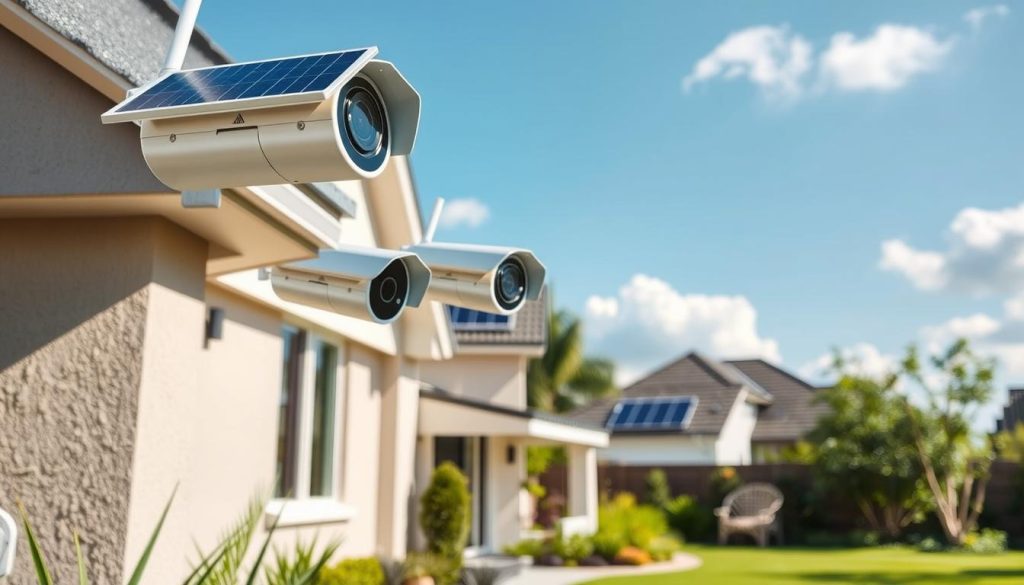
The Trend Towards Sustainable and Autonomous Security
Residential monitoring is shifting decisively toward energy independence. This movement reflects broader societal changes prioritizing environmental responsibility and operational resilience.
Modern guardianship solutions are becoming the standard for contemporary home protection. They represent more than just an alternative to wired setups.
These technologies address two critical future challenges simultaneously. First, they insulate your property from rising electricity costs that show no signs of slowing.
Second, they create infrastructure resilience against increasing grid instability. Weather events and urban demand strains make consistent power less certain.
Investing in photovoltaic-assisted monitoring today positions your home advantageously. You gain protection that becomes more valuable as conventional energy expenses climb.
The macro-trend favors decentralized, self-sufficient home technology. Your surveillance becomes part of this intelligent, sustainable ecosystem rather than a vulnerable dependency.
Upgradability and Compatibility with Emerging Tech
Modular design represents a crucial advantage for long-term value. You can replace individual components without overhauling your entire setup.
This approach lets you upgrade specific elements as technology improves. Swap out older photovoltaic panels for more efficient models when available.
Replace surveillance units with newer versions featuring enhanced capabilities. The core infrastructure remains functional while individual pieces evolve.
Compatibility with emerging smart home standards ensures continued integration. Protocols like Matter promise seamless communication between devices from different manufacturers.
Choosing brands with strong research and development commitments matters greatly. These companies actively ensure their products work with future platforms and devices.
Regular firmware updates play an essential role in maintaining relevance. They protect against new digital threats while adding functionality over time.
A well-maintained photovoltaic-assisted setup can gain capabilities through software alone, extending its useful life far beyond hardware limitations.
Near-future advancements will benefit early adopters significantly. Improved battery density promises longer operation between charges.
More efficient solar cells will harvest energy even in challenging light conditions. Enhanced artificial intelligence analytics will provide smarter, more contextual alerts.
These developments position your current investment to remain effective for years. You’re not just buying today’s technology but securing a pathway to tomorrow’s innovations.
The purchase transforms from a one-time expense into a long-term investment. It builds a secure, sustainable, and intelligent home ecosystem that grows with your needs.
This forward-looking approach delivers peace of mind that extends far into the future. Your property gains protection that adapts rather than becomes obsolete.
Taking the Next Step Toward Solar-Powered Security
Your journey toward sustainable home protection begins with a single, confident step forward. You now understand the key benefits: energy independence, cost savings, and uninterrupted monitoring.
Schedule a free site survey to get a customized plan. Explore 2024 Q3 promotions, including 0% financing for 12 months. This makes the transition more affordable.
For personalized advice, contact Wen Hong at +65 60135960. Consider testing your chosen setup in a less critical area first. Gain confidence before full deployment.
Choose suppliers with strong local support and warranty services. This ensures long-term reliability for your investment.
Take control of your property’s safety with modern, sustainable technology. Experience the empowerment and peace of mind it brings.
FAQ
How well do these cameras work during Singapore’s rainy season?
High-quality models are built for tough weather. They feature strong waterproof ratings, like IP65 or IP66, to handle heavy rain and high humidity. The integrated battery ensures recording continues even if the panel gets wet. For consistent charging, just wipe the surface dry when the storm passes.
Can I install one of these systems in a shaded area?
Yes, but placement is key. While direct sunlight is best, modern panels can charge with ambient light. For heavily shaded spots, consider a model with a detachable panel. You can mount the photovoltaic cell in a sunnier location and run a cable to the unit, ensuring it stays powered.
Do I need a strong WiFi signal for outdoor use?
A stable connection is essential for live viewing and smart alerts. For units far from your router, a WiFi extender can boost the signal. During setup, test the network strength at the camera’s location using your phone to avoid video lag or disconnection issues.
What happens at night or on very cloudy days?
These devices are designed for 24/7 operation. The internal battery stores energy from sunny periods for use at night or during overcast conditions. Most have excellent infrared night vision for clear low-light footage. Systems with efficient energy management can run for several days without direct sun.
Are there any ongoing subscription fees?
A> It depends on the brand. Some, like Eufy, offer free basic local storage. Others, such as Ring or Arlo, provide optional cloud plans for extended video history and advanced features. Always check the brand’s policy to understand if a monthly fee is required for the functionality you want.
How difficult is the setup process for a non-technical person?
Manufacturers prioritize user-friendly installation. Typically, you mount the bracket, attach the device, connect it to the mobile app, and join your home network. Many kits include all necessary hardware. Wireless design means no complex wiring, making it a straightforward DIY project for most homeowners.


