
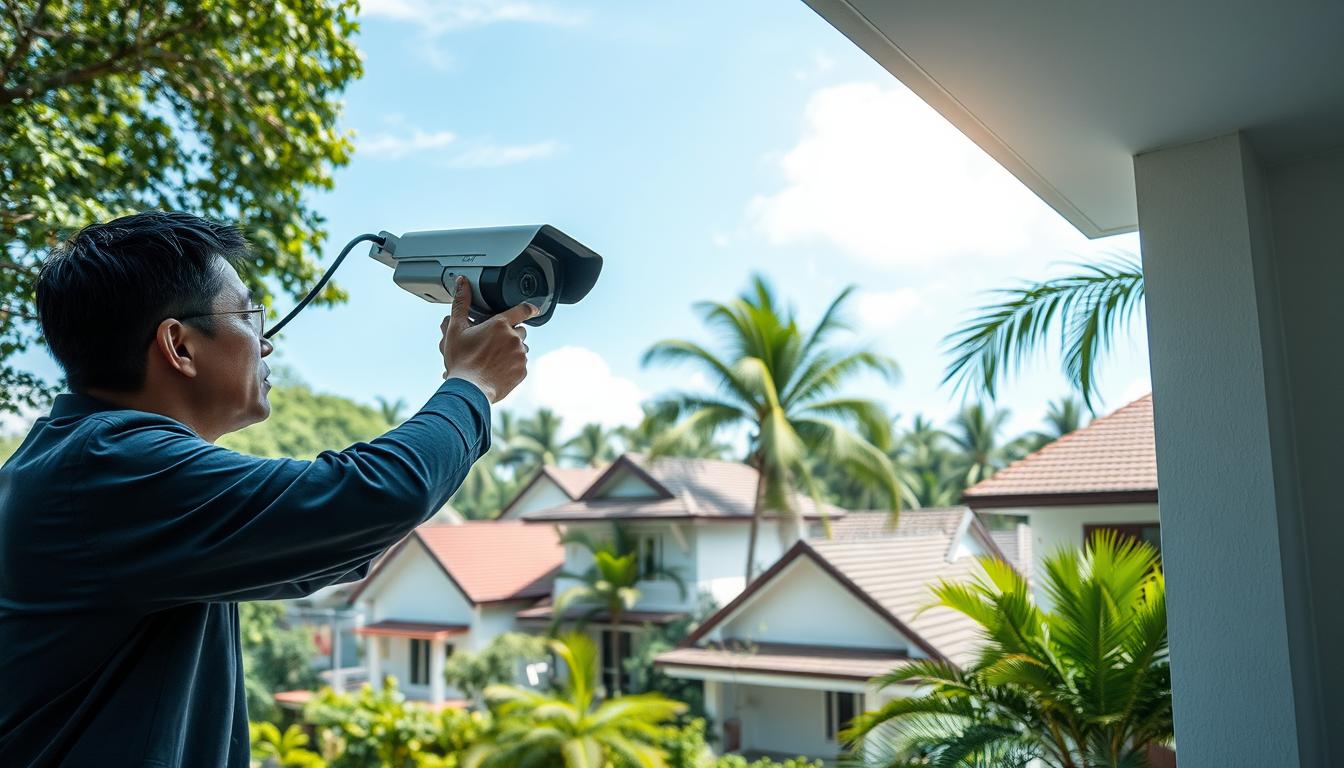
Is it legal to install CCTV outside my house in Singapore
In recent years, the adoption of CCTV cameras has surged in Singapore. With over one million cameras enhancing security in both residential and public areas, many homeowners are considering these devices for protection against theft and vandalism. The growing trend reflects a heightened awareness of safety and the desire to monitor family members or domestic helpers.
This article addresses a critical question: the legality of placing cameras around your home. The answer varies based on property type and adherence to local regulations. Recent updates, such as the May 2023 HDB policy change, have simplified the process for homeowners. However, compliance with privacy laws remains essential.
Improper installation can lead to penalties, including fines up to $5,000 or orders for removal. Understanding the Personal Data Protection Act and the Community Disputes Resolution Act is crucial for homeowners. This guide will explore the regulations governing CCTV in HDB flats, condominiums, landed properties, and business premises, ensuring a comprehensive understanding of compliant installation.
Professional installation services can help ensure adherence to these rules, minimizing disputes and maximizing security benefits. As you navigate this guide, remember that understanding local laws is vital for anyone considering outdoor surveillance.
Key Takeaways
- Residential CCTV adoption is rising due to security concerns.
- Legality varies based on property type and regulations.
- Over one million cameras operate in Singapore.
- Recent policy updates simplify installation processes.
- Privacy laws must be respected to avoid penalties.
- Understanding regulations is crucial for compliance.
Understanding the Legal Framework for Residential CCTV in Singapore
The legal landscape for residential CCTV in Singapore is complex yet essential for homeowners. This framework aims to balance the need for security with respect for individual privacy rights. Two primary laws govern the use of surveillance cameras: the Personal Data Protection Act (PDPA) and the Community Disputes Resolution Act (CDRA).
Role of the Personal Data Protection Act (PDPA)
The PDPA primarily regulates organizations and businesses. However, it does not restrict how individuals use CCTV footage captured for personal, non-commercial purposes. Under Section 21(3)(c) of the PDPA, homeowners can install cameras for personal use without adhering to strict data protection obligations. This exemption allows for greater flexibility in ensuring home security.
Nonetheless, if footage is shared publicly, homeowners must comply with data protection rules. While the PDPA mainly targets organizations, its principles can influence residential cases, especially when recordings capture public spaces.
Community Disputes Resolution Act (CDRA) and Neighbor Privacy
The CDRA plays a crucial role in preventing disputes between neighbors. It defines unreasonable surveillance as any monitoring that interferes with another person’s enjoyment of their property within a 100-meter radius. A “neighbor” includes anyone living in the same building or nearby.
Legal experts note that homeowners should avoid capturing private spaces, such as windows or balconies, to prevent privacy violations. Courts can impose compensation of up to $20,000 for breaches of privacy under the CDRA.
Key Differences Between Residential and Commercial Surveillance Laws
There are significant differences between residential and commercial surveillance laws. Businesses face stricter PDPA compliance requirements, including obtaining consent and notifying individuals about surveillance. In contrast, residential systems enjoy more leniency but must still respect neighbors’ privacy.
For instance, the 2022 AVS cat abuse case highlighted what constitutes unreasonable surveillance in residential contexts. Homeowners should test camera sightlines before permanent installation to ensure compliance with both PDPA principles and CDRA provisions.
Understanding this dual legal framework is essential for any homeowner planning to use CCTV cameras for security purposes.
Is it legal to install CCTV outside my house? Key Considerations
Understanding the legality of placing surveillance cameras at your residence is crucial for homeowners in Singapore. The answer varies significantly based on property type, camera placement, and compliance with local regulations. Each aspect plays a vital role in ensuring that you adhere to the rules while enhancing your security.
What Constitutes Private Property Surveillance
Private property surveillance primarily involves monitoring areas within your home, such as interior spaces, exterior walls, and garden areas. However, homeowners must be cautious when it comes to shared spaces like corridors or walkways. In HDB flats, strict regulations apply, requiring town council approval for any cameras facing common corridors.
Landed property owners enjoy more flexibility, but they must avoid pointing cameras at adjacent homes. This ensures that privacy rights are respected and potential disputes are minimized.
Restrictions on Monitoring Neighbors and Common Areas
When installing cameras, it’s essential to understand the restrictions on monitoring neighbors. The Community Disputes Resolution Act (CDRA) defines unreasonable surveillance as any monitoring that interferes with another person’s enjoyment of their property within a 100-meter radius. Cameras must not capture neighboring units’ doors, windows, balconies, or private activities, as this can lead to legal complications.
Unauthorized installations in common areas can result in fines of up to $5,000. Therefore, homeowners should always test camera sightlines before permanent mounting. This step helps ensure compliance with regulations and protects against potential disputes.
Compliance with Privacy and Data Protection Requirements
Even for residential systems, compliance with privacy and data protection requirements is paramount. Homeowners should consider proper signage, secure storage of footage, and limitations on audio recording. Theft deterrence remains the top reason for mounting cameras outside, but it’s crucial to balance security benefits against privacy trade-offs and potential hacking risks.
A notable example is the 2023 case of Ms. G, whose corridor-facing camera successfully captured a parcel thief. This incident underscores the importance of proper placement and approved permits to ensure that footage is admissible as evidence.
In summary, while outdoor surveillance is generally permissible, it requires careful planning and adherence to specific guidelines. This approach helps avoid legal complications and neighbor disputes while enhancing the security of your home.
Installing CCTV Outside HDB Flats: Rules and Guidelines
CCTV installation in HDB flats comes with a set of rules that homeowners must follow for compliance. Understanding these regulations is vital for ensuring both security and respect for privacy rights.
Town Council Approval and Police Report Requirements
For cameras outside the flat in common areas, Town Council approval is mandatory. Residents must file a police report documenting incidents like theft or vandalism that justify the need for surveillance. This report should be attached to the request sent via email to the relevant council.
In Ang Mo Kio Town, for instance, residents are required to point cameras only at their own property. They must avoid capturing common corridors without approval and remove devices if complaints arise. The Kio Town Council typically responds within 1 to 2 weeks regarding approval requests.
2023 HDB Corridor-Facing Camera Policy Updates
Since May 2023, owners of HDB flats no longer need prior approval to install CCTV cameras facing corridors from within their units. However, cameras must not point directly at neighbors’ doors or windows. This policy update aims to streamline the installation process while maintaining privacy standards.
Temporary Installation Permits and Renewal Process
Ang Mo Kio Town Council allows temporary setups for up to six months if residents can prove repeated thefts or vandalism. After this period, a fresh request must be submitted for renewal. It’s worth noting that only about 10% of outdoor setups meet the renewal criteria due to angle adjustments required by town councils during surprise checks.
Chua Chu Kang Town Council reserves the right to remove unauthorized devices within 24 hours. Residents must agree to remove cameras if neighbors file valid complaints, with non-compliance potentially leading to fines of up to $5,000.
Private balconies and front doors typically do not require permits. However, pointing devices at common walkways can trigger scrutiny and enforcement action. To avoid disputes, HDB residents should consult their specific town council’s guidelines before purchasing equipment, as requirements may vary slightly between different estates.
CCTV Installation Regulations for Condominium and Private Apartments
Navigating the rules for CCTV installation in condominiums requires careful attention to specific regulations. Unlike HDB residents, condominium dwellers operate under the Management Corporation Strata Title (MCST) bylaws, which often impose stricter limits on camera placement.
Management Corporation Strata Title (MCST) Bylaws
The MCST has the authority to regulate surveillance in common areas. This includes corridors, lift lobbies, swimming pools, gyms, and other shared facilities. Many bylaws prohibit devices that monitor these spaces without explicit approval.
A notable case in 2022, MCST Plan No. 3593, resulted in a $5,000 fine for unauthorized lobby surveillance. This precedent underscores the importance of adhering to established rules.
Approval Procedures for Common Areas and Camera Placement
Residents looking to install CCTV cameras must submit detailed justification forms, camera specifications, and coverage maps for MCST board review. Approval timelines typically average 3 to 4 weeks.
Many MCSTs now require infrared cameras that obscure faces beyond 10 meters. This measure helps balance security needs with privacy protections under Singapore law.
Handling Security and Privacy Conflicts in Condominiums
Nearly 90% of disputes arise from cameras capturing shared facilities like gyms or pools without proper signage or consent. Residents must be cautious to avoid conflicts.
A landmark ruling occurred when elevator footage was shared via WhatsApp, leading to significant penalties for unauthorized distribution. This highlights the need for careful management of surveillance footage.
Condo residents should review their specific MCST bylaws carefully. Rules may vary between developments, and obtaining written approval before installing any cameras outside their units is essential.
MCSTs also have the authority to conduct surprise inspections. They can mandate angle adjustments for non-compliant units and remove unauthorized systems after written warnings.
In conclusion, proper signage, neighbor notification, and adherence to MCST guidelines are crucial for maintaining security while respecting community privacy in condominium settings.
Guidelines for Installing CCTV on Landed Properties
Homeowners of landed properties in Singapore have significant flexibility when it comes to placing CCTV cameras. This advantage allows them to monitor various areas around their homes, including driveways, gardens, and exterior walls. However, certain rules and considerations must still be adhered to for responsible installation.
Permitted Camera Coverage and Boundary Restrictions
For landed property owners, the permitted camera coverage includes gate entrances facing inward, perimeter walls avoiding public sidewalks, and garage areas. However, it is crucial to ensure that cameras do not overlap with neighboring driveways or capture private spaces such as windows and balconies. Fence-mounted devices must point inward toward the owner’s property to comply with regulations.
Community Disputes Resolution Act Impact within 100-Meter Radius
The Community Disputes Resolution Act (CDRA) plays a vital role in monitoring surveillance practices. Landed property owners must be cautious not to interfere with their neighbors’ enjoyment of their property. The CDRA applies within a 100-meter radius, meaning that any intrusive surveillance can lead to disputes.
In the notable 2021 Boon Lay case, footage from a landed property’s fence line was validated as evidence in a cat abuse incident. This case underscores the importance of properly positioned cameras to avoid legal complications.
Best Practices for Minimizing Neighbor Privacy Concerns
To minimize privacy concerns, homeowners should maintain a 15-degree buffer zone when positioning cameras near shared boundaries. Utilizing land survey maps can help clarify exact property lines, ensuring compliance with the law. Proactive communication with neighbors is essential, as the Community Mediation Centre handles 72% of surveillance-related cases before they escalate to court.
Additionally, homeowners should consider technical features such as anti-glare capabilities to prevent light pollution complaints and infrared settings for nighttime clarity without bright LEDs. Even in cases like the 2023 hornbill nesting incident, careful angle adjustments are necessary to avoid capturing neighboring properties.
In conclusion, while landed properties face fewer restrictions regarding CCTV installation, responsible placement and open communication with neighbors remain crucial. This approach helps avoid community disputes and potential claims under the CDRA.
Legal Use and Limitations of Smart Doorbells and Peephole Cameras
Digital door viewers and smart doorbells are becoming essential tools for modern home security. These devices offer convenience and surveillance capabilities that appeal to many homeowners. Popular brands like Ring and Xiaomi are leading the market in Singapore.
The HDB’s stance on digital door viewers is quite accommodating. Residents can install these devices inside their flats without needing prior approval. However, if homeowners wish to place smart doorbells in common areas, they must seek permission from the Town Council.
For instance, the Ang Mo Kio Town Council has confirmed that approval is necessary for both CCTV cameras and smart doorbells installed in common property areas. On the other hand, peephole cameras mounted on doors are considered part of the private unit, thus requiring no Town Council approval.
Audio recording features in these devices come with restrictions. Singaporean laws prohibit capturing private conversations without consent. Therefore, homeowners should disable audio recording features to avoid potential legal complications.
Cloud storage is another area of concern. WiFi-enabled models must ensure data encryption to protect personal data. Regularly deleting stored footage is advisable to enhance data security.
A notable case in 2023 highlighted the evidentiary value of digital door viewers. Footage from a door viewer helped identify a shoe thief who stole limited-edition Vans sneakers. This incident underscores the importance of proper configuration and compliance with regulations.
For privacy protection, homeowners should consider the following tips:
- Use motion zones to limit the recording range.
- Disable audio recording features to prevent unauthorized capture.
- Ensure infrared sensors automatically disable when doors open.
- Avoid making permanent modifications to HDB property.
Additionally, devices must limit viewing angles to private door frames. Capturing common corridor activities could lead to complaints and enforcement actions from the Town Council.
In conclusion, homeowners should review their specific Town Council’s guidelines. Rules may vary slightly between different councils, and prioritizing neighbor privacy is essential when configuring smart security devices.
How to Obtain Town Council or MCST Approval for Outdoor CCTV
Acquiring approval from the Town Council or MCST is essential for homeowners wishing to enhance their security with outdoor CCTV. The process typically involves three key steps that ensure compliance with local regulations.
Step 1: Filing a Police Report
The first step is filing a police report. This report should document specific incidents such as theft, vandalism, or harassment, including exact dates. Town Councils require this evidence before considering installation requests. Notably, SafeTrolley receives 70 to 90 inquiries monthly about HDB installation procedures, with incomplete reports being the top reason for rejection.
Step 2: Submitting Installation Requests and Documentation
Next, homeowners must submit their installation requests via email to the relevant Town Council. This request should include the police report, camera placement diagrams showing no coverage of neighboring properties, and signed consent forms for shared wall mounts. According to First Solution Group, over 500,000 successful installations have followed this workflow. Approval timelines typically range from 1 to 2 weeks, depending on the district.
Step 3: Temporary Installation Duration and Compliance Monitoring
Finally, understanding the temporary installation duration is crucial. Town Councils grant approval for up to six months only. After this period, residents must submit a fresh request for renewal if they still need the cameras. I-Secure Solutions notes that only 10% of outdoor setups meet renewal criteria due to required angle adjustments. Compliance monitoring is also vital, as Town Councils conduct surprise checks to ensure cameras do not capture prohibited areas. Unauthorized devices may be removed within 24 hours.
For condominium residents, the MCST approval process typically requires submission of camera angle diagrams, a board review period of 2 to 4 weeks, and signage notifying residents of recording zones. Homeowners should begin the approval process before purchasing equipment to avoid compatibility issues and ensure a smooth installation experience.
Best Practices for CCTV Placement and Usage to Avoid Legal Issues
Effective placement of CCTV cameras is essential for maximizing security while minimizing legal risks. Homeowners should adopt strategic techniques to ensure compliance with local regulations and maintain good neighbor relations.
Strategic Camera Positioning and Angle Adjustments
When installing CCTV, consider positioning cameras at a minimum height of 10 feet. This elevation helps prevent tampering while still capturing clear facial images. Additionally, a 45-degree downward tilt can enhance facial recognition and reduce glare.
It’s crucial to avoid capturing neighbors’ private spaces. Maintain a 15-degree buffer zone near shared boundaries and use privacy masking for sensitive angles. These adjustments can help prevent disputes and ensure compliance with local rules.
Lighting, Weatherproofing, and Technical Considerations
Lighting plays a significant role in camera performance. Infrared-capable models excel in low-light conditions, making them ideal for areas like parking lots. Furthermore, anti-glare features can mitigate light pollution complaints from neighbors.
Weatherproofing is vital in Singapore’s tropical climate. Ensure that cameras have IP66+ rated housing to withstand humidity and rain. Regular maintenance checks are also essential for keeping cameras aligned and functional.
Consider using motion sensors that activate recording only when movement is detected. This feature conserves storage space and ensures relevant footage is captured. I-Secure Solutions reports that these best practices lead to successful installations and fewer disputes.
Signage, Neighbor Notification, and Transparency Measures
Clear signage indicating monitoring areas is essential, especially in semi-public spaces. Homeowners should notify neighbors about camera placements and share coverage maps. This transparency fosters good relationships and often leads to cooperative security arrangements.
In conclusion, following these best practices not only maximizes security benefits but also significantly reduces the risk of legal issues and community disputes. For optimal results, consider professional installation services that can handle proper cable management and system integration.

Penalties and Enforcement for Non-Compliant CCTV Installations
Homeowners in Singapore must be aware of the consequences of non-compliant CCTV installations. The legal framework surrounding these devices includes strict penalties that can significantly impact residents.
Town Councils can impose immediate $5,000 fines for unauthorized cameras in HDB common areas. If these devices are not removed within 24 hours of notice, they may be confiscated. In 2023, residents in Ang Mo Kio faced 47 such penalties, highlighting the enforcement of these rules. Additionally, repeat offenders may incur cumulative fines; for instance, a homeowner in Woodlands paid $15,000 after three violations.
Fines and Removal Orders from Town Councils
First-time offenders typically receive warnings, allowing a 14-day correction period before financial penalties are enforced. This approach provides an opportunity for voluntary compliance. However, failure to correct violations can lead to significant fines and removal orders.
Criminal Liabilities under PDPA and CDRA
Under the Personal Data Protection Act (PDPA), unauthorized commercial surveillance can result in severe penalties. Offenders may face fines of up to $10,000 or imprisonment for up to three years for deliberate privacy breaches. The Community Disputes Resolution Act (CDRA) also imposes penalties, including compensation orders of up to $20,000 for interfering with a neighbor’s enjoyment of their property.
A notable ruling in 2022 from Toa Payoh prohibited a resident from installing any cameras for five years after repeated corridor violations. This case illustrates the serious consequences of persistent non-compliance.
Appeals Process and Legal Remedies
For those facing penalties, the appeals process involves submitting evidence to the Community Disputes Resolution Tribunal within 14 days of receiving a penalty or enforcement order. A licensed security service provider can assist in contesting improper penalty assessments by providing technical reports that demonstrate compliance with placement guidelines.
The MCST Plan No. 3593 establishes that even accidentally capturing neighbors’ private spaces constitutes an offense if left uncorrected after notification. Understanding these rules is essential for homeowners to avoid costly legal entanglements. Proper installation and adherence to regulations can prevent disputes and ensure a secure environment.
Business CCTV Installations: Additional PDPA Compliance Requirements
Setting up CCTV cameras for businesses involves a more stringent set of regulations compared to residential installations. Organizations must fully comply with Singapore’s Personal Data Protection Act (PDPA) when collecting, using, or disclosing footage that can identify individuals. This compliance is crucial to avoid potential legal issues.
Key obligations under the PDPA include:
- Consent Obligation: Organizations must obtain or be deemed to have obtained consent from individuals before collecting their personal data through surveillance. Implied consent is often achieved through clear signage at monitored premises.
- Notification Obligation: Businesses must inform individuals of the purposes for collecting surveillance data. This is typically done through conspicuous signs stating, “This area is monitored by CCTV for security purposes,” along with contact details of the data protection officer.
- Reasonable Purposes Requirement: Surveillance must be for purposes a reasonable person would consider appropriate. Coverage should be proportionate to the legitimate business need without extending excessively beyond the premises.
Furthermore, it is essential to distinguish between public and non-public areas:
- The PDPA offers limited exemptions for public spaces, such as shopping malls and retail stores.
- Stricter compliance is required for non-public areas, such as offices with keycard entry or staff-only sections.
Data retention is another critical aspect. Organizations must not keep CCTV footage longer than necessary. They should create a data retention policy outlining how long footage will be kept and the reasoning behind it. Additionally, under Sections 21 and 22 of the PDPA, individuals have the right to access footage containing their personal data. Organizations are required to respond to these requests within a reasonable timeframe.
Effective footage management practices include:
- Using masking or blurring techniques to hide third-party identities when fulfilling access requests.
- Securely deleting footage once its original purpose has been fulfilled.
It is crucial to note that CCTV cameras must never be installed in private or sensitive areas, such as toilets or changing rooms. Doing so could lead to criminal charges for outrage of modesty or voyeurism.
In conclusion, businesses should consult legal professionals and implement comprehensive data protection policies. This approach ensures full PDPA compliance and helps avoid financial penalties or enforcement action by the Personal Data Protection Commission.
DIY versus Professional CCTV Installation: Legal and Practical Considerations
When considering CCTV options, homeowners must weigh the pros and cons of DIY installations versus hiring professionals. Understanding the legal framework is crucial, as regulations can significantly impact your installation choices.
Licensing Requirements under the Private Security Industry Act
According to the Private Security Industry Act, anyone who wishes to install CCTV cameras must hold a valid Security Service Provider license. This requirement means that homeowners cannot legally install CCTV cameras on their own unless they are licensed. The Police Licensing & Regulatory Department (PLRD) mandates that all security service providers obtain PSIA certification.
Licensed technicians must complete 160 hours of accredited training, pass background checks by the Criminal Investigation Department, and attend annual refresher courses on privacy laws. A 2023 PSIA study revealed that 45% of homeowners are unaware of these licensing requirements, highlighting a significant knowledge gap that can lead to unintentional violations.
Risks of Unlicensed Installations and Insurance Implications
Opting for unlicensed installations carries serious risks. For instance, First Solution Group notes that such installations can void equipment warranties. Additionally, improper mounting or wiring can lead to denied insurance claims for property damage.
DIY mistakes may also result in neighbor disputes over miscalculated camera angles. Furthermore, data breaches from insecure configurations can lead to legal complications. Compliance with technical standards is essential, as violations may result in fines or removal orders.
Advantages of Hiring Certified Security Service Providers
Hiring certified security service providers offers numerous advantages. Professionals ensure proper cable management with concealed wiring, optimal camera angles that avoid private spaces, and system integration with 24/7 monitoring options. Notably, professional installers prevent 80% of common compliance issues seen in residential cases, according to industry data.
They also provide maintenance contracts for long-term reliability. It’s important to note that commercial properties with more than eight cameras must use licensed installers per PSIA guidelines. Residential systems monitoring common areas also fall under this rule.
Homeowners should verify the credentials of any security service provider before engagement. Ensure they hold valid PSIA licenses and have experience with residential installations. While professional installation may involve higher upfront costs, it provides legal protection, technical expertise, and peace of mind that outweigh the risks associated with DIY approaches.
Handling Neighbor Privacy Concerns and Community Disputes
Respecting neighbor privacy is a vital aspect of using surveillance technology effectively. Homeowners must navigate the legal thresholds that define reasonable surveillance scope. This ensures that the use of CCTV cameras does not infringe on the rights of others.
Legal Thresholds for Reasonable Surveillance Scope
The Community Disputes Resolution Act (CDRA) outlines that unreasonable monitoring occurs when recordings interfere with a neighbor’s enjoyment of their property. Courts evaluate factors such as camera direction, coverage area, and recording duration. For instance, in a notable 2023 Woodlands case, a resident was mandated to remove devices that captured footage of a neighbor’s prayer room, highlighting the importance of respecting privacy.
Conflict Resolution through Mediation and the Community Disputes Resolution Tribunal
When disputes arise, the Community Mediation Centre plays a crucial role in resolving conflicts. Most surveillance-related cases are handled within three sessions, often leading to agreements on camera repositioning and audio recording limitations. The Community Disputes Resolution Tribunal can issue orders for compensation up to $20,000, camera removal, or adjustments to installations. A mandatory 14-day cooling-off period allows both parties to reflect before proceeding.
Technical Solutions to Prevent Privacy Violations
To mitigate privacy concerns, homeowners can implement several technical solutions. For example, angle adjustments can resolve 78% of community disputes. Common strategies include 10-degree inward tilts and installing physical barriers to control sightlines. Privacy filters that blur specific zones while maintaining security coverage are also effective. Additionally, using motion-activated recording helps avoid capturing passersby unnecessarily, while infrared settings can prevent nighttime glare complaints.
Proactive communication with neighbors is essential. Sharing camera coverage maps and notifying them about recording zones can prevent conflicts before they escalate. The CDRA provides mediation frameworks for neighbor negotiations, allowing most cases to be resolved without court intervention when both parties engage in good faith discussions.
Homeowners should document all communication regarding surveillance concerns. If direct discussions prove unsuccessful, considering professional mediation services may be beneficial. Ultimately, respecting neighbor privacy is not only a legal obligation but also crucial for maintaining community harmony and avoiding costly legal proceedings.
Emerging Trends and Future Outlook for Home Surveillance in Singapore
The landscape of home surveillance technology is rapidly evolving in Singapore. Innovations like AI-powered cameras and advanced motion detection are enhancing security measures. Industry experts anticipate stricter regulations for these technologies by 2025, ensuring compliance with data protection standards.
Following the 2023 policy changes, there has been a notable 33% increase in security equipment sales. Additionally, HDB flats with compliant systems are seeing a 2-3% rise in property value. Town Councils are actively enforcing rules, resolving privacy complaints within 14 working days.
As technology advances, the importance of cybersecurity grows. Homeowners must be vigilant against potential threats while adopting privacy-enhancing features like automatic face blurring. Staying informed about regulations is crucial for balancing security and privacy in today’s surveillance landscape.
FAQ
What are the key legal considerations for installing surveillance cameras at home?
Homeowners must comply with the Personal Data Protection Act (PDPA) and respect neighbor privacy while ensuring cameras do not infringe on common areas.
Do I need permission from the town council for outdoor camera installation?
Yes, obtaining approval from the local town council is necessary, especially for installations that may affect public spaces or neighbor privacy.
What are the penalties for non-compliance with CCTV regulations?
Non-compliant installations can result in fines, removal orders from the town council, and potential criminal liabilities under the PDPA.
How can I minimize neighbor privacy concerns when installing cameras?
Position cameras strategically, avoid capturing neighbor properties, and notify them about the installation to foster transparency and trust.
Are there specific guidelines for installing cameras on HDB flats?
Yes, residents must adhere to the HDB corridor-facing camera policy and seek necessary approvals before installation.
What should I do if I have a dispute with a neighbor regarding my camera installation?
Consider mediation through the Community Disputes Resolution Tribunal to resolve conflicts amicably and legally.
What are the requirements for installing cameras in condominiums?
Residents must follow Management Corporation Strata Title (MCST) bylaws and seek approval for camera placement in common areas.
Can I record audio with my surveillance cameras?
Recording audio may violate privacy laws; ensure compliance with PDPA rules regarding audio recording and data protection.
What are the advantages of hiring professional security service providers for CCTV installation?
Certified providers ensure compliance with legal requirements, reduce risks associated with unlicensed installations, and offer technical expertise.
How can I obtain approval for my outdoor camera installation?
File a police report, submit necessary documentation, and comply with any temporary installation requirements set by the town council or MCST.


