
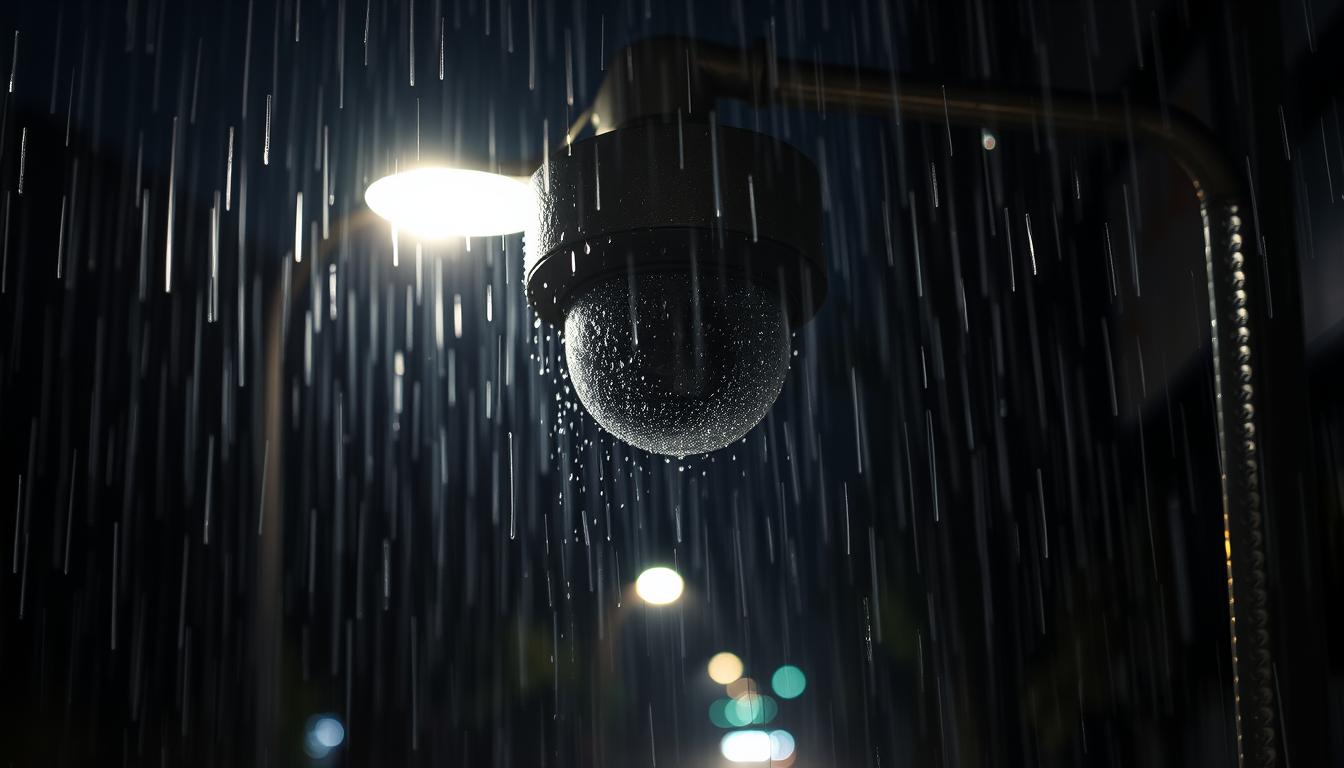
How do I stop my CCTV from picking up rain?
Rain can really mess up outdoor CCTV systems, causing unwanted alerts. This CCTV rain interference happens when rain droplets set off motion detection. Cameras like the VIGI C340HPWSM and Tapo C200 then send out constant notifications. This problem gets worse at night, when infrared sensors are already on.
To deal with this outdoor cameras rain issue, we have some practical solutions. These tips will help you avoid the trouble of getting alerts from your security camera rain detection.
It’s key to figure out how to stop your CCTV from detecting rain. With the right tweaks, you can make your outdoor surveillance better. Alerts will only go off when there’s a real security threat, not just because of the weather. Our guide is here to help solve these problems and make your CCTV system work better. For more tips on improving your surveillance, check out this resource on CCTV systems.
Key Takeaways
- CCTV rain interference can lead to unnecessary alerts.
- Models like VIGI C340HPWSM and Tapo C200 are susceptible to false motion detection.
- Rain droplets can activate infrared sensors, specially at night.
- Practical solutions can help stop CCTV from detecting rain.
- Adjustments improve the effectiveness of outdoor cameras.
- Understanding motion detection helps in optimizing alerts.
Understanding Motion Detection in CCTV Cameras
CCTV motion detection is key to keeping places safe. It works by looking at changes in camera frames. When something moves, it changes the image, and the system notices this.
Even small things like raindrops or insects can cause these changes. This means a small movement can sometimes trigger false alarms. It’s important to know this to avoid unnecessary alerts.
How do I stop my CCTV from picking up rain?
CCTV systems can sometimes think rain is movement, causing unwanted alerts. To stop CCTV rain detection, you need to adjust some settings. Start by making the camera’s motion sensitivity lower. This helps avoid rain alerts and minimizes rain alerts.
Also, think about where you place your CCTV camera. Putting it under eaves or in a spot not hit by rain can help. Adjusting the tilt and angle ensures it sees what’s important without rain interference.
Using advanced tech like PIR (Passive Infrared) sensors can also help. These sensors are better at spotting real movement, not rain. Adding these features and following CCTV adjustment tips can make your system work better in any weather.
Adjusting Camera Sensitivity Settings
Getting your camera sensitivity right is key for good surveillance. The right camera sensitivity adjustment makes your CCTV system work better. It helps cut down on false alerts, like those from rain.
Finding the perfect sensitivity is important. It keeps your surveillance working well and reduces false alerts.
Lowering Detection Sensitivity
Lowering your camera’s sensitivity helps reduce false alerts from things like rain. A high sensitivity can make the camera too sensitive to small movements. This leads to lots of false alarms.
Lowering sensitivity can make alerts better, but it’s important to know how it affects detection. You don’t want to miss real movements.
Effect on Real Motion Detection
Adjusting sensitivity can help reduce false alerts, but it might affect real motion detection. Lower sensitivity means the camera might miss small movements. This could be people walking by or animals in the area.
Finding the right balance is key. You want to keep motion detection accurate but avoid too many false alerts.
Defining Activity Zones for Your CCTV
Setting up specific activity zones in your CCTV camera’s view is key to better alert accuracy. By doing this, you can make sure motion detection only catches what’s important. This helps avoid false alarms from rain and wind.
Setting Up an Activity Zone
To start setting up detection zones, go to the camera’s settings and find the activity zone section. Here’s what you need to do:
- Pick the area you want to watch closely within the camera’s view.
- Draw the boundaries of the zone, leaving out areas with unwanted movement.
- Change the size and shape of the zone as needed for your monitoring needs.
- Check and save your changes to make the new setup active.
This careful setup makes your system better at catching important movements. It also cuts down on distractions from the environment.
Using Object Classification Features
Modern security systems now use CCTV object classification features. These systems can tell the difference between people, cars, and animals. This helps them spot important events and avoid false alarms, even in rainy weather.
With CCTV object classification, you can ignore small movements. This means you only get alerts when something important happens. It makes watching over your area much easier and more focused.
Object classification in CCTV tech boosts security and cuts down on false alarms. It saves time and effort. So, it’s key to pick systems with this feature for better surveillance.
Adjusting Camera Placement and Angle
Proper CCTV camera installation needs careful thought on placement and angle. The right adjustments can greatly improve performance. They also help avoid problems from rain and other environmental factors. Here are some guidelines for the best placement to get the best surveillance results.
Best Installation Practices
To get the most out of camera monitoring, follow these best placement practices:
- Place the camera under eaves or awnings to keep it dry.
- Use mounts that let you adjust the angle. This helps avoid water buildup.
- Install cameras high up for better views and less chance of damage from debris.
Avoiding Busy Areas
It’s smart to avoid busy spots or areas with lots of light changes. Changing the camera’s focus can cut down on false alerts from:
- People or cars moving and triggering recordings.
- Shadows that confuse the motion detection system.
- Leaves or animals that mess with steady surveillance.

Implementing PIR Sensors for Best Results
Adding a CCTV PIR sensor to your system can make a big difference. These sensors use infrared to spot heat from living things. This is super useful in many places.
Unlike regular cameras, PIR sensors don’t get fooled by rain or wind. This means fewer false alarms. It helps keep your system working smoothly.
PIR sensors help cut down on false alarms. This lets you focus on real security issues. It’s really helpful in places like Singapore, where the weather can be unpredictable.
When you’re setting up a new security system, look for ones with PIR sensors. Brands like Hikvision and Dahua have good options. They make your system work better and are easy to use. You might also want to check out solar-powered WiFi CCTV cameras for even better results.
Upgrading Your CCTV System
Thinking about upgrading your CCTV system can really boost your property’s security. Older systems might not have the latest features for good surveillance. Look for CCTV upgrade options with advanced CCTV technology for better motion detection and camera quality.
New systems tackle issues like rain interference. Brands like VIGI and Tapo make outdoor use systems. They are weatherproof and can tell different movements apart. This reduces false alarms from rain or other weather.
Upgrading your tech improves camera performance and your security plan. These new systems offer reliable monitoring, even in bad weather. This gives you peace of mind.
Weatherproofing Your CCTV Setup
Keeping your CCTV system ready for bad weather is key to its long life and good performance. A smart move is to get protective housing for your cameras. These enclosures keep rain and moisture out, so your cameras work well no matter the weather. Make sure the housings are made for outdoor use and stop water from getting inside.
Installing canopies or overhangs over your cameras is also a good idea. They block rain and reduce glare from the sun. This is a great way to protect your cameras from both rain and sunlight.
Choose CCTV cameras that can handle bad weather, like those rated IP66 or higher. These cameras are built to stand up to rain, dust, and more. By using these weatherproofing tips, your CCTV system will keep working well, giving you peace of mind in any weather in Singapore.
FAQ
How does rain affect my CCTV motion detection?
Rain can cause your CCTV system to send out false alerts. This happens because rain changes the video feed, making the camera think there’s movement. This issue is worse at night when infrared sensors are on.
What can I do to minimize false alerts caused by rain?
To cut down on false alerts, you can tweak your camera settings. Try adjusting sensitivity, setting up specific activity zones, and placing cameras wisely. You might also want to look into newer models with better features like PIR sensors and object classification.
How do I adjust the sensitivity settings on my CCTV system?
To change sensitivity, go to your camera’s settings through the app or software. Lower the motion detection sensitivity. But be careful not to make it too low, or you might miss real alerts for people or animals.
What are activity zones and how do I set them up?
Activity zones let you choose areas in your camera’s view that will trigger alerts. By setting up these zones to ignore areas with lots of movement, like rain or busy streets, you can make alerts more meaningful.
How can object classification features improve my CCTV’s performance?
Object classification lets your CCTV system tell apart humans, animals, and other objects. This means it can cut down on false alerts from rain or other unwanted movements.
What are the best practices for camera placement?
When setting up your CCTV, aim for angles that avoid rain and other environmental issues. Try to point cameras away from busy spots or areas with changing light, which can lead to false alerts.
What advantages do PIR sensors offer for CCTV systems?
PIR sensors detect motion based on heat from living things, not visual changes. This helps reduce false alerts from rain or wind, making your surveillance more reliable.
When should I consider upgrading my CCTV hardware?
Think about upgrading if your system often sends out false alerts, isn’t weatherproof, or can’t tell different types of motion apart. Look for newer models, like those from VIGI and Tapo, that are better at outdoor security.
How can I weatherproof my CCTV setup?
To weatherproof your CCTV, use protective housing, install canopies, and pick cameras that can handle the weather. This makes your system last longer and work better, even in rainy conditions.


