
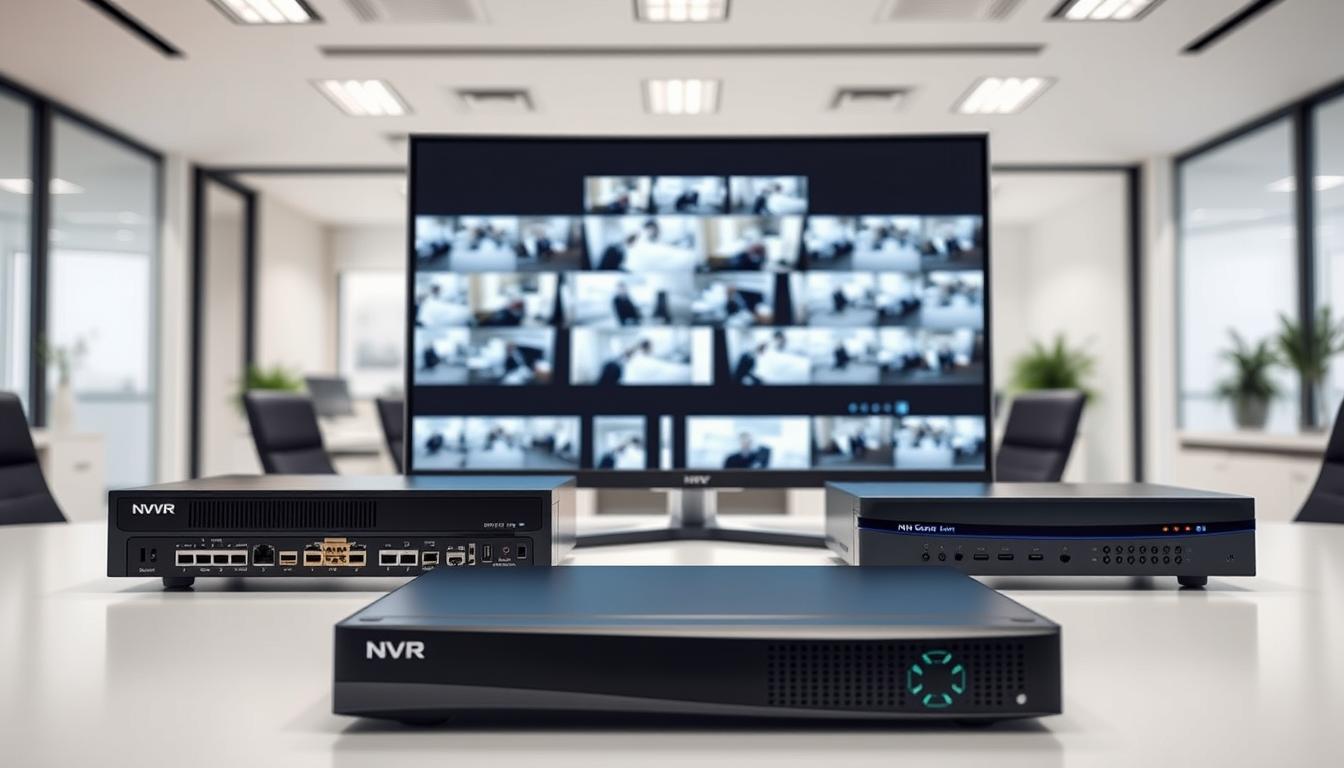
DVR vs. NVR: Understanding the Key Differences
Video surveillance plays a critical role in modern security for both businesses and homes. These systems help deter crime and provide vital evidence. Choosing the right setup is essential for effective protection.
Digital Video Recorders (DVRs) and Network Video Recorders (NVRs) are the two primary recording solutions available today. Both record video footage onto a hard drive. Their core design and implementation, however, vary significantly.
Understanding the distinctions between these technologies is crucial for an informed purchase. Key areas of comparison include camera types, installation methods, and overall system cost. This knowledge ensures you select a system that matches your specific security needs.
In Singapore, where property safety is a top priority, adoption of these security systems is growing. This guide provides a clear, side-by-side analysis. We will draw on expert sources and current market data for accurate information.
Key Takeaways
- Video surveillance systems are vital for deterring crime in both residential and commercial settings.
- DVR and NVR systems are the two main types of video recorders used today.
- While both record footage to a hard drive, they use fundamentally different technologies.
- The choice impacts the type of cameras you can use, the installation process, and the total cost.
- Making an informed decision requires understanding these key technical and practical differences.
- This comparison will cover camera compatibility, cabling requirements, and video quality.
- The right system enhances security and provides peace of mind for property owners in Singapore.
Introduction to DVR and NVR Security Systems
At the heart of every reliable security camera setup lies a critical piece of hardware: the video recorder. This device is the central hub for your entire surveillance operation. Two primary technologies dominate this space: the Digital Video Recorder (DVR) and the Network Video Recorder (NVR).
Both types of recorders share a common mission. They capture, store, and manage the footage from your cameras. Their methods for accomplishing this task, however, are built on different technological foundations.
Your choice between these two paths shapes everything from camera selection to installation complexity. Understanding their basic roles is the essential first step in planning an effective security system.
The Role of Recorders in Modern Surveillance
A recorder does much more than just save video. It acts as the brain of your security camera network. Its core functions are encoding, storage, and providing access.
First, it processes raw video data into a storable digital format. Then, it archives this footage onto an internal hard drive for later review. Finally, modern units allow for remote viewing via smartphones or computers.
This capability turns a simple camera into a powerful monitoring tool. You can check on your property from anywhere with an internet connection. Reliable recording is what transforms live video into usable evidence and a deterrent.
Defining the Scope: DVR and NVR in Singapore’s Security Landscape
In Singapore’s dense urban environment, property security is a top concern for homeowners and businesses alike. High-rise HDB flats, condominiums, and commercial shophouses all benefit from vigilant surveillance. The choice between DVR and NVR systems often hinges on local factors.
DVR setups represent a traditional, wired approach. They use analog cameras connected via coaxial cables. This makes them a common sight in older installations or buildings with existing coaxial infrastructure.
NVR systems embody a modern, network-based philosophy. They utilize digital IP cameras that transmit data over Ethernet cables or Wi-Fi. This aligns well with Singapore’s advanced digital connectivity and newer building developments.
The right security system is not just about the hardware; it’s about how it integrates with your life and property.
Local considerations like building age, available wiring, and internet stability can influence your decision. For a deeper dive into the technical specifics that will guide your choice, explore this detailed technical comparison. Grasping these two core system types is the fundamental step toward securing any space effectively.
What is the Difference Between DVR and NVR? The Core Technology
One critical technical distinction separates DVR from NVR: the location of video encoding. This fundamental choice defines each setup’s capabilities and limitations.
Think of it as a question of intelligence. Does the smart processing happen in a central box, or is it distributed out to each individual eye?
This architectural decision influences everything from camera compatibility to future expansion. Understanding it is key to selecting the right security solution.
DVR: Processing Video at the Recorder
In a digital video recorder setup, the recorder itself is the brain. Analog cameras capture a raw video signal.
This unprocessed footage travels via coaxial cable to the central unit. Inside the DVR, a specialized AD encoder chip converts the analog data.
It transforms the signal into a storable digital format. All the heavy computational lifting occurs at this single point.
An analogy helps. A DVR system is like a central kitchen. Individual stations (cameras) send raw ingredients (analog signals) to the main chef (the recorder) to be cooked (encoded).
The cameras are simpler, but the entire system relies on that one kitchen. If the recorder fails, processing stops.
NVR: Processing Video at the Camera
A network video recorder operates on a different principle. Here, intelligence is built into each camera.
Modern IP cameras contain their own processing chipset. They capture and encode video data internally into a digital packet.
This pre-processed data is then transmitted over a standard network cable. The NVR’s primary role is storage and remote access management.
Using our analogy, an NVR system receives pre-cooked meals. Each smart kitchen (IP camera) prepares its own dish and sends it ready-to-serve.
This distributed approach offers distinct advantages. It reduces strain on the central unit and allows for more flexible network design.
The core technology difference has real-world impacts. Because NVR cameras handle encoding, they typically support higher resolutions and advanced compression.
System scalability also changes. Adding cameras to an NVR setup is often simpler, as each device is intelligent and network-aware.
Reliability models differ too. In a DVR configuration, the recorder is a potential single point of failure for processing. In NVR systems, if the recorder fails, cameras continue to encode and can often record to other network storage.
This foundational choice between centralized and distributed processing shapes your security system’s future. It affects upgrade paths, image clarity, and overall system resilience.
Camera Compatibility: Analog vs. IP Cameras
Camera compatibility forms the first major practical divide between DVR and NVR setups. Your recorder choice determines the specific type of eyes you can deploy. This is not a minor detail but a foundational system constraint.
Each technology is designed for a distinct camera family. Mixing them natively is typically impossible without add-on converters. Understanding this lock-in is crucial for planning your security investment.
DVR Systems and Analog CCTV Cameras
Digital video recorder setups are exclusively paired with analog CCTV cameras. These cameras represent a mature and widely adopted technology. They are known for their reliability and straightforward operation.
Analog cameras capture a raw video signal. This unprocessed footage travels directly to the central DVR unit via coaxial cable. All the complex encoding happens inside the recorder itself.
A key advantage here is cost. Analog cameras are generally more affordable upfront than their digital counterparts. They offer a proven track record for basic surveillance needs.
This ecosystem is also relatively brand-agnostic. Most analog CCTV cameras will work with most DVRs, simplifying replacements. However, this simplicity comes with limitations in advanced features.
NVR Systems and IP (Internet Protocol) Cameras
In contrast, network video recorder systems are built for modern IP cameras. Each IP camera is a sophisticated computing device. It contains its own video encoder and processing chip.
These cameras capture and compress video data internally. They then transmit the digital stream over a standard Ethernet network. This distributed intelligence unlocks superior capabilities.
IP cameras routinely support higher resolutions, like 4K or 5MP. They often include built-in microphones for audio recording. Their digital nature enables powerful analytics, such as people counting or object detection.
“IP cameras don’t just see; they understand. This intelligence transforms passive recording into an active security tool.”
The compatibility equation changes here. While ONVIF standards help, seamless integration often requires matching brands. An NVR may not support all features from a third-party IP camera.
This lock-in has significant implications. You cannot simply plug an analog camera into an NVR, or vice versa. Upgrading from an analog to an IP system usually means replacing both cameras and the recorder.
For property owners in Singapore, this choice impacts identification clarity. High-resolution IP cameras excel in varied lighting, crucial for detailed evidence. The demand for clear footage in bustling HDB corridors or dimly lit car parks often leans toward digital IP solutions.
Your camera selection ultimately defines your system’s potential. It affects image detail, feature set, and future expansion paths. Choose the eye that matches not just your budget, but your security vision.
Cabling, Power, and Installation Compared
The physical wiring of your security system forms its backbone. It directly impacts installation complexity and long-term reliability. Your choice between a DVR or NVR setup dictates the entire cabling infrastructure.
This involves the types of cables used, how power is delivered, and the overall effort required for setup. In Singapore’s diverse properties, from heritage shophouses to new condos, these practical factors are crucial.
DVR: Coaxial Cables and Separate Power
DVR systems rely on traditional coaxial cables for video transmission. These are the same thick, round cables often used for television signals. Each camera must connect to the recorder using this dedicated line.
A significant drawback is that coaxial cables only carry the video signal. They do not provide electrical power to the cameras. This necessitates a separate power cable run to each device.
To simplify this, installers often use a siamese cable. This bundle contains a coaxial cable and a power wire within a single jacket. It still requires two distinct connections at both the camera and recorder ends.
Coaxial cables are stiff and have a larger diameter. This makes them challenging to route through tight conduits or existing wall spaces. Their signal quality can degrade after runs exceeding 90 meters.
For property owners, this means planning for power outlets near each camera location. Alternatively, you must run lengthy power cables back to a central source. This adds material cost and installation time.
NVR: Ethernet Cables and Power over Ethernet (PoE)
NVR systems utilize standard Ethernet cables, like Cat5e or Cat6. These are the same thin, flexible wires used for computer networking. This modern approach consolidates multiple functions into a single cable.
The key advantage is Power over Ethernet (PoE) technology. A single Ethernet cable delivers data, audio, and electrical power to the camera. This eliminates the need for separate power adapters and outlets.
Power is supplied either directly from a PoE-enabled network switch or from the NVR unit itself. This creates a much cleaner and simpler wiring plan. You only need to run one thin cable to each camera position.
Standard Ethernet cables have a maximum reliable length of 100 meters per segment. However, you can easily extend a network using switches without any loss in digital data quality. This offers greater flexibility for large properties.
Ease of Installation and Cable Management
Comparing the two methods reveals clear differences in setup difficulty. DVR installations are generally more labor-intensive due to their dual-cable requirement.
The bulkier coaxial cables are harder to hide and manage. Retrofitting them into an existing HDB flat with finished walls can be disruptive. It often requires professional help to ensure a clean and functional setup.
In contrast, NVR systems with PoE are often quicker to install. The thin Ethernet cables are easy to route and conceal. This makes them ideal for new constructions or renovations where network lines are being planned.
Cable management is inherently cleaner with a single-wire-per-camera approach. It reduces clutter at the recorder location and minimizes points of failure.
“PoE turns a complex wiring job into a plug-and-play network setup. It’s a game-changer for DIY security enthusiasts and professionals alike.”
For upgrading an older Singaporean property with existing coaxial wiring, a DVR system might leverage that infrastructure. Running new Ethernet cables, however, future-proofs the installation for higher security and smarter cameras.
Overall, an NVR with PoE provides a more streamlined installation process. It reduces the number of components and potential failure points. This often translates to lower labor costs and a more aesthetically pleasing final result.
Video and Audio Quality: A Side-by-Side Look
When reviewing an incident, the quality of recorded video and audio becomes your most valuable evidence. This aspect determines how well you can identify faces, read license plates, or understand conversations.
Modern recorders offer varying levels of performance. The gap between DVR and NVR systems is most apparent here.
Your choice impacts the detail captured every day. For property owners in Singapore, this can affect everything from petty theft investigations to major security audits.
Resolution and Image Clarity
Video quality starts with resolution. This is where the two technologies diverge sharply.
DVR systems use analog cameras. Modern analog HD cameras have improved, often reaching 1080p (2MP). This provides decent clarity for many applications.
Their maximum capability, however, is typically lower than digital IP cameras. The signal travels as an analog wave over coaxial cables. It is then converted to digital inside the recorder.
This analog-to-digital conversion can introduce minor signal degradation. It may affect fine details and color accuracy.
NVR systems utilize IP cameras. These devices capture and encode video digitally from the start.
They commonly support 4K (8MP), 5MP, or even higher resolutions. The purely digital signal path from camera to recorder preserves image integrity perfectly.
Beyond pixel count, other factors influence clarity.
- Compression: IP cameras often use advanced codecs like H.265. This allows high-resolution footage to be stored efficiently without losing detail.
- Frame Rate: A higher frame rate (e.g., 30 fps) produces smoother motion. This is crucial for capturing fast-moving events.
- Low-Light Performance: Many IP cameras feature superior sensors and built-in infrared. They deliver clearer images in dim Singaporean car parks or alleyways.
Advancements like TVL (TV Lines) ratings have boosted analog camera performance. Yet, the gap in maximum resolution and overall video quality remains.
For monitoring a retail shop floor, crystal-clear 4K can differentiate products on a shelf. At a condo entrance, high resolution can capture a visitor’s face clearly from a distance.
Audio Transmission Capabilities
Audio capability is another major differentiator. Sound can provide context that video alone cannot.
In DVR systems, audio support is often limited. Coaxial cables do not natively transmit sound.
To add audio, you typically need separate RCA cables run to each camera. Some modern DVR systems use audio-over-coax technology. This sends sound over the same coaxial line.
Even with this, most digital video recorders have only a few dedicated audio input ports. You might only record sound on a subset of your cameras.
NVR systems handle audio seamlessly. Ethernet cables carry power, data, and sound in one bundle.
Any IP camera with a built-in microphone can record audio. The network recorder supports it on all channels simultaneously.
This creates a more complete surveillance record. Hearing a conversation or a specific noise can be critical evidence.
“Clear audio transforms silent footage into a narrative. It answers the ‘why’ and ‘how’ that video alone often leaves unanswered.”
The real-world implications are significant. For security footage used in legal contexts, higher resolution and synchronized audio are powerful assets.
In Singapore, monitoring an industrial site might require hearing machinery sounds for operational safety. Recording audio at a residential gate can help verify visitor intent.
If crystal-clear detail and widespread audio recording are top priorities, NVR systems hold a distinct advantage. They deliver superior video quality and integrated sound.
For applications where acceptable clarity and limited audio suffice, a DVR system can be a cost-effective solution. Assess your needs for identification and evidence collection carefully.
System Flexibility, Scalability, and Advanced Features
Flexibility and advanced capabilities often become the deciding factors when investing in long-term security infrastructure. A system that cannot adapt may quickly become obsolete.
Modern surveillance demands more than just recording. It requires intelligent management and easy expansion. This section examines how DVR and NVR solutions compare in these critical areas.
From adding cameras to leveraging smart alerts, your choice shapes operational efficiency. For property owners in Singapore, these features impact daily monitoring and future upgrades.
Expanding Your System: Adding More Cameras
Scalability defines how easily you can grow your security coverage. NVR systems excel here due to their network-based architecture.
Adding a new camera is often as simple as connecting an IP device to the network switch. The recorder automatically detects it if on the same local network.
This allows for wireless camera integration and placement anywhere with Wi-Fi or Ethernet access. You are not limited by physical ports on a central box.
DVR systems face stricter physical constraints. Each analog camera must have a direct coaxial cable run to the recorder.
Expansion is limited by the number of ports on the digital video recorder. Running new cables through finished walls in an HDB flat can be disruptive and costly.
This fundamental difference in design gives NVR a clear edge for growing businesses or homes. Your security can scale with your needs without a complete overhaul.

Remote Viewing and Network Accessibility
Both DVR and NVR systems support remote viewing from smartphones and computers. The experience and underlying technology, however, differ significantly.
NVR systems are born for the network. Their remote viewing capabilities are typically more seamless and robust.
Access is often app-based or cloud-connected, providing a smooth, reliable feed. This native integration simplifies checking footage from anywhere in Singapore or abroad.
DVR systems require additional network configuration for external access. They must connect to your router, often needing port forwarding.
This can be less intuitive for non-technical users. The viewing experience may also feel less polished compared to modern IP-based solutions.
“True remote access means instant, reliable visibility. It turns your phone into a mobile command center for your property’s safety.”
Network accessibility introduces cybersecurity considerations. An NVR system is part of your data network, requiring strong passwords and firmware updates.
A traditional DVR setup operates on a more closed circuit. This can offer a simpler, though not impenetrable, security model against external threats.
Smart Features and Video Analytics
The intelligence gap between the two systems is widest in their advanced features. NVR systems leverage the processing power inside each IP camera.
This enables powerful video analytics performed at the edge. Common smart features include:
- Facial recognition and license plate reading
- Advanced motion detection with object classification (person vs. vehicle)
- Virtual line crossing and intrusion zone alerts
- People counting and object removal detection
These analytics filter out false alarms from leaves or shadows. You receive intelligent alerts for relevant events, saving hours of review time.
DVR systems have limited capacity for such smart features. Any advanced analytics would need to be processed by the recorder itself.
This strains its resources and is less common. You typically get basic motion detection that triggers on any pixel change.
The real-world benefit is profound. For a retail store in Singapore, people counting analytics can track customer flow. A smart motion alert for a person in a restricted area is more actionable than a generic alarm.
Future integration is another key advantage. NVR systems and their IP cameras are better positioned to connect with other smart home or building automation systems.
This aligns with the growing trend of integrated property management in Singapore. Your security investment becomes part of a broader, smarter ecosystem.
When weighing the pros cons, consider your need for growth, intelligent monitoring, and ease of access. These features define the modern standard for effective surveillance.
Cost Analysis: Upfront Investment and Long-Term Value
A thorough financial evaluation moves beyond the sticker price to consider the total investment over a system’s lifespan. The initial purchase is just one part of the equation.
Long-term expenses for maintenance, upgrades, and expansion significantly impact overall value. Smart planning balances immediate affordability with future performance.
This analysis breaks down the cost components for both setups. We will examine where you save money upfront and where you might invest more later.
Initial Hardware and Installation Costs
DVR systems typically win on initial hardware price. The recorders and compatible analog cameras are mature, mass-produced technologies.
This makes them less expensive per unit than their digital counterparts. Your shopping list includes a digital video recorder, analog CCTV cameras, coaxial cables, and separate power supplies.
NVR systems carry a higher initial hardware cost. The network recorder and smart IP cameras incorporate more advanced processing chips.
Your budget must cover the NVR unit, IP cameras, Ethernet cables, and a PoE switch. The per-camera cost is often higher.
Installation labor can shift this balance. Running new, bulky coaxial cables for a DVR setup is physically demanding.
It often requires more time and expertise, increasing labor cost. Retrofitting an older Singaporean home can be particularly challenging.
Installing an NVR system with PoE is generally simpler. A single, thin Ethernet cable handles power and data.
This streamlined process can reduce labor hours and final installation charges. It’s a cleaner solution for new constructions or renovations.
Long-Term Maintenance and Upgrade Considerations
Total cost of ownership looks at a 5 to 10-year horizon. Here, the pros cons of each technology become clearer.
DVR systems are simpler to maintain. They operate on a closed circuit with fewer network-related variables.
Basic troubleshooting is often straightforward. Their lower bandwidth usage also places less demand on your network infrastructure.
However, expanding a DVR setup is limited by physical ports and cable runs. Future upgrades might require a full system replacement.
NVR systems offer superior scalability. Adding a camera is often a plug-and-play network task.
Their advanced features and higher video quality provide lasting value. The initial investment can be justified by this long-term flexibility.
Maintenance may require basic IT knowledge for network configuration and security updates. This is a key consideration for some users.
Hidden costs exist for both. DVRs may need separate audio cables. NVRs require higher-capacity hard drives to store high-resolution footage.
“Value isn’t just about the lowest price today. It’s about the cost of missing an opportunity or being locked into a dead-end system tomorrow.”
Future-proofing is another factor. IP cameras from an NVR system often retain more resale or reuse value.
They are compatible with evolving security standards. Analog cameras have a more limited upgrade path.
For budget-conscious projects or locations with existing coaxial wiring, a DVR system delivers excellent value. It provides reliable security without a large upfront outlay.
For those prioritizing growth, superior image quality, and smart capabilities, the higher initial cost of an NVR often pays dividends. Your choice should align with both your current budget and future vision. For a deeper foundational understanding to inform this financial decision, explore this comprehensive overview of DVR and NVR.
Choosing the Right System for Your Needs
Armed with a clear comparison, you can now navigate the decision between traditional and network-based recording. Your choice depends on several key factors.
Consider your property’s layout and existing wiring. DVR systems work well with older coaxial cables. NVR systems leverage modern Ethernet cables and PoE for cleaner installation.
Evaluate your budget and desired features. A digital video recorder setup offers a cost-effective start. A network video recorder solution provides superior video quality and smart remote viewing.
Think about future expansion. Adding cameras to an NVR is often simpler. For locations with existing analog infrastructure, a DVR can be sufficient.
There is no single best system. The ideal security setup matches your specific needs, property, and long-term goals. For complex projects in Singapore, consult a professional to assess site challenges.
With this knowledge, you can confidently engage local providers. Select the security systems that deliver true peace of mind for your home or business.
FAQ
Can I use my existing analog cameras with an NVR system?
No, you cannot directly connect traditional analog CCTV cameras to a standard network video recorder. NVR systems are designed to work exclusively with IP cameras, which send digital video data over a network. To use older analog cameras with a modern setup, you would need a hybrid recorder or encoder devices to convert the signal.
What are the main cabling differences between DVR and NVR setups?
A> DVR security systems require two separate cables for each camera: a coaxial cable to transmit the video footage and a separate power cable. NVR systems typically use a single Ethernet cable for each IP camera. This single cable handles power (via Power over Ethernet, or PoE), video data transmission, and even audio, making installation much cleaner.
Which system generally offers better video quality, DVR or NVR?
A> NVR systems paired with modern IP cameras typically deliver superior video quality and higher resolution. Since IP cameras process video data internally before sending a compressed digital stream, they support advanced resolutions like 4K. DVR systems are limited by the capabilities of the analog cameras and the coaxial cable technology.
Is it easier to expand an NVR or DVR security system?
A> Network video recorder systems are generally more flexible and scalable. Adding cameras often just involves connecting a new IP camera to an available port on your network switch. Expanding a DVR system is limited by the number of ports on the recorder itself and may require running new coaxial cables, which can be more labor-intensive.
Are NVR security systems more expensive than DVR systems?
A> The initial investment for an NVR setup is often higher due to the cost of IP cameras and a PoE switch. However, the long-term value can be greater due to easier installation, superior video quality, and advanced features like video analytics. DVR systems may have a lower upfront cost but use older technology.


