

Essential Considerations for CCTV Installation in Singapore
Safety is a top priority for homes and businesses across Singapore. With crime incidents a global concern, a robust security plan is no longer optional.
Modern CCTV systems are a cornerstone of this plan. Research shows over 770 million surveillance cameras operate worldwide. These devices play a vital role in deterring crime and providing crucial evidence.
In a bustling urban environment like Singapore, a proper security setup is more than just cameras. It’s an investment in peace of mind and property protection. A well-planned installation ensures your system works effectively when you need it most.
This guide walks you through the essential considerations. We cover legal, technical, and practical factors to help you make an informed decision for your specific needs.
Key Takeaways
- A well-planned CCTV system is a critical investment for safety in Singapore.
- Surveillance cameras are a proven global tool for crime prevention and evidence collection.
- Effective security involves more than just purchasing cameras; proper installation and planning are key.
- Understanding local regulations and legal factors is essential before setup.
- Your specific needs for home or business will determine the best system features.
- Technical aspects like camera placement and video storage are fundamental considerations.
- A comprehensive approach ensures your security system delivers long-term peace of mind.
Understanding the Role of CCTV in Singaporean Security
Nearly one million operational CCTV units form the backbone of Singapore’s modern approach to safety and crime prevention. This extensive network is not just about watching. It’s a proactive tool for protection and community well-being.
The role of these systems is deeply integrated into both public and private security strategies. They serve a clear, dual purpose that benefits the entire nation.
The Prevalence and Purpose of Surveillance
The sheer number of surveillance cameras across the island is a testament to their importance. This vast web monitors public spaces, transport hubs, and private properties.
Their primary function is twofold. First, a visible CCTV system acts as a powerful deterrent. Potential criminals are often scared off, leading to reduced incidents of theft and robbery.
Second, these systems are vital for post-incident investigation. Recorded footage provides law enforcement with crucial visual data. This evidence is key for solving crimes like vandalism and identifying perpetrators.
Benefits for Homes and Businesses in Singapore
For homeowners, especially in HDB estates, CCTV cameras address specific local concerns. Residents use them to combat harassment and deter loan sharks. The presence of cameras fosters a stronger sense of community safety and personal security.
Businesses gain significant, tangible advantages from robust surveillance. A well-planned system can lead to direct cost savings by optimizing the need for security personnel. It also promotes a more productive work environment.
Commercial CCTV setups enhance the capability to resolve internal disputes or criminal acts efficiently. The footage protects assets and provides clear evidence for police investigations. This comprehensive protection is a smart investment for any Singaporean enterprise.
Navigating Legal Requirements: Your First Priority
Failing to adhere to specific statutes can turn a security asset into a legal liability. Your first priority must be understanding the rules that govern surveillance.
This framework protects individuals’ rights while allowing for effective security. It covers national data laws, housing regulations, and fundamental privacy boundaries.
Complying with the Personal Data Protection Act (PDPA)
The PDPA is Singapore’s cornerstone law for personal data protection. It applies whenever your CCTV recording captures identifiable individuals.
Both businesses and homeowners have obligations under this act. Key requirements include notifying people of the surveillance’s purpose.
You must also obtain consent, which can be implied in certain areas. Displaying clear signage is a fundamental step for compliance.
Individuals have the right to request access to footage containing their personal data. Your system must be able to manage these requests properly.
Understanding HDB and Condominium Regulations
Housing rules add another layer of local requirements. For HDB flats, a key update took effect in May 2023.
Homeowners no longer need prior approval for corridor-facing cameras. However, strict rules on camera direction remain mandatory.
You cannot point your CCTV at neighbors’ doors or windows. This respects their private living spaces and maintains community harmony.
Condominium owners must check their Management Corporation Strata Title (MCST) by-laws. These rules are often stricter than HDB guidelines.
Respecting Privacy: Private Spaces vs. Common Areas
The line between security and intrusion is defined by location. Certain areas are strictly off-limits for camera installation.
It is illegal to place cameras in private spaces like bathrooms or bedrooms. This is a non-negotiable rule for privacy protection.
Common areas within your own property, such as living rooms or hallways, are generally permissible. For a detailed guide on where cameras are not allowed, consult expert resources.
If your installation covers exterior or public areas, additional permits may be needed. Homeowners should consult the Singapore Police Force and relevant town councils.
Proper control and positioning of your CCTV footage collection avoids fines. It also ensures your system operates with full legal authority.
Assessing Your Property’s Security Needs and Coverage
Effective CCTV coverage begins with a meticulous evaluation of your property’s specific layout and risks. A generic plan often misses critical vulnerabilities unique to your home or business.
This process maps out all the areas requiring monitoring. It balances your security needs with a practical surveillance strategy.
Conducting a Pre-Installation Site Assessment
A thorough walk-through of your property is the first practical step. You must view each space from both an owner’s and an intruder’s perspective.
This site evaluation identifies weak spots in your current security setup. It determines the optimal mounting places for cameras to maximize their field of view.
The goal is to eliminate blind spots where activity could go unrecorded. A professional assessment often reveals gaps a casual observer might miss.
Identifying Critical Areas: Entry Points and Vulnerable Spots
Focus first on all potential access points. Statistics show most break-ins occur through the main door.
Ground-floor windows are another common target. Your system must cover these primary entry zones without fail.
Internal choke points like main hallways and staircases are vital. Monitoring these areas tracks movement inside the property.
External zones demand attention too. This includes driveways, backyards, garages, and any detached buildings. Comprehensive coverage here deters trespassing and property theft.
Determining the Number of Cameras Required
The quantity of cameras depends directly on your coverage goals. A large, multi-level home with many entry points needs more units than a compact apartment.
You must also decide on a strategic placement philosophy. Overt, visible CCTV acts as a powerful visual deterrent. Covert, hidden cameras are better for discreet recording of specific rooms or areas.
Plan your security layout with practical examples in mind. Use a wide-angle lens camera to fully capture the front door and porch. Install models with superior night vision for dark driveways or backyards.
This tailored approach ensures your surveillance system meets your precise needs. It provides peace of mind through complete visual security.
Your camera selection defines the clarity, coverage, and reliability of your entire surveillance setup. After assessing your property’s needs, choosing the right equipment translates your security plan into reality.
This decision involves comparing physical designs, prioritizing technical specs, and selecting essential protective features. The right combination ensures your system performs flawlessly day and night.
Choosing the Right CCTV Cameras and Key Features
Modern security systems offer a wide range of camera models. Your choice should balance the environment, coverage goals, and budget identified in your site assessment.
Key decision factors include the physical camera type, image resolution, and durability features. Understanding these elements helps you build a robust and effective surveillance network.
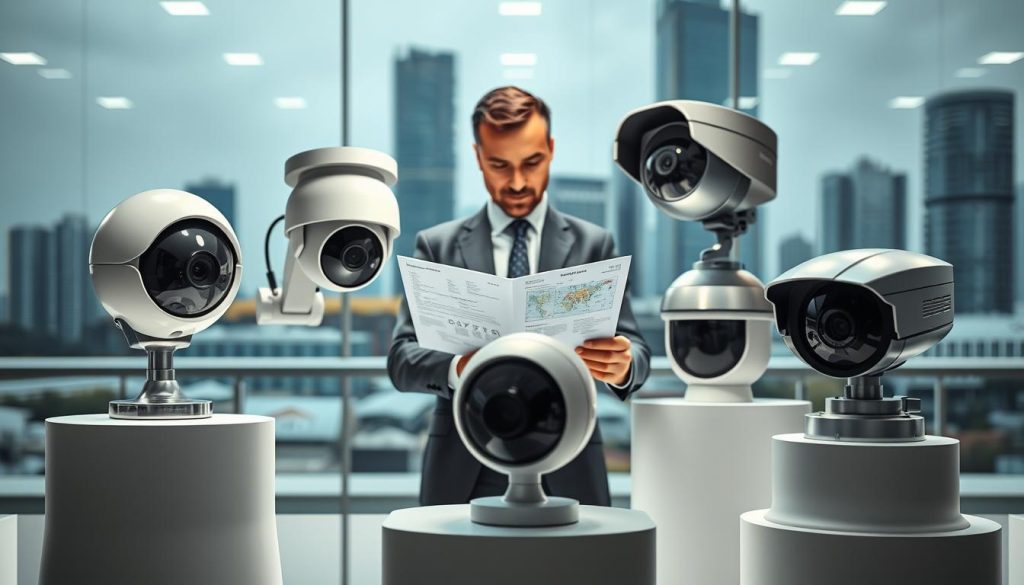
Comparing Camera Types: Dome, Bullet, PTZ, and Fixed
Four primary CCTV designs dominate the market. Each serves distinct purposes based on visibility, range, and environmental needs.
Dome cameras are known for their discreet, compact housings. Their tamper-resistant design makes them ideal for indoor retail spaces or outdoor areas prone to vandalism.
These units often feature a wide-angle lens for broad coverage. Their shape makes it difficult for subjects to determine the direction of recording.
Bullet cameras have a long, cylindrical shape perfect for long-range monitoring. They are highly visible, acting as a strong visual deterrent for perimeter security.
This type is commonly used outdoors to cover driveways, parking lots, and building exteriors. Their design typically houses powerful lenses and infrared LEDs.
PTZ (Pan-Tilt-Zoom) cameras offer remote-controlled movement. Operators can pan horizontally, tilt vertically, and zoom in on details across a large area.
This flexibility makes them excellent for monitoring expansive spaces like warehouses or car parks. They provide live coverage that would require multiple fixed cameras.
Fixed cameras provide a static, unchanging field of view. They are the most cost-effective solution for monitoring specific choke points like doors or cash registers.
Their simplicity makes them reliable and easy to install. Use them for consistent video capture of well-defined areas.
Prioritizing Image Resolution and Video Quality
High-resolution footage is non-negotiable for identification and evidence. Blurry images render a security system nearly useless when you need details most.
Choose cameras with at least 1080p Full HD resolution. This standard provides clear imagery for recognizing faces, license plates, and other critical details.
For properties requiring superior detail, 4K Ultra HD equipment is the current benchmark. The enhanced pixel count captures finer information across a wider scene.
Video quality also depends on frame rate and sensor performance. A higher frame rate delivers smoother motion, crucial for reviewing fast-paced events.
Superior low-light sensor technology ensures the camera maintains clarity at dusk or dawn. This complements dedicated night vision features.
Essential Features: Night Vision, Weather Resistance, and Vandal Proofing
Round-the-clock surveillance demands reliable night vision. Most modern CCTV cameras use infrared (IR) LED technology.
IR illumination allows the camera to see in complete darkness, producing monochrome video. Check the specified night vision range to ensure it covers your intended zone.
Outdoor equipment must withstand Singapore’s tropical climate. Look for an IP (Ingress Protection) rating of at least IP66.
This rating guarantees protection against heavy rain and dust ingress. It ensures your systems operate reliably during monsoon seasons.
For locations accessible to the public, vandal-proof housing is a wise investment. These housings are built from tough polycarbonate or metal alloys.
They resist physical impacts, spray paint, and tampering attempts. This durability protects your investment and maintains uninterrupted security monitoring.
Advanced features like AI-powered motion analytics or IoT connectivity add smart capabilities. They can reduce false alarms and integrate with other smart home systems.
Planning Your CCTV System: Installation and Maintenance
Implementing a robust surveillance network requires meticulous planning beyond just selecting hardware. The physical setup and ongoing care of your system determine its real-world effectiveness.
This phase transforms your security plan into a functional, reliable asset. Proper installation and maintenance ensure your investment delivers continuous protection and peace of mind.
Strategic Camera Placement for Maximum Coverage
Optimal positioning is the cornerstone of effective surveillance. Your cameras must cover all critical points without blind spots.
Focus first on primary entry and exit zones. Position units to capture clear frontal views of doors and ground-floor windows.
Mounting height is a crucial factor. Install cameras high enough to prevent tampering, yet low enough to capture identifiable facial details.
Angle each device to monitor the intended areas fully. A slight downward tilt often provides the best coverage of walkways and approach paths.
For large exterior spaces, use overlapping fields of view. This strategy ensures continuous tracking of movement across your property.
Interior placement should cover main hallways, staircases, and valuable asset locations. A well-planned layout leaves no room for unseen activity.
Wired vs. Wireless: Power and Connectivity Considerations
Your choice between wired and wireless systems impacts reliability and installation complexity. Each type serves different property needs.
Wired CCTV systems, like Power over Ethernet (PoE), provide a steady connection and power through a single cable. They are exceptionally reliable and immune to Wi-Fi interference.
The initial installation involves running cables, which can be more invasive. The payoff is a rock-solid network for continuous video streaming.
Wireless systems offer easier, cleaner setup with minimal drilling. They rely on your property’s Wi-Fi network for data transmission.
Their performance depends entirely on signal strength. Use network boosters or mesh routers to strengthen internet signals in dead zones.
For uninterrupted operation, backup power is essential for both types. An Uninterruptible Power Supply (UPS) or battery backup keeps cameras running during outages.
This ensures your security system remains active even when the main electricity fails.
Ensuring Long-Term Reliability with Regular Maintenance
A proactive maintenance schedule preserves your CCTV system’s performance for years. Neglect can lead to corrupted footage or complete failure.
Start with simple visual checks. Clean camera lenses every few months to remove dust, spider webs, and water spots.
Clear image quality depends on this basic task. Check all housing seals on outdoor units to ensure they remain weatherproof.
Regularly update your system’s firmware. Manufacturers release patches to fix bugs and improve security.
These updates often enhance features and compatibility. Set reminders to manage your storage space by archiving or deleting old footage.
Inspect all cables and connections for wear or damage. For wireless systems, verify internet speed and router health.
Professional installation often includes warranty coverage and an optimal initial setup. Experts ensure correct angles, secure mounting, and proper network configuration.
They can also provide a maintenance plan. For a deeper dive into key factors for evaluating CCTV setup, consult specialized resources.
This level of care guarantees you maintain full access and control over your surveillance. A well-maintained system reliably meets your security needs every day.
Budgeting and Storage: Practical Financial and Technical Factors
The true cost of surveillance extends far beyond the initial price tag on a camera box. A sustainable plan requires a clear budget for all expenses and a robust strategy for handling your video data.
These financial and technical factors determine your system’s long-term viability. Smart planning here prevents unexpected costs and ensures you never lose critical footage.
Breaking Down the Costs: Equipment, Installation, and Recurring Fees
Your total investment includes three primary categories. Understanding each helps you allocate funds effectively.
Upfront equipment costs vary widely. Basic cameras are affordable, but advanced models with 4K resolution or AI analytics cost more.
Your choice of storage hardware, like a Network Video Recorder (NVR), adds to this initial outlay. More cameras naturally mean higher equipment expenses.
Professional installation fees are a significant line item. Experts ensure optimal camera placement and reliable system setup.
Complex wiring for a wired system often costs more than a simple wireless setup. This fee buys you long-term reliability and correct configuration.
Recurring fees are the ongoing costs of ownership. The most common is a monthly subscription for cloud storage space.
- Cloud plans charge based on the number of cameras and the recording duration you wish to retain.
- Local systems have hidden recurring costs too. Hard drives inside DVRs/NVRs eventually fail and need replacement.
- Budget for occasional maintenance, like lens cleaning or firmware upgrades, to keep your security system sharp.
Choosing Your Storage Solution: DVR/NVR, Cloud, or Hybrid
Where you keep your footage is a crucial technical decision. Each storage method offers distinct advantages for different needs.
Local Storage (DVR/NVR) keeps all data on-site. A hard drive inside the recorder provides high-capacity storage for continuous recording.
The main benefit is one-time cost and full physical control. Your footage remains private and doesn’t rely on an internet connection.
The downside is vulnerability. If the recorder is stolen or damaged, you lose all video evidence. Expanding space requires buying and installing a larger hard drive.
Cloud Storage uploads footage to secure remote servers. This offers excellent off-site backup and remote access from any device.
It simplifies management with automatic overwriting of old files. The trade-off is a monthly fee and dependence on a strong, consistent internet bandwidth.
Hybrid Systems combine the best of both worlds. They record primarily to a local NVR while simultaneously sending a backup stream to the cloud.
This setup provides immediate local access and a secure off-site copy. It’s a premium option that maximizes security and privacy for vital evidence.
Future-Proofing Your Investment
A good CCTV system should serve you for years. Select equipment and storage options that can grow with your needs.
Choose an NVR with extra unused channels. This allows you to add more cameras later without replacing the core unit.
Ensure your system supports software updates. New features and security patches keep your technology current.
Consider systems with open standards for easier integration. They can connect with other smart home devices or alarm panels you may add.
Plan your storage capacity with growth in mind. For example, a 4-camera 1080p system recording for 30 days might need a 2TB hard drive.
If you upgrade to 4K video or add two more cameras, that requirement can double. Scalable cloud plans or a hybrid model handle this expansion smoothly.
This forward-thinking approach protects your financial outlay. It ensures your security infrastructure remains effective and adaptable for the long term.
Making an Informed Decision for Your Singapore Property
Finalizing your property’s security plan requires synthesizing diverse considerations into a cohesive security system. Balance legal requirements like the PDPA with technical factors such as camera features and storage options.
A well-planned installation deters criminals and delivers lasting peace of mind. Your unique home layout and security needs should guide every choice.
Professional consultation ensures complex setups work flawlessly. It provides expert control over camera placement, data access, and system integration.
This thoughtful approach transforms CCTV cameras into a reliable shield. You gain robust protection for your family’s safety and privacy.
For a tailored assessment, contact a reputable provider like ED Viston. They can evaluate your property’s vulnerable points and critical areas.
FAQ
What are the main legal rules for surveillance cameras in Singapore?
The primary law is the Personal Data Protection Act (PDPA). It requires you to notify individuals they are being recorded, limit collection to what is necessary, and protect any footage captured. For HDB flats and condos, you must also follow your building’s specific by-laws regarding equipment installation and where you can point your lenses.
Where should I place security cameras around my property?
Focus on critical entry points like the main door, gate, and service entrance. Also, cover vulnerable spots such as ground-floor windows, balconies, and secluded areas like backyards. Avoid pointing cameras into neighbors’ homes or private spaces to respect privacy.
What is the difference between DVR and NVR storage systems?
A DVR system works with analog cameras, processing video at the recorder. An NVR system works with IP cameras, processing data at the camera and sending it digitally. NVR systems generally offer higher image resolution, easier installation, and better scalability for your security system.
Are wireless security systems as reliable as wired ones?
Wireless systems offer easier installation and flexibility but depend on your Wi-Fi network’s strength and stability. Wired systems, using cables for power and data, are typically more reliable for continuous recording and are not susceptible to signal interference. Your choice depends on your property’s layout and reliability needs.
How much does a typical CCTV setup cost in Singapore?
Costs vary widely. A basic DIY system with a few cameras starts around a few hundred dollars. A comprehensive, professional installation with high-quality cameras, a multi-channel NVR, and cloud storage can cost several thousand. Remember to budget for potential recurring fees for cloud storage subscriptions.
Why is a site assessment important before installing cameras?
A pre-installation assessment identifies blind spots, determines the best camera types for different areas, and plans cable routes. This ensures you get complete coverage, meet all legal requirements, and choose the right equipment for your specific security challenges, saving time and money.
What features are most important for outdoor surveillance cameras?
For outdoor use, prioritize weather resistance (look for an IP66 or higher rating), strong night vision (measured in distance), and vandal-proof housing. Good video quality and a wide field of view are also crucial for capturing usable footage day and night.


