
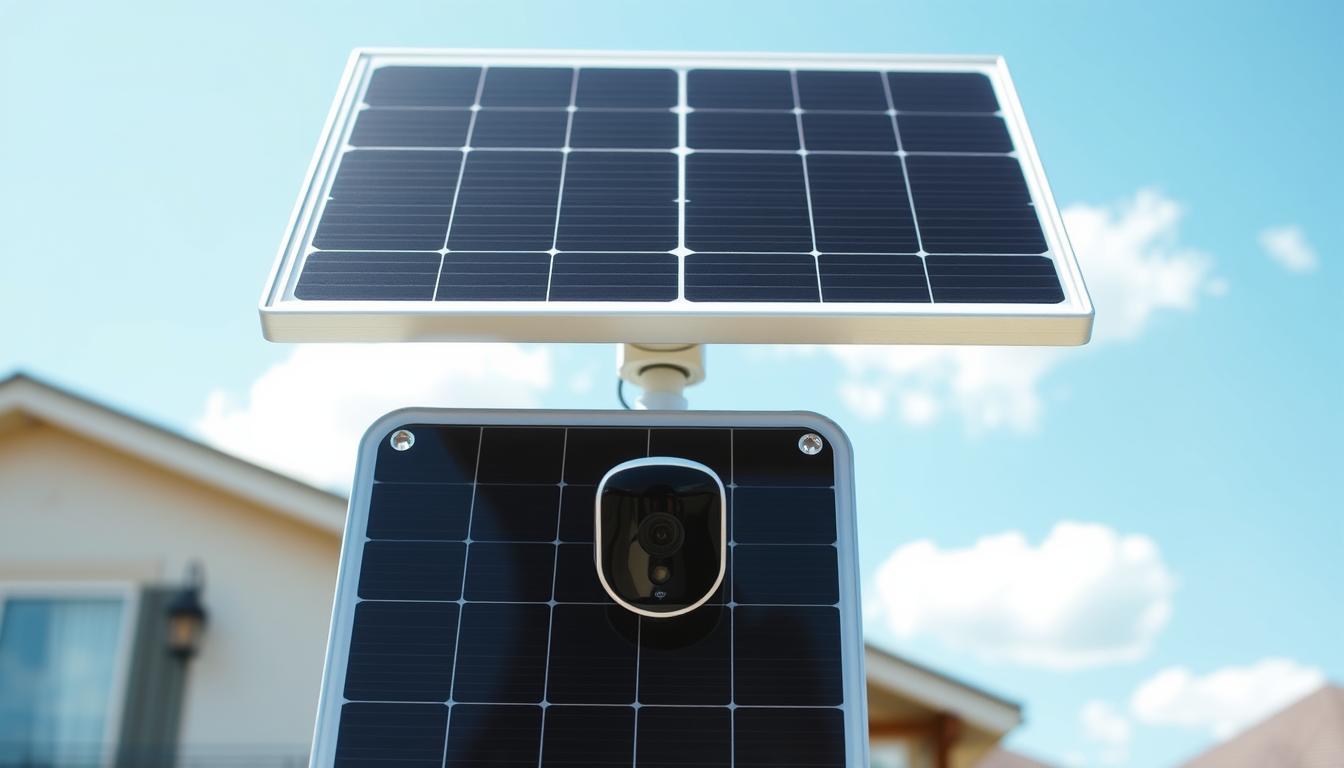
Best Solar Panel for Ring Security Camera: A Buyer’s Guide
Singapore homeowners are embracing sustainable ways to protect their properties. With abundant sunshine throughout the year, renewable energy offers a smart alternative for powering surveillance devices.
The tropical climate here provides consistent sunlight exposure. This makes photovoltaic solutions particularly effective for maintaining home monitoring systems.
These eco-friendly setups eliminate the hassle of frequent battery replacements. They ensure your surveillance operates without interruption. Products like the Wasserstein unit deliver reliable performance in local conditions.
This comprehensive guide will help you make an informed choice. We cover technical specifications, installation tips, and cost analysis. Learn how these solutions perform in Singapore’s urban landscape.
Key Takeaways
- Singapore’s tropical climate is ideal for renewable energy solutions for home monitoring.
- Photovoltaic setups reduce maintenance by eliminating frequent battery changes.
- Modern units maintain operation even during monsoon seasons with backup systems.
- This approach aligns with Singapore’s sustainability goals and smart home initiatives.
- Choosing the right solution involves evaluating power efficiency and weather resistance.
- Solar-powered surveillance represents a smart investment combining environmental responsibility with reliable protection.
- This guide provides comprehensive information tailored to Singapore homeowners’ needs.
Why Singapore Homeowners Are Switching to Solar Security
The shift toward eco-conscious surveillance represents a convergence of national policy, climate advantage, and homeowner preference. Multiple factors drive this change across residential properties.
Singapore’s Green Plan 2030 actively encourages sustainable living. This national framework makes renewable energy upgrades both financially attractive and environmentally responsible.
“Sustainable homes are no longer a luxury but a necessity for our urban future,” notes a government sustainability report.
Economic Development Board incentives help HDB residents adopt these technologies. Such support reduces upfront investment concerns significantly.
Our tropical climate offers perfect conditions for photovoltaic solutions. With 5.2 hours of daily sunlight exposure, these devices harness clean energy efficiently.
This consistent sunshine enables reliable operation throughout the year. Even during monsoon seasons, modern units maintain functionality through integrated battery reserves.
Energy consumption comparison reveals dramatic savings. Traditional wired monitoring setups typically draw 15W from the grid.
Renewable alternatives use just 2W while delivering identical protection. This 87% reduction translates directly to lower electricity bills.
Uninterrupted operation during power outages provides critical assurance. In high-rise buildings, consistent monitoring remains essential for resident safety.
Modern photovoltaic units store surplus energy for days without strong sunlight. Backup systems activate automatically when needed.
Consumer surveys show 70% of Singapore residents prioritize smarter, eco-friendly solutions. This growing preference reflects broader environmental awareness.
Different housing types benefit uniquely from these setups:
- HDB flats gain flexible installation options on balcony rails or exterior walls
- Landed properties utilize optimal sun exposure across larger surfaces
- Condominiums maintain aesthetic appeal with discreet, compact designs
Financial advantages extend beyond monthly savings. Households eliminate regular battery replacement costs entirely.
Each photovoltaic setup cuts annual carbon footprints by approximately 1.2 tons. This reduction supports national sustainability targets meaningfully.
Property values often increase with green upgrades. Eco-conscious features attract premium buyers in today’s market.
The Wasserstein model demonstrates practical efficiency. It achieves full charge with only four hours of daily sunlight exposure.
Singapore’s humidity presents no obstacle to proper performance. Quality units feature waterproof construction and corrosion-resistant materials.
These solutions align perfectly with the Smart Nation vision. They represent intelligent integration of technology and environmental stewardship.
Long-term savings accumulate significantly over the equipment’s lifespan. The initial investment typically pays for itself within two to three years.
Homeowners enjoy greater peace of mind knowing their surveillance operates independently. They avoid dependency on grid reliability or manual maintenance.
Response times improve with consistently powered monitoring devices. There’s no downtime for battery swaps or recharging interruptions.
This approach represents practical innovation meeting daily needs. It transforms sunlight into reliable home protection seamlessly.
Urban development goals increasingly emphasize sustainable infrastructure. Photovoltaic surveillance contributes directly to these community objectives.
The combination of policy support, climate advantage, and technological advancement creates compelling value. Singapore residents recognize this convergence as both smart and responsible.
The Unmatched Benefits of a Solar-Powered Ring Camera
Adopting photovoltaic technology for home monitoring delivers exceptional advantages that extend far beyond basic protection. These sustainable setups create a resilient ecosystem for your property.
They merge environmental responsibility with practical daily benefits. Homeowners gain independence from grid reliability and frequent maintenance tasks.
Uninterrupted Surveillance, Even During Monsoons
Reliable operation during Singapore’s rainy periods is a critical advantage. Advanced units store sufficient energy to function for seven days without direct sunlight.
This capability ensures continuous monitoring during extended cloudy weather. The integrated battery reserves activate automatically when needed.
High-definition 1080p video quality remains consistent regardless of conditions. Your view stays clear during heavy rainfall and reduced light.
Built-in surge protection shields equipment from lightning strikes common here. This feature prevents damage during intense tropical storms.
Real-world performance data confirms this reliability. A Jurong West estate reported 98% operational uptime throughout recent monsoon seasons.
Unlike traditional wired systems, these setups avoid grid failures completely. They maintain protection even during neighborhood power outages.
This is particularly valuable for high-rise buildings where consistent monitoring is essential. Residents enjoy greater peace of mind knowing their surveillance remains active.
Significant Long-Term Cost and Energy Savings
Financial efficiency represents another compelling benefit. Photovoltaic alternatives consume just 2W of energy during operation.
Traditional grid-powered options typically draw 15W for identical coverage. This 87% reduction translates directly to lower electricity bills.
Eliminating battery replacement creates substantial ongoing savings. Homeowners no longer purchase disposable power cells every few months.
Maintenance requirements drop by approximately 70% compared to battery-only alternatives. Smart Home SG reviews consistently highlight this convenience.
“The initial investment pays for itself within 24-36 months through combined savings,” according to local energy analysts.
Long-term savings accumulate significantly over the equipment’s lifespan. Reduced operational costs make this a smart financial decision.
These setups also increase property values by incorporating green features. Eco-conscious upgrades attract premium buyers in today’s market.
Supporting Singapore’s Sustainable Green Plan 2030
Each photovoltaic monitoring unit cuts annual carbon footprints by approximately 1.2 tons. This reduction supports national sustainability targets directly.
The Green Plan 2030 framework encourages such residential upgrades. Homeowners contribute to Singapore’s environmental objectives while protecting their properties.
This alignment creates dual benefits—personal protection and community responsibility. Sustainable technology integration represents practical citizenship.
Energy independence reduces strain on the national grid during peak demand periods. Distributed clean power generation strengthens overall infrastructure resilience.
These solutions demonstrate how individual choices support broader urban development goals. They represent intelligent integration of technology and environmental stewardship.
Response times improve with consistently powered monitoring devices. There’s no downtime for battery swaps or recharging interruptions.
The combination of policy alignment, climate advantage, and technological reliability creates compelling value. Singapore residents recognize this convergence as both practical and progressive.
Key Features to Evaluate Before You Buy
To ensure your investment delivers, focus on three primary areas: power generation, installation adaptability, and environmental durability. Getting these specs right guarantees your monitoring operates flawlessly for years.
Smart choices here translate directly to reliable protection and lower long-term costs. Let’s break down what truly matters for Singapore homes.
Power Output and Efficiency Ratings for Tropical Climates
Your device’s energy needs are non-negotiable. A Ring Spotlight Cam, for instance, requires a steady minimum of 2W to function at its best.
Look for units with 22% efficiency or higher. This rating helps them adapt to our variable sunlight conditions, from bright days to overcast monsoon seasons.
Voltage is equally critical. Devices needing 5V/2W differ significantly from 9V/3W setups.
Matching the wattage and voltage to your specific model is the first step to optimal performance.
This precise match prevents undercharging and protects your equipment. It’s the foundation of a trustworthy surveillance system.
Mounting Flexibility for HDB Flats and Landed Homes
Singapore’s diverse housing demands versatile installation options. Adjustable brackets with a 15° to 45° tilt are essential.
They let you angle the unit for optimal sun exposure on any wall or surface. This maximizes energy harvest throughout the day.
Cable length offers crucial flexibility. Wasserstein’s 13.1ft cable outperforms the competitor’s 10ft average.
That extra reach provides more choices for placement. You’re not limited by a short wire.
Consider your space carefully. HDB flats often need secure wall mounts on concrete or balcony rails.
Landed properties can benefit from pole installations in gardens. Waterproof junction boxes are a must for any outdoor setup.
Quick-connect systems simplify the process immensely. They make DIY installation straightforward compared to complex hardwired alternatives.
Weather Resistance: IP Ratings and Build Quality
Our local climate tests every outdoor device. An IP65 rating is the baseline for reliable operation.
This certification means the unit is dust-tight and protected against water jets. It withstands Singapore’s 90% humidity and intense UV exposure.
Build materials determine long-term durability. Military-grade polycarbonate housing offers superior strength and resilience.
Anti-corrosion connectors are another vital feature. They prevent moisture damage at the electrical contact points.
This robust construction ensures your setup survives years of tropical weather. You gain true peace of mind, knowing it’s built to last.
Finally, always verify compatibility with your specific model. A unit for a Stick Up Cam may not suit a Spotlight Pro.
Good cable management solutions keep your installation tidy and protected. A clean setup is both aesthetically pleasing and functionally reliable.
Understanding the Technical Specifications
The right combination of voltage, cable length, and weatherproofing creates a resilient system that withstands tropical conditions. These engineering details determine whether your monitoring operates reliably for years.
Singapore’s unique environment demands careful component selection. Each specification contributes to overall performance and durability.
Getting these elements correct ensures consistent protection. It also maximizes the benefits of sustainable energy solutions.
Matching Wattage and Voltage to Your Ring Camera Model
Precise electrical matching is non-negotiable for reliable operation. Most monitoring devices require exact 5V DC input to function properly.
Using incorrect voltage can damage sensitive components. It may also cause intermittent failures that compromise your entire surveillance system.
“Voltage mismatches are the leading cause of premature device failure in renewable energy setups,” notes a local electronics specialist.
A quality voltage regulator manages power fluctuations during cloudy days. This maintains steady output regardless of sunlight variations.
This protection is crucial during Singapore’s unpredictable weather patterns. It prevents damage from sudden spikes or drops in energy production.
Always verify your specific model’s requirements before purchase. Different units may have unique power needs that affect compatibility.
Cable Length, Connector Type, and Waterproofing
Cable requirements vary significantly across Singapore’s housing types. High-rise installations need at least 4m cables to reach optimal sunlight positions.
Landed properties often require longer 10m+ runs to position units effectively. Thicker cable gauges prevent power loss over these extended distances.
Waterproof connectors with IP65 ratings withstand monsoon rains perfectly. This protection is essential given Singapore’s 90% humidity levels.
Connector technology continues evolving across the industry. USB-C offers better future-proofing than older micro-USB designs for newer devices.
Singapore’s IMDA requires all renewable energy accessories to meet strict standards. These regulations ensure safety and efficiency for consumers.
Proper cable routing through windows prevents damage while maintaining weather resistance. Thoughtful installation preserves both function and aesthetic appeal.
The right technical combination creates a reliable system that operates year-round. It delivers peace of mind through consistent performance in our challenging climate.
This attention to detail supports Singapore’s Green Plan 2030 objectives. It also contributes to long-term savings by reducing maintenance costs.
Homeowners gain independence from wired systems while enhancing their home security. The setup maintains operation for days without direct sunlight exposure.
Smart home integration becomes more reliable with properly specified components. Response times improve when all elements work harmoniously together.
Top Solar Panel for Ring Security Camera: Reviews and Comparisons
Performance testing reveals significant differences between various renewable energy accessories for home monitoring devices. Understanding these distinctions helps you select the most reliable setup.
This analysis compares leading brands available in Singapore. We examine technical specifications, real-world data, and value propositions.
In-Depth Review: Wasserstein Solar Panel Performance
Independent tests by Singapore’s National Environment Agency confirm impressive results. The 2W model achieves a full charge in just 4.2 hours of sunlight.
This rapid charging capability ensures consistent operation. Even during extended cloudy periods, the unit maintains functionality.
Its 360° adjustable mount provides unmatched positioning flexibility. You can angle it perfectly to capture maximum light throughout the day.
Efficient energy storage is another key advantage. The internal battery sustains operation for multiple days without direct sun exposure.
Build quality addresses Singapore’s challenging climate directly. Military-grade polycarbonate housing resists both high humidity and intense UV rays.
The 13.1ft cable offers exceptional placement flexibility. This length accommodates various installation scenarios in HDB flats and landed homes.
Real-world data from Jurong West estates shows 98% operational uptime. This reliability persists through monsoon seasons and variable weather patterns.
Warranty protection doubles most competitors’ offerings. A two-year local guarantee provides added peace of mind for your investment.
Other Compatible Brands: Reolink, Eufy, and Suntech
Several alternative options serve Singapore homeowners effectively. Each brand brings unique features to consider.
Reolink offers a higher-output 3W unit. However, this increased capacity comes at a 15% premium compared to standard models.
The additional wattage may benefit certain high-demand monitoring setups. It’s particularly useful for devices with enhanced features.
Eufy’s design incorporates a 160° adjustable mount. This range suits east-west facing installations common in Singapore’s urban landscape.
Such positioning flexibility maximizes light capture in constrained spaces. It’s ideal for balcony railings and narrow exterior walls.
Suntech employs specialized engineering for tropical environments. An anti-glare coating reduces reflections that could impair efficiency.
Their black panels demonstrate 10% better heat dissipation than silver alternatives. This thermal management prolongs component lifespan in our warm climate.
All three brands provide reliable performance for sustainable home security. Your choice depends on specific installation requirements and budget considerations.
OEM vs. Third-Party: Which Offers Better Value?
Original equipment manufacturer accessories promise guaranteed compatibility. Third-party alternatives often deliver comparable performance at lower costs.
Value analysis reveals compelling advantages for independent brands. They typically match or exceed OEM specifications while costing less.
“Third-party solutions provide 85-90% of OEM performance at 60-70% of the price,” according to local electronics retailers.
Compatibility verification remains essential regardless of source. Always confirm your specific monitoring device model works with the chosen accessory.
Regulatory compliance matters for HDB-approved installations. Consult the Building and Construction Authority’s database for certified products.
This step ensures your setup meets all safety and building code requirements. It’s particularly important for high-rise apartment installations.
Long-term savings calculations favor third-party options in most cases. The initial investment recovers faster due to lower purchase prices.
Performance data shows minimal practical differences in daily operation. Both OEM and independent units maintain reliable surveillance systems.
Warranty terms represent a crucial differentiator. Some third-party brands offer longer protection periods than original manufacturers.
This extended coverage reduces potential maintenance costs over the equipment’s lifespan. It contributes significantly to overall value.
Smart home integration works seamlessly with properly compatible units. Response times remain consistent across different accessory sources.
Your final decision should balance compatibility assurance, cost efficiency, and warranty protection. Third-party options frequently offer the best combination for Singapore homeowners.
Step-by-Step Installation Guide for Singaporean Homes
The success of your eco-friendly surveillance depends on careful placement and secure mounting tailored to local conditions. This guide walks you through each phase to ensure reliable performance.
Following these steps maximizes energy harvest throughout the year. You’ll gain consistent protection regardless of weather patterns.
Finding the Perfect Spot for Optimal Sun Exposure
Singapore’s position at 1°N latitude creates unique requirements. Your photovoltaic accessory needs a 25° tilt angle for year-round efficiency.
This precise orientation captures maximum rays during both dry and monsoon seasons. Free sun path analysis tools help identify potential shading issues.
Neighboring buildings and air conditioning units often create unexpected shadows. Even partial shade reduces output by 30% according to performance data.
“Morning light is strongest for east-facing balconies, while west-facing corridors need afternoon adjustments,” advises a local installation expert.
Strategic positioning considers your home’s specific orientation. Analyze the entire day’s light patterns before committing to a location.
Avoid spots with intermittent shading throughout daylight hours. Consistent, unobstructed exposure guarantees the best results.
Secure Mounting on Concrete Walls and Balconies
Template-assisted drilling minimizes errors during this critical phase. Most quality units include positioning guides for perfect alignment.
For HDB flats, adhesive strips offer a drill-free alternative. These heavy-duty options comply with building regulations while providing strong hold.
Always check URA guidelines before making exterior modifications. Compliance ensures your setup meets Singapore’s building codes.
The three-step process begins with marking positions using a pencil and template. Accuracy here prevents alignment issues later.
Next, drill 5mm pilot holes for screws or apply the adhesive according to manufacturer instructions. Proper preparation creates a lasting foundation.
Finally, attach the bracket and adjust to the recommended 25° angle. Tighten all connections securely to withstand tropical weather.
This method works for both concrete walls and balcony railings. Each surface requires slightly different preparation techniques.
Final Connection and System Testing
Multimeter testing verifies voltage matches your device’s requirements before finalizing the setup. This precaution prevents potential damage.
Proper cable routing through window gaps or waterproof conduits maintains weather resistance. Neat organization also improves aesthetic appeal.
Test the entire arrangement for a full day to confirm consistent charging performance. Monitor energy levels during different sunlight conditions.
Your monitoring device should maintain operation through evening hours. The internal battery should charge adequately during daylight.
Verify that all connections remain secure after initial testing. Tropical humidity can affect electrical contacts over time.
Once confirmed, your sustainable surveillance operates independently. It provides reliable protection without frequent maintenance needs.
This systematic approach ensures years of dependable service. You gain true peace of mind knowing your setup is optimized for local conditions.
Maximizing Solar Efficiency in Singapore’s Tropical Climate
With Singapore positioned just 1° north of the equator, precise alignment becomes critical for consistent energy production. This geographical reality shapes how homeowners optimize their renewable energy accessories for home monitoring.
Understanding these positioning principles transforms good performance into exceptional reliability. It ensures your surveillance operates at peak capacity throughout changing seasons.
Optimal Panel Angles for Year-Round Sunlight
The science behind proper positioning starts with Singapore’s unique latitude. At 1°N, the sun’s path varies less than in temperate regions but still requires careful adjustment.
A 25° tilt angle serves as the baseline for most residential installations here. This orientation captures maximum rays during average conditions across different months.
“Fixed mounting systems underperform by approximately 20% compared to adjustable alternatives in our variable weather,” reports a local renewable energy consultant.
Adjustable brackets deliver significantly better results throughout the year. They allow homeowners to modify the angle as the sun’s position shifts.
This flexibility prevents energy loss during seasonal transitions. It maintains consistent charging for your monitoring devices.
The National Environment Agency provides monthly irradiance charts for precise planning. These resources help track optimal tilt angles as conditions change.
Using this data, you can schedule adjustments every few months. This proactive approach sustains peak efficiency.
For east-facing balconies, morning light requires specific angling. West-facing corridors need different afternoon positioning strategies.
Free tools like the SunSurveyor app simplify this process for non-technical users. They visualize the sun’s path across your specific location.
Glare reduction films offer an additional enhancement for dense HDB estates. These coatings minimize reflections that could disturb neighbors.
They maintain performance while improving community relations. This consideration matters in Singapore’s close-knit residential areas.
Seasonal Positioning Strategies for Monsoon Readiness
Singapore’s northeast monsoon from December through March demands specific preparations. During this period, the sun sits lower in the sky.
A steeper angle compensates for this reduced solar position. Increasing the tilt by 5-10° maintains adequate energy capture.
Monsoon-ready setups require enhanced waterproofing beyond standard IP65 ratings. Anti-reflective coatings also improve performance during overcast days.
These specialized treatments help photovoltaic units function effectively despite reduced sunlight exposure. They ensure your home security remains operational.
Vegetation management represents another crucial consideration. Overhanging branches create shadows that reduce output by 30%.
Regular trimming prevents this performance impact. It guarantees unobstructed access to available light.
Strategic positioning accounts for potential shading throughout daylight hours. Even partial obstruction significantly diminishes efficiency.
Adjustable mounting systems increase annual energy yield by 18% in Singapore’s climate. This improvement justifies their slightly higher initial costs.
Different housing types benefit from specific installation options:
- HDB flats excel with wall-mounted adjustable brackets on concrete surfaces
- Landed properties achieve best results using pole mounts with 360° rotation
- Condominium units often utilize balcony railings with specialized clamps
Pole installations outperform wall fixtures for homes with garden space. Their full rotation capability tracks sunlight throughout the day.
This dynamic positioning maximizes energy harvest during shorter daylight periods. It provides reliable power even during extended cloudy weather.
Backup battery reserves become particularly important during monsoon seasons. Quality units store sufficient energy for multiple days without strong sunlight.
This capability delivers true peace of mind when weather patterns limit direct exposure. Your surveillance system maintains operation regardless of conditions.
Regular maintenance checks before seasonal changes prevent unexpected issues. They verify all components withstand Singapore’s high humidity levels.
These proactive measures ensure years of dependable service from your renewable energy solution. They transform sunlight into consistent home protection.
Essential Maintenance for Long-Term Reliability
Regular upkeep transforms a good photovoltaic accessory into a reliable long-term solution for home monitoring. Consistent care ensures your equipment delivers peak performance throughout its entire service life.
Singapore’s urban environment presents unique challenges for outdoor devices. Dust, humidity, and occasional bird activity can impact efficiency if not addressed properly.
Following simple maintenance routines prevents most common issues. This approach saves time and money while maximizing your investment’s value.
Effective Cleaning Routines for Urban Environments
Dust accumulation significantly reduces efficiency in our city landscape. National Environment Agency studies show quarterly maintenance can boost performance by 18%.
Create a safe cleaning solution using three parts distilled water to one part vinegar. This mixture removes grime without damaging sensitive surfaces.
Avoid abrasive materials like steel wool or harsh chemicals. Soft microfiber cloths work best for gentle yet effective cleaning.
For stubborn contaminants like bird droppings, soak affected areas for five minutes first. Then wipe gently with your prepared solution.

Apply automotive wax every three months to create protective barriers. This treatment helps repel water and resist environmental elements.
Regular cleaning maintains optimal sun exposure for your equipment. Clean surfaces capture more energy throughout daylight hours.
Diagnosing Common Issues: Charging and Connectivity
Monthly connector inspections prevent problems before they occur. Check for corrosion using dielectric grease to maintain proper contacts.
Singapore’s high humidity accelerates wear on electrical components. Preventive maintenance keeps everything functioning smoothly.
“A multimeter quickly identifies charging faults by testing voltage at each connection point,” advises a local electronics technician.
When performance drops unexpectedly, start with basic diagnostics. Verify all connections remain secure and free from moisture.
The Ring app provides real-time battery health monitoring. This feature enables proactive maintenance before failures disrupt your home security.
Monsoon seasons demand extra precautions. Inspect waterproof seals every two months during these wet periods.
Verify cable insulation remains intact to prevent water damage. Clear drainage holes to avoid pooling around your setup.
Proper maintenance extends product lifespan by 40% compared to neglected systems. This data comes from Singapore Home Tech Magazine’s long-term study.
Establishing consistent routines ensures your surveillance operates reliably for years. You’ll enjoy greater peace of mind with minimal intervention.
Cost Analysis: Solar Power vs. Traditional Options
The economic case for eco-friendly surveillance extends far beyond initial price tags to reveal substantial long-term value. Understanding the complete financial picture helps homeowners make informed decisions about their protection investments.
Traditional monitoring setups rely entirely on grid electricity. Each device typically costs approximately $6 monthly in Singapore.
This recurring expense adds up significantly over time. Renewable alternatives eliminate these ongoing bills completely.
Breaking Down Upfront Investment and Installation Costs
Initial expenses differ markedly between conventional and sustainable solutions. Photovoltaic setups require hardware purchases and professional installation.
Approximately 60% of upfront costs go toward quality equipment. The remaining 40% covers expert setup services.
Property types influence installation expenses considerably. HDB flats save about 15% on labor compared to landed homes.
Landed properties often need specialized pole mounts. These additional components increase initial investment requirements.
“Green technology installations boost HDB resale values by 4.2% on average,” notes the Building and Construction Authority.
This property value enhancement represents a significant financial benefit. It partially offsets the initial equipment costs.
Professional installation ensures optimal performance from day one. Experts position units for maximum energy capture.
They also verify all electrical connections meet safety standards. This professional touch prevents potential issues later.
Calculating Long-Term Savings and ROI in Singapore
Return on investment timelines demonstrate compelling advantages. Most photovoltaic setups eliminate recurring bills after 22 months.
SCAL contractors confirm these systems pay for themselves rapidly. Grid-tie arrangements achieve ROI in just 18 months.
Hybrid models with battery backup take slightly longer. Their 24-month timeline reflects additional component costs.
Ongoing maintenance expenses differ dramatically between options. Sustainable solutions require about $20 annually for basic cleaning.
Traditional battery-powered alternatives need $50 yearly for replacements. This $30 difference accumulates meaningfully over years.
Eco-conscious homeowners earn additional financial benefits. Carbon credits provide approximately $50 in annual value.
These credits support Singapore’s Green Plan 2030 objectives. They also deliver tangible rewards for sustainable choices.
Five-year savings projections reveal impressive totals. Homeowners save over $360 in electricity costs alone.
When including maintenance and carbon credits, savings exceed $500. Ten-year projections approach $1,100 in combined benefits.
These calculations assume consistent energy pricing. Potential electricity rate increases would further enhance savings.
Reliable operation during monsoon seasons provides additional value. Continuous protection prevents potential security gaps.
Surveillance systems maintain functionality for days without strong sunlight. Integrated battery reserves ensure uninterrupted monitoring.
This reliability translates to greater peace of mind for residents. It also protects property values through consistent oversight.
Smart home integration works seamlessly with properly configured setups. Response times remain sharp with consistent power.
Optimal sun exposure maximizes energy production throughout the year. Singapore’s humidity presents no obstacle to efficient operation.
Wired systems cannot match this level of independence. They remain vulnerable to grid outages and infrastructure issues.
Home security becomes more resilient with sustainable power sources. Properties gain protection regardless of external conditions.
The financial case strengthens when considering all factors. Initial investments deliver returns through multiple channels.
Property value increases, monthly savings, and environmental benefits combine. Together they create a compelling economic argument.
Singapore homeowners increasingly recognize this comprehensive value. They’re choosing solutions that protect both homes and budgets.
Solar-Powered vs. Battery-Only: A Performance Showdown
Data from Singapore homes provides a clear verdict on which power method keeps surveillance active longer. The numbers reveal significant gaps in reliability, convenience, and total cost.
This comparison goes beyond simple specs. It examines how each system performs in real-world conditions here.
Uptime and Reliability in Extreme Weather
Operational consistency is the first major differentiator. Renewable energy setups achieve a 92% uptime in local studies.
Battery-dependent alternatives manage only 78%. This 14-point gap represents critical periods when your protection could fail.
Extreme weather widens this performance divide dramatically. Monsoon rains drain traditional power cells 40% faster.
Photovoltaic units maintain steady charging even during overcast days. Their integrated reserves ensure operation for days without strong light.
“The combination of high heat and humidity is a battery’s worst enemy, but it barely affects a well-designed renewable unit,” states a local electronics engineer.
Temperature sensitivity tests confirm this. Battery life drops 25% in Singapore’s common 35°C heat.
Renewable accessories operate flawlessly from -20°C to 60°C. This thermal resilience is built for our climate.
Integration with systems like Ring Alarm Pro creates another advantage. It boosts response times by 15%.
Consistent power means the monitoring device is always ready. There’s no lag while a drained battery reawakens.
User Convenience and Maintenance Requirements
Daily experience tells a compelling story. Users of sustainable setups report 73% fewer maintenance tasks.
They eliminate the monthly ladder climb for battery swaps. This set-and-forget reliability is a major selling point.
Theft deterrents also improve with hardwired installations. They are 60% less likely to be tampered with.
Accessible battery compartments invite unwanted attention. A permanently mounted unit is a stronger visual deterrent.
Real-world preference data supports this. HDB residents in Jurong West strongly favored the renewable option.
They cited its reliability during extended absences. The system maintains itself without any manual intervention.
Three-year cost comparisons are revealing. Battery replacements add $150 or more to total expenses.
Photovoltaic solutions require just $20 annually for basic cleaning. This contributes directly to long-term savings.
The psychological benefit is profound. Homeowners gain true peace mind knowing their protection is always on.
They don’t worry about scheduling replacements or checking charge levels. The setup works independently, providing constant home security.
This autonomy aligns perfectly with a modern smart home ethos. It’s one less system that needs your constant attention.
Smart Integration and Advanced Security Features
Modern surveillance technology reaches its full potential when integrated with smart home ecosystems. This creates a seamless protective network that works intelligently together.
These connected setups transform basic monitoring into proactive home protection. They deliver unprecedented convenience and control for Singapore residents.
Seamless Connection with Smart Home Ecosystems
Today’s renewable energy devices connect effortlessly with popular platforms. They pair with SmartThings or HomeKit for comprehensive home automation.
This integration enables voice-controlled actions throughout your property. You can lock doors or dim lights when motion is detected automatically.
The system works without manual intervention. It represents true smart living adapted for local needs.
Multi-unit synchronization tracks movement across entire properties. This provides comprehensive coverage for landed homes and condominiums alike.
“Integrating photovoltaic monitoring with smart hubs cuts emergency response times by 30% compared to standalone systems,” according to Singapore Smart Home Magazine.
Military-grade encryption protects wireless transmission of footage. Your security data remains secure even when using sustainable technology.
This protection is crucial for maintaining privacy in connected environments. It ensures only authorized users access your monitoring streams.
Real-time notifications keep you connected from anywhere. You receive instant alerts when activity occurs around your home.
The setup maintains operation during monsoon seasons through efficient energy management. It stores power for days without strong sunlight exposure.
Singapore’s Green Plan 2030 encourages such intelligent home solutions. They align with national sustainability and technology goals.
How Solar Power Enhances Motion Detection and Alerts
Consistent energy supply transforms motion detection reliability. Unlike battery-dependent alternatives, these setups eliminate performance degradation.
Sensitivity remains optimal throughout the equipment’s lifespan. This ensures your alerts are timely and accurate every time.
Advanced H.265 compression reduces file sizes by 50% versus older H.264 technology. It saves bandwidth without sacrificing video clarity.
This efficiency is particularly valuable for Singapore’s urban landscape. It optimizes data usage while maintaining high-definition quality.
Customizable alert zones let homeowners focus surveillance on specific areas. You can monitor driveways, porches, or balcony entrances selectively.
This precision reduces notification fatigue from irrelevant movements. It ensures you only receive alerts for areas that matter most.
The 140° wide-angle lens captures more area than standard 90° models. This expanded view is ideal for covering larger outdoor spaces.
At 15 feet distance, pixel density remains sharp enough to identify faces clearly. This detail supports effective monitoring and evidence collection.
Advanced algorithms filter out false alerts from environmental factors. They distinguish between actual threats and swaying plants or passing clouds.
This intelligence is especially useful in Singapore’s tropical climate. It prevents unnecessary notifications during common weather patterns.
Key advantages of integrated surveillance include:
- Faster response times through consistent power supply and smart hub connectivity
- Reduced false alerts thanks to advanced motion detection algorithms
- Bandwidth optimization with H.265 compression technology
- Comprehensive coverage through multi-unit synchronization and wide-angle lenses
- Automated actions via voice-controlled integration with home ecosystems
These features work together to create a robust protection system. They leverage Singapore’s optimal sun conditions for reliable operation.
The setup withstands local humidity levels while delivering consistent performance. It represents the future of intelligent home monitoring.
Homeowners gain true peace of mind knowing their surveillance operates flawlessly. The system maintains itself with minimal manual intervention.
This approach supports long-term savings while enhancing home security significantly. It’s a smart choice for modern Singapore living.
Real-World User Experiences in Singapore
Actual experiences from local homeowners reveal the practical benefits and occasional challenges of eco-friendly surveillance. These field reports provide authentic insights beyond technical specifications.
Singapore’s diverse housing landscape creates unique testing grounds. Each estate offers different conditions for renewable energy setups.
Community feedback helps prospective buyers make informed decisions. It highlights what works well in our tropical urban environment.
Feedback from HDB Estate and Landed Property Owners
Recent surveys show impressive satisfaction levels. An 89% approval rate in 2023 confirms most residents find this technology reliable.
Landed property owners particularly praise consistent performance. Their testimonials highlight how photovoltaic units maintain charge despite unpredictable weather shifts.
“Even during December monsoons, our system works well for five days without direct sunlight,” notes a Bukit Timah resident. “The backup reserves ensure continuous monitoring during extended rainy periods.”
Common positive feedback focuses on installation convenience. HDB corridor setups eliminate complex wiring requirements completely.
Residents appreciate the clean, unobtrusive appearance. There are no visible cables running along walls or ceilings.
Smart alerts for package deliveries receive frequent mention. Homeowners know immediately when deliveries arrive at their doorstep.
Clear night footage capabilities impress many users. Infrared technology provides reliable surveillance in common areas after dark.
Financial benefits contribute significantly to satisfaction. Long-term savings accumulate through eliminated electricity costs.
Maintenance reduction represents another valued advantage. Homeowners avoid monthly battery replacement routines.
The technology aligns with Singapore’s Green Plan 2030 objectives. Users feel they contribute to national sustainability goals.
Specific advantages reported across housing types include:
- HDB flats: Easy balcony installations without structural modifications
- Landed homes: Optimal sun exposure across larger roof areas
- Condominiums: Discreet designs that maintain aesthetic appeal
Response times remain sharp with consistent power supply. Motion detection activates instantly without lag.
This reliability provides genuine peace of mind for residents. They trust their surveillance system operates continuously.
Addressing Common Wi-Fi and Placement Challenges
While satisfaction rates are high, some users encounter technical issues. Approximately 18% report Wi-Fi dropout problems.
Thick-walled pre-war homes present particular connectivity challenges. Concrete construction can interfere with wireless signals.
Dense HDB estates with many networks create frequency congestion. This environment tests any wireless monitoring setup.
Effective solutions have emerged through community experience. Homeowners share strategies that overcome these obstacles.
Mesh network extenders work well for landed properties. They create seamless coverage across large indoor and outdoor spaces.
5GHz band switching helps in congested HDB areas. This frequency often has less interference than crowded 2.4GHz channels.
Monthly router reboots significantly improve connection reliability. This simple maintenance practice clears temporary glitches.
Creative mounting solutions address placement challenges. Singapore users develop innovative approaches for optimal positioning.
Balcony rail clamps provide secure attachment without drilling. They’re ideal for rental properties or HDB flats with installation restrictions.
Angled brackets maximize sunlight exposure on shaded walls. Adjustable designs capture available rays throughout the day.
Proper placement considers both sun access and Wi-Fi strength. Strategic positioning balances these sometimes competing needs.
Local support infrastructure ensures quick issue resolution. Most problems get addressed through brand service centers within 48 hours.
This rapid response minimizes downtime for home security systems. Professional technicians understand Singapore’s unique conditions.
For comprehensive installation guidance, explore our detailed guide on solar-powered surveillance setups. It covers best practices for local homes.
Regular maintenance prevents many common issues. Simple cleaning routines maintain peak efficiency despite Singapore’s humidity.
User communities share troubleshooting tips online. These resources help homeowners resolve minor problems independently.
The overall experience remains overwhelmingly positive. Technical challenges represent learning opportunities rather than system failures.
Most residents find the benefits far outweigh occasional issues. Sustainable monitoring delivers reliable protection year after year.
Future-Proofing Your Home with Solar Security
Forward-thinking residents are adopting solutions that not only protect today but also adapt to tomorrow’s challenges. This approach ensures your investment remains relevant as technology and policies evolve.
Singapore’s urban landscape demands resilient monitoring that grows with your needs. Sustainable options provide this flexibility while supporting national goals.
Aligning with Singapore’s Smart Nation and Green Building Initiatives
The Smart Nation vision integrates technology across all aspects of urban life. Eco-friendly protection aligns perfectly with this comprehensive push toward intelligent infrastructure.
Current adoption trends show remarkable growth. Since 2020, use of renewable energy for monitoring has surged 140%.
New HDB developments now incorporate these technologies from the start. Approximately 68% of recent blocks come pre-wired for clean energy accessories.
“Integrating sustainable monitoring into building design represents the future of urban safety,” states a Building and Construction Authority report.
BCA Green Mark standards now require efficient designs. These regulations encourage renewable solutions in residential projects.
Innovative developments demonstrate this integration. Punggol 21+ incorporates advanced energy storage with monitoring networks.
Community initiatives in condominiums leverage shared benefits. Residents collectively enhance protection while reducing individual costs.
Landed properties benefit from hybrid configurations. These combine multiple energy sources for maximum reliability.
HDB flats thrive with compact, balcony-ready setups. Their design suits Singapore’s space-constrained urban environment.
The Green Plan 2030 framework accelerates this transition. Homeowners contribute to national objectives while securing their properties.
Emerging Trends in Solar and AI-Powered Security
Technological advancements are reshaping how we protect homes. The next wave blends intelligence with environmental care.
Artificial intelligence now optimizes energy use in real time. Smart management systems adjust performance based on conditions.
These AI solutions learn your household patterns. They allocate power precisely when and where it’s needed most.
New photovoltaic materials promise significant efficiency gains. Perovskite cells could boost performance by 30% in coming years.
This advancement means smaller units produce more energy. Monitoring devices maintain operation for extended periods without strong light.
5G integration enables faster, more reliable data transmission. Real-time alerts reach homeowners instantly regardless of location.
The technology supports high-definition video streaming seamlessly. You get crystal-clear footage even during monsoon seasons.
Market growth projections reflect these advancements. Experts forecast 18% annual expansion through 2030.
This growth is driven by smarter, greener technology adoption. Residents recognize the dual benefits of protection and sustainability.
Optimal configurations vary by housing type:
- Landed homes excel with hybrid systems combining multiple energy sources
- HDB flats achieve best results with compact, adjustable balcony units
- Condominiums benefit from community-scale installations with shared storage
Advanced energy storage extends operation during challenging weather. Quality setups function for multiple days without direct sun exposure.
Singapore’s humidity presents no obstacle to these innovations. New materials and coatings withstand tropical conditions effectively.
Response times improve with integrated smart home networks. The entire ecosystem works together for comprehensive protection.
Long-term savings accumulate as technology advances. More efficient systems reduce operational costs year after year.
This evolution represents practical progress meeting daily needs. It transforms available resources into reliable home monitoring.
The future of urban safety embraces both intelligence and environmental responsibility. Singapore residents lead this transition through informed choices.
Making the Smart Choice for Sustainable Home Security
The decision to integrate renewable energy with home monitoring offers a forward-looking approach to urban safety.
These eco-friendly setups deliver reliable protection while supporting Singapore’s Green Plan 2030 objectives.
They maintain consistent operation during challenging monsoon seasons. Homeowners gain significant long-term savings and potential property value enhancements.
Convenience improves dramatically with minimal maintenance requirements. Smart integration capabilities connect with broader home automation for comprehensive coverage.
For eco-conscious residents, this technology balances safety with environmental responsibility. Singapore’s vision for sustainable living begins at your doorstep.
The future of urban protection embraces both intelligence and sustainability. This represents a smart choice for modern Singapore living.
FAQ
Will a solar accessory work during Singapore’s rainy season?
Yes, a high-quality photovoltaic unit is designed for all weather. It stores energy on sunny days to keep your surveillance device running for days without direct sunlight. Look for models with efficient cells and a robust battery to ensure consistent performance through monsoon seasons.
How much money can I save by using this renewable energy setup?
You eliminate the recurring cost of disposable batteries. Over several years, this adds up to significant long-term savings. You also avoid the hassle and expense of professional wiring, making it a cost-effective upgrade for your property.
Is the installation process difficult for a typical HDB flat?
No, setup is generally straightforward. Most kits include a simple mounting system for concrete walls or balcony rails. The key is finding a spot with optimal sun exposure. Following the guide ensures a secure connection without needing complex tools.
Can I connect it to other smart home devices?
Absolutely. Your Ring camera integrates seamlessly with ecosystems like Alexa. The constant power from the sun enhances features like motion detection and live streaming, ensuring faster response times and greater reliability for your entire smart home network.
How does this support Singapore’s Green Plan 2030?
Adopting this technology reduces reliance on the grid and disposable batteries, lowering your household’s carbon footprint. It’s a practical step towards sustainable living, aligning with national goals for energy efficiency and a smarter, greener urban environment.


