
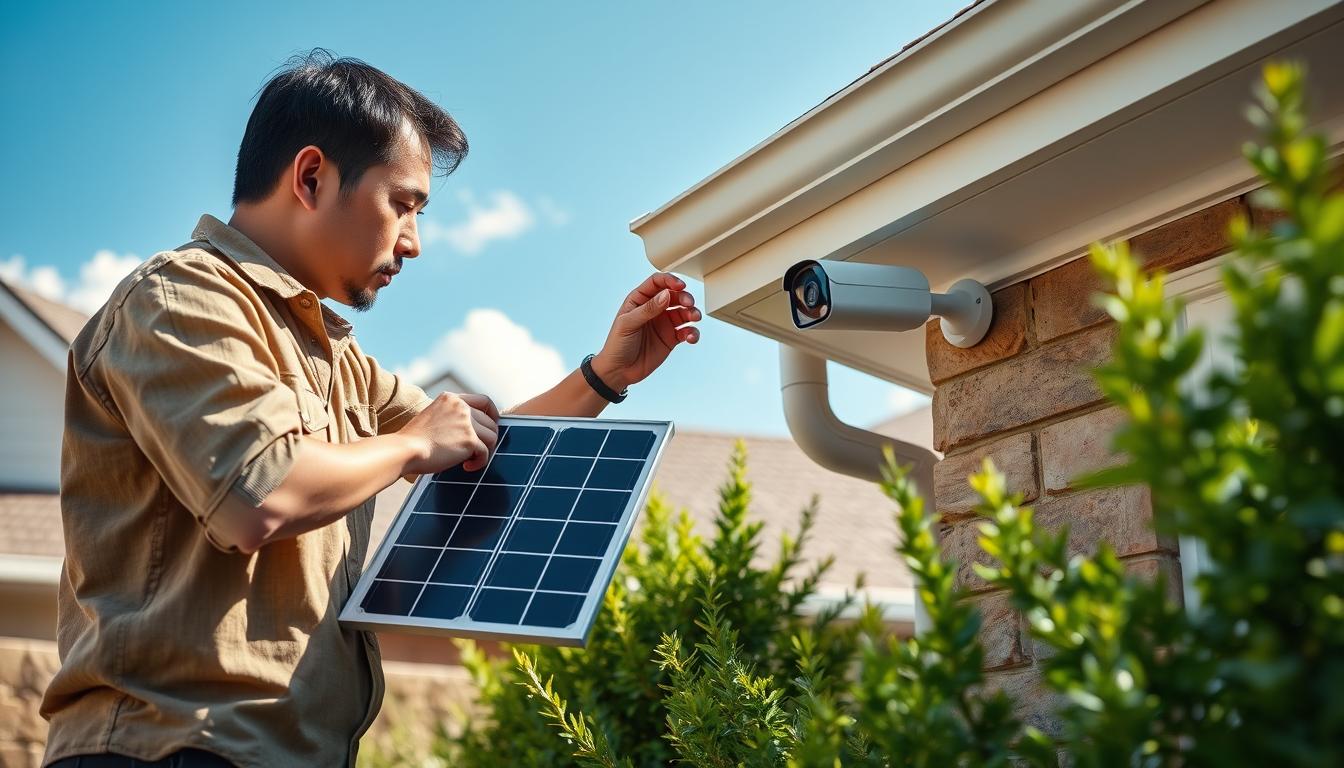
Best Wireless Solar CCTV Systems for Home Security
More homeowners in Singapore are choosing sun-powered protection for their properties. This trend combines reliable monitoring with eco-friendly energy sources.
Modern cord-free surveillance setups use photovoltaic panels to operate independently. They eliminate the need for complex wiring and ongoing electricity costs.
Singapore’s climate is perfect for this technology. The country enjoys over 2,500 hours of bright sunlight each year. This ensures consistent power for continuous operation.
These solutions align with national sustainability goals. Government programs encourage green technology adoption through various incentives.
This guide compares top models available in the local market. We examine benefits, features, and installation considerations for Singapore residences.
Leading brands like Reolink, Eufy, and Arlo offer advanced options. Each provides unique advantages for different home layouts and security needs.
A sun-powered surveillance setup represents a smart investment. It delivers reliable protection while supporting environmental responsibility.
Key Takeaways
- Solar-powered security cameras offer sustainable, cord-free protection for Singapore homes.
- Singapore’s abundant sunlight provides ideal conditions for reliable solar energy collection.
- These solutions support national green initiatives and may qualify for government incentives.
- Leading brands like Reolink, Eufy, and Arlo offer various models with different features.
- Eliminating wiring reduces installation complexity and ongoing electricity expenses.
- This technology provides continuous monitoring even during power disruptions.
- Choosing the right system involves considering home layout, security needs, and budget.
Why Singapore Homes Are Embracing Solar-Powered Security
A quiet revolution is transforming home protection across Singapore. It is driven by abundant sunshine and growing environmental awareness. Residents are finding smart ways to merge safety with sustainability.
The Perfect Climate for Solar Efficiency
Singapore’s location near the equator gives it a powerful natural advantage. The tropical climate delivers consistent, strong sunlight throughout the year. This reliable energy source is perfect for powering security devices.
The country enjoys over 2,500 hours of bright sunshine annually. That averages to about 5.5 productive hours each day. This consistent exposure ensures photovoltaic panels can harvest ample energy.
This natural bounty means sun-charged cameras operate with remarkable reliability. They maintain continuous surveillance without interruption. Traditional setups, by contrast, draw power constantly from the electrical grid.
Choosing to use solar power for monitoring makes practical sense here. The climate supports it effortlessly. Homeowners gain peace of mind knowing their protection won’t fail due to weather.
Aligning with National Sustainability Goals
Environmental consciousness is rising sharply among Singapore residents. This shift directly influences security choices for many households. People want solutions that protect both their property and the good planet.
This trend aligns perfectly with national initiatives like the Singapore Green Plan 2030. The plan encourages adopting clean technologies across all sectors. Home security is a natural area for applying these principles.
Government incentives and rebates further encourage this green transition. Programs make renewable energy solutions more accessible. Adopting a sun-powered setup can be both a civic duty and a financially smart move.
Statistics show this movement is gaining real traction. Approximately 45% of homeowners now use some form of photovoltaic surveillance. This adoption rate highlights a significant behavioral shift toward sustainable living.
There’s also a psychological benefit to choosing responsibly. Homeowners feel pride in reducing their carbon footprint. They contribute to national targets while securing their personal space.
Using solar energy for protection reduces strain on the power grid during peak hours. It represents a practical and principled choice for modern living. This technology offers security independence while supporting community-wide sustainability goals.
The Compelling Benefits of a Wireless Solar CCTV System
Adopting photovoltaic monitoring delivers tangible benefits that extend far beyond basic security. Homeowners gain financial advantages, installation flexibility, and reliable operation. These advantages make cord-free, sun-powered protection a smart choice for modern living.
Significant Reduction in Electricity Bills and Long-Term Costs
One of the most immediate benefits is the impact on your monthly expenses. Photovoltaic-powered surveillance can reduce energy costs by up to 75% compared to traditional wired setups. This represents substantial savings over time.
Consider the math over a five-year period. A standard wired setup might add SGD 15-25 monthly to your electricity bills. A sun-powered alternative eliminates this recurring cost entirely.
Many Singapore residents have documented their savings. One homeowner in Jurong reported saving over SGD 300 annually after switching. Another in Tampines eliminated a SGD 180 yearly power drain from their old setup.
The initial investment often pays for itself within 2-3 years. After that, you enjoy essentially free monitoring. This long-term value enhances your property’s appeal to eco-conscious buyers.
Elimination of Complex Wiring and Flexible Installation
Traditional security setups require extensive electrical work. This involves drilling, conduit running, and professional electricians. Cord-free alternatives bypass all this complexity.
By removing complex wiring, installation becomes remarkably straightforward. Homeowners can often complete the setup themselves. This represents immediate savings of SGD 100 to SGD 500 per unit on professional installation fees.
The flexibility advantage cannot be overstated. You can position units anywhere sunlight reaches your property. This includes garden sheds, perimeter fences, or remote corners of your yard.
Expanding your surveillance network becomes simple. Adding another unit doesn’t require new electrical plans or permits. You simply mount it in another sunny location and connect it to your network.
Maintenance is also significantly easier. Without wires to degrade or connectors to fail, reliability improves. Cleaning the photovoltaic panel occasionally is typically the only regular upkeep needed.
Uninterrupted Protection During Power Outages
Singapore’s electrical grid is reliable, but disruptions can happen. Severe weather or maintenance work might cause temporary outages. Traditional security devices fail immediately when power stops.
Sun-charged protection continues working seamlessly. Advanced battery systems store enough energy for up to seven days without sunlight. Your home remains monitored even during extended grid problems.
This reliability provides genuine peace of mind. You won’t miss important events because of a tripped circuit breaker. The surveillance keeps recording through any electrical interruption.
The technology has proven itself during Singapore’s occasional thunderstorms. While neighbors’ wired cameras went offline, photovoltaic units continued capturing footage. This consistent operation is invaluable for true security.
Choosing this technology means your protection doesn’t depend on external power sources. It operates independently, creating a self-sufficient security solution. This autonomy is particularly valuable for remote properties or vacation homes.
Ultimately, these benefits combine to create a comprehensive advantage. You save money, enjoy easier installation, and gain unwavering reliability. That’s why more homeowners consider this approach the definitive smart choice for modern property protection.
Essential Features of Top-Tier Solar Security Cameras
The effectiveness of any home surveillance solution depends on its core technological features. Modern protection devices offer capabilities that transform basic monitoring into intelligent security. Understanding these specifications helps homeowners make informed choices.
Leading models incorporate advanced engineering for reliable performance. They maintain operation through Singapore’s varied weather patterns. This section examines the critical components that define premium surveillance equipment.
High-Resolution Video and Starlight Night Vision
Clarity is paramount for useful surveillance footage. Today’s premium security cameras offer resolution options from 1080p to 4K ultra-high definition. Higher resolution captures finer details like license plates or facial features.
1080p Full HD remains a solid standard for general monitoring. 2K resolution provides approximately 50% more detail than 1080p. 4K delivers four times the pixel count of Full HD for exceptional clarity.
True security operates around the clock. Traditional infrared night vision often produces grainy, black-and-white images. Starlight sensor technology represents a significant advancement for low-light conditions.
These specialized sensors can capture color video with minimal ambient light. They work well even under moonlight or distant street lighting. This technology provides clearer identification during nighttime hours.
Superior video quality ensures evidence is usable if needed. It allows homeowners to distinguish between familiar visitors and unknown individuals. This clarity is essential for both deterrence and documentation.
Robust Weatherproofing for Tropical Conditions
Singapore’s climate presents unique challenges for outdoor electronics. High humidity, frequent rainfall, and consistent heat require durable construction. International Protection (IP) ratings indicate how well equipment resists environmental factors.
IP65-rated devices are dust-tight and protected against water jets. IP66 units can withstand powerful water jets from any direction. IP67 equipment can survive temporary immersion in water up to one meter deep.
These ratings ensure reliable operation during Singapore’s monsoon seasons. Proper sealing prevents moisture damage to internal components. It also protects against dust accumulation that can obscure lenses.
Premium models often include additional protective coatings. These guard against corrosion from salty coastal air. They also help dissipate heat to prevent overheating in direct sunlight.
This durability means installations require minimal maintenance. Homeowners can trust their protection through heavy rain and intense sunshine. The equipment continues working through seasonal weather changes.
Advanced Motion Detection and Smart Alerts
Basic motion sensors trigger alerts for any movement within their field of view. This often results in frequent false alarms from passing animals or shifting shadows. Advanced motion detection uses artificial intelligence to analyze activity intelligently.
AI-powered systems can distinguish between people, vehicles, and animals. This filtering reduces unnecessary notifications dramatically. Homeowners receive alerts only for relevant security events.
These smart systems often include customizable sensitivity settings. Users can define specific zones for monitoring priority areas. They can also schedule different detection patterns for day versus night.
When a significant event occurs, immediate notification reaches your mobile device. The alert typically includes a snapshot or short video clip. This allows quick assessment without opening the full application.
Two-way audio adds another layer of interactive security. Homeowners can speak through the device to deter unwanted visitors. They can also communicate with delivery personnel or family members.
Storage options present important considerations for privacy and accessibility. Local storage keeps footage on physical media within your home. Cloud storage offers remote access but involves ongoing subscription costs.
Many premium models offer hybrid approaches. They provide basic local storage with optional cloud backup. This balances cost control with convenient remote viewing capabilities.
These features like AI recognition and smart alerts create a comprehensive protection network. They work together to provide situational awareness without constant monitoring. The technology maintains performance even during challenging conditions.
During even cloudy days with reduced sunlight, battery management systems ensure continuous operation. Advanced power regulation extends recording capability. This reliability means protection doesn’t diminish with weather changes.
Choosing equipment with these capabilities represents a smart investment. It delivers peace of mind through technological excellence. Homeowners gain confidence that their property receives optimal surveillance.
Understanding the Technology: How Solar CCTV Works
The magic behind reliable, off-grid home surveillance lies in a clever fusion of three core technologies. Photovoltaic panels harvest energy, batteries store it, and wireless networks transmit footage. This synergy creates a self-sufficient protection solution that operates independently.
Each component plays a critical role in ensuring continuous monitoring. Understanding this interplay reveals why modern setups are so effective. Let’s examine how these elements work together seamlessly.
Solar Panel Efficiency and Energy Harvesting
At the heart of every solar powered unit is the photovoltaic cell. These cells convert sunlight directly into electrical energy through the photovoltaic effect. When photons strike the semiconductor material, they knock electrons loose, generating a flow of electricity.
Modern solar panels achieve impressive efficiency rates, often reaching 21%. This means they convert over one-fifth of captured sunlight into usable power. Higher efficiency translates to faster charging and better performance in lower light conditions.
Singapore’s tropical climate offers ideal conditions for energy collection. The consistent, intense sunlight ensures panels work well throughout the year. Even during monsoon seasons, enough diffuse light reaches the cells to maintain operation.
The orientation and angle of your solar panel significantly impact harvesting. Manufacturers design them to capture maximum sunlight during peak hours. This optimization is crucial for maintaining reliable battery life.
“The advancement in photovoltaic technology has transformed intermittent solar power into a dependable energy source for continuous security applications.”
Choosing to use solar energy represents a smart application of renewable energy principles. It harnesses Singapore’s abundant natural resource for practical protection. This technology turns everyday sunshine into constant vigilance.
Battery Storage Systems and Power Management
Energy collection is only half the equation. Storage systems ensure protection continues when the sun sets. Most premium models utilize advanced lithium-ion battery technology.
These batteries offer excellent energy density and long cycle life. They can typically store enough power for several days of operation. Capacity ratings help homeowners understand how long their protection will last without sunlight.
Sophisticated power management algorithms optimize energy use. They regulate power distribution between recording, processing, and transmission functions. During low-activity periods, these systems enter power-saving modes to conserve energy.
This intelligent management extends operational time significantly. Many units can run for seven days or more without direct sunlight. This reliability is essential during Singapore’s occasional cloudy stretches.
The technology includes fail-safe mechanisms for extreme scenarios. If battery levels drop critically, units prioritize essential functions. They maintain basic surveillance while minimizing power consumption.
Using solar energy with smart storage creates a resilient power chain. Homeowners gain confidence that their protection won’t fail overnight. This combination delivers true 24/7 security independence.
Wireless Connectivity: Wi-Fi, 4G, and Remote Access
Modern surveillance requires robust communication channels. Most wireless cctv devices connect via dual-band Wi-Fi networks. They support both 2.4GHz and 5GHz frequencies for flexible installation.
The 2.4GHz band offers better range and wall penetration. This makes it suitable for installations farther from your router. The 5GHz band provides faster data speeds with less interference.
For properties without reliable internet access, cellular options exist. 4G/LTE connectivity enables truly remote monitoring. This technology is perfect for construction sites, rural properties, or temporary installations.
Remote access completes the technological triangle. Dedicated mobile applications provide live viewing and playback from anywhere. Web interfaces offer additional management options through browsers.
These platforms deliver instant notifications when activity is detected. They allow homeowners to review footage, adjust settings, and communicate through two-way audio. The integration creates a comprehensive security management ecosystem.
Advanced encryption protects all transmitted data. This ensures your footage remains private and secure. The technology maintains protection without compromising your digital safety.
Together, these components form a complete technological solution. They transform sunlight into reliable, accessible home security. This engineering marvel makes sustainable protection both practical and powerful for Singapore residences.
How to Choose the Best System for Your Singapore Home
Personalized security solutions emerge from understanding your home’s layout and daily routines. The perfect setup balances technical capabilities with your property’s physical characteristics. This selection process ensures your investment delivers maximum protection and value.
Every Singapore residence presents unique opportunities and challenges. Factors like sunlight exposure, entry points, and budget constraints shape your ideal choice. A methodical approach helps you navigate these variables confidently.
Assessing Your Property’s Sunlight Exposure
Sunlight fuels your protection equipment. Proper assessment ensures reliable operation throughout the year. Begin by observing how light moves across your property.
Most solar powered devices need six to eight hours of direct sunlight daily. This exposure keeps batteries fully charged for continuous monitoring. Singapore’s tropical climate generally provides this abundantly.
Conduct a simple three-day observation. Note which areas receive uninterrupted morning, midday, and afternoon sun. South-facing walls typically gather the most energy throughout the day.
Consider potential obstructions like neighboring buildings or mature trees. These can create shadows that reduce charging efficiency. Seasonal changes may also affect light patterns slightly.
If certain spots receive limited direct light, don’t abandon the idea. Modern panels work well with diffuse daylight too. Positioning becomes more flexible than many homeowners realize.
For comprehensive guidance on maximizing your property’s potential, explore our detailed resource on solar-powered protection. This helps you make informed placement decisions.
Matching Camera Features to Your Security Needs
Different protection concerns demand different technological responses. Entry points require different monitoring than perimeter areas. Align specifications with your specific priorities.
For basic visibility, standard resolution models suffice. They document activity without advanced analytics. These options save money while providing fundamental oversight.
High-traffic areas like main gates benefit from advanced detection. Artificial intelligence distinguishes between people, vehicles, and animals. This reduces false alerts dramatically.
Consider your existing network infrastructure too. Ensure new equipment integrates smoothly with your Wi-Fi router. Compatibility prevents frustrating technical issues.
Two-way audio adds interactive capability. It lets you communicate with visitors or deter unwanted attention. This feature enhances both convenience and security.
Storage preferences influence your selection. Local options keep data within your control. Cloud services offer remote accessibility but involve recurring fees.
Create a simple priority list before shopping. Rank importance for video quality, night vision, smart alerts, and audio. This clarity streamlines your comparison process.
Budget Considerations: Initial Cost vs. Lifetime Value
Initial prices for quality security cameras range from SGD 140 to SGD 800 per unit. This variation reflects differences in resolution, features, and brand reputation. The right choice depends on your protection priorities.
Calculate total ownership costs beyond the purchase price. Include potential energy savings and maintenance expenses. This broader perspective reveals true value.
Photovoltaic protection typically reaches breakeven within seven years. Eliminated electricity bills and reduced wiring costs create this advantage. The investment pays for itself over time.
Consider scalability from the beginning. Adding units later should be straightforward and cost-effective. A modular approach supports future expansion.
Warranty coverage provides important financial protection. Look for comprehensive policies covering panels, batteries, and electronics. Reliable after-sales support matters for long-term satisfaction.
Allocate your budget according to risk areas. Prioritize primary entry points before secondary locations. This strategic spending maximizes protection per dollar.
Remember that easy install options reduce setup expenses. Self-installation saves professional fees. Simpler designs often mean lower maintenance costs too.
Ultimately, choosing photovoltaic monitoring represents a smart choice for Singapore home security. It delivers reliable protection while aligning with sustainable values. The combination of independence and efficiency creates compelling long-term value.
Product Roundup: Reolink Argus 3 Pro & Eco
The Reolink Argus 3 Pro and Eco models offer distinct approaches to cord-free home protection. These devices have gained popularity among Singapore residents for their reliable performance.
Both units belong to a respected lineup known for balancing features with value. They provide homeowners with flexible options based on specific needs and budgets.
This review examines what makes these models like Reolink stand out in a competitive market. We’ll explore their technical capabilities and real-world application.
Key Specifications and Solar Performance
The Argus 3 Pro captures footage in crisp 1080p Full HD resolution. It features a 122-degree field of view for comprehensive coverage.
Storage options include local microSD cards up to 128GB. Cloud backup is available through Reolink’s subscription service for added security.
Its integrated starlight sensor enables color night vision with minimal ambient light. This technology outperforms traditional infrared illumination.
Photovoltaic compatibility ensures continuous operation without grid dependency. The optional panel charges the built-in 5200mAh lithium-ion battery efficiently.
In Singapore’s climate, full charging typically requires six to eight hours of direct sunlight. The battery can sustain operation for several days without additional charging.
Weather resistance meets IP65 standards, protecting against tropical rain and dust. This durability suits Singapore’s humid environment perfectly.
The Reolink Argus Pro maintains functionality during overcast conditions. Its power management system optimizes energy use for extended runtime.
Standout Features for Home Security
Advanced motion detection distinguishes between people, vehicles, and animals. This artificial intelligence reduces false alerts from passing wildlife or shifting shadows.
Users receive instant notifications with snapshot previews on their mobile devices. The Reolink app allows quick assessment of security events.
Two-way audio enables communication through the device’s built-in speaker and microphone. Homeowners can speak to visitors or deter unwanted attention remotely.
These features like AI recognition and smart alerts create a responsive protection network. They provide situational awareness without constant manual monitoring.
The devices integrate with popular smart home platforms including Google Assistant and Amazon Alexa. Voice commands offer convenient control over surveillance functions.
Local processing minimizes bandwidth usage while maintaining privacy. Footage stays within your home unless you choose cloud backup options.
Real-world feedback from Singapore users confirms reliable performance. One homeowner in Woodlands reported consistent operation through multiple monsoon seasons.
Ideal Use Cases and Installation Tips
The Argus 3 Pro suits properties requiring advanced detection capabilities. Its person/vehicle identification works well for main gates and driveways.
The more affordable Eco model provides essential monitoring for secondary areas. It offers basic motion detection without AI filtering for budget-conscious installations.
For landed properties, position units to cover primary entry points and perimeter fences. Ensure photovoltaic panels face south for optimal sunlight exposure throughout the day.
Avoid placing cameras where overhanging roofs or trees create persistent shadows. Morning sun exposure is particularly valuable for maintaining charge levels.
Clean the photovoltaic surface monthly to remove dust and pollen accumulation. This simple maintenance ensures maximum energy harvesting efficiency.
Both models work well even during Singapore’s occasional even cloudy periods. Their battery reserves provide sufficient power until sunlight returns.
Current market prices range from SGD 180 to SGD 280 per unit depending on retailer promotions. The optional solar panel adds approximately SGD 60 to SGD 80 to the total cost.
Major electronics stores and online platforms like Lazada and Shopee carry these products. Look for bundled packages that include mounting hardware and memory cards.
Consider starting with one unit at your most vulnerable entry point. Expand your network gradually as you become familiar with the technology’s capabilities.
These solar-powered security cameras represent a practical choice for Singapore residences. They deliver reliable protection while supporting sustainable living values.
Product Roundup: EufyCam 3 and 3C Series
When exceptional video clarity meets sustainable power, you get the innovative EufyCam 3 and 3C models. These devices represent a premium approach to home protection.
They combine cutting-edge imaging with self-sufficient energy harvesting. This creates a surveillance solution that operates independently from grid power.
The series stands out for its integrated design philosophy. Every component works together seamlessly for reliable performance.
Singapore homeowners appreciate the balance of advanced features and practical operation. Let’s explore what makes these models compelling choices.
The Power of 4K Resolution and Local Storage
Ultra-high definition video transforms security monitoring from basic observation to detailed documentation. The EufyCam 3 captures footage in stunning 4K resolution.
This clarity provides approximately four times more detail than standard 1080p. You can read license plates from a distance and identify facial features clearly.
Such precision is invaluable for evidence collection. It ensures footage serves its purpose if ever needed for investigation.
Storage methodology represents another significant advantage. These security cameras utilize local storage exclusively.
The HomeBase station includes built-in memory up to 128GB. This eliminates monthly cloud subscription fees entirely.
Local storage enhances privacy by keeping data within your home. You maintain complete control over recorded footage.
Accessibility remains convenient through the Eufy Security app. You can review recordings remotely without external servers.
This approach saves money over the long term. It also reduces dependence on internet connectivity for playback.
Integrated Solar Panel and AI Recognition
The design philosophy eliminates separate components. A built-in photovoltaic panel tops each camera unit.
This integrated approach ensures continuous charging during daylight hours. The panel work well with Singapore’s abundant sunshine.
During even cloudy days, energy collection continues efficiently. Diffuse light still provides sufficient power for operation.
The battery life extends impressively with this constant replenishment. Many users report never needing manual charging.
Artificial intelligence elevates basic motion detection to intelligent monitoring. The system analyzes movement patterns in real time.
It distinguishes between humans, pets, and vehicles with high accuracy. This filtering reduces false alerts dramatically.
You receive notifications only for relevant security events. The technology learns from your environment over time.
Night vision capabilities ensure consistent performance after dark. Enhanced sensors capture usable footage in low-light conditions.
These features like AI recognition create a responsive protection network. They provide peace of mind without constant manual checking.
Evaluating the Eufy Security Ecosystem
The HomeBase station serves as the central hub for the entire setup. It manages connectivity, storage, and device coordination.
This creates a robust mesh network that extends coverage throughout your property. Signal strength remains consistent even in larger homes.
The ecosystem supports expansion with additional devices. You can add door sensors, motion detectors, and keypads.
Everything integrates through a single application interface. This unified control simplifies daily security management.
Comparing the 3 and 3C series reveals targeted differences. The flagship EufyCam 3 offers the full 4K experience.
The more affordable 3C model provides 2K resolution while maintaining core functionalities. Both support the integrated charging panel.
Installation considerations focus on optimal sunlight exposure. Position units where they receive morning or midday sun.
Avoid locations with persistent shadows from structures or vegetation. Regular panel cleaning ensures maximum efficiency.
Compatibility extends to popular smart home platforms. The devices work with Amazon Alexa and Google Assistant.
Voice commands offer convenient control over monitoring functions. This integration enhances overall home automation.
Performance in Singapore’s tropical climate has proven reliable. The weather-resistant construction handles humidity and rainfall effectively.
Current market pricing reflects the premium positioning. The EufyCam 3 typically ranges from SGD 450 to SGD 550 per unit.
The 3C model offers a more accessible option at SGD 300 to SGD 380. Bundle packages sometimes include additional sensors.
Major retailers like Challenger and Harvey Norman carry these products. Online platforms provide competitive pricing with delivery convenience.
Choosing between models depends on your resolution priorities and budget. Both deliver the core benefits of integrated solar powered operation.
The complete ecosystem approach makes Eufy a compelling choice. It offers a cohesive security solution rather than isolated devices.
Product Roundup: Arlo Go 2 for Ultimate Flexibility
The Arlo Go 2 redefines portable protection by combining sun-charged operation with mobile data transmission. This model stands apart by offering true independence from both power cables and local internet networks.
It represents the pinnacle of flexible monitoring solutions. Homeowners gain surveillance capabilities anywhere cellular signals reach.
This approach is perfect for challenging Singapore locations. Construction sites, remote properties, and temporary installations all benefit from its design.
LTE Connectivity for Truly Wireless Monitoring
Cellular network access transforms what’s possible with home protection. The Arlo Go 2 includes built-in 4G LTE capability alongside standard Wi-Fi connectivity.
This dual-connection approach ensures continuous operation. If your local network experiences issues, the device automatically switches to mobile data.
True installation freedom emerges from this technology. You can place the unit anywhere with cellular coverage, regardless of Wi-Fi signal strength.
The advantage is particularly valuable for larger properties. Garden sheds, perimeter fences, and detached structures often lack reliable internet access.
Singapore’s comprehensive mobile network supports this approach effectively. Major providers offer strong coverage across the entire island.
Setup requires a compatible nano-SIM card from your preferred carrier. The device supports most local telecommunications companies.
This makes the Arlo Go 2 a wireless cctv camera in the truest sense. It operates without physical connections to your home’s infrastructure.
Durability and Performance in Remote Locations
Outdoor electronics must withstand Singapore’s tropical climate. The Arlo Go 2 meets IP65 weather resistance standards for reliable performance.
This rating ensures protection against dust ingress and water jets from any direction. The unit continues operating through heavy monsoon rains.
Built-in temperature management prevents overheating in direct sunlight. Special coatings guard against corrosion from humid, salty air.
Remote locations often lack consistent power infrastructure. The integrated photovoltaic charging panel solves this challenge elegantly.
You can use solar power to maintain continuous operation without electrical outlets. The panel harvests energy efficiently throughout daylight hours.
Performance remains stable during even cloudy conditions common in Singapore. Diffuse sunlight still provides sufficient charging capability.
The battery life extends impressively with regular sun exposure. Many users report never needing manual recharging.
This reliability makes the device perfect for temporary security needs. Event venues, renovation projects, and vacation properties all benefit.
One Singapore contractor reported using the Arlo Go 2 across multiple construction sites. The equipment work well even during weekend periods without staff present.
Understanding Data Plans and Cloud Storage
Cellular functionality requires an active data subscription. Singapore providers offer various plans suitable for surveillance applications.
Most users select a dedicated SIM card with 2-5GB monthly data allocation. This typically costs SGD 10-20 per month depending on the carrier.
Video transmission consumes data efficiently through compression technology. The Arlo Go 2 optimizes bandwidth usage during normal operation.
Cloud storage represents another important consideration. Arlo provides secure remote backup for recorded footage.
The basic subscription includes three months of rolling video history. This ensures important events remain accessible for review.
Higher-tier plans extend storage duration and add advanced features. They may include activity zones and richer notification options.
Total cost analysis should include both hardware and ongoing expenses. The Arlo Go 2 typically retails for SGD 450-550 in Singapore.
Add approximately SGD 15 monthly for data and cloud services. This creates predictable security budgeting for homeowners.
Compared to Wi-Fi-only alternatives, this model offers unique advantages. It provides monitoring where traditional camera systems cannot function.
The combination of cellular connectivity and photovoltaic charging creates ultimate flexibility. It delivers reliable solar security for Singapore’s most challenging locations.
Comparing the Top Contenders: Features at a Glance
Video clarity, battery endurance, and smart features vary significantly between premium brands. This comparison helps you understand what each model delivers.
We examine Reolink, Eufy, and Arlo side-by-side. Each offers unique advantages for different Singapore homes.
Your choice depends on specific priorities and property characteristics. This analysis provides clarity for your decision.
Video Quality, Battery Life, and Solar Charging Speed
These three factors determine daily performance and reliability. They impact how well your protection functions.
Resolution differences create practical security implications. Higher pixel counts capture finer details for identification.
Reolink provides 1080p Full HD clarity at an accessible price point. Eufy delivers stunning 4K ultra-high definition footage.
Arlo balances both with 2K resolution for most situations. Each option serves different monitoring needs effectively.
Battery performance depends on usage patterns and charging efficiency. Real-world testing reveals significant variations.
With regular sun exposure, units can operate for months without intervention. During overcast periods, endurance becomes crucial.
Advanced power management extends operational time dramatically. Smart algorithms conserve energy during low-activity hours.
Sun-powered charging speeds depend on panel efficiency and placement. Singapore’s climate supports rapid energy collection.
Most models work well with six to eight hours of daily sunlight. This ensures consistent operation throughout the year.
Integrated panels offer convenience but may have fixed orientations. Separate panels allow optimal positioning for maximum exposure.
| Feature | Reolink Argus 3 Pro | EufyCam 3 | Arlo Go 2 |
|---|---|---|---|
| Video Quality | 1080p Full HD | 4K Ultra HD | 2K Resolution |
| Battery Life | 1-3 months | 3+ months | 2-4 months |
| Solar Charging | Optional panel | Integrated panel | Integrated panel |
| Night Vision | Starlight color | Enhanced color | Infrared & color |
| Motion Detection | AI person/vehicle | AI human/animal | Basic motion zones |
Smart Home Integration and App Experience
Modern protection extends beyond basic recording. Connectivity with other devices creates comprehensive home automation.
Each brand offers different compatibility levels. This affects how seamlessly your surveillance integrates with daily life.
Google Home and Apple HomeKit support varies between models. Some provide full voice control and scene automation.
Others offer basic notification sharing only. Check compatibility with your existing smart home ecosystem.
Mobile application design influences daily usability. Intuitive interfaces make monitoring effortless and accessible.
Notification systems should provide relevant alerts without overwhelming you. Smart filtering reduces false alarms significantly.
Reolink’s app focuses on straightforward control and playback. Eufy emphasizes local storage management and privacy.
Arlo provides robust cloud integration with subscription options. Each approach suits different user preferences.
These features like voice commands and automation scenes add convenience. They transform basic surveillance into intelligent home management.
Consider how often you’ll interact with the application. Simplicity often beats complexity for regular use.
Price Point Analysis for the Singapore Market
Singapore pricing reflects import costs, warranty coverage, and brand positioning. Understanding value propositions helps maximize your budget.
Prices range from SGD 140 for basic models to SGD 800 for premium setups. Each tier delivers different capabilities.
Entry-level options provide fundamental monitoring at accessible costs. They often lack advanced AI detection or ultra-high resolution.
Mid-range models balance features with reasonable investment. They typically include smart detection and reliable sun-powered operation.
Premium solutions offer cutting-edge technology and seamless integration. These justify their higher costs through superior performance.
Singapore-specific availability affects pricing and support. Local warranty coverage provides peace of mind for long-term use.
Major retailers like Challenger and Harvey Norman offer competitive bundles. Online platforms frequently provide promotional discounts.
Consider total cost of ownership beyond initial purchase. Include potential energy savings and maintenance expenses in your calculation.
Sun-powered protection typically reaches breakeven within several years. This makes premium models more affordable over time.
Here’s a recommendation matrix based on different priorities:
- Budget-Conscious Homeowners: Reolink provides reliable 1080p monitoring at accessible prices. The optional panel keeps costs flexible.
- Video Quality Enthusiasts: Eufy delivers exceptional 4K clarity with integrated charging. Local storage eliminates monthly fees.
- Remote Property Owners: Arlo offers cellular connectivity for true installation freedom. It works anywhere with mobile network coverage.
- Smart Home Integrators: Check specific compatibility with your existing ecosystem. Some models work better with certain platforms.
- Minimal Maintenance Seekers: Integrated charging panels reduce regular attention needs. They maintain operation automatically.
Each brand presents a compelling value proposition. Your ideal choice depends on which advantages matter most for your Singapore home.
Balancing performance, features, and cost creates optimal protection. This comparison provides the clarity needed for confident selection.
Step-by-Step Guide to Installation and Setup
Following systematic installation steps guarantees your renewable energy security devices perform optimally throughout the year. A proper setup ensures reliable coverage and maximizes energy harvesting from Singapore’s abundant sunshine.
This guide walks you through the complete process from location selection to final testing. Whether you choose DIY or professional help, understanding these steps ensures success.
Selecting the Optimal Mounting Locations
Location choice balances security needs with sunlight access. The ideal spot provides clear surveillance views while receiving ample daily sunshine.
First, identify your property’s vulnerable areas. Main entry points, driveways, and perimeter fences typically need monitoring. Mark these spots on a simple sketch of your home.
Next, assess sunlight patterns at each potential location. Optimal spots receive six to eight hours of direct sunlight daily. South-facing walls often gather the most consistent energy.
Consider these factors for each mounting point:
- Security Coverage: The device should view critical areas without obstructions
- Sunlight Access: Avoid spots shaded by trees, roofs, or neighboring structures
- Camera Height: Mount 8-10 feet high for balanced perspective and deterrence
- Weather Protection: Choose locations sheltered from direct heavy rain when possible
- Wi-Fi Signal: Ensure adequate wireless network strength at the installation point
Test potential locations for several days before finalizing. Observe morning, midday, and afternoon sun patterns. This prevents surprises after mounting.
For challenging spots with limited sun, consider models with separate photovoltaic panels. These allow flexible positioning of the energy collector.
Positioning the Solar Panel for Maximum Sunlight
Photovoltaic panel placement directly impacts your equipment’s reliability. Proper orientation ensures consistent energy collection throughout Singapore’s seasons.
Most panels perform best when angled between 35 and 45 degrees. This tilt maximizes exposure to the sun’s path across the sky. Singapore’s equatorial location makes this angle particularly effective.

Wall-mounted installations: Face the panel southward for all-day exposure. Ensure no overhangs create shadows during peak sunlight hours.
Roof-mounted setups: Angle the panel toward the equator. Clean the surface regularly to prevent dust accumulation reducing efficiency.
Pole-mounted arrangements: Adjust the tilt seasonally if possible. Slight changes can optimize energy harvest as the sun’s position shifts.
During installation, use a simple compass app to verify direction. Many smartphones include this functionality for accurate alignment.
Check connections between the panel and battery unit. Ensure weatherproof seals protect all electrical contacts from Singapore’s humid climate.
Even during cloudy periods, properly positioned panels continue collecting diffuse light. They work well under various weather conditions common in Singapore.
This easy install approach requires basic tools: a drill, screwdriver, level, and ladder. Most homeowners complete the physical setup in under four hours.
Syncing with Your Mobile App and Network
Digital configuration brings your physical installation to life. This process connects your equipment to home networks and mobile devices.
Begin by ensuring your Wi-Fi router provides adequate signal strength at the installation location. Test connectivity with a smartphone before mounting the device permanently.
Most modern security devices use straightforward pairing procedures. The typical easy set process involves these steps:
- Download the manufacturer’s official application from your app store
- Create a secure account with a strong, unique password
- Power on your security device and wait for indicator lights
- Scan the QR code usually found on the device or packaging
- Follow in-app prompts to connect to your home Wi-Fi network
- Name each device clearly (e.g., “Front Gate Camera”) for easy identification
- Configure motion detection zones and notification preferences
For a wireless cctv camera with cellular capability, insert the SIM card before powering on. Follow carrier instructions for data plan activation.
Address these common challenges during setup:
- Weak Wi-Fi Signal: Consider a Wi-Fi extender or mesh network node
- QR Code Issues: Manually enter the device serial number if scanning fails
- Connection Drops: Restart both router and security device
- App Recognition Problems: Ensure firmware is updated to the latest version
After successful connection, conduct comprehensive testing. Verify live viewing, motion alerts, and night vision functionality. Test two-way audio if your model includes this feature.
Optimize settings based on your daily patterns. Schedule different sensitivity levels for daytime versus nighttime. Create activity zones focusing on entry points rather than entire fields of view.
For professional installation versus DIY, consider these factors:
“Professional installers bring expertise in optimal positioning and weatherproofing, while DIY approaches offer cost savings and personal familiarity with your system.”
Professional services typically cost SGD 100-300 per device in Singapore. They handle ladder work, cable management, and complex configurations.
DIY installation saves this expense but requires careful attention to safety guidelines. Always use stable ladders with someone spotting you. Avoid installation during rain or high winds.
Finalize your setup with these optimization procedures:
- Review footage quality from different times of day
- Test battery performance over a 48-hour period
- Verify notification delivery speed and accuracy
- Share access with family members through the application
- Set up automated backup routines for recorded footage
A properly installed wireless solar security solution provides peace of mind. It operates reliably even cloudy days thanks to efficient energy management.
Your complete camera system now delivers continuous protection. Regular maintenance ensures long-term performance and security coverage for your Singapore home.
Routine Maintenance for Peak Performance and Longevity
Proper upkeep transforms your sun-charged monitoring from a purchase into a lasting investment. Regular attention preserves efficiency and prevents unexpected failures. A simple routine ensures your protection operates reliably through Singapore’s tropical climate.
This maintenance guide covers essential procedures for optimal performance. We’ll examine cleaning methods, battery checks, and software updates. Following these steps extends equipment lifespan and maintains security coverage.
Cleaning Solar Panels and Checking Connections
Photovoltaic surfaces require regular cleaning to maintain energy harvesting efficiency. Dust, pollen, and bird droppings can reduce performance significantly. In Singapore’s environment, accumulation happens faster than many homeowners expect.
Clean your energy collectors every two to three months. This frequency prevents up to 25% efficiency loss. More frequent cleaning may be needed during dry seasons or near construction sites.
Follow this safe cleaning procedure:
- Turn off the device or disconnect the charging cable temporarily
- Use a soft cloth or sponge with mild soap and water
- Gently wipe the surface in circular motions
- Rinse with clean water using a spray bottle
- Dry with a microfiber cloth to prevent water spots
Avoid abrasive materials or harsh chemicals. These can scratch protective coatings and reduce light transmission. Early morning cleaning prevents rapid drying and streaking.
Connection inspection completes the physical maintenance routine. Check all cable connections monthly for corrosion or looseness. Weatherproof seals should remain intact to protect against Singapore’s humidity.
For truly cord-free setups, verify wireless signal strength regularly. Use your mobile application to check connection status. Weak signals may require router adjustments or extender placement.
These simple checks prevent most physical issues. They ensure your solar powered equipment continues harvesting energy efficiently. Regular attention maintains the independence that makes this technology valuable.
Monitoring Battery Health and Replacement Signs
Energy storage components have finite lifespans even with excellent care. Most lithium-ion batteries last two to three years before replacement becomes necessary. Recognizing decline early prevents complete failure during critical moments.
Monitor these indicators of diminishing battery life:
- Frequent low-battery alerts despite sunny days
- Reduced nighttime operation duration
- Longer charging times to reach full capacity
- Device resets or unexpected shutdowns
- App notifications about power issues
Your mobile application provides the primary monitoring tool. Check battery status weekly through the device dashboard. Note any consistent downward trends in percentage or estimated runtime.
Performance testing offers additional insight. During a sunny period, note how long the battery maintains charge overnight. Compare this duration to manufacturer specifications or earlier performance.
Replacement batteries should match original specifications precisely. Using incompatible cells can damage charging circuits. Purchase from authorized dealers to ensure quality and warranty coverage.
Some homeowners choose professional battery replacement services. This ensures proper handling of lithium-ion components. DIY replacement requires careful attention to polarity and connection security.
Proper disposal of old batteries is essential. Singapore has specific recycling programs for electronic waste. Never discard lithium batteries with regular household trash.
Updating Firmware for Enhanced Security and Features
Software maintenance is as crucial as physical care. Manufacturers release regular updates that address security vulnerabilities and add functionality. Keeping firmware current protects your investment and your home.
Most modern devices offer automatic update options. Enable this feature for convenience and consistent protection. Manual checking monthly ensures you don’t miss critical patches.
The update process typically follows this easy set pattern:
- Open your device’s mobile application
- Navigate to settings or device management
- Check for available firmware updates
- Ensure stable internet connection during installation
- Allow the device to restart completely after updating
Never interrupt power during firmware installation. This can corrupt software and require factory resets. Schedule updates during daylight hours when batteries have ample charge.
Updates often include:
- Security patches against newly discovered vulnerabilities
- Improved motion detection algorithms
- Enhanced compatibility with other smart home devices
- New features like additional activity zones or scheduling options
- Performance optimizations for better energy efficiency
Create a seasonal maintenance checklist for Singapore’s climate:
“Before monsoon season: Clean panels thoroughly, check weatherproofing seals, and update firmware. After dry season: Inspect for dust accumulation, test battery capacity, and verify connection stability.”
Preventive maintenance avoids most system failures. Regular checks identify issues before they compromise security. This proactive approach saves repair costs and maintains continuous protection.
Performance monitoring through mobile apps provides real-time insights. Most applications show energy harvesting rates, battery levels, and connection quality. Review these metrics weekly to catch deviations early.
Warranty considerations affect maintenance decisions. Some manufacturers void coverage if unauthorized repairs occur. Check your warranty terms before attempting complex fixes.
Common maintenance issues include:
- Dirty panels reducing charging efficiency
- Loose connections causing intermittent operation
- Outdated firmware missing security patches
- Aging batteries requiring replacement
- Network changes affecting wireless connectivity
Professional maintenance services offer comprehensive checks. Technicians can test components homeowners might overlook. They also handle ladder work safely for elevated installations.
Homeowner maintenance saves costs and builds familiarity with your equipment. Simple tasks like cleaning and app monitoring require minimal technical skill. Complex repairs may still benefit from professional attention.
Your security solutions deserve consistent care. Regular maintenance ensures they work well throughout their operational life. This attention transforms capable equipment into reliable, long-term protection for your Singapore home.
Cost-Effectiveness Analysis: Solar vs. Traditional CCTV
A comprehensive cost comparison shows why sustainable security makes economic sense for Singapore homeowners. The financial picture extends beyond purchase prices to include operational expenses and long-term value.
This analysis examines both immediate investments and lifetime costs. We’ll explore how photovoltaic protection delivers financial advantages alongside environmental benefits.
Breaking Down the Initial Investment
Upfront costs represent the first financial consideration for any security upgrade. Photovoltaic-powered options typically range from SGD 140 to SGD 800 per unit.
Traditional wired alternatives start lower at SGD 100 to SGD 500 per camera. However, installation expenses create a significant additional burden.
Professional wiring and electrical work add SGD 100 to SGD 300 per device. This brings total traditional setup costs closer to photovoltaic alternatives.
Solar powered installations eliminate most professional fees. Homeowners can often complete the setup themselves with basic tools.
Consider this detailed comparison for a typical four-camera setup:
- Photovoltaic Setup: SGD 560-3,200 for equipment, SGD 0-200 for optional professional mounting
- Traditional Wired Setup: SGD 400-2,000 for equipment, SGD 400-1,200 for professional installation
- Total Initial Outlay: Photovoltaic SGD 560-3,400 vs Traditional SGD 800-3,200
The price gap narrows significantly when including labor costs. Mid-range options often show comparable initial investments.
Premium photovoltaic models with advanced features command higher prices. Their value emerges through operational savings and reduced maintenance.
Financing options help manage larger upfront investments. Singapore banks offer green technology loans with favorable terms.
Some retailers provide installment plans for security equipment purchases. These spread costs over six to twelve months without interest.
Insurance considerations affect initial budgeting too. Many providers offer premium reductions for monitored protection systems.
Documenting your installation can secure 5-15% discounts on home insurance policies. This partially offsets the equipment investment.
Calculating Long-Term Energy and Maintenance Savings
Operational expenses reveal the true financial advantage of sustainable protection. Photovoltaic units eliminate ongoing power consumption from your electricity bills.
Traditional wired cameras continuously draw energy from the grid. This adds SGD 15-25 monthly to household expenses.
Over five years, these savings accumulate significantly. A typical household might save money totaling SGD 900-1,500.
Extended timelines show even more compelling results. Ten-year projections reveal SGD 1,800-3,000 in eliminated energy costs.
Maintenance represents another area of financial advantage. Wired systems require periodic electrical checks and wire replacements.
Photovoltaic alternatives need only occasional panel cleaning and battery replacement every 2-3 years. This reduces long-term upkeep expenses.
Consider this fifteen-year total cost comparison:
“Photovoltaic protection reaches cost parity with traditional systems within 5-7 years. Beyond that point, it delivers increasingly significant financial advantages through eliminated operational expenses.”
Battery replacement costs approximately SGD 80-120 every three years. This adds SGD 400-600 over fifteen years.
Traditional systems require professional servicing every 2-3 years at SGD 150-250 per visit. This totals SGD 750-1,250 over the same period.
System expansions demonstrate further financial benefits. Adding photovoltaic units involves only equipment purchase costs.
Traditional expansions require new wiring runs and electrical work. This creates substantially higher incremental costs.
Property value represents an often-overlooked financial consideration. Sustainable security features enhance home appeal to eco-conscious buyers.
Real estate professionals note increasing buyer interest in green technology installations. This can translate to higher resale values.
Return on investment calculations vary by usage patterns. Heavy-use scenarios show faster payback periods than light-use situations.
Here’s a realistic ROI scenario for Singapore homeowners:
- Year 1-3: Initial investment phase with minimal savings
- Year 4-7: Cumulative savings offset equipment costs
- Year 8-15: Net positive financial benefit of SGD 2,000-4,000
The breakeven point typically occurs within seven years. After this milestone, protection becomes essentially free.
Potential Government Incentives and Green Rebates
Singapore’s commitment to sustainability creates financial support opportunities. Various programs encourage renewable energy adoption across residential sectors.
The Singapore Green Plan 2030 includes specific home technology initiatives. These aim to reduce national carbon emissions through individual actions.
Using solar energy for home protection aligns perfectly with these goals. Homeowners contribute to national targets while securing personal benefits.
Current incentive programs include several valuable options:
- Green Mark Incentive Scheme: Provides rebates for sustainable home improvements
- Energy Efficiency Fund: Offers grants for energy-saving technology installations
- SolarNova Programme: Supports photovoltaic adoption across Singapore
Application processes involve documentation of equipment specifications. Homeowners typically need purchase receipts and installation photographs.
Rebate amounts vary based on system capacity and efficiency ratings. Typical photovoltaic security installations qualify for SGD 100-300 in incentives.
The environmental impact of your choice extends beyond personal finances. Each photovoltaic unit reduces grid dependence and carbon emissions.
Choosing sustainable protection supports the good planet we all share. It represents responsible citizenship alongside smart home management.
To use solar power effectively, ensure proper documentation for incentive claims. Keep all purchase records and efficiency certifications.
Future incentive developments may offer even greater support. Singapore continues expanding green technology programs annually.
Combining personal savings with government support creates compelling economics. The financial case strengthens when considering all available benefits.
Total cost of ownership analysis confirms the value proposition. Photovoltaic protection delivers security independence with financial intelligence.
Homeowners gain peace of mind through both protection and prudent investment. This dual advantage makes sustainable security a wise choice for Singapore residences.
The Positive Environmental Impact of Your Choice
Choosing sustainable home protection extends your care beyond property security to environmental stewardship. This decision creates meaningful benefits for both your household and the community.
Modern surveillance technology now addresses ecological concerns alongside traditional safety needs. Each installation contributes to Singapore’s broader sustainability goals.
Let’s explore how your selection makes a measurable difference. We’ll examine carbon reduction, national targets, and responsible product lifecycles.
Reducing Carbon Footprint and Reliance on the Grid
Traditional surveillance equipment draws constant power from Singapore’s electrical grid. This contributes to ongoing carbon emissions from fossil fuel generation.
Sun-charged alternatives operate independently from this infrastructure. They eliminate this continuous environmental burden completely.
Research shows significant reduction potential. Photovoltaic protection cuts carbon emissions by 40-80% compared to wired alternatives.
Consider a typical four-camera household setup. Traditional equipment might produce 120-180 kg of CO₂ annually.
A sun-powered equivalent reduces this to just 25-50 kg. That’s equivalent to planting 3-5 mature trees each year.
Peak energy periods see particular benefit. Singapore’s grid faces highest demand during afternoon hours.
Photovoltaic units harvest maximum energy at these exact times. They reduce strain on the national infrastructure when it matters most.
This independence creates a virtuous cycle. Less grid dependence means lower overall emissions.
Your home contributes to cleaner air for everyone. This represents responsible citizenship alongside smart protection.
The cumulative effect across neighborhoods becomes substantial. Widespread adoption could offset thousands of tons of emissions annually.
Contributing to Singapore’s Renewable Energy Targets
National initiatives guide Singapore’s green transformation. The Singapore Green Plan 2030 sets ambitious targets for clean energy adoption.
One key goal aims for 2 gigawatt-peak of photovoltaic capacity by 2030. Every residential installation moves the nation closer to this objective.
Your choice directly supports this national vision. It demonstrates practical commitment to renewable energy principles.
Government programs recognize and encourage such contributions. Various incentives make sustainable choices more accessible.
The SolarNova Programme specifically promotes photovoltaic expansion. Home technology installations align perfectly with its objectives.
Consider the multiplier effect of community adoption. If 10,000 households switch to sun-charged protection, they collectively contribute approximately 5-8 megawatts toward national targets.
This represents meaningful progress. It shows how individual decisions create collective impact.
Your installation becomes part of Singapore’s sustainability story. It supports the transition toward a cleaner energy future.
Choosing to use renewable energy for home protection makes practical sense. It harnesses abundant local resources while reducing import dependence.
This alignment with national goals provides additional satisfaction. You protect your home while supporting the good planet we all share.
Sustainable Manufacturing and End-of-Life Considerations
Environmental responsibility extends beyond daily operation. Leading brands now prioritize sustainability throughout product lifecycles.
Manufacturing processes have evolved significantly. Companies implement cleaner production methods and material choices.
Key sustainable practices include:
- Reduced hazardous substances in electronic components
- Energy-efficient manufacturing facilities
- Recycled materials in packaging and components
- Extended product durability to reduce replacement frequency
- Modular designs allowing component upgrades rather than full replacements
These approaches minimize the initial environmental impact of production. They ensure products begin their service with lower ecological debt.
End-of-life management represents another critical consideration. Singapore offers proper disposal and recycling options for electronic equipment.
Responsible brands provide take-back programs. They ensure components get recycled appropriately rather than ending in landfills.
Compare this to traditional wired equipment. Those systems often require complete replacement every 5-7 years due to wiring degradation.
Sun-charged alternatives typically last 8-12 years with proper maintenance. This extended lifespan reduces electronic waste significantly.
Recycling programs in Singapore handle various components:
- Lithium-ion batteries get processed for material recovery
- Electronic circuits undergo specialized recycling
- Plastic housings get recycled into new products
- Photovoltaic panels get processed for glass and silicon recovery
Corporate sustainability commitments strengthen these efforts. Featured brands publish environmental reports and improvement targets.
They invest in research for even cleaner technologies. This continuous improvement benefits future customers and the environment.
Your purchase supports these responsible business practices. It encourages further investment in sustainable innovation.
Calculating community-scale benefits reveals impressive potential. Widespread adoption could prevent tons of electronic waste annually.
This comprehensive approach creates true environmental stewardship. It considers impacts from production through disposal.
Choosing sustainable protection delivers peace mind on multiple levels. You secure your home while minimizing ecological footprint.
Environmental responsibility has become integral to modern security choices. It represents the evolution of home protection toward holistic values.
Your decision contributes to a cleaner, more sustainable Singapore. That’s a legacy worth protecting alongside your property.
Future Trends in Solar Security Technology
Tomorrow’s security landscape will feature autonomous, self-sufficient devices that anticipate threats before they occur. This evolution moves beyond simple recording toward intelligent protection ecosystems.
Innovation focuses on three key areas: energy independence, artificial intelligence, and digital safety. Each advancement promises to make home protection more reliable and responsive.
Singapore’s commitment to smart nation initiatives accelerates these developments. Local research institutions collaborate with global technology leaders.
The result will be security that integrates seamlessly with daily life. It will operate quietly in the background while providing comprehensive coverage.
Advances in Battery Density and Panel Efficiency
Energy storage represents the foundation of reliable off-grid protection. Current lithium-ion technology continues to improve, but next-generation solutions promise dramatic leaps.
Solid-state batteries emerge as a promising alternative. They offer higher energy density and improved safety compared to traditional designs.
These advanced cells could double current battery life within three years. Homeowners might enjoy six months of operation between charges.
Graphene-based supercapacitors represent another exciting development. They enable ultra-fast charging during brief sunlight exposure.
A five-minute sun break could provide hours of monitoring capability. This resilience ensures protection during Singapore’s occasional cloudy stretches.
Photovoltaic technology undergoes parallel transformation. Perovskite solar cells achieve laboratory efficiencies exceeding 30%.
This represents a 50% improvement over current commercial panels. Real-world deployment could begin within two years.
Bifacial panels capture sunlight from both sides simultaneously. They harvest reflected light from surrounding surfaces for additional energy.
These innovations mean smaller, more discreet energy collectors. They maintain high output while becoming less visually prominent.
Integrated energy management becomes more sophisticated too. Systems will automatically balance charging, storage, and consumption.
They prioritize essential functions during low-energy periods. This intelligence extends operational time significantly.
The combination of better storage and harvesting creates true energy independence. Protection continues uninterrupted through various conditions.
Integration of Artificial Intelligence and Predictive Analytics
Modern motion detection already distinguishes between people and animals. Next-generation artificial intelligence analyzes behavior patterns for threat prediction.
Systems learn your household’s normal routines over time. They recognize deviations that might indicate security concerns.
Predictive analytics identify potential vulnerabilities before incidents occur. The technology might notice a gate left unsecured overnight.
It could alert homeowners about unusual activity patterns in the neighborhood. This proactive approach transforms reactive monitoring into preventive protection.
Automated responses become more sophisticated with machine learning. Devices might activate additional lighting when detecting suspicious movement.
They could trigger audible warnings or contact authorities based on threat assessment. These responses happen without human intervention.
Singapore’s smart city infrastructure enables broader integration. Security devices communicate with municipal networks and community systems.
This creates layered protection that extends beyond individual properties. Neighborhood watch programs gain technological support.
Energy sharing represents another innovative application. Homes with surplus photovoltaic power could support neighbors’ security during emergencies.
Grid feedback systems might allow excess energy contribution during peak sunlight hours. This turns home protection into community resource management.
Miniaturization trends make devices less conspicuous. Discreet designs blend seamlessly with architectural elements.
Standardization efforts improve interoperability between different brands. Homeowners mix equipment without compatibility concerns.
Enhanced Cybersecurity for Wireless Systems
As protection devices become more connected, digital security becomes paramount. Next-generation encryption protects data transmission and storage.
Quantum-resistant algorithms prepare for future computing threats. These advanced protocols safeguard footage against emerging decryption techniques.
Blockchain technology offers promising applications for surveillance. It creates tamper-proof audit trails for recorded evidence.
Each video segment receives cryptographic verification. This ensures authenticity if footage serves legal purposes.
Multi-factor authentication becomes standard for device access. Biometric verification adds another security layer.
Regular security updates occur automatically without homeowner intervention. Systems patch vulnerabilities as soon as they’re discovered.
Network segmentation isolates protection devices from other home electronics. This containment limits potential breach impacts.
Manufacturers implement stricter security standards throughout development. They conduct regular penetration testing before product release.
These measures address growing concerns about connected home devices. They ensure protection doesn’t create digital vulnerabilities.
Market evolution will introduce new product categories beyond traditional cameras. Integrated sensors monitor environmental conditions alongside security threats.
They detect smoke, water leaks, or air quality changes. This expansion transforms protection into comprehensive home guardianship.
Future-proofing current investments involves several considerations. Choose devices with upgradeable firmware and modular designs.
Select brands committed to long-term software support. Prioritize equipment with standard communication protocols.
Consider how today’s purchase integrates with tomorrow’s innovations. Look for manufacturers with clear technology roadmaps.
“The most future-resistant security solutions balance current reliability with upgrade potential. They serve today’s needs while accommodating tomorrow’s advancements.”
Singapore’s technology adoption rate ensures rapid implementation of these trends. Early adopters will experience benefits within the coming years.
These developments promise more intelligent, efficient, and integrated protection. They represent the natural evolution of sustainable home security.
Solar CCTV for Business and Commercial Applications in Singapore
From construction sites to retail stores, sustainable surveillance technology offers practical solutions for Singapore enterprises. Companies across various sectors recognize the value of energy-independent monitoring. This approach addresses unique commercial security challenges while supporting operational efficiency.
Business leaders appreciate the flexibility of cord-free installations. They eliminate dependence on existing power infrastructure at temporary locations. This makes protection possible where traditional methods would be impractical or costly.
The commercial adoption rate continues to grow steadily. Approximately 35% of Singapore businesses now use some form of photovoltaic monitoring. This trend reflects both practical benefits and environmental responsibility.
Securing Construction Sites and Remote Facilities
Construction projects present unique protection challenges across Singapore. These locations often lack established power connections and permanent structures. Traditional wired setups require extensive electrical work before they can function.
Sun-charged alternatives solve this problem elegantly. Teams can deploy units immediately upon arriving at a new site. There’s no waiting for electricians or permit approvals.
The technology work well even during Singapore’s variable weather patterns. During even cloudy days, energy collection continues efficiently. Battery reserves ensure continuous operation through temporary sunlight reductions.
Consider these specific deployment scenarios for construction security:
- Equipment Protection: Monitor valuable machinery and materials overnight
- Perimeter Security: Create virtual fences around active work zones
- Access Control: Track personnel entry and exit throughout the day
- Progress Documentation: Record construction milestones automatically
- Safety Compliance: Ensure workers follow proper safety protocols
One major contractor reported significant results after implementation. Their project in Punggol reduced equipment theft by 85% within three months. The investment paid for itself through prevented losses alone.
Remote facilities like storage yards and utility stations benefit similarly. These locations often lack reliable power infrastructure. Photovoltaic monitoring provides consistent protection without grid dependence.
Data management for these applications requires careful planning. Construction sites generate substantial footage from multiple angles. Cloud storage solutions offer convenient remote access for project managers.
Local regulations require proper notification about surveillance areas. Singapore’s Personal Data Protection Act governs commercial monitoring practices. Businesses must display clear signage about camera presence.
Integration with existing business protection networks is straightforward. Modern devices connect to central monitoring stations. They feed footage into comprehensive security management platforms.
Cost-Effective Monitoring for SMEs and Retail
Small and medium enterprises face particular budget constraints for protection. Traditional wired installations represent significant upfront investments. Many retailers postpone security upgrades due to these costs.
Sun-powered alternatives change this financial equation dramatically. The elimination of wiring reduces installation expenses by 40-60%. This makes comprehensive protection accessible to businesses of all sizes.
Consider a typical retail store in Singapore’s heartland areas. A traditional four-camera setup might cost SGD 3,000-4,000 with professional installation. A photovoltaic equivalent could cost SGD 1,800-2,500 with similar capabilities.
The operational savings continue throughout the equipment’s lifespan. Businesses eliminate monthly power consumption from their electricity bills. This represents SGD 200-400 in annual savings for most retail operations.
Flexibility represents another major advantage for SMEs. Retail spaces often undergo layout changes during renovations. Cord-free devices relocate easily without electrical modifications.
Here’s a breakdown of ROI for different business applications:
- Retail Stores: Breakeven typically occurs within 18-24 months through theft reduction and energy savings
- Office Buildings: Payback periods average 2-3 years with comprehensive perimeter coverage
- Warehouse Facilities: Faster ROI of 12-18 months due to high-value inventory protection
- Food Establishments: Additional benefits include kitchen safety monitoring and customer service improvement
Case studies from Singapore businesses demonstrate real-world success. A boutique in Orchard Road reported 30% fewer shoplifting incidents after installation. Their system paid for itself within 22 months.
A furniture warehouse in Jurong achieved even better results. They recovered SGD 15,000 in stolen goods during the first year. The monitoring equipment cost only SGD 2,800 initially.
Scalability considerations matter for growing businesses. Photovoltaic protection networks expand easily as operations grow. Adding new units doesn’t require electrical system upgrades.
Vendor selection guidance for commercial installations includes several factors. Look for providers with business-grade equipment and professional support. Consider warranty coverage that matches your operational hours.
“The most successful commercial implementations balance upfront costs with long-term value. They deliver protection today while accommodating business growth tomorrow.”
Event Security and Temporary Surveillance Solutions
Singapore’s vibrant event calendar creates unique security needs. Festivals, concerts, and public gatherings require temporary protection solutions. These situations demand quick deployment and reliable operation.
Traditional monitoring approaches struggle with temporary installations. Running cables across public spaces creates safety hazards and logistical challenges. Obtaining power access often involves complex coordination with venue managers.
Sun-charged alternatives provide the ideal solution. Event organizers can position units wherever needed without power constraints. The equipment operates independently throughout the event duration.
Consider these applications for event security:
- Crowd Monitoring: Track movement patterns and density in real time
- Entry Point Surveillance: Monitor ticket gates and access control points
- Asset Protection: Secure equipment, stages, and valuable installations
- Emergency Response: Provide visual information during incident management
- Traffic Management: Monitor vehicle flow in parking and loading areas
The Singapore Grand Prix represents a successful implementation case. Organizers deployed 45 photovoltaic units across the circuit area. These provided comprehensive coverage without disrupting race preparations.
Community festivals in heartland towns benefit similarly. Temporary installations protect food stalls, performance areas, and activity zones. The equipment packs up quickly when events conclude.
Regulatory considerations for public surveillance require attention. Event organizers must comply with PDPA requirements for public spaces. Clear signage about camera presence is mandatory throughout monitored areas.
Data management for temporary installations presents unique challenges. Event footage typically needs preservation for 30-90 days post-event. Cloud storage solutions offer convenient access for multiple stakeholders.
Commercial-scale installations require proper planning for larger coverage areas. Businesses should consider these factors when expanding their protection networks:
- Central Management: Unified platforms for monitoring multiple locations
- Network Design: Ensuring reliable connectivity across large properties
- Power Planning: Calculating energy needs for extensive camera networks
- Storage Solutions: Managing substantial footage from numerous devices
- Maintenance Scheduling: Coordinating upkeep across distributed equipment
The solar powered approach suits various commercial cctv systems effectively. These security solutions adapt to different business environments. Modern camera systems provide reliable performance for enterprises.
Wireless solar technology enables flexible commercial deployments. Solar security represents a smart investment for forward-thinking businesses. The technology delivers protection while supporting sustainability goals.
Successful implementations across Singapore demonstrate the practical value. From construction sites to retail stores, businesses gain reliable monitoring. They achieve this without complex infrastructure or ongoing power costs.
The commercial sector continues embracing these innovative security solutions. This trend reflects both practical benefits and environmental awareness. Singapore businesses lead in adopting sustainable protection technology.
Making the Smart, Sustainable Security Upgrade
Your journey toward smarter home protection culminates in a decision that balances safety with sustainability. Over 70% of Singapore residents express security concerns, making this choice particularly relevant.
Modern sun-powered protection addresses both priorities effectively. It delivers reliable monitoring while reducing your environmental impact. This represents a true smart choice for forward-thinking homeowners.
Consulting with local professionals ensures your setup matches your specific needs. They provide tailored solutions that maximize both protection and efficiency.
Take the next step toward comprehensive home security and peace of mind. Choose technology that safeguards your property while supporting our good planet.
FAQ
Do solar-powered security cameras work on cloudy days?
Yes, modern models like the Reolink Argus Pro are designed to harvest energy even in overcast conditions. High-efficiency panels capture ambient light, ensuring the battery stays charged. This provides reliable, uninterrupted protection for your home regardless of the weather.
How long does the battery last in a wireless solar CCTV system?
With efficient solar charging, these cameras can achieve an exceptionally long battery life, often lasting for months on a single charge. Advanced power management minimizes usage, and the integrated solar panel continuously tops up the power, making constant battery swaps a thing of the past.
Can I install a solar security camera myself?
Absolutely. A major benefit is the easy installation process. Without the need for complex wiring or an electrician, you can mount the camera and its solar panel in optimal locations. Most systems, including popular ones from Reolink and Eufy, offer a straightforward setup via a mobile app.
What happens during a power outage?
Your surveillance remains fully active. Since these camera systems operate independently from your home’s electrical grid, they continue recording and sending alerts. This offers true peace of mind, keeping your property secure even when the main power is down.
Are solar security cameras good at night?
Top-tier models feature excellent night vision capabilities, such as starlight sensors or color night vision. This ensures clear, detailed footage after dark. Combined with motion detection, you receive smart alerts and can monitor activity in high-definition video quality around the clock.
Is a solar CCTV system a cost-effective choice?
Yes, it’s a smart choice for long-term savings. While the initial investment may be similar to traditional setups, you eliminate monthly electricity bills for the cameras. Over time, the reduction in energy costs and minimal maintenance make it a financially savvy and sustainable security solution.
How does using a solar camera help the environment?
By using renewable energy from the sun, you directly reduce your carbon footprint and reliance on fossil fuels. This choice supports a good planet and aligns with broader sustainability goals, making your home security part of a positive environmental impact.


