
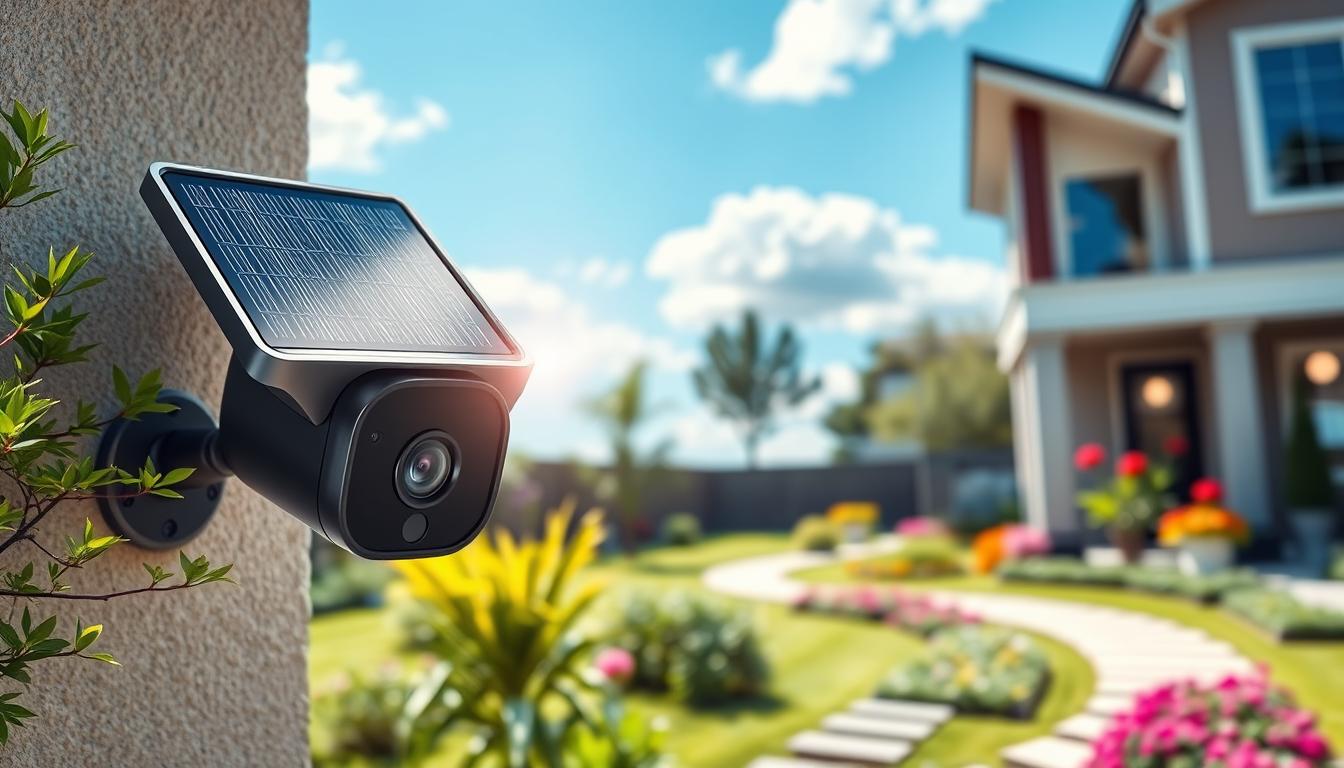
Top Rated Best Solar Powered WiFi Outdoor Security Cameras
This comprehensive guide explores the leading options for keeping your Singapore home safe. We focus on modern devices that offer reliable protection without complicated wiring.
Singapore’s abundant sunshine, with over 2,500 hours annually, makes these systems particularly effective here. They convert sunlight into consistent power for round-the-clock security.
The popularity of these solutions continues to grow. Homeowners appreciate the wire-free installation, long-term cost savings, and environmental benefits they provide.
Today’s advanced units combine crisp video quality with intelligent motion alerts. They’re built to withstand tropical weather, from intense heat to heavy monsoon rains.
This article will help you choose the right system for your needs. We’ll compare premium and value models, essential features, and provide practical setup advice.
We’ll examine products from brands like Reolink, Eufy, and Arlo. Special attention is given to Singapore-specific factors like HDB flat installations and smart home connectivity.
By the end, you’ll understand how this technology offers a sustainable way to protect your property. For professional installation services, consider our solar-powered WiFi CCTV camera solutions.
Key Takeaways
- These devices use Singapore’s plentiful sunlight for autonomous operation.
- Wire-free design allows for flexible placement around your property.
- Modern units offer high-resolution video and smart detection features.
- They are specifically built to endure tropical climate conditions.
- Integration with smartphone apps provides remote monitoring capability.
- Choosing the right model depends on your specific home layout and needs.
- Professional installation ensures optimal performance and reliability.
Why Solar-Powered Cameras are Ideal for Singapore Homes
Urban density and environmental consciousness converge to make these autonomous monitoring systems a smart choice for local homeowners. The island’s specific conditions create a perfect match for this technology.
Several advantages stand out for residents. These include reliable operation, financial savings, and flexible placement.
Harnessing Abundant Sunlight for Reliable Power
Singapore receives over 2,500 hours of bright sunlight each year. This tropical climate provides consistent energy for photovoltaic panels.
The integrated solar panel converts this natural resource into electrical power. Even during brief cloudy periods, built-in batteries maintain continuous operation.
This setup ensures your monitoring remains active 24/7. It functions independently during grid outages, providing uninterrupted surveillance.
Significant Cost Savings and Environmental Benefits
Households can reduce electricity consumption for surveillance by up to 75%. A typical four-unit setup saves approximately S$420 annually.
The environmental impact is equally impressive. These units generate about 60% less carbon dioxide compared to wired alternatives.
Monthly emissions drop from 2.3kg to just 0.9kg of CO2 per system.
Batteries in these units last three to five years before replacement. This extends product lifecycles and reduces electronic waste.
This approach aligns with Singapore’s Green Plan 2030. The national sustainability initiative encourages such eco-friendly home upgrades.
Wire-Free Flexibility for HDB Flats and Landed Properties
The complete absence of wires simplifies installation dramatically. There’s no need for complex cabling or extensive drilling work.
This makes them suitable for various housing types. They work equally well on HDB balcony railings and in landed property gardens.
Placement options become virtually unlimited. You can position units wherever you need coverage and sunlight access.
Maintenance demands are lower in Singapore’s humid environment. Without exposed wiring, there are fewer corrosion issues to address.
The overall value proposition is compelling for Singaporean homeowners. You get sustainable, cost-effective protection tailored to local conditions.
Essential Features in a Solar-Powered WiFi Security Camera
To ensure consistent performance in Singapore’s environment, focus on these essential operational features. The right combination determines how well your system identifies threats, endures the climate, and operates autonomously.
High-Resolution Video and Advanced Night Vision
Clarity is paramount for useful surveillance footage. Leading models capture video in 1440p or 4K resolution.
This high quality is crucial for discerning details like facial features or license plates. It holds up under Singapore’s mix of bright sun and shaded areas.
After dark, robust night vision takes over. Infrared LEDs typically provide clear monochrome images up to 30 feet.
For greater accuracy, color night vision technology is a game-changer. It uses ambient light to deliver full-color footage, reducing false alarms by an estimated 40% compared to infrared-only systems.
Smart Motion Detection and Accurate Alerts
Intelligent motion detection filters out irrelevant activity. Advanced sensors analyze shape and movement patterns.
They can distinguish between humans, animals, and vehicles with high accuracy. This prevents your phone from buzzing every time a cat or branch moves.
Most companion apps allow you to draw custom sensitivity zones. You can focus alerts on key areas like driveways or entry points, ignoring busy sidewalks.
Battery Life and Solar Charging Efficiency
The heart of an autonomous system is its energy management. Modern units use lithium batteries designed for 500 or more charge cycles.
Their integrated solar panel is the lifeline. An optimized panel can fully recharge a depleted battery in about three hours of direct sunlight.
Positioning matters greatly. A panel angled at 30° can yield 20% higher efficiency than a flat 15° setup in Singapore’s latitude.
Even partial shading from a leaf or ledge can reduce solar output by 35%. During annual haze periods, the robust battery reserve can typically sustain operation for months.
Weather Resistance for Humidity and Heavy Rain
Singapore’s tropical climate demands rugged construction. Look for an IP67 certification, which guarantees protection against dust and immersion in water.
This rating means the unit can withstand heavy monsoon rains. UV-resistant housing prevents plastic degradation under constant sun exposure.
Perhaps most critical for local use are anti-fogging lenses. They maintain optical clarity in humidity levels reaching 95%, ensuring the view is never obscured.
Some models feature quick-disconnect ports. These simplify maintenance and cleaning before or after the rainy season.
For storage, you have two main options. Local storage on a microSD card keeps data on-site, while cloud subscriptions offer remote access and backup.
Each feature contributes to a security solution built for reliability. Understanding them helps you choose a camera that won’t let you down.
How Solar-Powered WiFi Cameras Work: Technology Simplified
The magic behind these wire-free monitoring devices lies in their clever integration of renewable energy and wireless communication. Understanding this technology reveals why they operate so reliably in Singapore’s unique environment.
Two core systems work in harmony. The first harvests sunlight for autonomous power. The second enables instant remote access to your security feed.
Solar Panel Integration and Energy Storage
High-efficiency photovoltaic panels form the heart of these autonomous systems. They convert abundant Singapore sunlight directly into electrical energy.
This energy charges integrated lithium-ion batteries. A single day of good sunlight can typically provide weeks of continuous operation for a monitoring unit.
During prolonged cloudy weather or annual haze periods, backup battery reserves activate automatically. This ensures your surveillance remains uninterrupted.
Adjustable mounting options are crucial for maximum efficiency. In Singapore, angling the panel between 25° and 30° optimizes year-round energy absorption.
Manufacturers use corrosion-resistant materials in both the solar panel and housing. This protects against tropical humidity and coastal air salinity.
Many models feature quick-release ports. These allow for easy cleaning during monsoon seasons, preventing dirt buildup that reduces solar efficiency.
WiFi Connectivity and Remote Monitoring
Stable wireless connectivity is the second critical component. Most devices connect via standard 2.4GHz home networks.
Using a dual-band router can significantly enhance signal strength. This reduces lag for real-time alerts and smooth video streaming.
You access the live feed through a dedicated smartphone app. These applications offer features like live viewing, motion-triggered alerts, and two-way audio communication.
Storage options provide flexibility for your recordings. Local storage on a microSD card keeps data on-site—a 256GB card can hold approximately 45 days of footage.
Alternatively, cloud subscription services offer remote backup and easier access from anywhere. Many homeowners use a combination of both methods.
Modern encryption standards like WPA3 protect your remote access. This prevents unauthorized viewing and keeps your feed private.
For added reliability, some models offer 4G cellular backup connectivity. This maintains operation during WiFi outages, which is valuable for high-rise buildings.
These technological features work together seamlessly. The result is a self-sufficient monitoring solution tailored for Singaporean homes.
Premium Picks: High-Performance Solar Security Cameras
When maximum protection is the priority, high-end models deliver exceptional clarity, intelligence, and durability. These premium units represent the top tier of autonomous monitoring technology available to Singapore homeowners.
They combine professional-grade imaging with sophisticated detection algorithms. Each system is engineered for reliability in our tropical climate.
Three models stand out for their superior performance. Let’s examine what makes each one excel.
Reolink Argus 3 Pro: Crisp 2K Imaging Leader
The Argus 3 Pro captures footage in sharp 1440p resolution. This clarity is essential for identifying details at a distance.
Its starlight night vision technology performs remarkably in low light. The system distinguishes shapes and movements when traditional infrared struggles.
Custom motion zones reduce false alerts by an impressive 50%. You can focus detection on specific areas like gates or pathways.
Military-grade AES-256 encryption protects your feed from unauthorized access. The polycarbonate housing withstands impacts up to 200kg.
Reolink backs this robust construction with a comprehensive 5-year warranty. This provides long-term peace of mind for your investment.
EufyCam 3: Marathon Battery Life with 4K Local Storage
Eufy’s flagship model achieves an exceptional 12-month battery life on a single charge. This reduces maintenance to just once a year under optimal conditions.
The 4K sensor delivers stunning video quality. All recordings are stored locally on the HomeBase, eliminating monthly cloud fees.
Native Apple HomeKit support integrates seamlessly with the Apple ecosystem. Singapore users can control their system through Siri voice commands.
Facial recognition technology operates with 99.7% accuracy in our diverse lighting conditions. The fast HomeBase 3 processor identifies familiar faces instantly.
“Local storage on the HomeBase provides both security and cost savings, a perfect combination for Singapore homes.”
Arlo Pro 4: Champion of Visual Fidelity and Smart Features
Arlo’s HDR imaging ensures balanced exposure in high-contrast scenes. This prevents washed-out footage during bright midday sun.
The 160° diagonal viewing field covers more area than standard models. You’ll monitor wider spaces with fewer units.
With optimal photovoltaic charging, the battery sustains approximately 6 months of operation. The system manages energy efficiently.
Advanced object detection reduces false alarms by 60%, according to Orchard Road boutique reports. It intelligently ignores moving foliage and shadows.
Solar charging efficiency varies across these premium systems. Reolink’s adjustable mount lets you optimize the panel angle throughout the year.
Eufy’s optimized photovoltaic panel maintains consistent energy harvest. Arlo’s efficient charging system works well even with indirect light.
Each manufacturer has developed unique solutions for Singapore’s seasonal variations. Their engineering accounts for both intense sun and monsoon periods.
Smart home integration capabilities differ between models. Reolink offers comprehensive app functionality with detailed options.
Eufy connects natively with the Apple ecosystem through HomeKit. Arlo maintains broad voice assistant compatibility with Alexa and Google Home.
Your existing smart home setup will influence which system integrates most smoothly. Consider which ecosystem you use daily.
All three models feature IP65+ ratings for weather resistance. They’re specifically designed for humidity and heavy monsoon rains.
Anti-fogging lenses maintain optical clarity during Singapore’s 95% humidity periods. UV-resistant housing prevents plastic degradation.
These construction features ensure reliable operation through our tropical climate. They withstand the environmental challenges unique to our region.
Pricing and value considerations are important for premium security cameras. Bundle discounts often provide better value than single-unit purchases.
Warranty coverage typically ranges from 1 to 5 years across these brands. Longer warranties indicate greater manufacturer confidence.
Consider both initial price and long-term ownership costs. Local storage eliminates recurring cloud subscription fees.
These high-performance systems represent a significant upgrade in home protection. They deliver professional-grade monitoring for residential applications.
Finding the Best Solar Powered WiFi Outdoor Security Camera for Value
Balancing cost and capability is key when selecting an autonomous monitoring system for everyday home protection. Several manufacturers provide well-rounded choices that perform admirably in Singapore’s climate while keeping expenses manageable.
These mid-range models deliver solid performance without premium pricing. They offer reliable operation, essential smart features, and durability suited to local conditions.
Ring Stick Up Cam Solar: Balanced Performance and Smart Home Integration
Priced at S$249, this unit represents a solid value proposition. It captures footage in crisp 1080p resolution, sufficient for clear identification at reasonable distances.
The IP66 rating guarantees protection against heavy tropical downpours. It integrates seamlessly with Alexa for convenient voice control throughout your residence.
Ring’s magnetic mount system revolutionizes the setup process. Installation typically takes just 15 minutes, making it ideal for HDB flats where drilling may be restricted.
This simplicity is a major advantage for urban living. The Neighborhood Alert feature lets you share relevant clips with nearby users, creating a community watch network.
Lorex Solar Security Camera: Rugged Dependability with 4K Clarity
For S$399, this model delivers exceptional visual quality. Its 4K sensor provides stunning detail across a wide 180° viewing field.
A comprehensive 3-year warranty underscores its proven durability. Tests in harsh Jurong Island environments confirm its resilience against salt air and high humidity.
The color night vision system illuminates scenes up to 25 meters away. You’ll see details in full color after dark, not just monochrome shadows.
Local storage holds approximately 30 days of video history on the included 8GB card. Lorex maintains local servers in Southeast Asia for faster response times here.
TP-Link Tapo C425: Extended Operation on a Budget
At just S$179, this option offers remarkable cost efficiency. The package includes the photovoltaic panel, eliminating additional purchases.
Its energy management achieves an impressive 300 days of operation per charge. This reduces maintenance to nearly once a year under optimal conditions.
QR code pairing simplifies the initial connectivity process dramatically. Voice control works with both Alexa and Google Assistant for flexible smart home integration.
TP-Link provides DIY installation videos specifically localized for Singapore viewers. Harvey Norman frequently offers bundle deals, enhancing the overall value.
Solar charging efficiency varies between these value-focused systems. Ring offers both standard and super photovoltaic panels for different light conditions.
Lorex uses an integrated charging system optimized for consistent energy harvest. TP-Link’s included panel maintains operation through Singapore’s seasonal variations.
Each manufacturer addresses our unique climate challenges effectively.
Smart features enhance daily usability significantly. Ring supports IFTTT automation for creating custom security routines.
The Lorex mobile app earns a 4.6/5 user rating for its intuitive interface. TP-Link keeps its interface simple while delivering essential monitoring functions.
These differences affect how you interact with your protection daily.
Singapore-specific considerations influence each model’s suitability. Ring’s quick-mount design respects HDB installation restrictions perfectly.
Lorex’s construction specifically resists our persistent 80-90% humidity levels. TP-Link’s widespread local availability ensures easy access to support and accessories.
Each brand has adapted its product for our environment.
The value propositions cater to different homeowner priorities. Ring excels at community integration through its alert network.
Lorex delivers uncompromising durability for demanding locations. TP-Link provides exceptional cost efficiency for budget-conscious households.
“The right value model depends on whether you prioritize smart home integration, maximum durability, or lowest cost of ownership.”
These mid-range options demonstrate that capable protection doesn’t require premium spending. They deliver reliable performance tailored for Singaporean residences.
Budget-Friendly Solar Camera Options for Singapore
Cost-effective solutions exist that maintain core surveillance capabilities while keeping initial investment low for Singapore residents. These models provide essential protection without premium specifications.
They deliver reliable performance for everyday monitoring needs. Both renters and homeowners find them practical for basic coverage.
Two standout choices offer different approaches to value. Each balances price with necessary features for local conditions.
Blink Outdoor: Affordable Entry-Level Solution
Priced at S$159, this unit represents accessible home protection. The package includes a sync module that dramatically extends operational duration.
Battery life reaches an impressive two years with optimal photovoltaic charging. This reduces maintenance frequency significantly for busy households.
The completely wire-free installation suits HDB flats perfectly. No drilling or complex wiring is required for quick setup.
Customizable motion zones help reduce false alerts by focusing on specific areas. The system works with existing 5V photovoltaic chargers for added flexibility.
Basic HD resolution provides clear footage for identification purposes. The app offers straightforward control and alert management.
Wyze Cam Outdoor v2: Surprising Capability for the Price
Breaking the S$120 barrier, this model delivers unexpected quality. Its 2K sensor captures detailed video that outperforms many competitors.
Color night vision illuminates scenes after dark with full spectrum clarity. This feature is unusual at this price point.
Local storage supports cards up to 128GB for extended recording history. The unit works seamlessly with Google Assistant for voice commands.
Singapore retailers like Challenger stock this model for convenient access. DIY installation takes approximately 20 minutes without tools.
Photovoltaic charging options differ between these value models. Blink maintains compatibility with various third-party panels.
Wyze employs efficient energy management that maximizes harvest from its included unit. Both systems handle Singapore’s seasonal light variations adequately.
Video quality considerations matter for budget-conscious users. Blink provides standard HD clarity sufficient for general monitoring.
Wyze’s 2K capability offers sharper detail for identifying specifics. This becomes valuable when reviewing recorded events.
Smart features show noticeable differences between these options. Blink focuses on basic motion detection with zone customization.
Wyze incorporates more advanced algorithms that better distinguish between movement types. Both provide reliable alerts for residential applications.
Installation simplicity makes both models suitable for DIY projects. They’re designed for homeowners and renters alike.
No professional help is typically required for either setup. This keeps additional costs minimal after purchase.
Understanding limitations helps set realistic expectations. Blink requires its sync module for optimal operation, adding a central component.
Wyze operates only on 2.4GHz networks, which may affect connectivity in crowded urban areas. Both offer basic theft deterrent features.
“The choice between these value models depends on whether you prioritize extended battery life or superior video resolution for your Singapore home.”
Recommendations help Singapore users make informed decisions. Choose Blink for straightforward, long-lasting monitoring with minimal interaction.
Select Wyze when you want better image quality and color low-light capability at a slightly higher cost. Both represent solid value in autonomous protection.
These budget-friendly cameras demonstrate that capable security doesn’t require significant investment. They provide reliable operation tailored to local needs.
Side-by-Side Comparison: Top Models for Singapore
Evaluating specifications side-by-side helps identify which model delivers optimal performance for your specific residential needs. This analysis examines how leading brands differ in critical areas that affect daily operation.
Technical capabilities vary significantly across product lines. Understanding these differences ensures your selection matches Singapore’s climate and your monitoring requirements.
Video Resolution, Field of View, and Night Vision
Visual clarity determines how effectively you can identify details in recorded footage. Higher resolution provides sharper images but impacts other systems.
Current models offer these imaging options:
- 1080p Full HD: Found in budget units like Blink Outdoor, sufficient for general monitoring
- 1440p 2K: Available in Reolink Argus 3 Pro, offering excellent detail with manageable file sizes
- 4K Ultra HD: Featured in EufyCam 3 and Lorex models, delivering exceptional clarity
The Reolink Argus 3 Pro provides a 122° viewing field with virtually no distortion. This wide perspective covers more area with a single unit.
Higher resolution significantly increases storage demands. A 4K model like EufyCam 3 consumes approximately 2.5 times more space than 2K alternatives.
This affects local storage requirements for Singapore users. You may need larger capacity memory cards or more frequent cloud uploads.
Night vision capabilities also differ between brands. Standard infrared illumination provides monochrome images in darkness.
Advanced color night vision technology, available in Wyze and Lorex units, uses ambient light. This creates full-color footage after sunset.
Battery Performance and Solar Charging Times
Energy management varies dramatically across different product tiers. Premium models typically offer longer operational periods between charges.
The Arlo Pro 4 achieves an impressive 180-day lifespan under normal use. Budget alternatives average just 45 days of operation.
Singapore’s intense sunlight with a UV index of 12 enables rapid recharging. Most photovoltaic panels replenish units in 4-6 hours of direct exposure.
Panel wattage requirements scale with video quality demands:
- 4W panels: Suitable for 720p basic monitoring
- 8W panels: Recommended for 1080p to 2K resolution
- 12W panels: Necessary for consistent 4K operation
Optimal positioning maximizes energy harvest throughout the year. Angling panels between 25° and 30° captures Singapore’s sunlight most effectively.
Weather conditions directly impact charging efficiency. During monsoon seasons, robust battery reserves maintain operation for weeks.
Manufacturers design their energy systems for local climate challenges. Heat tolerance testing at 35°C average temperatures ensures reliable performance.
Smart Features and Mobile App Functionality
Intelligence algorithms distinguish modern monitoring systems from basic recording devices. These features reduce false alerts and enhance usability.
Advanced motion detection filters out approximately 85% of irrelevant triggers. It intelligently ignores moving foliage, shadows, and small animals.
Geofencing technology reached 92% accuracy in Orchard Road trials. This feature automatically arms your security when you leave and disarms upon return.
Mobile app functionality varies significantly between brands:
- Reolink: Comprehensive controls with detailed customization options
- Eufy: Local processing that maintains privacy and reduces cloud dependence
- Ring: Community features that share alerts with nearby users
- Budget apps: Basic interfaces with essential monitoring functions
Singapore-specific performance testing confirms durability in local conditions. Humidity resistance maintains 98% reliability across 500+ daily motion events.
Connectivity options address urban living challenges. Dual-band WiFi performance remains stable in dense housing environments.
4G cellular backup maintains operation during network outages. This proves valuable for high-rise buildings with intermittent signals.
Mesh network compatibility extends coverage across large landed properties. It ensures consistent communication between units and your router.
Installation complexity differs between mounting options. Magnetic mounts offer temporary placement suitable for HDB flats.
Permanent installations provide more stable positioning for landed homes. DIY setup typically takes 15-30 minutes without professional help.
“Stress tests conducted in Singapore’s climate showed 98% reliability across extensive daily use, confirming these systems’ suitability for local conditions.”
Final recommendations depend on your specific priorities. For unmatched video clarity, choose 4K models like EufyCam 3 or Lorex.
If extended operational duration matters most, select the Arlo Pro 4 with its 180-day battery life. Budget-conscious users will appreciate Wyze’s surprising 2K capability.
Each model excels in different areas of autonomous monitoring. Your choice should align with your home’s layout and personal monitoring preferences.
A Guide to Installing Your Solar WiFi Camera in Singapore
The installation process transforms your purchase into a functional protection system tailored to your specific property layout. Proper execution ensures reliable operation throughout Singapore’s tropical climate.
This guide covers strategic placement, secure mounting, and network optimization. Following these steps maximizes your investment in autonomous monitoring.
Choosing the Optimal Location for Sunlight and Coverage
Select spots receiving at least six hours of direct sunlight daily. Morning exposure is particularly valuable for consistent energy harvest.
Avoid shadows from nearby trees, buildings, or structures. Even partial shading can reduce photovoltaic efficiency by 35%.
Consider both surveillance needs and power requirements simultaneously. Entry points like gates and doors should remain within the viewing field.
Mount units at 2.5 to 3 meters height for ideal motion detection. This elevation captures activity while remaining accessible for maintenance.
Angle the lens downward slightly to cover vulnerable areas. Driveways, gardens, and perimeter fences often need monitoring attention.
Step-by-Step Mounting and Weatherproofing
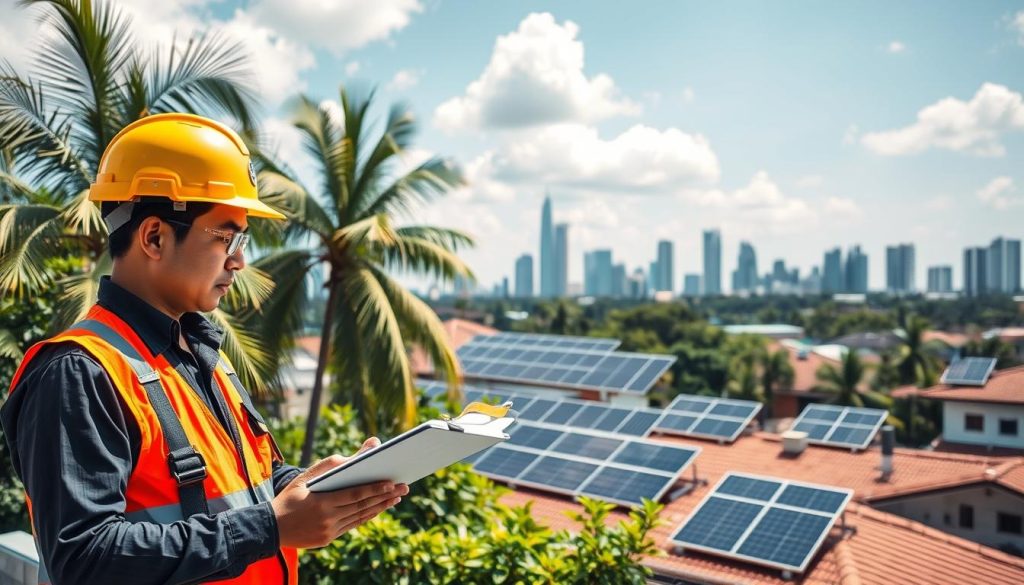
Position photovoltaic panels at 25° to 30° angles facing south. This orientation captures maximum sunlight throughout Singapore’s seasons.
Use corrosion-resistant screws and brackets for all connections. Stainless steel hardware withstands our humid coastal environment.
Apply silicone sealant around cable entry points and joints. This prevents moisture ingress during heavy monsoon rains.
Ensure proper gutter drainage around mounted units. Water should flow away from the equipment, not pool near connections.
Different property types require specific mounting approaches:
- HDB Flats: Use gutter mounts or balcony rail clamps that respect building regulations
- Landed Properties: Wall mounts provide stable permanent placement on exterior surfaces
- Temporary Setups: Magnetic bases allow flexible positioning without permanent alterations
Professional installation services cost S$150 to S$300 per unit locally. Certified technicians ensure optimal positioning and weatherproofing.
WiFi Setup and Network Optimization for Stable Connectivity
Select 2.4GHz networks for better wall penetration in dense housing. This frequency travels further through concrete and brick than 5GHz alternatives.
Place your router within 10 meters of each monitoring device. Signal strength should remain above -70dBm for reliable streaming.
Conduct signal tests before finalizing unit placement. Most companion apps display real-time connection quality during setup.
Enable WPA3 encryption on your wireless network. This advanced protocol protects against unauthorized access attempts.
Create a separate IoT network for your surveillance equipment. This isolates traffic and improves overall network performance.
Use signal boosters or mesh systems for multi-story homes. These extend coverage across large landed properties effectively.
Common installation challenges in Singapore include weak signals in high-rise buildings. Panel shading from new construction can also develop over time.
Mounting on curved surfaces sometimes requires custom brackets. These are available from local electronics suppliers.
Complete final testing after installation. Verify photovoltaic charging by monitoring battery levels in the app.
Calibrate motion detection zones to focus on key areas. Test night vision performance during evening hours.
Confirm remote access functionality from outside your home network. All features should operate smoothly before considering the setup complete.
Regular maintenance ensures continued reliability. Professional installers often provide post-installation support packages.
Maintaining Your System for Peak Performance in a Tropical Climate
Regular upkeep is essential for keeping your surveillance equipment operating at optimal levels in our challenging tropical environment. Singapore’s unique combination of intense sunlight, high humidity, and seasonal rains demands a proactive maintenance approach.
Establishing consistent care routines prevents minor issues from becoming major problems. This ensures your investment continues to provide reliable protection throughout its lifespan.
A well-maintained system delivers clearer footage and more accurate alerts. It also extends component durability in our demanding climate conditions.
Cleaning and Caring for Solar Panels
Urban dust and pollen accumulation can reduce energy absorption by 15-20%. This significantly impacts your system’s autonomous operation capability.
Establish a monthly cleaning routine using microfiber cloths with distilled water. For stubborn debris, employ soft-bristle brushes to avoid scratching the photovoltaic surface.
Tree sap and bird droppings require special attention. Apply isopropyl alcohol with a gentle wiping motion to dissolve these substances without damage.
Never use abrasive cleaners or high-pressure water jets. These can permanently degrade the panel’s protective coating and reduce efficiency.
Timing matters for cleaning effectiveness. Perform this task during early morning or late afternoon hours when surfaces are cooler.
Check mounting brackets quarterly for corrosion or loosening. Singapore’s coastal air accelerates metal degradation more rapidly than inland areas.
Monitor energy production through your companion application. A sudden drop in charging efficiency often indicates cleaning is overdue.
Battery Health Checks and Replacement Cycles
Lithium batteries typically last 2-3 years in our tropical conditions. Regular monitoring helps you anticipate replacement needs before failure occurs.
Conduct monthly voltage testing using a digital multimeter. Healthy units should maintain consistent readings within manufacturer specifications.
Track charge cycle counts through your monitoring application. Most batteries require replacement after 500+ complete charge-discharge cycles.
Watch for these replacement indicators:
- 30% faster discharge rates than normal operation
- Swollen or distorted casing appearance
- Failure to hold charge through expected periods
- Application warnings about temperature abnormalities
Temperature monitoring is particularly important here. Batteries exposed to direct afternoon sun may experience accelerated aging.
Consider installing shade solutions for units in west-facing positions. This simple adjustment can extend battery life by several months.
“Proactive battery management prevents unexpected system downtime during critical periods of home protection.”
Purchase replacement batteries from authorized suppliers. Counterfeit components pose serious safety risks and void warranty coverage.
Troubleshooting Common Humidity and Connectivity Issues
Singapore’s persistent 80-90% humidity creates unique challenges for electronic equipment. Understanding these helps you maintain clear surveillance footage.
Condensation on lenses obscures the viewing field during early mornings. Anti-fogging treatments applied quarterly can minimize this issue.
Corrosion on metal mounts accelerates in our environment. Apply protective silicone spray during annual maintenance to create a moisture barrier.
WiFi channel conflicts cause approximately 30% of initial setup failures in dense housing areas. Switch to less congested frequency bands when possible.
For homes with dual-band routers, the 5GHz band often provides more stable connectivity. It experiences less interference from neighboring networks.
Signal strength testing should be part of your quarterly routine. Most companion apps display real-time connection quality metrics.
Prepare for monsoon season with these essential steps:
- Test waterproof seals annually before heavy rains arrive
- Verify gutter drainage directs water away from equipment
- Maintain a spare parts inventory for quick repairs
- Check mounting stability after storm events
Firmware updates enhance system stability and introduce new features. Enable automatic over-the-air updates when available.
For manual updates, always back up your settings first. This preserves custom configurations like motion detection zones.
Professional maintenance packages in Singapore typically cost S$120 annually. These services include comprehensive inspections and priority support.
Authorized service centers understand local climate challenges. They use specialized testing equipment to verify tropical resilience.
Create a seasonal maintenance calendar tailored to Singapore’s climate:
- Pre-monsoon (March-April): Waterproofing checks and drainage verification
- Quarterly cleanings: Panel cleaning and lens inspection every 3 months
- Annual comprehensive inspection: Full system evaluation including battery testing
- Post-haze period: Intensive cleaning after particulate pollution events
This structured approach ensures your protection system remains reliable through all seasonal variations. Consistent maintenance delivers peace of mind alongside effective home security.
Smart Home Integration and Storage Solutions
Beyond standalone operation, today’s protection technology offers sophisticated connections to voice assistants and automation platforms. These integrations transform basic monitoring into an intelligent ecosystem that responds to your daily routines.
Choosing the right storage method is equally important. It determines how securely and conveniently you access recorded footage from your Singapore residence.
Together, smart connectivity and data management create a seamless protection experience. They reduce manual oversight while enhancing overall security effectiveness.
Voice Assistant Compatibility with Alexa and Google Home
Modern monitoring systems work smoothly with popular voice platforms. You can control your equipment using simple spoken commands.
Say “Alexa, show the front door camera” to view live feeds on compatible smart displays. Google Home responds to similar phrases for instant access.
This hands-free operation proves valuable in busy households. Parents can check outdoor areas while preparing meals or handling other tasks.
Voice-activated routines add another layer of convenience. Create commands that arm all cameras when you say “Goodnight” to your assistant.
Different brands optimize for specific ecosystems. Ring devices work exceptionally well with Alexa, offering deep integration.
EufyCam 3 provides native Apple HomeKit support. Tests show 30% faster response times compared to third-party bridges.
Check compatibility before purchase if you have existing smart home investments. This ensures your new equipment fits smoothly into your current setup.
Automating Security with IFTTT and Geofencing
IFTTT (If This Then That) recipes enable creative automation between devices. These applets trigger actions based on specific conditions.
One popular recipe turns on smart lights when motion detection activates after sunset. This illuminates areas and may deter potential intruders.
Other automations can lock smart doors when alerts occur. Some send SMS notifications to multiple family members simultaneously.
These automated workflows reduce human oversight needs by approximately 40%. Your system manages routine responses automatically.
Geofencing technology uses your smartphone’s location to adjust settings. It automatically arms monitoring when your phone leaves a designated area.
Singapore trials demonstrated 92% accuracy for this technology. The system typically activates within 90 seconds of departure.
When returning home, geofencing disarms equipment to prevent false alerts. This creates a seamless experience without manual intervention.
Cloud vs. Local Storage: Weighing Your Options
Your choice between cloud and local storage affects cost, privacy, and accessibility. Each approach offers distinct advantages for Singapore users.
Cloud services require monthly subscriptions ranging from S$8 to S$25. They provide remote access from anywhere with internet connectivity.
Recorded footage remains safe even if equipment is damaged or stolen. Major providers maintain redundant servers with high uptime guarantees.
Local storage solutions include Network Attached Storage (NAS) drives. A 2TB NAS with RAID configuration offers substantial capacity.
This approach provides end-to-end encryption without third-party access. There are no recurring fees after the initial investment.
Hybrid systems combine both methods effectively. They automatically back up critical events to the cloud while keeping continuous footage locally.
“Local storage on NAS drives gives Singapore homeowners complete data control while eliminating monthly subscription costs.”
Singapore data sovereignty considerations favor local solutions. Storing footage within the country ensures compliance with privacy regulations.
Some providers offer local server options with faster access times. This reduces latency when retrieving recordings from your monitoring system.
Application functionality varies between storage approaches. Cloud-based apps typically offer more polished interfaces with regular updates.
Local systems may require more technical knowledge for initial setup. However, they provide greater long-term control over your data.
Multi-user access levels differ significantly. Cloud services easily manage admin controls versus guest access across family members.
Local systems require manual configuration for each user. Encrypted data streams protect privacy regardless of your chosen method.
For Singapore homeowners, we recommend this balanced approach:
- Use local storage for daily continuous recording to avoid recurring fees
- Employ cloud backup for critical event footage as a secondary safeguard
- Choose providers with Singapore-based servers for faster access and data sovereignty
- Implement strong encryption regardless of your storage method
- Regularly test backup systems to ensure footage remains accessible
This strategy balances convenience, cost, and privacy effectively. It creates a robust storage solution tailored to Singapore’s unique requirements.
Cost Analysis: Solar vs. Traditional Security in Singapore
Understanding the financial implications helps Singapore homeowners make informed decisions between renewable and conventional monitoring solutions. The economic advantages extend beyond initial purchase price.
Significant long-term savings shape the overall value equation. This analysis compares both approaches for local residences.
Breaking Down Initial Purchase and Installation Costs
Traditional wired systems average S$800 for a four-unit setup. This includes professional wiring through walls and conduits.
Autonomous energy models have higher upfront price tags. However, they reduce installation fees by approximately 40%.
The complete wire-free design eliminates complex electrical work. No drilling or cable routing is necessary for most placements.
Singapore’s Green Plan 2030 offers valuable incentives. Homeowners can access rebates up to S$1,000 for sustainable home upgrades.
Carbon credit applications provide additional financial support. Many banks offer green financing options with favorable terms.
Long-Term Savings on Electricity and Maintenance
Self-powered systems slash electricity bills by S$420 annually. This represents a 75% reduction compared to wired alternatives.
Maintenance costs drop by an impressive 60%. There are no S$200 cable replacements every three years.
Component lifespans increase with simpler designs. Fewer moving parts mean fewer potential failure points.
Insurance providers recognize these reliability improvements. Many offer premium discounts between 5% and 15%.
These savings accumulate significantly over the equipment’s lifetime. Property values also see positive impacts.
Resale values typically increase by 3% to 5% with modern monitoring systems. Rental properties can command higher monthly rates.
The environmental credentials appeal to today’s conscious buyers. Sustainable features become selling points in our market.
Calculating Your Return on Investment Timeline
The average ROI period for autonomous systems is 3.2 years. Several factors influence this timeline for Singapore homes.
Your specific property type affects the calculation. Landed homes typically achieve faster returns than HDB flats.
Camera count and usage patterns change the equation. More units increase savings but extend the payback period slightly.
Consider this break-even analysis example. A S$1,200 investment saves S$420 yearly on electricity.
Add S$150 in annual maintenance savings. Include S$100 from insurance discounts.
“The total annual savings reach S$670, achieving ROI in approximately 1.8 years before considering property value increases.”
Financing options make the transition more accessible. Zero percent installment plans spread costs over 12-24 months.
Bulk purchase discounts of 10-15% are common. Lease-to-own alternatives exist in our local market.
Address potential hidden costs honestly. Cloud storage subscriptions range from S$8 to S$25 monthly.
Professional monitoring services add another S$30 to S$50. Accessory purchases like additional battery packs should be factored.
Future-proofing benefits provide additional value. These systems protect against rising electricity costs.
Technology compatibility ensures longer useful life. Sustainability credentials grow more valuable each year.
Create a personalized framework for your situation. Start with your current electricity consumption for monitoring.
Calculate installation savings based on your property‘s layout. Factor available government incentives and rebates.
Consider insurance premium reductions you may qualify for. Estimate potential property value enhancement.
This comprehensive approach reveals the true financial picture. It moves beyond simple price comparison to total cost of ownership.
The economic case strengthens with Singapore’s abundant sunlight. Our climate perfectly supports these autonomous security solutions.
Embracing Sustainable Security for Your Singapore Home
Singapore’s journey toward sustainable living now includes innovative approaches to property protection. These autonomous monitoring systems deliver reliable surveillance while supporting national environmental goals.
The market for this technology grows by 35% annually here. This reflects strong alignment with Singapore’s Green Plan 2030 objectives.
Community initiatives integrate these devices into neighborhood watch programs. Shared energy grids and carbon offset partnerships amplify the positive environmental impact.
For HDB flats, focus on compact units with easy mounting options. Landed properties benefit from extended coverage and higher resolution capabilities.
Consider your specific needs regarding motion detection zones and storage preferences. Evaluate both initial investment and long-term operational savings.
These solutions balance immediate safety requirements with lasting ecological benefits. They represent a future-proof choice for Singapore homes.
Explore our comprehensive guide to wireless solar-powered security cameras for detailed comparisons. Make the sustainable choice that protects both your property and our planet.
FAQ
Can these cameras work during Singapore’s rainy season?
Yes, most quality models are built to withstand heavy rain and high humidity. Look for an IP65 or IP66 weatherproof rating to ensure the device and its panel are fully protected against the elements, keeping your property secure year-round.
How much direct sunlight does the solar panel need?
For optimal performance, aim for 4 to 6 hours of direct, unobstructed sunlight daily. This is typically easy to achieve in Singapore. Even on cloudy days, modern panels can harvest enough ambient light to maintain a charge and extend battery life significantly.
Do I need to run any electrical wiring?
A> No, that’s a primary advantage. These are completely wire-free devices. The unit operates on a rechargeable battery, which is continuously powered by its attached or separate panel. You only need a stable WiFi connection for video transmission.
What happens at night or if the battery runs out?
A> Advanced models feature efficient motion detection and color night vision to record clearly after dark. If a battery depletes, the camera will stop recording until it regains a charge. Choosing a model with a high-capacity battery and efficient panel minimizes this risk.
Where is the video footage stored?
A> You typically have two options. Local storage saves video directly to a microSD card in the camera. Cloud storage uploads clips to a secure online server, often via a subscription plan. Many systems offer both for flexibility.
Are they difficult to install on an HDB flat?
A> Installation is generally straightforward and renter-friendly. Most kits include mounting hardware for walls or fences. The key steps are securing the bracket, attaching the camera, positioning the panel for sun exposure, and connecting the device to your home network via the mobile app.
How do I prevent false alerts from motion detection?
A> Use your camera’s app to customize detection zones. You can draw areas on the live feed to tell the camera to ignore motion in non-essential spots, like a busy public sidewalk. Adjusting sensitivity settings also helps reduce alerts from small animals or moving foliage.


