
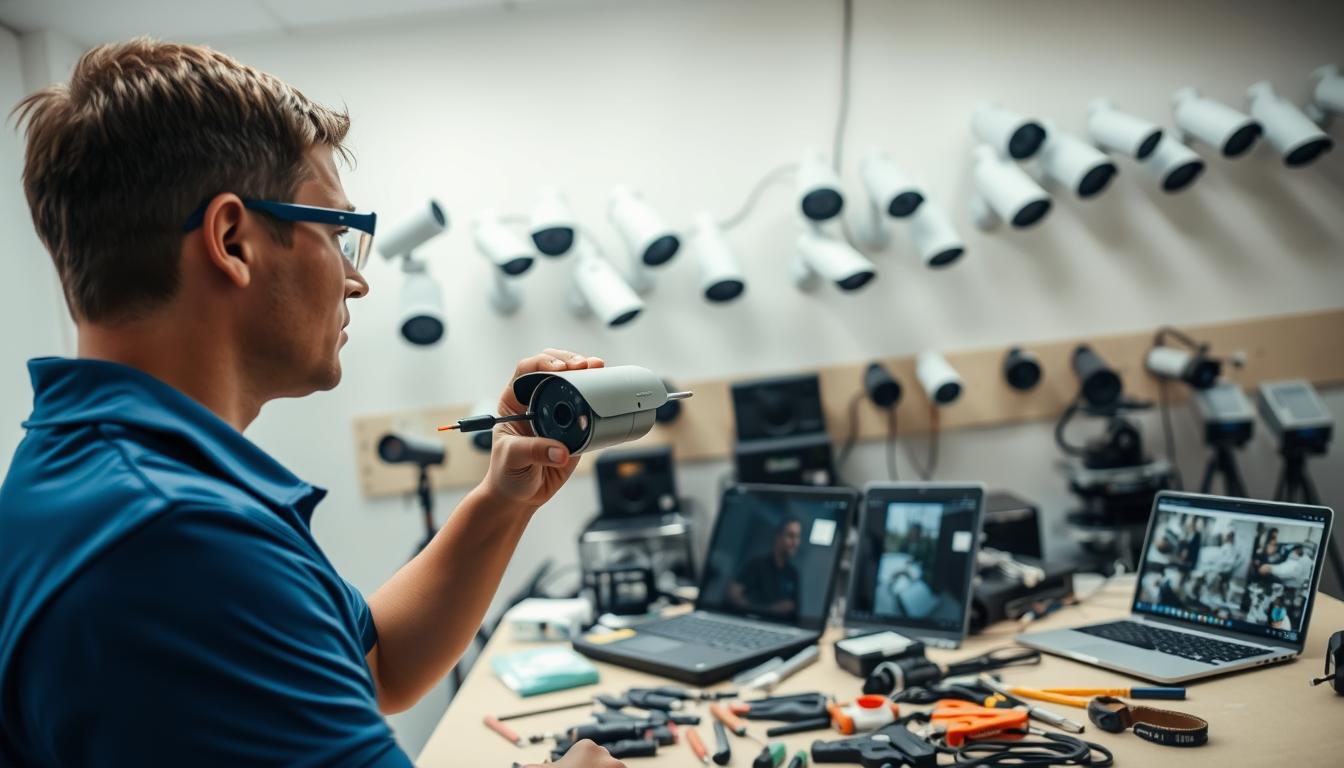
What is CCTV Maintenance? A Comprehensive Guide
Your surveillance setup is a silent guardian, a cornerstone of modern security. To keep this guardian alert and effective, it requires dedicated, ongoing care.
This essential practice involves the regular inspection, cleaning, testing, and updating of your closed-circuit television equipment. It’s the disciplined process that ensures every camera and recorder performs at its best.
In a place like Singapore, where these systems are ubiquitous, this upkeep is far from optional. It is a critical investment for any property or business owner.
The core goal is straightforward: to guarantee smooth operation, prevent unexpected breakdowns, and fully protect your security investment. A well-maintained system delivers reliable footage when you need it most.
A proactive schedule of service stands in sharp contrast to costly, disruptive emergency repairs. This guide will show you how a planned approach saves money and stress in the long run.
We will provide actionable insights and best practices tailored for the Singapore context, helping you achieve lasting security resilience.
Key Takeaways
- CCTV maintenance is the ongoing process of inspecting, cleaning, testing, and updating surveillance equipment.
- It is a necessary investment, not an optional cost, to ensure system reliability.
- Regular upkeep prevents costly failures and protects your security infrastructure.
- A proactive maintenance plan is more effective and economical than reactive repairs.
- This practice is especially vital in security-conscious environments like Singapore.
- The goal is to keep your cameras and recording systems functioning optimally 24/7.
- This guide will provide practical solutions for maintaining your surveillance system.
Why CCTV Maintenance is Non-Negotiable for Security
Viewing upkeep as an optional expense is a critical misstep that jeopardizes your entire security framework. This disciplined care is a fundamental operational requirement, not a discretionary cost.
Skipping it creates a dangerous illusion of protection. Your property becomes vulnerable the moment a camera fails.
The High Cost of Neglect: From Blurry Footage to Total Failure
Minor issues quickly become major threats. A lens coated in grime or a camera knocked out of alignment produces blurry, useless footage.
This degraded video quality has serious consequences. It compromises evidential value and can render recordings inadmissible.
Neglect allows these problems to cascade. Hardware degradation, water damage, and power failures can lead to complete system collapse.
The result is blind spots. These are open invitations for security breaches.
Data shows the impact. Poor upkeep leads to system inefficiencies, potential breaches, and significantly increased repair costs.
It also carries legal and compliance risks. Conversely, a regular schedule can lower malfunction chances by up to 30%.
The key risks of poor maintenance include:
- Unusable, low-quality footage.
- Increased downtime and security gaps.
- Exponential emergency repair expenses.
- Exposure to liability from system failure.
Proactive Care vs. Reactive Repairs: Understanding the ROI
Scheduled service offers a clear financial advantage. The costs are predictable and budgetable.
Reactive fixes are the opposite. They are unpredictable, often exorbitant, and come during a crisis.
This proactive approach directly enhances reliability. It ensures your cameras are operational precisely when needed.
Downtime is a critical concept. Unplanned outages create immediate security gaps and disrupt operations.
Regular inspections prevent this. They protect your financial investment by maximizing equipment lifespan.
For commercial operations, this is essential. A well-maintained system supports liability management, regulatory compliance, and asset protection.
Over 80% of businesses report better satisfaction with properly maintained systems. This translates to peace of mind and a stronger security posture.
The return on investment is clear. Proactive care saves money, prevents stress, and guarantees your security infrastructure performs.
The Critical Role of CCTV in Singapore’s Security Landscape
Singapore’s reputation as a safe city-state is underpinned by a sophisticated network of surveillance technology. This infrastructure is vital for both public safety and private asset protection.
Its consistent operation is not just a technical concern. It is a fundamental pillar of the nation’s security posture.
Deterrence and Data: How Cameras Shape Public and Private Safety
Visible cameras act as a powerful psychological deterrent. Their presence in public areas and around private properties influences behavior and discourages criminal activity.
Studies consistently show a correlation between increased camera coverage and reduced crime rates. This data validates the investment in these systems.
When an incident occurs, recorded footage provides crucial evidence. High-quality video can identify perpetrators and support investigations.
Modern cctv systems offer features like remote access. Property owners and managers can view live feeds from smartphones or tablets anywhere.
This capability transforms reactive monitoring into proactive management. It addresses security needs in real-time.
Meeting Singapore’s Regulatory Standards for Surveillance
Operating a surveillance system in Singapore carries legal responsibilities. Strict regulations, including the Personal Data Protection Act (PDPA), govern monitoring and data handling.
Regular professional care ensures your setup complies with these laws. Key compliance areas include:
- Lawful video retention periods.
- Secure storage and protection of recorded data.
- Appropriate signage informing of surveillance.
Singapore’s humid, tropical climate presents a unique challenge. Moisture and heat can degrade camera components and lens clarity.
Consistent upkeep counteracts these environmental factors. It preserves performance and evidential quality.
Maintaining private cctv systems supports broader national security initiatives. Each functioning camera contributes to the collective safety network.
For businesses, this is both a commercial duty and a risk management strategy. A well-kept system offers reliable security and legal compliance.
Ultimately, this disciplined approach to system care upholds Singapore’s status as a secure global hub. It is a shared commitment to resilience.
What is CCTV Maintenance? Defining the Scope
To build a resilient security posture, one must first map the entire landscape of necessary upkeep tasks. A clear, operational definition moves us beyond basic concepts.
This disciplined program ensures every component of your surveillance setup functions as intended. It’s the blueprint for reliability.
Beyond Just Cleaning: A Holistic View of System Care
Effective care is holistic. It integrates physical, digital, and operational aspects into a single, coherent strategy.
The physical layer involves cameras, housings, cables, and power supplies. Keeping these parts clean and secure is fundamental.
The digital layer covers software health and network connectivity. Regular firmware updates and cybersecurity patches are non-negotiable.
“A surveillance system is an ecosystem. You cannot maintain the hardware and ignore the software; both are vital for security.”
The operational layer focuses on data integrity and storage checks. You must make sure recordings are complete and of evidentiary quality.
This integrated view treats your cctv system as a living entity. Each element supports the others, creating a unified defense.
Routine vs. Corrective: The Two Pillars of Maintenance Action
All upkeep activities fall into two categories: routine and corrective. Understanding this distinction is key to a smart plan.
Routine maintenance is preventative. These are scheduled tasks designed to stop things from going wrong.
- Visual inspections of all equipment and mounts.
- Testing camera feeds and recording functions.
- Cleaning lenses and housing exteriors.
- Applying the latest firmware updates.
Corrective maintenance is reactive. It addresses problems that have already occurred.
- Replacing a failed camera or recorder.
- Repairing cut or damaged cables.
- Troubleshooting network connectivity failures.
- Restoring lost data or corrupted storage.
A balanced strategy prioritizes routine actions. This proactive approach dramatically reduces the need for costly corrective work.
Defining this full scope—from holistic care to action types—is the critical first step. It allows you to build a customized, effective program for any property.
Your security systems deserve this comprehensive attention. It transforms a collection of devices into a trusted, enduring shield.
Core Components of an Effective CCTV Maintenance Plan
Transforming a collection of cameras into a dependable shield requires a methodical maintenance framework. This blueprint organizes all necessary tasks into three core, interconnected components.
Neglecting any single area weakens your entire security posture. A comprehensive plan addresses hardware, software, and operational performance in unison.
Hardware Health: Cameras, Housings, Cables, and Power Supplies
The physical integrity of your setup is the first line of defense. Regular inspections verify that all equipment remains secure and functional.
Check camera lenses for dirt, condensation, or spider webs. Examine protective housings for cracks or water ingress, especially after heavy rain.
Inspect all cables and connections for wear, corrosion, or damage. Loose wires can interrupt power and data transmission, causing feed loss.
Ensure mounts are tight and camera angles haven’t shifted. A misaligned camera creates a blind spot, defeating its purpose.
A proactive checklist for hardware includes:
- Visual check for physical damage or corrosion.
- Verification of tight, secure connections.
- Cleaning of lenses and housing exteriors.
- Testing of power supplies and backup batteries.
Addressing minor wear early prevents major failures. For complex issues, engaging professional camera repair services ensures correct and lasting fixes.
Software Integrity: Firmware Updates and Cybersecurity Patches
Your surveillance system is a computer network. Its software requires as much care as its physical parts.
Manufacturers release firmware updates to fix bugs, improve performance, and close security loopholes. Outdated software is a prime target for hackers.
Regular updates protect your network from unauthorized access. They also ensure compatibility with other systems and new features.
“Cybersecurity for surveillance isn’t optional. An unpatched camera can become an open door into your entire network.”
Schedule these updates during low-activity periods. Always back up configurations beforehand to avoid data loss.
This layer of care maintains digital connectivity and safeguards your recorded data. It is a non-negotiable part of modern security management.
Performance Verification: Image Quality and Storage Checks
The ultimate test of your plan is output reliability. You must validate that the system is capturing and storing usable evidence.
Regularly review live feeds and recorded footage. Look for blurriness, discoloration, or poor lighting that obscures details.
Confirm that motion detection and recording triggers work correctly. Test during different times of day to ensure consistent performance.
Monitor storage capacity on network video recorders (NVRs) or cloud services. Full storage can halt recording, creating critical gaps.
Key verification tasks ensure quality:
- Assess image clarity and color accuracy.
- Test playback and export functions.
- Verify available storage and recording schedules.
- Check that all cameras are contributing data.
This process confirms your equipment is not just on, but actively serving its purpose. It guarantees the system running smoothly when an incident occurs.
These three components form a complete cycle of care. Hardware provides the platform, software secures it, and verification proves its condition.
Together, they deliver clear footage, extended system lifespan, and unwavering reliability. This is the core of any effective maintenance plan.
Common CCTV Maintenance Issues and How to Troubleshoot Them
When a camera feed goes dark or footage turns fuzzy, the integrity of your entire security perimeter is instantly called into question. Recognizing early warning signs and knowing how to respond is crucial.
This guide breaks down the most frequent problems into three key areas. We provide a logical path to diagnose and often resolve them yourself.
Image Problems: Blurry, Foggy, or Discolored Footage
Poor visual quality is a top complaint. It renders footage useless for identification.
First, check the lens. Dust, grease, or spider webs are common culprits. Gently clean the exterior with a microfiber cloth.
Internal fogging points to a broken seal. This often requires professional resealing or housing replacement.
For night vision glare, adjust the camera’s infrared LED settings or its angle. Ensure it’s not pointed at a reflective surface.
Make sure camera settings like focus, white balance, and exposure are correct. Sometimes a simple reboot fixes these things.
Connectivity Failures: Losing Feed or Network Access
When a camera disappears from your monitor, connectivity is usually the issue. Start with the physical link.
Inspect cables for cuts, chew marks, or corrosion. Verify every connector is snug. A loose cable is a frequent cause of intermittent downtime.
“Over 50% of network feed losses trace back to physical cable faults or poor connections. The simplest check is often the most effective.”
For IP cctv cameras, check your network. Reboot the router and ensure the camera has a valid IP address. An IP conflict can knock a device offline.
Keep all network switch firmware updated. This maintains stable connectivity for your entire system.
Power and Recording Issues: Unexpected Shutdowns or Data Loss
If a camera reboots randomly or won’t turn on, suspect a power problem. Check the local adapter and any power over Ethernet (PoE) injector.
Test the outlet and inspect the cable for damage. A faulty power supply is a common point of failure.
Recording failures are serious. First, verify your DVR or NVR hard drive has free space. A full drive stops new recordings.
Run a diagnostic on the storage drive. Frequent corruption or data loss may signal a failing hard drive needing replacement.
Always ensure your recorder’s software and firmware are current. Updates often patch bugs that cause shutdowns.
For complex electrical problems or persistent data loss, contact a certified technician. DIY fixes can risk further damage.
Systematic troubleshooting—identify the symptom, isolate the component, test solutions—turns panic into control. It is the core of smart system ownership.
Building Your CCTV Maintenance Schedule: A Step-by-Step Guide
The true power of your surveillance investment is unlocked through a consistent, structured care routine. A smart schedule aligns directly with your system’s specific needs and how often it’s used.
Busy locations may require checks every month. Less active areas might only need them every six months. This guide provides a templated framework for creating your personalized plan.
We’ll start with simple quick-checks and build up to comprehensive professional service. Following this rhythm is the key to keeping your systems working well.
Daily and Weekly Quick-Checks for Peace of Mind
These are fast, non-invasive tasks that verify basic operation. They provide immediate peace of mind and catch major issues early.
Glance at your monitor display or mobile app. Ensure all cameras show a live feed. Look for any system alert notifications.
Confirm that recording is ongoing. Check that the date and timestamp on the footage are correct. This simple habit guarantees your system running smoothly.
A quick weekly log entry can track these observations. Consistent quick-checks are your first line of defense.
Monthly and Quarterly Deep-Cleaning and Testing Tasks
This intermediate tier involves hands-on activities. It’s where you make sure every component performs optimally.
Physically clean camera lenses and housing exteriors. Remove dust, cobwebs, and grime that blur images.
Inspect cable ties and connections for wear. Test motion detection zones and review stored footage for clarity and quality.
“Documentation turns random checks into a reliable program. A maintenance log provides a history of service and highlights recurring issues.”
Your monthly and quarterly checklist should include:
- Lens and housing cleaning.
- Cable and connection integrity checks.
- Motion sensor and recording trigger tests.
- Storage capacity and footage quality review.
Log each completed task. This record is invaluable for troubleshooting and proving due diligence.
The Essential Annual Professional Audit
This comprehensive assessment is the cornerstone of your schedule. Experts strongly recommend a full professional service at least once a year.
A certified technician performs a deep system health check. They use tools like thermal imaging to spot overheating components.
The audit includes detailed software diagnostics and firmware updates. The technician will thoroughly clean internal DVR or NVR components.
They also verify compliance with local regulations. This is critical for data handling and retention laws.
Tailor the frequency based on your environment. Coastal areas in Singapore need more frequent checks for salt corrosion.
High-traffic zones also demand more attention. A professional audit provides the definitive solutions and long-term reliability you need.
Adherence to this scheduled rhythm prevents minor glitches from becoming major failures. Consistency protects your investment over time.
Here is a sample 12-month calendar you can adapt:
- Daily/Weekly: Verify live feeds & recording status.
- Monthly: Clean lenses, check for physical damage.
- Quarterly: Test all functions, review footage logs.
- Annually: Schedule full professional system audit.
Stick to your plan. A disciplined maintenance schedule is the simplest way to ensure unwavering security performance.
Selecting a CCTV Maintenance Provider in Singapore
Not all service companies are created equal. Selecting the right one requires careful evaluation of several key factors.
Your choice directly impacts the reliability of your entire security infrastructure. A qualified partner delivers peace of mind and long-term value.
Key Criteria: Experience, Certifications, and Local Knowledge
Look for a provider with proven experience across multiple CCTV brands. They should understand the nuances of different system architectures.
Relevant industry certifications are non-negotiable. These credentials prove technicians are trained to current standards.
Ask for case studies or references from similar businesses. This demonstrates their ability to deliver effective solutions.
Deep local knowledge is crucial in Singapore. Providers must navigate the PDPA and other regulations governing surveillance.
They should also understand the local climate. Humidity and heat require specific protective measures for outdoor equipment.
“A technician’s certification is your assurance of quality work. Always verify their credentials before signing a contract.”
Leading companies like Huntaway and Prowler set the standard. Their teams include certified experts who stay updated on the latest technology.
These firms offer comprehensive services tailored to client needs. They build detailed maintenance plans for optimal system health.
Always check online reviews and contact past clients. This due diligence reveals a company’s true customer service quality.
Understanding Service Level Agreements (SLAs) and Response Times
A clear SLA defines the scope of work and sets performance expectations. It is the foundation of a professional partnership.
Examine the guaranteed response times for emergencies. A critical issue might require a technician on-site within four hours.
The SLA should also specify resolution timeframes. This ensures problems are fixed promptly, minimizing security gaps.
Compare different service models. Ad-hoc pay-per-repair offers flexibility but can be costly and slow.
Annual maintenance contracts provide predictable scheduling and cost. Comprehensive managed services offer the highest level of proactive care.
Prioritize providers with 24/7 support and a strong local presence. This ensures faster on-site response when you need it most.
Choosing based on price alone is a major risk. Quality cctv maintenance is an investment in your property’s safety, not an expense.
Prepare a list of questions for your consultation. This helps you find the perfect fit for your specific security systems.
- What is your average emergency response time?
- Can you provide proof of licensing and technician certifications?
- Do you offer tailored solutions for my brand of cameras?
- What is included in your standard and premium services?
- Can I see references from clients with similar needs?
Selecting the right companies ensures your surveillance investment is protected. It transforms routine upkeep into a strategic advantage.
Demystifying CCTV Maintenance Costs and Budgeting
A clear grasp of upkeep expenses transforms security from a capital cost into a manageable operational one. Transparent budgeting is essential for long-term surveillance effectiveness.
This section provides clear insights into typical costs in Singapore. It helps property owners plan financially for reliable protection.
Understanding these numbers allows for smarter decisions. You can allocate resources effectively and avoid surprise bills.
Factors Influencing Price: System Size, Complexity, and Location
Several key elements determine your final service quote. The primary driver is the scale of your installation.
The number of cameras directly impacts labor time and material needs. A basic residential setup with four cameras differs vastly from a large commercial network.
System complexity is another major factor. Modern IP-based systems with advanced analytics require more technical expertise than traditional analog setups.
Camera location accessibility also affects price. Units mounted on high poles or in tight corners take longer to inspect and service.
The range of services included shapes the cost. Basic cleaning checks cost less than full packages with cloud storage management and detailed reporting.
In Singapore, expect to budget SGD 300 to SGD 600 annually for a standard home system. Larger business security systems command higher fees due to scale and complexity.
Climate plays a role too. Coastal properties may need more frequent checks for salt corrosion, adding to the annual cost.

Preventative Maintenance Contracts vs. Pay-Per-Repair: A Cost Analysis
Choosing between a scheduled contract and emergency calls is a fundamental financial decision. Each model has distinct implications for your budget.
Preventative contracts offer predictable, locked-in annual fees. You gain priority service and regular inspections that catch damage early.
“An annual maintenance plan is an insurance policy for your security investment. It swaps unpredictable, high emergency costs for known, manageable expenses.”
The pay-per-repair model seems cheaper upfront. However, emergency call-out rates are significantly higher, and you face unpredictable downtime.
Contracts promote long-term savings by extending equipment lifespan. They prevent minor issues from escalating into total system failures.
This approach aligns with the Total Cost of Ownership (TCO) concept. The initial purchase price is just one part of your financial commitment.
Smart budgeting involves planning for ongoing care. A good rule is to allocate 10-15% of your original system cost each year for professional solutions.
Always review contract details carefully. Look for hidden fees or exclusions that don’t meet your specific needs.
Leading companies offer tiered services to match different client needs. This allows for a customized plan that fits both security and financial requirements.
For businesses, the contract model is almost always more economical. It ensures operational continuity and protects against liability from system failure.
Viewing professional cctv maintenance as a necessary operational cost is key. This mindset leads to sustainable security management and reliable peace of mind.
Hands-On Best Practices for CCTV Camera Upkeep
Mastering the physical care of your surveillance equipment is the foundation of reliable security. This section provides actionable techniques for preserving your system’s performance.
These practical steps empower you to take direct control. They prevent common failures before they compromise your safety.
Lens and Housing Cleaning: Techniques for Clear Vision
Clear lenses are non-negotiable for usable footage. A simple cleaning routine every three months keeps images sharp.
Use a soft microfiber cloth and a dedicated lens cleaner. Gently wipe the exterior glass in a circular motion to remove dust and grime.
Avoid abrasive materials like paper towels. They can scratch delicate coatings and permanently degrade image quality.
Never spray liquid directly onto the camera. Apply cleaner to the cloth first to prevent moisture from seeping into housing seals.
Check protective enclosures for cracks or condensation. These signs indicate a broken seal that needs immediate attention.
Internal fogging often requires professional resealing. Addressing this quickly prevents water damage to sensitive internal parts.
Environmental Management: Dealing with Weather and Obstructions
Singapore’s tropical climate shape specific challenges. Humidity and frequent rain demand proactive strategies.
Ensure all outdoor cameras have proper weatherproof housings. Consider adding silica gel packs inside to absorb excess moisture.
Regularly clear spider webs, bird nests, and overgrown foliage. These things can block the field of view and trigger false motion alerts.
“Trim plants and trees near outdoor units. Good external lighting also shape clearer images by reducing digital noise.”
Manage lighting conditions to avoid glare at night. Position cameras so infrared LEDs are not pointed directly at windows or reflective surfaces.
Keep the infrared LEDs clean and unobstructed. This ensures effective night vision range and clarity.
Secure and Stable: Verifying Mounts and Cable Integrity
Mechanical integrity is just as critical as visual clarity. Loose mounts or frayed wires create immediate vulnerabilities.
During monthly checks, physically test each mounting bracket. Make sure all bolts and screws are tight and corrosion-free.
Inspect all cables and conduits for chew marks, cracks, or weathering. Damaged wiring can interrupt power and data connectivity.
Verify that cable connectors are seated properly and weather-tight. Loose connections are a leading cause of intermittent feed loss.
Make sure all power supply indicators are lit. A simple visual check can reveal failing adapters before they cause downtime.
Adopt a “pre-flight” checklist for your monthly visual round. This systematic approach covers all critical areas.
- Verify camera housing is secure and sealed.
- Check for physical damage to lenses and mounts.
- Inspect cable condition and connection points.
- Confirm clear line of sight, free from obstructions.
- Note any warning lights on power supplies.
Always prioritize safety when performing upkeep at height. Use stable ladders and proper fall protection.
For cameras in difficult-to-reach locations, engage a professional technician. Their expertise ensures the job is done safely and correctly.
These hands-on practices directly sustain image quality and long-term system reliability. Taking an active role fortifies your entire security posture.
The Tangible Benefits of Regular System Inspections
The discipline of routine system checks delivers concrete advantages that go far beyond basic operation. This proactive commitment transforms your surveillance from a static cost into a dynamic asset.
You gain measurable returns in financial savings, legal protection, and operational confidence. Data shows well-kept systems have 50% fewer problems than neglected ones.
This section crystallizes the positive outcomes. We detail how regular care protects your capital and ensures your evidence is court-ready.
Maximizing Equipment Lifespan and Protecting Your Investment
Proactive inspections are the most effective tool for extending the useful life of your hardware. They spot minor wear before it causes a major failure.
Early detection of issues like a failing power supply or a degrading hard drive is key. It allows for a planned, low-cost replacement instead of an emergency repair.
Cameras and recorders that receive consistent care simply last longer. This directly protects your initial capital investment.
Your equipment stays in optimal condition, which sustains high performance. This means your systems work well for years beyond their expected service life.
A documented history of professional maintenance can also keep equipment warranties valid. This provides another layer of financial protection.
Ensuring Evidentiary Quality: Footage That Holds Up in Court
Legal and insurance proceedings demand impeccable evidence. Only a well-maintained surveillance setup produces admissible recordings.
Inspections guarantee cameras are correctly focused and positioned. They capture identifiable faces and license plates, not useless blurry images.
You get clear, time-stamped, and uninterrupted footage. This quality is non-negotiable for proving what happened.
“In a dispute, the clarity and continuity of video evidence are everything. A single gap or a blurry frame can undermine your entire case.”
Regular checks verify that the recording system works well and stores data securely. This process ensures reliability when you need it most.
The benefits of this disciplined approach extend into several other critical areas:
- Deterrence: Properties with visible, well-kept cameras are statistically less likely to be targeted by criminals.
- Compliance: Regular maintenance helps meet insurance policy requirements and local data-handling regulations.
- Due Diligence: A service log creates a documented history of care, valuable for property valuation and liability management.
- Peace of Mind: Proactive confidence replaces the reactive panic of a system failure during a security incident.
The financial case is compelling. The money spent on professional solutions and regular upkeep is dwarfed by the costs and risks it avoids.
Emergency repairs, legal liabilities, and total system replacements are far more expensive. Investing in routine inspections is a smart strategy for lasting security.
Leveraging Technology for Smarter CCTV Maintenance
Smart technology is reshaping the very nature of upkeep, turning reactive chores into automated, data-driven processes. Modern software and connected devices are revolutionizing how we ensure systems remain reliable.
This shift moves care from a calendar-based schedule to an intelligent, condition-based strategy. It delivers powerful solutions for property owners and managers.
Remote Monitoring and Diagnostics: The Power of IoT
Internet of Things (IoT) technology embeds intelligence directly into cameras and recorders. These devices can report their own health status to a central dashboard.
Authorized personnel can access this dashboard from any location. They check live feeds, review system logs, and verify storage capacity remotely.
This capability allows technicians to diagnose common issues without an on-site visit. A camera going offline or a hard drive filling up triggers an instant alert.
Resolution time drops dramatically. Technicians can often reboot a device or clear a storage warning remotely, restoring security in minutes.
For properties across Singapore, this means faster response to needs. Managers maintain constant oversight of their security infrastructure from a smartphone.
Remote diagnostics also support better service planning. Technicians arrive on-site already knowing the exact problem and required parts.
The Future is Predictive: AI and Automated Alert Systems
Artificial intelligence takes remote monitoring a giant step further. AI algorithms analyze vast amounts of performance data from your cctv systems.
They look for subtle patterns that humans might miss. A camera’s image quality degrading over time or an unusual reboot pattern are early warning signs.
This is predictive maintenance. The software forecasts potential failures before they happen, scheduling care just in time.
“Predictive analytics transform maintenance from a cost center into a strategic asset. It prevents downtime by fixing issues you didn’t even know were forming.”
Automated alert systems notify you of these anomalies immediately. You receive a notification about a specific camera lens getting dirty or a fan speed dropping.
These smart solutions make upkeep more efficient and cost-effective. They eliminate unnecessary manual checks and focus resources where they are truly needed.
Modern cctv system platforms offer integrated features like self-diagnostic reports and automated firmware updates. They run continuous cybersecurity health checks to protect your network connectivity.
Advanced setups integrate surveillance data with other building management systems. This creates a holistic view of security, energy use, and operational flow.
The future holds even more innovation. Drone technology may soon inspect cameras on high-rise facades, reaching locations that are dangerous or costly for humans.
When choosing new equipment or upgrading, inquire about these smart capabilities. Selecting solutions with built-in IoT and AI future-proofs your maintenance strategy.
Embracing this technology ensures your security infrastructure is not just monitored, but intelligently managed. It delivers unparalleled reliability and peace of mind.
Maintaining a Resilient Security Posture for the Long Term
The true strength of your surveillance lies not in the cameras you install, but in the disciplined upkeep you commit to. Security is a resilient posture, built through a consistent plan, regular schedule, and professional solutions.
In a dynamic environment, a “set and forget” attitude is a recipe for vulnerability. Effective care directly supports crime deterrence, loss prevention, and operational continuity.
You now have the knowledge to take control. Audit your current practices or contact a reputable local provider for an assessment. This proactive step is the most effective way to protect your larger investment in property and safety.
A well-maintained CCTV system is the cornerstone of long-term security resilience. It keeps your systems in top shape for years to come.
FAQ
Why is regular upkeep for my surveillance system so important?
Consistent professional service is non-negotiable for security. It prevents small problems from becoming total failures, ensures footage is clear and usable as evidence, and protects your financial investment by extending the lifespan of your equipment. Proactive care avoids costly emergency repairs and system downtime.
What does a typical maintenance visit include?
A comprehensive plan covers both hardware and software. Technicians clean camera lenses and housings, check all cables and power supplies, verify recording performance and storage capacity, and update system firmware and cybersecurity patches. This holistic approach keeps the entire solution running smoothly.
How often should my security cameras be serviced?
A structured schedule is best. Daily or weekly visual checks can be done in-house. Professional deep-cleaning, thorough testing, and performance verification should occur quarterly or semi-annually. An essential annual professional audit by a company like CCTV Singapore assesses the entire system’s health and future needs.
What are the most common issues that inspections find?
Frequent problems include blurry footage from dirty lenses or misalignment, connectivity losses from damaged cables, and power failures. Environmental factors like weather or obstructions can also degrade performance. Regular checks identify these signs early for quick corrective action.
Should I hire a provider or handle the upkeep myself?
While basic lens cleaning can be done in-house, professional providers bring critical expertise. They have the experience and tools for advanced diagnostics, comply with local regulatory standards, and offer Service Level Agreements (SLAs) for guaranteed response times. This ensures reliability and optimal system condition.
What factors influence the cost of a service plan?
Pricing depends on your system’s size, the number of cameras, installation complexity, and site accessibility. A preventative maintenance contract typically offers better long-term value than pay-per-repair models, budgeting for predictable costs and minimizing unexpected expenses from major damage.
How does maintenance ensure my footage is legally admissible?
For footage to hold up as evidence, you must demonstrate the system was working correctly. Regular inspections and detailed service logs verify image quality, accurate time-stamping, and secure data storage. This documented care supports the integrity and reliability of your surveillance data.


