
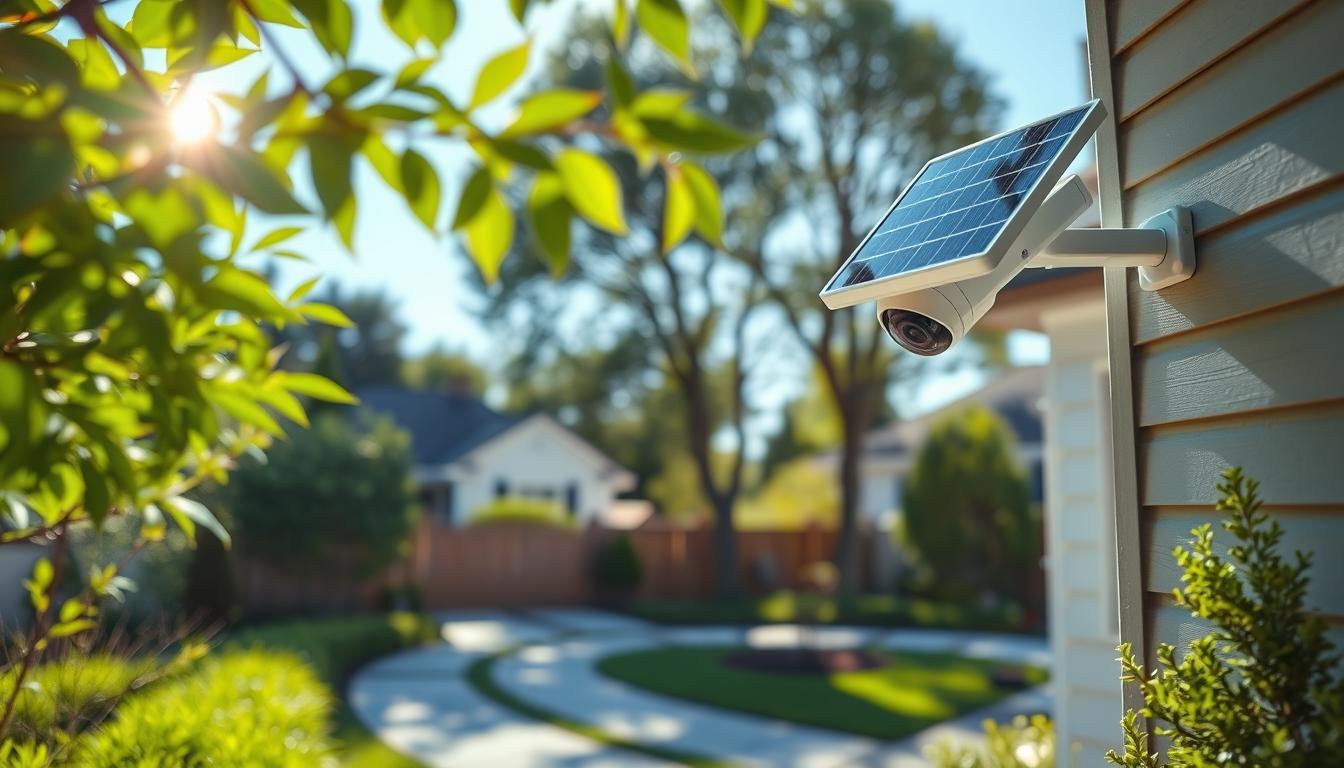
Top Solar Panel Outdoor Security Cameras for Home Security
In Singapore, protecting your property is more important than ever. Modern technology offers powerful tools for keeping your family and belongings safe. These innovative devices provide constant monitoring and peace of mind.
Today’s best solutions harness renewable energy. This sustainable approach fits perfectly with Singapore’s Green Plan 2030. You get reliable protection while supporting environmental goals.
The local market shows strong trust in these systems. Over 640 Singapore reviews average an impressive 4.5 out of 5 stars. Prices range from budget-friendly $59.99 to premium $799.99 setups.
Brands like Reolink and Eufy lead with high-resolution video and night vision. This guide will compare top models, features, and benefits. We’ll help you make a smart choice for your needs.
Key Takeaways
- Modern home protection systems offer 24/7 monitoring for peace of mind in Singapore.
- Energy-harvesting technology aligns with Singapore’s Green Plan 2030 sustainability goals.
- Local users highly rate these solutions with 4.5/5 stars from over 640 reviews.
- Prices range from $59.99 for basic setups to $799.99 for premium configurations.
- Leading brands like Reolink and Eufy dominate the market with advanced features.
- The tropical climate here is ideal for renewable energy devices.
- This guide will help you compare options and choose the best system for your home.
Why Solar-Powered Security is a Smart Choice for Singapore
Forward-thinking homeowners in Singapore are discovering that effective property protection can align with environmental responsibility. This approach represents more than just a technological upgrade. It’s a strategic decision that leverages local advantages for superior results.
Aligning with Singapore’s Green Plan 2030
The nation’s sustainability roadmap actively encourages renewable energy adoption. Government initiatives provide tangible support for eco-friendly choices. Subsidies of up to 30% are available for ECO-certified protection systems.
This financial incentive makes advanced technology more accessible. The Green Plan 2030 targets 2GW of photovoltaic capacity. Integrating surveillance into this framework demonstrates practical application of national goals.
Public housing developments already incorporate these concepts. The HDB rollout includes integrated monitoring features. URA guidelines further support installation in private residential areas.
Choosing sun-powered protection directly contributes to Singapore’s broader sustainability targets while reducing grid dependence.
Capitalizing on the Tropical Climate for Optimal Power
Singapore’s geographical position offers a remarkable natural advantage. The country enjoys over 2,500 hours of bright sunshine annually. This consistent exposure creates ideal conditions for energy harvesting.
Average solar irradiance measures 1,582 kWh/m² each year. Such abundant light ensures reliable operation for photovoltaic arrays. Even during monsoon periods, these units maintain 85% efficiency.
This performance reliability addresses a common concern. Homeowners need assurance that their investment works year-round. The local climate actually enhances rather than hinders these systems.
Addressing Local Security Concerns with Sustainable Tech
Modern monitoring solutions must balance effectiveness with environmental consciousness. Today’s technology achieves both objectives without compromise. High-resolution video and instant alerts provide constant vigilance.
These devices operate independently from traditional power sources. Their self-sustaining nature ensures uninterrupted surveillance. This reliability is crucial for comprehensive property protection.
The integration represents a forward-looking approach to urban safety. It combines practical home defense with responsible energy use. Residents gain peace of mind while supporting national sustainability efforts.
This synergy between personal safety and planetary health defines smart contemporary living. Singapore’s unique context makes this combination particularly powerful and relevant for local homeowners.
Understanding Solar Panel Outdoor Security Cameras
At the heart of this sustainable security approach is a simple yet powerful process of energy conversion and storage. These innovative units represent a significant leap forward in autonomous home protection technology.
They merge environmental awareness with practical vigilance. This creates a robust solution for modern homeowners.
How They Work: From Sunlight to Surveillance
The fundamental technology relies on photovoltaic cells. These specialized cells capture natural light and transform it into electrical energy.
This energy directly powers the monitoring device. It also charges an integrated battery for continuous operation.
Modern photovoltaic arrays boast efficiency rates between 15% and 22%. Under Singapore’s bright conditions, a full recharge typically takes just 6 to 8 hours.
This rapid charging capability is a key strength. It ensures the system remains active and ready.
The stored energy provides an impressive backup. Many models can function for up to seven days without direct sunshine.
A notable demonstration of this reliability occurred at the Sentosa Cove development. There, a solar-powered security system operated independently for 300 consecutive days, showcasing remarkable long-term performance.
The Core Advantage: Wireless and Self-Sustaining Operation
The core benefit is a completely wireless design. This eliminates the need for complex wiring and external power outlets.
You gain unparalleled freedom in placement and installation. There are no cords to hide or electrical points to find.
This self-sustaining nature is ideal for various locations. It perfectly suits remote spots, active construction sites, or areas with unreliable grid access.
These devices provide steadfast protection where traditional options fail. They operate entirely off-grid.
Integration with IoT connectivity aligns perfectly with Singapore’s Smart Nation goals. Homeowners can monitor their property remotely via smartphone apps.
You receive instant alerts and can view live feeds from anywhere. This seamless connectivity adds a layer of modern convenience.
The overall system offers simplicity and ease of maintenance. Once installed, it requires minimal ongoing attention while delivering effective, round-the-clock vigilance.
The Compelling Benefits of Going Solar for Security
Adopting renewable energy for home protection delivers multiple advantages that extend beyond basic surveillance. This approach creates a holistic package that saves money, helps the planet, and ensures unwavering coverage. For Singaporean homeowners and businesses, these benefits align perfectly with local needs and conditions.
Significant Reduction in Electricity Costs and Bills
The financial advantages are immediately apparent. By harnessing natural light, these units eliminate ongoing energy expenses from the grid.
Data from the SP Group reveals impressive results. Condo surveillance setups using this technology achieved a 75% reduction in their electricity bills.
Over a decade, the savings become substantial. Users can save between $1,500 and $2,000 compared to traditional wired configurations.
Maintenance costs also drop significantly. Annual upkeep averages just $50, versus $300 for conventional alternatives. This long-term financial efficiency makes the initial investment highly worthwhile.
Eco-Friendly Operation with a Lower Carbon Footprint
Environmental responsibility is a core benefit. Each monitoring device makes a measurable positive impact on our planet.
Statistics show that a single unit offsets approximately 2,000 pounds of CO² annually. This equals the carbon sequestration effect of 45 mature trees.
This reduction directly supports Singapore’s Green Plan 2030 objectives. It represents a practical step toward national sustainability targets.
Choosing this technology demonstrates a commitment to cleaner urban living. It allows residents to protect their property while also protecting the environment.
Simplified Installation Without Extensive Wiring
The setup process is remarkably straightforward. These self-contained devices require no complex electrical work or cabling.
This wireless design offers unparalleled placement flexibility. You can mount them virtually anywhere on your property without searching for power outlets.
For many homeowners, this means a true DIY-friendly option. There’s no need to hire electricians or manage disruptive renovation work.
The installation simplicity translates to lower upfront costs and faster deployment. Your new vigilance system can be operational in hours, not days.
Reliable Performance in Remote or Power-Scarce Areas
Perhaps the most critical advantage is unwavering reliability. These systems perform consistently where traditional options might fail.
They are ideal for locations with poor grid access or frequent outages. Their self-sustaining nature ensures continuous operation.
A compelling case study at Jurong Island Industrial Park demonstrated this reliability at scale. With 200 units installed, the setup achieved full compliance with SCDF emergency power backup requirements while simultaneously cutting operational costs.
This industrial-scale proof confirms the technology’s robustness. It performs reliably for both residential and commercial applications.
Additional incentives like eligibility for Solar Renewable Energy Certificates (SREC) provide further financial motivation in Singapore. This creates a complete value proposition for savvy property owners.
Key Features to Look for in a Solar Panel Outdoor Security Camera
When evaluating protection solutions, several technical aspects separate basic models from premium performers. Understanding these specifications helps you invest wisely in a system that meets your specific needs. The right combination of capabilities ensures reliable, around-the-clock vigilance for your property.
High-Definition Video Resolution and Image Clarity
Visual detail is paramount for effective monitoring. Today’s top devices offer crisp 1080p, sharp 2K, or ultra-clear 4K video quality. Higher resolution captures finer details like facial features or license plate numbers.
This forensic-level clarity is especially valuable in urban settings. It supports compliance with Singapore’s Personal Data Protection Act (PDPA) guidelines. Clear evidence collection becomes straightforward when incidents occur.
Many premium units include 8x digital zoom functionality. This allows you to examine specific areas without compromising image integrity. Storage requirements vary significantly between 1080p and 4K footage.
Consider your needs for evidence retention when choosing resolution. Higher clarity often means larger file sizes and more storage capacity.
Advanced Night Vision Capabilities for 24/7 Monitoring
Complete protection requires consistent performance after dark. Modern systems employ infrared or full-color night vision technology. Effective ranges typically extend up to 33 feet in total darkness.
Infrared illumination uses invisible light beams to create monochrome images. Color night vision utilizes starlight sensors to maintain color information in low-light conditions. This technology enhances identification accuracy during evening hours.
The best devices automatically switch between day and night modes. They ensure seamless surveillance regardless of lighting conditions. This continuous operation is essential for comprehensive property defense.
Look for models with adjustable sensitivity settings. This allows customization based on your specific environment and lighting challenges.
Smart Motion Detection and AI-Powered Alerts
Intelligent notification systems minimize distractions while maximizing relevance. Artificial intelligence algorithms now distinguish between people, animals, and vehicles. This precision reduces false alarms by up to 90%.
Instead of alerting you to every leaf movement, these smart systems focus on meaningful activity. You receive notifications only when human presence is detected near your property. This targeted approach saves time and reduces notification fatigue.
Advanced models offer customizable activity zones. You can define specific areas for heightened sensitivity. This ensures important spaces receive extra attention while ignoring irrelevant movement.
The integration of AI transforms basic motion sensing into intelligent threat assessment, creating a more responsive and efficient protection network.
Battery Life and Solar Charging Efficiency
Autonomous operation depends on reliable energy management. High-capacity batteries should provide extended runtime between charges. Look for units that can operate for multiple days without direct sunlight.
The photovoltaic component’s efficiency determines how quickly energy replenishes. Modern arrays typically need 6-8 hours of good sunlight for a full day’s operation. This matches Singapore’s abundant daily sunshine perfectly.
Energy management systems optimize power consumption based on activity levels. During quiet periods, the device enters low-power mode to conserve energy. When motion occurs, it instantly activates full recording capabilities.
Check product specifications for estimated battery lifespan. Quality lithium-ion batteries often last 2-3 years before needing replacement. This affects long-term maintenance costs and system reliability.
Weatherproof and Durable Build for Outdoor Use
Singapore’s tropical climate demands robust construction. An IP67 rating guarantees protection against heavy rain and high humidity. This international standard ensures complete dust resistance and withstands temporary immersion.
Materials should resist corrosion from constant moisture exposure. UV-resistant housing prevents sun damage and color fading over time. These durability features ensure year-round performance in challenging conditions.
Some models offer URA-approved camouflage designs. These blend seamlessly into conservation areas or heritage zones. Discreet installation maintains aesthetic harmony while providing protection.
Wide-angle lenses, including dual-lens configurations, offer up to 180° coverage. This expansive view minimizes blind spots around your property. Comprehensive surveillance becomes achievable with fewer devices.
Feature Selection Checklist:
- Video resolution matching your identification needs (1080p, 2K, or 4K)
- Night vision range adequate for your property’s dimensions
- AI-powered discrimination between people, animals, and vehicles
- Battery capacity supporting your expected activity levels
- Solar charging efficiency suitable for your installation location
- Weatherproof rating (IP67 or higher) for tropical climate endurance
- Wide viewing angle (130° minimum) for comprehensive coverage
- Low-latency live streaming (under 300ms) for real-time monitoring
- Local storage options or cloud service compatibility
- Design that complements your property’s aesthetics
Comparing these specifications across different models reveals their true value. Prioritize features that address your specific vulnerability points. This strategic approach ensures your investment delivers maximum protection.
How Solar Power and Camera Technology Integrate
Behind every reliable autonomous vigilance unit lies a carefully engineered partnership between power generation and digital observation. This synergy transforms natural resources into constant property protection. The integration involves three core components working seamlessly together.
Each element must perform optimally for the entire system to succeed. Understanding this technical harmony helps homeowners make informed choices. It also reveals why some models outperform others in real-world conditions.
Photovoltaic Panel Types and Efficiency Rates
Modern energy-harvesting systems primarily use two photovoltaic technologies. Monocrystalline arrays offer superior efficiency, converting up to 22% of captured light into usable electricity. Their uniform crystal structure enables this high performance.
Polycrystalline alternatives provide a cost-effective solution. While slightly less efficient, they perform remarkably well in tropical climates. Singapore’s consistent sunshine makes them a practical choice for many homeowners.
Regular maintenance significantly impacts energy collection. Dust and debris can reduce efficiency by up to 25%. A simple monthly cleaning with a soft cloth restores optimal performance.
Local environmental factors also affect output. Seasonal haze may decrease efficiency by approximately 15%. Proper placement minimizes this impact while maximizing daily energy harvest.
Battery Systems: Storage, Lifespan, and Management
Energy storage determines how long a device operates without direct sunlight. Lithium-ion technology dominates this space with impressive durability. High-quality units withstand over 3,000 complete charge cycles.
Two main lithium chemistries serve different needs. LiFePO4 batteries offer enhanced safety and longer lifespan. They withstand Singapore’s heat and humidity exceptionally well.
NMC alternatives provide higher energy density in compact sizes. This allows for sleeker device designs without sacrificing capacity. Both types require proper management for longevity.
Intelligent charge controllers prevent overcharging and deep discharge. These electronic guardians extend battery life significantly. They ensure the storage unit receives optimal charging currents.
Proper disposal follows NEA-approved procedures when batteries eventually wear out. Responsible recycling prevents environmental contamination. It aligns with Singapore’s sustainability commitments.
“The marriage of efficient photovoltaics with advanced battery management creates a truly self-sufficient monitoring solution that operates independently for extended periods.”
Wi-Fi Connectivity and Remote Monitoring Apps
Reliable connectivity transforms a local device into a smart protection asset. Stable remote access requires adequate internet bandwidth. A minimum upload speed of 5Mbps ensures smooth 1080p video streaming.
Modern systems incorporate multiple connectivity safeguards. Mesh WiFi support strengthens signal reach throughout larger properties. 4G fallback activation maintains operation during broadband outages.
Data security remains paramount for privacy-conscious users. AES-256 encryption protects video feeds and personal information. This enterprise-grade security prevents unauthorized access.
Companion mobile applications deliver comprehensive control. Users enjoy live streaming, customizable alert zones, and video history access. Multi-user support allows family members to monitor simultaneously.
Cloud storage options provide convenient footage backup. Local storage alternatives offer complete data ownership. Many homeowners prefer hybrid approaches for balanced convenience and control.
Smart home integration represents the next evolution. Compatibility with Google Home, Apple HomeKit, and Amazon Alexa enables centralized management. Voice commands and automated routines enhance daily convenience.
Singapore-specific compliance ensures legal operation. IMDA Type Approval certifies devices meet national technical standards. This verification guarantees interference-free performance alongside other electronics.
Maximizing Your System’s Performance
Strategic placement optimizes both energy collection and surveillance coverage. Position photovoltaic arrays facing north or northwest for maximum daily exposure. Avoid shadows from trees or structures during peak sunlight hours.
Battery care extends operational lifespan. Avoid complete discharges whenever possible. Maintain charge levels between 20% and 80% for optimal long-term health.
Network configuration impacts remote access reliability. Place WiFi extenders if signal strength appears weak at the installation location. Test connectivity during different times to identify interference patterns.
Regular system checks prevent unexpected failures. Monthly verification of energy production and battery levels takes just minutes. This proactive approach ensures uninterrupted protection.
The integration of these technologies creates a resilient property guardianship solution. Each component reinforces the others, forming a cohesive protection network. Understanding this interplay helps homeowners select and maintain optimal systems for their specific needs.
An Overview of the Solar Security Camera Market in Singapore
Understanding the pricing and brand dynamics helps homeowners make informed decisions about their protection systems. The local landscape offers diverse choices across multiple price tiers.
Consumer demand continues to grow alongside national sustainability initiatives. This creates a vibrant ecosystem of products and services.
Price Range: From Budget-Friendly to Premium Systems
The cost spectrum for these devices spans from affordable to high-end. Entry-level units start around $59.99 for basic functionality.
Mid-range options typically fall between $200 and $400. They offer enhanced features like better resolution and smarter detection.
Premium professional setups can reach $799.99. These comprehensive kits include multiple units and advanced integration capabilities.
Several factors influence final pricing. Resolution quality significantly affects cost, with 4K models commanding higher prices.
Brand reputation also plays a major role. Established manufacturers often price their products at a premium.
Storage options create another price differentiator. Cloud subscription services add recurring expenses to initial purchase costs.
Additional smart features increase value. AI-powered person detection and two-way audio justify higher investment.
Budget-conscious buyers should understand what each tier delivers. The $60 range provides fundamental monitoring with motion alerts.
The $200-$400 bracket adds HD video and night vision. Premium packages offer complete home coverage with professional-grade reliability.
Dominant Brands and Their Market Reputation
Reolink maintains strong local presence with reliable performance. Their devices receive positive feedback for durability in tropical conditions.
Eufy emphasizes privacy with local storage solutions. This approach resonates with Singaporean homeowners concerned about data security.
Arlo delivers seamless smart home integration. Their systems work smoothly with popular voice assistants and automation platforms.
TP-Link offers excellent value with flexible storage choices. Users appreciate the balance between cost and capability.
Authorized dealers provide essential warranty support and technical assistance that grey market sellers cannot match.
These leading manufacturers dominate Singapore’s renewable energy surveillance sector. Each brings distinct strengths to the market.
Reolink focuses on high-resolution imaging and robust construction. Eufy prioritizes user privacy through innovative local data handling.
Arlo excels in ecosystem integration and user experience. TP-Link delivers versatility with adjustable energy collection components.
Market growth responds directly to Singapore’s green initiatives. The Green Plan 2030 encourages adoption of sustainable technology.
Simultaneously, rising security awareness drives demand. Homeowners seek reliable protection that aligns with environmental values.
Smart shopping strategies can reduce costs significantly. Condominium group purchases often secure bulk discounts for residents.
Certified refurbished units offer substantial savings with warranty protection. These come directly from manufacturers with quality assurance.
Always verify authorized dealer status before purchasing. Grey market products lack local support and may violate warranty terms.
The expanding selection gives buyers genuine choice. Matching specific needs with appropriate products becomes increasingly feasible.
Comparing Top Solar-Powered Security Camera Systems
With multiple options available, a side-by-side evaluation reveals which units offer the best value for Singaporean homes. This comparison focuses on three leading models that represent different price tiers and feature sets.
Each system brings unique strengths to property protection. Understanding their differences helps you match technology to your specific needs.
Analysis of Price Versus Performance
The Reolink Argus 3 Pro sits at $199 with impressive motion detection. It maintains accuracy even during Singapore’s heavy monsoon rains.
EufyCam 3 offers robust construction for $179. Its vandal-resistant design withstands potential tampering attempts effectively.
Lorex 4K commands $549 with premium video clarity. This investment delivers exceptional durability and visual detail.
Performance trade-offs become clear across these price points. Lower-cost units may compromise on resolution or advanced detection features.
Mid-range options balance capability with affordability. They typically include HD video and reliable notification systems.
Premium models justify their higher cost through superior components. Enhanced lenses, better processors, and rugged materials extend operational lifespan.
Video quality represents a major differentiator. The Lorex system’s 4K resolution captures fine details like license plates from greater distances.
Environmental resilience varies significantly between models. Some handle humidity better than others in tropical conditions.
Evaluating Long-Term Value and Warranty Support
Initial purchase price tells only part of the story. Hidden expenses can substantially impact your total investment over time.
Cloud subscriptions represent one such ongoing cost. The Reolink system requires $6.99 monthly for extended video history storage.
Warranty terms provide crucial protection for your purchase. Lorex offers three years of coverage compared to typical two-year policies.
After-sales support quality varies among brands in Singapore. Authorized dealers provide reliable technical assistance and replacement services.
“The true cost of a protection system includes not just the hardware, but also subscriptions, maintenance, and potential replacement parts over several years of operation.”
Installation expenses create another financial consideration. Professional setup can add $150 to your project budget.
DIY installation eliminates this cost for capable homeowners. Most modern devices feature straightforward mounting and configuration processes.
Additional value aspects include BCA Green Mark points eligibility. Systems like the Lorex 4K can contribute to sustainable building certifications.
This recognition matters for certain property types. It aligns with Singapore’s broader environmental initiatives.
Total cost of ownership analysis should span three to five years. Include energy savings, subscription fees, and potential battery replacements.
Premium models often demonstrate better long-term economics. Their durable construction reduces maintenance needs and extends service life.
Smart buyers look beyond the initial sticker price. They consider how each component will perform and cost over extended use.
This comprehensive evaluation approach ensures you select the optimal solution. It balances immediate needs with future reliability and expenses.
Leading Contender: Arlo Essential 2nd Gen with Solar Panel
Among the array of available options, a particular unit has earned widespread recognition for delivering premium capabilities at an accessible price point. CNET experts crowned Arlo’s second-generation Essential model the best overall pick for 2026. This device strikes an impressive balance between performance and affordability.
It brings together several key technologies in one cohesive package. Homeowners get reliable monitoring without breaking the bank. The system tested exceptionally well in various conditions.
Stellar 2K Resolution and Integrated Spotlight
The visual quality of this device stands out immediately. It captures footage in stunning 2K detail. This higher resolution provides clearer images than standard HD.
You can identify important details like faces or license plates more easily. The integrated spotlight adds another layer of functionality. It automatically illuminates areas when motion is detected.
This creates a powerful deterrent effect after dark. The unit also features full-color night vision. Unlike traditional infrared, this maintains color information in low light.
Two-way audio allows for direct communication through the device. You can speak to visitors or deter unwanted individuals remotely. The construction proved durable during rigorous outdoor testing.
It handles Singapore’s tropical climate with consistent reliability. The included energy-harvesting accessory comes with an 8-foot cable. This allows flexible placement for optimal sun exposure.
“The solid, durable Arlo Essential 2nd-gen cam tested well in outdoor conditions, offering an unbeatable combination of 2K resolution, color night vision, and integrated spotlight functionality.”
Seamless Smart Home Integration and User Experience
This model connects effortlessly with popular smart home ecosystems. It works with Amazon Alexa and Google Home for voice control. You can view feeds on compatible displays and create automation routines.
While it doesn’t currently support Apple HomeKit, future updates may add this capability. The user experience through the Arlo app remains intuitive and responsive. Setting up the device takes just minutes following the guided process.
Basic functions operate without any monthly fees. Live viewing and motion alerts work immediately after installation. However, accessing the full suite of capabilities requires a subscription plan.
Arlo Secure unlocks features like advanced detection and extended video history. The subscription starts at $6.99 monthly for a single device. This business model is common among premium monitoring systems.
For comprehensive home protection solutions, explore our guide to the best solar-powered wireless options available in Singapore. The Arlo Essential represents an excellent all-rounder choice. It delivers high-quality performance with modern conveniences that homeowners appreciate.
The Integrated Solution: Eufy SoloCam S230
Privacy-conscious residents in Singapore will appreciate the Eufy SoloCam S230’s distinctive approach to home surveillance. This model stands out by combining multiple components into one streamlined device.
It offers a simplified user experience from setup to daily operation. The design philosophy focuses on reducing complexity while maintaining robust performance.
Built-In Solar Panel and Local Storage Benefits
The most notable feature is its integrated energy-harvesting component. You don’t need to mount a separate power source.
Find a sunny location for this 2K unit, and installation becomes straightforward. This all-in-one design eliminates cable management headaches.
Data privacy receives special attention with 8GB of built-in local storage. Your footage stays on the device itself, not in the cloud.
This approach removes monthly subscription fees entirely. You maintain complete control over your recorded video.
The local storage solution aligns well with Singapore’s data protection regulations. It gives homeowners peace of mind regarding their personal information.
Free AI Detection and No Subscription Model
Eufy provides intelligent recognition capabilities at no extra cost. The system distinguishes between people, animals, and vehicles automatically.
Many competing brands charge subscription fees for these advanced features. Here, they’re included from day one.
Visual quality remains impressive with 2K resolution. Color night vision ensures clear footage after dark.
You can identify important details in both daylight and low-light conditions. The technology performs reliably in various environments.
“The free AI detection and local storage make the Eufy SoloCam S230 a financially smart choice for long-term home protection without recurring expenses.”
Practical considerations include the unit’s somewhat bulky design. Careful placement is necessary to ensure optimal sun exposure.
The entire device must sit in a bright spot for consistent operation. This requires thoughtful planning during installation.
Compared to subscription-based models, this option delivers significant long-term savings. Over three years, you could avoid hundreds of dollars in cloud fees.
It’s an ideal selection for users who value data ownership. The streamlined setup appeals to those preferring minimal maintenance.
The Eufy SoloCam S230 represents a compelling value proposition. It balances performance, privacy, and cost-effectiveness in one cohesive package.
Versatile Performer: TP-Link Tapo C420S1 with Solar Panel
The TP-Link Tapo C420S1 stands out with its uniquely adjustable power source that adapts to changing light conditions. This bundle delivers a compelling mix of high-quality imaging and energy independence. Homeowners gain precise control over their system’s placement and operation.
TP-Link’s package includes the C420S1 monitoring device and a specialized energy-harvesting accessory. Together, they form a self-sufficient vigilance solution. The setup appeals to users who value customization in their home protection approach.
360-Degree Adjustable Panel for Optimal Sunlight
The most distinctive feature is the fully adjustable energy collector. You can rotate it 360 degrees horizontally and tilt it vertically. This allows perfect alignment with the sun’s path throughout the day.
Maximum energy capture becomes achievable regardless of mounting location. Even shaded spots can work when the collector angles toward bright areas. Singapore’s changing sun positions present no challenge for this design.
Charging efficiency impresses with its claimed speed. The manufacturer states just 30 minutes of direct bright light provides a full day’s operation. Real-world performance depends on usage patterns and local weather conditions.
Regular activity might require slightly longer charging periods. The system manages energy intelligently to extend operational duration. Users rarely face power interruptions with proper placement.
“The 360-degree adjustability transforms installation from a compromise into an optimization exercise, letting homeowners capture every available photon regardless of structural constraints.”
Choice of Local or Cloud Storage Flexibility
Data management options provide another layer of user control. You can insert a microSD card for completely local video storage. This approach keeps your footage private and eliminates monthly fees.
Alternatively, Tapo Care cloud plans offer convenient remote access and backup. The choice depends on your privacy preferences and budget considerations. Both options work with the device’s intelligent recognition capabilities.
Artificial intelligence features come at no extra cost. The system distinguishes between people, vehicles, and animals automatically. Custom activity zones let you focus on specific property areas.
Visual quality reaches 2K QHD resolution for clear detail capture. Dual integrated spotlights enable full-color night vision after dark. These work together for comprehensive day-and-night monitoring.
One consideration involves the viewing angle. At 113 degrees, it’s narrower than some competing models. This might require strategic placement or additional units for complete coverage.
The bundle represents excellent value for Singaporean homeowners. You get robust features without mandatory subscription commitments. Installation simplicity adds to the overall appeal.
Key advantages of the TP-Link Tapo C420S1 system:
- Fully adjustable energy collector for optimal placement
- Rapid charging capability under good conditions
- High-resolution 2K QHD video quality
- Dual spotlights for color night vision
- Free AI-powered person and vehicle detection
- Flexible local or cloud storage choices
- Weather-resistant construction for tropical climates
This versatile performer suits users who appreciate control over their system’s configuration. The adjustable collector solves common placement challenges. Storage flexibility accommodates different privacy and budget needs.
Budget-Friendly Option: Blink Outdoor 3 with Solar Charging Mount
For homeowners seeking reliable protection without straining their budget, the Blink Outdoor 3 with Solar Charging Mount presents an attractive entry point into sustainable surveillance. This compact bundle combines affordability with essential functionality.
It delivers a practical solution for those testing renewable energy monitoring. The package keeps initial costs low while maintaining respectable performance.
Cost-Effective Security Without Sacrificing Core Features
Despite its budget-friendly price, this system retains most desirable Blink characteristics. You get 1080p HD video quality for clear footage capture.
Infrared night vision ensures visibility after dark. Motion detection alerts you to activity around your property.
Two-way audio allows communication through the device. These core features provide solid baseline protection.
The energy-harvesting accessory keeps the battery charged using natural light. This eliminates frequent manual recharging needs.
Value-conscious users appreciate this balance of cost and capability. It proves that economical options can still deliver reliable performance.
“The Blink Outdoor 3 package represents smart value engineering—delivering essential monitoring functions at a price point that welcomes first-time adopters into solar-powered security.”
Easy Installation and User-Friendly App Controls
Setup simplicity makes this system appealing for non-technical individuals. The mounting process requires minimal tools and effort.
Intuitive app controls guide you through configuration steps. You can manage settings and view footage from your smartphone.
The photovoltaic component design offers placement flexibility. You can detach it from the main unit.
Position it several feet away for optimal sunlight exposure. This adaptability helps overcome installation challenges.
Storage operates locally via a Sync Module 2 unit. There’s no built-in storage or free cloud option available.
This approach keeps data on your premises. It avoids monthly subscription fees for video history.
Consider that this represents an older generation among Blink models. The newer Outdoor 4 doesn’t support this specific charging accessory.
Placement requires thoughtful planning for consistent power. You must ensure the energy collector receives adequate daily light.
As a starter system, it introduces renewable energy concepts gently. Homeowners can evaluate this technology before committing to premium options.
The Blink Outdoor 3 bundle serves as a practical first step. It demonstrates how sustainable security can be both accessible and effective.
Selecting the Right Solar Camera for Your Property
Before comparing brands and prices, smart buyers first analyze their property’s layout and potential weak points. This systematic approach ensures your investment addresses actual vulnerabilities rather than imagined threats. You’ll match technological capabilities to specific protection requirements.
The selection process balances several factors. Consider your budget, technical preferences, and integration needs. A thoughtful evaluation leads to better long-term satisfaction with your monitoring solution.
Assessing Your Home’s Layout and Security Vulnerabilities
Begin with a thorough risk assessment of your premises. Walk around your property during different times of day. Identify entry points like gates, doors, and accessible windows.
Note blind spots where visibility is limited. These often include corners, dense foliage areas, and spaces behind structures. High-traffic zones deserve special attention for comprehensive coverage.
For larger estates, consider heat mapping techniques. This involves tracking movement patterns over time. You’ll discover where activity naturally concentrates on your property.
Document all vulnerable locations systematically. Create a simple sketch or use digital tools. This visual reference guides your equipment placement decisions.
Prioritize areas based on risk level. Main entry points typically rank highest for surveillance priority. Secondary zones receive appropriate but less intensive monitoring.
Matching Camera Features to Residential vs. Commercial Needs
Different property types require distinct feature sets. Residential homeowners typically prioritize cost-effectiveness and ease of use. Aesthetic integration with home design also matters for many residents.
Commercial properties demand different capabilities. Durability against weather and potential tampering becomes crucial. Extensive coverage areas require wider viewing angles and higher resolution.
“The Arlo Pro 4 offers a 160-degree field of view with digital zoom capabilities, making it ideal for residential users who value smart home integration. For commercial applications, Lorex units provide 4K HD resolution with expansive coverage suitable for larger premises.”
Business installations often need advanced detection features. These include license plate recognition and people counting analytics. Residential users might prefer simpler motion alerts with person detection.
Storage requirements differ significantly between applications. Homes may manage with local storage or basic cloud plans. Commercial operations frequently need extended retention periods and robust backup systems.
Considering Integration with Existing Smart Home Systems
Compatibility with your current technology ecosystem is essential. Check whether potential devices work with Google Home, Amazon Alexa, or Apple HomeKit. Seamless integration enhances daily convenience and automation possibilities.
Review your existing smart home investments. Consider how new monitoring units will complement these systems. Unified control through a single app simplifies management significantly.
Voice command capability adds practical functionality. You can check feeds using simple spoken requests. This integration represents the modern standard for connected home protection.
Create a checklist of must-have features before shopping. Include specific detection types, storage preferences, and resolution requirements. This framework guides your evaluation of different models.
Balance your protection needs with budget constraints and technical preferences. The ideal solution addresses your highest priority vulnerabilities. It should also fit comfortably within your technological comfort zone.
Remember that the best choice varies for each property. What works perfectly for a condominium might not suit a landed house. Tailor your selection to your unique circumstances and requirements.
A Step-by-Step Guide to Installation and Placement
Proper installation is the critical final step that transforms your purchase into reliable protection. Following systematic guidelines ensures your vigilance system operates at peak efficiency year-round. This process maximizes both energy collection and surveillance coverage for your property.
Getting the most from your investment requires careful attention to placement and setup procedures. Each decision affects performance and longevity. We’ll walk through the essential stages to achieve optimal results.
Choosing the Optimal Location for Maximum Sunlight
Energy collection depends heavily on photovoltaic placement. Select spots receiving at least six to eight hours of direct bright light daily. This ensures consistent operation without interruptions.
Face your energy collector toward the equator for optimal exposure. In Singapore, this typically means a southern orientation. Avoid shadows from trees, buildings, or other structures.
Adjust the tilt angle to approximately 30 degrees. This position captures maximum photons throughout the day. It works well with Singapore’s latitude and sun path.
Different property types have specific regulations. HDB flat owners must follow URA and PAP approval processes. These ensure compliance with public housing guidelines.
Landed home installations should consider lightning protection requirements. Condominium residents need MCST permission for common area placements. Height regulations often apply in shared spaces.
Evaluate multiple potential spots before finalizing your choice. Consider both surveillance needs and energy harvesting potential. The ideal location balances both requirements effectively.
Essential Tools and Mounting Best Practices
Gather the right equipment before starting your project. A basic toolkit includes a power drill, appropriate screws, and mounting brackets. You’ll also need a level for accurate alignment.
Consider a Wi-Fi extender if your installation spot has weak signal strength. Laser alignment tools help with multi-unit systems. These ensure consistent coverage across your property.
Anti-theft brackets add an extra layer of protection for your equipment. They deter tampering and unauthorized removal. This is especially valuable for ground-level installations.
“Achieving the correct 30-degree tilt for photovoltaic arrays significantly boosts energy collection efficiency, particularly during Singapore’s varying seasonal sun angles.”
Cable management solutions keep your setup neat and professional. Use weatherproof conduits for any necessary wiring. Proper grounding prevents electrical issues during storms.
Follow these mounting steps for best results:
- Mark your chosen location with a pencil
- Pre-drill holes using the appropriate bit size
- Secure the mounting bracket firmly to the surface
- Attach your monitoring device to the bracket
- Adjust the angle for optimal viewing and energy capture
- Test stability before completing the installation
Configuring Wi-Fi and App Settings for Reliable Operation
Begin by fully charging your device before activation. Most units need initial power to complete setup successfully. Follow manufacturer instructions for this first step.
Connect to your home network using the companion mobile application. Ensure you’re within range during this configuration phase. Strong signal strength prevents connectivity issues later.
Configure motion zones and alert preferences through the app. Customize these settings to match your property layout. Focus on high-traffic areas and potential entry points.
Test all functions thoroughly after installation. Check video feed quality during daylight hours. Verify night vision performance after sunset.
Confirm motion alerts work correctly by walking through detection zones. Monitor energy collection status through the app interface. Ensure your photovoltaic component reports adequate charging.
A comprehensive post-installation checklist ensures nothing gets overlooked:
- Video feed clarity and resolution
- Night vision activation and range
- Motion detection sensitivity and accuracy
- Alert notification delivery speed
- Energy harvesting status and battery level
- Remote access functionality from outside your network
- Two-way audio quality if applicable
Singaporean homeowners report high satisfaction with DIY installations. Approximately 85% successfully complete their projects without professional help. This demonstrates the user-friendly nature of modern monitoring systems.
Take your time during each installation phase. Rushing can lead to placement errors or configuration mistakes. Proper setup delivers years of reliable property protection and peace of mind.
What Users Are Saying: Reviews and Real-World Feedback
Real-world experiences from homeowners provide invaluable insights that specifications sheets cannot capture. The collective voice of thousands reveals what truly works in daily use. This feedback helps set realistic expectations before you invest.
Community reviews highlight consistent patterns across different brands. They show how units perform through monsoon seasons and bright sunshine. This practical perspective complements technical data perfectly.
Common Praises: Reliability and Cost Savings
Homeowners consistently celebrate two major benefits. First is the remarkable reliability in Singapore’s tropical climate. These devices maintain operation through heavy rains and intense humidity.
Many report uninterrupted service for over a year. The self-sustaining power source eliminates worries about grid outages. Users appreciate this consistent protection.
Financial savings represent the second frequent compliment. Electricity bill reductions often exceed expectations. One condominium resident documented a 78% decrease in monthly energy costs.
Popular units receive impressive ratings from large user bases. The Ring Stick Up Cam boasts over 71,000 reviews with a 4.6-star average. This demonstrates widespread satisfaction.
The SEHMUA unit earns a 4.3-star score from 5,200 evaluations. Its 360-degree viewing capability receives particular praise. Users value the comprehensive coverage it provides.
“After six months, my electricity bill dropped noticeably. The unit worked perfectly through December’s heavy rains. I haven’t touched a power cord since installation.”
Frequently Noted Considerations and Tips
Experienced owners share valuable lessons from their installations. Optimal placement remains the most repeated advice. The photovoltaic component needs direct sunlight for several hours daily.
Position it facing north or northwest in Singapore. Avoid shadows from structures or trees. This ensures consistent energy harvesting.
Wi-Fi signal strength directly impacts performance. Weak connections cause delayed alerts and choppy video feeds. Consider a mesh network extender for larger properties.
Some models occasionally struggle with motion detection accuracy. The Ring unit sometimes misses activity in certain lighting conditions. Adjusting sensitivity settings often resolves this issue.
Night vision performance varies between different makes. Lower-cost options may produce grainier images after dark. Premium units typically offer clearer low-light footage.
Practical maintenance tips extend system longevity. Gently clean the energy collector monthly with a soft cloth. Dust accumulation can reduce efficiency by 20%.
Adjust motion detection zones to preserve power. Focus on high-traffic areas rather than entire fields of view. This extends operational duration between charges.
Singapore-specific platforms offer localized insights. Check forums discussing performance during haze periods. Local reviews address tropical climate challenges directly.
Key recommendations from seasoned users:
- Test Wi-Fi signal at your planned installation spot before mounting
- Monitor energy collection levels through the companion app regularly
- Create custom activity zones to reduce false notifications
- Perform quarterly checks on mounting hardware stability
- Consult local user groups for brand-specific advice in tropical conditions
This collective wisdom helps new buyers avoid common pitfalls. It transforms theoretical specifications into practical understanding. Your investment decision becomes more informed with these real-world perspectives.
Making Your Final Decision: A Buyer’s Checklist
The final step in securing your property involves methodically evaluating your options against a proven checklist. This systematic approach transforms overwhelming choices into clear, actionable decisions. You’ll ensure your investment delivers both immediate protection and long-term value.
Every component matters when selecting sustainable monitoring technology. From visual clarity to local compliance, each criterion affects performance. A thorough review prevents costly mistakes and installation headaches.
Essential Criteria for Your Purchase
Begin with the core technical specifications that determine effectiveness. Video resolution should meet your identification needs, with 2K or 4K providing forensic-level detail. This clarity supports evidence collection under Singapore’s PDPA guidelines.
Night vision capability ensures consistent operation after dark. Look for full-color technology or extended infrared ranges. Effective monitoring requires visibility in all lighting conditions.
Motion detection intelligence reduces false alerts significantly. AI-powered systems distinguish people from animals with over 90% accuracy. Custom activity zones let you focus on vulnerable areas.
Weatherproof construction is non-negotiable for tropical climates. An IP67 rating guarantees protection against heavy rain and dust. This durability ensures year-round reliability in Singapore’s environment.
Cybersecurity certifications protect your privacy and data. Look for AES-256 encryption and secure cloud protocols. These measures prevent unauthorized access to your footage.
Local compliance represents a critical consideration. IMDA Type Approval certifies devices meet Singapore’s technical standards. This verification ensures interference-free operation alongside other electronics.

- Video Resolution: Minimum 1080p, preferably 2K or 4K for detail
- Night Vision Type: Full-color or infrared with 30+ foot range
- Battery Life: 7+ days operation without direct sunlight
- Weatherproof Rating: IP67 or higher for tropical conditions
- Smart Features: AI person detection and customizable zones
- Data Security: AES-256 encryption and secure protocols
- Local Compliance: IMDA Type Approval certification
- Warranty Coverage: Minimum 2 years with local support
- Storage Options: Local and/or cloud with Singapore servers
- Viewing Angle: 130° minimum for comprehensive coverage
Where to Buy in Singapore and Support Considerations
Purchase location directly affects your long-term satisfaction. Authorized Singaporean retailers provide crucial advantages that grey market sellers cannot match. These established channels ensure proper voltage compatibility and localized firmware.
Recommended retailers include official brand stores, Challenger, and Harvey Norman. These outlets offer genuine products with valid local warranties. Their after-sales support resolves issues quickly and professionally.
Grey market imports present significant risks. They often lack proper voltage adaptation for Singapore’s electrical system. Local firmware may be missing, affecting app functionality and updates.
“Purchasing from authorized dealers ensures you receive products tested for Singapore’s climate and electrical standards, with warranty claims processed through local channels rather than overseas manufacturers.”
After-sales service quality varies between suppliers. Authorized retailers typically provide faster response times and replacement units. They understand local installation challenges and can offer practical advice.
Compatibility checking prevents integration headaches. Verify that new units work with existing analog systems or smart home platforms. This ensures seamless operation rather than isolated solutions.
Total cost of ownership calculations reveal true investment value. Factor in the device price, necessary accessories, and potential subscription fees. Consider energy savings and maintenance costs over three to five years.
Warranty terms deserve careful examination. Look for comprehensive coverage that includes both parts and labor. Some premium models offer extended protection up to three years.
Use this checklist as your final review before completing any purchase. Compare each candidate against every criterion systematically. The right choice will satisfy all essential requirements while fitting your budget.
Your methodical approach now culminates in a confident selection. You’ve balanced technical specifications with practical considerations. The resulting system will deliver reliable, sustainable protection for years to come.
The Evolving Landscape of Solar-Powered Security
Emerging developments in sustainable vigilance technology signal a transformative shift in home safety approaches. The global market for these renewable energy systems continues expanding rapidly.
Technological progress drives this evolution. Photovoltaic cells and batteries achieve greater efficiency. This enables more compact, aesthetically pleasing designs.
Artificial intelligence integration brings smarter analytics to monitoring devices. Facial recognition and behavior detection enhance protection capabilities. Hybrid systems combine multiple renewable sources for ultimate reliability.
These advancements integrate with broader home energy management. They form part of smart, sustainable living ecosystems.
Challenges like upfront costs and consumer education remain. Yet the potential for 75% energy savings compared to traditional systems is compelling.
This technology is becoming mainstream, not niche. It represents the future standard for property surveillance in Singapore and beyond.
FAQ
How reliable are these cameras during Singapore’s rainy season?
Modern models are built for tough weather. They feature waterproof designs and efficient battery systems that store enough energy to maintain operation through several cloudy days, ensuring consistent monitoring.
Do I need a professional to install a solar-powered security camera?
Most systems are designed for DIY setup. They are wireless, eliminating complex wiring. You typically just need to mount the unit, connect the photovoltaic panel, and sync the device with your home network via the companion app.
What happens at night or in low-light conditions?
These devices come equipped with advanced infrared or color night vision. This technology provides clear footage in darkness, allowing for 24/7 surveillance and effective motion detection around the clock.
Can I view the footage remotely on my phone?
A> Yes. Connectivity through Wi-Fi allows you to access live streams and recorded clips from anywhere using a smartphone application. Many brands like Arlo and Eufy offer apps with real-time alerts and cloud storage options.
Are there any ongoing costs or subscriptions?
While some brands offer optional cloud plans for extended video history, many function without monthly fees. Options like the Eufy SoloCam S230 use local storage, and the self-sustaining power design eliminates electricity bills.
How long does the battery last on a single charge?
Battery life varies by model and usage. With a properly positioned panel receiving adequate sunlight, many units can operate continuously. In low-activity areas, some can run for months before needing a supplemental charge.


