

Buyer’s Guide: Choosing the Best Mobile Construction Site Cameras
Protecting your building project in Singapore requires more than fences and guards. Modern threats demand smart, adaptable solutions. Portable surveillance units offer a powerful answer to theft, vandalism, and safety concerns.
These relocatable monitoring systems provide real-time visibility into your premises. They help manage risks and keep projects on schedule. This guide will help you select the right equipment for your specific needs.
We will explore critical features like video quality, night vision, and motion detection. You’ll learn about different power options, including solar panels. The guide also covers compliance with local regulations like BCA VSS specifications.
Understanding the return on investment is crucial. Proper surveillance can prevent costly losses and improve operational efficiency. By the end, you’ll know how to choose a system that grows with your project.
Key Takeaways
- Portable surveillance is essential for modern project security and theft prevention.
- The right system provides comprehensive coverage and real-time monitoring capabilities.
- Key features to evaluate include video resolution, night vision, and motion alerts.
- Compliance with Singapore’s BCA and PDPA regulations is mandatory for legal operation.
- Different unit types (trailers, towers) suit various site layouts and risk profiles.
- A proper solution offers strong protection while documenting progress and safety.
- Calculating ROI includes factors like loss prevention and potential insurance benefits.
Why Construction Site Security is a Multi-Million Dollar Concern in Singapore
Singapore’s $35 billion building sector faces a growing security crisis that threatens profitability and project completion timelines. What was once a minor operational concern has evolved into a significant financial challenge.
The industry’s scale makes it a prime target for criminal activity. Every delay or loss directly impacts the bottom line.
The Rising Tide of Theft and Vandalism
Statistics reveal an alarming trend. Singapore reports a 37% annual increase in stolen materials from work zones.
Catalytic converter thefts have surged by 1,200% in just two years. Criminals systematically target high-value assets.
Copper wiring and heavy machinery are particularly vulnerable. These items are easy to resell on black markets.
One Jurong development avoided a $9,000 tool loss through vigilant monitoring. This example shows how prevention pays.
Vandalism repairs average S$15,000 per incident. These costs drain budgets and cause unplanned downtime.
Financial and Operational Fallout from Security Breaches
The immediate loss of materials is only part of the problem. Insurance claims drive premiums up by 22% on average.
Contractors face compounded financial pressure. Higher insurance costs reduce overall project margins.
Operational disruptions are severe. 68% of contractors experience timeline delays due to theft incidents.
Idle labor costs can reach S$50,000 during investigations and repairs. These expenses were never in the original budget.
Stakeholder trust erodes with each security incident. Clients question management capabilities and oversight.
Non-compliance with Singapore’s strict regulatory frameworks brings additional penalties. Safety protocols must be maintained.
Proactive measures represent a strategic investment. They mitigate multi-million dollar risks before escalation occurs.
How Mobile Construction Site Cameras Solve Modern Security Challenges
A new generation of intelligent, adaptable monitoring technology addresses the core weaknesses of legacy systems. These portable surveillance units deliver proactive protection where traditional methods fail.
They transform how project managers oversee safety and asset protection. The result is a more resilient security posture.
Overcoming the Limitations of Static CCTV and Guards
Fixed installations create dangerous blind spots as work zones evolve. Once poured concrete or erected scaffolding blocks a camera’s view, that area becomes vulnerable.
Human guards face inherent limitations too. Shift changes, fatigue, and distraction slow response times.
Instant automated alerts reach teams in under two minutes. Traditional patrols might take thirty minutes or more to identify and report an incident.
This speed difference is critical for preventing theft. One case study showed portable units reduced theft incidents by 62% during a six-month build.
Artificial intelligence further enhances effectiveness. Smart systems filter false alarms caused by animals or weather.
They focus attention on genuine risks like unauthorized entry. Hikvision’s ANPR technology demonstrates this advantage.
It slashes vehicle entry processing time by 73%. Automation consistently outperforms manual checks.
Adapting to the Dynamic Nature of Building Projects
Every project progresses through distinct phases. Excavation, framing, and finishing each present unique risks.
Static security cannot follow this natural progression. Portable surveillance systems move with the work.
Providers like Birdseye offer free monthly relocations. This ensures coverage always focuses on current high-risk zones.
The Regal Cinemas project used modular units to secure a temporary festival area. This demonstrated remarkable versatility beyond typical applications.
Cloud connectivity enables real-time oversight from anywhere. Managers receive intelligent alerts directly to their devices.
They can verify situations remotely before dispatching personnel. This efficiency saves both time and resources.
Financial benefits are equally compelling. These monitoring solutions offer approximately 88% savings compared to 24/7 security personnel.
The system grows alongside your project. It provides consistent protection from groundbreaking to final inspection.
The Core Advantages of Mobile Construction Site Cameras
The strategic deployment of adaptable monitoring systems creates a triple-layered advantage for project managers. These portable units deliver financial, operational, and safety benefits that compound over a project’s lifecycle.
Each layer reinforces the others, creating a comprehensive security posture. The result is stronger protection and better project oversight.
Unmatched Deterrence Against Criminal Activity
Visible surveillance acts as a powerful psychological barrier to criminals. High-tech units signal that a location is actively monitored and protected.
This presence alone can slash incident rates dramatically. The MasTec case study showed an 83% reduction in criminal activity after deployment.
Potential thieves recognize they’ll be recorded and identified. They typically seek easier targets without such robust systems.
This deterrent effect provides continuous protection even when no one watches the feeds. It creates a virtual perimeter that discourages unauthorized access.
Significant Cost Savings Compared to On-Site Security Personnel
Financial advantages become clear when comparing monthly expenses. Portable surveillance averages S$2,800 per month for comprehensive coverage.
Employing round-the-clock guards costs approximately S$15,600 monthly. This represents 82% savings while often improving effectiveness.
Verified monitoring systems also impact insurance premiums. Providers frequently offer discounts up to 64% for projects with documented protection.
One project manager summarized the value clearly:
“Our solar-powered units paid for themselves in three months through theft prevention alone.”
The return on investment often materializes within a single quarter. This makes portable surveillance one of the most cost-effective security solutions available.
Enhanced Site Safety and Remote Productivity Monitoring
Beyond theft prevention, these systems improve overall worksite safety. Remote supervisors can monitor for hazards and ensure proper equipment usage.
Projects using cloud-based monitoring report 40% fewer safety incidents. Early detection of unsafe conditions prevents accidents before they occur.
Remote access to live feeds transforms project management. Supervisors save over 12 hours weekly by checking progress virtually instead of traveling.
Teams verify work quality through cloud feeds, catching issues early. This proactive approach significantly reduces costly rework.
Time-lapse documentation provides stakeholders with clear progress updates. Everyone stays informed without disruptive site visits.
The combination of safety oversight and productivity tracking creates operational efficiency. Projects move forward smoothly with fewer delays and better quality control.
Essential Features to Look for in a Mobile Surveillance System
Not all portable security systems are created equal, with key differentiators in imaging, power, and intelligence. Understanding these specifications ensures your investment delivers maximum protection.
The right combination of features transforms basic monitoring into proactive security. Each component plays a vital role in Singapore’s challenging environment.
High-Definition Video Resolution and Optical Zoom Capabilities
Clear evidence requires superior image quality. High-definition video, such as 4MP or 4K resolution, captures critical details from significant distances.
This clarity enables identification of faces, license plates, and equipment markings. Blurry footage fails as legal evidence and offers little deterrence value.
Optical zoom capabilities, like 32x magnification, maintain image integrity when focusing on specific areas. Digital zoom degrades resolution, making distant objects unrecognizable.
Hikvision’s 4MP units demonstrate this advantage. They capture crisp details at 100-meter distances, providing comprehensive coverage without quality loss.
Robust Night Vision and All-Time Color Imaging
Effective protection operates around the clock. Traditional infrared night vision often produces grainy, monochrome footage that lacks detail.
Advanced “All-Time Color” imaging ensures evidence remains clear in low-light conditions. This technology provides full-color video even after sunset.
Thermal sensors complement visual systems by detecting heat signatures during complete darkness. This dual approach leaves no gaps in monitoring.
One security manager noted the difference:
“Color imaging at night helped us identify vehicle colors and clothing details that black-and-white systems would have missed entirely.”
Solar-Powered Operation and Weather-Resistant Durability
Singapore’s tropical climate demands resilient equipment. IP68-rated housings resist 90% humidity and heavy monsoon rains.
This weather-resistant durability ensures reliable year-round operation. Systems must withstand environmental challenges without failure.
Solar-powered operation provides energy independence for off-grid locations. Birdseye’s efficient panels charge in six hours with backup batteries for 72-hour operation.
This renewable approach can cut energy costs by 40% while eliminating dependency on unreliable power sources. The solution works anywhere, regardless of infrastructure.
AI-Powered Motion Detection and Smart Alerts
Basic motion sensors create alert fatigue with constant false alarms. AI algorithms intelligently distinguish between humans, vehicles, and environmental triggers.
This smart filtering reduces false notifications by 94% in documented cases. Teams focus only on genuine threats rather than chasing shadows.
Instant notifications pinpoint intrusions via mobile app, SMS, or email. Each alert includes details like location and event type for rapid response.
The system learns patterns over time, further refining its accuracy. This intelligent approach transforms reactive monitoring into proactive prevention.
Understanding the Different Types of Mobile Surveillance Units
Selecting the optimal surveillance solution begins with understanding the distinct equipment categories available for dynamic work environments. Each format serves a specific tactical purpose in your overall security strategy.
Recognizing these differences ensures you deploy the right tools where they’re most effective. This knowledge transforms generic monitoring into targeted protection.
Mobile Trailers for High-Visibility, Active Deterrence
These substantial units deliver a powerful visual statement. They combine multiple AI-enabled cameras with strobe lights and audible alarms.
Manufacturers like Milesight design trailers for maximum psychological impact. Their presence signals robust security oversight to anyone approaching.
One project manager described their effectiveness:
“The trailer’s visible cameras and flashing lights made our entrance look impenetrable. Theft attempts dropped to zero after installation.”
These systems excel at monitoring central compound areas. They provide enriched edge-AI processing for smart threat detection.
Security Towers for Virtual Perimeter Guarding
Pole-mounted towers establish invisible boundaries around your premises. They often feature Passive Infrared (PIR) sensors for 360-degree coverage.
This approach creates a virtual fence without physical barriers. Towers are ideal for securing gates, laydown yards, and remote access points.
Providers like WCCTV offer models covering a 100-meter radius per unit. Deployment requires no complex wiring, enabling rapid relocation.
Their elevated position provides unobstructed sightlines across large areas. This makes them perfect for monitoring perimeter activities.
All-in-One Enclosure Kits for Flexible, Plug-and-Play Setup
These ruggedized boxes package everything needed for immediate operation. Power supplies, networking gear, and multiple cameras integrate into a single housing.
The design prioritizes simplicity and reliability. You can position an enclosure and have it functioning within minutes.
This format suits projects requiring adaptable multi-camera coverage. Easy relocation supports changing security needs as work progresses.
Birdseye’s solutions demonstrate this plug-and-play philosophy. Their enclosures maintain consistent operation through Singapore’s humid conditions.
Standalone Solar-Powered Kits for Single-Point Monitoring
Compact, truly wireless units address specific high-value locations. They operate independently from grid power using integrated solar panels.
These kits excel at spot monitoring for equipment yards or remote entrances. Their self-contained nature eliminates dependency on site infrastructure.
Solar charging ensures continuous operation even during power disruptions. Backup batteries typically provide 72 hours of runtime.
This approach delivers focused surveillance where traditional systems can’t reach. It’s an efficient solution for protecting isolated assets.
Your choice depends on the specific needs of each construction site. Trailers offer maximum visibility for central areas.
Towers secure perimeters with virtual guarding. Enclosures provide flexible multi-camera setups.
Standalone kits deliver targeted protection for single points. Leading providers offer all these formats.
You can mix and match units to create a customized security ecosystem. This tailored approach matches your project’s unique layout and workflow.
Understanding these options ensures your investment delivers appropriate coverage. The right combination protects assets while documenting building progress.
The Critical Role of Real-Time Monitoring and Remote Access
Real-time visibility transforms security from a passive recording function into an active management tool for project oversight. This capability bridges the critical gap between incident detection and human response.
Modern solutions create a virtual command center accessible from any location. Teams gain immediate situational awareness without physical presence.
This approach delivers three interconnected benefits. Live viewing provides eyes on the ground, secure storage preserves evidence, and instant alerts trigger rapid response.
Live Viewing via Mobile Apps and Cloud Platforms
Dedicated applications turn smartphones and computers into powerful monitoring stations. Project managers, safety officers, and security teams can access feeds simultaneously.
Birdseye’s app demonstrates this capability effectively. It enables simultaneous viewing of four camera feeds from any internet-connected location.
Live feeds feature under 0.5-second latency for true real-time awareness. This near-instant transmission eliminates dangerous delays in threat assessment.
Cloud platforms like Hikvision’s Hik-Connect centralize multiple unit feeds. Authorized personnel check conditions without traveling to the premises.
This remote access saves significant time and resources. Teams maintain oversight while focusing on other critical tasks.
The Importance of Reliable Cloud Storage for Evidence
High-quality video loses value if it cannot be preserved properly. Reliable, encrypted cloud storage is vital for maintaining evidential integrity.
Hikvision’s solution provides 10TB of protected storage space. Military-grade encryption safeguards against data tampering and unauthorized access.
These protocols preserve a clear chain of custody for legal proceedings. This meets Singapore’s stringent requirements for admissible evidence.
Automated 90-day retention policies ensure compliance with VSS regulations. Systems automatically manage data according to PDPA guidelines.
The practical value became clear in one documented case. Cloud backups helped resolve a S$28,000 equipment dispute within 48 hours.
The project manager confirmed the impact:
“The timestamped, encrypted footage provided irrefutable proof that settled the disagreement immediately. Without that cloud evidence, we faced weeks of dispute.”
Instant Alert Systems for Rapid Incident Response
Intelligent notification mechanisms transform detection into action. Configured systems send alerts for specific triggers like perimeter breaches or human detection.
Push notifications, SMS, and emails reach designated responders within seconds. This rapid communication enables intervention before incidents escalate.
Advanced filtering reduces false alarms dramatically. AI distinguishes between genuine threats and environmental movements like swaying trees.
Teams receive actionable information with each alert. Notifications include location details, event type, and sometimes snapshot previews.
This capability creates a proactive security posture. Personnel can verify situations remotely before dispatching resources.
The integration of live viewing, secure storage, and instant alerts forms a complete protection loop. This closed-loop system deters, detects, documents, and enables response.
Together, these components provide comprehensive oversight. Projects gain continuous protection that adapts to evolving needs.
Advanced Technologies Defining the Future of Site Security
Tomorrow’s most secure projects will leverage artificial intelligence and integrated data systems to predict and prevent incidents before they occur. These innovations move beyond simple recording to create intelligent, responsive protection layers.
The next generation of monitoring transforms raw video into actionable insights. This shift enables proactive risk management across entire work zones.
AI Analytics for PPE Compliance and Threat Detection
Modern artificial intelligence has evolved far beyond basic motion detection. Today’s algorithms perform sophisticated behavior analysis in real time.
Hikvision’s Live Guard system identifies suspicious loitering with 98% accuracy. It differentiates between humans and vehicles to filter irrelevant alerts.
The same technology automatically detects missing personal protective equipment. It flags workers without hard hats or safety vests for immediate correction.
Predictive analytics examine historical patterns to forecast potential theft risks. This allows supervisors to strengthen vulnerable areas before incidents happen.
In one documented implementation, AI analytics reduced false alarms by 94%. This dramatic improvement lets teams focus on genuine threats instead of environmental triggers.
Thermal Imaging and License Plate Recognition (LPR)
Traditional video systems struggle in complete darkness or adverse weather. Thermal imaging cameras detect heat signatures rather than visible light.
These specialized sensors identify intruders up to 120 meters away in total darkness. They perform reliably through light fog and dense foliage where standard units fail.
License Plate Recognition technology automates gate access control and creates detailed entry logs. Osprey’s LPR cameras capture plates at speeds up to 60km/h.
This automated system integrates with police databases and custom watchlists. It generates immediate alerts when unauthorized vehicles approach your premises.
One security manager highlighted the operational impact:
“The LPR system eliminated manual logging errors and reduced gate processing time by 40%. We now have perfect records of every vehicle that enters our construction sites.”
Integration with IoT and Smart Site Management Systems
The true power of modern security lies in seamless integration. Connecting surveillance systems with other operational technologies creates a unified smart site.
RFID tags on expensive tools trigger instant alerts if moved without authorization. This provides granular tracking for high-value assets across large projects.
Pilot programs like Hikvision’s BIM integration synchronize camera feeds with digital building models. Supervisors view security footage within the context of architectural plans.
This convergence enables security data to inform broader operational decisions. Managers can track material deliveries or automatically log equipment usage alongside protection monitoring.
Emerging 5G networks will enable higher-resolution 8K streaming with near-zero latency. This advancement supports more detailed remote inspection and progress documentation.
Future AI will become increasingly predictive, forecasting risks based on historical patterns and real-time conditions. Adopting systems with these advanced capabilities ensures your security investment remains effective for years.
These integrated solutions contribute directly to operational efficiency. They transform security from a cost center into a strategic advantage for project management.
Ensuring Compliance with Singapore’s Security Regulations
Singapore’s building industry operates within a tightly controlled regulatory landscape. Surveillance equipment must meet precise standards to avoid penalties.
Legal adherence transforms monitoring from a simple tool into a legally defensible asset. It protects your investment while maintaining operational integrity.
Meeting BCA Video Surveillance System (VSS) Specifications
Projects exceeding S$5 million must comply with Building and Construction Authority mandates. These VSS specifications create a baseline for reliable protection.
Approved systems capture 1080p resolution at 30 frames per second. This ensures clear, usable evidence for investigations and dispute resolution.
Privacy masking features protect neighboring properties from unnecessary recording. They maintain boundaries while focusing on your premises.
Audit-ready logging tracks every access attempt to the monitoring system. This creates a verifiable chain of custody for all footage.
Minimum 90-day storage meets standard investigative timelines. It provides sufficient historical data for thorough incident reviews.
AES-256 encryption safeguards recorded material against tampering. This military-grade protection maintains evidential integrity.
The BCA mandates regular compliance audits for certified setups. Burton Construction’s implementation reduced disputes by 41% using verifiable footage.
Their project manager confirmed the value:
“Our VSS-compliant system resolved three liability cases within weeks. The clear, timestamped evidence prevented lengthy legal battles.”
Adhering to PDPA Guidelines for Privacy-First Surveillance
The Personal Data Protection Act requires responsible monitoring practices. Every system must operate with clear purposes and boundaries.
Surveillance should focus only on legitimate security concerns. It must avoid unnecessary collection of personal information.
Encrypted, cloud-based storage with strict access controls meets both VSS and PDPA requirements. This dual compliance protects data security and individual privacy.
Proper implementation includes documented policies for footage handling. Authorized personnel should access recordings only for defined purposes.
Non-compliance carries serious consequences. Financial penalties, project delays, and reputational damage can result from regulatory violations.
Choosing a provider familiar with Singapore’s legal landscape is essential. They ensure your jobsite video cameras meet all current standards.
A compliant monitoring solution does more than avoid legal issues. It provides court-admissible evidence that swiftly resolves disputes.
This regulatory alignment strengthens your overall security posture. It builds trust with stakeholders and regulatory bodies alike.
Analyzing the Cost-Effectiveness of Your Investment
Understanding the true economic impact of surveillance investments requires examining both immediate and long-term benefits. Financial analysis reveals portable monitoring delivers exceptional value compared to traditional approaches.
The complete picture includes upfront expenses, operational savings, and risk reduction. Each factor contributes to the overall return on your security expenditure.
Lower Upfront Costs vs. Permanent Installations
Traditional fixed CCTV demands significant initial investment. Wiring, conduits, and structural mounting average S$28,000 for a standard premises.
These permanent installations become obsolete as work zones evolve. Portable alternatives require zero installation fees and minimal infrastructure.
The savings demonstrate a 220% cost difference over two years. This dramatic variance makes adaptable solutions financially superior from day one.
Modern providers include comprehensive tech support with their packages. This further lowers long-term maintenance expenses.
Calculating ROI Through Theft Prevention and Efficiency Gains
Return on Investment calculations extend beyond equipment prices. Direct loss prevention represents the most visible financial benefit.
Stolen materials and tools often cost thousands per incident. One project manager documented their experience clearly:
“Our portable surveillance paid for itself in 5.7 months through theft prevention alone. The reduced guard costs created additional monthly savings.”
Vandalism repair bills also decrease significantly with active deterrence. These operational savings compound throughout the project timeline.
Indirect efficiency gains further boost financial returns. Remote progress oversight saves supervisors hours of travel time weekly.
Early issue detection through live feeds reduces costly rework. This proactive approach keeps projects on schedule and within budget.
How Mobile Surveillance Can Reduce Insurance Premiums
Verified monitoring systems dramatically cut insurer risk assessments. Companies view certified protection as a major threat mitigant.
Highland Homes achieved a 22% premium reduction after implementing their solution. This annual saving directly improves project profitability.
Most providers offer discounts ranging from 20% to 64% for protected premises. The exact percentage depends on system capabilities and certification levels.
Insurance companies recognize the documented deterrence effect. They reward projects that actively manage their security exposure.
The combined financial benefits create a compelling investment case. Lower upfront costs, operational savings, and premium reductions work together.
When evaluating total value, consider intangible advantages too. Peace of mind, regulatory compliance, and operational insights all impact the bottom line.
Portable surveillance represents one of the most cost-effective investments for modern project management. The financial returns typically materialize within three to six months.
Key Evaluation Factors for Your Specific Construction Site
Customizing your protection strategy requires evaluating three critical dimensions: physical layout, environmental conditions, and project evolution. Each work zone presents unique challenges that demand tailored solutions.
A thorough assessment ensures your investment delivers comprehensive coverage. It addresses specific vulnerabilities from day one.
Assessing Site Size, Layout, and High-Risk Zones
Begin by mapping your premises’ total area and perimeter length. This measurement forms the foundation for equipment planning.
Industry guidelines suggest one surveillance tower or trailer per 100 meters of boundary. This ratio provides adequate monitoring without coverage gaps.
Identify priority areas needing enhanced protection. Material storage yards, equipment compounds, and fuel depots typically represent high-risk locations.
Remote access points also demand special attention. These zones often become targets for unauthorized entry.
Thermal imaging technology proves valuable for monitoring sensitive storage areas. It detects heat signatures in complete darkness.
Integration with existing gate systems reduces blind spots. This creates a unified security ecosystem across your premises.
Evaluating Environmental Challenges and Power Availability
Singapore’s tropical climate tests equipment durability. High humidity and frequent rainfall require robust protection ratings.
Look for IP68-rated housings that resist moisture ingress. Coastal locations need additional corrosion resistance against salt spray.
Night operations demand infrared capabilities for reliable after-hours monitoring. This ensures continuous protection through all shifts.
Power availability significantly influences system selection. Off-grid locations favor solar-powered units with integrated battery backups.
These renewable solutions provide energy independence. They maintain operation during temporary power disruptions.
Robust battery systems should support at least 72 hours of runtime. This resilience keeps your surveillance active through weekend shutdowns.
Planning for Scalability and Phase-by-Phase Relocation
Every building project evolves through distinct stages. Your security must adapt alongside this natural progression.
Choose monitoring systems that scale easily by adding more units. This flexibility accommodates expanding work zones.
Providers like Birdseye offer free monthly relocation services. This ensures equipment stays aligned with changing high-risk areas.
Strategic rotation between locations can reduce theft incidents significantly. Documented cases show reductions up to 57% without additional costs.
Plan for the entire project lifecycle from foundation to finishes. Each phase presents different security requirements.
Your solution should transition seamlessly between these stages. This maintains consistent protection throughout the building process.
A thorough site-specific evaluation delivers lasting value. It ensures your investment remains effective from groundbreaking to final inspection.
Selecting the Right Provider and Service Package
The effectiveness of any monitoring technology ultimately rests on the quality of service and expertise behind it. Your chosen partner determines operational reliability, compliance assurance, and long-term value.
Evaluating vendors requires examining their local presence, support capabilities, and commitment to your success. This decision impacts every aspect of your protection strategy.
Criteria for Vendor Reliability and Local Support in Singapore
Local expertise proves invaluable for navigating Singapore’s unique regulatory environment. Providers with established operations understand BCA and PDPA requirements intimately.
Birdseye’s 20-year law enforcement background brings tactical insights to surveillance planning. This experience helps identify vulnerabilities that purely technical vendors might overlook.
Hikvision maintains 58 certified technicians across the island nation. This extensive network ensures rapid response regardless of your project’s location.
Evaluate a provider’s track record with similar projects in the region. Look for case studies demonstrating successful implementations under challenging conditions.
Local knowledge extends beyond technical specifications. It includes understanding seasonal weather patterns, common criminal tactics, and regional compliance nuances.
Understanding Warranties, SLAs, and System Redundancy
Service Level Agreements define your provider’s commitment to operational continuity. Scrutinize response time guarantees for critical issues.
Leading vendors commit to under 4-hour response for priority incidents. This rapid support minimizes potential security gaps during emergencies.
Warranty terms vary significantly between service packages. Comprehensive coverage should include protection against environmental damage common in tropical climates.
One project manager highlighted this value:
“Our 5-year warranty eliminated replacement costs when extreme weather damaged two units. The provider handled everything seamlessly.”
System redundancy becomes crucial during Singapore’s monsoon seasons. Backup 4G connections maintain cloud access when primary networks fail.
Integrated battery power ensures continuous operation during temporary outages. These fail-safes protect your investment when conditions become challenging.
The Importance of Compatibility and Future-Proofing
Your surveillance solution should integrate smoothly with existing management tools. Compatibility checks prevent integration headaches and operational disruptions.
Ensure the system works with your access control, alarm systems, and project software. This creates a unified ecosystem rather than isolated components.
Future-proofing extends the lifespan of your technology investment. Providers committed to regular software updates keep your protection current with evolving threats.
Hardware compatibility ensures you can expand coverage without replacing entire setups. This scalability supports your project’s growth from groundbreaking to completion.
Choosing a forward-thinking partner safeguards your investment against rapid technological obsolescence. Their commitment to innovation keeps your security effective for years.
Future Trends: Where Construction Site Surveillance is Headed
Innovation in digital oversight is shifting from reactive documentation to proactive, data-driven threat prevention. The next wave of technological advancement promises to create intelligent ecosystems that autonomously manage risks.
These emerging platforms will converge security, safety, and operational data into unified command centers. Project managers will gain unprecedented visibility into every aspect of their work zones.
Greater Automation and Predictive Risk Analytics
Artificial intelligence is evolving beyond basic motion detection. Neural networks now analyze complex patterns like concrete curing through thermal imaging.
Deep learning algorithms identify potential threats with 99.2% accuracy. This dramatic improvement reduces false alarms to near-zero levels.
Predictive analytics examine multiple data streams simultaneously. They forecast risks based on weather patterns, historical incident data, and real-time activity.
One pilot program demonstrated remarkable efficiency gains. Predictive tracking of material deliveries reduced idle crane time by 37%.
Automation extends to administrative functions too. Systems generate safety reports and log compliance violations without human intervention.
RFID-tagged tools trigger instant alerts when moved without authorization. This granular tracking protects high-value assets across expansive premises.
The technology even controls physical deterrents autonomously. Lights and sirens activate based on threat severity assessments.
Deeper Integration with 5G, BIM, and Autonomous Systems
Connectivity advancements are revolutionizing video quality and accessibility. 5G networks enable real-time streaming of ultra-high-definition 8K footage.
This millimeter-level detail allows remote inspectors to examine weld quality or crack formation. Project managers can verify workmanship without physical presence.
Building Information Modeling integration creates context-aware monitoring. Hikvision’s pilot programs sync cameras with digital building models.
This convergence provides alerts when physical construction deviates from planned designs. It bridges the gap between digital plans and on-ground reality.
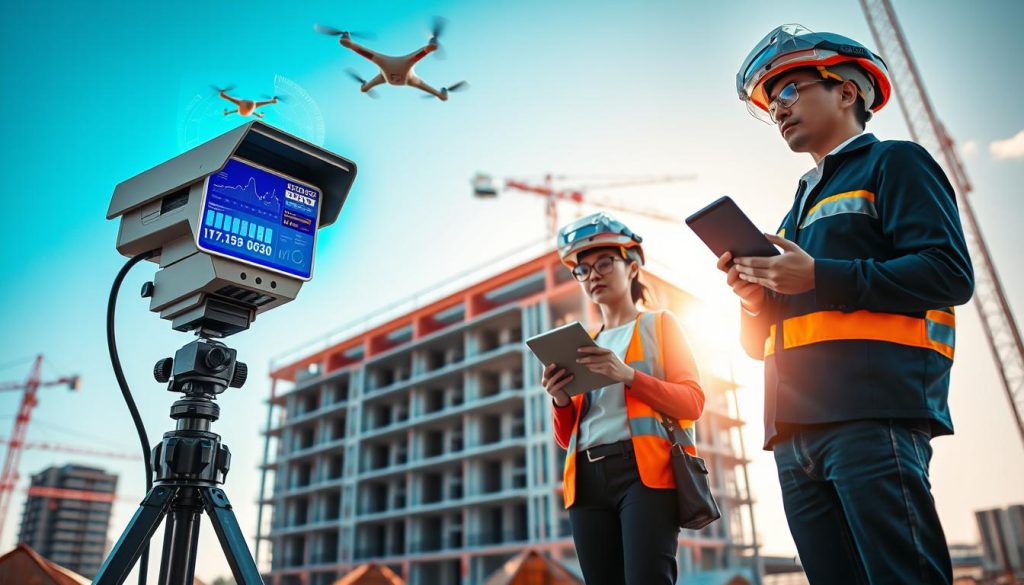
The surveillance ecosystem continues expanding beyond fixed units. Autonomous drones conduct aerial patrols, mapping terrain and filling coverage gaps.
Ground-level inspection robots navigate challenging environments safely. Together, they create a multi-layered, dynamic monitoring mesh.
One security director explained the strategic value:
“Our integrated system transformed how we manage large-scale projects. The drones cover areas our fixed cameras cannot reach, creating complete situational awareness.”
These trends point toward holistic “site intelligence” platforms. Security, safety, quality control, and project management converge on single data-driven interfaces.
Investing in solutions with open architecture ensures future compatibility. Upgrade paths position your project to leverage these advancements as they mature.
The future belongs to predictive, integrated protection ecosystems. They transform surveillance from cost centers into strategic operational advantages.
Taking the Next Step to Secure Your Singapore Construction Project
The final phase of securing your building endeavor involves translating insights into actionable protection measures. Engage with reputable providers like Birdseye and Hikvision for a tailored assessment.
Birdseye offers rapid 4-hour deployment for urgent needs. Hikvision has completed over 130 installations across Singapore. Many vendors provide free site surveys and limited-time trial programs.
One satisfied client reported: “Our sites now have 360° security without breaking budget.” This demonstrates the achievable value of modern surveillance.
Projects facing BCA deadlines receive priority scheduling. Discuss your phasing plan to ensure seamless relocation of monitoring systems.
Act now to implement robust protection. You’ll gain operational benefits while ensuring full regulatory compliance for your project’s success.
FAQ
What are the primary benefits of using a mobile surveillance system instead of traditional security?
Mobile surveillance units offer active deterrence and significant cost savings. They provide high-visibility protection without the expense of full-time guards. These systems deliver remote access, real-time alerts, and detailed video evidence, enhancing overall project oversight and safety.
How do these cameras operate without a fixed power source on a remote building site?
Most modern units feature integrated solar panel technology for sustainable, off-grid operation. This design ensures continuous power and video coverage even in areas without electrical infrastructure. The systems are built for durability and weather-resistant performance in harsh outdoor environments.
Can I monitor my project in real-time and access footage remotely?
Yes. Advanced solutions offer live viewing through secure cloud platforms and mobile apps. You can check on progress and safety from anywhere. Reliable cloud storage keeps your evidence secure and accessible for review or compliance needs.
What features are crucial for effective night-time and low-light surveillance?
A> Look for robust night vision and all-time color imaging capabilities. High-definition resolution combined with optical zoom is essential for identifying details in darkness. This ensures your perimeter guarding remains effective 24/7, providing clear footage for detection.
How does AI-powered motion detection improve security response?
Smart analytics filter out false alarms from wildlife or weather, sending instant alerts only for genuine threats. This technology enables rapid incident response by notifying managers of unauthorized access or motion in restricted areas, saving valuable time.
Are these systems compliant with Singapore’s Building and Construction Authority (BCA) regulations?
Reputable providers design solutions to meet specific Video Surveillance System (VSS) specifications. They also adhere to PDPA guidelines, ensuring a privacy-first approach to monitoring that protects personal data while securing the asset.
What is the typical return on investment for deploying this type of security?
ROI is realized through direct theft prevention, reduced loss of materials and equipment, and potential insurance premium reductions. The investment also pays off by boosting remote productivity and avoiding costly project delays from vandalism or safety incidents.


