
How much electricity does CCTV use per month?
Security is a big deal for homes and businesses in Singapore. Knowing how much CCTV energy consumption is key. With more cameras to watch over places, the electricity bill can go up a lot.
It’s important to figure out the CCTV power needs for different setups. This helps manage budgets and find ways to save energy without sacrificing security. This part explains how CCTV systems can raise your electricity bills and why knowing their energy use is important.
Key Takeaways
- CCTV systems can noticeably increase monthly electricity costs.
- Understanding the specific energy needs of different camera types is essential.
- Monitoring CCTV energy consumption can lead to better financial management.
- Investing in energy-efficient cameras can reduce power usage significantly.
- Operational hours and features strongly influence overall electricity consumption.
Understanding CCTV Power Needs
Knowing how much power CCTV systems need is key to saving energy. Different CCTV cameras use different amounts of power. This affects how much electricity your security system uses. Knowing this helps you manage and plan for your power needs.
Different types of CCTV cameras and their wattage
There are many types of CCTV cameras, each with its own power needs. Standard analog cameras use between 4 to 8 watts. IP cameras, on the other hand, use a bit more, around 5 to 10 watts. This depends on their features, like resolution and connectivity.
Additional components affecting power consumption
Other parts of CCTV systems also use a lot of power. DVRs and NVRs, for example, can use 40 to 60 watts. Knowing how these parts add to your power use helps you plan better. Using solar-powered options can also help save money on electricity.
Factors Influencing CCTV Power Usage
It’s important to know what affects CCTV power use to make them more efficient. Several things decide how much energy they need. The type of camera and its features, and how long they run, all play a part.
Camera type and features impacting energy consumption
Not all CCTV cameras use the same amount of power. PTZ cameras, for example, need more because they move. Features like night vision and high-definition also use more energy. These features are great for clear monitoring but increase power use.
Operational hours and recording settings
How long cameras run affects their power use. Running them all the time uses more power than running them only when needed. Setting a schedule can save energy while keeping things secure.
Different recording settings also impact energy use. For example, recording only when motion is detected uses less power than constant recording. For tips on managing these settings, check out this resource.
Typical Power Consumption of Common CCTV Setups
Knowing how much power different CCTV setups use helps users figure out their energy costs. Each camera type uses a different amount of power, affecting how much electricity is used.
Basic IP cameras and their average power use
IP cameras are a common choice for security because they are digital. They usually use between 3 to 10 watts. This means they use about 2.1 to 7.2 kWh of energy each month. There are many models to choose from, all with different power needs.
Bullet and PTZ cameras energy requirements
Bullet cameras are great for outdoor use because they’re tough and work well. They use 4 to 8 watts, which is about 2.9 to 5.8 kWh a month. PTZ cameras, which are flexible and move around, use more energy. They use 8 to 15 watts, which is 5.8 to 10.8 kWh a month. It’s important to think about these energy needs when setting up a surveillance system.
How much electricity does CCTV use per month?
Knowing the costs of CCTV monthly usage is key to budget planning. By figuring out the electricity costs of your devices, you can save money. This method helps you make smart choices for your CCTV system.
Calculating monthly energy costs based on wattage
To figure out your CCTV system’s monthly energy costs, start with the wattage of your cameras. Multiply this by 24 hours for daily use. Then, multiply that by the number of days in a month. For example, if a camera uses 5 watts:
- 5 watts x 24 hours = 120 watt-hours
- 120 watt-hours x 30 days = 3600 watt-hours or 3.6 kilowatt-hours
To find the cost, multiply the kilowatt-hours by your local electricity rate. This method gives you a clear idea of your monthly bills.
Example scenarios for different setups
Looking at specific setups can help you understand how different CCTV systems affect your bills. For example:
- Basic IP Camera: An IP camera that uses 6 watts 24/7 will cost about SGD 1.30 a month. This is based on a rate of SGD 0.30 per kilowatt-hour.
- Bullet Camera: Five bullet cameras using 10 watts each will cost about SGD 2.16 a month.
- PTZ Camera: A PTZ camera using 15 watts will cost around SGD 3.24 a month.
These examples show how different cameras can affect your electricity bill. This knowledge helps you plan better for your CCTV system’s monthly costs.
Practical Tips for Reducing Energy Costs
To cut down on electricity costs for CCTV systems, make smart choices in equipment and settings. Some practices can save energy without losing security. By following these tips, you can keep your security system effective while using less energy.
Choosing energy-efficient CCTV models
Look for CCTV models that use less power. Many cameras today have energy-efficient technology and use Power over Ethernet (PoE). This cuts down on wiring and can lower your energy bills. Brands like Hikvision and Dahua have models that save energy and meet security needs.
Utilizing motion detection features effectively
Motion detection settings can greatly reduce energy use. Cameras only work when there’s activity, saving power when it’s quiet. By recording only when motion is detected, you avoid unnecessary footage and save energy. Lowering resolutions and adjusting frame rates during quiet times also helps save energy.
Comparing CCTV Cameras: Energy Efficiency
When we look at CCTV systems, it’s key to know the difference between wired and wireless cameras. Each type has its own way of using power. Wired cameras use a steady amount of power from an outlet, making energy use easy to predict. Wireless cameras, on the other hand, might use batteries or Wi-Fi, leading to power use that can change.
Wired vs. Wireless: Impact on electricity usage
Wired cameras are known for their steady performance, making them great for long-term watching. They need electricity to work, which helps save energy over time. But, wireless cameras might use more power to stay connected, like when streaming high-quality video or needing battery backup often.
IP cameras compared to analog systems
Choosing between IP and analog systems also affects energy use. IP cameras need more power because they have advanced features and better image quality. But, they offer more, like remote access and smart analytics. Analog cameras, though, use less power. It’s a choice between better features and lower energy costs.
Weighing Costs: Is Your Security Worth It?
Investing in CCTV systems requires a careful cost assessment. It’s important to weigh the benefits against the costs. The initial cost for equipment and installation can be high. But, ongoing maintenance and operational expenses are also key to financial planning.
Assessing the overall cost of CCTV systems
The cost of CCTV systems depends on the type and quality of cameras. Some systems might be cheaper, but installation and accessories can increase the price. It’s essential to consider:
- Initial equipment costs, including cameras and recording devices.
- Installation fees if professional services are required.
- Ongoing service or maintenance charges.
Potential savings with energy-efficient cameras
Choosing energy-efficient cameras can lead to big savings on electricity bills. These cameras use less power, saving money in the long run. Some insurance companies also offer discounts for properties with strong security systems. This can make your investment even more worthwhile.
Investing in Solar Options for CCTV Systems
Technology keeps getting better, and more security systems are going green. Solar-powered CCTV systems are becoming popular. They use sunlight to work well and don’t need much traditional energy. Learning about these systems can show you the benefits of solar cameras.
How solar cameras work and their benefits
Solar cameras use special panels to turn sunlight into electricity. This power runs the camera and sometimes saves extra for later. The benefits of solar cameras include:
- Lower electricity bills, saving money over time.
- They’re good for the planet, using clean energy.
- They’re easy to set up because they don’t need lots of wiring.
Comparing traditional electricity vs. solar energy usage
Looking at energy comparison shows big differences. Traditional CCTV systems use grid electricity, which can change in price. They also might need expensive upgrades. Solar-powered systems, on the other hand, use free, clean energy.
Switching to solar is a smart move. It helps the planet and saves money on security costs in Singapore. Choosing solar shows we care about the environment and want to use tech wisely.
Monitoring and Managing CCTV Electricity Costs
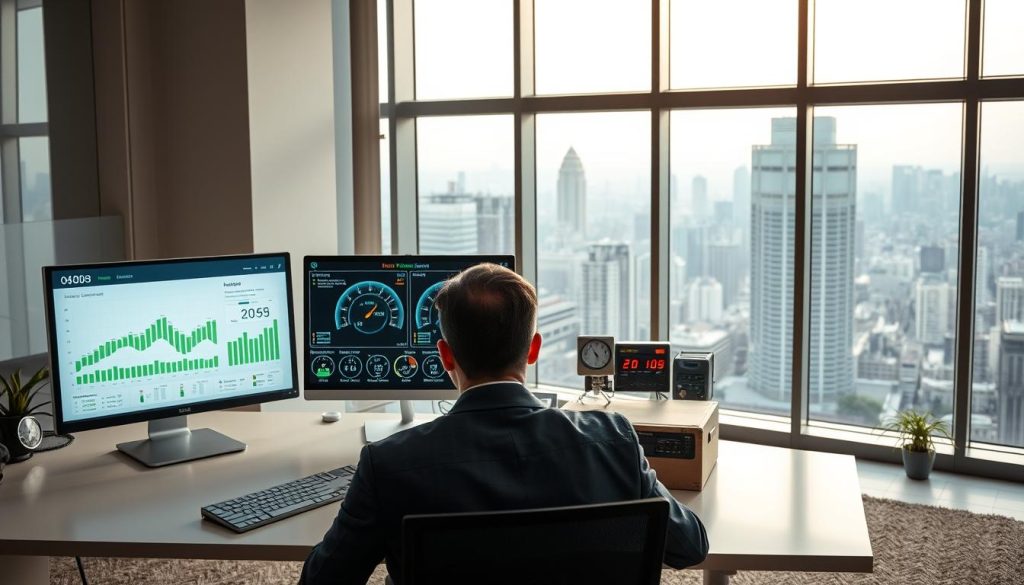
Keeping an eye on the energy costs of CCTV systems is key to a cost-effective security setup. Knowing how billing cycles work and tracking energy use can save a lot. Smart tools help manage electricity, letting users see how much they use and find ways to use less.
Understanding billing cycles and tracking usage
Understanding billing cycles helps spot when energy use goes up. Most utility companies send out monthly bills that show how much energy you’ve used in kWh. Looking at these bills regularly can show when energy costs jump, pointing out where your CCTV system might be using too much.
Using smart tools for energy management
Smart tools are becoming more popular for managing electricity. They track energy use in real-time, giving detailed insights into how your system works. These tools have important features:
- Usage analytics: They help find out which devices in your CCTV system use the most energy.
- Remote monitoring: You can check your energy data from anywhere, helping you make better choices.
- Alerts and notifications: You get alerts when your energy use goes over what you set as a limit.
Adding these smart tools to your monitoring plan can make your system more efficient and lower your electricity bills.
Innovations in CCTV Power Management
In recent years, CCTV technology has seen big changes in power management. New energy-saving technology includes special chipsets that cut down power use without losing quality. This lets security systems work well while saving money on energy, meeting today’s eco-friendly needs.
Also, new sensors have been added to CCTV systems. These sensors adjust how they work based on the environment and how often they’re used. This makes them more efficient, saving on electricity costs and supporting green security solutions worldwide.
Another key improvement is the use of solar power for CCTV systems. This lets cameras work well even in tough conditions. Adding solar power to CCTV systems is a big step towards using less traditional energy. As these power management innovations grow, they promise a greener future for surveillance technology in Singapore and elsewhere.
FAQ
How much electricity do CCTV systems consume monthly?
CCTV systems use different amounts of electricity based on the cameras. Basic IP cameras use 2.1 to 7.2 kWh a month. Bullet cameras use 2.9 to 5.8 kWh. PTZ cameras use the most, averaging 5.8 to 10.8 kWh a month.
What types of CCTV cameras are available and how do they differ in power usage?
There are many CCTV cameras like analog, IP, bullet, and PTZ. Standard analog cameras use 4 to 8 watts. IP cameras use 5 to 10 watts. PTZ cameras use more, from 8 to 15 watts, because of their motors.
What additional components can affect the power consumption of a CCTV system?
DVRs and NVRs also use a lot of power, from 40 to 60 watts. Adding more parts can increase the energy needed.
What factors influence the energy consumption of CCTV systems?
Camera type, features like night vision, and how long they run affect energy use. Cameras that run all the time use more energy than those that only run when needed.
How can I estimate the monthly energy costs of my CCTV system?
To find monthly energy costs, multiply the wattage of your cameras by their hours of use. Then, multiply by the number of days in a month. This will give you kWh used.
What practical tips can help reduce energy costs for CCTV systems?
Choose energy-efficient models, like those with Power over Ethernet (PoE). Also, use motion detection to save energy by only turning on cameras when needed.
How do wired and wireless CCTV cameras compare regarding energy efficiency?
Wired cameras use the same amount of power all the time. Wireless cameras use batteries, which can change how much energy they use. IP cameras usually need more power than old analog systems.
What costs should I consider when evaluating the investment in a CCTV system?
Look at both the initial cost and the ongoing expenses of a CCTV system. Also, think about the security benefits and how it might lower your insurance costs.
How can solar power be integrated into CCTV systems?
Solar cameras use sunlight for power, making them eco-friendly. They can save a lot of money over time compared to using regular electricity.
What methods are available for effectively monitoring CCTV electricity usage?
It’s important to understand billing cycles and track energy use. Using smart tools for energy management can help find trends, save energy, and lower bills.
What recent advancements are being made in CCTV power management?
New advancements include energy-saving chipsets and sensors that use less power without losing quality. Solar technology is also getting better, working better even in tough conditions.


