
How CCTV Can Identify Individuals [Present]
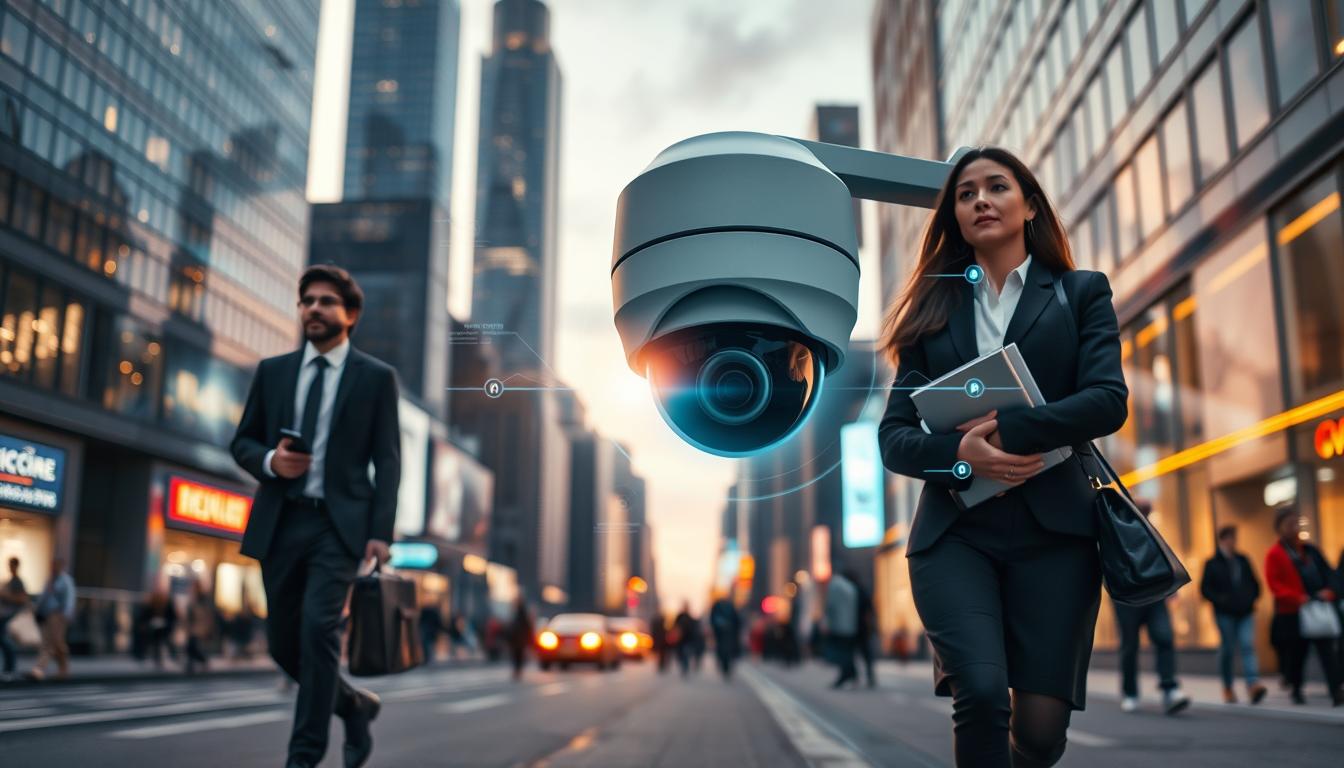
Modern security has moved far beyond simple video recording. Today’s surveillance cameras are intelligent systems. They analyze footage in real time to recognize people and activities.
This shift is powered by artificial intelligence and sophisticated software. The core of this advancement is facial recognition technology. It scans facial features and matches them against databases.
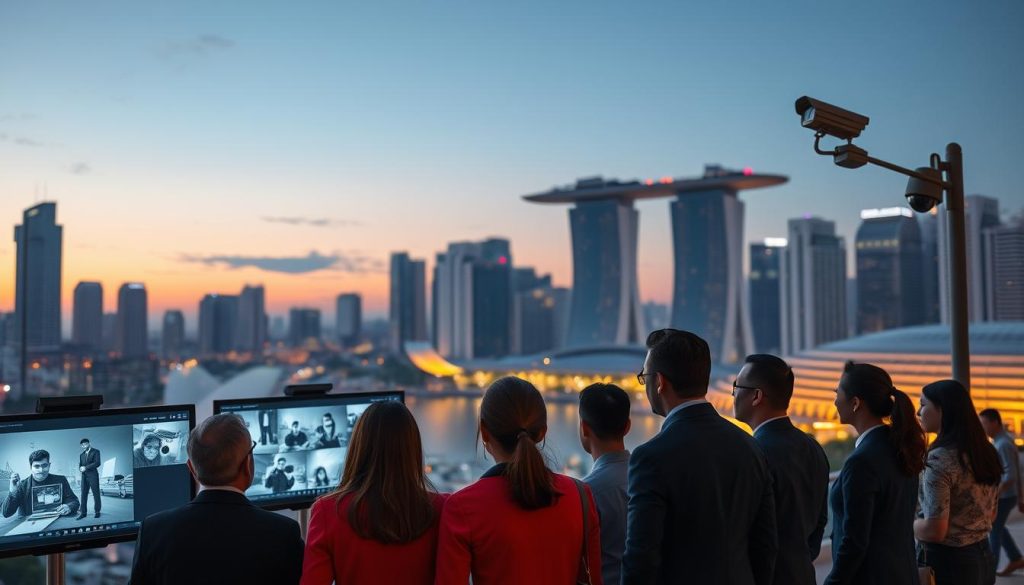
Places like Singapore showcase this evolution. The city-state’s PolCam initiative aims for over 200,000 cameras by 2030. This network is designed for public safety and crime prevention.
However, powerful monitoring tools come with important questions. The balance between collective security and individual privacy is a key debate. Understanding how these systems work is crucial for everyone.
This guide explores the mechanics behind modern identification. We’ll look at the technical setup, governing standards, and what the future holds. Our goal is to provide clear information on current capabilities.
Key Takeaways
- Contemporary surveillance uses AI for real-time analysis and identification.
- Facial recognition software compares live images with stored data.
- Singapore is a leading example with its extensive PolCam network.
- Advanced technology significantly boosts public safety and crime deterrence.
- Widespread camera use sparks ongoing discussions about personal privacy.
- Effective system performance depends on camera quality, placement, and lighting.
Understanding the Core Question: Can CCTV Identify a Person?
Surveillance networks today are evaluated by their fundamental power to distinguish one human being from another. This capability defines modern public safety infrastructure.
Contemporary video surveillance solutions go beyond mere observation. They are designed to identify a specific individual from recorded footage. This is not a simple yes or no proposition.
Success depends on integrating facial recognition technology with biometric analysis. The process begins by capturing a clear image of a subject’s face.
Specialized software then converts this visual data into a digital biometric template. This mathematical representation of facial features is compared against a stored database.
A critical distinction exists between detection and recognition. Detection means the system finds a face within the video frame.
Recognition involves matching that face to a known identity. Not all surveillance footage is automatically suitable for this task.
Real-world applications demonstrate this technology’s value. In Singapore, advanced systems utilize face recognition for law enforcement and public safety.
Several variables influence the success of an identification attempt. Image resolution, lighting conditions, and software sophistication are paramount.
While powerful, the accuracy of these solutions is not infallible. Technical and environmental factors can affect performance.
Biometric data extends beyond just facial features. Gait analysis and other behavioral metrics offer broader identification methods.
Understanding these core mechanics is essential to grasp the full answer. The next section will delve into the precise technology that makes it all work.
The Mechanics of Modern CCTV Identification
Today’s identification mechanics rely on a sophisticated interplay of hardware capture and software interpretation. This process turns live video streams into reliable security intelligence.
It involves precise steps and strict technical standards. Every component, from the lens to the algorithm, must work in harmony.
From Simple Recording to Facial Recognition Technology
Video surveillance has evolved dramatically. Early systems just recorded events for later review.
Modern networks are proactive. They analyze scenes in real time to spot and recognize individuals.
This shift is powered by artificial intelligence. AI enables continuous monitoring and instant alerts.
Facial recognition technology is the cornerstone. It allows a system to match a live face against a known database.
How Facial Detection and Matching Software Operates
The software follows a defined sequence. First, it detects a human face within the video frame.
The image is then aligned and normalized. Quality enhancement prepares it for analysis.
Next, the algorithm extracts unique facial features. It measures distances between eyes, nose shape, and jawline contours.
These measurements form a digital biometric template. This template is a mathematical model of the face.
Matching compares this template to thousands stored in a database. A decision is made on whether a match exists.
Leading manufacturers use advanced processors to speed this up. Dahua’s Vision Processor Unit (VPU) allows real-time recognition at the camera.
Hikvision employs Edge Computing. This method handles face detection and data structuring locally.
Machine learning constantly improves accuracy. Systems learn from vast datasets of facial images.
Databases can hold tens of thousands of profiles. Alerts trigger when a face is recognized or is unknown.
Key Technical Factors for Accurate Identification
Hardware quality is non-negotiable. Pixel density, or image resolution, is paramount.
High resolution ensures enough detail for the software to work. Blurry footage leads to failed matches.
Camera installation follows strict guidelines. The tilt angle should not exceed 30 degrees from horizontal.
Pan inclination must stay within 20 degrees. This optimizes the camera’s view of approaching faces.
Installers must account for natural human behavior. People often look down at door handles or their feet.
This means faces may be inclined between 10 and 20 degrees. The system’s design must anticipate this angle.
The horizontal angle between the camera’s lens and the subject is also critical. A direct frontal view is ideal.
Ultimately, performance depends on both sharp hardware and smart software. Their seamless integration defines a system’s prowess.
Advancements in Biometric Data and AI Integration
Contemporary identification is evolving from a focus on static images to the dynamic analysis of how individuals move and behave. This progression is powered by two intertwined forces: the expansion of biometric markers and the deep integration of artificial intelligence.
These elements transform passive monitoring networks into proactive, intelligent security ecosystems. They enable solutions to understand context, predict events, and deliver precise information.
Beyond the Face: The Role of Biometric Data
While facial recognition is a cornerstone, modern systems analyze a wider spectrum of unique signatures. This multi-modal approach significantly boosts accuracy and reliability.
Gait analysis examines a person’s walking pattern, which is difficult to disguise. Voice pattern recognition adds an auditory layer to security protocols.
Some advanced solutions even use thermal signatures to detect human presence in total darkness. Combining these data points creates a more certain identification.
Leading manufacturers build this capability directly into their hardware. Dahua’s Deep Learning Technology, for instance, does more than just find faces.
It can categorize individuals based on demographic features like age, gender, and the presence of glasses or facial hair. Hikvision’s cameras structure vehicle data and filter false alarms alongside face detection.
This structured data turns raw video into searchable, actionable information. It allows operators to quickly find specific individuals based on multiple traits.
How AI and Deep Learning Enhance CCTV Systems
Artificial Intelligence, particularly deep learning neural networks, is the engine behind this transformation. These algorithms learn from vast datasets to perform complex video analytics automatically.
The impact on accuracy is dramatic. In 2014, searching a large photo database had a failure rate near 4%.
By 2018, that rate dropped to 0.2% for a database of 26.6 million images. The top facial recognition algorithm in 2020 achieved a stunning error rate of just 0.08%.
This AI integration automates routine monitoring tasks with high precision. It enables real-time license plate recognition, accurate crowd counting, and instant intrusion detection.
Behavioral analysis is another key benefit. Systems can now detect loitering, unusual movements, or abandoned objects, alerting staff to potential incidents.
The quality of the AI model depends entirely on its training data. Large, curated databases of diverse images are essential for building fair and effective algorithms.
Processing this data requires significant computational power. Modern cctv cameras often include specialized hardware like Vision Processor Units (VPUs).
This allows for edge computing, where data is processed locally on the camera. It reduces bandwidth use and enables faster, more secure real-time analysis.
AI and expansive biometric data are no longer optional features. They are the core components defining the next generation of intelligent video surveillance and security solutions.
CCTV Surveillance and Identification in Singapore
The city-state of Singapore operates one of the world’s most dense and technologically advanced public surveillance networks. It serves as a living laboratory for how video monitoring integrates with urban management and public safety.
This infrastructure provides a clear benchmark for the capabilities of modern security systems. The approach combines scale, strategic placement, and intelligent analytics.
Overview of Singapore’s Extensive CCTV Landscape
Scale defines the Singaporean model. The nation currently has over 90,000 public cameras watching over its streets and neighborhoods.
Plans are ambitious, targeting an expansion to more than 200,000 units by 2030. This translates to roughly one camera for every 13 residents.
Deployment is highly strategic. Cameras are concentrated in areas with high public footfall.
You will find them in public housing estates, known as HDB blocks. They are also prevalent at transport hubs like MRT stations and bus interchanges.
Commercial centers, including landmarks like the Esplanade, are covered. This blanket coverage creates a powerful deterrent and evidence-gathering tool.
Local security companies with deep regional experience are crucial. They handle the deployment, integration, and ongoing maintenance of these vast systems.
The PolCam Network and Real-Time Public Safety
At the heart of this ecosystem is the PolCam 2.0 network. This police-led initiative fields about 10,500 cameras in key public areas.
Its primary purpose is enhancing real-time public safety. The feeds are integrated directly into police operations centers.
Artificial intelligence powers the analytics. These smart cameras can detect unsafe actions as they happen.
They alert operators to incidents like public disturbances, fights, or suspicious loitering. This enables law enforcement to respond immediately, often before a 999 call is made.
A robust technological backbone supports this. High-speed fiber networks transmit high-quality video to centralized command centers.
Here, personnel monitor feeds and manage alerts. The system is designed for speed and situational awareness.
Impact on Law Enforcement and Crime Resolution
The impact on policing efficiency is profound. Automated video analytics have reduced manpower costs for certain monitoring tasks by 80-90%.
Investigations are faster when officers have clear visual evidence. Footage from these networks has directly aided in identifying and apprehending suspects in numerous cases.
It provides reliable forensic evidence that can corroborate witness statements. The ability to track an individual’s movement across the city is a powerful investigative tool.
Public acceptance is a key part of this equation. A recent survey found about 60% of Singaporeans find it acceptable for police to use facial recognition technology.
This support is often linked to a strong collective desire for safety and order. The tangible results in crime resolution help sustain this social license.
For optimal system performance over time, regular assessment is needed. Understanding the optimal time to replace your CCTV system in is part of maintaining this cutting-edge infrastructure.
Singapore’s model demonstrates a successful integration. It blends advanced identification technology with a smart city framework, setting a global standard for others to study.
How to Set Up CCTV for Effective Identification: A Practical Guide
A successful identification result is not accidental. It is the product of deliberate technical planning.
This guide outlines the critical factors for configuring a video surveillance network. Proper setup ensures your security solution captures usable data.
Critical Factor #1: Pixel Density and Image Resolution
Pixel density is the foundational metric for clear identification. It measures how many pixels cover a subject’s face.
Higher resolution, like 4K or 12MP, provides more detail. This allows software to extract unique facial features accurately.
International standards like EN 62676-2015 provide guidelines. They specify the minimum pixels required across a face for reliable analysis.
A practical rule of thumb links distance to required resolution. The farther the subject, the higher the camera’s resolution must be to maintain pixel density.
Critical Factor #2: Camera Placement, Angle, and Height
Geometry is everything in camera installation. The relationship between height and tilt angle is inverse.
Mounting a unit too high forces an extreme downward tilt. This distorts facial images and ruins recognition attempts.
Strict limits exist for optimal performance. The tilt from horizontal should not exceed 30 degrees.
Pan inclination must stay within 20 degrees. Exceeding these limits creates unusable footage.
Correct placement offers a direct, frontal view of approaching individuals. This is the ideal scenario for all systems.
Critical Factor #3: Accounting for Human Behavior Patterns
Effective setup anticipates how people naturally move. We rarely walk with our heads perfectly level.
In a lobby, a person looks down at a door handle. In a retail store, attention shifts to products on shelves.
This natural behavior creates a face inclination between 10 and 20 degrees. Your cctv cameras must be positioned to account for this expected angle.
Planning for this pattern ensures faces are captured within the software’s analytical range. It turns chance captures into reliable detection.
Choosing Locations: Main Entrances vs. Service Entrances
Location strategy differs based on the entrance type. Each requires a tailored approach.
Main Entrances: The goal is to capture clear video of every visitor. One strategy uses a wide-angle lens at lower height for identification prior to entry.
A more controlled method uses a telephoto lens focused directly on the doorway. This setup captures the entire entrance with optimal pixel density.
Service Entrances: The priority often shifts to monitoring exits. The subject pool is usually limited to employees.
This allows for slightly relaxed technical requirements. For comprehensive coverage, two cameras may be necessary—one for entry and one for exit.
Specialized design tools, like IP Video System Design Tool, are invaluable. They simulate camera views before physical installation.
This verifies that all parameters—pixel density, tilt, horizontal angle, and face inclination—are met. Successful identification is a deliberate outcome of this meticulous planning.
Regulations, Privacy, and Ethical Considerations in Singapore
With great technological power comes the imperative for strong governance and ethical guidelines. Singapore’s extensive video monitoring network operates within a carefully constructed framework of law and public discourse.
This balance is critical for maintaining social license. It ensures advanced security tools serve the public good without undue intrusion.
Governing Framework: The Personal Data Protection Act (PDPA)
The Personal Data Protection Act (PDPA) is the legal cornerstone. It governs the use of all cameras in the nation, applying to over 900,000 units.
The law mandates key principles for operators. Collection of data must be necessary for a clear purpose.
Organizations must notify individuals they are under recording. They are also responsible for protecting the collected personal information.
Specific PDPA guidelines address sensitive scenarios. Recording is strictly prohibited in private areas like toilets and changing rooms.
Permission is required for cameras pointing at private residences. Clear signage must be displayed in monitored zones.
Operators must also define and adhere to data retention periods. This prevents indefinite storage of footage.
Balancing Public Safety with Individual Privacy
A core societal debate weighs collective safety against personal anonymity. Dense surveillance offers undeniable public safety benefits.
Yet it also reduces privacy in spaces once considered anonymous. The government acknowledges this tension openly.
“We have to maintain that trust… the sense that the government is using these tools properly, for the right reasons.”
Transparency about usage is seen as key to building trust. Public perception surveys reflect this nuanced balance.
About 60% of residents find police use of facial recognition acceptable. This support is tied to tangible results in crime resolution.
Limitations and Challenges: Bias and Misidentification
Even advanced systems face significant technical and ethical hurdles. These limitations pose real risks if not managed.
Poor quality video is a primary cause of error. Low lighting, bad camera angles, and insufficient resolution degrade images.
This can lead to failed matches or, worse, false accusations. Reliable identification requires optimal technical conditions.
A more profound issue is algorithmic bias. Studies show some recognition software has higher error rates for women and people with darker skin tones.
This bias often stems from non-diverse training databases. It raises serious concerns about equitable policing and monitoring.
Mitigating these challenges requires proactive measures. Regular system audits and using diverse training datasets are essential.
Human oversight must be maintained for critical decisions. No algorithm should have the final say on a match.
Industry best practices for data security are also crucial. Footage should be encrypted both in transit and at rest.
Strict access controls prevent unauthorized use of the technology. These steps protect the integrity of the entire system.
Responsible deployment of surveillance solutions demands dual adherence. It must follow the letter of the law and the spirit of ethical principles.
Only then can this powerful technology truly serve society justly and maintain the public’s essential trust.
The Future of CCTV Identification Technology
The trajectory of surveillance technology is set for profound transformation. It will be driven by leaps in artificial intelligence and ultra-fast 5G connectivity.
These changes enable real-time, ultra-high-definition video streaming. Cloud-native solutions and “as a Service” models will become standard. This allows for scalable storage and powerful remote analytics.
Systems will deeply integrate with the Internet of Things. Data from access control and sensors creates a holistic security ecosystem. Advanced AI will move beyond simple identification.
It will power predictive analytics that spot behavioral anomalies. This shift turns monitoring networks into proactive tools. They can alert to potential threats before an incident occurs.
Forensic searches will become fully automated. Investigators can track a person across multiple cameras in seconds. Strong cybersecurity, like blockchain for data integrity, is essential to protect these networks.
Ethical standards for biometric use will evolve globally. Public demand for transparency will grow. Singapore’s Smart Nation vision exemplifies this integrated, intelligent future.
The path ahead promises greater capability and connectivity. It demands ongoing public dialogue about privacy and the role of technology in society.
FAQ
What technology allows surveillance cameras to recognize individuals?
Advanced facial recognition software enables this capability. Modern systems analyze facial features from video feeds, comparing them against a database. This technology relies on high-quality image capture and powerful AI algorithms for accurate detection.
How does artificial intelligence improve video monitoring?
AI and deep learning transform raw footage into actionable information. These solutions can track people and vehicles, analyze behavior patterns, and flag unusual activity in real-time. This greatly enhances security and monitoring efficiency for both public and private systems.
Are public surveillance systems effective for safety in cities like Singapore?
Yes, extensive networks like Singapore’s PolCam have a proven impact. These cameras in public places provide constant monitoring, aiding police in crime resolution and deterrence. The data collected helps authorities respond quickly to incidents, enhancing overall public security.
What are the most important factors for a reliable security camera installation?
Three factors are critical. First, high image resolution ensures clear faces. Second, proper placement and angle avoid obstructions. Third, understanding common human behavior helps position cameras at key points like main entrances or service areas for optimal coverage.
How are privacy rights protected when using these advanced systems?
In jurisdictions like Singapore, the Personal Data Protection Act (PDPA) sets standards. These rules govern how biometric data is collected, used, and stored. The goal is a balance between powerful security solutions and protecting individual privacy from misuse.
What does the future hold for identification technology?
Expect tighter AI integration and smarter analytics. Future technology will move beyond simple recognition to predictive behavior analysis. Software will become more adept at handling challenges like poor lighting or distance, making surveillance systems more robust and intelligent.


