

Do CCTV cameras need maintenance How to Keep Them Working
In Singapore, the question of whether surveillance systems require upkeep is crucial for property owners. These systems play a vital role in protecting homes and businesses. Regular checks ensure that every unit functions optimally, safeguarding against potential failures. Without consistent attention, you risk missing important details that could compromise your security.
The tropical climate of Singapore, characterized by high humidity and frequent rain, adds to the challenges of maintaining these systems. It’s essential to stay proactive to avoid blurred footage and system breakdowns. Moreover, proper upkeep not only extends the lifespan of your equipment but also saves you from costly repairs.
Understanding the importance of maintenance goes beyond just cleaning lenses. It encompasses a comprehensive approach to power management, storage, and software updates. This guide will explore practical steps to keep your surveillance systems running smoothly, ensuring high-quality video recording around the clock.
Key Takeaways
- Regular checks are vital for optimal performance and reliability.
- Neglecting upkeep can lead to blurred footage and system failures.
- Singapore’s climate makes maintenance essential.
- A well-maintained system saves money on repairs.
- Maintenance involves more than just cleaning; it includes power and software management.
- Both homeowners and businesses should prioritize proactive care.
Why Regular CCTV Maintenance Is Essential for Security Systems in Singapore
Maintaining surveillance systems is a critical factor for effective security in Singapore. The tropical climate poses unique challenges for these systems. High humidity, intense heat, and heavy rainfall can accelerate wear and tear on outdoor equipment.
Moisture ingress is a significant concern. It can lead to internal corrosion, short circuits, and fogging on camera lenses. These issues severely degrade image quality and system reliability over time. Regular upkeep helps mitigate these risks, ensuring your equipment functions optimally.
Moreover, compliance with local surveillance laws is crucial. Singapore has regulations governing data protection and privacy. Regular checks ensure that your security system adheres to these laws. This compliance helps avoid legal complications and ensures that your footage meets evidentiary standards when needed.
Routine maintenance also has a direct link to the lifespan of your equipment. By caring for your cameras, cables, and recording units, you can extend their life significantly. A well-maintained system delivers superior performance, providing sharper video and fewer blind spots.
Preventive maintenance reduces unexpected breakdowns. This minimizes downtime, ensuring consistent security coverage across all areas of your property. Many Singaporean businesses and homeowners have benefited from regular checks, protecting their investments against the harsh local environment.
Investing time and effort into regular maintenance pays off. It enhances security, reduces repair costs, and provides peace of mind, knowing your system works when you need it most.
Understanding the Different Types of CCTV Maintenance
A clear grasp of the different maintenance strategies is vital for optimal surveillance performance. Each type plays a significant role in ensuring your systems operate efficiently. Understanding these methods helps you keep your equipment in top condition.
Preventive Maintenance: Avoiding Problems Before They Occur
Preventive maintenance is the proactive approach of regularly inspecting, cleaning, and servicing your equipment. This strategy aims to stop problems before they disrupt your security coverage. Tasks such as lens cleaning, cable checks, and firmware updates are essential.
By implementing preventive measures, you create a reliable way to avoid unexpected system failures. This not only saves you from costly emergency repairs but also enhances the overall effectiveness of your surveillance systems.
Corrective Maintenance: Addressing Issues After They Arise
Corrective maintenance involves diagnosing and fixing issues after they have already occurred. This may include replacing a failed power supply or repairing damaged wiring. While this approach can resolve immediate problems, it often leads to higher long-term costs.
Relying solely on corrective maintenance can extend downtime and create gaps in your surveillance. Such gaps could compromise safety, making it essential to balance this method with preventive strategies.
Predictive Maintenance: Using Data to Schedule Upkeep
Predictive maintenance employs advanced data analytics to anticipate when specific components need attention. By analyzing system diagnostics and performance trends, you can schedule upkeep at the optimal time. This reduces unnecessary service visits and helps prevent failures before they impact your security.
Integrating predictive maintenance with preventive and corrective strategies creates a comprehensive maintenance plan. This approach maximizes equipment lifespan and ensures consistent, high-quality video capture.
Understanding these maintenance categories empowers you to make informed decisions about caring for your surveillance investment the right way.
Do CCTV Cameras Need Maintenance? Key Reasons to Keep Your System Up-to-Date
For homeowners and businesses alike, keeping surveillance systems updated is essential for maintaining security. Regular care not only enhances performance but also extends the lifespan of your equipment. This section will explore the critical reasons why ongoing upkeep is vital for effective surveillance.
Maintaining Image Quality and Clear Footage
One of the most compelling reasons to prioritize upkeep is the need for clear images. Dirty lenses can produce grainy, unusable footage. Regular cleaning of camera lenses removes dust, moisture, and debris that accumulate over time. This significantly enhances video clarity and detail.
Clear footage is crucial for identifying faces, license plates, and other critical details during security incidents. Therefore, maintenance becomes a non-negotiable part of your security strategy.
Preventing Equipment Failure and Security Risks
Routine checks help identify worn cables, loose connections, and failing power supplies before they lead to complete equipment failure. These preventive measures are essential to avoid dangerous security gaps that could compromise your safety.
By focusing on regular upkeep, users can make their systems more reliable and avoid expensive repairs. Ignoring maintenance can lead to serious issues, including data loss and system breakdowns.
Saving Money Through Early Problem Detection
Early problem detection through routine checks can save you substantial money. Addressing minor issues before they escalate into major repairs or require full camera replacement is crucial.
Consistent upkeep extends the operational life of your surveillance equipment, protecting your initial investment and delivering better long-term value. In Singapore, where security is paramount, businesses cannot afford downtime in their systems. Scheduled maintenance ensures continuous protection for assets, employees, and customers.
Ultimately, the small cost of regular upkeep is always far less than the expense and stress of dealing with a security breach caused by malfunctioning equipment.
Creating a Comprehensive CCTV Maintenance Checklist
A well-structured maintenance checklist is essential for ensuring your surveillance system operates effectively. Regular checks not only enhance performance but also prolong the lifespan of your equipment. By following a routine, you can catch problems early and keep your system running smoothly.
Key areas to inspect include:
- Inspecting and Cleaning Camera Lenses: Check for clarity and cleanliness to ensure optimal image quality. Use a microfiber cloth and appropriate lens cleaner to remove dust, dirt, and condensation without scratching the glass.
- Checking Power Supply and Connections: Ensure all connections are secure and functioning correctly. Measure voltage levels to prevent electrical failures that could shut down your entire security setup.
- Monitoring Storage Health and Capacity: Verify that recordings are saving correctly. Delete old footage when necessary and ensure there is sufficient space for continuous recording.
- Examining Wiring and Equipment Housing: Inspect for signs of damage or wear that could affect system performance. Look for frayed wires, loose BNC/Ethernet ports, or corrosion.
It is advisable to check camera lenses and wiring every month, while a full system check should be performed every six months. This regular care boosts your system’s reliability and prevents unexpected failures.
In addition, make sure to check the camera housing for cracks, water damage, or insect nests, especially for outdoor units exposed to Singapore’s tropical weather. Incorporate full system diagnostics into your annual routine, allowing professionals to detect hidden issues like signal loss or bandwidth problems before they cause failures.
Using this maintenance checklist as a structured guide will help you perform consistent monthly and biannual checks that keep your surveillance system operating at peak performance year-round.
How Often Should CCTV Maintenance Be Performed?
Establishing a regular schedule for surveillance system upkeep is essential for optimal performance. The frequency of checks varies based on the environment and type of system in use. For most indoor residential setups, biannual inspections suffice. However, outdoor systems exposed to harsh weather conditions require more frequent attention.
For outdoor cameras, inspections every three months are advisable. These units face challenges from rain, dust, and humidity, especially in Singapore’s tropical climate. Properties near the coast should be checked even more often due to the corrosive effects of salt-laden air.
In commercial and industrial settings, a monthly maintenance schedule is crucial. High-security locations like banks and retail stores must ensure their systems are always operational. Regular professional checks help confirm proper alignment, recording functionality, and that no obstructions interfere with the cameras.
Weekly Visual Checks and Monitoring
Performing weekly visual checks is a simple yet effective way to maintain your system. This includes verifying that camera angles are correct and ensuring no new obstructions block the field of view. It takes only a few minutes but can help catch obvious problems like misaligned cameras or recording failures before they compromise security.
Monthly Deep Cleaning and System Tests
Monthly deep cleaning sessions are essential for maintaining clear footage. This involves cleaning camera lenses and housings to remove dust and grime. Additionally, testing all system functions ensures that everything operates smoothly. Reviewing stored footage will help confirm that video quality meets security requirements.
Annual Professional Inspections and Diagnostics
Annual professional inspections are vital for a comprehensive evaluation of your entire system. Experienced technicians can identify hidden technical problems, such as signal loss or bandwidth issues. They can also advise on necessary firmware updates and upgrades for better performance.
Following a consistent maintenance schedule tailored to your environment and system type is the most effective way to extend equipment life. Use seasonal changes or specific months as reminders for deeper maintenance tasks. This ensures your surveillance systems remain ready to capture clear footage at all times.
Maintenance Tips for Different Types of CCTV Systems
To achieve the best results, it’s crucial to adapt maintenance practices to the specific type of security system in use. Each type of system—wired, wireless, and IP-based—has unique care routines that must be followed to ensure reliability and performance.
Wired CCTV Systems: Cable and Connection Care
Wired systems are known for their reliability and consistent video quality. To keep them functioning optimally, focus on cable and connection care. Regularly inspect all wiring for signs of fraying, corrosion, or loose BNC connectors. These checks are essential, as any disruption can lead to performance issues.
Since wired systems depend entirely on physical connections, maintaining these cables is the most critical way to prevent unexpected failures. A small issue with a cable can interrupt the stable video feed these systems are designed to provide.
Wireless CCTV Systems: Battery and Network Monitoring
Wireless systems offer flexibility in placement, making them easy to install in hard-to-reach areas. However, they require diligent battery and network monitoring. Regularly check battery levels to ensure they are sufficient for operation. Additionally, confirm that your Wi-Fi network maintains a strong and interference-free signal to all cameras.
Be aware of potential interferences that might disrupt video quality. Keeping an eye on power sources and network stability will help avoid unexpected downtime or recording gaps.
IP-Based Systems: Firmware Updates and Cybersecurity
IP-based systems utilize digital technology for superior video quality and remote access. To protect against hacking and unauthorized access, it’s essential to implement regular firmware updates and cybersecurity measures. Install the latest security patches every three to four months to ensure your system remains secure.
Updating your camera firmware is crucial for optimal performance. Without these updates, you may encounter malfunctions or even complete system failures. Regular attention to these updates safeguards your footage and ensures continued accessibility.
By applying these tailored maintenance tips, you can ensure your specific CCTV system operates reliably. This will help deliver the security and performance you expect, regardless of the underlying technology.
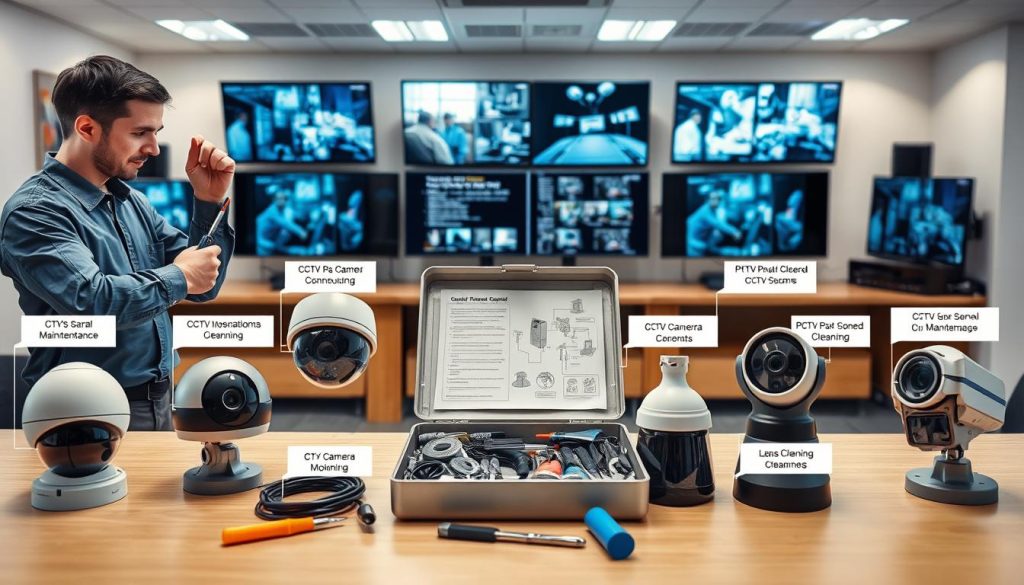
Common Issues Encountered in CCTV Maintenance and How to Fix Them
CCTV systems often face a variety of common problems that can hinder their effectiveness. It’s essential to address these issues promptly to maintain security. Here are some of the most frequent problems and how to resolve them.
Dirt and Dust on Camera Lenses
Accumulation of dirt and dust on camera lenses is a common issue. This buildup can obscure the view, leading to hazy and unclear images. Even a thin layer of dust can significantly reduce video quality, making it difficult to identify faces or details.
To clean the lenses effectively, start by using a compressed air can to blow away loose debris. Then, gently wipe the lens with a microfiber cloth to avoid scratching the glass surface. Regular cleaning should be performed at least once every three months to ensure optimal image quality.
Wiring Damage and Loose Connections
Wiring problems are another significant concern. Frayed cables or loose connections can cause intermittent video loss, flickering feeds, or complete camera failure. This creates dangerous blind spots in your surveillance coverage.
Inspect cables regularly for signs of fraying, corrosion, or pest damage. It’s also crucial to tighten all BNC, Ethernet, and power connections to maintain strong, uninterrupted signals to every camera.
Storage Overload and Recording Failures
Storage overload can lead to critical problems. Insufficient hard drive space may cause recording failures, overwrite important footage, or prevent the system from capturing new video entirely. Managing storage effectively ensures that all essential recordings are saved.
Monitor capacity levels frequently, delete unnecessary old recordings, and upgrade hard drives when needed. This proactive approach ensures continuous, reliable footage retention, allowing for effective review of security events.
Additionally, check camera enclosures for water ingress, condensation, and dirt buildup. Open the housing and inspect for moisture that could damage internal components and cause system failures. Addressing these common problems promptly as part of your regular maintenance routine will keep your CCTV cameras functioning correctly and your property protected at all times.
Best Practices for Keeping Your CCTV Cameras in Top Condition
A well-maintained surveillance system guarantees clearer images and increased reliability for your security needs. To achieve this, it’s essential to adopt best practices that ensure your equipment functions effectively.
Using Proper Cleaning Tools and Techniques
Regular cleaning of camera lenses is vital. Dust, rain, and debris can harm image quality. Always use proper cleaning tools, such as microfiber cloths and lens-safe solutions. Avoid using paper towels or household cleaners, as these can scratch lenses and degrade video quality.
Regular Power Supply Checks
Keeping an eye on power is essential for smooth operation. Every security camera requires a steady power source to work correctly. Perform regular checks on power cables, adapters, and connections. Look for signs of wear or corrosion and replace any damaged components immediately.
Maintaining Weatherproof Enclosures
Outdoor cameras face unique challenges. It’s crucial to maintain their weatherproof enclosures. Periodically open the camera housings to check for water residue, dirt, or condensation. This ensures the internal electronics remain protected from rain and wind.
In some cases, applying waterproof silicon sealant around the camera housing may be necessary. Make sure all gaskets and seals remain intact and pliable. Replace them if they show signs of cracking or deterioration.
By consistently applying these best practices, you can keep your entire CCTV system operating at peak performance. This will ensure that your security cameras provide continuous, high-quality surveillance coverage when you need it most.
Choosing the Right Professional CCTV Maintenance Provider in Singapore
Selecting a reliable provider for CCTV services is essential for maintaining the efficiency of your security systems. A qualified maintenance provider ensures that your surveillance equipment remains in top condition. With numerous options available, making an informed choice can greatly impact your system’s performance.
When evaluating potential service providers, consider their experience and expertise. Look for companies with a proven track record in handling systems similar to yours. This experience is crucial, especially in a unique environment like Singapore, where climate conditions can affect equipment longevity.
Evaluating Experience and Expertise
Assess the years of experience and technical skills of potential maintenance providers. A company with extensive knowledge of various camera types and recording equipment is more likely to deliver effective service. Their familiarity with the challenges posed by Singapore’s tropical climate can also make a significant difference in performance.
Understanding Local Regulatory Compliance
It is important to ensure that your chosen provider understands local regulatory compliance requirements. Familiarity with Singapore’s Personal Data Protection Act and industry-specific surveillance laws is vital. A knowledgeable provider can help you navigate these regulations, ensuring that your security system remains compliant.
Tailoring Maintenance Plans to Your System Needs
Every security system is unique, so it’s crucial to work with a provider who can tailor maintenance plans to your specific needs. Whether you have a small residential setup or a large commercial system, customized care will enhance performance and extend the life of your equipment.
Many security companies offer customized CCTV maintenance checklist services. These experts can identify issues you might miss and provide specialized care like firmware updates, advanced diagnostics, and infrared calibration. This comprehensive approach keeps your system in top condition year-round.
Understanding the cost expectations for professional maintenance is also essential. Basic plans typically range from $50 to $200 annually per camera, while complex commercial systems may cost between $1,000 and $5,000 annually. Knowing these figures helps you budget effectively for ongoing care.
Lastly, read customer reviews and testimonials to gauge the reliability of service providers. Companies with consistently positive feedback are more likely to deliver satisfactory regular maintenance. Investing in a professional partnership will not only maximize your system’s performance but also give you confidence that your cameras are always ready to protect what matters most.
Maximizing Your CCTV System’s Performance with Ongoing Care
A proactive approach to system upkeep is essential for safeguarding your property. Regular attention to your surveillance setup can significantly enhance its effectiveness. Each step, from simple lens cleaning to thorough system diagnostics, ensures your equipment remains operational when you need it most.
Prevention is always cheaper than dealing with a security breach. By consistently maintaining your cameras, you ensure clear footage and reliable performance 24/7. This diligence not only preserves your investment but also meets warranty requirements.
Monitor every aspect of your setup, including power supply stability and cable integrity. Make sure your cameras are free from dust and moisture, as these can degrade image quality. Embrace ongoing care as a commitment to protecting your family, employees, and assets.
FAQ
Why is regular maintenance important for security systems?
Regular upkeep ensures that surveillance equipment functions optimally, preventing issues that could compromise security. It helps maintain image clarity and extends the lifespan of the system.
How does weather in Singapore affect surveillance equipment?
Singapore’s humid and rainy climate can lead to moisture buildup and corrosion in security systems. Regular checks help mitigate these risks and maintain performance.
What are the different types of maintenance for security systems?
Maintenance can be categorized into preventive, corrective, and predictive. Preventive focuses on avoiding issues, corrective addresses existing problems, and predictive uses data to plan future upkeep.
How can I maintain image quality in my surveillance system?
Regularly inspect and clean camera lenses to prevent dirt buildup, which can obscure footage quality. This ensures clear and reliable video monitoring.
What are common issues encountered during maintenance?
Common problems include dirt on lenses, wiring damage, and storage overload. Identifying these issues early can prevent more significant failures and security risks.
How often should I perform maintenance on my surveillance system?
It’s recommended to conduct weekly visual checks, monthly deep cleaning, and annual professional inspections to ensure optimal performance.
What are some best practices for maintaining CCTV systems?
Use appropriate cleaning tools, regularly check power supplies, and ensure weatherproof enclosures are intact to protect equipment from environmental damage.
How can I choose the right maintenance provider for my security system?
Evaluate providers based on their experience, expertise, and understanding of local regulations. Tailoring maintenance plans to fit your system’s specific needs is also crucial.


