
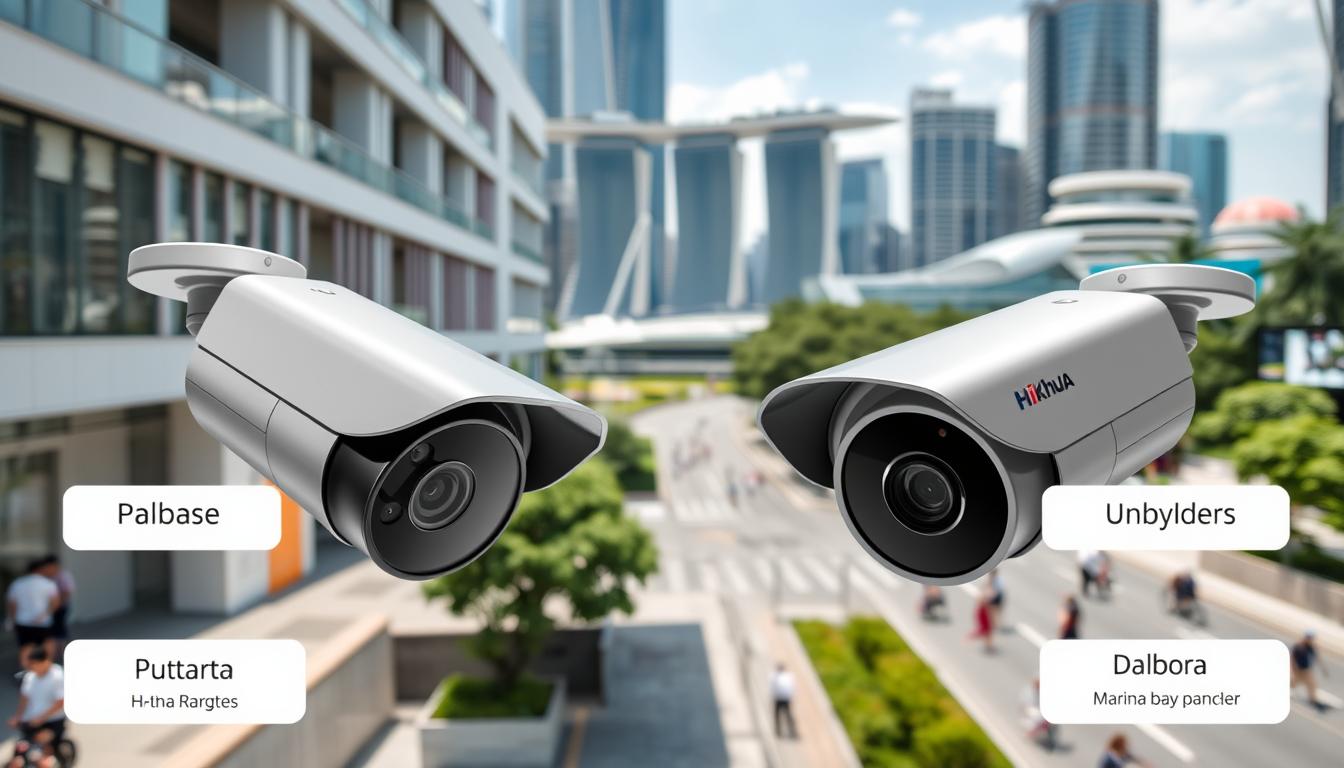
Which is better Dahua or hikvision? Singapore 2024 Guide
In Singapore, the debate among security buyers regarding the top surveillance solutions continues to grow. Two major players dominate this market: Hikvision and Dahua. Both brands, originating from Hangzhou, China, have established themselves as leaders in the global security camera industry. As of 2021, Hikvision holds the top position, while Dahua ranks third.
Both manufacturers have invested significantly in research and development. This commitment has led to advanced security cameras equipped with innovative features. Unlike in the United States, where certain restrictions apply, Singaporean consumers enjoy full access to both brands.
The unique climate of Singapore, characterized by high humidity and tropical rain, creates specific demands for security systems. This guide will explore essential factors for buyers, such as video quality, night vision performance, and long-term reliability. By examining these aspects, readers can make informed decisions tailored to their security needs and budget.
Overview of Dahua and Hikvision Brands in the Singapore Security Market
The security camera market in Singapore features two leading brands, each with unique offerings. Both Hikvision and Dahua have carved out significant market presence and reputation over the years. Their commitment to innovation and quality has made them popular choices among consumers and businesses alike.
Market presence and reputation
Hikvision, officially known as Hangzhou Hikvision Digital Technology Co., has established itself as the largest security camera manufacturer globally. This dominance is reflected in its substantial market share, achieved through an impressive investment of eight percent of its revenue into research and development. This strategy has resulted in user-friendly and highly capable IP security cameras that meet diverse needs.
Dahua, officially Zhejiang Dahua Technology Co., ranks third in the global market. It has successfully organized its products into three distinct series:
- UltraSeries: Designed for large businesses and enterprises.
- ProSeries: Aimed at medium-sized operations.
- LightSeries: Tailored for residential and small business applications.
Both brands operate as original equipment manufacturers (OEM), which means their technology often powers various other brands in the market. In Singapore, they have built strong distribution networks, making their products widely available. Security consultants and installers frequently specify these brands for projects ranging from HDB flats to commercial buildings and industrial facilities.
Brand histories and product ranges
Founded in 2001 in Hangzhou, China, both brands have expanded their reach globally. They have established regional offices and research and development centers to support their international operations. The product ranges available in Singapore include:
- Entry-level dome and bullet cameras
- Sophisticated PTZ cameras
- Thermal imaging solutions
- Complete network video recorder systems
Feedback from Singapore installers and end-users highlights the build quality, after-sales service, and overall satisfaction with both brands. Moreover, both Hikvision and Dahua have adapted their products to meet the specific needs of the Southeast Asian market. This includes considerations for tropical weather resistance and compliance with local regulations.
Which is better Dahua or Hikvision? Core Features and Performance Compared
The choice of security cameras in Singapore hinges on understanding the core features offered by leading brands. In this section, we will explore the performance capabilities of Hikvision and Dahua, focusing on video quality, AI technologies, and night vision performance.
Video quality and resolution capabilities
Both brands provide impressive 4K Ultra HD cameras that deliver exceptional video clarity. Users can expect detailed footage, ideal for identifying faces and license plates in Singapore’s bustling urban environment. While both brands excel in daytime conditions, Hikvision typically has a slight edge in low-light situations.
This advantage comes from its ColorVu 3.0 AI technology, which utilizes a dedicated imaging chip to enhance color night vision. On the other hand, Dahua counters with its WIZColor Technology, which also offers full-color images at night. This technology provides strong detail and clarity, comparable to Hikvision’s G3 cameras, making it a viable option for budget-conscious consumers.
AI and smart detection technologies
When it comes to AI features, Hikvision integrates advanced capabilities such as face detection, license plate recognition, and anomaly detection. This technology can recognize faces when linked to a database, enhancing security measures significantly. Dahua, however, also offers robust AI-powered analytics, including human and vehicle detection, tripwire, and intrusion detection.
Notably, Dahua often provides these features at a more affordable price point. Hikvision’s AcuSense 3.0 technology enhances false alarm reduction, making it easier for users to focus on genuine threats. Both brands support smart detection systems, such as line crossing and intrusion detection, through compatible NVRs.
Night vision and low-light performance
In Singapore, specific scenarios like poorly lit corridors and car parks require reliable night vision. Hikvision’s technology generally performs better in low-light conditions, providing clearer images. However, Dahua’s solutions yield similar results, offering competitive night vision performance.
Understanding these differences is crucial for users seeking reliable alerts without being overwhelmed by false notifications. Both brands effectively implement smart features, ensuring users have a seamless experience with their security systems.
Lens, Sensor, and Image Quality Differences
Understanding the hardware differences between leading security camera brands can greatly impact your surveillance experience. In this section, we will explore how lens options and internal sensors play crucial roles in image quality.
Comparison of lens options and flexibility
When it comes to lens options, Hikvision typically offers a broader selection of fixed lens choices. Their range includes:
- 2.8mm
- 4mm
- 6mm
- 8mm
- 12mm
This variety allows installers in Singapore to select the perfect field of view for different locations, such as narrow HDB corridors or expansive car parks. On the other hand, Dahua provides a more streamlined selection with common fixed lens options of:
- 2.8mm
- 3.6mm
- 6mm
While Dahua’s offerings simplify the selection process, Hikvision’s extensive choices cater to a wider range of specific needs.
Both brands also feature varifocal lenses, allowing adjustments for different viewing angles during installation. This flexibility is especially beneficial for properties where camera positioning may require fine-tuning.
Internal sensors and impact on image clarity
Both manufacturers predominantly use a ⅓-inch Progressive Scan CMOS sensor in their IP cameras. This industry-standard sensor is reliable in various lighting conditions, particularly in Singapore’s tropical environment.
However, certain models from Dahua, such as turret cameras, feature slightly larger sensors. This advantage allows them to capture more detail at greater distances in low-light conditions, enhancing overall image clarity.
Resolution is directly linked to sensor size, which is crucial for users needing to identify faces or vehicle numbers. In terms of bitrate, Hikvision cameras often deliver higher megabits per second—sometimes double that of comparable Dahua models. This can result in smoother video with fewer compression artifacts during fast motion.
Both brands support H.264 and H.265 compression formats. The latter is particularly advantageous for users with limited storage, as it reduces file sizes without sacrificing quality.
In conclusion, understanding these hardware differences can help Singapore users select the best configurations for their specific surveillance needs. Whether opting for Hikvision or Dahua, aligning the right lens and sensor specifications with your environment is key to achieving optimal performance.
Software, Applications, and Smart Features
When considering security solutions, the software that powers them is just as important as the hardware. Both Hikvision and Dahua offer robust software ecosystems that enhance the functionality of their security cameras. This section delves into the video management software and mobile applications that are essential for users in Singapore.
Video management software and system integration
Hikvision’s HikCentral Professional and Dahua’s DSS Pro provide comprehensive control over multi-camera systems. Key features include:
- Customizable search and playback options
- Smart playback for efficient video review
- Multi-channel live view capabilities
Hikvision holds a distinct advantage in software development, offering advanced capabilities for detecting unusual behavior. This includes recognizing faces linked to a database and identifying abandoned objects. Such features are particularly valuable for retail and commercial applications in Singapore.
Both brands support ONVIF and RTSP protocols for third-party integration. However, it’s important to note that ONVIF halted support for both brands in 2019 due to political differences. This change impacts users looking to mix brands in their security camera systems.
In terms of video stream capabilities, Hikvision supports three unique streams at different resolutions. In contrast, Dahua limits users to two streams. This flexibility allows Hikvision users to record locally and view remotely, accommodating varying bandwidth conditions in Singapore.
Mobile app availability and functionalities
Both manufacturers offer mobile applications for enhanced user experience. Hikvision’s Hik-Connect and Dahua’s mobile apps are available on both the App Store and Play Store. These apps allow users to:
- Receive real-time mobile alerts
- Stream video footage
- Manage configuration settings
- Review recorded data
Hikvision’s app is known for its intuitive user interface and responsive alerts, making it easier for users to monitor their properties. Dahua’s app also provides similar functionalities, ensuring users can stay connected with their security systems while on the go.
Both applications enable push notifications for motion detection events, allowing homeowners to check their cameras immediately when alerts are triggered. The ease of initial setup and configuration through these software platforms is also noteworthy, catering to users who may be setting up their first security camera system.
Additionally, both brands support Power over Ethernet connections, simplifying cabling for homes and offices in Singapore. This integration capability with existing network infrastructure enhances the overall user experience.

Pricing Analysis and Value for Money
Evaluating the price points of different security camera series helps buyers in Singapore make wise investments. Understanding the cost implications of choosing between brands is crucial for informed decision-making. In this section, we will analyze the pricing structures of both Hikvision and Dahua, providing clarity on how these brands cater to various budgets.
Cost comparison across camera series
Dahua security cameras are generally more affordable than their counterparts. However, the price difference is not substantial. Dahua features three distinct price ranges:
- UltraSeries: Tailored for large businesses with premium features.
- ProSeries: Designed for medium-sized operations, balancing cost and functionality.
- LightSeries: Ideal for residential and small business applications, offering essential features at a lower price.
Hikvision also provides a tiered pricing structure, but their premium models typically include superior software and hardware. When comparing the best models from each brand, Hikvision usually commands a higher price, reflecting its advanced features.
Balancing price with desired features
Dahua’s competitive pricing makes it a great option for larger installations or budget-conscious users. For instance, a 4K turret camera from Dahua’s ProSeries might be more cost-effective compared to a similar Hikvision model. This price-performance ratio is appealing for Singapore homeowners and small business owners seeking reliable security solutions.
Hikvision cameras are positioned as premium products, often justifying their higher costs with advanced AI and smart features. Buyers should consider the total cost of ownership, including:
- Initial camera purchase
- NVR compatibility
- Storage requirements
- Potential installation costs
Understanding when to invest more for advanced features is essential. Larger installations can see significant savings by opting for Dahua without compromising on security capabilities. Both brands are available through local distributors, ensuring competitive pricing and local warranty support.
Ultimately, balancing desired features against budget constraints will guide Singapore readers in making financially sound decisions without sacrificing essential security capabilities.
Installation, Usability, and Long-Term Reliability
The installation process of security cameras can significantly affect their usability and long-term performance. In Singapore, where environmental conditions can be challenging, understanding how to set up these systems is crucial for homeowners and businesses alike.
Both Hikvision and Dahua have unique approaches to installation. Hikvision products are renowned for their user-friendly design, making them easy to install. However, some advanced models may benefit from professional installation to maximize their capabilities. On the other hand, Dahua offers comprehensive DIY installation guides, empowering tech-savvy users to handle the setup themselves.
Both brands support Power over Ethernet (PoE), simplifying the installation process. This technology allows users to deliver both power and data through a single network cable, reducing complexity and installation costs for homes and offices in Singapore.
Ease of setup and system compatibility
When considering NVR compatibility, both brands offer impressive features that enhance user experience. Hikvision NVRs provide:
- Adjustable video footage capacity
- Cloud support
- Customizable search and playback options
- Enhanced diagnostics and configuration
- Multi-channel live view
- Network detection
- Simultaneous HDMI and VGA outputs
- Smart playback capabilities
Dahua NVRs also deliver quality video footage with capable processors that achieve maximum 4K resolution. They come equipped with video management software and support PoE, making them an excellent choice for users seeking high-quality performance.
Durability and performance in Singapore conditions
Singapore’s tropical climate presents unique challenges for security cameras. Both brands are designed to withstand harsh outdoor environments, performing well in heat, rain, and coastal conditions. They feature weather-resistant housings rated for these environments, ensuring reliability.
Understanding the importance of IP ratings for outdoor cameras is essential. Both brands offer models suitable for various installations, from sheltered HDB corridors to fully exposed landed property perimeters. This adaptability ensures that users can find the right camera for their specific needs.
Long-term reliability is another critical factor. Feedback from users and installers in Singapore indicates that both brands have proven track records of consistent performance over years of operation. Hikvision’s products are noted for their durability, while Dahua’s cameras receive positive reviews for their reliable long-term performance.
When considering a purchase, it’s essential to compare the warranty and after-sales support available through authorized distributors in Singapore. This support can be crucial for buyers investing in a security camera system they expect to last for many years.
Lastly, system compatibility should be taken into account. Both brands’ cameras work seamlessly with their respective NVRs. Users who already own equipment may wonder if mixing components from different manufacturers is feasible. Understanding these aspects can lead to a more informed decision.
To ensure optimal performance and longevity, buyers should follow proper installation practices, conduct regular maintenance, and keep firmware updated. These steps will help maximize the benefits of whichever brand they choose.
Making the Right Choice Between Dahua and Hikvision for Your Singapore Security Needs
Selecting the right security solution for your home or business in Singapore requires careful consideration. Both brands offer distinct advantages tailored to different needs. Hikvision excels in advanced features, providing superior night vision and cutting-edge AI technology. This makes it a strong choice for those prioritizing high performance.
On the other hand, Dahua stands out as a cost-effective option, delivering excellent quality and reliable performance without breaking the bank. It is ideal for budget-conscious buyers who still want professional-grade security.
Ultimately, your decision should align with your property size, budget, and specific security requirements. Both brands enjoy robust support networks in Singapore, ensuring that you receive the necessary assistance and service. Assess your priorities and consult with local security experts to find the best fit for your needs.
FAQ
What are the main differences between Dahua and Hikvision cameras?
The primary differences lie in their video quality, smart detection features, and overall performance in various lighting conditions. Both brands offer unique strengths, making them suitable for different security needs.
How do the night vision capabilities compare?
Both brands provide impressive night vision features, but Hikvision typically excels in low-light performance due to advanced infrared technology, while Dahua also offers reliable options for nighttime surveillance.
What type of video management software is available for these brands?
Both Dahua and Hikvision offer robust video management software, allowing for seamless integration and user-friendly interfaces. They also provide mobile applications for remote monitoring.
Are there significant price differences between Dahua and Hikvision products?
Pricing can vary based on specific models and features. Generally, Dahua may offer more budget-friendly options, while Hikvision might provide higher-end features at a premium price.
How easy is it to install these camera systems?
Installation for both brands is designed to be user-friendly, with clear instructions. However, compatibility with existing systems may vary, so it’s essential to consider your current setup.
What features should I prioritize when choosing a camera system?
Key features to consider include video resolution, night vision capabilities, smart detection technologies, and ease of use. Assessing your specific security needs will help determine the most important aspects.
How do the lens options differ between the two brands?
Dahua and Hikvision offer a variety of lens options, with both brands providing flexibility in focal lengths. However, Hikvision may have a slight edge in offering more specialized lens choices for specific applications.
Can I integrate these camera systems with other security devices?
Yes, both Dahua and Hikvision systems can often be integrated with other security devices, enhancing your overall security setup. Ensure compatibility with your existing equipment for optimal performance.


