

What is the lifespan of NVR? Ultimate Guide for Singapore
Network video recorders (NVRs) are essential for modern security systems. They manage video storage from IP cameras, creating comprehensive surveillance networks for both homes and businesses in Singapore. Understanding the lifespan of these devices is crucial for effective security planning.
Most quality NVRs typically operate efficiently for about 3-5 years. However, premium models can last up to a decade with proper care. This longevity is vital for Singaporean property owners, as it directly impacts budget allocation and long-term reliability.
Factors influencing NVR longevity include component quality, environmental conditions, and maintenance practices. Singapore’s tropical climate, with its high humidity and consistent temperatures, can accelerate wear on electronic equipment. Therefore, proactive care and management strategies are essential.
This guide will delve into technology comparisons, maintenance strategies, and upgrade considerations tailored for Singapore’s unique conditions. Our goal is to help you protect your security investment by maximizing equipment longevity through informed decision-making.
Key Takeaways
- NVRs are crucial for security systems in Singapore.
- Quality NVRs last 3-5 years; premium models can last up to 10 years.
- Understanding lifespan impacts security planning and budgeting.
- Environmental factors like humidity affect NVR longevity.
- Proactive maintenance is key to maximizing equipment life.
Understanding User Intent Behind “What is the Lifespan of NVR?”
Recognizing how long network video recorders last is vital for making informed security investments. Users searching for this information often belong to different categories. These include business owners planning security budgets, homeowners evaluating surveillance options, and IT managers forecasting equipment replacement cycles.
The underlying concern for many readers is clear: they want to know how long their security systems will remain reliable. Understanding this helps prevent costly replacements or performance degradation over time. This knowledge is essential for effective security management.
For property owners in Singapore, knowing the expected lifespan of NVRs aids in making informed purchasing decisions. They can compare budget models against premium options based on anticipated years of service rather than just upfront costs.
Additionally, the search intent often reflects concerns about Singapore’s tropical climate. The environment can significantly impact electronic equipment longevity, making it a crucial consideration for local readers.
Moreover, this question touches on broader concerns about the total cost of ownership. This includes maintenance expenses, storage replacements, and potential downtime costs throughout the system’s operational life.
Readers are looking for actionable insights to extend their NVR’s functional years. Proper installation, regular maintenance, and smart usage patterns can make a difference.
Timing is also a key aspect. Many searchers are evaluating new purchases, troubleshooting aging systems, or planning infrastructure upgrades for their surveillance networks.
This article promises comprehensive coverage of all factors affecting NVR longevity. From component quality to environmental management, the content is tailored specifically for Singapore’s unique conditions.
Introduction to Network Video Recorders (NVRs) in Modern Surveillance
Network video recorders play a crucial role in enhancing security measures in today’s world. These devices serve as the central command center for modern IP-based surveillance systems. Unlike older analog recording technologies, NVRs process digital signals, providing a significant upgrade in functionality and quality.
Modern NVRs manage IP camera feeds through Ethernet connections. This setup allows for the processing of high-definition digital video footage, ensuring superior clarity compared to traditional systems. With the ability to handle multiple streams simultaneously, NVRs excel in data organization and flexible storage options.
Among the core functionalities are:
- Simultaneous multi-stream processing: NVRs can handle feeds from several cameras at once.
- Data organization: Efficiently categorizes and stores footage for easy retrieval.
- Flexible storage options: Supports local hard drives and cloud solutions, ensuring redundancy.
Additionally, modern NVR technology includes advanced features like:
- Remote access: Users can view live footage from smartphones.
- Real-time viewing: Instant access to ongoing surveillance.
- Artificial intelligence integration: Enhances capabilities such as motion detection and facial recognition.
Singapore’s robust network infrastructure perfectly supports these systems. Reliable internet connectivity ensures consistent performance for both residential and commercial applications. Furthermore, Power over Ethernet technology simplifies installation by delivering power and data through a single cable, reducing cabling complexity.
Another advantage is scalability. Users can easily add cameras without overhauling the entire system, future-proofing their security investments. Additionally, ONVIF compliance guarantees compatibility with various camera brands, providing flexibility in building tailored surveillance systems.
How Does an NVR Work? From IP Cameras to Video Storage
A deep dive into the workings of network video recorders reveals their importance in security. These devices manage the flow of data from IP cameras to ensure effective video surveillance. Understanding this workflow helps users appreciate how each component contributes to the longevity of the system.
IP cameras capture crisp digital video footage. They compress and encrypt this data before sending it through network cables to the NVR. This process is essential for maintaining high-quality recordings while minimizing bandwidth usage.
The NVR receives multiple simultaneous streams from various cameras. It processes and organizes this incoming data, ensuring smooth operation even under heavy surveillance loads. High-quality components play a vital role in maintaining performance and efficiency.
Video compression codecs like H.265 and H.264 are crucial in this workflow. They reduce storage demands and bandwidth requirements while preserving excellent video quality. This is particularly important for security purposes, where clarity can make a significant difference.
Storage architecture includes local hard drive configurations and RAID setups for redundancy. These systems protect against data loss and support flexible retention settings. Additionally, cloud integration options align with Singapore’s PDPA retention requirements, ensuring compliance.
Modern NVR systems are capable of handling high-resolution formats, including 4K and 8MP footage. This capability does not place excessive strain on components, contributing to an extended equipment lifespan. Adequate processing power and memory are vital for managing multiple high-definition streams simultaneously.
Metadata integration enables smart search capabilities, allowing users to locate specific footage quickly. This feature is beneficial for reviewing events based on motion detection or time stamps.
Efficient processing reduces component strain and thermal output. This directly impacts how many years the system remains operational, highlighting the importance of quality in NVR technology.
Comparing NVRs and DVRs: Durability and Technological Advantages
Evaluating the durability of NVRs versus DVRs reveals critical insights into their performance. These two systems represent different approaches to video surveillance, and understanding their differences can help users make informed choices.
Network video recorders process digital signals natively from IP cameras. This design reduces strain on components, enhancing overall durability. In contrast, digital video recorders handle analog signals that require constant conversion. This conversion generates additional heat and electrical stress, leading to accelerated wear on DVR components.
Statistically, NVR systems outlast DVRs by an average of 18-24 months. They also have a 37% lower component failure rate, thanks to their streamlined digital processing. This advantage translates to a longer operational lifespan, which is essential for maintaining effective security.
Another key difference lies in resolution capabilities. NVR technology supports high-definition formats, including 4K and 8MP video. On the other hand, DVRs are typically limited to 1080p. This makes NVRs more future-proof as camera technology continues to advance.
Power consumption is another area where NVRs excel. They draw 15-20% less electricity per channel compared to DVRs. This reduced thermal output contributes to a longer operational life, especially in Singapore’s warm climate.
Real-world examples, such as Changi Airport’s transition from DVR to NVR systems during their 2019 security upgrade, highlight the reliability advantages recognized by major institutions. The modular design of quality NVR systems allows for component upgrades over time, extending their functional lifespan beyond the fixed architecture of DVR systems.
Furthermore, firmware support periods differ significantly. Major brands typically provide NVR updates for over five years, while DVR models often receive support for only 2-3 years. This extended support is crucial for long-term security and compatibility with evolving technology.
What Is the Lifespan of NVR? Industry Benchmarks and Expectations
Evaluating the expected lifespan of NVRs is crucial for making informed decisions about security investments. Most surveillance recording units operate effectively for about 3-5 years. However, premium models can last up to a decade with proper care.
Entry-level units, such as those from Zosi, typically provide a lifespan of 3-5 years. Alarmingly, 63% of budget devices fail by Year 4 due to lower quality components. In contrast, mid-range NVRs, like those from Lorex, generally last between 5-7 years. They achieve this by balancing cost and durability with better thermal management.
For enterprise-grade solutions, manufacturers like Axis utilize high-quality parts, enabling their systems to last 7-10+ years. These industrial-grade units can exceed 100,000 hours of mean time between failures (MTBF), significantly outpacing retail options.
Storage drive health is another critical factor affecting overall system performance. Hard disk drives in continuous operation usually average 3-5 years before requiring replacement. Usage patterns also play a significant role; systems running 24/7 experience more wear than those with motion-activated recording.
It’s essential to distinguish between physical failure and technological obsolescence. As advancements occur, users may need to upgrade their systems even before hardware failure. Additionally, Singapore’s tropical climate can impact these benchmarks, making effective environmental management vital for achieving optimal longevity.
Component Quality and Build: Foundation of NVR Longevity
The quality of components within network video recorders significantly influences their operational lifespan. When it comes to surveillance systems, the selection of internal parts can make a considerable difference in how long the equipment lasts.
Industrial-grade components significantly outperform consumer-grade parts. For instance, Japanese capacitors exhibit a 0.1% failure rate, while cheaper alternatives can fail at a rate of 5%. This stark contrast directly impacts how many years an NVR remains operational.
Another crucial factor is the quality of the printed circuit boards (PCBs). Military-grade PCBs can last 2.3 times longer than standard boards. This durability comes from thicker copper layers and superior solder masks, which enhance performance during continuous surveillance operations.
Additionally, the material of the chassis plays a vital role. Aluminum chassis dissipate heat 40% faster than plastic enclosures. This advantage is particularly important in Singapore’s tropical climate, where effective thermal management directly affects component lifespan.
Cooling systems also contribute to longevity. Ball-bearing fans outlast sleeve types by three times, reducing the risk of overheating that can lead to premature NVR failure. Furthermore, conformal coatings protect circuits from moisture, meeting Singapore’s SS 345:2001 corrosion standards.
Statistics indicate that 80% of premature failures stem from power surges and thermal stress. Therefore, investing in surge protection and proper cooling is essential for safeguarding NVR equipment.
Enterprise systems often feature reinforced chassis and enhanced cooling systems. These designs withstand demanding operational conditions better than consumer-grade alternatives, further extending the life of the system.
Ultimately, the quality of components directly relates to the total cost of ownership. Investing in better-built NVR systems reduces long-term replacement and maintenance expenses, ensuring reliable security for years to come.
Usage Patterns and Their Effects on NVR Lifespan
Understanding how different recording patterns affect NVR performance is essential for maximizing their lifespan. The operational choices made by users can significantly impact the durability of these systems.
Continuous recording creates substantially more wear than motion-activated operation. Systems that run 24/7 require more frequent maintenance and earlier component replacement. In fact, drives in continuous recording setups wear out three times faster than those using motion detection.
Additionally, higher resolution footage and multiple camera feeds increase the processing load on NVR systems. This added strain can accelerate wear on critical components, including processors and storage drives.
Consider the following factors that influence NVR longevity:
- Recording schedules: Continuous writing causes more fragmentation and mechanical stress. Event-based recording allows drives to rest, extending their lifespan.
- Number of connected cameras: More cameras increase the system workload. Proper NVR sizing is crucial to prevent constant operation at maximum capacity.
- Video compression codecs: Efficient formats like H.265 reduce storage writes and processing demands compared to older H.264 compression.
- Environmental demands: Different settings, such as construction sites or offices, may require tailored usage patterns to ensure equipment durability.
- Load management: Keeping system usage within 80% of capacity helps prevent performance degradation and extends service life.
For Singaporean users, configuring recording schedules can help balance security needs with equipment longevity. For example, consider continuous recording during business hours while using motion detection overnight.
Environmental Factors Impacting NVR Durability in Singapore
Environmental factors play a pivotal role in determining the durability of network video recorders. In Singapore, the tropical climate presents unique challenges that can significantly affect the performance and lifespan of these systems.
Heat and Thermal Management
Singapore’s average temperature hovers around 31°C, which pushes electronic equipment toward their operational limits. Every 10°C above 40°C can halve the lifespan of components, according to the Arrhenius equation. This principle highlights the need for effective thermal management.
Without proper cooling, thermal stress can crack solder joints, particularly near power supplies. Such damage can reduce equipment lifespan by up to 40% in tropical environments. Maintaining operating temperatures below 40°C is essential for optimal performance.
Practical strategies include:
- Utilizing air conditioning in equipment rooms.
- Ensuring proper ventilation clearance around NVR units.
- Regularly monitoring temperature levels to prevent overheating.
Humidity and Moisture Challenges
Humidity levels in Singapore average around 80%, creating significant corrosion risks for internal components. At 85% relative humidity, the risk of corrosion increases by 400% compared to temperate climates. This threat can jeopardize circuit boards and connections.
To combat humidity challenges, consider these measures:
- Maintain humidity levels under 80% non-condensing.
- Use silica gel packs inside equipment enclosures.
- Deploy NEA-approved dehumidifiers in server rooms.
Effective environmental management can add 3-5 years to equipment operation in tropical regions. This represents substantial value preservation for surveillance investments.
Finally, monitor environmental conditions using simple thermometer-hygrometer combinations or smart PDUs with temperature sensors. Detecting issues early can prevent NVR failure and extend the lifespan of your systems.
Best Installation and Placement Practices for Optimal Lifespan
Proper installation and placement of network video recorders can significantly enhance their performance and longevity. Understanding how to position these systems effectively is crucial for maximizing their lifespan and ensuring reliable security.
Wall-mounted units typically last longer than floor placements. Vertical installation promotes better air circulation around the equipment. In fact, wall-mounted systems demonstrate a 25% longer service life compared to those placed on the floor.
To optimize airflow, maintain at least 50mm clearance around the unit. This spacing is essential for proper ventilation. Moreover, rack installations with adequate airflow outperform standalone setups by an impressive 40%.
When mounting in racks, follow these best practices:
- Leave 1U gaps between units to reduce internal temperatures by 8°C.
- Utilize hot aisle/cold aisle configurations for efficient cooling.
- Install blanking panels to prevent air recirculation.
Avoid direct sunlight exposure on the equipment housing. This exposure can dramatically increase internal temperatures and accelerate component degradation, especially in Singapore’s warm climate.
For outdoor installations, select IP66-rated enclosures with NEMA 4X certification. These ratings provide essential weatherproof protection against tropical rain and humidity.
When possible, use air conditioning in equipment rooms. NEA-approved cooling systems offer reliable temperature control for mission-critical surveillance systems.
Proper cable management is also vital. It improves airflow efficiency while reducing strain on connection ports, preventing accidental disconnections. Additionally, consider using vibration damping mounts for hard drives in high-traffic areas. These measures protect sensitive storage components from mechanical stress.
The Critical Role of Proactive and Regular Maintenance
To ensure network video recorders function optimally, proactive maintenance is key. Consistent maintenance protocols represent the most effective strategy for maximizing surveillance equipment longevity. Studies show that regular maintenance can double the expected lifespan of NVR systems.
Unpatched systems fail three times faster than those that receive proper care. Comprehensive maintenance reduces failure risk by 60%. Well-maintained surveillance systems often exceed their expected lifespan by 2-3 years, making regular checks essential.
Manufacturers typically release bi-annual firmware updates to address security vulnerabilities and enhance performance. Keeping systems updated is crucial for maintaining security and reliability.
Firmware and Software Updates
Implementing a routine for firmware updates is vital. Schedule these updates during low-activity periods to minimize disruption. Always back up configurations before applying firmware changes. Testing updates in staging environments before deployment can also prevent issues.
Hardware Inspections and Cleaning
Quarterly hardware inspections should include:
- Comprehensive dust removal using compressed air, focusing on vents and fan blades.
- Checking all connections for corrosion, especially given Singapore’s high humidity.
- Thermal monitoring using infrared thermometers to spot overheating components before they fail.
Documenting all maintenance activities is essential for compliance and performance tracking. Keeping records of inspections, cleanings, and component replacements helps identify patterns and areas for improvement.
For users in Singapore, consider specific maintenance packages from providers like CCTV Maintenance Singapore. These packages offer climate-specific servicing and humidity-resistant treatments for coastal installations.
Choosing the Right Storage Solutions to Support Longevity
Selecting the right storage solutions is crucial for maximizing the longevity of network video recorders. The choice of hard drives and how data is managed directly impacts performance and reliability.
Hard Drive Types and RAID Configurations
When it comes to hard drives, enterprise-grade models outperform consumer options, especially in continuous operation. For instance, WD Purple drives demonstrate a 30% longer lifespan than Seagate SkyHawk in tropical conditions. This makes drive selection critical for installations in Singapore.
RAID configurations also play a significant role in extending NVR lifespan. Using RAID 5 distributes data across multiple drives, reducing individual workload and wear. This setup not only enhances performance but also protects against data loss during drive failures.
Storage Capacity Management
Effective storage capacity management is essential. It is recommended to maintain utilization below 80% to prevent fragmented writes and accelerated drive wear. At this threshold, wear rates can increase by 40%.
Moreover, consider the advantages of SAS drives, which offer a 35% higher MTBF than SATA drives in humid conditions. This makes them worth the premium for mission-critical surveillance systems.
Implementing SSD caching can also be beneficial. Solid-state drives handle frequently accessed data, reducing mechanical strain on HDDs and improving both system speed and longevity.
Additionally, helium-filled HDDs are ideal for tropical climates as they reduce internal friction and heat generation. This feature is particularly important in Singapore’s warm environment.
Integrating cloud solutions can further enhance longevity. By offloading archival footage, cloud storage reduces constant read-write cycles on physical drives, extending the functional years of on-premise equipment.
Lastly, aligning storage decisions with Singapore’s PDPA compliance requirements ensures that retention periods are met while maintaining system health through proper capacity planning.
Recognizing the Signs That Indicate NVR Replacement Needs
Understanding the warning signs of an aging NVR is essential for safeguarding your surveillance investment. Being aware of these indicators can help you distinguish between repairable issues and situations that require full replacement.
One major sign to watch for is consistent CPU spikes above 15% during idle periods. This indicates processor stress and often precedes complete system failure. Monitoring your NVR’s performance can reveal these critical issues before they escalate.
Another important aspect is the health of your hard drives. Utilize SMART attributes to keep track of their status. If you notice reallocated sectors exceeding 50 or spin retry counts above 10, this signals imminent HDD failure that requires immediate attention.
Boot failures are also a red flag. Aging units experience a 200% increase in boot failures, often indicating power supply deterioration or storage issues. These problems may warrant replacement rather than repair.
Additionally, consider technology compatibility. Pre-2018 models often lack H.265 decoding capability, forcing inefficient H.264 usage. This inefficiency strains hardware and limits compatibility with modern cameras.
Follow the 40% replacement rule: when repair costs exceed 40% of new unit pricing, replacement becomes the more cost-effective long-term decision. This guideline can help you make informed choices regarding your NVR.
Thermal throttling symptoms should also be monitored. If processors cannot maintain video quality during peak loads, especially in Singapore’s warm climate, it may lead to intermittent shutdowns. This can further compromise your security systems.
Finally, keep an eye on network diagnostic indicators. Packet loss exceeding 0.5% or TCP retransmissions above 1% signal connectivity deterioration in aging NVR equipment. Regular checks can help maintain system integrity.
Technological Advancements Extending the Lifespan of NVRs
Innovations in NVR technology are driving significant improvements in system longevity. Modern advancements in video recording technology are extending the operational life of NVRs, making them more efficient and reliable than ever before.
One cutting-edge innovation is the use of graphene thermal pads. These materials can reduce processor temperatures by 12°C compared to traditional options. This temperature control is crucial in tropical environments like Singapore, where overheating can significantly shorten component life.
Another notable development involves variable speed fans equipped with ceramic bearings. These fans can triple operational lifespans by dynamically adjusting their RPM based on thermal conditions. This adaptability helps maintain optimal temperatures without constant high-speed operation.
Emerging technologies such as phase-change materials also play a vital role. They absorb heat during peak loads and gradually release it during cooler periods, providing passive thermal management for surveillance systems.
Modern NVRs now feature specialized AI chips that reduce CPU load by 70% while enhancing video quality. This capability allows for real-time analytics without straining external servers, further extending system performance.
Additionally, 5G-ready models are revolutionizing remote monitoring. These advancements enable ultra-low latency connectivity, which is essential for Singapore’s Smart Nation infrastructure.
Support for multi-codec formats, including H.265+ and H.266, reduces bandwidth needs by 50%. This not only conserves storage but also minimizes processing demands compared to older standards.
Engineers are also leveraging computational fluid dynamics to optimize airflow paths in NVR designs. This results in more efficient cooling systems, crucial for enhancing the lifespan of these devices.
Thanks to these technological advancements, modern NVRs can achieve service lifespans of up to 7 years, significantly exceeding the traditional expectations of 3 years for older technology in tropical deployments.
Proper NVR Sizing and Scalability for Long-Term Use
Effective NVR sizing ensures that surveillance systems remain functional and efficient. Choosing the right size for your network video recorder is crucial for accommodating future growth without requiring complete system replacement.
One important guideline is the 20% headroom rule. For instance, if you plan to use 16 cameras, select a 20-channel video recorder. This extra capacity allows for future expansion without overloading the system.
Additionally, understanding bitrate calculations is essential. The formula to determine bitrate is: Resolution x FPS x Codec Factor. For example, a 4K resolution at 30 frames per second (fps) using H.265 compression requires only 8Mbps, while H.264 would demand 20Mbps. This difference significantly affects storage and processing requirements.
In Singapore, the Building and Construction Authority (BCA) specifications mandate a minimum of 2MP resolution for public space coverage. This ensures compliance while planning system capacity for long-term use.
Power over Ethernet (PoE) budgeting is another critical aspect. A 16-port switch with a 150W capacity can support 12 cameras at 8W each when operating at 80% load. This prevents overloading your power infrastructure.
Moreover, integrating edge storage can provide a 45% bandwidth reduction by processing motion events locally before transmission to the NVR. This approach reduces strain on the central system.
It’s also important to ensure ONVIF Profile S compliance. This standard guarantees camera compatibility across different brands, protecting your investment by allowing flexible component selection throughout the system’s lifespan.
Additionally, multi-encoder support future-proofs your system against emerging compression standards while maintaining compatibility with existing cameras. This capability extends the functional years of your equipment without requiring full replacement.
Lastly, conduct load testing under simulated peak conditions. This means running all channels at maximum bitrate simultaneously to verify that the system can handle the expected workload before deployment.
Warranty, Support, and Manufacturer Considerations
Evaluating the support and warranty terms from manufacturers can significantly influence your NVR investment. These factors not only reflect the quality of the equipment but also indicate the expected lifespan of the systems.
For instance, Hikvision offers a standard 3-year warranty that covers parts and labor. However, this warranty excludes damage from environmental factors, which can be a concern in Singapore’s tropical climate. In contrast, Axis Communications provides a superior 5-year extendable warranty that includes firmware updates. These updates can help devices last longer and perform better.
Additionally, Singapore’s Lemon Law offers consumer protections, requiring remedies for defective products within six months of purchase. This law adds an extra layer of security for NVR investments.
Consider the following points when evaluating warranties and support:
- Manufacturer warranty offerings: Compare Hikvision’s 3-year coverage with Axis Communications’ 5-year extendable protection.
- Quality indicators: Longer warranty periods often reflect better component selection and build quality.
- On-site service premiums: These can cost 18-25% more than depot repairs but help minimize system downtime.
- Third-party maintenance contracts: These become cost-effective after year three, typically offering 40% savings over OEM extensions.
- Spare parts availability: Ranges from 5 years for consumer models to over 10 years for enterprise solutions, affecting long-term repairability.
- Consumer Protection Regulations: Mandate 30-day resolution periods for warranty claims, ensuring timely responses to issues.
- Total cost evaluations: Assess costs over 5 years, noting that cheaper units may incur higher long-term expenses due to support and repairs.
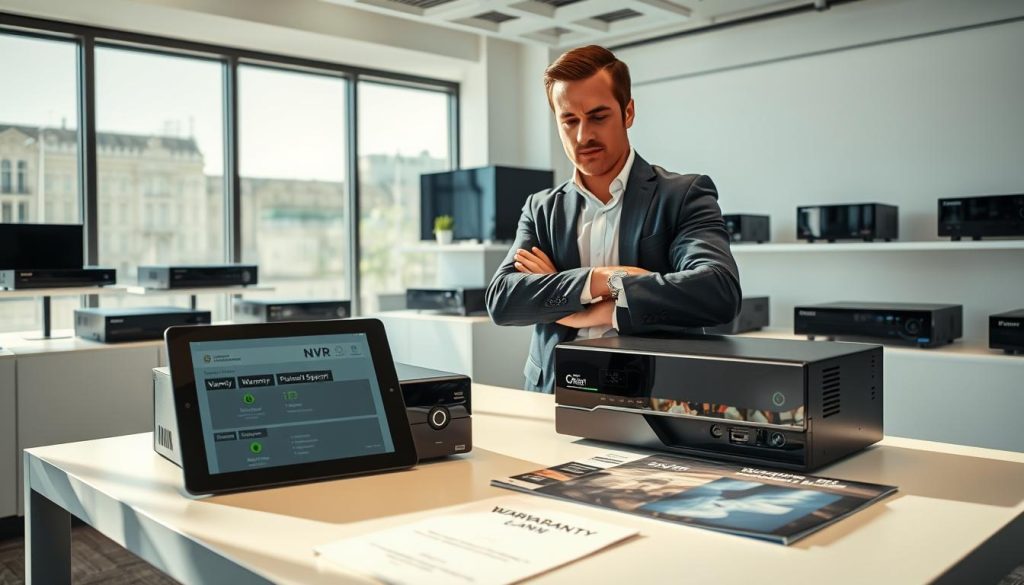
In summary, understanding warranty and support options is essential for maximizing the value of your NVR investment. By considering these factors, you can ensure that your security systems remain reliable for years to come.
Maximizing Your NVR Investment: Practical Tips for Longevity in Singapore
To enhance the longevity of your surveillance systems, practical strategies are essential. Start with bi-annual maintenance, which can reduce failure risk by 60%. This proactive care ensures your equipment remains reliable.
Power protection is critical. A quality UPS can prevent 92% of surge-related damage, ensuring continuous operation during outages. Additionally, proper environmental management can add 3-5 years to your equipment’s operational life in Singapore’s tropical climate.
Implement a practical checklist: schedule quarterly dust removal, monitor storage capacity, and conduct thermal inspections. These actions can extend your systems’ lifespan significantly.
Preventative care is financially wise. It costs five times less than emergency replacements for critical security infrastructure. Well-maintained systems often outlast their expected timelines by 2-3 years, rewarding diligent users.
Use tools like infrared thermometers for heat monitoring and S.M.A.R.T. software for tracking storage health. Document all maintenance activities to identify patterns and predict future needs.
By following these comprehensive strategies, you can ensure your investment in surveillance technology remains sound for years to come.
FAQ
How long can I expect my NVR to last?
Generally, an NVR can last between 5 to 10 years, depending on factors like usage, maintenance, and environmental conditions.
What maintenance is required to extend the life of my NVR?
Regular checks, firmware updates, and cleaning dust from the device are essential for maintaining optimal performance and longevity.
How do environmental conditions affect NVR durability?
Extreme temperatures, humidity, and dust can negatively impact the reliability and lifespan of your surveillance system.
What are the signs that my NVR needs to be replaced?
Signs include frequent system failures, inability to store footage, or degraded video quality, indicating that it’s time for an upgrade.
Can the quality of components influence NVR lifespan?
Yes, higher-quality parts and robust build materials can significantly enhance the durability and longevity of your network video recorder.
How do storage solutions impact the performance of an NVR?
Choosing the right hard drive types and RAID configurations is crucial for ensuring sufficient storage capacity and improving overall system performance.
What role do firmware updates play in NVR maintenance?
Regular firmware updates can enhance security features, fix bugs, and improve overall functionality, contributing to the longevity of your NVR.
How can I optimize the placement of my NVR?
Installing the device in a cool, dry location away from direct sunlight and high humidity can help extend its lifespan.


