
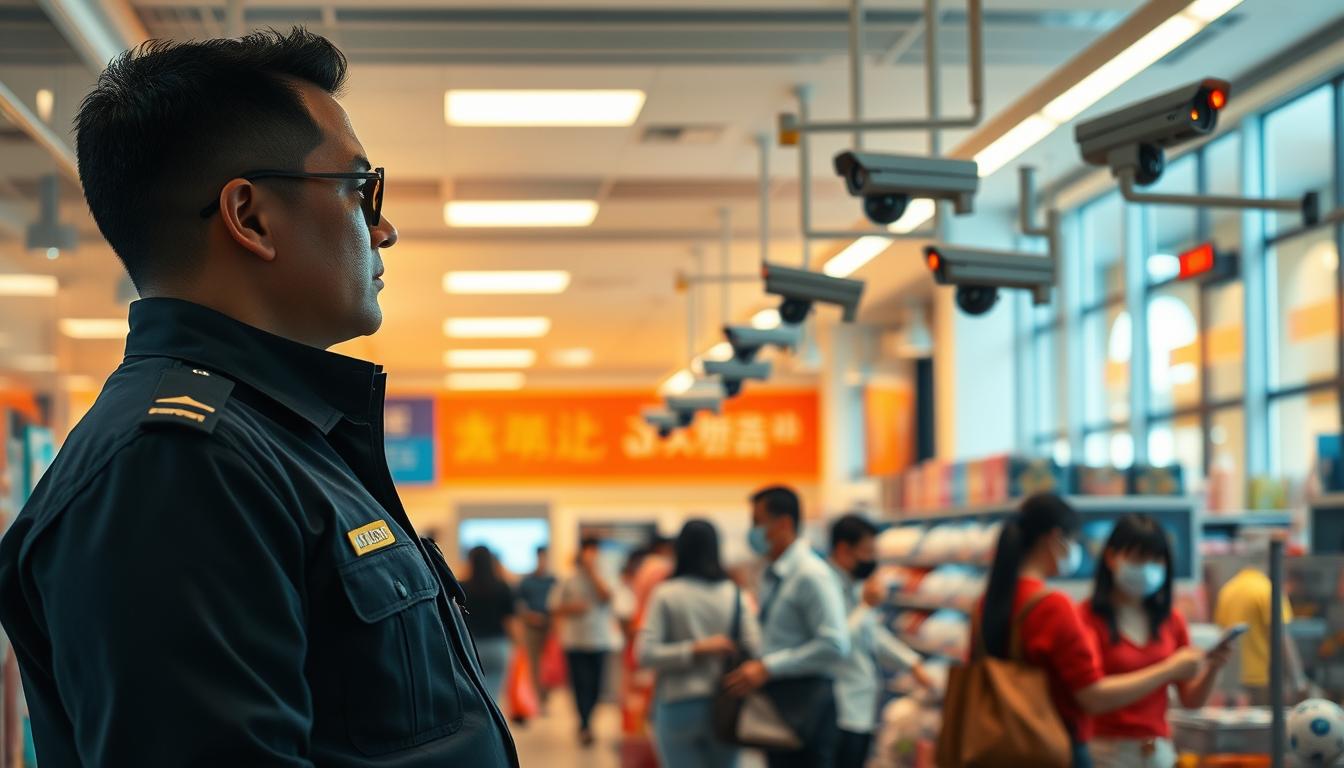
Top Surveillance Cameras for Retail Stores Reviewed
Singapore’s retail sector faces a significant challenge with annual losses exceeding SGD 1 billion due to theft. In 2023 alone, over 5,000 stores were forced to close, highlighting the urgent need for effective solutions. To combat this, 93% of retailers in Singapore have turned to advanced security systems, with over 1 million devices already in use.
Leading brands like Hikvision and Dahua dominate the market, offering features such as night vision, HD resolution, and AI analytics. These innovations not only enhance store security but also integrate seamlessly with POS systems and IoT trends, providing 24/7 monitoring capabilities.
This article aims to compare the top systems available, helping Singaporean retailers make informed decisions. Whether you’re looking to upgrade your current setup or invest in a new one, understanding the cost-benefit analysis of these technologies is crucial. For expert guidance, contact ED Viston at +65 8313 4578.
Key Takeaways
- Singapore’s retail theft crisis costs over SGD 1 billion annually.
- 93% of retailers in Singapore use advanced security systems.
- Hikvision and Dahua lead the market with cutting-edge features.
- Integration with POS systems and IoT enhances security.
- 24/7 monitoring ensures round-the-clock protection.
Why Retail Stores Need Surveillance Cameras
Theft continues to plague businesses, with shoplifting accounting for 1.33% of retail sales annually. This issue is particularly acute during peak seasons, where losses can spike to 39%. Both small and large stores face unique vulnerabilities, making robust retail security essential.
Smaller businesses often lack the resources to implement comprehensive security measures, while larger stores are prime targets for organized retail crime (ORC). A case study from an Orchard Road boutique showed a 93% reduction in theft after installing advanced security systems.
The Growing Threat of Retail Theft
Employee theft is another significant concern, with 70% of incidents involving staff. Integrating security systems with POS technology can help mitigate this risk. For example, NTUC FairPrice successfully reduced theft by leveraging advanced monitoring tools.
Organized retail crime is on the rise, with a 93% year-over-year increase in shoplifting incidents in 2023. These crimes often involve coordinated efforts to steal high-value items, posing a serious threat to businesses.
- Visible security systems act as a psychological deterrent, reducing theft incidents.
- Warehouses face emerging threats like cargo theft, requiring tailored solutions.
- Compliance with PDPA regulations ensures proper handling of security footage.
By addressing these challenges, businesses can protect their assets and maintain customer trust. Investing in effective security measures is no longer optional—it’s a necessity.
Types of Surveillance Cameras for Retail Stores
Understanding the different types of security cameras can help you make an informed decision. With various options available, it’s essential to choose a system that aligns with your store’s specific needs and layout.
Wired vs. Wireless Systems
Wired systems are known for their reliability and longevity, often lasting over five years. They require professional installation, which can cost around SGD 1,200. However, they provide a stable connection and are ideal for large spaces.
Wireless systems, on the other hand, offer flexibility with a range of 30 to 100 feet. Installation is simpler and more affordable, averaging SGD 800. These systems are perfect for stores that need quick setup or frequent reconfiguration.
VivoCity’s hybrid approach, combining wired and wireless systems, demonstrates how businesses can leverage the strengths of both. This setup ensures comprehensive coverage while minimizing installation challenges.
Dome Cameras vs. Bullet Cameras
Dome cameras are discreet and blend seamlessly into store layouts, making them ideal for ceiling installations. Their 360° coverage ensures no blind spots, providing a comprehensive view of the area.
Bullet cameras, with their directional focus, are perfect for monitoring entrances and high-traffic zones. Decathlon’s success story highlights how these cameras reduced theft by 80% in their stores.
When choosing between the two, consider factors like vandal resistance. Polycarbonate housings are durable, while aluminum offers added protection. Bandwidth is another consideration, especially for 4K systems that require higher data transfer rates.
For large spaces, the Hikvision DS-2DE5425IW-AE is a top recommendation. Its advanced features ensure optimal performance, making it a reliable choice for businesses looking to enhance their security.
Key Features to Look for in Retail Surveillance Cameras
Choosing the right security system involves understanding its core features. Modern solutions offer advanced capabilities that go beyond basic monitoring. These features ensure your business is protected around the clock, even in challenging conditions.
High-Definition Video Quality
High-quality video is essential for capturing clear evidence. Systems with 4K UHD resolution can even capture license plates, making them ideal for high-traffic areas. Compared to 1080p, 4K provides sharper details, which can be crucial during investigations.
For example, Mustafa Centre’s implementation of 4K systems reduced theft incidents significantly. Investing in high-resolution technology ensures you have the evidence needed to address security breaches effectively.
Night Vision Capabilities
With 70% of crimes occurring at midnight, night vision is a must-have feature. Dahua’s Starlight technology excels in low-light conditions, providing clear images even in complete darkness. This feature ensures your business remains secure during off-hours.
Hikvision’s AcuSense facial recognition further enhances night vision performance. It distinguishes between humans and objects, reducing false alarms. For optimal results, look for systems with a minimum 30-meter IR range.
Remote Access and Mobile Connectivity
Remote access allows you to monitor your store from anywhere. Mobile apps with geofencing and push alerts keep you informed in real-time. Cold Storage outlets have successfully implemented two-way audio, enabling immediate response to incidents.
Cloud storage, averaging SGD 45/month, offers flexibility for accessing footage remotely. However, ensure your system includes robust cybersecurity features to protect against unauthorized access.
Top Brands for Retail Surveillance Cameras in Singapore
Singapore’s market is dominated by two major players in the security industry. Hikvision and Dahua have established themselves as leaders, offering advanced technology tailored to the needs of modern businesses. Together, they account for 90% of the market share, with Hikvision leading at 58% and Dahua following at 32%.
These brands are trusted by retailers across the country for their reliability and innovative features. Whether you’re a small business or a large chain, understanding their offerings can help you make the best choice for your security needs.
Hikvision: A Leader in Security Technology
Hikvision, with a revenue of $12.62 billion in 2021, is renowned for its cutting-edge solutions. Their DeepinMind NVR series is a standout, offering AI-powered analytics and seamless integration with IoT devices. This makes it a favorite among retailers looking for comprehensive protection.
One notable deployment is at IKEA Alexandra, where Hikvision’s systems have significantly reduced theft incidents. Their cameras are known for high-definition video quality, night vision, and vandal-resistant designs. With a 3-5 year warranty and robust after-sales support, Hikvision ensures long-term reliability.
Dahua: High-Quality Video Solutions
Dahua is another top contender, offering 8MP 4K solutions that deliver exceptional clarity. Their WizMind SMD 3.0 AI analytics can distinguish between humans and objects, reducing false alarms. This feature is particularly useful for high-traffic areas.
For SMEs, the Dahua IPC-HDW5849H-ASE is a recommended choice. It combines affordability with advanced features like motion detection and remote access. Dahua’s mobile app also provides a user-friendly experience, allowing retailers to monitor their stores from anywhere.
Both brands offer competitive pricing, with cameras ranging from SGD 380 to SGD 2,200. Their IoT integration capabilities ensure future-proof solutions, making them ideal for businesses looking to stay ahead in security technology.
Comparing High-Definition vs. Standard Definition Cameras
High-definition systems are transforming how businesses approach security. The difference in resolution between HD and SD can significantly impact the effectiveness of your security strategy. HD systems, especially 4K, provide sharper details, making it easier to identify suspects and gather evidence.
“HD increases suspect ID rate by 70%,”
highlighting the importance of investing in higherqualitysystems. For example, Takashimaya’s migration to an 8MP system resulted in clearer footage and improved security outcomes.
Resolution and Clarity
HD systems, particularly 4K, offer unparalleled clarity. They can capture fine details like license plates or facial features, which are crucial for investigations. In contrast, SD systems often produce grainy images, making it harder to identify suspects.
For businesses, this difference can be critical. Clear footage is more likely to be admissible in court, providing stronger evidence. Additionally, HD systems reduce false alarms by accurately distinguishing between threats and harmless movements.
Cost and Value
While HD systems have a higher upfront cost, their long-term value is undeniable. A 4K system typically pays for itself within 14 months by reducing theft and improving operational efficiency. However, it’s essential to consider storage needs—4K systems require 2TB per month, which is 25% more than SD systems.
Edge computing can help manage bandwidth and storage costs by processing data locally. For luxury retailers, the Axis Communications Q3519-LV is a top recommendation, offering advanced features and reliable performance.
By carefully evaluating your needs, you can choose a system that balances resolution, quality, and cost to maximize your security investment.
The Importance of Night Vision in Retail Surveillance
Effective security systems are crucial for businesses operating after dark. With 70% of crimes occurring at midnight, according to a Vivint study, ensuring visibility during nighttime is essential. Night vision technology plays a vital role in protecting assets and deterring theft.
How Night Vision Works
Modern night vision systems rely on CMOS sensors, which measure light sensitivity in lux. Lower lux levels mean better performance in dark areas. Infrared (IR) technology is commonly used, with wavelengths ranging from 850nm to 940nm. Shorter wavelengths provide brighter images but are more visible to the human eye.
Smart IR technology adjusts the intensity of IR light to prevent overexposure. This ensures clear images without washing out details. In contrast, white light technology offers color imaging but can be intrusive. For businesses like 7-Eleven, which operate 24/7, these features are indispensable.
Best Night Vision Solutions for Businesses
When choosing a system, consider top performers like the Hikvision DarkFighterX and Dahua Starlight. Both offer exceptional low-light performance, with IR ranges up to 30 meters. Thermal imaging is another alternative, ideal for detecting heat signatures in complete darkness.
For high-risk environments like jewelry stores, vandal-resistant IR housings are recommended. These protect the system from tampering while ensuring consistent performance. Additionally, optimizing lux levels for backrooms can enhance security without unnecessary costs.
By investing in advanced night vision technology, businesses can safeguard their premises around the clock. These systems not only cameras help prevent theft but also provide valuable evidence when incidents occur.
Advanced Features in Modern Surveillance Cameras
Modern security solutions are evolving rapidly, offering advanced tools to enhance business safety. These innovations go beyond basic monitoring, providing actionable insights and real-time alerts. From motion detection to AI-powered systems, these features are transforming how businesses protect their assets.
Motion Detection and Alerts
Motion detection is a game-changer for businesses. It reduces false alarms by 80%, ensuring that only relevant incidents trigger alerts. For example, Uniqlo Orchard uses heat mapping to optimize store layouts and improve customer flow. This technology also integrates with POS systems to detect fraudulent activities, enhancing overall security.
AI-Powered Analytics
AI is revolutionizing security with its ability to analyze data in real-time. Sephora’s queue management system, powered by AI, has improved customer satisfaction by reducing wait times. License plate recognition is another advanced feature, streamlining logistics for large retailers. NTUC has successfully reduced shrinkage by 15% using AI-powered analytics.
- Facial recognition ensures GDPR compliance, protecting customer privacy.
- On-device AI reduces latency compared to server-based systems.
- Emotion recognition raises ethical questions but offers potential for personalized service.
For businesses seeking cutting-edge solutions, the Hikvision iDS-2CD7A26G0/P-IZS is a top recommendation. Its advanced analytics capabilities make it ideal for modern security needs.
Costs and Considerations for Retail Surveillance Systems
Investing in robust security systems is a critical decision for any business aiming to protect its assets. Understanding the financial implications, from installation to ongoing maintenance, ensures you make a cost-effective choice that aligns with your needs.

Installation Costs
Installation expenses can vary widely, ranging from SGD 50 to SGD 5,000. For new builds (BTO), costs are typically higher due to wiring and infrastructure requirements. Retrofitting existing spaces is often more affordable but may require additional adjustments.
Small and medium enterprises (SMEs) can benefit from grants offered by EnterpriseSG, covering up to 50% of installation costs. These grants make advanced security systems more accessible, helping businesses enhance their protection without straining their budgets.
Ongoing Maintenance and Support
Maintaining your system is essential for long-term performance. Preventive maintenance schedules, including regular software updates and hardware checks, can prevent costly breakdowns. Many local providers offer Service Level Agreements (SLAs) to ensure timely support and repairs.
Cloud subscription models provide flexibility for storing and accessing footage. However, they require monthly fees averaging SGD 45. For businesses with limited IT resources, on-premise solutions with UPS backup systems may be a better fit.
Cybersecurity audits are another critical consideration. Ensuring your system is protected against unauthorized access is vital for safeguarding sensitive data. Additionally, allocating 14% of your annual budget for upgrades ensures your security systems remain up-to-date with the latest technology.
- Break down BTO vs. retrofit installation costs.
- Compare cloud subscription models and their long-term value.
- Evaluate 5-year Total Cost of Ownership (TCO) calculations.
- Detail preventive maintenance schedules and SLA options.
- Discuss cybersecurity audit requirements and UPS backup needs.
- Include an ROI calculation framework to measure investment returns.
By carefully analyzing these factors, your business can implement a security solution that balances costs and effectiveness, ensuring long-term protection and peace of mind.
How to Choose the Right Surveillance System for Your Store
Selecting the ideal security solution for your business requires careful evaluation of your specific requirements. With over 3,000+ models available, finding the right fit can seem overwhelming. However, by focusing on your store’s unique needs and financial constraints, you can make an informed choice that ensures long-term protection.
Assessing Your Store’s Security Needs
Start by evaluating your store’s size and layout. For spaces under 500 sqft, wireless systems are often sufficient and can save SMEs up to 40% on installation costs. Larger stores, exceeding 5,000 sqft, may require a combination of wired and wireless solutions for comprehensive coverage.
Conduct a risk assessment to identify vulnerabilities. High-traffic areas like entrances and cash registers need focused monitoring, while backrooms may require night vision capabilities. A checklist can help ensure no area is overlooked.
- Compare single-site vs multi-location solutions for scalability.
- Analyze product value tiers to balance cost and performance.
- Include CPF Board’s tender requirements for compliance.
Matching Features to Your Budget
Your budget plays a crucial role in determining the features you can afford. Wireless systems are cost-effective for smaller businesses, while larger enterprises may benefit from advanced analytics and IoT integration. Financing options, such as those offered by EnterpriseSG, can help offset initial costs.
Consider the total cost of ownership, including maintenance and upgrades. A 5-year roadmap ensures your system remains effective as technology evolves. For personalized advice, ED Viston offers a free site survey to help you make the best choice for your store.
Case Studies: Successful Retail Surveillance Implementations
Real-world examples highlight the transformative impact of advanced security systems. From small boutiques to large chains, businesses in Singapore are leveraging technology to combat theft, improve operations, and enhance customer trust. These case studies demonstrate how tailored solutions can deliver measurable results.
Small Retail Stores
Small businesses often face unique challenges, but effective security measures can make a significant difference. For instance, Buzz Retail saved SGD 18K annually by implementing a cost-efficient system. Their setup included motion detection and remote access, ensuring comprehensive coverage without breaking the budget.
Charles & Keith’s adoption of facial recognition technology further illustrates the potential of advanced systems. This innovation not only reduced theft but also streamlined customer service. By integrating these tools, small stores can protect their assets while enhancing the shopping experience.
Large Retail Chains
Larger businesses require scalable solutions to address their complex needs. Mustafa Centre’s 278-camera network is a prime example. This system provides 360° coverage, ensuring no blind spots in their expansive layout. The result? A significant reduction in theft and improved operational efficiency.
ION Orchard’s crowd management system showcases how security technology can enhance customer experience. By monitoring foot traffic in real-time, they’ve optimized store layouts and boosted sales. Similarly, Takashimaya’s loss prevention strategy highlights the importance of integrating security with business operations.
- BHG’s POS integration reduced shrinkage by 15%.
- Sheng Siong’s warehouse monitoring system improved inventory accuracy.
- Octopus card integration streamlined payment processes for Cold Chain.
These case studies underscore the value of customized solutions. Whether you’re a small boutique or a large chain, investing in the right security system can protect your assets and drive business growth.
Future Trends in Retail Surveillance Technology
The future of security technology is evolving at an unprecedented pace. Businesses are adopting smarter, more integrated solutions to stay ahead of emerging threats. From IoT-enabled systems to advanced AI, these innovations are transforming how businesses protect their assets and enhance operations.
Integration with IoT and Smart Systems
IoT is revolutionizing security by connecting devices for seamless data sharing. For example, NTUC’s Smart Shelf trial integrates CCTV with inventory tracking, reducing theft and improving efficiency. This approach ensures real-time monitoring and actionable insights.
5G-enabled analytics are another game-changer. They allow businesses to process data faster, enabling quicker responses to potential threats. Additionally, AR-powered overlays provide enhanced situational awareness, making it easier to identify risks.
Enhanced AI and Machine Learning Capabilities
By 2025, 65% of security devices will be AI-enabled. These systems offer advanced features like emotion recognition and behavioral analysis. NUS’s research on behavioral AI highlights its potential to predict and prevent incidents before they occur.
Blockchain technology is also gaining traction for ensuring footage integrity. It provides a tamper-proof record, enhancing trust and compliance. Meanwhile, drone surveillance is emerging as a cost-effective way to monitor large areas, especially in logistics and warehousing.
- Edge computing reduces latency by processing data locally.
- Sustainable production methods are making security devices eco-friendly.
- 8K resolution is expected to become the standard by 2027, offering unparalleled clarity.
These trends are not just about security—they’re about creating a safer, more efficient environment for customers and businesses alike. By embracing these innovations, companies can stay ahead in an increasingly complex world.
Protecting Your Retail Store with the Best Surveillance Solutions
Ensuring your business is protected today requires a tailored approach to security. In Singapore, where retail theft remains a pressing issue, investing in the right solutions is essential. Over 500 warehouse upgrades in 2023 alone demonstrate the growing demand for advanced systems.
When selecting a system, prioritize features like 24/7 monitoring and AI-powered analytics. These tools not only deter theft but also provide a strong return on investment. For instance, businesses leveraging Singapore’s security grants have seen significant cost savings.
Beware of counterfeit systems that compromise effectiveness. Instead, opt for trusted solutions that align with your long-term goals. A 5-year projection shows that integrating IoT and smart technology will become standard, offering enhanced protection and operational efficiency.
Take immediate action by conducting a risk assessment. ED Viston offers free security audits to help you identify vulnerabilities. Contact them at +65 8313 4578 to safeguard your retail business today.
FAQ
Why do retail stores need security systems?
Security systems help prevent theft, monitor customer and staff activity, and ensure safety in retail environments. They also provide valuable video footage for investigations.
What types of cameras are best for retail environments?
Dome cameras are ideal for indoor use due to their discreet design, while bullet cameras work well for outdoor areas. Both offer high-quality video and durability.
How important is night vision for store security?
Night vision is crucial for monitoring after hours or in low-light areas. It ensures clear video footage, helping to deter theft and improve overall safety.
What features should I look for in a retail security camera?
Key features include high-definition resolution, remote access, motion detection, and AI-powered analytics for advanced monitoring and theft prevention.
Are wired or wireless systems better for retail stores?
Wired systems offer reliability and consistent performance, while wireless options provide flexibility and easy installation. The choice depends on your store’s layout and needs.
How do I choose the right system for my store?
Assess your store’s security needs, consider your budget, and match features like video quality, coverage, and analytics to ensure the best solution.
What are the benefits of AI-powered analytics in security systems?
AI analytics can detect suspicious behavior, track customer movement, and provide insights to improve store layouts and sales strategies.
How much does a retail security system cost?
Costs vary based on the number of cameras, features, and installation requirements. Ongoing maintenance and support should also be factored into the budget.
Can I monitor my store remotely?
Yes, many modern systems offer mobile connectivity, allowing you to access live video feeds and receive alerts from anywhere.
What are the future trends in retail security technology?
Future trends include integration with IoT devices, enhanced AI capabilities, and smart systems that offer real-time insights and automation.


