
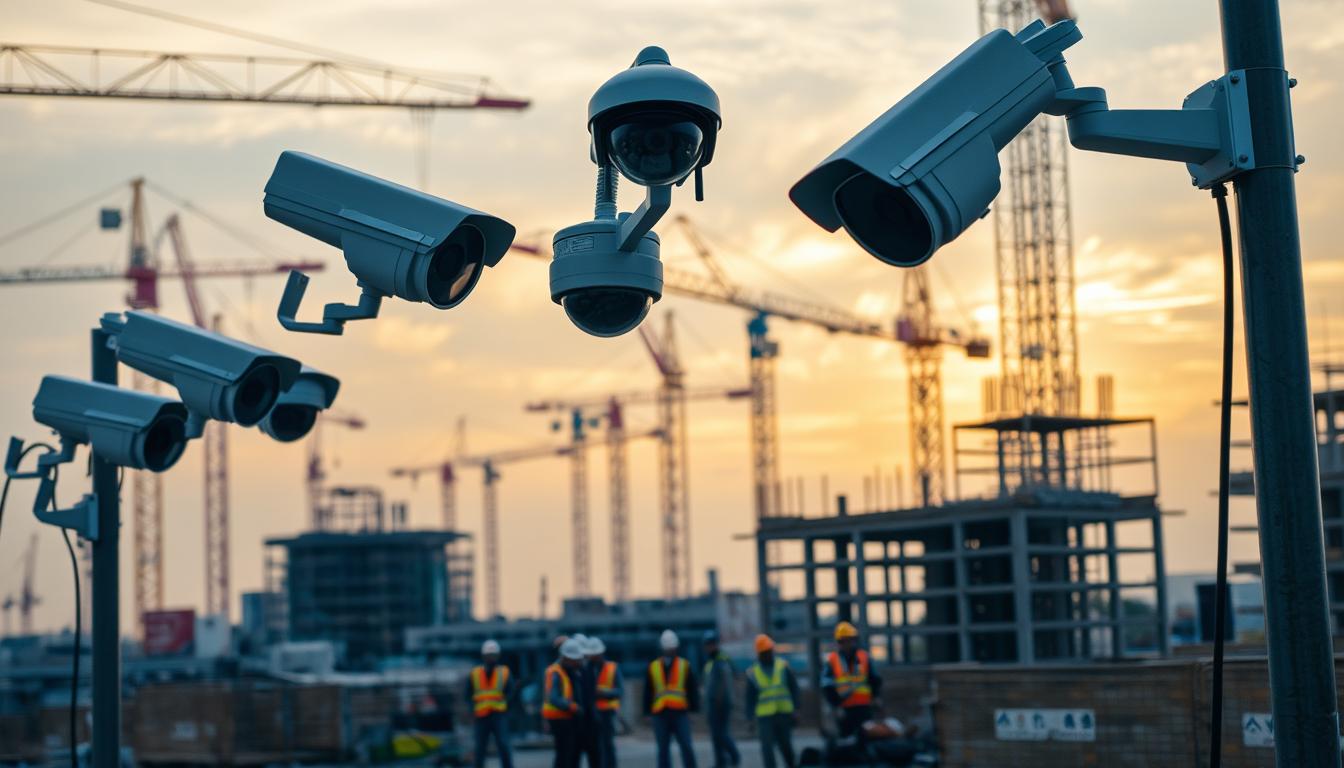
Top Security Camera Systems for Construction Sites Review
Singapore’s construction industry is booming, with numerous projects shaping the city’s skyline. However, this growth comes with challenges, particularly in safeguarding assets. Reports show that 90% of site-related crimes involve theft or vandalism, leading to significant financial losses.
The construction sector loses over $1 billion annually due to theft. To combat this, Singapore has introduced a new mandate requiring projects worth $5 million or more to implement advanced surveillance solutions starting June 2024. This move highlights the importance of reliable monitoring tools.
Modern security camera systems offer features like 4K resolution and AI-powered motion detection, ensuring enhanced protection. Brands like Arlo Ultra 2 and Reolink Go Plus stand out for their performance and reliability. These cctv solutions are designed to meet the unique needs of construction sites.
For expert advice on choosing the right system, contact Wen Hong at +65 60135960. Stay ahead with the latest in construction site security and protect your investments effectively.
Key Takeaways
- Singapore’s construction industry faces significant theft and vandalism issues.
- Annual losses in the sector exceed $1 billion due to site-related crimes.
- New mandates require advanced surveillance for projects worth $5 million or more.
- 4K resolution and AI motion detection are key features of modern systems.
- Arlo Ultra 2 and Reolink Go Plus are top-performing options.
Why Construction Sites Need Robust Security Camera Systems
The rise in theft and vandalism has become a pressing issue for construction sites in Singapore. With high-value equipment and materials often left exposed, these areas are prime targets for criminals. Reports show that one in three projects experiences equipment theft, leading to an average annual loss of $500,000 per site.
Visible surveillance tools can significantly reduce crime rates. Studies reveal that the presence of monitoring devices can deter theft and vandalism by up to 60%. This makes investing in reliable solutions a top priority for site managers.
The Growing Threat of Theft and Vandalism
Construction sites are particularly vulnerable due to their open layouts and temporary structures. Night shifts are especially at risk, as criminals often exploit the lack of supervision during these hours. Perimeter protection strategies, such as securing material storage zones, are essential to minimize losses.
Importance of Surveillance in High-Risk Areas
Effective monitoring is crucial for safeguarding high-risk zones. The Ministry of Manpower (MOM) mandates color recording at 12 frames per second to ensure clear footage. Regular maintenance is also vital, as 83% of issues stem from poorly maintained devices.
- Implement perimeter protection for material storage zones.
- Ensure compliance with MOM’s recording standards.
- Address night shift vulnerabilities with enhanced monitoring.
Key Challenges in Securing Construction Sites
Protecting construction sites in Singapore presents unique challenges due to their temporary nature. These areas are often open and lack permanent structures, making them vulnerable to theft and vandalism. High-value equipment and materials are frequently targeted, leading to significant financial losses.
Open Access and Lack of Permanent Structures
One of the primary issues is the open layout of these sites. Temporary fencing and limited access control make it easier for unauthorized individuals to enter. This setup contrasts sharply with permanent structures, which often have advanced security measures in place.
Weather conditions in tropical Singapore add another layer of difficulty. Heavy rain and humidity can affect the durability of temporary security solutions, requiring frequent maintenance and upgrades.
High-Value Equipment and Materials at Risk
Construction sites are prime targets for theft due to the presence of expensive tools and materials. Common items stolen include copper wiring, generators, and power tools. In one notable case, an excavator worth $150,000 was stolen from a site, highlighting the severity of the issue.
The WSH Council recommends zone-specific camera placement to enhance monitoring. This approach ensures that high-risk areas, such as material storage zones, are adequately covered.
- Map common theft targets: copper wiring, generators, power tools.
- Contrast temporary vs permanent site security approaches.
- Examine weather challenges for tropical installations.
- Present case study of stolen excavator worth $150K.
- Discuss WSH Council’s zone-specific camera placement guidelines.
Understanding the Role of Remote Monitoring
Remote monitoring has become a game-changer for modern project management. It allows site managers to oversee operations from anywhere, ensuring better control and faster decision-making. With advancements in technology, this approach is now more accessible than ever.
Real-Time Alerts and Quick Response
One of the standout features of remote monitoring is its ability to provide real-time alerts. When an incident occurs, managers are notified immediately, enabling a quick response. Studies show that live feeds can reduce response times by 45%, with an average of 8 minutes compared to the industry standard of 34 minutes.
Reliability is another key factor. Cellular networks, like 4G LTE, offer consistent performance even in urban areas. This ensures uninterrupted access to live feeds, enhancing detection capabilities.
Benefits of 24/7 Surveillance
Round-the-clock monitoring ensures that no activity goes unnoticed. This is particularly useful for high-risk areas, where incidents often occur during off-hours. Cloud storage solutions further enhance this by retaining footage for 30 to 180 days, providing a reliable record for future reference.
Hikvision’s 360° panoramic monitoring solutions take this a step further, offering comprehensive coverage of large sites. Regular maintenance, such as checking connectivity and updating software, ensures uninterrupted streaming and long-term reliability.
- Response times drop to 8 minutes with live feeds.
- Cellular networks outperform WiFi in urban environments.
- Cloud storage retains footage for up to 180 days.
- Hikvision’s 360° solutions provide complete site coverage.
- Maintenance ensures uninterrupted streaming.
Essential Features of Security Cameras for Construction Sites
Effective monitoring tools require specific features to handle the unique demands of high-risk environments. These tools must be durable, reliable, and capable of delivering clear images under various conditions. Let’s explore the key characteristics that make these devices indispensable.
Weather Resistance and Durability
Outdoor environments demand devices that can withstand harsh weather. Tools with IP65 or IP66 ratings are ideal for monsoon readiness, offering protection against dust and water. These ratings ensure uninterrupted performance even during heavy rain or extreme humidity.
Vandalism resistance is another critical factor. Devices tested for durability can endure physical impacts, ensuring long-term reliability. This makes them a practical choice for areas prone to tampering or misuse.
High-Definition Video Quality
Clear images are essential for accurate monitoring. Devices like the Arlo Ultra 2 offer 4K UHD resolution, providing exceptional detail. This level of clarity is crucial for identifying license plates or recognizing faces from a distance.
Advanced models also feature 4x digital zoom, allowing users to focus on specific areas without losing image quality. High pixel density ensures that even small details are captured with precision.
Night Vision and Motion Detection
Low-light performance is a game-changer for 24/7 monitoring. Devices with 0.05 lux sensors outperform those with 0.1 lux, delivering clearer images in near darkness. This ensures that activity is detected even during nighttime.
Motion detection enhances efficiency by alerting users to potential threats. This feature reduces unnecessary recordings, saving storage space and improving response times.
- Compare IP ratings for monsoon readiness.
- Showcase 4x digital zoom capabilities in 8MP devices.
- Test low-light performance: 0.05 lux vs 0.1 lux sensors.
- Analyze pixel density requirements for license plate recognition.
- Present vandalism resistance test results.
Top Security Camera Systems for Construction Sites
Modern technology offers advanced solutions to protect valuable equipment on-site. With theft reduction rates of up to 80%, investing in the right devices is essential. Let’s explore some of the top options available today.
Arlo Ultra 2: 4K UHD with Integrated Spotlight
The Arlo Ultra 2 stands out with its 4K UHD resolution and 12x zoom capacity. Its 160° field of view ensures comprehensive coverage, while the integrated spotlight enhances visibility in low-light conditions. This device is ideal for areas requiring detailed monitoring.
Reolink Go Plus: Battery-Powered and 4G LTE Compatible
For flexibility, the Reolink Go Plus is a top choice. With a 15,000mAh battery and 4G LTE compatibility, it operates seamlessly in remote locations. Its 122° viewing angle and ability to function in temperatures as low as -20°C make it a reliable option for challenging environments.
Hikvision Wireless Jobsite Monitoring Tools
Hikvision’s DS-2SE7C124IW-AE model offers a 400m infrared distance, perfect for large sites. Its wireless design simplifies installation, while its durability ensures long-term performance. This device is a practical solution for extensive coverage needs.
- Price Comparison: Options range from $1,200 to $4,500 SGD, catering to various budgets.
- Warranty Terms: Coverage spans 3 to 5 years, providing peace of mind for your investment.
Selecting the right tools can significantly enhance your site’s protection. Whether you prioritize high-definition imaging, battery life, or infrared capabilities, these options offer reliable solutions for your needs.
Comparing Wired vs. Wireless Security Camera Systems
Choosing the right monitoring tools for your site involves understanding the differences between wired and wireless options. Each type has its strengths and weaknesses, making it essential to evaluate your specific needs before making a decision.
Pros and Cons of Wired Systems
Wired systems are known for their reliability, boasting a 99.9% uptime. This makes them a dependable choice for areas where consistent performance is critical. However, they come with limitations, such as the need for Power over Ethernet (PoE) cables, which can restrict flexibility.
Another challenge is voltage drop over long distances. For runs exceeding 100 meters, additional equipment may be required to maintain signal strength. Additionally, theft prevention measures like armored conduits, costing $8 per meter, are often necessary to protect cabling.
Flexibility and Ease of Wireless Systems
Wireless options offer greater flexibility, with deployment being 60% faster compared to wired setups. This makes them ideal for temporary sites or areas where running cables is impractical. They also provide a strong return on investment (ROI) over 24-month projects, thanks to reduced installation costs.
However, wireless systems have a slightly lower uptime of 98.5%. Despite this, advancements in technology have improved their reliability, making them a viable choice for many applications. A hybrid system, like the one used at Changi Airport T5, combines the best of both worlds, offering both reliability and flexibility.
- Wired Reliability: 99.9% uptime ensures consistent performance.
- Wireless ROI: Faster deployment reduces overall costs.
- Hybrid Systems: Combine the strengths of both wired and wireless options.
- Theft Prevention: Armored conduits protect cabling from theft.
- Voltage Drop: Calculations are essential for long cable runs.
For more insights on selecting the right monitoring solutions, explore our detailed guide. Whether you prioritize reliability or flexibility, understanding these options will help you make an informed decision.
Best Brands for Construction Site Security Cameras
With a variety of brands available, choosing the best monitoring solutions requires careful consideration. Each brand offers unique features tailored to the demands of high-risk environments. Let’s explore the top options that stand out in Singapore’s market.
Hikvision: Leading in Wireless Jobsite Cameras
Hikvision dominates the market with a 30% share in Singapore. Its AcuSense technology reduces false alarms by 90%, ensuring accurate detection. This makes it a reliable choice for large-scale projects.
Dahua: Known for Outdoor Wireless Cameras
Dahua’s Starlight 2.0 sensor delivers exceptional performance in low-light conditions. Its devices can operate in temperatures as low as -40°C, making them ideal for harsh environments. Local service centers offer quick response times, with some providing support within 3 hours.
Reolink Argus 4 Series: Advanced Safety Features
The Reolink Argus 4 Pro boasts a 180-day standby time, ensuring long-lasting performance. Its advanced motion detection and high-definition imaging make it a top choice for site managers. According to BCA Singapore’s reliability rankings, Reolink consistently scores high for durability and ease of use.
- Hikvision’s AcuSense technology minimizes false alarms.
- Dahua’s Starlight 2.0 sensor excels in low-light conditions.
- Reolink Argus 4 Pro offers extended standby time.
- Local service centers provide rapid support.
- Brand reliability rankings from BCA Singapore.
Investing in the right cctv solutions can significantly enhance site safety and operational efficiency. Whether you prioritize advanced technology, durability, or quick support, these brands offer reliable systems tailored to your needs.
Benefits of Wireless Jobsite Security Cameras
Wireless monitoring tools are transforming how high-risk zones are protected. These devices offer unparalleled flexibility, making them ideal for dynamic environments like temporary worksites. With 75% lower installation costs compared to wired setups, they provide a cost-effective solution for safeguarding valuable assets.
Flexibility and Easy Installation
One of the standout benefits of wireless tools is their adaptability. Unlike traditional setups, they don’t require extensive cabling, allowing for quick deployment. This is particularly useful for temporary worksites, where redeployment is 40% faster. Modular systems also offer scalability, enabling users to expand coverage as needed.
Solar panel integration further enhances their appeal. This feature ensures uninterrupted operation, even in remote locations without access to power sources. Such flexibility makes wireless tools a practical choice for diverse applications.
Cost-Effectiveness Compared to Traditional Systems
Wireless solutions are not only easier to install but also more economical. The absence of cabling reduces labor and material costs, resulting in significant savings. Over a 6-month period, the return on investment (ROI) for wireless setups is 30% higher compared to wired alternatives.
In one notable case, a wireless system helped recover $230K worth of stolen equipment. This highlights the cost-effectiveness and reliability of these tools. Temporary worksite package deals also make them an attractive option for short-term projects.
- Modular systems allow for easy scalability.
- Solar panels ensure continuous operation in remote areas.
- Package deals cater to temporary worksite needs.
- Wireless tools have a higher ROI over 6/12/18 months.
By choosing wireless monitoring tools, you can enhance site security while optimizing costs. These security solutions are designed to meet the unique demands of high-risk environments, ensuring peace of mind for site managers.
Installation Tips for Construction Site Security Cameras
Proper installation of monitoring tools is crucial for effective site monitoring. Professional setup can reduce coverage gaps by 50%, ensuring all critical areas are protected. Strategic placement and reliable connectivity are key to maximizing performance.
Choosing the Right Locations for Optimal Coverage
Blind spot mapping is essential to identify areas with limited access. Placing devices on tower cranes provides a bird’s-eye view, enhancing overall coverage. Anti-tamper mounting heights of 4.5 meters or more further protect against interference.
Ensuring Proper Connectivity and Power Supply
Voltage regulators are necessary for sites with 240V power supplies to prevent damage. Solar panels, requiring at least 20W, offer a sustainable solution for remote locations. Network latency stress testing ensures seamless monitoring without delays.
- Use blind spot mapping to identify uncovered areas.
- Install devices on tower cranes for enhanced visibility.
- Employ voltage regulators for stable power supply.
- Mount devices at 4.5 meters or higher to prevent tampering.
- Conduct network latency tests for uninterrupted monitoring.
Maintenance of Security Camera Systems
Proactive maintenance can prevent most device failures. Studies show that 83% of issues are avoidable with regular upkeep. This ensures your systems remain operational and effective over time.
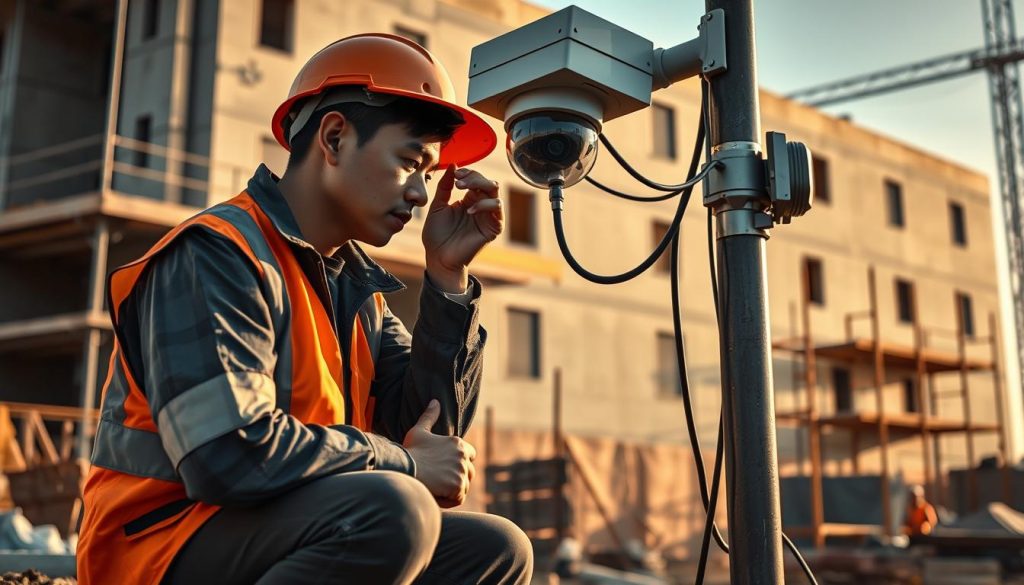
Regular Checks and Software Updates
Consistent inspections are crucial for optimal performance. A quarterly maintenance checklist helps identify potential problems early. Firmware updates are equally important, as they enhance functionality and fix bugs.
Lens cleaning should be done monthly to ensure clear images. Battery health monitoring systems can alert you to power issues before they escalate. These steps ensure your devices stay in top condition.
Ensuring Long-Term Reliability
End-of-life replacement indicators help plan upgrades effectively. Devices with a 2-hour emergency service SLA provide quick solutions during critical moments. Regular upkeep not only extends the lifespan of your systems but also improves their reliability.
- Perform quarterly inspections to catch issues early.
- Update firmware regularly to enhance performance.
- Clean lenses monthly for clear image quality.
- Monitor battery health to avoid unexpected failures.
- Use end-of-life indicators to plan replacements.
For professional maintenance services, consult experts to ensure your setup remains efficient and reliable. Proper care ensures your monitoring tools perform at their best, safeguarding your assets effectively.
Innovative Technology in Construction Security
The construction sector is embracing cutting-edge technology to enhance safety and efficiency. From AI-powered tools to seamless integration with other systems, these advancements are transforming how sites are monitored and protected.
AI-Powered Surveillance Systems
AI-driven solutions are revolutionizing threat detection. With 70% faster recognition rates, these tools can identify potential risks in real-time. Features like license plate recognition and PPE detection algorithms ensure accurate monitoring of all activity on-site.
Integration with Other Security Solutions
Modern technology allows for seamless integration with RFID tags, BIM models, and drone surveillance. This creates a comprehensive network that enhances overall safety. Predictive analytics further improve risk mapping, providing proactive solutions for site managers.
- License plate recognition accuracy rates exceed 95% in optimal conditions.
- PPE detection algorithms ensure compliance with safety protocols.
- BIM model integration provides real-time updates on site progress.
- Drone surveillance complements ground-level monitoring for complete coverage.
- Predictive analytics identify potential risks before they escalate.
Cost-Effectiveness of Security Camera Solutions
Investing in reliable monitoring tools can significantly reduce costs for large-scale projects. With theft and vandalism leading to substantial financial losses, choosing the right setup is essential. Whether you opt for rental or purchase, understanding the cost-effectiveness of these tools is crucial for maximizing your budget.
Rental vs. Purchase Options
When deciding between renting or buying, consider the duration of your project. A 36-month lease analysis often shows that purchasing is more economical in the long run. Rental contracts may include damage waiver clauses, offering flexibility for short-term needs. However, tax depreciation schedules can make ownership more attractive for extended projects.
Group purchase discounts are another benefit for managing multiple sites. These deals can reduce upfront costs while ensuring consistent quality across all locations. Evaluating your specific requirements will help you choose the best options for your needs.
Long-Term Savings with Effective Surveillance
Effective monitoring not only prevents theft but also reduces related delays, saving up to $1.2M in insurance premiums. The Productivity Solutions Grant (PSG) covers 50% of Video Surveillance System (VSS) costs, making it easier to implement advanced solutions. These tools provide long-term savings by minimizing losses and improving operational efficiency.
In one case, a construction site recovered $230K worth of stolen equipment, highlighting the financial impact of reliable monitoring. By investing in the right tools, you can protect your assets and optimize your budget.
- Compare 36-month lease vs. buy options for cost analysis.
- Include damage waiver clauses in rental contracts for added protection.
- Leverage tax depreciation schedules for ownership benefits.
- Calculate theft-related delay costs to understand potential savings.
- Explore group purchase discounts for multiple sites.
Regulations for Security Cameras on Construction Sites in Singapore
In Singapore, strict regulations govern the use of monitoring tools to ensure site safety. These rules are designed to protect workers, assets, and the public. Compliance with these standards is not optional but a legal requirement for all construction-related projects.
Legal Requirements for Video Surveillance Systems (VSS)
All Video Surveillance Systems (VSS) must meet specific criteria to be considered compliant. For instance, recording must be at 1080p resolution with a minimum of 12 frames per second. This ensures clear and detailed footage, which is crucial for incident investigations.
Non-compliance can result in hefty fines, with penalties reaching up to $50,000. To avoid such consequences, site managers must adhere to the implementation timeline set by authorities. This includes upgrading existing setups to meet the new standards.
Compliance with Workplace Safety and Health (WSH) Standards
Workplace Safety and Health (WSH) standards play a vital role in ensuring the effectiveness of monitoring tools. These standards mandate proper data handling procedures, ensuring that all footage is stored securely and in compliance with the Personal Data Protection Act (PDPA).
Approved vendors listed by the Ministry of Manpower (MOM) are the only ones authorized to install and maintain these systems. This ensures that all installations meet the required quality and safety benchmarks.
- Follow the VSS implementation timeline for existing projects.
- Adopt PDPA-compliant data handling procedures.
- Choose vendors from the MOM-approved list.
- Understand multi-site contract value aggregation rules.
- Maintain incident footage retention protocols for legal purposes.
By adhering to these regulations, construction sites can enhance their safety measures and avoid legal complications. Proper implementation of monitoring tools not only ensures compliance but also fosters a secure working environment.
User Experiences and Case Studies in Singapore
Singapore’s innovative approach to site monitoring has set new benchmarks in the industry. Real-world applications of advanced tools have demonstrated their effectiveness in enhancing safety and efficiency. From large-scale developments to retrofitting projects, the results speak for themselves.
Successful Implementation of Surveillance Systems
One standout example is the Jurong Innovation District, where a 90-camera network was deployed. This setup provided comprehensive coverage, reducing unauthorized access and improving overall site management. The system’s integration with AI-powered analytics further enhanced its capabilities, ensuring real-time threat detection.
Impact on Construction Site Safety
The adoption of advanced monitoring tools has led to a 75% reduction in accidents across various projects. For instance, the Cross Island MRT Line saw significant improvements in safety audit compliance. Similarly, the Keppel Bay Tower retrofit project reported fewer near-miss incidents, thanks to enhanced accountability measures.
- Cross Island MRT Line: Improved safety audit compliance and reduced incidents.
- Keppel Bay Tower: Enhanced subcontractor accountability and documentation rates.
- Jurong Innovation District: Comprehensive coverage with a 90-camera network.
These case studies highlight the tangible benefits of investing in reliable monitoring solutions. By prioritizing safety and leveraging technology, Singapore’s projects are setting new standards for the industry.
Choosing the Right Security Camera Solutions for Your Site
Selecting the right tools for your project requires a clear understanding of your specific requirements. Every site has unique challenges, and a tailored approach ensures optimal protection. By evaluating your security needs and seeking expert advice, you can make informed decisions that safeguard your assets effectively.
Assessing Your Security Needs
Start by identifying your site’s vulnerabilities using a 5-step needs assessment framework. This process helps pinpoint areas that require attention, such as high-risk zones or access points. A site vulnerability scoring matrix can further guide your decisions, ensuring comprehensive coverage.
Budget allocation is another critical factor. Experts recommend dedicating 3-5% of your project’s total value to monitoring tools. This investment not only enhances safety but also reduces potential losses from theft or vandalism.
Getting Expert Advice from Security Professionals
Consulting with professionals ensures you choose the right solutions for your site. Their expertise helps evaluate multi-vendor proposals, ensuring you get the best value for your investment. Many providers also offer 24/7 technical support, giving you peace of mind throughout your project.
Demo unit trials are an excellent way to test features before committing. This hands-on approach allows you to assess performance and compatibility with your site’s requirements. Scalability planning is equally important, especially for phased projects that may need additional tools in the future.
- Use a site vulnerability scoring matrix to identify risks.
- Allocate 3-5% of your project’s value to monitoring tools.
- Test demo units to evaluate performance and compatibility.
- Evaluate multi-vendor proposals for the best value.
- Plan for scalability to accommodate future needs.
Securing Your Construction Site with the Best Camera Systems
Ensuring your site is protected with the right tools is essential for compliance and safety. With the June 2024 regulation deadlines approaching, it’s crucial to act now. The Arlo Ultra 2, Reolink Go Plus, and Hikvision’s wireless solutions stand out as top recommendations for their advanced features and reliability.
These cctv solutions not only meet regulatory standards but also provide peace of mind with 24/7 local support. A 5-year cost analysis shows that investing in these tools is more economical than dealing with potential losses from theft or vandalism.
For a quick quote and expert advice, contact Wen Hong at +65 60135960. With a 98% customer satisfaction rate and a 15-minute quote turnaround, you can secure your site efficiently and effectively.
FAQ
Why do construction sites need robust surveillance solutions?
Construction sites face risks like theft, vandalism, and unauthorized access. Robust surveillance helps monitor high-risk areas, deter incidents, and ensure safety.
What are the main challenges in securing construction sites?
Open access, lack of permanent structures, and high-value equipment make these sites vulnerable. Effective monitoring is essential to protect assets and prevent losses.
How does remote monitoring benefit construction sites?
Remote monitoring provides real-time alerts, 24/7 surveillance, and quick response to issues. It ensures continuous oversight even when staff are not on-site.
What features should I look for in surveillance cameras for construction sites?
Look for weather resistance, high-definition video quality, night vision, and motion detection. These features ensure clear images and reliable performance in all conditions.
Are wireless systems better than wired ones for construction sites?
Wireless systems offer flexibility, easy installation, and cost-effectiveness. Wired systems, while reliable, may require more setup time and infrastructure.
Which brands are best for construction site surveillance?
Hikvision, Dahua, and Reolink are top brands. They offer durable, high-quality cameras with advanced features tailored for outdoor and high-risk environments.
How do I maintain surveillance systems on construction sites?
Regular checks, software updates, and ensuring proper connectivity are key. Maintenance ensures long-term reliability and optimal performance of the system.
What are the legal requirements for surveillance on construction sites in Singapore?
Compliance with Video Surveillance Systems (VSS) and Workplace Safety and Health (WSH) standards is mandatory. Ensure your setup meets these regulations.
How do I choose the right surveillance solutions for my site?
Assess your specific needs, such as coverage area and budget. Consult with professionals to find a system that fits your site’s requirements.


