
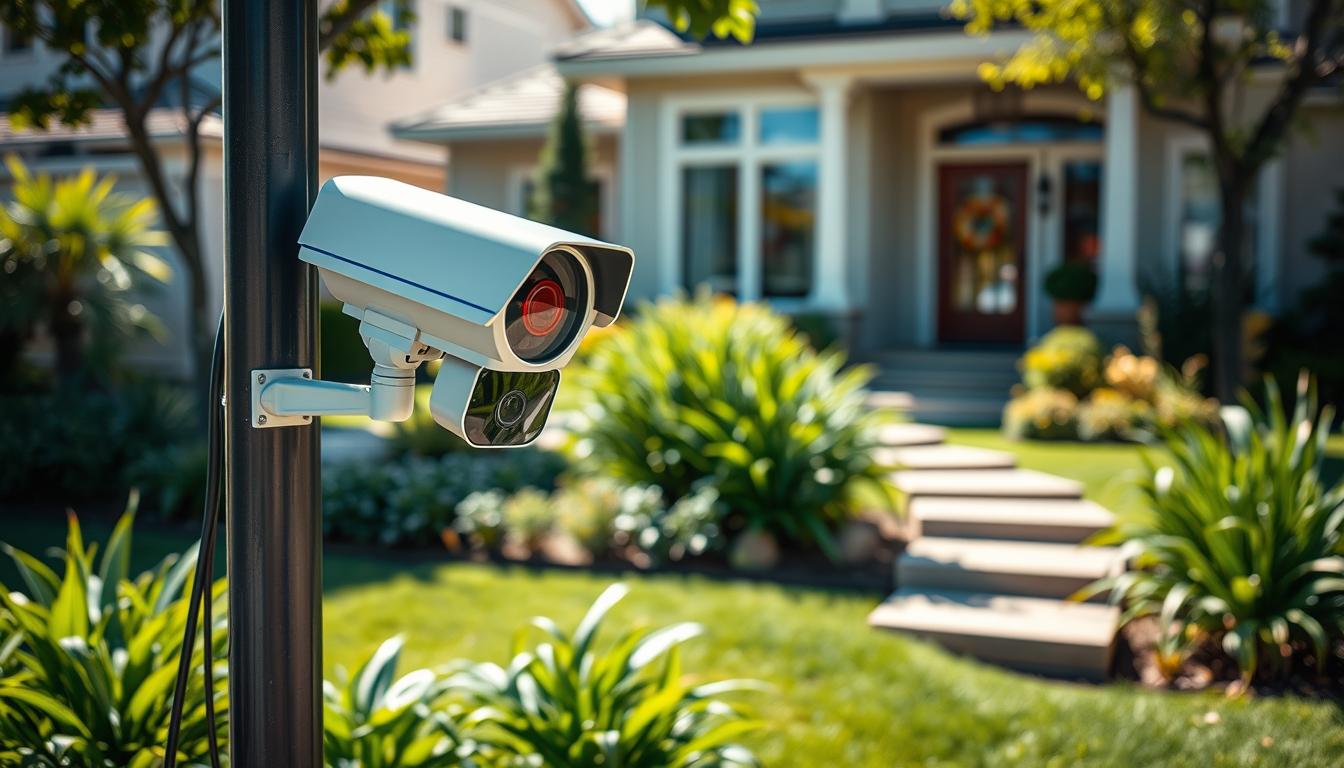
Top Rated wifi security camera outdoor solar Cameras
Keeping your property safe is a major concern for homeowners in Singapore. Modern technology now offers smart ways to watch over your space day and night.
These advanced monitoring systems provide constant vigilance. Many now use clean, renewable power sources. This fits perfectly with Singapore’s Green Plan 2030 for a sustainable future.
Local shoppers have left over 640 reviews, giving these products an average 4.5 out of 5 stars. Prices range from budget-friendly $59.99 setups to premium $799.99 packages. Brands like Reolink and Eufy lead the market with clear video and excellent night vision.
This guide compares the best options for your needs. We focus on devices that work well in Singapore’s tropical weather and bright sunshine. You’ll learn about features, performance, and value to make the right choice. For more details on installation and setup, visit our guide on solar-powered wifi security camera for outdoors.
Key Takeaways
- Modern surveillance systems offer 24/7 monitoring for Singapore homes.
- Renewable energy options align with national sustainability goals.
- Products have high user satisfaction with 640+ local reviews averaging 4.5/5 stars.
- Prices vary from $59.99 to $799.99 to suit different budgets.
- Leading brands provide high-resolution video and reliable night vision.
- These devices are particularly suitable for Singapore’s climate.
- This guide helps you compare features and value before buying.
Why Solar-Powered Security is a Game-Changer for Homeowners
The landscape of residential protection is changing dramatically thanks to innovative power-independent technology. Gone are the days of complex wiring and monthly energy spikes from traditional setups.
Modern solar-powered security represents a fundamental shift. These autonomous units free you from electrical outlets and utility bills.
The financial benefits are substantial. One prominent example comes from Marina Bay, where monitoring expenses fell by 75% after adoption.
This massive reduction in operational costs highlights the primary economic advantage. Your household budget remains untouched by surveillance power consumption.
Installation becomes a simple weekend project. Without needing an electrician, you can mount these devices in optimal locations.
The integration of IoT connectivity positions this technology at the heart of Singapore’s Smart Nation vision.
Maintenance demands are remarkably low. Unlike older systems that require frequent battery swaps, these units are designed for endurance.
Their robust construction is certified with an IP67 weatherproof rating. This ensures reliable performance through heavy rain and high humidity.
For the eco-conscious homeowner, the environmental advantage is clear. You’re choosing a sustainable method for property monitoring.
Operational independence is another key feature. Place your units anywhere sunlight reaches, without worrying about extension cords.
This technology is more than just a purchase. It’s a long-term investment in both safety and sustainable living.
Advanced security cameras with solar integration offer peace of mind. They work continuously without adding to your carbon footprint.
The combination of smart features and clean energy creates a powerful solution. It aligns perfectly with both personal and national goals for a greener future.
Singapore’s Climate: The Perfect Environment for Solar Security Cameras
With abundant sunshine throughout the year, Singapore provides perfect conditions for energy-independent monitoring systems. The island’s tropical position delivers consistent meteorological advantages for sustainable technology.
Abundant Sunlight Meets Smart Nation Goals
Singapore receives an average solar irradiance of 1,582 kWh/m² annually. This measurement represents the amount of sunlight energy available for conversion.
Over 2,500 hours of bright sun shine on the city-state each year. This consistent exposure makes photovoltaic panels exceptionally efficient.
These devices maintain up to 85% efficiency even during monsoon seasons. Heavy rain and cloud cover cause only minimal performance reduction.
The reliability of solar power aligns perfectly with Singapore’s Smart Nation vision. Autonomous monitoring supports the technological integration goals.
Government Initiatives and the Green Plan 2030
The Singapore government actively promotes renewable energy adoption. The Green Plan 2030 sets clear targets for national sustainability.
One key objective is achieving 2GW of solar capacity by 2030. This ambitious goal drives infrastructure development and public awareness.
Financial incentives make sustainable choices more accessible. Subsidies of up to 30% are available for ECO-certified monitoring systems.
Supportive policies extend across multiple agencies. The HDB solar panel rollout brings renewable energy to public housing.
URA guidelines facilitate installation in residential areas. These regulations help homeowners integrate clean technology seamlessly.
Real-world applications demonstrate the technology’s value. Nature reserves already use solar-powered surveillance for environmental protection.
Choosing these monitoring solutions represents more than personal preference. It’s participation in a national movement toward cleaner living.
The combination of ideal weather and supportive policy creates a unique opportunity. Singapore residents can protect their home while contributing to broader environmental goals.
This technology will likely remain relevant for many years. The climate advantages and government support ensure long-term viability.
Modern security cameras with solar integration offer practical benefits. They provide reliable performance without compromising sustainability principles.
Unpacking the Core Benefits of Outdoor Solar Security Cameras
Choosing autonomous monitoring technology delivers measurable improvements in both household economics and environmental impact. These systems transform how we protect our spaces while aligning with modern values.
The advantages extend far beyond basic surveillance. They create smarter, more sustainable living environments.
Significant Reduction in Energy Costs and Bills
The financial savings are substantial and long-term. Over a decade, users typically save between $1,500 and $2,000 compared to traditional wired arrangements.
This calculation includes eliminated electricity consumption. Your monthly utility statement won’t show spikes from constant recording.
Operational expenses drop dramatically. Annual maintenance averages just $50 instead of $300 for conventional setups.
You avoid costly electrician visits for initial setup. The simplified design reduces upfront labor costs significantly.
These economic benefits directly support household budgeting. Singaporean families can allocate funds to other priorities.
Eco-Friendly Surveillance and a Smaller Carbon Footprint
Each unit makes a verifiable environmental difference. Annually, one device offsets approximately 2,000 pounds of carbon dioxide emissions.
This impact equals the work of 45 mature trees. Your choice contributes directly to cleaner air.
Solar security technology supports Singapore’s sustainability targets. It represents a practical step toward Green Plan 2030 objectives.
The renewable energy source ensures continuous operation without fossil fuels. You gain reliable protection without environmental compromise.
This approach matches growing ecological awareness among residents. It allows proactive participation in national green initiatives.
Wire-Free Flexibility and Simplified Installation
The absence of cables transforms placement possibilities. You can position units where they get optimal sunlight and the best viewing angles.
This installation freedom addresses unique property layouts. Gardens, gates, and perimeter walls become practical mounting spots.
Technical barriers disappear for most homeowners. Many systems require only basic tools for mounting.
Scalability becomes straightforward. Adding more units doesn’t need new wiring infrastructure or complex planning.
The aesthetic advantage is clear. No visible cords preserve your home’s exterior appearance.
These features like extended battery life and wireless connectivity enhance convenience. You receive alerts and footage without physical connections.
For Singaporean households, this flexibility is particularly valuable. It accommodates various architectural styles and space constraints.
Reviewing the technical details confirms the practicality. Modern security cameras with autonomous power operate reliably in local conditions.
The best cameras for outdoor security combine durability with intelligent features. They deliver comprehensive monitoring without complexity.
How Solar-Powered WiFi Security Cameras Actually Work
At their heart, these units are a triumph of engineering, combining photovoltaic science with smart digital connectivity. They operate on a continuous loop of energy capture, storage, and wireless data transmission.
This process ensures your property remains monitored without interruption. Let’s break down each critical component.
The Solar Panel: Capturing and Converting Sunlight
The journey begins with the solar panel. Its surface is covered with photovoltaic cells, usually made from silicon.
These cells have a special property. When sunlight particles, called photons, strike them, they knock electrons loose.
This movement of electrons creates a flow of direct current (DC) electricity. It’s a clean and silent way to generate power.
Modern photovoltaic cells boast an efficiency rate between 15% and 22%. This means they convert a significant portion of captured light into usable energy.
In Singapore’s bright conditions, a typical panel can fully recharge a device in just six to eight hours. This high efficiency is key for reliable operation.
Even on cloudy days, these systems continue to gather energy. They are designed to perform well in varied light.
Battery Systems: Storing Power for Round-the-Clock Operation
Energy captured during the day must be saved for use at night. This is where the battery becomes the backbone of the entire system.
Lithium-based batteries are the standard. They offer a high energy density and a long lifespan, often exceeding 3,000 full charge cycles.
Not all lithium batteries are the same. Two common chemistries are LiFePO4 and NMC.
LiFePO4 (Lithium Iron Phosphate) is known for exceptional safety and durability. NMC (Nickel Manganese Cobalt) offers a higher energy density in a smaller package.
A smart charge controller acts as the system’s brain. It protects the battery from overcharging on sunny days.
It also prevents over-discharging during long periods of low light. This careful management is crucial for longevity.
This combination provides impressive backup. A well-designed unit can operate for up to seven days without direct sunlight.
WiFi Connectivity and Remote Monitoring Explained
The final piece is wireless communication. This is what transforms the device from a simple recorder into a smart monitoring tool.
WiFi connectivity allows the unit to send video and alerts to your home network. For smooth 1080p video streaming, your internet should have an upload speed of at least 5Mbps.
You access the feed through a dedicated smartphone app. These apps provide a live view of your property from anywhere.
You also receive instant notifications for detected motion. This real-time alert system is a core feature like modern users expect.
For more technical details, understanding the network requirements is helpful. Stable connectivity ensures you never miss an alert.
Advanced security cameras offer even more options. Some include 4G cellular fallback to maintain a connection if WiFi fails.
Others integrate directly with smart home platforms. This lets you control your cameras alongside lights, locks, and voice assistants.
Together, these three elements—panel, battery, and wireless link—create a robust and intelligent surveillance solution.
Essential Features to Look for in Your Solar Security Camera
Selecting the right monitoring device requires understanding which technical specifications deliver real-world protection value. Not all features are created equal, and some make a much bigger difference in daily operation.
Your choice should balance performance with practical considerations like storage and maintenance. This guide breaks down the most important capabilities to evaluate.
Video Resolution and Image Quality: From HD to 4K
Clarity is everything when you need to identify a face or read a license plate. Standard definition is no longer sufficient for modern surveillance needs.
The jump from 1080p (Full HD) to 4K Ultra HD is significant. 4K offers four times the pixel count of 1080p, capturing minute details with exceptional precision.
Many premium units now include 8x digital zoom without losing clarity. This allows you to focus on specific areas of the footage during review.
Higher resolution like 2K or 4K provides the video quality needed for positive identification, but requires approximately 2-4 times more storage space than 1080p.
Consider your storage method when choosing resolution. Cloud plans or larger memory cards may be needed for 4K recording.
For most homes, 2K offers an excellent balance. It provides clear imagery while being kinder to data limits and storage capacity.
Advanced Night Vision Capabilities
Protection doesn’t stop when the sun goes down. Effective night vision transforms darkness into a usable monochrome or even color image.
Infrared (IR) LEDs are the standard technology. They illuminate the scene with light invisible to the human eye, creating a clear picture.
Look for a stated effective range, such as up to 33 feet. This tells you how far the vision extends in complete darkness.
Some advanced models now offer color night vision. This uses ambient light or a built-in spotlight to capture images in color, adding valuable context.
The best security cameras maintain image integrity in low-light conditions. They ensure you don’t miss important activity after dusk.
Smart Motion Detection and AI-Powered Alerts
Basic motion sensors trigger on any movement, from a passing car to a swaying tree branch. This leads to alert fatigue, where you ignore notifications.
Modern motion detection uses artificial intelligence to analyze the scene. The system can distinguish between a person, a vehicle, and an animal.
This intelligent detection is a game-changer. By focusing only on relevant motion, it can reduce false alarms by up to 90%.
You receive notifications that actually matter. This means an alert for a person at your gate, but not for a cat in your garden.
Some AI analytics go further. They can detect specific behaviors or if a package has been delivered and then removed.
This smart filtering saves you time and ensures you pay attention to genuine security events. It’s one of the most valuable features in contemporary devices.
Weatherproof Durability and Build Quality
Singapore’s tropical climate demands robust construction. Your device will face heavy rain, intense humidity, and constant heat.
The IP (Ingress Protection) rating is your key indicator. An IP67 rating, as found on top models, guarantees complete protection against dust and immersion in water up to 1 meter for 30 minutes.
This weather resistance is non-negotiable. It ensures the unit survives monsoon seasons and performs reliably year-round.
Build quality extends beyond waterproofing. Vandal-resistant housings are important for exposed placements.
Look for tough materials that can withstand accidental impacts or deliberate tampering. A sturdy mount is equally crucial.
Beyond these core features, consider additional capabilities that enhance functionality:
- Two-way audio: Lets you speak through the device via your smartphone app.
- Built-in spotlights: Act as a deterrent and enable color night recording.
- Local storage options: SD card slots provide an alternative to cloud subscriptions.
- Siren alarms: An audible alarm can scare off intruders with a tap on your phone.
Prioritize these features based on your specific scenario. A front gate might need superior motion detection and a spotlight.
A backyard might require excellent night vision range. Understanding your needs helps you select the right solar-powered security cameras.
The best security cameras combine these elements into a cohesive system. They deliver comprehensive monitoring that adapts to your lifestyle and local conditions.
Your Guide to the Best WiFi Security Camera Outdoor Solar Systems
Investment in property monitoring spans a wide range. It accommodates everything from modest budgets to premium, feature-loaded installations.
This guide helps you navigate the options. We’ll break down what you get at different price points and how to match a system to your needs.
Prices start around $59.99 for a basic, single unit. At the other end, complete multi-camera networks can reach $799.99.
This broad spectrum means there’s a solution for every home. You don’t have to overspend to get effective protection.
It’s important to understand the difference between standalone cameras and full systems. A single device might be perfect for watching a front gate.
A multi-camera system, however, provides coordinated coverage of your entire property. These often include a central hub for managing all feeds in one app.
Many brands now offer convenient bundle deals. These packages include the monitoring device and a compatible solar panel designed to work together.
This eliminates guesswork and ensures optimal charging performance. It’s a smart way to purchase your setup.
When evaluating models, consider your property’s size and layout. How many units do you need to cover key entry points and blind spots?
Also, think about the specific features that matter most to you. Is crystal-clear 4K video a priority, or is reliable night vision more critical?
The “best” choice is deeply personal. It depends on your unique requirements, budget, and the specific layout of your living space.
Brand reputation and local after-sales support are crucial in Singapore. Companies like Reolink and Eufy have established a strong presence here.
This means easier access to customer service and technical help if needed. It’s a factor that adds long-term value to your purchase.
The following section provides a direct comparison of top-tier solar-powered security cameras. We’ll look at their strengths and ideal use cases.
This will help you move from general considerations to specific options. You’ll be better prepared to select the ideal security camera for your home.
Remember, the goal is to find a balance. The right system offers peace of mind without unnecessary complexity or cost.
Comparing Top-Tier Solar Security Camera Brands and Models
Understanding the differences between leading options helps you make an informed decision. We’ve analyzed the top contenders based on performance, value, and suitability for Singaporean homes.
This comparison focuses on real-world usability rather than just technical specifications. You’ll see which models excel in specific scenarios.
Arlo Essential: Feature-Rich Performance with Compact Solar
The Arlo Essential 2nd Gen earns its reputation as an award-winning choice. It delivers stunning 2K resolution that captures fine details clearly.
Smart home integration is seamless with this device. It works smoothly with Apple HomeKit, Google Home, and Amazon Alexa ecosystems.
A built-in spotlight adds both illumination and deterrence. The compact solar panel keeps the unit powered without bulky equipment.
Arlo’s ecosystem compatibility makes it ideal for tech-savvy homeowners who want unified smart home control.
Users appreciate the straightforward app interface and reliable alerts. This model represents a balanced approach to advanced features.
Eufy SoloCam: Integrated Solar and Local Storage
Eufy’s SoloCam S230 (also known as S40) features a unique integrated design. The solar panel is built directly into the unit’s body.
This creates a sleek, all-in-one appearance that many homeowners prefer. You get free AI detection capabilities without subscription fees.
An impressive 8GB of built-in local storage keeps your footage secure. This eliminates monthly cloud costs while maintaining privacy.
The system performs reliably in Singapore’s climate conditions. Its weather-resistant construction handles humidity and rain effectively.
Reolink Argus Series: High Resolution and Reliability
Reolink’s Argus 3 Pro stands out for its exceptional motion detection accuracy. Even during heavy rain, it maintains reliable performance.
The 2K resolution provides crisp imagery for identification purposes. This model has proven particularly durable in tropical environments.
Battery life remains strong despite Singapore’s heat and humidity. The separate solar panel offers flexible positioning for optimal charging.
Many users report consistent operation through monsoon seasons. This reliability makes it a favorite for larger properties.
Budget-Friendly Contenders: Blink and Tapo
For cost-conscious shoppers, Blink Outdoor 3 with its solar mount offers solid value. It provides essential monitoring capabilities at an accessible price point.
TP-Link’s Tapo C420S1 bundle includes a 2K QHD resolution device. The package features a 360-degree pan/tilt solar panel for maximum sun exposure.
Both options deliver core functionality without premium pricing. They represent excellent entry points into autonomous surveillance.
These budget models still offer weather resistance and basic smart features. They’re perfect for covering secondary areas or testing the technology.
Comparative Analysis at a Glance
This quick reference highlights key differences between the leading models:
- Arlo Essential 2nd Gen: Premium price, 2K resolution, compact panel, excellent smart home integration
- Eufy SoloCam S230: Mid-range price, integrated design, free AI detection, 8GB local storage
- Reolink Argus 3 Pro: Mid-range price, 2K resolution, exceptional motion detection, high durability
- Blink Outdoor 3 with Solar: Budget price, reliable basics, simple setup, good battery performance
- Tapo C420S1 Bundle: Budget price, 2K QHD, 360-degree panel, good value package
Storage options vary significantly between these cameras. Some rely on cloud subscriptions while others offer local alternatives.
Smart Home Ecosystem Compatibility
Integration with existing smart home systems matters for many users. Here’s how these solar-powered security cameras connect:
- Arlo works with all major platforms: HomeKit, Google Home, Alexa
- Eufy connects primarily with Google Home and Alexa
- Reolink offers compatibility with Google Home and Alexa
- Blink integrates seamlessly with Amazon Alexa ecosystems
- Tapo connects with Google Home and Alexa systems
Consider which ecosystem you already use in your home. Compatibility ensures a smoother experience and unified control.
Real-World Performance in Singapore’s Conditions
Local testing reveals important insights about these devices. Battery performance varies based on placement and sunlight exposure.
Models with efficient power management maintain operation through cloudy periods. The integrated designs often charge more consistently than separate panel setups.
Heat tolerance is crucial in our climate. All these options have proven adequate, but some manage thermal conditions better than others.
Monsoon readiness separates reliable units from problematic ones. Look for devices with proven track records during heavy rainfall.
Matching Models to User Profiles
Different homeowners will prefer different options based on their needs:
- Tech-savvy integrators: Arlo Essential for seamless smart home connectivity
- Privacy-focused users: Eufy SoloCam for local storage without subscriptions
- Large property owners: Reolink Argus for reliable coverage of expansive areas
- Budget-conscious buyers: Blink or Tapo for essential protection at lower cost
- First-time adopters: Budget options to test the technology before larger investments
Your specific property layout also influences the best choice. Consider how many units you need and where they’ll be placed.
Singapore-Specific Considerations
Local availability affects both purchase and support experiences. Major brands like Reolink and Eufy have established Singapore distribution.
This means easier access to warranty service and technical assistance. Check authorized retailers to ensure genuine products and local support.
Some models may have Singapore-specific firmware or settings. These optimizations can improve performance in our unique environment.
Installation services are available through certified technicians. While many setups are DIY-friendly, professional help ensures optimal placement.
Remember that the best solar-powered security cameras balance features with real-world reliability. Your choice should match both your budget and your specific monitoring needs.
High-Definition Video Quality: Why Resolution Matters for Security
The clarity of your surveillance feed can determine whether an incident is resolved or remains a mystery. In property monitoring, the level of detail captured is directly tied to the usefulness of the evidence.
Higher resolution provides the video quality needed for positive identification. It transforms a blurry shape into a recognizable face or a legible license plate.
This capability is vital in urban settings like Singapore. It helps distinguish details in crowded or complex environments.
Standard definitions have evolved significantly. Today’s options range from 1080p (Full HD) to 2K and 4K Ultra HD.
Each step up offers a substantial leap in pixel count. 4K provides four times the detail of 1080p, delivering forensic-level clarity.
For compliance with regulations like Singapore’s PDPA, clear evidence is often required. High-definition footage can be crucial for meeting these legal standards.
Consider these common resolutions and their practical impact:
- 1080p (Full HD): Good for general monitoring. It may struggle to identify a face beyond 15 feet.
- 2K: An excellent balance. It offers clear identification at greater distances and is more storage-friendly than 4K.
- 4K (Ultra HD): Exceptional detail. It can capture fine features like facial marks or small text on a package from across a driveway.
This increased detail comes with a trade-off. Higher resolution demands more storage space and network bandwidth.
A 4K stream requires approximately 2-4 times the data of a 1080p stream. This affects your cloud subscription costs or local memory card capacity.
Modern compression technologies, like H.265, help manage this load. They maintain video quality while reducing file sizes significantly.
Supporting features like Wide Dynamic Range (WDR) enhance effective quality. WDR balances light and dark areas in high-contrast scenes, such as a brightly lit doorway.
Digital zoom also leverages high resolution. An 8x digital zoom on a 4K feed remains usable where it would pixelate on a lower-resolution stream.
Choosing the right resolution depends on your specific needs and budget. Ask yourself what you need to see clearly.
Is your priority monitoring a wide garden area or identifying a person at a specific entry point? Your answer guides your choice.
Remember, resolution is just one factor in image clarity. The lens quality and sensor size in your cameras play equally important roles.
A high-resolution sensor with a poor lens will still produce mediocre footage. Look for devices that balance all these elements.
For monitoring critical entry points or valuable assets, maximum resolution is most important. It ensures no details are lost.
For general perimeter watch, a balanced 2K option often provides the best value. It delivers excellent video without excessive storage demands.
Your investment in clear security imagery is an investment in actionable evidence. It ensures your system serves its fundamental purpose: providing certainty.
Night Vision and Motion Detection: Ensuring 24/7 Protection
The transition from daylight to darkness represents the most critical period for property surveillance systems. Modern technology has developed sophisticated solutions to maintain clear visibility and intelligent alerting around the clock.
These capabilities work together to create seamless monitoring. They ensure no important activity goes unnoticed, regardless of lighting conditions.
Night vision technology has evolved beyond basic infrared illumination. Today’s systems use multiple approaches to capture usable images in low-light environments.
Infrared LEDs remain a fundamental component. They emit light invisible to the human eye, illuminating scenes up to 33 feet away.
More advanced models incorporate starlight sensors. These specialized components excel in extremely dim conditions, capturing details with minimal ambient light.
Some units now offer color night vision. They use ambient light or built-in spotlights to maintain color information after sunset.
Premium monitoring devices can achieve effective ranges extending to 150 feet. This ensures even large property perimeters receive comprehensive coverage after dark.
The choice between these technologies depends on your specific needs. Consider how much ambient light exists around your installation points.
Motion detection represents the intelligence layer of modern surveillance. Basic sensors that trigger on any movement often create alert fatigue.
Smart systems use pixel analysis and AI algorithms to classify activity. They distinguish between people, vehicles, animals, and environmental movement like swaying vegetation.
This intelligent filtering delivers substantial benefits. Users experience up to 90% fewer false alarms compared to basic motion sensors.
The system conserves valuable battery life by avoiding unnecessary recordings. You receive notifications only for relevant events that require attention.
Customizable detection zones enhance this precision further. You can define specific areas within the camera’s view to monitor actively.
For example, you might focus on a driveway or entry gate while ignoring a frequently used sidewalk. This customization tailors the system to your property’s unique layout.
Advanced detection integrates with other protective features like spotlights and sirens. When the AI identifies a person after hours, it can automatically trigger illumination or an audible alarm.
This multi-layered response acts as a powerful deterrent. It transforms passive recording into active prevention.
Optimizing your motion settings requires some consideration. Avoid pointing devices toward sources of frequent movement like busy streets.
Ensure mounts are stable to prevent camera shake from wind. This movement can trigger false alerts throughout the night.
Adjust sensitivity levels based on the monitored area’s typical activity. A quiet backyard needs different settings than a front gate near a sidewalk.
Different brands implement these capabilities with varying effectiveness. Understanding these differences helps select the right model for your needs.
Reolink’s systems are noted for exceptional accuracy even during heavy rain. Their algorithms effectively filter out environmental interference.
Eufy provides free AI detection without subscription fees. This makes advanced filtering accessible without ongoing costs.
Arlo integrates smoothly with broader smart home ecosystems. Their motion detection can trigger other connected devices in response to alerts.
Budget options like Blink and Tapo offer reliable basic detection. They provide essential functionality for cost-conscious users.
These two features work in tandem to bridge the daylight-to-darkness gap. They transform a monitoring device into a truly 24/7 protection solution.
Your investment in quality night vision and intelligent detection pays dividends in peace of mind. You gain confidence that your property remains watched regardless of the hour.
For Singaporean homeowners, this comprehensive coverage is particularly valuable. It addresses the unique security needs of residential spaces in our urban environment.
The combination ensures no critical moment escapes notice. From sunset to sunrise, your monitoring system maintains vigilant watch over what matters most.
Battery Life and Solar Charging Efficiency: What to Expect
The reliability of your monitoring system hinges on two critical factors: how long it can operate and how efficiently it recharges. Setting realistic expectations helps you plan for consistent, worry-free protection throughout the year.
Performance varies based on your specific setup and local conditions. Understanding these variables ensures your investment delivers the promised peace of mind.

Real-World Battery Performance in Singapore’s Weather
Under optimal conditions, a single charge can last several months. Some units even achieve a full year of operation when paired with consistent sunlight.
Your actual battery life depends on several key factors. The frequency of motion events directly impacts energy consumption.
Higher video quality settings use more power. Using built-in spotlights for color night recording also drains the battery faster.
Singapore’s warm climate affects performance too. High temperatures can slightly reduce overall battery capacity over time.
Manufacturers provide a “days of backup” rating for cloudy periods. Most quality systems function for up to seven days without direct sunlight.
This reserve gives you confidence during monsoon seasons. Your monitoring continues even through extended periods of rain.
Lithium batteries offer exceptional longevity, typically exceeding 3,000 full charge cycles. This translates to many years of reliable service before replacement is needed.
Different battery chemistries offer various benefits. LiFePO4 (Lithium Iron Phosphate) cells are known for superior safety and durability.
They handle Singapore’s heat well and maintain stable performance. Their long life cycle makes them a popular choice for premium devices.
Power management settings in your app help conserve energy. You can adjust sensitivity and recording length based on your needs.
Consider replacement after several years of use when you notice shorter runtime. This maintenance ensures your system remains dependable.
Maximizing Your Solar Panel’s Charging Potential
Your panel’s positioning dramatically affects charging speed. For Singapore’s latitude, an angle between 30° and 45° captures the most sunlight.
Avoid shadows from trees, walls, or other structures. Even partial shading can reduce energy harvest significantly.
Regular cleaning provides a substantial efficiency boost. Dust and pollen buildup can block up to 25% of available light.
A simple wipe every few months maintains peak performance. This small task ensures your panel converts maximum energy.
Seasonal haze presents a unique local challenge. Particulate matter in the air can reduce panel efficiency by up to 15%.
During these periods, charging takes longer. A high-quality panel with good low-light performance helps mitigate this effect.
Choosing a panel with higher wattage than the minimum requirement is wise. This extra capacity ensures consistent charging in less-than-ideal conditions.
Modern panels can recharge a device in just six to eight hours of bright sunlight. This quick turnaround keeps your system ready for action.
Monitor your battery level through the companion app. This lets you verify that your panel provides adequate energy daily.
With proper placement and maintenance, your solar charging system delivers reliable power. It forms the sustainable heart of your autonomous monitoring solution.
Installation Made Simple: Setting Up Your Solar Camera
Getting your new monitoring system up and running is simpler than you might think. Most homeowners complete the task in under two hours with basic tools.
The installation focuses on two key goals. You need optimal viewing angles for protection and consistent sunlight for power.
This process requires careful planning but follows straightforward steps. With proper preparation, your security camera will be operational quickly.
Choosing the Optimal Location for Sun and Security
Begin by assessing your property during different times of day. Look for spots that offer clear sightlines to entry points.
These areas should also receive direct sunlight for most of the day. The golden rule is six to eight hours of daily exposure.
This ensures your panel harvests enough energy for continuous operation. Avoid locations shaded by trees, walls, or other structures.
Consider the viewing angle needed for effective monitoring. Position the unit to cover gates, doors, or valuable assets.
Test different spots using your smartphone’s camera app. This helps visualize the coverage before mounting anything permanently.
Step-by-Step Mounting and Connection Guide
Once you’ve selected the perfect spot, gather your tools. You’ll need a drill, level, screwdriver, and appropriate wall anchors.
Mark the mounting holes using the provided template. Use a level to ensure everything will be straight and aligned.
Drill pilot holes for the anchors based on your wall material. For concrete or brick, use masonry anchors for secure holding.
Secure the mounting bracket with at least three screws. Make sure it feels solid and doesn’t wobble when tested.
Attach your monitoring device to the bracket. Follow the manufacturer’s instructions for proper orientation and locking.
Proper angling of the energy panel significantly impacts charging efficiency. A tilt between 35° and 45° captures maximum sunlight throughout Singapore’s seasons.
Now mount the solar panel in a nearby sunny location. Use the same careful process with anchors and screws.
Connect the panel to your device using the provided cable. Ensure waterproof connections if your model requires them.
Manage cables neatly along walls or eaves. Use clips or conduit to prevent tampering and maintain clean aesthetics.
Angle the solar panel properly for your location. In Singapore, 35° to 45° works well for year-round performance.
Singapore Housing Considerations
Different housing types have specific requirements. Understanding these helps avoid issues with authorities or neighbors.
For HDB flats, check URA guidelines for external installations. Some developments may require approval from the town council.
Landed properties should consider lightning protection. Consult an electrician if installing near tall trees or in exposed areas.
Condominium residents must review common area regulations. Many management committees have rules about exterior modifications.
Always respect your neighbors’ privacy when positioning units. Avoid pointing devices directly into adjacent living spaces.
Final Testing and Verification
After completing the physical installation, verify everything works correctly. Check the device’s power status through its indicator lights.
Connect the unit to your home network following the app instructions. Ensure you have a strong signal at the mounting location.
Test the live view from your smartphone. Confirm the image is clear and covers the intended area properly.
Walk through the detection zones to test motion alerts. Adjust sensitivity settings if you receive too many or too few notifications.
Verify night vision activates automatically at dusk. Check that the infrared illumination covers the necessary distance.
Most users find this process straightforward and satisfying. Surveys show 85% satisfaction with DIY setup experiences.
For complex installations or multi-unit systems, professional help might be beneficial. Certified technicians ensure optimal placement and performance.
They can also handle wiring through walls or across longer distances. This maintains your property’s appearance while ensuring reliability.
With your system now installed, you can enjoy continuous protection. Regular maintenance will keep it performing well for years to come.
Smart Home Integration and Connectivity Options
Smart integration capabilities elevate property protection from passive observation to active participation in home automation. Modern monitoring devices are designed to connect seamlessly with your existing digital ecosystem.
This aligns perfectly with Singapore’s Smart Nation vision. The goal is creating interconnected, intelligent living spaces.
Your autonomous unit becomes a smart node in a broader network. It communicates with other devices to create a cohesive protection environment.
This approach offers more than just remote viewing. It transforms how you interact with your entire property.
Popular Smart Home Platforms and Ecosystems
Today’s leading devices connect with major home automation systems. You can integrate them with platforms you already use daily.
Common compatibility includes Google Home, Amazon Alexa, and Apple HomeKit. Samsung SmartThings is another popular ecosystem.
Each platform offers unique features and control methods. Your choice depends on your existing smart home setup.
Integration allows voice commands for checking live feeds. You can ask your assistant to show the front gate on your TV.
Automation routines become more powerful with monitoring triggers. Your lights can turn on when motion is detected after sunset.
Mesh network compatibility ensures stable connections across large landed properties, maintaining consistent communication even in spacious homes.
Viewing all devices in a single app simplifies management. You don’t need to switch between different applications.
This unified control saves time and reduces complexity. Everything works together harmoniously.
Robust Connectivity for Reliable Operation
Stable communication is essential for real-time alerts and live viewing. Modern devices support dual-band network connectivity.
They can use both 2.4GHz and 5GHz frequencies. This provides flexibility for different home network setups.
Mesh network compatibility is particularly valuable. It ensures strong signals throughout larger homes and gardens.
For critical locations, advanced options provide extra reliability. 4G LTE cellular backup keeps your unit online during network outages.
This fallback functionality maintains protection when your primary internet fails. It’s ideal for monitoring important entry points.
Your data remains secure during transmission. Advanced encryption protocols protect video streams and alerts.
Security and Access Management
Protecting your footage is as important as capturing it. Modern systems use AES-256 encryption for video streams.
Secure cloud storage protocols add another layer of protection. Your recordings remain private and inaccessible to unauthorized parties.
Multi-user access controls are useful for families. You can share viewing permissions with household members securely.
Property managers benefit from this feature too. They can grant temporary access to maintenance staff without compromising security.
These features ensure your monitoring solution protects both your property and your privacy. They address modern digital safety concerns.
Compatibility with Other Security Components
Your monitoring device shouldn’t work in isolation. It should coordinate with other protective elements in your home.
Modern solar-powered security units integrate with doorbell cameras, smart locks, and alarm systems. This creates a comprehensive protection network.
When motion is detected, multiple responses can trigger automatically. Lights can illuminate, doors can lock, and alerts can sound.
This coordinated approach is more effective than individual devices working separately. It creates a unified defense for your home.
Before purchasing a specific model, check its compatibility with your existing ecosystem. This ensures everything will work together smoothly.
Review the manufacturer’s documentation for supported platforms. Verify integration capabilities match your smart home setup.
This due diligence prevents compatibility issues after installation. It saves time and frustration in the long run.
Achieving Seamless Intelligent Protection
Connectivity transforms basic monitoring into intelligent property management. It’s the key factor in creating a seamless security environment.
Your devices become proactive partners in home automation. They don’t just record events—they respond intelligently to them.
This approach aligns with Singapore’s technological advancement goals. It represents the future of residential protection.
Choose devices that offer the integration features you need. Consider both current requirements and future expansion possibilities.
The right options will grow with your smart home ecosystem. They’ll provide reliable protection for years to come.
Maintaining Your Solar Security System for Longevity
Consistent upkeep is the key to long-term reliability. Establishing a schedule helps your equipment operate at peak performance.
This process is far simpler than maintaining traditional wired systems. You’ll spend less time and money over the device’s life.
Routine Cleaning and Panel Care
Your energy panels need regular cleaning to capture maximum sunlight. Dust and pollen can reduce efficiency significantly.
Use a soft cloth with mild detergent for this task. Clean monthly or after local dust storms for best results.
Regular cleaning can boost your panel’s efficiency by up to 25%. This simple task ensures consistent power generation.
Check the mounting hardware seasonally. Ensure everything remains tight after monsoon winds or storms.
Remove any vegetation that might block sunlight. Trim branches or plants that create shadows on your solar panel.
Monitor your battery health through the companion app. Most applications show charge levels and performance metrics.
Look for indicators of degradation over time. Reduced runtime between charges may signal replacement needs.
Some battery units need replacement every two to five years. Plan for this as part of your long-term maintenance strategy.
Clean the monitoring device’s lens periodically. Use a microfiber cloth to remove dirt and maintain clear video quality.
Firmware Updates and System Checks
Always keep your device’s software current. Manufacturers release updates with important improvements.
These updates provide security patches and bug fixes. Sometimes they add new features to your existing equipment.
Enable automatic updates if your model supports this option. Otherwise, check for updates quarterly through the app.
Perform periodic functional tests to verify everything works correctly. Walk through motion detection zones to trigger alerts.
Verify night vision clarity during evening hours. Check that notifications reach your smartphone promptly.
Test the audio features if your camera includes two-way communication. Ensure you can hear and speak clearly through the app.
During seasonal changes, adjust settings if needed. Singapore’s weather patterns might require different sensitivity levels.
For prolonged absences, consider a specific maintenance plan. Some systems offer vacation modes that optimize power usage.
This minimal upkeep ensures your protection systems remain reliable. It’s far less demanding than maintaining traditional wired arrangements.
Making the Right Choice: How to Select Your Ideal Solar Camera
Every home has distinct vulnerabilities that demand customized surveillance strategies. The right choice depends on your specific living situation and protection priorities.
A systematic approach simplifies this important decision. You’ll match technology to your unique requirements with confidence.
Assessing Your Property’s Specific Security Needs
Begin with a thorough risk assessment of your living space. Walk around your entire property during different times of day.
Identify vulnerable areas like main entry points and potential blind spots. Note high-traffic zones where activity occurs regularly.
For larger estates, consider heat mapping techniques. These visualize movement patterns to optimize device placement.
Define your primary security objectives clearly. Are you focused on deterrence, evidence capture, or remote monitoring?
Many homeowners want all three benefits combined. Knowing your goals guides your feature selection process.
Your property’s size and layout significantly influence your choice. Wide-angle lenses work well for open garden areas.
Multiple units provide coordinated coverage for large landed properties. Compact models suit apartment balconies perfectly.
Consider how you’ll use the footage captured by your system. This determines the video quality and storage requirements.
Balancing Budget with Features and Performance
Create a realistic budget that reflects both immediate and long-term costs. The upfront price is just one part of the equation.
Consider the total cost of ownership over several years. This includes potential cloud subscription fees and maintenance expenses.
Prioritize features based on your identified security needs. Splurge on critical elements like resolution and weatherproofing.
You can save on less essential options without compromising protection. Focus on what matters most for your situation.
Future-proof your investment by choosing models that integrate with smart home systems you plan to adopt. This ensures your technology grows with your lifestyle.
Evaluate different models based on their performance in local conditions. Check how they handle Singapore’s humidity and rainfall.
Read reviews from other local users to understand real-world reliability. Their experiences provide valuable insights.
For complex property layouts or high-security needs, professional consultation makes sense. Experts like Wen Hong at +65 6013 5960 offer tailored advice.
They assess your space and recommend optimal solutions. This professional guidance ensures comprehensive coverage.
Follow this decision matrix for a structured selection process. Start with a thorough needs assessment of your property.
Next, prioritize features based on your security objectives. Then compare brands and models that match your criteria.
Finally, proceed with purchase and professional installation if needed. This methodical approach leads to confident choices.
Your ideal solar-powered security cameras should fit both your property and your peace of mind. They become a seamless part of your home’s protection.
Take your time with this important decision. The right system will serve you well for years to come.
Securing Your Singapore Home with Sustainable Technology
Achieving peace of mind about your property no longer requires choosing between effectiveness and eco-friendliness. Modern monitoring solutions deliver both robust protection and environmental responsibility.
The benefits are clear. You gain significant energy savings and reliable performance that lasts for years. Installation is straightforward, fitting Singapore’s climate and Smart Nation vision perfectly.
From feature-rich models to budget-friendly systems, there’s an option for every home. Brands like Arlo and Reolink offer advanced features, while Blink and Tapo provide essential functionality.
Your next step is simple. Review the comparisons and assess your needs. Choose a solar-powered security solution that aligns with your values and safety requirements.
This investment offers long-term peace of mind. It supports a secure, smart, and sustainable future for Singaporean households. For personalized guidance, expert advice is available to help you select the ideal system.
FAQ
How long do these systems operate on a single charge?
With a fully charged battery, most top models can run for several months without direct sunlight. In Singapore’s sunny climate, the integrated panel often keeps the battery topped up, providing truly continuous operation with minimal maintenance.
Will the device still function during rainy or cloudy periods?
Yes. High-quality units are designed with this in mind. They store ample energy in their batteries to power through several days of overcast weather. Durable, weatherproof construction also ensures they withstand heavy rain without issue.
Is the installation process complicated for a DIY user?
Not at all. Their wire-free nature makes setup straightforward. You typically just mount the bracket, attach the device, and connect it to your home network via a mobile app. The key step is choosing a spot with good sunlight exposure for the panel.
What video quality can I expect from a solar-powered model?
A> You can find excellent options offering 2K or 4K resolution, delivering crisp, clear footage crucial for identifying details. Many also feature advanced night vision using infrared or starlight sensors for full-color imaging in low light.
How does motion detection work with these cameras?
Modern systems use AI-powered algorithms to distinguish between people, vehicles, and animals. This smart filtering reduces false alarms from leaves or shadows, sending you only relevant alerts to your smartphone for immediate review.
Can I integrate these cameras with my existing smart home setup?
Absolutely. Leading brands like Arlo, Eufy, and Reolink offer compatibility with platforms such as Google Home and Amazon Alexa. This allows for voice control and creating automated routines with other connected devices in your home.
What maintenance is required to keep the system running well?
Maintenance is minimal. Periodically wiping the solar panel clean of dust and debris ensures maximum charging efficiency. It’s also wise to check for and install any firmware updates through the app to enhance features and security.


