
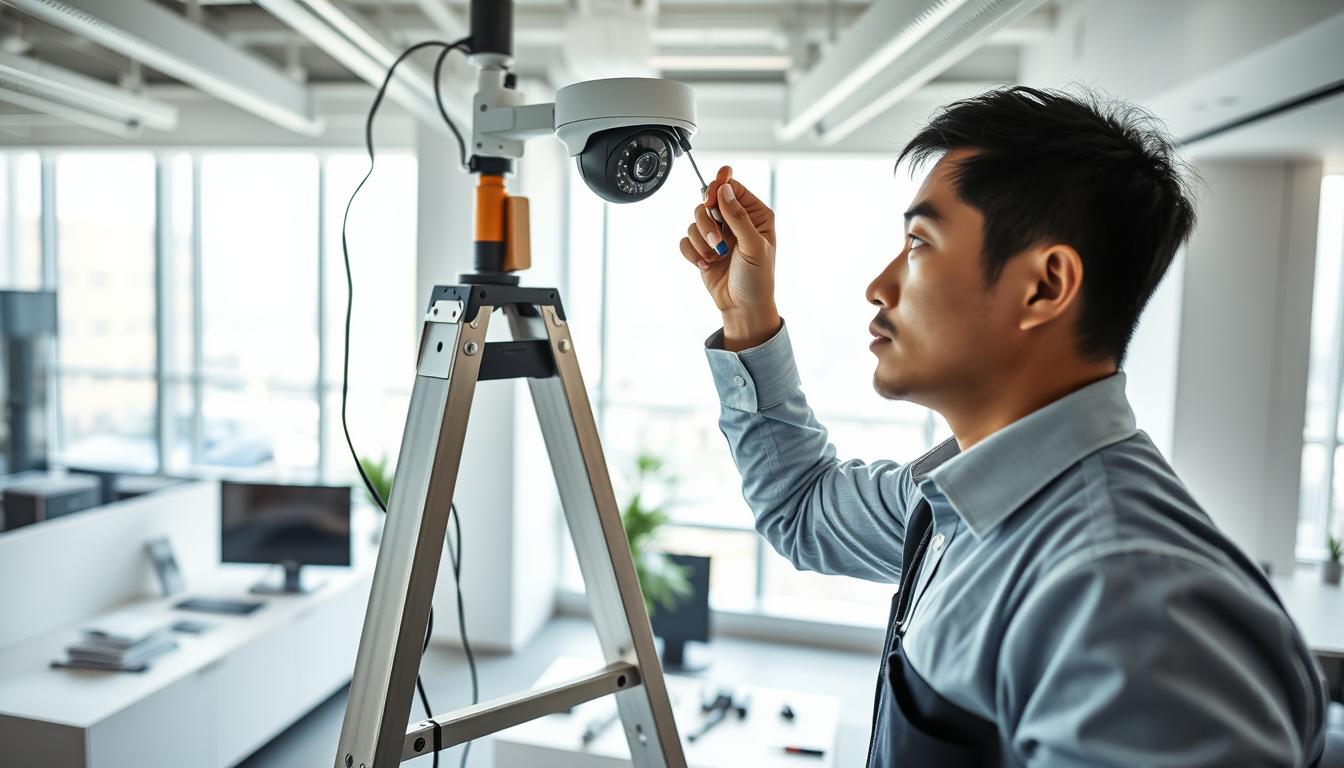
Tamper Proof Security Cameras Buyer’s Guide: Top Picks
Singapore businesses face growing threats to their operations and assets. Recent data shows alarming trends that demand stronger protective measures.
Warehouse thefts have jumped by 40% in 2024. Shop thefts have also risen by 9.6%. These numbers highlight an urgent need for enhanced business protection.
This guide helps owners make smart investments in durable surveillance technology. We provide clear, actionable advice for commercial settings. You’ll learn how to choose systems that actually work.
Visible, vandal-resistant equipment can cut crime by up to 75%. This creates long-term savings and peace of mind. Proper systems protect your investment.
We cover everything from durability ratings to top brands. Installation tips for Singapore’s humid climate are included. This ensures your equipment performs reliably.
The right surveillance tools are essential for modern operations. They defend against theft and damage. Let’s explore how to secure your business effectively.
Key Takeaways
- Singapore businesses face a 40% increase in warehouse thefts, requiring stronger protection.
- Visible surveillance systems can reduce criminal incidents by up to 75% through deterrence.
- This guide provides commercial-focused advice for investing in durable technology.
- Proper selection considers Singapore’s humid environment for reliable performance.
- Understanding durability ratings helps choose the right vandal-proof solutions.
- Strategic installation maximizes coverage and system effectiveness.
- Long-term cost savings come from reduced theft and equipment longevity.
Why Singapore Businesses Need Tamper Proof Security More Than Ever
A surge in targeted incidents against commercial properties has created new urgency for robust protective measures. The local security landscape now includes organized theft rings and deliberate property damage. These acts threaten operational continuity and financial stability.
Companies must understand these evolving risks. Proactive investment in the right protective solutions is no longer optional. It is a fundamental requirement for sustainable operations.
The Rising Cost of Vandalism and Theft
Financial losses from malicious acts have reached alarming levels. Police statistics show a 22% year-on-year increase in property damage during 2023. This trend shows no signs of slowing.
Construction sites are particularly vulnerable. They lose an estimated $1 billion annually to combined theft and vandalism. These costs include stolen materials, repair expenses, and project delays.
Other enterprises face similar threats. High-value warehouses storing electronics or pharmaceuticals are prime targets. Retail stores with high foot traffic experience frequent shoplifting and deliberate damage.
Insurance premiums reflect this risky environment. Providers often raise rates after repeated claims for security incidents. This creates a double financial burden for affected companies.
How Visible Deterrence Drives Down Crime Rates
Psychological factors play a crucial role in prevention. Studies indicate that 70% of burglars avoid properties with obvious surveillance systems. The mere presence of monitoring equipment changes criminal behavior.
Visible, durable surveillance solutions serve a dual purpose. They act as physical barriers against tampering. More importantly, they function as powerful psychological deterrents.
Research supports this approach. Properly installed systems can reduce criminal incidents by up to 75%. This prevention-first strategy stops problems before they occur.
Real-world examples demonstrate this effectiveness. A logistics company reported a 60% drop in perimeter breaches after upgrading their equipment. A retail chain saw shoplifting incidents fall by half.
Singapore’s urban density amplifies these benefits. High economic activity in concentrated areas increases exposure to risk. Durable monitoring systems provide essential protection in this environment.
These investments also support business continuity. They minimize operational disruptions caused by security incidents. This protection extends beyond assets to include reputation and customer trust.
Comprehensive solutions deliver measurable returns. They reduce direct losses from theft and vandalism. They also create potential for lower insurance costs over time.
What Are Tamper Proof Security Cameras?
Commercial environments demand equipment that can withstand both environmental challenges and deliberate interference. These specialized monitoring solutions represent a significant advancement over basic recording devices.
They are engineered specifically to resist physical attacks and harsh conditions. This makes them ideal for locations where standard equipment would fail quickly.
Beyond Standard Surveillance: Built for Impact and Weather
Standard monitoring devices often use plastic casings and basic mounting. They work fine in controlled indoor spaces but falter outdoors.
Vandal-proof alternatives feature reinforced metal housings and polycarbonate domes. These materials absorb and disperse impact energy effectively.
Tamper-resistant screws prevent unauthorized removal or adjustment. The entire unit is designed as a single, fortified piece.
This construction matters in real-world settings. Industrial sites face flying debris and accidental collisions.
Parking garages experience temperature swings and vehicle emissions. Exposed retail locations deal with public access and weather.
Superior equipment performs consistently in these challenging spots. It continues recording when ordinary devices would break.
Understanding IK and IP Ratings: The Language of Durability
International standards help buyers compare durability objectively. Two rating systems provide clear benchmarks for performance.
The IK code measures impact resistance. It ranges from IK00 (no protection) to IK10 (maximum protection).
IK10 represents the highest rating available. It means a unit can withstand 20 joules of impact energy.
This equals a 5kg weight dropped from 400mm height. Such resilience stops most hammer strikes or thrown objects.
The IP code indicates ingress protection against solids and liquids. The first digit shows dust resistance (0-6).
The second digit shows water protection (0-9). IP66 certification is particularly relevant for Singapore.
It guarantees defense against powerful water jets from any direction. This handles tropical downpours and high-pressure cleaning.
Higher ratings like IP67 and IP68 offer complete temporary immersion protection. They’re vital for flood-prone areas or marine applications.
These ratings translate directly to local climate suitability. Singapore’s humidity and frequent rain demand robust environmental sealing.
Many products claim “weather-resistant” but lack official certification. True weatherproof systems carry verified IP ratings.
Understanding this distinction prevents costly mistakes. For comprehensive protection, consider vandal-proof cameras designed for secure surveillance in.
These specialized solutions combine impact and weather protection. They deliver reliable monitoring despite challenging conditions.
The Tangible Benefits of Investing in Vandal-Resistant Systems
The financial justification for robust monitoring equipment extends far beyond initial purchase costs. These specialized solutions deliver measurable returns that strengthen operational resilience and profitability.
Businesses gain multiple economic advantages from durable surveillance technology. The benefits span direct loss prevention to indirect operational improvements.
Enhanced Asset Protection and Reduced Losses
Fortified surveillance directly safeguards physical assets and inventory. It creates a powerful deterrent against malicious acts.
Studies show visible, durable systems can stop criminal incidents by up to 75%. This protection translates into immediate financial preservation.
A Singapore retail chain documented compelling results. They reduced break-ins by 68% after installing dome cameras.
This technology minimizes losses from theft, vandalism, and inventory shrinkage. High-value warehouses and retail stores see particularly strong impacts.
Local enterprises benefit from this enhanced property safety. Singapore’s dense commercial environment amplifies these protective effects.
Long-Term Cost Savings on Maintenance and Repairs
Durable equipment requires far less frequent servicing than standard alternatives. This reliability creates substantial ongoing savings.
Advanced systems like Hikvision can deliver a 90-day return on investment. The reduced repair frequency quickly offsets the higher upfront cost.
Vandal-proof CCTV solutions save money on upkeep and replacements. Their reinforced construction withstands impacts that disable ordinary devices.
Consider the total cost of ownership over three to five years. Resilient technology often proves cheaper than repeatedly replacing standard equipment.
Extended equipment lifespan further enhances these savings. Minimized downtime from incidents also protects revenue streams.
Potential for Lower Insurance Premiums
Many insurance providers offer premium discounts for certified protection systems. Businesses can see reductions of up to 30%.
Insurers recognize that fortified surveillance lowers risk exposure. This translates directly into more favorable policy terms.
Certified security systems demonstrate proactive risk management. Providers often decrease rates after professional installation.
These financial benefits complement the direct loss prevention. Together they create a compelling business case for investment.
Singapore companies should discuss these options with their insurance advisors. Proper documentation of your monitoring setup is essential.
Beyond premiums, comprehensive surveillance supports operational efficiency. It aids inventory management and productivity monitoring.
Indirect advantages include improved customer confidence and brand reputation. Reduced liability from incidents further protects the business.
These layered benefits make durable surveillance a strategic investment. They deliver value across financial, operational, and reputational dimensions.
Key Features to Prioritize in Your Selection
Choosing the right surveillance technology requires understanding which technical specifications deliver real-world protection. Not all features provide equal value for Singapore’s commercial environments.
The most effective solutions combine physical durability with advanced imaging capabilities. This creates a layered defense against both environmental challenges and human interference.
Focusing on core engineering standards ensures your investment performs when needed. Let’s examine the critical specifications that separate adequate equipment from superior protection.
IK10 Rating: The Gold Standard for Impact Resistance
The IK code represents an international standard for mechanical impact protection. It objectively measures how well equipment withstands physical force.
IK10 stands as the highest available rating in this system. Units with this certification survive 20 joules of impact energy during testing.
This equals a 5kg weight dropped from 400mm height. Such resilience stops most hammer strikes or thrown objects encountered in commercial settings.
True vandal-resistant equipment should carry IK10 certification as a minimum requirement. Lower ratings may not withstand deliberate attacks on exposed installations.
When reviewing product specifications, verify the IK rating appears in official documentation. Some manufacturers claim “impact resistant” without providing certified test results.
IP66/67 and Beyond: Ensuring Weatherproof Reliability
Ingress Protection ratings define environmental sealing effectiveness. The two-digit code addresses both solid particle and liquid ingress.
For Singapore’s tropical climate, IP66 certification serves as the practical minimum for outdoor use. The “6” in each position carries specific meaning.
The first “6” indicates complete protection against dust ingress. The second “6” guarantees defense against powerful water jets from any direction.
This handles Singapore’s frequent heavy rainfall and high-pressure cleaning operations. More demanding locations benefit from higher certifications.
IP67-rated equipment can withstand temporary immersion in water up to 1 meter deep. IP68 offers protection during continuous immersion under specified conditions.
Coastal installations should prioritize corrosion-resistant materials alongside high IP ratings. Salt spray accelerates metal degradation in marine environments.
High-Definition Video: Why Resolution Matters for Evidence
Modern monitoring demands exceptional image clarity for practical identification. Standard definition footage often fails to provide usable evidence.
Current industry standards recommend 4K resolution (8 megapixels) as the baseline for commercial applications. This delivers approximately 3840 × 2160 pixels per frame.
Superior resolution enables critical identification tasks. These include facial recognition at greater distances and license plate reading from various angles.
Models like the Reolink RLC-842A demonstrate how 4K capability transforms monitoring effectiveness. The additional detail proves invaluable during incident review and investigation.
Beyond resolution, consider the imaging sensor size and lens quality. Larger sensors typically capture more light, improving performance in challenging conditions.
Superior Low-Light and Night Vision Performance
Singapore’s 24/7 business operations require consistent monitoring through all lighting conditions. Statistics reveal that 42% of break-ins occur during nighttime hours.
Effective night vision depends on both sensor sensitivity and infrared illumination technology. Look for systems with infrared range extending at least 30-50 meters.
Infrared LEDs should provide even illumination without creating “hot spots” that obscure details. The best systems automatically adjust illumination intensity based on distance.
Starlight sensor technology represents a significant advancement in low-light performance. These specialized sensors deliver color images in illumination as low as 0.0005 lux.
For complete darkness, true day/night functionality with mechanical infrared filters ensures optimal performance. The filter automatically engages when light levels drop below a specific threshold.
Advanced imaging features further enhance monitoring effectiveness. Wide Dynamic Range technology balances extreme lighting contrasts common in retail environments.
This prevents washed-out images near windows or darkened shadows in brightly lit areas. Look for WDR ratings of 120dB or higher for challenging interior spaces.
Motion detection has evolved beyond simple pixel change analysis. Modern systems utilize AI-powered analytics to distinguish between humans, vehicles, and animals.
This reduces false alarms from environmental movement like swaying trees or passing clouds. Smart detection focuses attention on genuinely relevant activity.
Singapore’s specific environmental factors demand additional consideration. Equipment should tolerate consistent high humidity without internal condensation.
Thermal management systems prevent overheating during extended operation in tropical heat. Proper ventilation maintains optimal sensor performance year-round.
The most comprehensive protection combines multiple specialized features. An IK10-rated housing with 4K resolution and 50-meter night vision creates formidable perimeter security.
When comparing models, review complete technical specifications rather than marketing claims. Pay particular attention to certified ratings rather than general descriptions.
Comparing the Main Types of Vandal-Resistant Cameras
The market offers several durable camera styles, each with unique strengths for specific applications. Understanding these differences helps businesses build effective monitoring networks.
Different designs excel in various environments. Some provide discreet observation while others serve as obvious deterrents.
Selecting the right combination creates comprehensive protection. This approach addresses multiple vulnerabilities across your property.
Dome Cameras: Discreet and Versatile for Indoor/Outdoor Use
Dome cameras feature a compact, hemispherical design that blends into ceilings and walls. Their unobtrusive appearance makes them ideal for customer-facing areas.
These units typically offer 360-degree coverage when mounted correctly. This wide field of view minimizes blind spots in retail spaces.
The tamper-resistant construction includes reinforced polycarbonate domes. Many models feature IK10-rated housings for maximum impact protection.
Businesses often choose dome cameras for indoor retail, office lobbies, and hospitality environments. Their discreet presence doesn’t disrupt customer experience.
Prices generally range from $180 to $350 for commercial-grade models. This investment includes durable construction and advanced features.
For continuous recording, experts recommend at least 128GB of storage per camera. This ensures sufficient capacity for evidence retention.
Bullet Cameras: Visible Deterrent with Long-Range Focus
Bullet cameras present a conspicuous, cylindrical form that clearly signals monitoring activity. Their obvious presence deters potential offenders before incidents occur.
These devices excel at long-range observation of perimeters and entry points. Fixed focal lengths provide detailed views of distant areas.
Weatherproof construction makes bullet cameras suitable for harsh outdoor conditions. Many achieve IP66 or higher ratings for complete environmental protection.
Warehouses and industrial sites benefit from their targeted observation capabilities. The visible design reinforces perimeter protection strategies.
Bullet cameras often represent a more affordable option for basic monitoring needs. Their straightforward installation simplifies deployment across large properties.
PTZ Cameras: Flexible, Comprehensive Coverage for Large Areas
PTZ (Pan-Tilt-Zoom) cameras provide active monitoring through remote-controlled movement. Operators can pan 360 degrees, tilt vertically, and zoom optically.
Advanced models offer 30x optical zoom for detailed observation of large spaces. This capability transforms wide-area monitoring into targeted investigation.
These premium solutions suit warehouses, parking lots, and construction sites. Their flexibility replaces multiple fixed cameras in expansive environments.
PTZ units represent a higher investment but deliver exceptional coverage. The ability to follow activity in real-time adds proactive capability to your system.
Singapore businesses with large outdoor areas find particular value in this technology. It provides detailed oversight without requiring numerous fixed installations.
Installation considerations vary significantly between camera types. Dome units typically require ceiling mounting with concealed wiring.
Bullet cameras need secure wall brackets and weatherproof cable connections. PTZ systems demand robust mounting to support movement and heavier construction.
Optimal placement strategies maximize each design’s strengths. Dome cameras work best at entry points and high-traffic zones.
Bullet cameras should cover long sight lines along fences and building exteriors. PTZ units belong in central locations with broad visibility.
Singapore enterprises commonly combine these technologies for complete protection. Retail stores use dome cameras inside with bullet cameras covering entrances.
Industrial facilities deploy bullet cameras along boundaries with PTZ units monitoring interior yards. This layered approach creates overlapping fields of view.
Each camera type brings distinct advantages to a comprehensive surveillance strategy. Understanding these differences ensures your investment addresses specific vulnerabilities effectively.
Strategic Placement for Maximum Coverage and Deterrence
The effectiveness of any surveillance system depends fundamentally on where and how it’s positioned across your property. Superior equipment delivers disappointing results when installed in suboptimal locations.
Thoughtful placement transforms technology from passive recording into active protection. It balances visibility with practical evidence collection.
This approach addresses both psychological deterrence and operational monitoring needs. Every business environment presents unique challenges requiring customized solutions.
Identifying High-Risk Zones: Entrances, Perimeters, and Blind Spots
Begin with a systematic assessment of your entire property. Walk through each area during different times to understand activity patterns.
Critical zones demand priority attention. These include main entrances, loading docks, cash handling locations, and inventory storage areas.
Perimeters represent your first line of defense. Fences, gates, and external walls need clear observation to detect approaching threats.
Research reveals that 70% of coverage gaps occur near structural columns and architectural features. These blind spots create opportunities for unauthorized activity.
Modern technology helps identify these vulnerabilities effectively. LiDAR-assisted mapping creates precise 3D models of your space.
Video Management Software (VMS) heatmap analysis shows where movement concentrates. This data informs strategic equipment placement.
Different business types require specialized approaches. Retail stores need coverage over product displays and checkout counters.
Warehouses should monitor inventory aisles and shipping areas. Office buildings benefit from reception zone observation.
Parking facilities require comprehensive vehicle and pedestrian tracking. Each environment has distinct protection requirements.
Optimal Mounting Height and Angle to Prevent Tampering
Installation height significantly impacts both visibility and equipment security. The recommended range of 2.8 to 3.2 meters balances multiple factors.
This elevation maintains clear sightlines across monitored zones. It also positions devices beyond easy reach from the ground.
Mounting at 3 meters typically prevents direct physical interference while preserving detailed observation capability. Angling downward between 15-30 degrees optimizes facial recognition.
Avoid positioning that creates backlighting or glare issues. Southeast-facing installations in Singapore often encounter morning sun challenges.
Anti-glare solutions become essential for glass-fronted commercial buildings. Polarizing filters and proper angling prevent reflection problems.
These measures ensure video quality remains consistent throughout daylight hours. They prevent washed-out images that compromise evidence value.
Strategic placement enhances specific feature effectiveness. Motion detection zones should cover approach paths rather than open spaces.
Night vision illumination must reach critical observation points. Proper alignment ensures infrared coverage matches the lens field of view.
Consider regulatory requirements during installation planning. Singapore’s SCDF checklist specifies clear emergency exit access.
Monitoring equipment should not obstruct escape routes or safety equipment. Privacy concerns in employee areas require thoughtful positioning.
Considering Singapore’s Environment: Humidity and Rain
Local climate conditions demand specific installation considerations. Tropical humidity presents ongoing challenges for electronic equipment.
Internal condensation can develop when temperature differentials exist. Proper sealing and ventilation prevent moisture accumulation.
Choose units with appropriate IP ratings for their installation environment. Outdoor positions require at least IP66 certification.
This guarantees protection against powerful water jets from any direction. Singapore’s frequent heavy rainfall makes this essential.
Rain deflection strategies improve performance during storms. Install protective hoods or position devices under eaves when possible.
Thermal management ensures consistent operation in tropical heat. Proper ventilation prevents overheating during extended operation.
Coastal installations face additional corrosion risks from salt spray. Stainless steel components and protective coatings extend equipment lifespan.
Practical installation techniques enhance long-term reliability. Use conduit protection for all exposed wiring to prevent damage.
Junction boxes provide secure connection points while maintaining weather resistance. Strategic lighting placement improves low-light performance.
Proper placement represents the difference between having equipment and having effective protection. Every installation decision should serve both immediate visibility and long-term reliability.
These placement principles apply whether you need basic monitoring or comprehensive surveillance. They ensure your investment delivers consistent value across Singapore’s unique business environments.
The right setup addresses both current protection needs and future expansion requirements. It creates a foundation for scalable security solutions.
Installation: Professional Setup vs. DIY for Businesses
The installation phase represents a critical decision point that determines your surveillance system’s long-term effectiveness. Business owners must evaluate whether they need expert assistance or can manage deployment internally.
This choice impacts everything from initial performance to ongoing maintenance. Both approaches have distinct advantages depending on your technical capabilities and operational requirements.
Singapore enterprises should consider their specific situation carefully. The right installation method ensures your investment delivers maximum protection value.
When to Hire a Professional Security Integrator
Professional installation services typically cost between SGD 1,500 and SGD 5,000 in Singapore. This investment brings significant expertise that optimizes your entire surveillance network.
Certified integrators understand local regulations and building standards. They ensure compliance with Singapore’s specific requirements for commercial properties.
These experts provide system optimization that increases efficiency by approximately 30%. They configure devices for optimal performance in your unique environment.
Warranty support becomes more comprehensive with professional installation. Many manufacturers require certified setup for full coverage.
Complex deployments benefit most from professional assistance. Multi-site operations need coordinated installation across different locations.
Integration with existing protection networks requires specialized knowledge. Professionals ensure new equipment works seamlessly with current technology.
Sophisticated network requirements demand technical expertise. VLAN configurations and bandwidth management become critical for larger installations.
Selecting the right integrator involves checking several criteria. Look for certifications from major manufacturers like Hikvision or Dahua.
Singapore-specific experience matters for local building challenges. Vendor partnerships indicate access to genuine equipment and support.
Post-installation support offerings should include training and troubleshooting. This ensures your team can operate the system effectively.
Key DIY Considerations: Wiring, Power (PoE), and Alignment
DIY installation can save substantial costs, ranging from SGD 150 to SGD 1,000. This approach suits technically capable businesses with simpler requirements.
Wiring complexity represents the first major consideration. Singapore’s concrete construction presents challenges for cable routing.
False ceiling limitations affect indoor deployment options. Outdoor installations demand proper weatherproofing for tropical conditions.
Power over Ethernet (PoE) technology simplifies deployment significantly. It delivers both power and data through a single cable.
This approach enables centralized power management from a PoE switch. Scalability becomes easier when expanding your surveillance network.
Camera alignment precision affects evidence quality dramatically. Even high-resolution devices need proper positioning for clear coverage.
Network configuration requires basic IT knowledge. IP address assignment and router settings must be correct for remote access.
Follow these steps for successful DIY deployment. Begin with careful cable routing through conduit entries for neat organization.
Configure your PoE switch according to manufacturer specifications. Mount each device at the recommended height and angle.
Complete initial system testing before finalizing installation. Verify image quality across all monitored areas.
Calibrate motion detection zones to minimize false alerts. Configure remote access for convenient monitoring.
Validate backup systems to ensure continuous recording. Test during different lighting conditions for consistent performance.
Common installation challenges require practical solutions. Concrete walls may need specialized drilling equipment.
Outdoor weatherproofing demands proper sealing at all connection points. Cable management should allow for easy future maintenance.
The choice between professional and DIY installation depends on your technical resources and protection needs. Professional services deliver optimized performance while DIY offers cost savings with hands-on control.
Post-installation verification ensures your system operates correctly. Check image clarity at various distances and lighting conditions.
Test motion detection sensitivity for different activity types. Verify remote access functionality from multiple devices.
Ensure backup recording systems activate properly during primary system issues. Document all configurations for future reference.
Singapore businesses should weigh long-term value against initial savings. Professional installation often proves more economical for complex deployments.
DIY approaches work well for smaller operations with technical staff. Either method requires careful planning and execution.
Your installation decision directly impacts system reliability and effectiveness. Choose the approach that matches your capabilities and protection requirements.
Integrating Cameras with Your Broader Security Ecosystem
Modern surveillance technology achieves its full potential only when seamlessly connected to a comprehensive protection network. Individual devices become powerful business tools through strategic integration.
This coordination transforms basic recording into intelligent monitoring. It enables proactive responses rather than passive observation.
Singapore enterprises benefit from unified systems that share information across platforms. This approach delivers coordinated protection that isolated equipment cannot provide.
Connecting to NVRs, DVRs, and Video Management Software (VMS)
Commercial surveillance architecture follows a logical hierarchy. Recording devices feed data to network video recorders or digital video recorders.
These central units manage storage and basic playback functions. The real intelligence emerges at the VMS level.
Video management software platforms provide centralized control and analytics. They transform raw footage into actionable business intelligence.
Compatibility standards ensure smooth operation between components. ONVIF and RTSP protocols allow mixing equipment from different manufacturers.
This flexibility prevents vendor lock-in and simplifies future upgrades. A logistics company improved overall performance by 25% after standardizing their integration approach.
Advanced VMS platforms offer features beyond simple viewing. They provide people counting analytics for retail optimization.
License plate recognition enhances parking facility management. Heat mapping identifies high-traffic zones for operational adjustments.

Leveraging Motion Detection and Real-Time Alert Systems
Intelligent activity recognition represents a major advancement over basic motion sensing. AI-powered algorithms distinguish between relevant events and environmental changes.
This technology reduces false alarms by approximately 65%. It focuses attention on genuine security concerns.
Systems can differentiate between humans, vehicles, and animals. They ignore swaying trees or passing clouds that trigger conventional sensors.
Real-time notification systems deliver immediate awareness of incidents. Mobile alerts and email notifications reach responsible personnel within seconds.
This rapid communication cuts response times by about 30%. Quick intervention prevents minor issues from escalating into major problems.
Integration with guard dispatch protocols enhances physical response coordination. Verification systems confirm that patrols complete scheduled rounds.
API connections with SCADA systems enable seamless operation across facilities. This creates unified protection for industrial environments.
Remote Access and Monitoring for Multi-Site Management
Singapore businesses with multiple locations require centralized oversight capabilities. Remote access technology enables monitoring from headquarters or mobile devices.
Authorized personnel can view live feeds from any connected camera. They can also review recorded footage when investigating incidents.
This capability proves invaluable for retail chains and logistics networks. Managers maintain visibility across dispersed operations without constant travel.
Cybersecurity becomes paramount when enabling remote connectivity. Proper protection measures prevent unauthorized access to sensitive feeds.
Encryption protocols safeguard data transmission between sites. Secure virtual private networks create protected communication channels.
Regular firmware updates address newly discovered vulnerabilities. Network segmentation isolates monitoring equipment from primary business systems.
Two-factor authentication adds an extra layer of access control. It requires both password and mobile verification for remote connections.
Integration extends beyond surveillance equipment alone. Modern systems connect with access control readers at building entrances.
They share data with intrusion detection sensors along perimeters. Fire alarm systems can trigger specific camera presets for emergency assessment.
Building management systems coordinate environmental monitoring with visual verification. This comprehensive approach addresses multiple operational aspects simultaneously.
Scalability planning ensures your ecosystem grows with your business. Calculate storage requirements based on recording resolution and retention policies.
Network bandwidth must support simultaneous streaming from all connected devices. Expansion capabilities allow adding new locations without redesigning the entire network.
A well-integrated protection ecosystem delivers value that exceeds the sum of its individual components. The coordination between devices, software, and personnel creates responsive business protection.
Singapore’s competitive commercial environment demands such sophisticated approaches. Integrated solutions provide the visibility and control needed for modern operations.
They transform surveillance from a cost center into a strategic asset. This technology supports both immediate protection and long-term business intelligence.
Top Brands and Solutions for the Singapore Market
Several established manufacturers dominate Singapore’s commercial protection landscape with specialized solutions. Each brand offers distinct advantages for different business needs and budgets.
Understanding these options helps you make informed investment decisions. The right choice depends on your specific operational requirements.
Hikvision: Feature-Rich Systems for Comprehensive Security
Hikvision commands approximately 34% of Singapore’s commercial monitoring market. This leadership position reflects their extensive product range and local support network.
The DS-2CD2143G0-I model exemplifies their approach. It delivers 4MP resolution with Wide Dynamic Range technology.
This feature balances extreme lighting contrasts in retail environments. It prevents washed-out images near windows or dark shadows in bright areas.
Their ecosystem includes advanced video analytics and management software. Integration capabilities support seamless operation with other business systems.
Hikvision provides a standard three-year warranty for commercial products. Local distributors offer responsive technical support across Singapore.
This brand suits enterprises needing comprehensive, scalable solutions. Their technology supports large-scale deployments across multiple locations.
Dahua: High-Performance Cameras Built for Harsh Conditions
Dahua holds about 28% market share with a focus on durability. Their equipment performs reliably in challenging Singapore environments.
A key advantage is their FIPS 140-2 cybersecurity certification. This ensures robust protection against digital threats to your monitoring network.
Their products withstand high humidity, salt spray, and temperature extremes. This resilience matters for coastal installations and industrial sites.
Dahua offers an impressive five-year warranty for commercial-grade equipment. This reflects confidence in their long-term reliability and performance.
Their systems include specialized features for low-light conditions. Enhanced infrared illumination extends effective night monitoring range.
This brand excels where environmental factors threaten equipment longevity. Construction sites and warehouses benefit from their rugged design.
Reolink: User-Friendly and Affordable Options for SMBs
Reolink provides accessible solutions for smaller Singapore businesses. Their approach emphasizes straightforward installation and operation.
The RLC-542WA model features 5MP resolution with dual-band WiFi connectivity. This wireless capability simplifies deployment in existing buildings.
Case studies show Reolink systems can reduce maintenance costs by up to 80%. Their simplified architecture requires less technical expertise to manage.
Their mobile app offers intuitive remote access and alert management. Business owners can monitor operations from any location with internet access.
Reolink balances capable performance with budget-conscious pricing. This makes their technology accessible to startups and growing enterprises.
They represent a practical choice for businesses with limited IT resources. The learning curve for their management interface remains relatively shallow.
Lorex: Professional-Grade Systems for Installers and Businesses
Lorex operates through a Partner Program offering bulk pricing advantages. This approach benefits both professional installers and larger enterprises.
Their Nocturnal Series delivers 4K IP cameras with 30FPS recording. This high frame rate captures smooth video critical for identifying fast-moving subjects.
The Elite Series incorporates AI-powered detection algorithms. These distinguish between humans, vehicles, and environmental movement.
Lorex provides comprehensive ecosystem solutions including recorders and monitors. Their packages simplify procurement for complete deployment projects.
Their technology supports centralized management of multi-site operations. This capability suits retail chains and logistics companies with dispersed locations.
Professional installers appreciate their standardized configuration tools. These reduce setup time and ensure consistent performance across installations.
Selecting the Right Brand for Your Singapore Business
Different business scenarios demand specific brand strengths. Consider these recommendations based on common Singapore applications.
Retail stores benefit from Hikvision’s WDR technology and analytics. These features manage challenging lighting and provide customer insights.
Warehouses and industrial sites need Dahua’s environmental resilience. Their extended warranty provides peace of mind for harsh conditions.
Small offices and startups find value in Reolink’s affordability. The reduced maintenance burden supports operations with limited technical staff.
Construction projects and multi-site operations suit Lorex’s professional packages. Their bulk pricing and centralized management streamline large deployments.
The total cost of ownership extends beyond initial purchase price. Consider licensing fees, storage requirements, and long-term maintenance when comparing brands.
Warranty terms vary significantly between manufacturers. Hikvision offers three years, while Dahua provides five years of coverage.
Support channels differ across the Singapore market. Some brands rely on distributor networks, while others offer direct technical assistance.
Evaluate your business size, technical expertise, and budget constraints. Match these factors to each brand’s strengths and support model.
Specific feature requirements should guide your final selection. Prioritize the capabilities that address your most critical vulnerabilities.
Singapore’s unique climate and business environment influence brand suitability. Choose solutions proven reliable in local conditions with accessible support.
Maintaining Your System for Peak Performance and Longevity
Proper maintenance transforms surveillance equipment from a purchase into a long-term investment. Your monitoring setup requires consistent care to deliver reliable protection. This ongoing attention preserves image clarity and prevents unexpected failures.
Singapore’s humid climate adds unique challenges to equipment upkeep. Regular routines address both environmental factors and technical performance. A structured approach maximizes your system’s value over many years.
Routine Inspection and Cleaning Schedules
Monthly visual checks improve identification accuracy by 50%. This simple practice ensures your lenses remain free of dust and debris. Clear images provide usable evidence when incidents occur.
Focus on critical components during each inspection. Check housing integrity for cracks or damage. Verify all cable connections remain secure and protected.
Lens cleaning deserves special attention. Use microfiber cloths and appropriate cleaning solutions. Avoid abrasive materials that could scratch delicate surfaces.
Quarterly maintenance involves 23 specific inspection points. This comprehensive review catches issues before they escalate. Create a checklist covering all essential components.
Examine cable condition along their entire length. Look for weathering or animal damage. Check mounting brackets for stability and corrosion.
Weather sealing verification matters in tropical environments. Ensure gaskets remain pliable and intact. Test drainage channels for proper water flow.
Storage system health affects your entire operation. Monitor hard drive performance and temperature. Implement redundancy for critical surveillance footage.
Singapore’s climate demands environmental monitoring. Use humidity indicator cards inside outdoor housings. Verify thermal management systems function correctly.
Corrosion prevention extends equipment lifespan. Apply protective coatings to metal components. Regular cleaning removes salt deposits in coastal areas.
Firmware Updates and System Upgrades
Regular firmware updates deliver multiple benefits. They provide essential security patches against new threats. Feature enhancements often improve user experience and functionality.
Compatibility improvements like H.265+ compression boost efficiency. This technology reduces storage needs while maintaining quality. Updated systems work better with newer components.
Establish a update schedule for all connected devices. Test updates in a controlled environment first. Document each change for future reference.
Storage maintenance requires ongoing attention. Optimize retention policies based on operational needs. Balance footage duration with available capacity.
Upgrade pathways extend your system’s useful life. Consider camera resolution improvements as technology advances. Storage expansion accommodates growing recording needs.
Analytics addition transforms basic monitoring into intelligent protection. Modern solutions offer people counting and license plate recognition. These features provide valuable business intelligence.
Integration with newer technologies keeps your setup current. Ensure compatibility with emerging standards and protocols. Plan for seamless expansion as your business grows.
Predictive maintenance represents the next advancement. AI diagnostics identify potential failures before they occur. This approach minimizes downtime and repair costs significantly.
Proactive maintenance costs approximately 30% less than reactive repairs over a five-year period. The investment in regular care delivers measurable financial returns through extended equipment life and reduced failures.
Troubleshooting Common Issues
Connectivity problems often stem from simple causes. Check power supplies and network connections first. Reboot devices before attempting complex solutions.
Image quality degradation has multiple potential sources. Dirty lenses cause the majority of clarity issues. Lighting changes may require adjustment of camera settings.
Motion detection failures frustrate many users. Calibration ensures sensors respond appropriately. Adjust sensitivity levels based on environmental factors.
Remote access difficulties can usually be resolved quickly. Verify network configurations and port settings. Ensure firewall rules permit necessary connections.
Storage system errors require prompt attention. Monitor hard drive health through management software. Implement automated alerts for capacity thresholds.
Environmental factors cause specific challenges in Singapore. High humidity can lead to internal condensation. Proper ventilation and sealing prevent moisture damage.
Thermal issues arise during extended hot periods. Ensure adequate airflow around all components. Consider supplemental cooling for enclosed spaces.
Maintenance cost projections help budget planning. Allocate approximately 10-15% of initial investment annually for upkeep. This covers cleaning supplies, replacement parts, and professional services.
ROI calculations demonstrate proactive approach value. Systems with regular maintenance last 40% longer than neglected equipment. Reduced failure rates translate to better protection continuity.
Document all troubleshooting procedures for your team. Create reference guides for common scenarios. This knowledge base speeds resolution when issues occur.
Your maintenance strategy directly impacts operational reliability. Consistent care ensures your investment continues delivering value. This approach supports long-term business protection needs.
Making the Final Decision: A Step-by-Step Selection Framework
A systematic decision-making framework transforms the complex process of choosing surveillance equipment into clear, actionable steps. This approach moves beyond product comparisons to address your unique operational context.
Singapore enterprises benefit from structured evaluation methods. They ensure investments align with both immediate protection requirements and long-term business objectives.
The right methodology considers multiple dimensions simultaneously. These include physical vulnerabilities, financial constraints, and technological compatibility.
Assessing Your Property’s Specific Vulnerabilities
Begin with a comprehensive audit of your physical premises and operational patterns. This identifies weak spots requiring priority attention.
A 12-point framework provides systematic assessment across key areas:
- Perimeter integrity: Check fences, gates, and external access points.
- Entry control: Evaluate main doors, loading docks, and secondary entrances.
- Internal circulation: Map employee and visitor movement patterns.
- High-value zones: Identify inventory storage, cash handling, and equipment areas.
- Blind spot analysis: Locate architectural features creating coverage gaps.
- Lighting conditions: Assess illumination levels during different hours.
- Existing protection: Document current alarms, locks, and monitoring.
- Historical incidents: Review past theft, vandalism, or unauthorized access.
- Operational hours: Determine activity patterns across business cycles.
- Environmental factors: Consider humidity, temperature, and weather exposure.
- Regulatory compliance: Verify alignment with Singapore building codes.
- Expansion plans: Account for future property modifications.
This audit reveals whether you need basic coverage or comprehensive solutions. It prioritizes upgrades based on actual risk exposure rather than assumptions.
Data throughput calculations prevent performance issues in multi-camera setups. Ensure your network infrastructure supports simultaneous streaming from all devices.
Compatibility verification matters for integration with platforms like Milestone or Genetec. Plan Power over Ethernet switch capacity to avoid overloading during peak operation.
Balancing Budget with Required Features and Durability
Financial planning requires strategic allocation across protection priorities. Not all areas demand equal investment intensity.
Core protection zones deserve immediate, comprehensive coverage. These include entry points, cash handling locations, and high-value inventory.
Secondary areas can receive phased implementation. Consider basic monitoring for general spaces with expansion later.
Total cost of ownership calculations extend beyond initial purchase. Include these elements over 3-5 year periods:
- Equipment acquisition and installation
- Storage infrastructure and expansion
- Regular maintenance and cleaning
- Potential repairs and part replacements
- Software licensing and updates
- Employee training and system management
- Future expansion and technology upgrades
Durability ratings directly impact long-term value. Higher IK and IP certifications reduce replacement frequency in challenging environments.
Singapore’s climate justifies investment in weatherproof construction. This prevents premature failure from humidity and rainfall.
Budget allocation should reflect your specific business context. Small retail stores have different financial constraints than large warehouses.
Planning for Future Expansion and Technology Advances
Scalability ensures your investment grows with your business. Consider both physical expansion and technological evolution.
Network architecture should accommodate additional devices without redesign. Leave capacity in switches and storage systems.
Upgrade pathways maintain relevance as technology advances. Modular designs allow component replacement without full system overhaul.
Integration capabilities with emerging solutions preserve flexibility. Open standards like ONVIF prevent vendor lock-in.
Decision matrices help compare options across different scenarios. Evaluate solutions against these criteria:
The optimal choice balances current protection needs with future adaptability. It delivers value today while remaining relevant tomorrow.
Vendor evaluation considers multiple factors beyond product specifications. Assess Singapore market presence and local support quality.
Warranty terms and installation partner networks affect long-term satisfaction. Technical assistance availability matters during system issues.
Implementation planning minimizes business disruption. Phased rollouts allow gradual adaptation to new monitoring procedures.
Employee training ensures proper system utilization. Staff should understand basic operation and incident reporting protocols.
Post-purchase validation confirms your selection meets expectations. Performance benchmarking against initial requirements provides objective assessment.
Feature testing verifies all capabilities function as promised. ROI measurement frameworks track financial returns from reduced losses.
Regular review cycles maintain alignment with evolving business needs. Adjust your protection strategy as operations change or expand.
This structured approach delivers confidence in your final decision. It transforms complex evaluation into manageable, logical steps.
Securing Your Business with Confidence
With the right protective measures in place, Singapore enterprises can operate with greater confidence and reduced risk. Focus on equipment with IK10 and IP66 ratings for durability against impacts and weather. Choose 4K resolution for clear video evidence.
This investment delivers strong returns. Visible monitoring can cut incidents by up to 75%. Systems often pay for themselves within 90 days through theft prevention. You may also qualify for insurance discounts.
Consider Singapore’s humid climate when selecting technology. Work with local experts for proper setup and compliance. For tailored solutions, contact Wen Hong at +65 6013 5960.
Regular maintenance keeps your equipment performing well. This proactive approach protects your property and ensures business continuity. Durable monitoring provides lasting peace of mind for your operations.
FAQ
What makes a surveillance camera truly "vandal-resistant"?
These devices are engineered for durability beyond standard models. They feature rugged, reinforced housings—often made from polycarbonate or metal—designed to withstand direct impacts and tampering attempts. Key certifications like the IK10 rating for impact and high IP ratings for weatherproofing are essential indicators of their robust build quality.
Are dome or bullet-style units better for preventing theft?
Both types offer strong deterrence but in different ways. Dome models provide a more discreet, versatile installation suitable for many areas. Bullet designs are a highly visible deterrent, often preferred for monitoring long perimeters. Your choice should be based on the specific location and the psychological impact you wish to create against vandalism.
How important is night vision for outdoor business monitoring?
Critical. Most incidents occur in low-light conditions. Prioritize units with superior infrared (IR) illumination or Starlight sensor technology. This ensures your system captures clear, identifiable evidence after dark, maintaining 24/7 protection for your assets and property.
Can these durable systems help lower my insurance costs?
A> Yes, absolutely. Installing a high-quality surveillance solution demonstrates proactive risk management to insurers. This can lead to reduced premiums, as it significantly lowers the likelihood of successful theft and property damage, protecting your business’s bottom line.
Should I install a business surveillance system myself?
For a simple, single-camera DIY setup, it’s possible. However, for a comprehensive multi-camera system with optimal coverage, professional installation is recommended. Experts ensure correct placement, secure wiring, and proper integration with your NVR and alert systems for maximum performance.
What are the main benefits of integrating motion detection?
Motion detection transforms a passive recording device into an active security tool. It triggers real-time alerts to your phone or security team, allowing for immediate response. This feature also saves storage space by only recording when activity is present, making video review much more efficient.


