
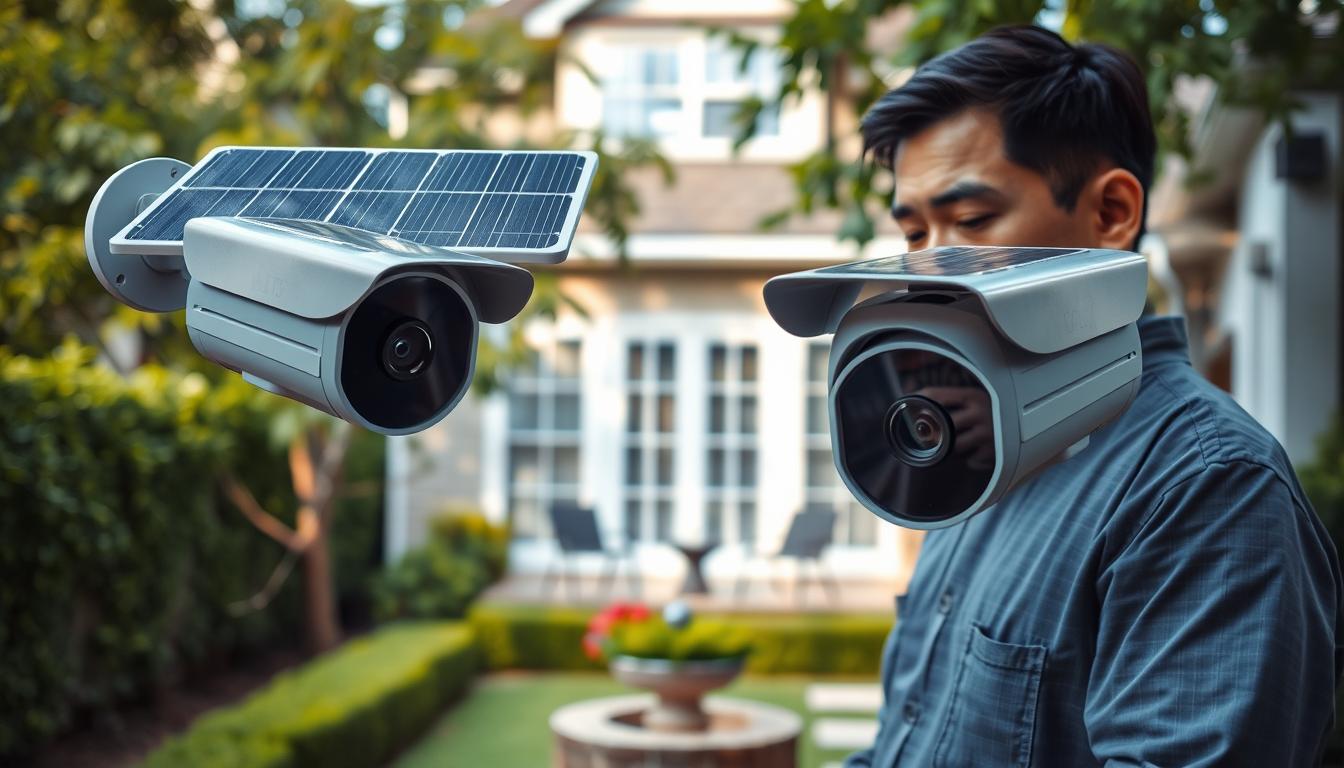
Solar Powered Outdoor Security Camera System: A Comprehensive Buyer’s Guide
Keeping your property safe is a growing concern for many in Singapore. Modern surveillance technology has become an essential tool for peace of mind. These devices help monitor your surroundings day and night.
Today’s advanced options offer a sustainable twist. They harness renewable energy, reducing both your carbon footprint and electricity bills. This aligns perfectly with Singapore’s Green Plan 2030 and the nation’s sunny climate.
Local shoppers show strong satisfaction with these products. Over 640 reviews in Singapore average an impressive 4.5 out of 5 stars. The market offers solutions for every budget, with prices ranging from $59.99 to $799.99.
Trusted brands like Reolink and Eufy provide reliable, high-resolution devices with excellent night vision. This guide will help you navigate the options. You’ll learn how to choose a setup that enhances your protection while supporting environmental goals.
Key Takeaways
- Home protection is increasingly important in Singapore, with surveillance tech becoming a common solution.
- Modern security systems offer sustainable operation by using renewable solar energy.
- Singapore’s climate and government initiatives make it ideal for solar-powered devices.
- User satisfaction is high, with local reviews averaging 4.5/5 from over 640 ratings.
- A wide price range ($59.99 to $799.99) caters to different needs and budgets.
- Leading brands like Reolink and Eufy dominate the market with quality offerings.
- This guide will help you make an informed decision that balances safety and sustainability.
Why Solar-Powered Security is Gaining Traction in Singapore
Multiple factors are driving the rapid adoption of renewable energy-based surveillance across Singapore. Recent surveys reveal a telling statistic. Over 70% of residents express concern about home safety. This high level of worry creates strong demand for reliable protection solutions.
The island’s tropical climate offers a natural advantage. Singapore enjoys more than 2,500 hours of bright sunshine each year. This consistent sunlight provides ideal conditions for photovoltaic technology. Devices can harvest ample energy throughout most days.
Government policy actively encourages this shift. The Green Plan 2030 sets ambitious targets for renewable adoption. One key goal aims for 2 gigawatts of solar capacity by 2030. This national framework supports cleaner energy choices for households and businesses.
Financial incentives make the transition easier for homeowners. Subsidies of up to 30% are available for ECO-certified products. These rebates apply to qualifying surveillance setups. They significantly reduce the initial investment required.
Infrastructure developments are incorporating these technologies. The ongoing HDB solar panel rollout now includes integrated monitoring features. Public housing blocks are becoming testbeds for smart, sustainable protection networks.
Singapore’s Smart Nation initiative creates perfect compatibility. Modern surveillance devices connect seamlessly to digital ecosystems. They offer remote access through smartphones and integration with other smart home devices.
Environmental consciousness among citizens acts as another driver. Many Singaporeans prefer sustainable options that reduce their carbon footprint. As one industry expert noted,
“The desire for safety and sustainability are no longer separate concerns—they’re converging in the products people choose.”
These setups solve practical challenges effectively. They maintain operation during power outages, ensuring continuous monitoring. They’re also ideal for remote locations where running electrical cables is difficult or expensive.
Market acceptance continues to grow visibly. Installations are increasing in both private residences and commercial properties. This trend shows a collective move toward smarter, greener protection methods that suit Singapore’s unique environment and forward-looking policies.
The Compelling Benefits of a Solar Powered Outdoor Security Camera System
The shift toward eco-conscious protection systems brings measurable financial and environmental gains. Homeowners gain more than just surveillance capabilities with these innovative devices.
They achieve significant cost reductions while supporting sustainability goals. This dual advantage makes photovoltaic options increasingly popular.
Eco-Friendly Surveillance and Sustainability
Environmental impact reduction stands as a major advantage. Each unit can lower carbon emissions by approximately 60% compared to traditional wired models.
Annually, one device offsets around 2,000 pounds of CO². This contributes directly to cleaner air and a smaller carbon footprint.
Singapore’s Green Plan 2030 actively encourages such sustainable choices. Adopting renewable energy surveillance aligns perfectly with national environmental targets.
Homeowners may even qualify for Solar Renewable Energy Certificates (SREC). These certificates recognize contributions to the local renewable energy grid.
Consumer demand for green home solutions continues growing rapidly. Many Singaporeans now prioritize products that combine effectiveness with ecological responsibility.
“The convergence of safety needs and environmental values creates powerful market momentum for sustainable surveillance technology.”
Cost-Efficiency and Energy Independence
Financial savings provide compelling reasons for adoption. Energy bills can drop by up to 30% when switching from conventional setups.
Long-term calculations reveal even greater value. Over a decade, users save between $1,500 and $2,000 compared to wired alternatives.
Maintenance expenses show dramatic differences too. Annual upkeep averages just $50 versus $300 for traditional surveillance networks.
Real-world examples demonstrate these savings clearly. The SP Group reported a 75% reduction in energy costs for condo monitoring installations.
Energy independence represents another crucial benefit. Devices continue operating during power outages, ensuring uninterrupted monitoring.
This reliability proves invaluable for emergency situations. Families maintain protection even when grid electricity fails.
Installation simplicity offers further advantages. Photovoltaic units eliminate complex wiring and electrical work entirely.
This makes them ideal for remote locations and construction sites. Areas without reliable power access gain viable surveillance options.
The combination of immediate savings and long-term value creates a strong case for adoption. Homeowners invest in both present security and future financial benefits.
Singapore’s Climate: A Perfect Match for Solar Security
Tropical conditions across the city-state provide reliable energy harvesting throughout the year. The island’s geographical position creates an environment where photovoltaic technology performs exceptionally well. This natural advantage translates directly to more effective monitoring solutions for residents.
Singapore receives abundant sunshine with over 2,500 hours of bright sunlight annually. The average solar irradiance measures approximately 1,582 kWh/m² each year. These figures rank among the highest in Southeast Asia, creating ideal conditions for renewable energy devices.
Modern surveillance setups maintain impressive performance even during less sunny periods. They operate at 85% efficiency during monsoon seasons and cloudy weather. Advanced power management ensures consistent operation without frequent maintenance checks.
Backup capabilities provide additional reliability for homeowners. High-capacity storage allows these devices to function for up to 7 days without direct sunlight. This resilience ensures continuous protection during extended rainy spells or unusual weather patterns.
Ample Sunlight for Consistent Power
The city’s consistent climate eliminates seasonal variations that challenge photovoltaic performance elsewhere. Unlike temperate regions, Singapore experiences minimal fluctuations in daily sunlight availability. This stability allows for predictable energy generation and reliable device operation.
Urban environment considerations require thoughtful placement for optimal results. Building orientations and potential shading factors influence energy collection efficiency. South-facing installations typically yield the best performance for maximum sunlight exposure throughout the day.
These climate advantages translate into practical benefits for monitoring setups. Consistent power generation reduces maintenance needs and operational costs. Homeowners enjoy reliable protection without worrying about power interruptions or frequent battery replacements.
As one energy analyst observed,
“Singapore’s weather patterns create a natural laboratory for renewable energy applications. The consistency allows technologies to perform at their optimal levels year-round.”
Government Initiatives and Green Support
National infrastructure projects demonstrate serious commitment to photovoltaic advancement. The Sembcorp Tengeh Floating Solar Farm represents one of the world’s largest inland floating installations. This project showcases sophisticated integration of renewable technology within Singapore’s unique environment.
Regulatory frameworks actively support residential adoption of these solutions. URA guidelines facilitate installation of photovoltaic equipment in private estates and residential properties. These policies streamline approval processes for homeowners seeking to enhance their property protection.
The national Green Plan 2030 establishes clear targets for renewable energy adoption. This comprehensive roadmap encourages sustainable choices across all sectors, including residential monitoring. Government initiatives create a supportive ecosystem for technological innovation and practical implementation.
Financial incentives further encourage adoption among Singapore residents. Various programs offer rebates and support for ECO-certified products that meet stringent efficiency standards. These measures help offset initial investment costs while promoting environmentally responsible choices.
This holistic approach combines favorable climate conditions with supportive policies and advanced technology. Together, they create ideal circumstances for adopting renewable energy surveillance in Singapore. Residents benefit from reliable protection that aligns with both personal safety needs and national sustainability goals.
Key Features to Evaluate in Your Solar Security Camera
When comparing different models, prioritize these fundamental aspects that determine real-world performance. The right combination of specifications ensures your investment delivers reliable protection and clear evidence.
Advanced features separate basic devices from professional-grade monitoring solutions. Understanding what each specification means helps you make a confident choice.
Video Resolution and Image Quality
Clarity is paramount for identification and forensic detail. Look for a minimum of 1080p Full HD resolution. This provides clear imagery for recognizing faces and license plates at a reasonable distance.
For maximum detail, 4K Ultra HD options are now available. They capture four times the pixel information of 1080p. This allows for digital zoom without losing critical details in the scene.
Higher resolution impacts data storage. A 4K stream requires significantly more cloud or local storage space than 1080p. Consider this when choosing your recording plan or memory card capacity.
Night Vision and Low-Light Performance
Effective monitoring doesn’t stop at sunset. Quality night vision should illuminate areas up to 33 feet (10 meters). This covers most driveways, gardens, and entry points.
Infrared (IR) LEDs are common, but starlight sensor technology represents a major advancement. These sensors excel in extremely low-light conditions, producing clearer, less grainy images than standard IR.
For true 24/7 awareness, ensure the device switches seamlessly between day and night modes. Color night vision is an emerging feature that provides more contextual information after dark.
Motion Detection and Smart Alerts
Basic motion sensors trigger alerts for any movement, including swaying branches. This leads to notification fatigue. Modern AI-powered motion detection solves this by analyzing the scene.
These intelligent systems can differentiate between people, pets, and vehicles. They reduce false alarms by an impressive 90%. You only get relevant notifications for actual security events.
Look for customizable activity zones. This allows you to specify which areas of the camera’s view should trigger alerts. It’s perfect for ignoring a busy public sidewalk while monitoring your private gate.
Real-time monitoring requires low latency. A quality device offers live streaming with a delay of under 300 milliseconds. This near-instant feed is crucial for interactive monitoring and two-way audio conversations.
Battery Life and Solar Charging Efficiency
A robust battery life is the foundation of wireless operation. Top-tier models can operate for multiple days without direct sunlight. This provides a reliable buffer during Singapore’s occasional cloudy spells.
The accompanying photovoltaic panel should have a conversion efficiency between 15% and 22%. Higher efficiency means faster charging from the same amount of sunlight.
A full recharge typically takes 6 to 8 hours of good daylight. Proper placement is key—ensure the panel gets unobstructed sun exposure for several hours daily.
Beyond these core specs, consider these valuable additions:
- Two-Way Audio: Lets you listen and speak through the device via your smartphone. Useful for greeting visitors or deterring intruders.
- Wide Viewing Angle: Lenses with 130° or more coverage reduce blind spots and the number of units needed.
- Weather-Resistant Design: An IP65 or IP66 rating confirms protection against tropical rain and humidity.
“The most effective surveillance device is the one you can set and forget. It should work reliably through rain, shine, day, and night, delivering clear, actionable information directly to you.”
Evaluating these features as a complete package is essential. A device with excellent resolution but poor battery management will fail when you need it most. Balance is key for a system that provides lasting peace of mind.
Understanding the Technology: How Solar WiFi Cameras Work
At the heart of every self-sustaining surveillance device lies a carefully engineered power generation and storage system. These innovative units convert sunlight into electrical energy, store it efficiently, and maintain wireless connectivity for remote access.
The process involves three core components working in harmony. Photovoltaic cells harvest energy, batteries store it, and intelligent controllers manage the flow. This creates a reliable cycle of energy capture and usage.
The Role of the Solar Panel and Photovoltaic Cells
Photovoltaic technology forms the foundation of energy independence. These cells directly convert sunlight into electricity through the photovoltaic effect.
Two main panel types dominate the market. Monocrystalline panels offer up to 22% efficiency with their pure silicon structure. They perform better in limited space and lower light conditions.
Polycrystalline panels are more cost-effective for budget-conscious buyers. They use fragmented silicon crystals, making them slightly less efficient but more affordable.
Regular maintenance significantly impacts performance. Cleaning the surface boosts efficiency by 25% by removing dust and debris. This simple task ensures maximum energy capture.
Singapore’s environment presents specific challenges. Seasonal haze can reduce panel efficiency by 15%. Positioning panels to avoid buildup and scheduling cleanings after haze periods maintains optimal operation.
Battery Systems and Power Management
Energy storage determines how long devices operate without direct sunlight. Modern units use advanced lithium-ion technology for reliability.
These batteries provide over 3,000 charge cycles throughout their lifespan. This translates to years of daily charging and discharging without significant capacity loss.
Different chemistries offer distinct advantages. LiFePO4 (Lithium Iron Phosphate) batteries are safer with excellent thermal stability. They withstand Singapore’s heat better than other types.
NMC (Nickel Manganese Cobalt) offers higher energy density. This means more power storage in a smaller physical package. The choice depends on your priority between safety and compact size.
Intelligent charge controllers prevent damage to components. They stop overcharging during sunny days and prevent over-discharging at night. This protection extends the overall system lifespan.
The complete energy conversion follows a precise path. Sunlight hits photovoltaic cells, generating direct current electricity. This current flows through the charge controller to the battery for storage.
When the device needs power, the battery supplies electricity through the controller. This powers the imaging sensor, processor, and wireless transmitter. The cycle repeats daily.
Wireless connectivity relies on standard WiFi protocols. Most devices use 802.11ac or WiFi 5 technology for stable connections. They maintain links with your home network for remote viewing.
Backup systems ensure continuous operation. During adverse weather, high-capacity batteries provide multiple days of reserve power. Some models include secondary charging options.
Integration with existing home networks is straightforward. These devices connect like any smart gadget to your router. They’re compatible with Singapore’s widespread fiber broadband infrastructure.
Technical specifications matter for optimal performance. Singapore buyers should understand:
- Panel wattage: Higher watts mean faster charging
- Battery capacity: Measured in watt-hours for runtime
- Charge controller type: MPPT controllers offer best efficiency
- Operating voltage: Matches your specific model requirements
“The sophistication lies in the seamless integration of these components. When properly matched, they create a surveillance solution that requires minimal intervention while delivering maximum reliability.”
Understanding this technology empowers informed purchasing decisions. You can evaluate specifications based on how components work together. This knowledge ensures you select a system matching Singapore’s unique conditions.
Comparing the Best Solar Security Camera Systems
With numerous models available, creating a structured comparison framework helps identify the best value. Different units excel in specific areas like motion detection or video clarity. A side-by-side analysis reveals which option delivers the right balance for your needs.
Singapore’s market offers devices from budget-friendly to premium price points. Each tier provides distinct advantages in performance and durability. Understanding these differences ensures you invest wisely in reliable home protection.
What to Look for in a Side-by-Side Analysis
Begin your evaluation by establishing clear comparison criteria. Focus on metrics that matter most for effective monitoring in local conditions. Detection accuracy, video quality, and long-term reliability should top your list.
The Reolink Argus 3 Pro demonstrates excellent motion detection capabilities at $199. It minimizes false alerts while capturing important activity. This makes it ideal for areas with frequent movement like driveways.
EufyCam 3 offers robust vandal resistance for $179. Its sturdy construction withstands potential tampering attempts. This durability provides peace of mind for exposed installation locations.
For premium video clarity, the Lorex 4K model delivers exceptional detail at $549. Its high-resolution imaging captures fine details even at distance. This is valuable for identification and evidence collection.
Singapore’s humid climate demands special attention to durability factors. Look for weather-resistant designs with proper sealing against moisture. Heat tolerance is equally important for consistent year-round operation.
Balancing Price Against Performance and Durability
Price ranges span from budget options around $59.99 to premium setups reaching $799.99. Lower-cost devices provide essential monitoring with basic features. Higher investment brings advanced capabilities and superior construction quality.
Consider the total cost of ownership beyond the initial purchase. Cloud storage subscriptions average $6.99 monthly for continuous recording access. These recurring fees impact your long-term budget planning.
Installation choices affect both cost and convenience. DIY setup can save up to $150 compared to professional services. Many modern devices feature straightforward mounting and wireless configuration.
Warranty periods typically cover 2-3 years for Singapore consumers. Comprehensive protection should include defects in materials and workmanship. Some manufacturers offer extended coverage for critical components.
Sustainability certifications add value for environmentally conscious buyers. Systems like the Lorex 4K may qualify for BCA Green Mark points. These recognize energy-efficient designs aligned with national green initiatives.
Create a weighted comparison chart based on your personal priorities. Assign importance values to factors like detection accuracy, video resolution, and local climate durability. This methodology highlights the best match for your specific situation.
As one industry analyst notes,
“The optimal choice isn’t the most expensive model, but the one whose strengths align with your property’s unique surveillance requirements.”
Balance immediate costs against long-term benefits and operational expenses. A slightly higher initial investment often delivers better reliability and lower maintenance. This approach ensures lasting value from your home protection technology.
Top Solar-Powered Camera Models Available in Singapore
Several leading brands have established strong presence in Singapore with devices tailored for tropical operation. Each offers unique advantages for different surveillance needs and property layouts.
Understanding these differences helps you select the right monitoring solution. The local market features reliable options from trusted manufacturers.
Reolink Argus 3 Pro: The Feature-Packed Performer
This device stands out for its balanced combination of clarity and intelligent detection. It captures detailed 2K resolution video with a wide 122° field of view.
The intelligent motion sensing minimizes false alerts from passing animals or foliage. This is particularly useful for gardens and driveways in landed properties.
Priced at $199.99, it represents strong value in the mid-range segment. Singapore users give it a 4.4 out of 5 rating for reliability in local humidity.
Its construction resists moisture ingress effectively. The unit maintains performance through the island’s frequent rain showers.
EufyCam 3: Local Storage and Robust Design
This model emphasizes data privacy and reduced ongoing costs. It includes 16GB of built-in local storage, eliminating monthly cloud fees.
The two-pack bundle costs $549.99, making it efficient for covering multiple angles. Its industrial-grade housing withstands potential tampering attempts.
Users appreciate the straightforward management through the companion app. It earns a 4.3 rating from Singapore consumers for consistent operation.
One homeowner noted,
“The local storage gives me peace of mind knowing my footage stays private and accessible without subscriptions.”
Ring Stick Up Cam Solar: Seamless Ecosystem Integration
This option excels at connecting with existing smart home setups. It integrates directly with Amazon Alexa for voice commands and automations.
At $140, it offers accessible entry into ecosystem-based monitoring. The DIY installation process takes most users under thirty minutes.
It achieves an impressive 9.5 out of 10 rating for user-friendly setup. The flexible mounting works well on various surfaces around HDB flats.
The device works smoothly with Singapore’s major internet providers. It maintains stable connections for real-time alerts and live viewing.
Additional noteworthy models include the budget-friendly Blink Outdoor at $99.99. Its separate photovoltaic panel allows for optimal sun exposure placement.
For comprehensive coverage, the eufyCam Pro 4-Cam Kit at $799.99 delivers 4K resolution across multiple units. This premium system suits larger landed homes.
Singapore-specific considerations influence model selection. Third-party photovoltaic panel compatibility extends placement options for some devices.
Local distributors provide warranty support typically covering 2-3 years. This includes defects in materials and workmanship for peace of mind.
Flexible payment methods accommodate different budgets. Many retailers accept NETS and offer ShopeePay installments over several months.
Comparing customer ratings helps gauge real-world satisfaction. The Reolink (4.4), Eufy (4.3), and Ring (9.5) scores reflect their respective strengths.
Matching models to property types ensures optimal performance. HDB flats often benefit from compact, easy-to-install units like the Ring Stick Up Cam.
Landed homes may require the wider coverage of the Reolink Argus 3 Pro or multi-cam kits. Condominiums with limited space might prioritize discreet designs with efficient battery life.
Each option brings distinct features to address specific surveillance scenarios. Your final choice should align with your property layout and monitoring priorities.
Navigating the Market: From Budget-Friendly to Premium Options
Choosing the right monitoring equipment involves balancing financial considerations with performance needs. The Singapore market offers solutions across a wide spectrum. Entry points begin around $59.99 for basic models.
Professional setups can reach $799.99 for comprehensive coverage. Understanding this range helps you make informed decisions. Your property size and protection requirements guide your selection.
Affordable Entry Points for Essential Security
Budget-friendly devices typically cost under $200. These units provide fundamental surveillance capabilities. They’re ideal for small apartments or focused monitoring of specific areas.
Essential features in this category include 1080p resolution and basic motion detection. Weather resistance is standard for Singapore’s climate. Most offer cloud storage with optional subscription plans.
The Blink Outdoor represents a popular choice at $99.99. It delivers reliable performance for its price point. Simple installation makes it accessible for DIY enthusiasts.
These options prioritize functionality over advanced analytics. They capture clear footage of entry points and common areas. Notification systems alert you to detected movement.
For HDB flats with limited space, compact designs work well. They monitor corridors, gates, or service areas effectively. Basic models satisfy fundamental home protection needs.
Premium Systems for Maximum Coverage and Detail
High-end investments exceed $500 and deliver exceptional capabilities. These setups provide comprehensive property monitoring. They’re designed for landed homes or commercial applications.
Advanced features distinguish premium systems. 4K Ultra HD resolution captures minute details at distance. AI-powered analytics differentiate between people, vehicles, and animals.
The eufyCam Pro 4-Cam Kit at $799.99 offers complete coverage. It includes local storage eliminating monthly fees. Professional-grade construction withstands harsh conditions.
These solutions often integrate with smart home ecosystems. They support automation routines and voice commands. Multi-camera coordination provides seamless monitoring.
Premium cameras excel in challenging lighting situations. Enhanced night vision illuminates larger areas clearly. They maintain performance during Singapore’s frequent rainfall.
Consider the total cost of ownership beyond initial purchase. Cloud subscriptions average $6.99 monthly for continuous recording. Installation services add $150-$300 for professional setup.
Maintenance expenses remain minimal for quality products. Annual checks ensure optimal photovoltaic panel performance. Battery replacements may be needed after several years.
Market risks include grey market products without local warranty. These devices may lack Singapore-specific certifications. Always purchase from authorized dealers like Challenger or Harvey Norman.
Authorized retailers provide 2-3 year warranties and local support. They ensure compatibility with Singapore’s electrical standards. Genuine products meet environmental regulations.
Group buy opportunities exist in condominiums and landed estates. Collective purchases can secure discounts of 15-20%. Neighbors often coordinate installations for consistency.
Management committees sometimes arrange bulk purchases for common areas. These initiatives reduce individual costs significantly. They also simplify maintenance through standardized equipment.
Compatibility with existing setups requires careful evaluation. Ensure new devices integrate with your current network. Check smart home platform support like Amazon Alexa or Google Home.
Some premium systems offer professional monitoring services. These connect to response centers for immediate action. They represent the highest level of home security investment.
Matching equipment to property types optimizes your investment. HDB flats benefit from compact, discreet designs. Landed homes require wider coverage and longer-range detection.
Condominiums with limited exterior space need efficient placement. Consider sight lines and potential obstructions. Each property type has unique monitoring requirements.
Refurbished equipment offers cost-saving alternatives with warranties. Certified refurbished products undergo thorough testing. They provide reliable performance at reduced price points.
Manufacturer-refurbished items typically include 1-year warranties. They represent excellent value for budget-conscious buyers. Ensure you purchase from reputable sources.
Guidance for choosing between budget and premium depends on multiple factors. Property size, risk assessment, and long-term plans influence your decision. Basic models suffice for small spaces with low traffic.
Larger properties with multiple entry points justify premium investments. Consider future expansion when selecting your setup. Modular systems allow gradual enhancement over time.
“The most cost-effective solution isn’t necessarily the cheapest one. It’s the system that meets your specific needs without requiring costly upgrades or replacements in the near future.”
Evaluate your priorities across these key areas:
- Coverage Area: How much property needs monitoring?
- Detection Accuracy: Do you need advanced person/vehicle detection?
- Video Quality: Is identification clarity crucial for your situation?
- Integration Needs: Will you connect to other smart home devices?
- Budget Constraints: What’s your total investment capacity?
Singapore’s diverse housing landscape requires tailored approaches. What works for a compact apartment differs from a sprawling landed property. Your selection should address both current needs and future considerations.
For specialized advice on selecting equipment with excellent night vision capabilities, consider consulting with professional installers who understand local conditions.
Weather Resistance and Durability for Tropical Conditions
Durability isn’t just a feature—it’s a necessity for any monitoring device exposed to Singapore’s tropical environment. The local climate tests equipment with intense humidity, heavy rainfall, and consistent heat. Your investment’s longevity depends on its ability to withstand these challenges year after year.
IP Ratings and What They Mean for You
Ingress Protection codes tell you how well a device resists dust and water. These ratings are crucial for selecting reliable equipment. They ensure your setup survives Singapore’s weather extremes.
An IP65 rating provides solid protection against dust ingress and water jets. This means the unit can handle heavy rain from any direction. It’s the minimum standard you should accept for reliable operation.
IP67-rated devices offer even greater resilience. They withstand temporary immersion in water up to one meter deep. This superior protection handles monsoon downpours and high humidity effectively.
Understanding these codes helps you choose equipment that matches your location’s specific conditions. Coastal areas and exposed installations benefit from higher IP ratings. They prevent moisture damage that could shorten your device’s operational life.
Ensuring Long-Term Reliability in Humidity and Rain
Singapore’s average humidity exceeds 80% throughout the year. This constant moisture threatens electronic components with corrosion. Quality construction uses specialized seals and corrosion-resistant materials.
Manufacturers test heat dissipation at 35°C ambient temperatures to simulate local conditions. Effective thermal management prevents overheating during extended operation. This maintains performance and extends the component lifespan.
Regular maintenance preserves your investment’s effectiveness. Cleaning the photovoltaic panel every 2-3 months maintains optimal energy collection. Remove dust, pollen, and debris that accumulate in tropical environments.
Proper placement maximizes both weather protection and surveillance coverage. Position units under eaves or other sheltered areas when possible. Ensure they still receive sufficient sunlight for the battery to charge fully.
Warranty coverage varies between manufacturers regarding weather-related damage. Singapore consumers should expect at least 2-3 years of protection against defects. Some brands offer extended coverage for corrosion and water ingress.
With proper care, these systems can provide 25-30 years of reliable service. This long operational life represents excellent value for your home protection investment. It reduces replacement costs and maintenance headaches over time.
As one technical expert explains,
“The true test of any surveillance equipment in Singapore isn’t its feature list—it’s whether the construction can survive our unique combination of heat, rain, and humidity year after year.”
Construction materials make a significant difference in long-term performance. Aluminum alloys and stainless steel components resist corrosion better than standard materials. High-quality silicone seals maintain their flexibility despite constant heat exposure.
These durability considerations directly impact your peace of mind. Equipment that withstands tropical conditions requires less frequent attention. You gain consistent protection without worrying about weather-related failures.
A Step-by-Step Guide to Solar Camera Installation
The effectiveness of your surveillance setup depends heavily on correct placement and professional mounting techniques. Getting this right ensures your device operates at peak performance. It also maximizes your investment in home protection.
Singapore residents report high satisfaction with DIY setups. Around 85% of users complete installation successfully on their first attempt. Following a structured approach makes the process straightforward.
This guide walks you through each critical phase. You’ll learn to balance sunlight needs with surveillance coverage. We’ll cover local regulations and practical mounting tips.
Choosing the Optimal Location for Sun and Security
Location selection requires dual consideration. Your device needs ample sunlight for the photovoltaic panel. It also requires a clear view of the area you want to monitor.
Prioritize spots with maximum daily sun exposure. South-facing positions typically receive the most light in Singapore. Avoid shadows from trees, walls, or other structures.
The optimal angle for energy capture is 30 degrees. This tilt matches Singapore’s latitude for efficient charging. Adjustable mounts help achieve this position.
For surveillance coverage, consider mounting heights between 8 to 10 feet. This range deters tampering while providing a comprehensive field of view. It captures faces and activities clearly.
Singapore-specific regulations are crucial for compliance. HDB flat owners must check with their Town Council. Many require approval before installing external equipment.
Landed property installations have more flexibility. Still, review URA guidelines for facade preservation. Condominium residents should consult their management committee.
Always consider privacy boundaries. Position your camera to monitor your property only. Avoid pointing it at neighbors’ windows or private spaces.
For multi-unit systems, use laser alignment tools. These ensure overlapping coverage without blind spots. They create a seamless monitoring network around your home.
Mounting, Setup, and Initial Configuration Tips
Begin by gathering the right tools. You’ll typically need a drill, screwdriver, level, and measuring tape. Most kits include mounting brackets and hardware.
Follow this step-by-step process for reliable results:
- Unpack and inspect all components. Verify the solar panel, mounting bracket, and device are present.
- Mark your chosen location. Use a pencil to indicate screw holes. Double-check alignment with a level.
- Secure the mounting bracket. Drill pilot holes first for cleaner installation. Use wall plugs for solid surfaces.
- Attach your device to the bracket. Ensure all connections are snug but not over-tightened.
- Position the photovoltaic panel. Connect it to the main unit. Aim it toward the sun’s path.
- Manage cables neatly. Use clips or conduits to secure wires along walls. This preserves your property’s aesthetics.
Security considerations are important. Anti-theft mounting brackets add an extra layer of protection. These require special tools to remove, deterring unauthorized tampering.
Choose tamper-resistant hardware for exposed locations. Stainless steel screws resist corrosion in humid conditions. They maintain a secure hold over time.
Cable management deserves special attention in Singapore. Our tropical climate demands protection against moisture. Use waterproof cable glands for all external connections.
Conceal wires within downpipes or along architectural features. This maintains clean lines on your property facade. It also protects cables from weather damage.
Initial configuration brings your setup to life. Download the manufacturer’s app on your smartphone. Follow the guided pairing process to connect to your WiFi network.
Customize security settings to match your needs. Set up motion detection zones and alert preferences. Configure recording schedules for optimal battery life.
Test all features before completing the installation. Verify live streaming, night vision, and two-way audio. Ensure notifications reach your phone promptly.
Common troubleshooting addresses local issues. Weak WiFi signals may require a mesh network extender. Sunlight blockage might need panel repositioning.
As one experienced installer notes,
“The difference between a good and great installation often comes down to preparation. Taking time to plan the location and manage cables properly pays off in long-term reliability and performance.”
Regular maintenance ensures continued operation. Clean the photovoltaic surface every few months. Check mounting hardware for tightness annually.
Your properly installed security camera now provides reliable protection. It harnesses Singapore’s abundant sunshine for sustainable operation. You gain peace of mind with a professionally executed setup.
Integrating Your Solar Camera with a Smart Home Ecosystem
Today’s advanced protection equipment transforms from standalone units into central components of automated living environments. This connectivity unlocks powerful capabilities that enhance both convenience and comprehensive monitoring.
When your device connects to a smart home network, it becomes part of an intelligent defense layer. You gain centralized control through voice commands and automated routines. This integration represents the next evolution in residential protection technology.
Compatibility with Amazon Alexa and Google Home
Major voice assistant platforms provide seamless control over your monitoring setup. Amazon Alexa and Google Home lead the market with widespread adoption in Singapore households.
These platforms allow hands-free operation through simple voice commands. You can ask to view live feeds on compatible displays. Checking your property’s status becomes as easy as speaking a sentence.
Apple HomeKit offers another robust option for iOS users. It provides tight integration with iPhone, iPad, and Mac devices. The ecosystem ensures privacy-focused operation with end-to-end encryption.
Samsung SmartThings creates a unified hub for diverse smart devices. It connects monitoring equipment with lights, locks, and sensors. This creates coordinated responses to detected activity around your property.
Most modern units support multiple platforms simultaneously. You’re not locked into a single ecosystem. This flexibility accommodates different family members’ preferences and existing device investments.
Automations and Remote Monitoring Capabilities
Intelligent automation transforms basic alerts into proactive responses. Your setup can trigger actions based on specific detection events. This creates a dynamic security layer that adapts to situations.
Common automation scenarios demonstrate this power. Lights can illuminate automatically when motion is detected after sunset. Smart locks might engage when the device identifies unfamiliar faces.
Alarm systems can activate based on customized trigger patterns. These coordinated responses enhance your overall home security without manual intervention. They create deterrent effects through immediate environmental changes.
Remote monitoring requires stable network connectivity. A minimum upload speed of 5Mbps ensures smooth 1080p streaming to your smartphone. Singapore’s fiber broadband networks typically exceed this requirement comfortably.
Live streaming provides real-time visibility from anywhere with internet access. Motion alerts deliver instant notifications when the device detects relevant activity. Two-way communication lets you interact with visitors or deter intruders remotely.
Settings adjustment happens through intuitive mobile applications. You can modify detection zones, sensitivity levels, and recording schedules. These controls adapt your setup to changing daily patterns and special circumstances.
Multi-user access controls benefit families and shared spaces. Different permission levels accommodate various household members. Condominium management teams can monitor common areas while respecting resident privacy.
Data protection employs enterprise-grade encryption standards. AES-256 encryption secures video transmission and cloud storage. This prevents unauthorized access to your footage during transmission and at rest.
Secure protocols like TLS/SSL create encrypted tunnels for data transfer. These measures ensure your monitoring remains private and protected. They align with Singapore’s strong emphasis on cybersecurity.
Integration extends to other intelligent devices throughout your residence. Door locks, lighting controls, and environmental sensors create comprehensive networks. Your monitoring unit becomes the visual component of this interconnected system.
“The most effective protection doesn’t operate in isolation. It works in concert with your entire living environment, creating responsive systems that anticipate needs rather than simply recording events.”
Energy efficiency receives a significant boost through renewable power sources. Your setup contributes to overall household sustainability goals. It reduces grid dependence while maintaining continuous operation.
Creating comprehensive ecosystems follows logical progression steps. Begin with core monitoring units at key entry points. Add complementary devices like motion sensors and smart lighting gradually.
Test automation routines during daytime hours first. Verify that triggers produce the intended responses. Refine settings based on real-world performance observations.
Singapore homeowners should consider local network characteristics. Mesh WiFi systems often improve coverage in larger landed properties. Wired backhaul connections ensure reliable performance for critical security systems.
Regular updates maintain compatibility with evolving platforms. Manufacturers release firmware enhancements that add new features. These improvements keep your investment current with technological advancements.
Your integrated setup delivers peace of mind through intelligent coordination. It transforms individual components into responsive protection networks. This represents the modern approach to residential safety in Singapore’s connected communities.
The Importance of User Reviews and Real-World Performance
Beyond technical specifications, genuine user experiences provide the most reliable insight into how monitoring equipment performs in daily life. Singapore homeowners share valuable feedback about durability, ease of use, and actual reliability.
These collective reports reveal patterns that specifications sheets cannot show. They highlight how devices handle local humidity, network conditions, and long-term operation.

What Singaporean Users Are Saying
Local feedback patterns reveal consistent priorities among Singapore buyers. The Ring Stick Up Cam Solar earns a 4.6-star rating from 71,000+ global reviews. Many highlight its straightforward setup and reliable connectivity.
Arlo devices achieve a SecurityScore of 8.8/10 in professional evaluations. Users appreciate their motion detection accuracy and video clarity.
Budget-conscious shoppers consider the SEHMUA model at $59.99. It maintains a 4.3-star rating from 5,200+ reviews. Feedback often mentions its value for basic monitoring needs.
Singapore-specific comments focus on climate resilience. Users report which models withstand heavy rain and high humidity best. They also note how batteries hold charge during cloudy days.
Common praise points include several key areas:
- Reliable night vision that clearly illuminates driveways and entry points
- Accurate motion detection that minimizes false alerts from animals or foliage
- Easy installation processes that most complete within an hour
- Stable connectivity with Singapore’s major internet providers
Frequent complaints also emerge across different brands. Subscription costs for cloud storage frustrate some users. They prefer devices with local storage options to avoid monthly fees.
Connectivity issues sometimes arise in landed properties with weak WiFi signals. Maintenance requirements vary between models. Some need more frequent panel cleaning than others.
The average price for well-reviewed units sits around $140. This provides a good balance of features and reliability. More affordable options exist for basic coverage needs.
Interpreting Ratings and Long-Term Reliability Reports
Understanding review credibility requires looking beyond star ratings alone. Check how many reviews come from verified purchases. Look for detailed comments about specific use cases.
Singapore users often mention local factors in their feedback. They discuss performance during monsoon seasons. They note how devices handle the constant high humidity.
Long-term reports reveal durability differences between brands. Some cameras maintain performance for years without issues. Others show component degradation after 18-24 months.
Network infrastructure affects real-world performance significantly. Devices with strong WiFi antennas work better in larger homes. Mesh network compatibility improves reliability in multi-story buildings.
When analyzing reviews, consider these credibility indicators:
- Verified purchase badges confirm the reviewer actually bought the product
- Detailed photos or videos showing the device in actual use
- Follow-up comments after several months of operation
- Specific mentions of Singapore conditions like humidity or rain
Comparative experiences across price points show interesting patterns. Budget devices often deliver good basic security. They may lack advanced features like person detection or wide view angles.
Mid-range options typically offer the best value for most homeowners. They balance quality, features, and durability effectively. Premium systems justify their cost through superior construction and advanced analytics.
Storage preferences divide the user community. Some value the convenience of cloud storage with remote access. Others prioritize privacy and cost savings with local storage solutions.
Audio quality receives mixed feedback in reviews. Two-way communication works well on some models. Others have muffled sound or noticeable delay.
“The most telling reviews come from users who’ve installed the same device I’m considering on a similar property type. Their experiences with Singapore’s weather and network conditions give me confidence in my choice.”
Battery life reports vary based on placement and usage patterns. Units in full sunlight typically maintain excellent charge. Those in shaded areas may need supplemental charging during rainy periods.
For guidance on selecting equipment with proven performance, consult professional reviews of essential features that matter most in local conditions.
Matching devices to Singapore property types requires thoughtful review analysis. HDB flat owners should look for feedback about installation in limited spaces. Condominium residents need comments about discreet designs and minimal visual impact.
Landed property owners benefit from reviews discussing wide coverage and long-range detection. Each housing type presents unique monitoring challenges that specific models address better than others.
Your final decision should balance technical specifications with real-world Singapore experiences. This combination ensures you choose equipment that delivers reliable protection in our unique environment.
Making Your Informed Decision and Final Selection
Your final choice in surveillance technology should reflect both your immediate safety needs and long-term sustainability values. Consider your budget, property type, and specific monitoring requirements.
These innovative devices can serve your family for up to 10 years with proper care. They eliminate monthly fees associated with traditional setups. Technology continues advancing, making renewable options more efficient and affordable.
Match specific models to your Singapore home. HDB flats need compact designs. Landed properties benefit from wider coverage. Condominiums require discreet installations.
For professional guidance and the latest surveillance deals, contact CCTV Maintenance at +65 8313 4578. Make your selection with confidence, knowing you’ve balanced features, price, and lasting value.
FAQ
How long does the battery last on a solar-powered camera?
With a properly sized solar panel in a sunny location like Singapore, the internal battery can often stay fully charged, providing indefinite operation. In less ideal conditions, a full charge typically lasts several weeks or months, depending on usage and model. Efficient power management is key to extended life.
Do these cameras work at night and in bad weather?
A>Yes. Most models feature infrared or color night vision for clear footage after dark. They are also built with weather-resistant housings, often with high IP ratings, to withstand Singapore’s heavy rain and humidity, ensuring reliable performance year-round.
Is professional installation required for a solar security setup?
A>Not usually. These systems are designed for DIY installation. The main tasks involve mounting the camera and positioning its solar panel in a spot with good sunlight. Wireless connectivity and user-friendly mobile apps guide you through the rest of the setup process.
What happens to my video footage with a solar camera?
A>You typically have two choices. Many devices offer free, rolling cloud storage for alerts. Others, like the EufyCam 3, provide local storage on a built-in hard drive or microSD card, which keeps your recordings private and can eliminate monthly fees.
Can I connect my solar camera to other smart home devices?
A>Absolutely. Leading brands ensure compatibility with popular platforms. You can often use voice commands with Amazon Alexa or Google Assistant to view feeds on smart displays. Many also integrate into broader routines for a connected, automated home defense system.
Are solar-powered security systems truly cost-effective?
A>Yes, they offer significant long-term savings. After the initial purchase, you eliminate recurring costs for electrical wiring and reduce or remove monthly fees for cloud storage. By harnessing free energy from the sun, you gain energy independence and lower operating expenses.


