

How often should CCTV be serviced?
Knowing when to service your CCTV system is key to its success. Regular checks keep your surveillance gear working right. This is critical for avoiding security threats and protecting your space. This guide will cover what affects service needs, when you should get it done, and how to keep your system in top shape.
Key Takeaways
- Regular CCTV maintenance is vital for optimal performance.
- Understanding service frequency helps ensure security systems are reliable.
- Professional CCTV servicing in Singapore offers peace of mind.
- Signs of deterioration can prompt timely servicing.
- Optimal upkeep extends the lifespan of surveillance equipment.
Understanding the Importance of CCTV Maintenance
Keeping your CCTV system in good shape is key to safety and security. Regular maintenance boosts security and keeps the system working well. Fixing small problems early helps avoid big failures and ensures clear footage when needed.
Enhancing Security Measures
Maintenance is vital for a secure CCTV system. A well-kept system can scare off threats. Regular checks make sure cameras and recorders work right.
This helps spot weak spots and makes the system more reliable.
Prolonging Equipment Lifespan
Good maintenance helps your CCTV system last longer. Catching issues like corrosion or damage early saves money on repairs. A proactive approach means your security gear stays effective for years, saving you money.
Factors Influencing CCTV Maintenance Frequency
Knowing what affects how often CCTV systems need maintenance is key. Different types of CCTV systems have their own needs. Also, the environment where they are used can greatly affect how long they last and how well they work.
Type of CCTV System
The type of CCTV system you have plays a big role in how often it needs maintenance. Digital cameras might need more attention than analog ones. This is because digital cameras use advanced tech that needs updates and checks often.
Keeping up with these needs helps keep the system working right. It makes sure it can provide the security it’s meant to.
Environmental Conditions
Where you put your CCTV system matters a lot. Systems in places with bad weather, like heavy rain or very hot or cold temperatures, need more checks. Areas with a lot of dust or pollution can also make systems wear out faster.
Checking on these systems regularly helps avoid damage. It keeps them working well and reliable.
How often should CCTV be serviced?
Knowing when to service your CCTV system is key to keeping it working well. It’s important to have a maintenance plan that fits your system’s needs.
Recommended Service Intervals
Experts say to check your CCTV system at least once a month, more often in busy or high-risk areas. For less active areas, quarterly checks might be enough. Regular checks help catch problems early.
Monthly Maintenance Needs
Monthly, you should do more than just check the system. Look at camera placement, clean lenses, and make sure everything records right. A good maintenance plan keeps your system running smoothly and reliably.
Common Signs Indicating CCTV Service is Needed
Spotting early signs of CCTV problems can make your security system last longer and work better. Knowing about issues like video quality problems and camera outages helps you fix them fast. This keeps your surveillance system reliable.
Video Quality Degradation
Video quality getting worse is a clear sign of CCTV trouble. If your footage looks pixelated, blurry, or has color issues, it might need a clean or adjustment. Keeping your cameras in good shape prevents more problems later.
Camera Outages
Camera outages are another big warning sign. If your system stops recording or won’t respond, it could mean hardware problems. Fixing these issues right away is key to avoiding security gaps and risks.
Best Practices for CCTV Servicing
Keeping CCTV systems in top shape is key for smooth operation and strong security. Following CCTV maintenance best practices helps avoid problems that could weaken surveillance. This includes making detailed servicing checklists and checking power supplies regularly.
Maintenance Checklist Creation
Creating a detailed checklist for servicing is vital for keeping CCTV systems running well. This checklist should include:
- Cleaning camera lenses to ensure clear video capture
- Checking cable connections for signs of wear or damage
- Verifying the integrity of the power supply during routine inspections
Sticking to these steps regularly helps avoid problems and keeps the surveillance system working well.
Power Supply Checks
Regular checks on the power supply can greatly lower the chance of outages. These checks should be done every month to catch any issues early. A stable power source is essential to prevent surveillance gaps, which could leave areas unmonitored at important times.
Keeping up with software and hardware updates also helps keep the system reliable. This ensures the system operates at its best.
Professional CCTV Maintenance Services: Why They’re Essential
Getting professional CCTV services is key for keeping your surveillance systems working well. Experts use the latest tech to make sure your gear is in top shape. Knowing the perks of expert care can really help your CCTV systems last longer.
Benefits of Engaging Professionals
Choosing professional CCTV maintenance brings many benefits, such as:
- Enhanced Diagnostic Skills: Technicians have the skills to find and fix complex problems.
- Up-to-Date Technology: They know all about the newest CCTV tech and how to fix it.
- Thorough Inspections: They do full checks to spot issues before they get worse.
- Improved Security: A well-kept system makes your security better.
What to Expect from a Professional Service
When you use professional services, you can expect a lot, including:
- Deep system checks and detailed reports on how it’s doing.
- Advice on what upgrades or fixes you might need.
- Quick and scheduled maintenance to avoid problems later.
- Expert tips on how to get the most out of your system.
Recommended Service Schedules for Different Environments
Keeping CCTV systems in top shape depends on where they are used. Home and business CCTV systems have different needs. Knowing these differences helps create service plans that keep systems running well.
Residential vs. Commercial Systems
At home, CCTV systems usually need a check-up once a year. Homeowners can do simple checks, but a pro can make sure everything works right. On the other hand, business CCTV systems need more care because they run all the time and must meet rules.
Businesses should have their systems checked every three months. This includes checking cameras, wires, and storage to make sure everything is working well.
High-Traffic Areas Maintenance
In places with lots of people, like busy streets, CCTV systems need even more attention. They face more damage and weather issues, so they need to be checked more often. This could be every month or every two months.
This schedule helps catch problems early and keeps the system working well. It makes sure the cameras capture clear images all the time.
Creating a CCTV Maintenance Plan
A good CCTV maintenance plan is key to your system’s success. It keeps your surveillance system running well for a long time. You need to make this plan fit your system’s needs. Think about the type of system, where it’s located, and how it’s used.
Customizing Your Maintenance Program
To make your CCTV maintenance plan better, consider these points:
- Assessing System Requirements: Look at what each camera and device needs.
- Establishing Service Intervals: Decide how often to check and maintain based on past results.
- Including Environmental Considerations: Adjust the plan for systems in tough conditions, needing more checks.
Documenting Service History
Keeping detailed records of service is very important. It helps in many ways:
- Performance Tracking: Spot trends and problems that might come up later.
- Proactive Management: Catch small issues early to avoid big problems.
- Improved Budgeting: Use past data to plan for future maintenance costs.
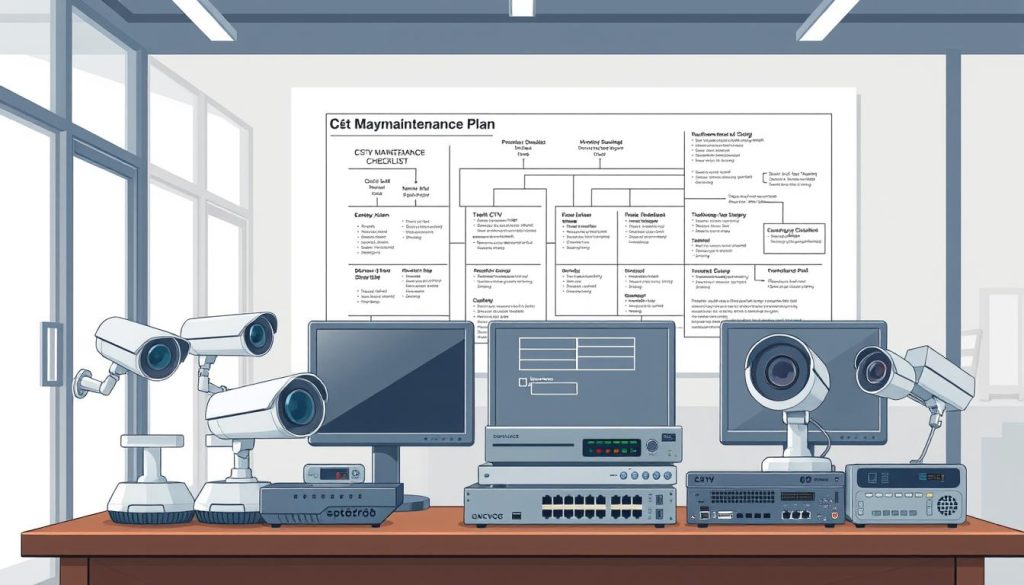
CCTV Maintenance Tips for Optimal Performance
To get the most out of your CCTV system, you need to maintain it well. Following good maintenance tips can make your system last longer and work better. Paying close attention to maintenance can stop many problems.
Regular Visual Inspections
Regular checks help spot issues early. Look for damage, clean off dust from lenses, and fix any camera that’s not right. These steps are key to keeping your system running smoothly.
Software and Firmware Updates
Staying updated with software is critical for security and performance. Regular updates keep your system safe and improve its function. Keeping up with these updates ensures your cameras work their best. For more help and advice, check out professional CCTV maintenance solutions.
Implications of Neglecting CCTV Maintenance
Not taking care of CCTV systems can cause big problems. These issues affect both your wallet and your legal standing. They also make your system less reliable and less effective.
Cost of System Failures
Ignoring CCTV upkeep can lead to expensive breakdowns. These failures can cost a lot to fix. They quickly add up, making it hard to manage your budget.
Regular checks and timely service can prevent these costs. It keeps your system running smoothly.
Legal Consequences
Not keeping CCTV systems in good shape can lead to legal trouble. If your system fails to work right, you could be held responsible for incidents. This might result in fines, lawsuits, and harm to your reputation.
It’s important to keep your CCTV systems working well. This helps avoid legal problems.
CCTV System Lifespan and Maintenance Frequency
It’s important to know what affects how long a CCTV system lasts. The life of a CCTV camera can change a lot. This depends on the camera type and where it’s used.
Average Lifespan of CCTV Cameras
CCTV cameras usually last between 5 to 10 years. This time can change based on how well it’s cared for and its surroundings. Cameras in tough spots might not last as long. But, regular checks can help them work better for longer.
Factors Affecting Longevity
Many things can make a CCTV camera last longer or shorter. Here are some main ones:
- Environmental Conditions: Cameras in very hot, cold, wet, or dusty places might not last as long.
- Type of Camera: Some cameras are made to last longer than others. They might have better materials and tech.
- Installation Quality: If a camera is installed right, it can avoid damage and work better for longer.
- Regular Maintenance: Checking cameras often can spot problems early. This helps them last longer and work better.
Knowing these factors can help users make their CCTV cameras last longer.
Understanding CCTV Technology Advancements
The world of surveillance technology is changing fast. New CCTV advancements are making security better. Cameras now have higher resolution and smart tracking, making it easier to see what’s happening.
These improvements also include advanced motion detection and artificial intelligence. This means security can act faster, stopping problems before they start.
Knowing about these changes is key for keeping security systems up to date. It helps security teams pick the right gear for today and tomorrow. This keeps systems working well and up to date, making sure security investments pay off.
Keeping up with CCTV tech helps users work better. It’s important to check for new tech often. This keeps cameras working great and helps keep places safe from new threats.
FAQ
How often should I service my CCTV system?
For high-risk or high-traffic areas, check your system monthly. Less demanding spots might need checks every three months. Clean your system every three to six months.
What are the signs that my CCTV system needs servicing?
Look out for video quality issues like pixelation or blurriness. Also, watch for camera outages where footage doesn’t record or the system doesn’t work.
What factors influence the frequency of CCTV maintenance?
The type of CCTV system, weather conditions, and usage level all affect how often you need to maintain it.
How can I create an effective CCTV maintenance checklist?
Your checklist should include cleaning camera lenses and checking cable connections. Also, inspect the power supply and plan for software and hardware updates.
Why is professional servicing important for CCTV systems?
Professional services offer advanced diagnostic skills and stay updated with technology. They do thorough inspections and give effective recommendations.
What is the difference between maintenance schedules for residential and commercial CCTV systems?
Residential systems usually need an annual check. Commercial setups, with more usage and compliance needs, should be inspected every three months.
What are the possible costs of ignoring CCTV maintenance?
Ignoring maintenance can lead to expensive repairs and legal issues. This is because system failures can happen during critical times.
How does the lifespan of CCTV cameras vary?
CCTV cameras last from 5 to 10 years, depending on the environment and type. Regular maintenance can extend their life.
How can I ensure my CCTV system always performs optimally?
Regular visual checks, ensuring cameras are aligned, and keeping software updated are essential. This keeps your system running well.


