

How CCTV Works: Does CCTV work when switched off?
In Singapore, where crime statistics show a significant rate, maintaining safety is crucial for homes and businesses. Security systems provide essential protection and evidence collection. Many people wonder about their operation during electrical failures.
Most surveillance cameras depend completely on a steady electricity supply. If the current stops flowing, standard setups cease capturing video immediately. This creates a vulnerable gap in your protection network.
Advanced technology offers solutions to bridge this gap. Backup power units and innovative battery systems can maintain operation temporarily. Understanding these options helps you make informed security choices.
Key Takeaways
- Standard surveillance systems require constant electrical current to function properly.
- During a power loss, most cameras stop recording video footage immediately.
- Backup solutions like UPS units provide temporary operation during outages.
- Singapore’s climate and power grid reliability affect backup system performance.
- Legal compliance with PDPA remains important even during electrical interruptions.
- Different camera types have varying power needs and backup requirements.
- Planning for power continuity is essential for complete security coverage.
Understanding the Fundamentals of CCTV Surveillance
The foundation of reliable property monitoring rests on understanding how surveillance components interact. Modern security technology creates a complete ecosystem for observation and evidence collection. Each part plays a specific role in capturing, processing, and storing visual data.
Knowing these basics helps you choose the right setup for any location. It also explains how the entire network functions under normal conditions. This knowledge is crucial for planning effective protection for homes or businesses.
Core Components: From Lens to Storage
Every surveillance system relies on several key hardware pieces. The lens is the eye of the operation. Fixed lenses offer a constant view, while varifocal options allow adjustment of the field.
Behind the lens sits the image sensor. This critical part converts light into electronic signals. Two main types exist: CCD sensors provide excellent low-light sensitivity, while CMOS sensors offer cost efficiency.
Storage solutions hold all the captured footage. Local hard drives, like 8TB models, can store approximately 45 days of recordings. Cloud-based options provide remote access and off-site backup for important video data.
Resolution and frame rate define footage quality. Analog HD systems support 720p or 1080p resolution. Modern IP cameras deliver much sharper 5-megapixel images or higher.
A standard 25 frames per second ensures smooth playback. This clarity is vital for identifying fast-moving objects or people. Higher frame rates capture even more detail for forensic analysis.
How Modern Cameras Capture and Process Video
Today’s devices do more than just record. Sophisticated circuitry inside each unit handles multiple tasks simultaneously. This includes video compression, encoding, and preparing data for transmission.
Power over Ethernet technology simplifies installation dramatically. A single cable delivers both data connectivity and electrical power to compatible cameras. This reduces clutter and improves system reliability.
Different camera types serve distinct security purposes. Dome models offer discreet monitoring for indoor areas. Bullet cameras provide visible deterrence for exterior walls and perimeters.
PTZ (Pan-Tilt-Zoom) units deliver flexible coverage of large spaces. Operators can control them remotely to follow movement or zoom in on details. Each type fits specific monitoring needs and environments.
Understanding these fundamentals ensures optimal system performance. Proper component selection matches technology to your security requirements. This applies whether protecting residential properties, commercial establishments, or industrial facilities across Singapore.
The Critical Role of Power in CCTV Operation
The silent partner in every reliable surveillance system is a robust and well-planned electrical infrastructure. Consistent energy flow determines whether your security devices perform their duties or sit idle during a critical moment. This fundamental truth applies to all monitoring technology, from simple home setups to complex commercial networks.
Your choice between wired and wireless configurations defines the power strategy. Each path has distinct requirements for installation, maintenance, and ongoing reliability. Understanding these differences is the first step toward building a resilient security solution.
Wired vs. Wireless Power Requirements
Wired surveillance systems often utilize Power over Ethernet (PoE) technology. This elegant solution sends both data and electrical current through a single network cable. PoE switches deliver between 15.4W to 30W per port, providing ample energy for high-resolution cameras and their features.
The primary advantage is a stable, dedicated connection. Ethernet cables are less susceptible to the interference that can plague wireless signals. This results in consistent video feeds and reliable performance for your security monitoring.
Wireless cameras offer unparalleled installation flexibility. They eliminate the need for long cable runs through walls and ceilings. However, this freedom comes with a direct dependency on batteries or alternative power sources like solar panels.
For solar-powered units to operate reliably, they typically need at least six hours of direct sunlight daily. In consistently shaded areas, battery life becomes the limiting factor. Planning for regular battery swaps or recharging is a crucial part of maintaining wireless system functionality.
Understanding Energy Consumption and Grid Reliability
Operating costs are a practical consideration for any security system. In Singapore, a typical setup with four cameras consumes a modest amount of energy. The average monthly cost for such a system runs around S$18.60.
It’s vital to calculate the total load of all components. This includes not just the cameras, but also the network video recorder (NVR), switches, and any supporting tech. Proper power planning ensures every part of your surveillance network receives stable voltage.
Singapore’s national grid provides a remarkably stable foundation. The standard supply is 230 volts at 50 hertz. Data from SP Power shows an exceptional reliability record, with an average annual downtime of just 0.3 minutes.
This grid stability is a significant advantage for security systems. Yet, even brief fluctuations can disrupt sensitive electronics. Implementing energy-efficient camera models and smart power management features can further protect your investment and reduce long-term costs.
Exploring Different Types of CCTV Systems
The evolution of visual monitoring technology has produced two primary system architectures with different operational characteristics. Understanding these categories helps property owners make informed decisions about their security investments. Each approach offers distinct advantages for specific applications and environments.
Modern surveillance solutions typically fall into analog or digital IP configurations. The choice between them affects image quality, installation complexity, and long-term scalability. Both systems serve the core purpose of capturing and storing visual evidence for security monitoring.
Analog vs. Digital IP Cameras
Traditional analog surveillance relies on established coaxial cable infrastructure. These systems typically use HD-TVI technology to deliver video signals. Maximum resolution often caps at 1080p, providing clear but limited detail for identification purposes.
One significant advantage of analog setups is their lower latency. Video transmission happens in approximately 50 milliseconds, creating near real-time monitoring. This responsiveness can be crucial for live security situations where every second counts.
Coaxial cables in these installations offer better surge protection than standard Ethernet. This inherent resilience makes analog systems suitable for areas with frequent electrical fluctuations. The robust physical connection maintains functionality even in challenging environmental conditions.
Digital IP cameras represent the technological advancement in security monitoring. These devices capture much crisper images, with some models reaching 12 megapixels of resolution. The enhanced clarity allows for better identification of people and objects in recorded footage.
This superior quality comes with increased bandwidth requirements. Network infrastructure must handle the larger data streams these high-resolution cameras produce. Transmission latency averages around 120 milliseconds, slightly slower than analog alternatives.
IP-based systems excel in scalability and advanced features. They integrate easily with other security technology and support sophisticated analytics. Motion detection algorithms, facial recognition, and automated alerts are commonly available in these modern setups.
The Advantages of Power over Ethernet (PoE) Systems
Power over Ethernet technology revolutionizes how modern surveillance systems receive energy. This approach combines data transmission and electrical supply in a single Cat6 cable. Installation becomes significantly simpler and more cost-effective as a result.
The IEEE 802.3af standard delivers 15.4 watts per port, sufficient for basic camera models. More advanced devices with heaters, blowers, or PTZ mechanisms require the enhanced 802.3at standard. This provides up to 30 watts of power for feature-rich security cameras.
Singapore’s CP5 wiring standards ensure safe and compliant PoE deployments. These guidelines address proper cable specifications, installation methods, and safety considerations. Following these standards guarantees reliable performance for both residential and commercial properties.
Network infrastructure must be properly planned for PoE systems. Switches need adequate power budgets to support all connected devices simultaneously. Calculating total energy requirements prevents overload situations during operation.
Hybrid systems offer a practical transition path for many property owners. They combine analog and IP technologies, allowing gradual upgrades while maintaining existing infrastructure. This approach balances modern features with budget considerations effectively.
Choosing between system types depends on multiple factors. Image quality requirements, installation environment, available budget, and future expansion plans all influence the decision. Each security solution should match the specific protection needs of the location.
“The right surveillance technology isn’t about choosing the newest option, but selecting the system that best addresses your specific security requirements and environmental conditions.”
Proper planning ensures your monitoring system delivers reliable performance over time. Considering both current needs and future growth leads to smarter security investments. The technology should serve your protection goals rather than creating unnecessary complexity.
Does CCTV Work When Switched Off? The Technical Reality
Security technology depends entirely on continuous energy flow to maintain its protective functions. Without a stable power source, these devices cannot process images, transmit data, or store video evidence. This fundamental truth applies to all monitoring equipment regardless of their sophistication or cost.
The technical reality is straightforward: visual monitoring systems require electricity to operate. When disconnected from their power supply, they enter a complete shutdown state. Understanding this behavior helps property owners plan for reliable security coverage.
Immediate Effects of Power Disconnection on Camera Function
The moment electricity stops flowing, surveillance devices cease their primary operations. Data transmission halts within milliseconds, creating an instant gap in monitoring coverage. This immediate shutdown affects all connected components in the security network.
Pan-tilt-zoom models lose their movement control capabilities instantly. These advanced units cannot rotate, tilt, or zoom without electrical current driving their motors. Their sophisticated tracking features become completely inactive during an outage.
Network video recorders and digital video recorders initiate protective shutdown sequences. These storage devices typically require about 30 seconds to properly close files and protect recorded data. This orderly process helps prevent corruption of valuable evidence.
Different camera types exhibit varying responses to power loss. Basic models stop functioning immediately, while some advanced units maintain limited operation through built-in capacitors. These temporary power reserves allow for graceful shutdowns rather than abrupt failures.
The immediate cessation underscores why reliable power infrastructure matters. Even brief interruptions can create security vulnerabilities that compromise property protection. Planning for continuity ensures monitoring systems remain operational when needed most.
What Happens to Internal Circuitry During an Outage
Inside each surveillance device, complex electronic components follow specific shutdown protocols. Voltage regulators play a crucial role in this process, disconnecting circuits at predetermined thresholds. For standard 12-volt systems, this typically occurs at 9.6 volts to prevent component damage.
Capacitors on circuit boards provide emergency power for brief periods. These components can sustain operation for 2 to 5 seconds through predictable discharge curves. This temporary energy allows the system to complete critical shutdown procedures safely.
Low-power components continue drawing minimal current until reserves deplete. Network interface chips typically consume about 0.8 watts, while status LEDs use approximately 0.2 watts. These small but continuous drains quickly exhaust any remaining power in the system.
Abrupt power disconnection poses significant risks to storage media. SD cards and hard drives can experience corruption when electricity vanishes suddenly. This may render the last 10 seconds of recorded footage unrecoverable, potentially losing crucial evidence.
Modern security systems incorporate safeguards against data loss. Proper shutdown sequences help protect the integrity of stored video files. Understanding these internal processes highlights why backup solutions are essential for complete protection.
“The elegance of modern surveillance technology lies not just in what it captures, but in how it protects that data even during system failures. Proper shutdown protocols represent years of engineering refinement aimed at evidence preservation.”
These technical realities inform smarter security planning. Property owners can select equipment with better capacitor reserves or faster shutdown capabilities. They can also implement appropriate backup systems to maintain monitoring during electrical interruptions.
Knowledge of internal circuitry behavior helps technicians diagnose issues more effectively. It also guides maintenance schedules for optimal system performance. This understanding ultimately leads to more reliable security solutions for homes and businesses.
Recording Capabilities During a Power Loss
Calculating how long your monitoring equipment can operate on reserve power is essential for complete property protection. Backup solutions bridge the gap when main electricity fails. Their effectiveness determines whether your security network maintains continuous coverage.
Different technologies offer varying durations of operation. Understanding these limits helps you plan for reliable surveillance. This knowledge is crucial for homes and businesses across Singapore.
How Long Can Backup Batteries Keep You Recording?
Backup duration depends on battery type, capacity, and camera energy needs. A simple formula helps estimate runtime: (Battery Ah × Voltage) ÷ Load Watts. This calculation provides a baseline for planning.
Battery chemistry significantly affects long-term performance. Sealed Lead Acid (SLA) units typically offer 300 charge cycles. Lithium Iron Phosphate (LiFePO4) technology lasts for 2,000+ cycles with superior efficiency.
A standard 10Ah battery can power a 5W camera for approximately seven hours. Actual runtime varies with environmental conditions. Temperature extremes in Singapore can reduce this duration.
Specific models demonstrate practical capabilities. The Reolink Argus 3 Pro provides up to 48 hours of standby recording on battery power. This extended coverage suits temporary outages effectively.
Uninterruptible Power Supply (UPS) systems offer another approach. The APC Back-UPS Pro 1000 maintains a four-camera setup for about 53 minutes. This gives time to address the electrical issue or switch to alternative sources.
The Impact on Motion Detection and Smart Features
Motion sensing capabilities change during backup operation. Passive Infrared (PIR) sensors consume less energy than pixel-based algorithms. This makes them more suitable for battery-powered scenarios.
Voltage drops trigger conservation measures. Below 10.5V input, frame skipping or reduced quality may occur. The system prioritizes extended runtime over perfect video clarity.
Transition periods create brief detection gaps. UPS switchover delays motion sensing by 2 to 5 seconds. This temporary blind spot is a trade-off for continuous power.
Advanced protocols help preserve critical data. ONVIF Profile G ensures event metadata retention during interruptions. Even if recording pauses, the system logs when triggers occurred.
Smart features often scale back to conserve energy. Facial recognition, object tracking, and analytics may be disabled. This extends battery life while maintaining basic surveillance functions.
Proper planning accounts for these limitations. Choose equipment with efficient detection methods for backup scenarios. Balance feature richness with practical runtime needs for your location.
Power Resilience Across CCTV System Types
Not all surveillance solutions respond equally when faced with power irregularities and grid disturbances. The architecture of your monitoring network determines its behavior during voltage dips and complete outages. Choosing the right technology foundation is crucial for maintaining security coverage when electricity becomes unstable.
Performance of Analog vs. IP Systems During Fluctuations
Traditional analog setups demonstrate notable resilience during electrical instability. Their coaxial cable infrastructure provides inherent surge protection superior to standard Ethernet connections. This physical advantage helps maintain basic video transmission even as voltage levels drop.
These analog networks typically deliver up to 1080p resolution through HD-TVI technology. While not matching the crispness of modern digital alternatives, this clarity remains sufficient for identification purposes. More importantly, the simpler signal processing requires less stable power to function.
Digital IP cameras capture remarkably detailed 12-megapixel images. This superior quality comes with increased sensitivity to power quality. The sophisticated processors inside these devices need consistent voltage to operate their advanced features properly.
Modern digital systems implement Dynamic Noise Reduction technology. This feature maintains video clarity during low-power states by filtering electrical interference. It represents one way manufacturers address the power sensitivity of high-resolution imaging.
Bandwidth requirements differ significantly between these technologies. Analog transmission works reliably with basic cabling infrastructure. IP systems demand robust network capacity to handle their substantial data streams without interruption.
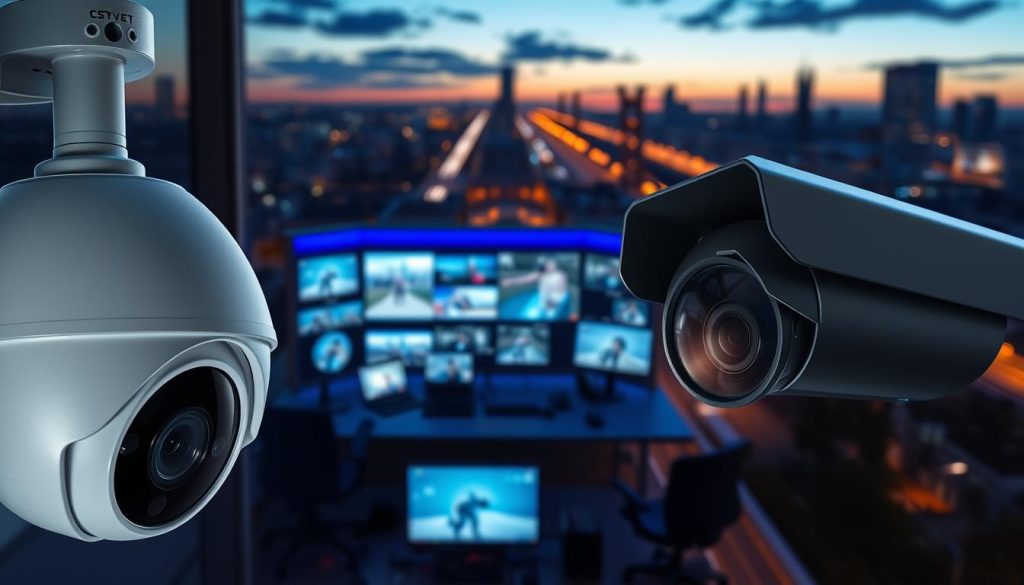
Why PoE Cameras Offer Enhanced Reliability
Power over Ethernet technology simplifies installations dramatically. A single Cat6 cable delivers both data connectivity and electrical current to compatible devices. This streamlined approach reduces potential failure points throughout your security infrastructure.
The IEEE 802.3af standard provides 15.4 watts per port for basic camera models. More advanced units with heaters or motorized components need the enhanced 802.3at specification. This delivers up to 30 watts for feature-rich surveillance equipment.
Centralized power management represents a key advantage of PoE deployments. Network switches control energy distribution to all connected devices from one location. This setup simplifies backup implementation compared to managing individual power adapters.
Built-in protection mechanisms enhance system durability. PoE standards include safeguards against overcurrent situations and short circuits. These features prevent damage during electrical anomalies that might compromise other equipment.
Singapore’s CP5 wiring standards ensure safe PoE installations for residential and commercial properties. These guidelines address proper cable specifications and installation methodologies. Compliance guarantees reliable performance within the local regulatory framework.
Power Sourcing Equipment features enable intelligent energy allocation. During power-limited conditions, network switches can prioritize critical cameras. This ensures essential monitoring continues even when backup capacity is constrained.
Choosing surveillance technology with power resilience in mind proves particularly important. Locations experiencing frequent electrical instability benefit from systems designed for such challenges. The right architecture maintains functionality when conventional setups might fail completely.
Battery Backup Solutions for Uninterrupted Surveillance
Effective security planning extends beyond camera selection to include robust power continuity strategies. Backup energy sources ensure your monitoring network remains active during electrical disruptions. These solutions bridge the gap between utility failure and restoration.
Different technologies address various outage scenarios and durations. Short-term interruptions need different approaches than extended power loss. Choosing the right combination protects your property continuously.
Singapore’s reliable grid still experiences occasional fluctuations. Backup systems provide peace of mind during these rare events. They maintain security coverage when it matters most.
UPS Systems: Specifications and Runtime Calculations
Uninterruptible Power Supply units offer immediate protection during outages. They switch to battery power within milliseconds of detecting grid failure. This seamless transition keeps all connected devices operational.
Two main topologies dominate the market. Line-interactive models correct minor voltage fluctuations without draining batteries. Online double-conversion systems provide pure sine wave output for sensitive equipment.
The Eaton 9PX 2000RT demonstrates practical capabilities. This unit can power a standard four-camera setup for approximately 45 minutes during complete power loss. Runtime varies based on total system load.
Calculating required backup duration involves simple mathematics. First, sum the wattage of all connected components. Then add a 25% safety buffer for unexpected demands.
Proper sizing considers your specific security needs. Historical outage data helps determine appropriate battery capacity. Longer runtime requires larger or additional battery banks.
Solar-Powered CCTV Alternatives
Singapore’s tropical climate offers excellent solar potential. The country averages 5.4 daily sunlight hours throughout the year. This makes photovoltaic systems viable for security applications.
A 200-watt solar panel can charge a 20Ah lithium battery in about five hours. This stored energy powers cameras like the Hikvision DS-3WF01C through the night. Proper sizing ensures continuous operation.
Charge controller technology significantly affects system efficiency. Maximum Power Point Tracking (MPPT) controllers achieve 92-97% efficiency. Pulse Width Modulation (PWM) alternatives reach only 70-75%.
Local regulations govern solar installations. Singapore’s BCA Green Mark certification requires weatherproof enclosures for rooftop setups. These withstand tropical rain and humidity effectively.
Solar-powered surveillance offers sustainable advantages. It reduces grid dependency and operational costs over time. Maintenance involves periodic panel cleaning and battery checks.
Hybrid approaches combine multiple backup sources. Systems automatically transition between UPS and solar power during fluctuations. This layered protection maximizes uptime for critical security functions.
Key specifications for effective backup solutions:
- Runtime matching: Align battery capacity with typical outage durations in your area
- Automatic switching: Ensure seamless transition between power sources
- Regular testing: Verify backup functionality through scheduled simulations
- Environmental protection: Use weatherproof enclosures for outdoor components
- Monitoring integration: Include backup status in your security alerts
Proper implementation requires analyzing both energy consumption patterns and location-specific factors. Historical outage data helps determine optimal system sizing. Professional installation ensures reliable performance during actual emergencies.
“The true test of any backup solution isn’t during installation, but during that unexpected moment when the lights go out and your security system needs to perform flawlessly.”
Investing in robust backup technology protects your security investment. It ensures continuous monitoring capability regardless of grid conditions. This comprehensive approach delivers true peace of mind for property owners.
Today’s most resilient security networks combine multiple energy sources and intelligent storage to overcome limitations of conventional setups. These advanced approaches ensure continuous protection even during extended electrical disruptions. Property owners now have sophisticated options beyond basic battery backups.
Advanced Technologies to Extend Recording Time
Innovative solutions address the core challenge of maintaining surveillance during power loss. Modern technology integrates smart power management with redundant storage systems. This creates a layered defense against recording interruptions.
Manufacturers develop specialized features for extended operation. These intelligent systems prioritize essential functions when running on reserve power. The result is significantly longer recording time during outages.
Hybrid Power Systems for Maximum Uptime
Combining multiple energy sources creates exceptionally reliable surveillance networks. These hybrid configurations draw from grid electricity, solar panels, and battery reserves simultaneously. If one source fails, others automatically compensate to maintain operation.
The Hanwha Wisenet Wave platform demonstrates this triple-source approach effectively. It integrates 200-watt solar panels with 20Ah lithium batteries and standard grid power. This ensures cameras continue capturing footage through various outage scenarios.
Intelligent power management extends battery life dramatically. Modern systems can adjust recording resolution or activate motion-only capture during backup operation. These conservation measures prioritize extended recording time over perfect video quality.
Solar integration proves particularly effective in Singapore’s climate. The consistent sunlight provides reliable renewable energy for security devices. Properly sized systems can operate indefinitely without grid connection.
Leveraging Cloud Storage During Local Outages
Cloud-based solutions provide critical off-site preservation for surveillance footage. When local power fails, these services maintain evidence collection remotely. This ensures important video data remains accessible and secure.
Local network-attached storage devices offer substantial capacity for temporary outages. The Synology SA3400 provides 96TB of raw storage space. This can maintain continuous recording for extended periods without internet connectivity.
4G LTE failover connections maintain crucial cloud synchronization. These wireless links cost approximately S$15 monthly per camera installation. When primary internet service drops, the failover automatically activates to preserve data transmission.
Edge storage devices create intelligent local caches during network disruptions. AWS Snowball Edge units maintain 100TB of local storage that syncs when connectivity resumes. This two-layer approach protects footage both locally and in the cloud.
Specialized surveillance hard drives optimize performance for continuous recording. Seagate SkyHawk AI 18TB models store approximately 180 days of 4K footage. RAID 5 redundancy protects against individual drive failures within the storage system.
Video management software implements advanced security measures for stored data. Milestone XProtect® 2023 R1 uses AES-256 encryption for edge storage protection. This ensures footage remains secure even during network disruptions.
These technologies work together to create comprehensive protection. Hybrid power maintains camera operation while cloud and edge storage preserve the captured video. The combination delivers true resilience for modern surveillance needs.
Singapore-Specific Considerations for CCTV Power
The Lion City’s tropical climate and urban density create specific challenges for surveillance power management. Local environmental factors and infrastructure reliability directly impact how security systems perform during electrical disruptions. Understanding these Singapore-specific conditions ensures your monitoring network remains operational when needed most.
Local Power Grid Reliability and Infrastructure
Singapore’s electrical infrastructure ranks among the world’s most reliable. The Energy Market Authority awards the national grid a 99.999% reliability rating. This exceptional performance provides a solid foundation for continuous security monitoring.
The SP Group maintains this stability through advanced 22kV distribution networks. These systems experience average annual downtime of just 0.3 minutes. Such minimal interruption supports consistent operation for most surveillance installations.
Location significantly affects power stability across different areas. Industrial zones like Jurong Island face approximately three times more outages than central business districts. This variation requires tailored backup planning based on your property’s location.
Critical facilities must meet stringent safety standards. The Singapore Civil Defence Force mandates 72-hour backup capabilities for hospitals and essential services. These regulations ensure life-saving systems remain functional during extended power loss.
Urban density presents unique challenges for modern security technology. High-rise environments affect wireless signal propagation for IP cameras. Careful network infrastructure planning ensures reliable data transmission between devices.
Local certifications guarantee equipment meets Singapore’s specific requirements. The Physical Security Industry Association sets performance standards for surveillance technology. Choosing PSIA-certified products ensures compatibility with local conditions and regulations.
Climate Factors: Heat and Humidity’s Impact on Backup Systems
Singapore’s tropical climate demands special consideration for backup components. Average temperatures of 35°C reduce battery efficiency by approximately 18% compared to manufacturer specifications. This thermal effect shortens runtime for all battery-dependent security solutions.
High humidity levels accelerate component degradation. With relative humidity averaging 80%, electronic circuits require additional protection. Conformal coating prevents corrosion and extends the lifespan of surveillance equipment.
Substantial annual rainfall necessitates robust outdoor protection. Approximately 1700mm of yearly precipitation requires IP66-rated enclosures for all external components. These waterproof housings safeguard cameras and power connections from water damage.
Periodic haze conditions affect renewable energy solutions. Solar panels require monthly cleaning to maintain 90% power output during hazy periods. This maintenance ensures consistent charging for battery backup systems.
Flood zone guidelines protect electrical installations in vulnerable areas. The Building and Construction Authority recommends mounting equipment 1.5 meters above ground level in flood-prone locations. This precaution prevents water damage during heavy storms.
Heat management becomes crucial for uninterrupted recording. Proper ventilation around backup batteries prevents thermal runaway. Strategic placement away from direct sunlight maintains optimal operating temperatures.
These environmental factors influence how long security cameras can keep recording during power interruptions. Understanding local conditions helps design systems that withstand Singapore’s unique challenges year-round.
Legal and Compliance Implications of CCTV Downtime
The opening_fre.
</lang
</name
Dispelling Common Myths About CCTV Operation
Widespread misconceptions about surveillance technology can lead to inadequate security planning. Many property owners hold incorrect beliefs about how their monitoring devices actually function. Understanding these myths helps create more effective protection strategies.
Separating security fact from fiction is crucial for informed decisions. This knowledge prevents wasted investments in ineffective solutions. It also ensures your property receives genuine protection.
Blinking Lights and Dummy Cameras: Knowing the Difference
A common misconception suggests that security cameras with blinking lights indicate recording activity. In reality, most genuine surveillance equipment operates without visible indicators. Manufacturers design these devices for discretion rather than visual display.
Dummy cameras often feature obvious blinking LEDs to simulate functionality. These imitation units provide no actual recording capability or security benefit. They create false confidence without delivering real protection.
Authentic surveillance systems focus on reliable performance rather than visual deterrents. Proper installations prioritize coverage areas and image quality over conspicuous displays. The best security cameras blend into their environment while capturing clear footage.
Understanding this distinction prevents false security confidence. It ensures proper protection implementation for homes and businesses. Always verify if your cameras are recording rather than relying on visual cues.
Key differences between functional and dummy cameras:
- Power connection: Real devices require proper wiring or battery sources
- Recording capability: Genuine systems store footage locally or in the cloud
- Network integration: Functional cameras connect to monitoring systems
- Maintenance needs: Actual equipment requires periodic checks and updates
- Legal compliance: Real systems follow data protection regulations
Setting Realistic Expectations for Surveillance Technology
All security systems require continuous power, proper maintenance, and adequate storage to function effectively. No surveillance solution provides absolute protection by itself. Layers of security including proper lighting and physical barriers complement camera effectiveness.
Technological limitations mean cameras cannot record in complete darkness without enhancement features. Infrared illumination or low-light sensors are essential for night-time monitoring. Understanding these requirements ensures proper system design.
Network-dependent IP cameras need stable internet connectivity for remote viewing. Local recording options provide backup during network outages. Smart planning includes both cloud and on-site storage solutions.
Proper system design considers multiple environmental factors. Camera placement, lighting conditions, and storage requirements all impact performance. Relying solely on visual deterrents creates security vulnerabilities.
Realistic expectations acknowledge these practical considerations:
- Power dependency: All electronic devices need reliable energy sources
- Storage limitations: Recording duration depends on available capacity
- Environmental factors: Weather and lighting affect camera performance
- Maintenance requirements: Regular checks ensure continuous operation
- Legal considerations: Compliance with local regulations is mandatory
Education about actual surveillance capabilities helps users make informed security investments. It supports comprehensive protection strategies that address real risks. This approach delivers genuine peace of mind rather than false confidence.
“The most dangerous security system is one that appears to be working but actually provides no protection. Understanding the limitations and realities of surveillance technology prevents this critical failure.”
Implementing effective protection requires moving beyond common myths. Focus on verified functionality rather than superficial appearances. This ensures your security investment delivers tangible protection for your property.
Choosing and Future-Proofing Your CCTV System
Future-proof surveillance technology demands careful consideration of evolving standards and connectivity options. Your choice should match your property type and specific security needs.
HDB units typically allow two external cameras, favoring compact models. Landed properties can install more advanced devices with enhanced night vision. Commercial installations require higher certification standards for data protection.
Look for systems with ONVIF compliance for easy upgrades. Support for AI analytics and 5G readiness ensures long-term functionality. Cybersecurity features protect your monitoring network from digital threats.
Plan power infrastructure with expansion in mind. Scalable storage solutions accommodate growing recording needs. Professional consultation tailors these components to your unique security requirements.
FAQ
Can security cameras operate without electricity?
No. A camera requires a power source to function. When its main electrical supply is disconnected, the device stops capturing and transmitting video. For continuous operation during grid failures, you must integrate a backup solution like a UPS or battery pack into your surveillance system.
What happens to my recorded footage if the power goes out?
It depends on your setup. If your Network Video Recorder (NVR) or Digital Video Recorder (DVR) is also on a backup power supply, recording will continue. Without backup, the storage device will shut down, halting any new video capture. Existing files on the hard drive are typically safe but cannot be accessed until power is restored.
Do wireless cameras work during a power outage?
Most so-called “wireless” models still need to be plugged into an electrical outlet for power, so they will fail. True wire-free devices run on internal batteries and can continue recording. However, they often rely on your home Wi-Fi, which will also go down unless your router has its own uninterruptible power supply.
How can I ensure my surveillance system stays online?
To maintain functionality, invest in a robust backup strategy. An Uninterruptible Power Supply (UPS) for your recorder and cameras is essential. For maximum resilience, consider hybrid systems that combine battery, solar, and grid power. Regularly test these solutions to confirm they work as intended.
Does motion detection work when a camera is off?
Motion detection is an active electronic feature. If the device has no energy, this smart technology cannot analyze the scene or send alerts. Some advanced systems with local battery backup may retain basic motion sensing, but cloud-based notifications will fail without an internet connection.
Are there legal issues if my CCTV stops recording?
In Singapore, while the PDPA doesn’t mandate 24/7 recording, specific premises or insurance policies might require it. A prolonged, unplanned gap in your surveillance footage could complicate incident investigations or violate contractual security obligations. It’s crucial to understand your specific compliance needs.


