
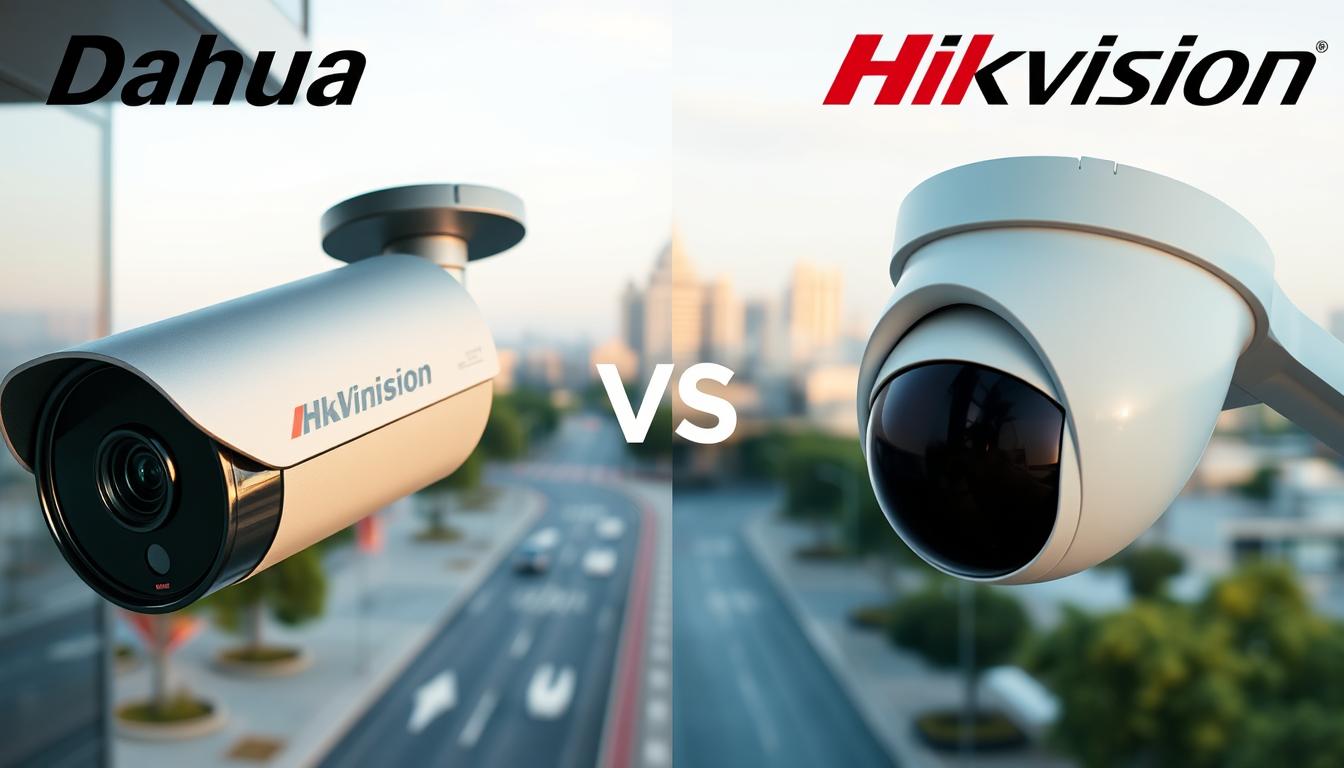
Dahua vs. Hikvision: Which Security Camera Brand is Better?
Protecting your property is a top priority. For homeowners and business operators in Singapore, selecting the right surveillance system is a critical decision.
Two giants dominate the global market for video security solutions. These brands are renowned for their innovation, reliability, and comprehensive product ranges.
This guide provides a detailed, feature-by-feature analysis. We will examine video quality, AI capabilities, durability, cost, and ease of use. Our goal is to help you make a confident choice based on your specific needs and budget.
Both manufacturers produce excellent CCTV cameras. The “better” option truly depends on your unique priorities for residential or commercial security.
Key Takeaways
- Choosing the correct surveillance system is vital for effective property protection in Singapore.
- Dahua and Hikvision are both globally recognized leaders in the security camera industry.
- A detailed comparison should focus on specific features like video resolution and smart analytics.
- Your final decision should align with your budget, installation environment, and security goals.
- There is no single “best” brand; the optimal choice varies for each user’s situation.
- This article offers an unbiased analysis to guide your purchasing decision.
Introducing the Titans of Video Surveillance
The global video surveillance landscape is dominated by a pair of industry giants. Dahua and Hikvision hold an undisputed position as the leading forces in security technology.
Both companies began their journey in 2001. They have spent over two decades pushing the boundaries of what a security camera can do.
Their growth is a story of relentless innovation. This drive has reshaped the entire market for professional systems.
Market share data highlights their scale. A 2017 IHS report forecasted Hikvision to command about 17% of the global video surveillance market.
Dahua followed closely, projected at a significant 5.5%. This solidifies its role as a powerful and growing challenger.
Their fierce competition is a major win for consumers. It forces rapid advancements in features like resolution and analytics.
It also keeps pricing competitive. You get more capable products for your investment over time.
The applications for their technology are vast. These two brands provide solutions for scenarios ranging from simple home monitoring to complex city-wide networks.
- Residential property protection
- Business and retail loss prevention
- Transportation and traffic management
- Large-scale public safety and smart city projects
For anyone researching professional-grade equipment, these brands are almost always the final contenders. The choice often comes down to a market leader versus a value-packed challenger.
In Singapore, both brands have a strong, established presence. They offer systems and support tailored to the region’s specific security needs and environmental conditions.
The brands offer a depth of technology that makes them the default consideration for serious video surveillance projects.
Brand Overview: Hikvision and Dahua at a Glance
While both are industry leaders, Hikvision and Dahua have carved out distinct market positions and brand philosophies. Their approaches to innovation, product development, and pricing create a clear choice for different types of users.
Understanding these core identities helps you decide which brand aligns with your security goals and budget.
Hikvision: The Market Leader in Innovation
Founded in 2001, Hikvision has cemented its role as the innovation frontrunner. It is a leading provider of IoT and security systems globally.
The company is renowned for cutting-edge products that leverage deep learning and AI. Its core technologies, AcuSense and ColorVu, define its market edge.
AcuSense uses AI to filter out false alarms from animals or foliage. It focuses detection on humans and vehicles for more accurate alerts.
ColorVu technology delivers full-color video in extremely low light. This eliminates the grainy, black-and-white footage typical of standard night vision.
Hikvision’s product range is vast and premium. It includes high-end DarkFighter PTZ cameras for challenging environments.
The brand also offers comprehensive smart home ecosystems. Its reputation is built on superior low-light imaging and advanced analytics.
- Facial recognition for access control
- License plate recognition for parking management
- Advanced perimeter protection analytics
This focus on top-tier performance and features comes at a premium price point. Hikvision positions itself for users who prioritize the absolute best in video surveillance technology.
Dahua: The Value and Technology Challenger
Dahua Technology, also founded in 2001, is the powerful challenger. It focuses on providing high-quality video systems at more competitive prices.
Dahua closely matches the technological offerings of its rival. Its strategy is to deliver comparable core features for a lower cost.
Flagship technologies like WIZColor provide excellent color night vision. The TIOC (Three-in-One Camera) integrates lighting, an alarm, and a speaker into a single unit.
These products offer AI-powered human and vehicle detection. Users get smart analytics without always paying the top-market price.
Dahua’s invention of HDCVI technology was a major industry milestone. It allowed high-definition video over traditional coaxial cable.
With a strong R&D team, Dahua ensures it remains a true technology leader. It is not merely a budget alternative but a source of genuine innovation.
This commitment results in cctv cameras known for great video quality and reliability. The brand delivers high value for both residential and commercial use.
In summary, both hikvision dahua brands are technologically advanced. Their market positioning differs clearly.
Hikvision aims for premium performance with the latest options. Dahua focuses on delivering high value and competitive prices.
Your choice between these cctv leaders depends on which approach best suits your needs.
Which is Better Dahua or Hikvision? A Feature-by-Feature Showdown
Beyond brand reputation, the choice hinges on practical differences in imaging, intelligence, and system design. This detailed comparison examines the core features that impact daily performance.
We will analyze three critical areas. These are video quality, smart analytics, and data management.
Understanding these key differences helps you select the right technology for your property.
Video Quality and Low-Light Performance
Both manufacturers deliver exceptional video quality. Their top-tier cameras support 4K Ultra HD resolution, also known as 8MP.
This provides crystal-clear detail for identifying faces and license plates. The real competition lies in low-light performance.
Hikvision employs its ColorVu and DarkFighter technologies. These systems use large apertures and advanced sensors to capture color video in near darkness.
Dahua’s answer is WIZColor and Starlight technology. It achieves a similar goal of full-color night vision with minimal ambient light.
On paper, both can operate in extremely low light, down to 0.01 lux. In practical use, Hikvision often holds a slight edge in pitch-black conditions.
Its images may retain slightly better clarity. For daytime recording, many users note Dahua’s excellent color accuracy and vibrancy.
Your priority decides the winner here. Do you need the absolute best in very dark night scenarios, or outstanding daytime color fidelity?
AI and Smart Detection Capabilities
Modern security relies on intelligent detection. Both hikvision dahua brands integrate powerful AI into their systems.
Core smart features are now standard. These include accurate human and vehicle detection, intrusion zones, and virtual line crossing.
Hikvision packages its analytics under the AcuSense name. It effectively filters out false alarms from animals or moving shadows.
Dahua offers comparable functionality with its Smart AI platform. It provides the same essential filtering for more relevant alerts.
The differences emerge in specialized, advanced analytics. Hikvision frequently leads in offerings like deep learning-based facial recognition.
It also excels in complex license plate recognition algorithms. Dahua includes robust AI features across its product line, often at a more accessible price point.
This makes smart detection a standard, not a luxury. For most users, both brands’ AI capabilities are more than sufficient.
Storage Options and System Scalability
A camera is only one part of a complete security solution. How you store footage and expand your network is crucial.
Both companies support all standard recording methods. You can choose DVRs for analog cctv, NVRs for IP systems, or hybrid recorders.
Cloud storage subscriptions are also available for remote backup. The scalability of an NVR is defined by its channel capacity.
Hikvision often provides a wider range of high-channel NVRs. This allows for massive systems with dozens of cameras.
Its solutions are highly customizable for enterprise-grade projects. Dahua offers excellent scalability for residential and small-to-medium business applications.
Its NVRs support ample channel counts for growing needs. A shared advanced technology is triple-stream encoding.
Select models from both brands offer this. It allows simultaneous streaming at different resolutions for live view, recording, and mobile playback.
Your future expansion plans should guide this part of your decision.
Durability and Performance in Singapore’s Environment
The tropical climate of Singapore demands robust construction from any outdoor security equipment. High humidity, frequent rain, and consistent heat test the limits of electronic products.
For a security system to be effective, it must perform reliably day after day. This makes durability a non-negotiable factor in your selection way.
Reliability and Long-Term Performance
Both manufacturers design their cameras for harsh, continuous use. High-grade materials and rigorous manufacturing standards ensure component longevity.
Their widespread adoption in commercial and municipal installations speaks volumes. These applications require cctv systems that operate 24/7 for years without failure.
User reviews consistently highlight positive long-term performance. Many report these models delivering consistent video and detection over many years.
For long-term reliability, neither brand has a significant disadvantage. Both are considered industry workhorses built to last.
Weather Resistance and Suitability
Singapore’s environment requires specific protective features. Outdoor cameras must handle moisture, dust, and temperature extremes.
This is where Ingress Protection (IP) ratings become critical. Most outdoor products from these brands carry ratings like IP66 or IP67.
An IP66 rating means the unit is totally dust-tight. It can also withstand powerful water jets from any direction.
IP67 takes it a step further, allowing temporary immersion in water. Both manufacturers build their cctv units to these robust standards.
Corrosion resistance is also engineered into the housing materials. This is vital for coastal areas where salt air can degrade electronics over time.
In practice, both Dahua and Hikvision manufacture surveillance equipment built for these conditions. Their basic weatherproofing offers no major differentiation.
You can confidently install either brand’s outdoor options. They are equally suitable for Singapore’s unique climate challenges.
Overall, durability is a shared strength for these industry leaders. Your choice should not hinge on perceived weaknesses in build quality.
Instead, consider other factors like specific night vision performance or smart features. Both will provide the rugged reliability your property’s security demands.
Cost Analysis: Pricing and Value for Your Budget
A critical factor for many buyers in Singapore is the cost versus value equation of their surveillance investment. Your budget directly influences which brand and features you can access.
List pricing for similar models from these leaders can appear close. The real differences emerge in the value proposition and target market.
This analysis breaks down what you pay for and what you receive. It helps determine the best fit for your security dollar.
Hikvision: Premium Features at a Premium Price
Hikvision’s price point reflects its position as an innovation leader. You pay a premium for cutting-edge technology and often slightly superior performance.
This investment covers its renowned low light imaging, like ColorVu. It also includes more polished software and advanced AI analytics.
The extra cost is frequently justified in specific scenarios. High-security commercial sites benefit from the latest detection algorithms.
- Locations with extremely poor lighting conditions.
- Projects requiring the absolute latest video surveillance technology.
- Users for whom budget is a secondary concern to top-tier features.
For these applications, the price delivers tangible security advantages. It’s the choice for maximum capability regardless of cost.
Dahua: Competitive Performance on a Budget
Dahua champions outstanding value. You typically get 90-95% of the core functionality for a notably lower price point.
Its products maintain professional-grade video quality and reliability. This makes it a powerhouse for cost-effective deployments.
Dahua offers more cost-effective options while maintaining professional-grade quality.
This value proposition is ideal for several key users. Budget-conscious homeowners get robust protection without overspending.
Large-scale installations, like covering multiple building entrances, benefit from lower per-unit costs. Anyone seeking high-quality security without the premium brand tag finds a perfect match here.
For a comprehensive detailed comparison of these security cameras, consider professional insights.
In practice, Dahua’s pricing is often more aggressive, especially during promotions. While hikvision dahua cctv cameras are close in list price, Dahua consistently wins on value.
The choice becomes clear. Select Hikvision for top performance regardless of cost. Choose Dahua for outstanding performance per dollar spent.
Both paths lead to a capable security system. Your financial parameters will guide the final brand selection for your home or business.
Setup, User Experience, and Compatibility
A security system’s effectiveness depends not just on hardware specs but on seamless setup and intuitive operation. After purchase, how easily you can install, configure, and live with the equipment defines its real value.
This section examines the practical side of ownership. We compare the installation process, software interfaces, and how well these systems play with others.
Ease of Installation and DIY-Friendliness
Getting your cameras mounted and connected is the first hurdle. Both hikvision dahua brands offer Power over Ethernet (PoE) options, simplifying cabling.
Dahua often takes the lead for DIY enthusiasts. Its products frequently come with clearer, step-by-step guides. Many models have a plug-and-play tendency for basic home setups.
Hikvision systems are equally robust but can present deeper configuration menus. These advanced options are a boon for professional installers.
They allow fine-tuning for complex commercial network deployments. For a straightforward home installation, Dahua’s approach may feel more welcoming.
The physical installation of mounts and running cables is similar across both brands. Your choice here hinges on comfort with software configuration.
User Interface and Mobile App Experience
Daily interaction happens through software and mobile apps. Dahua’s DMSS and Hikvision’s Hik-Connect are the central hubs for your surveillance.
Both apps provide essential functions: live video viewing, playback, and alert management. They are powerful tools for remote monitoring.
Users frequently praise Dahua’s DMSS for its intuitive layout. Navigating between cameras and finding settings is often more straightforward.
Hikvision’s Hik-Connect and iVMS-4200 desktop software offer extensive professional controls. They provide granular management for large-scale cctv systems.
For a typical homeowner, Dahua’s app might offer a smoother learning curve. Integrators and advanced users may prefer the depth Hikvision’s software provides.
System Integration and ONVIF Compliance
Future-proofing your investment often means integrating with other technology. Open standards like ONVIF and RTSP are crucial for compatibility.
Both manufacturers fully support these protocols. This allows their products to work with third-party video management software (VMS) and other hardware.
It is technically possible to mix Dahua and Hikvision devices on a single network using ONVIF. Basic video streaming will function.
For optimal performance and access to all smart features, a single-brand ecosystem is strongly recommended. An NVR is designed to unlock the full potential of its native brand’s AI.
Mixing brands within one recorder can limit these advanced capabilities. Stick with one brand per system for the best way to use your investment.
In summary, Dahua holds a slight edge in overall user-friendliness for non-professionals. Its installation guides and app design cater well to DIY home security projects.
Hikvision, on the other hand, delivers powerful tools preferred by integrators. Its software depth supports complex commercial use cases.
Your comfort level with technology should guide this part of your decision.
Security Protocols and Data Privacy Considerations
Modern security extends beyond physical deterrence to safeguarding the data your system collects and transmits. A robust surveillance setup must protect against digital intrusions as effectively as it deters physical ones.
This aspect is critical for both residential and commercial users in Singapore. Understanding the built-in protocols and potential privacy implications is essential.
Both leading manufacturers implement strong measures at the device level. The ultimate security of your installation, however, depends heavily on proper configuration and network management.
Let’s examine the key differences and common standards in encryption and data handling. This knowledge empowers you to make a safer choice for your property.
Encryption and Network Security
At the core of any secure surveillance solution are fundamental encryption standards. Both hikvision dahua brands equip their products with essential features to guard your video feeds.
Standard protections include mandatory password security for device access. SSL/TLS encryption secures data transmission between cameras, recorders, and your mobile app.
IP address filtering allows you to restrict access to trusted devices only. These features form a baseline defense against unauthorized viewing.
Perception in the business community often gives Hikvision a slight edge. Its enterprise focus leads to a more comprehensive security framework in high-end models.
This can include more granular user permission levels and advanced audit logs. For most users, the core encryption technology is functionally similar between the two.
Regardless of the brand you select, your own practices are paramount. Implement these best practices to maximize your network safety:
- Always change default passwords to strong, unique combinations.
- Keep device firmware updated to patch any security vulnerabilities.
- Use network segmentation to isolate your cameras from your main business or home network.
- Disable unused network services on the recording device.
Proper installation by a knowledgeable technician adds a critical layer of reliability. They can configure these settings correctly from the start.
Privacy Concerns and Compliance
Global discussions on cybersecurity have touched both Chinese-manufactured surveillance brands. Users must consider these geopolitical factors as part of their risk assessment.
It is prudent for buyers in Singapore to stay informed. Check for any specific regulatory advisories from local authorities regarding this technology.
If data privacy is a paramount concern, take proactive configuration steps. Ensuring your system stores footage locally on a network video recorder (NVR) is a fundamental measure.
Avoid cloud storage subscriptions if you wish to keep data entirely on-premises. This gives you full physical control over the recorded video.
For the highest level of isolation, place your surveillance equipment on a dedicated network segment. This VLAN should have no internet access, functioning as a closed-circuit in the truest sense.
Such a setup prevents any external data transmission. It is a common approach for high-security commercial sites and privacy-conscious homeowners.
Over time, maintaining this isolated network and reviewing access logs is crucial. Regular checks ensure your configured privacy measures remain effective.
On the other hand, for standard use cases like home monitoring, the built-in protocols of both brands provide solid protection. Their smart detection analytics also process data locally on the camera or NVR in many models.
This local processing enhances performance and can reduce privacy concerns associated with data leaving the premises.
In summary, both manufacturers prioritize device-level security. Your vigilance in setup and configuration ultimately defines the privacy and integrity of your surveillance operation.
Our Final Recommendation: Matching the Brand to Your Needs
Ultimately, the best surveillance brand for you depends on a clear assessment of your specific requirements. Our analysis shows Hikvision holds a slight edge in premium low-light performance and cutting-edge AI. Dahua delivers exceptional value, matching core features at more competitive prices.
Choose Hikvision if your priority is the absolute best video quality in darkness. This brand suits projects needing advanced analytics or where budget is secondary to top-tier technology.
Opt for Dahua when outstanding performance per dollar is key. It is ideal for covering large areas on a budget. Many find its user-friendly setup perfect for home installation.
For most users in Singapore, both brands offer reliable, professional-grade security systems. You truly cannot make a wrong choice between these industry-leading products.
Review your own property’s needs against this detailed comparison. Your perfect security solution is the one that aligns with your environment and financial plan.
FAQ
Does Hikvision or Dahua have superior night vision?
Both manufacturers excel in low-light conditions, but their approaches differ. Hikvision often leads with cutting-edge sensor technology for very clean night imagery. Dahua frequently offers exceptional low-light performance at a more accessible price point. For most home and business uses, both provide excellent after-dark clarity.
Which brand offers better value for money?
This depends on your budget and required features. Hikvision cameras often command a premium for their latest innovations and market-leading reputation. Dahua is generally known for providing robust technology and competitive features at more competitive prices, making it a strong choice for cost-conscious projects without sacrificing core performance.
Are these cameras suitable for Singapore’s humid and rainy climate?
A> Yes, absolutely. Both companies design their security products for global use. Key models from each brand carry high Ingress Protection (IP) ratings, ensuring resistance against rain and humidity. When purchasing, look for cameras rated IP66 or higher to guarantee reliability in local weather conditions.
How do their smart detection features compare?
A> Both integrate advanced AI for detection of people, vehicles, and other objects. Hikvision has deep investment in AI analytics, offering very accurate and sophisticated alerts. Dahua also packs powerful AI into its systems, often including these smart features even in mid-range camera kits, providing great value in smart surveillance.
Is one brand easier to install for a DIY setup?
A> The installation process is very similar for both. They use standard mounting hardware and connectors. User-friendliness often comes down to the specific system and mobile app. Many find the initial setup wizard and app interface for Dahua products to be very straightforward. Hikvision’s apps are also comprehensive but can have a steeper learning curve due to their extensive features.
Can I mix and match cameras from these brands in one system?
A> Direct mixing within a single branded NVR can be limited. However, both brands support ONVIF compliance, a universal standard. This means you can often integrate a Dahua camera with a Hikvision NVR, or vice versa, using ONVIF profiles, though some advanced features may not be available. For full functionality, using one brand is recommended.


