

CCTV Security Camera Warehouse: Advanced Surveillance Camera Systems
Protecting your business assets in Singapore has never been more critical. Industry reports show a worrying 40% increase in theft incidents at storage facilities. This trend makes robust protection systems essential for every company.
Modern monitoring technology has evolved far beyond basic recording devices. Today’s comprehensive solutions integrate artificial intelligence analytics and cloud-based platforms. These advanced tools offer real-time threat detection and operational efficiency improvements.
This article serves as your complete guide to securing your Singapore business premises. We’ll explore how to select, install, and maintain the optimal surveillance setup for your specific needs. Our expertise comes from successful installations across the local market.
You’ll discover tangible benefits including potential insurance savings and theft reduction. We position ourselves as your premier partner for professional protection solutions in Singapore. Let’s begin securing what matters most to your business.
Key Takeaways
- Singapore businesses face a 40% increase in warehouse theft incidents requiring immediate attention.
- Modern surveillance systems have evolved into comprehensive solutions with AI and cloud technology.
- Proper installation and maintenance can lead to theft reduction and operational efficiency gains.
- Businesses may qualify for insurance savings with professionally implemented monitoring solutions.
- This guide covers everything from threat assessment to technology integration for your premises.
- Selecting the right system requires understanding your specific business needs and challenges.
- Professional solutions offer remote monitoring capabilities and high-definition footage quality.
The Rising Threat: Understanding Warehouse Security Challenges in Singapore
A silent crisis unfolds in Singapore’s industrial zones, where valuable assets become increasingly vulnerable. Recent data reveals a troubling 40% surge in theft incidents at storage facilities. This trend signals urgent needs for enhanced protection measures across the logistics sector.
Industrial environments present unique obstacles for asset protection. Their expansive layouts feature multiple entry points and limited staff coverage. High-value inventory naturally attracts criminal attention, creating persistent risks.
Statistical analysis shows alarming patterns. Up to 40% of cargo theft occurs within storage facilities themselves. In the United States alone, such losses cost companies $15 to $30 billion annually. These figures highlight the global scale of the problem.
Singapore’s booming e-commerce sector intensifies these vulnerabilities. Logistics growth means more goods flow through distribution centers. Extended operating hours and rapid turnover create additional exposure windows.
Three primary theft categories threaten operational hubs:
- External Intrusion: Organized groups target perimeter weaknesses during off-hours.
- Internal Issues: Employee-related incidents account for significant inventory shrinkage.
- Cargo Operations: Sophisticated theft rings exploit loading/unloading procedures.
Traditional protection methods often prove inadequate. Basic locks and occasional patrols cannot cover vast spaces effectively. Modern facilities operate around the clock with fluctuating personnel levels.
Challenges extend beyond simple theft prevention. Safety compliance demands proper monitoring of work areas. Accident documentation requires reliable recording capabilities. Singapore’s regulatory framework imposes specific observation requirements.
Security breaches create psychological impacts that ripple through organizations. Employee morale suffers when they feel unprotected. Customer trust erodes following incident reports. Business reputation takes years to rebuild after major losses.
Criminal tactics continuously evolve alongside technology. Thieves now use digital tools to scout vulnerabilities and coordinate operations. This technological arms race demands equally advanced countermeasures.
Visible surveillance deters up to 60% of potential intruders before incidents occur. Facilities with comprehensive observation systems report theft reductions up to 70%.
Consider a Jurong industrial facility that experienced repeated inventory discrepancies. After implementing professional monitoring, they reduced internal losses by approximately 30%. Their recording documentation helped resolve disputes and improve procedures.
Another Tuas distribution center faced organized cargo theft during night operations. Their upgraded system provided clear footage that identified perpetrator patterns. This evidence supported successful law enforcement intervention.
These examples demonstrate how proper planning addresses specific vulnerabilities. Each facility requires tailored approaches considering its layout, inventory, and operational patterns. Comprehensive surveillance solutions must adapt to these unique conditions.
The evolving threat landscape makes proactive measures essential rather than optional. Understanding these challenges represents the first step toward effective protection. Next, we’ll explore why this investment delivers critical business value.
Why Warehouse Security is a Critical Investment for Your Business
Forward-thinking companies recognize that comprehensive monitoring delivers returns far beyond simple theft prevention. This technology represents a strategic capital allocation with measurable financial benefits.
The initial expenditure for professional observation solutions often surprises business owners. Yet the long-term savings reveal a compelling economic case. A complete industrial-grade installation typically costs around £45,000.
Compare this to annual security personnel expenses averaging £80,000. The math becomes clear within the first year of operation. Surveillance systems provide continuous coverage without breaks, holidays, or human error.
Insurance providers actively reward businesses that implement robust protection measures. They offer premium reductions of up to 20% for facilities with verified surveillance systems. This creates immediate cash flow improvements alongside enhanced asset protection.
Loss prevention generates the most direct financial returns. These installations can prevent incidents saving over £31,000 annually. The combination of deterrence and evidence collection protects your bottom line.
Operational improvements represent another significant value stream. Approximately 60% of storage facility managers report better efficiency with proper monitoring. They optimize workflows and identify process bottlenecks through recorded footage analysis.
Modern surveillance integrates seamlessly with inventory management software. This creates a unified data ecosystem for your operations. You gain insights into stock movement patterns and employee productivity metrics.
Supply chain integrity depends on protecting goods throughout the storage and distribution process. Any breach can disrupt deliveries and damage customer relationships. Comprehensive observation ensures product security from receiving to shipping.
Singapore’s workplace safety regulations require specific monitoring of hazardous areas. Proper systems demonstrate compliance and reduce liability risks. They provide documented evidence in case of accidents or disputes.
Business continuity benefits cannot be overstated. Security incidents can halt operations for days or weeks. Prevention through visible deterrence maintains uninterrupted workflow and revenue streams.
Consider these documented advantages:
- Financial Protection: Direct theft prevention and insurance savings create positive ROI.
- Operational Intelligence: Video analytics help optimize space utilization and labor allocation.
- Regulatory Compliance: Meeting Singapore’s safety requirements reduces legal exposure.
- Risk Mitigation: Minimizing disruptions protects customer relationships and market reputation.
A Jurong logistics company documented their experience after implementation. They reduced inventory shrinkage by 34% within six months. Their insurance premiums decreased by 18% following professional certification.
Another Tuas distribution center used motion analytics to redesign their loading bay workflow. This change increased throughput by 22% while reducing overtime costs. The system paid for itself in under fourteen months.
The most successful businesses view protection technology not as an expense, but as a core operational investment. It safeguards assets while generating efficiency gains and cost savings.
These examples demonstrate the multifaceted returns available. The technology pays dividends across financial, operational, and compliance dimensions. Smart business leaders recognize this convergence of benefits.
Your company’s resilience depends on protecting physical assets and operational continuity. Professional surveillance solutions deliver this protection while improving profitability. They transform a necessary function into a strategic advantage.
The next step involves understanding the specific features that make these systems effective. We’ll explore the technical specifications that deliver these business benefits.
Essential Features of a High-Performance Warehouse CCTV Camera
The effectiveness of your protection strategy depends heavily on the specific features built into your observation technology. Not all surveillance components are created equal, especially for demanding industrial environments.
Professional-grade systems offer capabilities that basic consumer models simply cannot match. Understanding these distinctions helps you make informed decisions about your facility’s needs.
This section breaks down the critical characteristics that deliver reliable performance around the clock. Each feature contributes to a comprehensive solution that protects assets and supports operations.
High-Definition Resolution and Image Clarity
Image quality forms the foundation of any effective monitoring setup. You need clear visuals to identify individuals, read license plates, and verify inventory details.
Modern industrial-grade equipment should exceed 480 lines of resolution. This minimum standard ensures footage remains useful for investigation and evidence purposes.
Higher resolution means you can zoom into recorded video without losing critical details. This capability proves invaluable when reviewing incidents or checking specific activities.
Clarity transforms raw video into actionable intelligence. It allows managers to distinguish between authorized personnel and potential intruders with confidence.
Advanced Night Vision and Low-Light Performance
Industrial facilities often operate during overnight hours with minimal lighting. Most security incidents occur when visibility is naturally reduced.
Advanced infrared technology enables 24/7 surveillance regardless of ambient conditions. These systems automatically adjust to changing light levels throughout the day.
Quality night vision extends your observational reach into dark corners and shadowy areas. It eliminates blind spots that criminals might otherwise exploit.
This feature provides peace of mind for managers overseeing facilities with extended operating schedules. Your investment remains active and effective through all shifts.
Remote Monitoring and Mobile Access Capabilities
Modern business operations require flexibility and real-time oversight. Managers cannot always be physically present at their storage facilities.
Remote access technology allows authorized personnel to view live footage from any location. This capability uses secure mobile applications and web interfaces.
You can check on operations during off-hours or while traveling between sites. Immediate visibility helps address issues before they escalate into major problems.
This feature represents a significant advancement over traditional closed-circuit systems. It transforms surveillance from a passive recording function into an active management tool.
Motion Detection and Intelligent Analytics
Basic motion sensors often generate numerous false alarms from routine activity. Intelligent systems use advanced algorithms to distinguish between normal operations and genuine threats.
These analytics reduce unnecessary alerts while ensuring real incidents receive immediate attention. They can differentiate between employees, vehicles, and unauthorized individuals.
Smart detection also optimizes data storage by recording only when relevant activity occurs. This approach extends recording duration without requiring massive storage infrastructure.
Artificial intelligence takes this capability further by identifying patterns and anomalies. It can alert managers to unusual behavior that might indicate internal issues or external threats.
Additional technical considerations enhance overall system performance. Wide-angle lenses covering up to 180 degrees maximize coverage while minimizing the number of units required.
PTZ (Pan-Tilt-Zoom) functionality provides dynamic viewing of large spaces. Operators can remotely control these units to follow activity or investigate specific areas.
Integration features allow your observation system to work with other operational technologies. This creates a unified platform for managing both protection and productivity.
“The right technical specifications transform surveillance from simple recording into a strategic business tool. Features should address both immediate protection needs and long-term operational intelligence.”
Evaluating these characteristics helps you select equipment that matches your specific operational requirements. Each facility has unique layout challenges and observation priorities.
Professional guidance ensures your investment delivers maximum value across all these dimensions. Expert solutions consider how features work together to create comprehensive coverage.
The next section explores how these technical capabilities translate into tangible business benefits for your company.
Tangible Benefits of Implementing a Warehouse CCTV Surveillance System
Business leaders seek clear returns on every investment they make. Modern observation technology delivers measurable advantages across multiple operational dimensions.
The data reveals compelling patterns. Facilities with comprehensive video monitoring experience 40% fewer intrusion attempts. Potential criminals often seek easier targets when they see visible protection measures.
Theft and vandalism incidents drop by up to 50% in monitored environments. This reduction protects both physical assets and operational continuity. Every prevented incident saves thousands in replacement costs and downtime.
Internal issues also decrease significantly. Employee-related shrinkage falls by approximately 30% with proper oversight. This creates a culture of accountability throughout the organization.
Safety improvements represent another major advantage. Companies report 25% fewer workplace accidents when using observation systems. High-risk zones receive constant attention, encouraging proper procedures.
Insurance providers recognize these risk reductions. They offer premium discounts up to 20% for professionally installed solutions. This creates immediate financial benefits alongside enhanced protection.
Operational intelligence transforms how managers run their facilities. About 60% report better efficiency after implementing monitoring technology. They identify workflow bottlenecks and optimize resource allocation.
“The most successful installations deliver dual returns: immediate theft prevention and long-term operational insights. This combination creates sustainable competitive advantages.”
Evidentiary value cannot be overstated. High-quality footage provides irrefutable documentation for incident investigations. It resolves disputes quickly and supports liability protection efforts.
Regulatory compliance becomes simpler with proper documentation. Singapore’s workplace safety requirements demand specific monitoring in hazardous areas. Recorded evidence demonstrates due diligence to inspectors.
Security culture improves throughout the organization. Employees become more conscious of safety protocols and proper procedures. They know their actions support overall operational excellence.
Supply chain integrity strengthens with comprehensive oversight. Reduced shrinkage improves inventory accuracy across all tracking systems. Shipping and receiving verification becomes more reliable.
Business intelligence applications extend beyond basic security. Managers use recorded data to inform strategic decisions about layout and staffing. They identify patterns that suggest process improvements.
The return on investment picture includes both direct and indirect benefits. Financial savings from theft prevention and insurance discounts provide quick returns. Reputation protection and customer confidence deliver long-term value.
Consider a Singapore logistics company that implemented professional monitoring last year. They reduced inventory discrepancies by 35% within eight months. Their insurance premiums decreased by 17% following system certification.
Another local distributor used motion analytics to redesign their storage layout. This change increased picking efficiency by 28% while reducing labor costs. The technology paid for itself in under sixteen months.
These examples demonstrate the multifaceted returns available. The right solution protects assets while generating efficiency gains. It transforms a necessary function into a strategic advantage.
Your facility deserves this level of comprehensive protection. The next section explores the technical specifications that make these benefits possible.
Key Technical Specifications for Industrial-Grade Security Cameras
Industrial environments demand equipment built to withstand rigorous operational demands and environmental challenges. Professional-grade surveillance technology differs significantly from consumer models in its construction and capabilities.
Understanding these technical details ensures your investment delivers reliable performance. Each specification contributes to overall system effectiveness in protecting assets.
Resolution Standards: From 1080p to 4K Ultra HD
Image clarity begins with resolution specifications. Modern industrial observation devices typically offer 1080p Full HD as a minimum standard.
Higher resolutions like 4K Ultra HD provide exceptional detail for identification purposes. This improves evidentiary value when reviewing recorded footage.
Clear visuals help distinguish individuals and read important details. They transform raw video into actionable intelligence for your operations.
Night Vision Capabilities for 24/7 Operations
Round-the-clock facilities require consistent monitoring regardless of lighting conditions. Advanced infrared technology enables observation in complete darkness.
Specifications include infrared range measured in meters and illumination power. Low-light sensitivity ratings determine performance during dusk and dawn periods.
Quality night vision eliminates blind spots in shadowy areas. It ensures your investment remains active through all operational shifts.
Connectivity and Installation Considerations
Power over Ethernet (PoE) simplifies setup significantly. This technology delivers both power and data through a single cable.
It reduces infrastructure complexity and cable clutter throughout your facility. PoE supports flexible placement of observation points where needed most.
Network connectivity enables remote access via secure mobile applications. Managers can view live feeds from any location with internet access.
Environmental Durability Ratings
Outdoor installations face weather challenges in Singapore’s tropical climate. IP66 ratings ensure protection against dust and powerful water jets.
IK10 ratings indicate resistance to vandalism and physical impacts. These specifications guarantee reliable operation in harsh industrial conditions.
Proper environmental ratings prevent premature equipment failure. They maintain continuous observation capabilities through seasonal changes.
Storage Efficiency and Bandwidth Management
Modern compression technologies maintain video quality while optimizing storage. H.265 compression reduces file sizes by approximately 50% compared to older standards.
Intelligent recording options save storage space effectively. Motion-activated recording captures only relevant activity rather than continuous footage.
Bandwidth considerations affect network performance throughout your facility. Efficient systems minimize impact on other operational technologies.
Lens Specifications and Coverage Calculations
Focal length determines how much area each device can observe effectively. Wider angles cover more space but may reduce detail at distances.
Aperture settings affect low-light performance and image clarity. Field of view calculations help determine optimal placement throughout your layout.
Varifocal lenses offer adjustable focal lengths for flexible installation. They allow fine-tuning during setup to match specific observation needs.
Integration with Operational Systems
Professional-grade equipment connects with access control and alarm systems. This creates unified protection across your entire facility.
Warehouse management software integration provides operational intelligence. Video analytics can trigger alerts based on specific activity patterns.
Unified platforms simplify management and improve response times. They transform isolated components into comprehensive solutions.
Power Requirements and Backup Systems
Continuous operation demands reliable power infrastructure. Uninterruptible power supplies maintain functionality during brief outages.
Backup systems ensure observation continues through unexpected interruptions. Failover mechanisms automatically switch to alternative power sources.
Proper power planning prevents gaps in your protection coverage. It maintains the integrity of your entire observation network.
“Technical specifications transform observation equipment from simple recording devices into strategic operational tools. Each detail contributes to reliability and effectiveness in demanding environments.”
Specification Checklist for Evaluation
Use this checklist when assessing different models for your application:
- Resolution: Minimum 1080p, preferably 4K for critical areas
- Night Vision: Minimum 30-meter infrared range with adjustable illumination
- Environmental Rating: IP66 for outdoor areas, IK10 for vulnerable locations
- Connectivity: PoE capability with network video recorder compatibility
- Storage Efficiency: H.265 compression with intelligent recording options
- Lens Options: Appropriate focal length for coverage area with varifocal flexibility
- Integration: Compatibility with existing access control and management systems
- Power: Support for backup systems and failover mechanisms
- Analytics: Built-in motion detection with customizable alert parameters
- Remote Access: Secure mobile application with multi-user management
This comprehensive approach ensures your observation solution meets both immediate and long-term needs. Technical excellence supports business continuity and asset protection simultaneously.
The right specifications address Singapore’s specific environmental and operational challenges. They deliver reliable performance that justifies your investment over time.
Exploring the Types of CCTV Cameras for Comprehensive Warehouse Coverage
Modern industrial facilities benefit from specialized observation devices designed for distinct applications and environments. A one-size-fits-all approach rarely delivers optimal protection for complex operational spaces.
Different zones within your premises demand specific technological solutions. Loading docks, storage aisles, and perimeter fences each present unique monitoring challenges.
The right combination of equipment creates overlapping coverage that eliminates blind spots. This strategic approach ensures every critical area receives appropriate attention.
Understanding available options helps you build an effective protection network. Each category serves particular purposes within your overall strategy.
PTZ (Pan-Tilt-Zoom) Cameras for Active Monitoring
These versatile units provide dynamic viewing capabilities for expansive spaces. Operators can remotely control pan, tilt, and zoom functions in real-time.
Large open areas like distribution floors benefit greatly from this technology. A single PTZ device can cover what would require multiple fixed units.
The zoom function allows close inspection of distant activities. This proves invaluable for identifying individuals or reading labels from afar.
Active surveillance becomes possible with responsive remote control. Security personnel can follow suspicious movements throughout the facility.
These systems often include preset positions for routine checks. They automatically scan predetermined routes when not manually operated.
Dome Cameras for Discreet Indoor Surveillance
These compact units blend seamlessly into interior environments. Their unobtrusive design makes them ideal for employee areas and customer spaces.
Vandal-resistant construction protects against tampering attempts. Tempered glass housings withstand impacts that would damage other models.
Wide viewing angles provide excellent general area coverage. Strategic placement captures comprehensive activity within indoor zones.
Discreet monitoring encourages natural behavior patterns. Employees and visitors remain unaware of exact viewing directions.
Indoor applications include offices, break rooms, and inventory control areas. They maintain observation without creating an oppressive atmosphere.
Bullet Cameras for Durable Outdoor Perimeter Security
These rugged devices withstand Singapore’s tropical climate conditions. Weatherproof housings protect internal components from rain and humidity.
Visible installation serves as a powerful deterrent against intrusion attempts. Potential intruders recognize comprehensive perimeter protection.
Long-range infrared illumination enables clear nighttime observation. Critical outdoor areas remain monitored during all operating hours.
Fixed focal lengths provide consistent coverage of specific zones. Entry points, parking lots, and exterior walls benefit from this focused approach.
Durability ratings ensure reliable performance through seasonal changes. These units maintain functionality despite environmental challenges.
Specialized Cameras: Thermal, ANPR, and Varifocal
Advanced technologies address specific operational requirements. These specialized solutions enhance standard surveillance capabilities.
Thermal imaging devices detect heat signatures rather than visible light. They identify intruders up to 300 meters away in complete darkness.
Perimeter protection gains new effectiveness with this technology. Foliage and camouflage cannot hide body heat from thermal sensors.
ANPR (Automatic Number Plate Recognition) systems capture vehicle identification data. They read and store registration plate information automatically.
Logistics tracking and access control improve significantly. Authorized vehicles gain entry while unauthorized ones trigger alerts.
Varifocal lenses offer adjustable focal lengths during installation. Technicians optimize coverage for each specific location.
Square rooms and irregular spaces benefit from this flexibility. “Dead zones” disappear through precise lens adjustment.
Additional considerations complete your equipment selection process. Network-connected IP devices enable remote access and high-resolution streaming.
Discreet units serve sensitive areas where visible equipment might be avoided. These hidden solutions provide observation without obvious presence.
Creating effective combinations requires understanding your facility’s layout. Different zones demand different technological approaches.
“Strategic equipment selection transforms basic recording into intelligent protection. The right mix of devices addresses both obvious and subtle threats throughout your operations.”
Consider these pairing recommendations for common industrial areas:
- Loading Docks: Combine fixed bullet cameras with ANPR systems for vehicle tracking
- Storage Aisles: Use dome cameras for general coverage with varifocal units for specific racks
- Perimeter Fences: Deploy thermal imaging with bullet cameras for comprehensive exterior protection
- Office Spaces: Install discreet dome cameras with appropriate privacy considerations
- High-Value Areas: Implement PTZ units with preset positions for routine inspection
Each facility presents unique challenges that demand customized solutions. Professional assessment identifies the optimal equipment mix for your specific needs.
The right combination delivers comprehensive coverage without unnecessary duplication. It creates an intelligent network that protects assets while supporting operations.
Your next step involves matching these technological options with your operational requirements. Proper selection ensures every investment delivers maximum value.
Choosing the Right CCTV Security Camera Warehouse Solution for Your Needs
Finding the perfect match between technology and operational needs demands a structured decision-making process. A one-size-fits-all approach rarely delivers optimal results for complex industrial environments.
Your facility deserves a tailored solution that addresses specific vulnerabilities. This systematic approach ensures every investment contributes directly to enhanced protection.
Begin with a comprehensive needs assessment of your entire premises. This foundational step identifies critical zones requiring focused attention.
Evaluate your physical layout with precision. Identify all entry and exit points, including loading docks and emergency doors.
Storage aisles and high-value inventory sections need special consideration. Perimeter boundaries demand robust observation to prevent unauthorized access.
Lighting conditions vary dramatically throughout industrial spaces. Analyze illumination levels during different operational shifts.
Poor lighting areas require specialized equipment with enhanced capabilities. Infrared technology becomes essential for consistent monitoring after dark.
Assess the value of stored goods in different sections. High-value inventory justifies more sophisticated protection measures.
Prioritize your observation levels based on asset importance. This strategic allocation optimizes your investment across the facility.
Examine operational patterns throughout your work cycles. Identify peak activity times and employee workflow routes.
Vulnerability periods often occur during shift changes or low-staff hours. Enhanced monitoring during these windows prevents potential incidents.
Integration requirements form another critical consideration. Your new system should connect seamlessly with existing access controls.
Alarm systems and management software need compatibility assurance. Unified platforms simplify daily operations and emergency responses.
Scalability matters for growing businesses. Choose solutions capable of expanding with additional devices and storage capacity.
Future-proof your investment by selecting flexible architectures. Modular designs accommodate growth without complete system replacements.
Budget planning balances initial costs with long-term value. Consider maintenance expenses and potential insurance savings together.
Quality equipment often delivers better returns despite higher upfront costs. Reliable performance reduces unexpected repair bills and downtime.
“The most effective protection strategies emerge from thorough analysis rather than impulsive purchases. Understanding your specific environment transforms technology from an expense into a strategic asset.”
Technical specifications guide your equipment selection process. Image clarity depends heavily on resolution standards.
Look for devices with at least 1080p resolution for clear identification. Consider 4K options for areas requiring detailed footage analysis.
Infrared capabilities ensure consistent observation in poor lighting. Professional advice often highlights models like the Hikvision DS-2CD2386G2-I(U) for its 8MP resolution.
Live viewing from remote locations provides operational flexibility. Choose providers known for quality systems with comprehensive installation services.
Wired configurations manage multiple units without signal loss. They offer reliability superior to wireless alternatives in industrial settings.
Evaluation criteria should include reliability records and local support availability. Technical specifications tell only part of the performance story.
Consider these decision factors when comparing different options:
- Coverage Requirements: Match device capabilities to specific zone characteristics
- Image Quality Needs: Balance resolution with storage and bandwidth considerations
- Environmental Durability: Ensure equipment withstands Singapore’s tropical conditions
- Integration Complexity: Verify compatibility with existing operational systems
- Support Infrastructure: Assess maintenance responsiveness and technical expertise
- Growth Potential: Confirm expansion capabilities for future requirements
Create a weighted scoring system for objective comparisons. Assign values to different criteria based on your operational priorities.
Technical performance might receive higher weights for critical areas. Support services could dominate evaluations for facilities with limited IT staff.
Consult with professionals who understand Singapore’s industrial landscape. Their experience reveals practical considerations beyond technical specifications.
Successful implementations address both obvious and subtle threats. They create comprehensive protection while supporting daily operations.
Your final selection should deliver peace of mind through reliable performance. It becomes an integral component of your business continuity strategy.
The right choice transforms potential vulnerabilities into controlled, monitored zones. This systematic approach ensures optimal alignment between technology and operational reality.
Professional Warehouse CCTV Installation: Best Practices for Optimal Coverage
Expert setup transforms advanced technology from a collection of components into a cohesive protection network. The difference between adequate and exceptional monitoring lies in meticulous deployment practices.
Every successful implementation begins with a comprehensive site assessment. Professionals analyze your entire premises to identify vulnerabilities and operational patterns.
They examine entry points, storage zones, and perimeter boundaries. This audit reveals blind spots that might escape casual observation.
Strategic placement follows established principles for maximum effectiveness. Entry and exit locations receive priority attention for clear identification.
High-value inventory sections demand focused coverage with overlapping views. This approach eliminates single points of failure in your observation network.
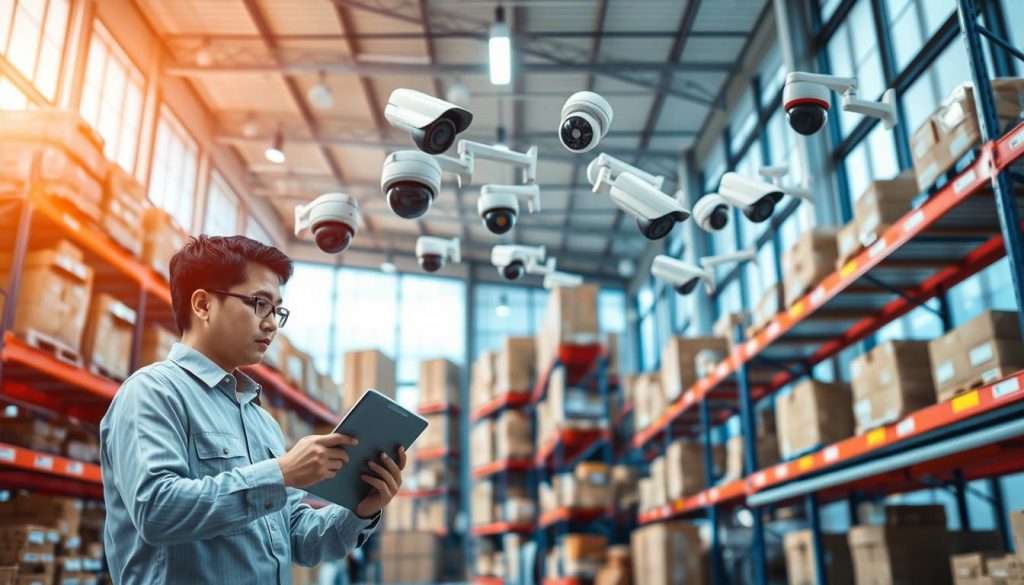
Lighting conditions significantly impact image quality throughout your facility. Professionals assess illumination levels during different operational shifts.
They recommend supplemental lighting where natural conditions prove inadequate. Proper illumination ensures consistent performance regardless of time.
Infrastructure installation requires careful planning for long-term reliability. Wiring routes must protect cables from environmental damage and interference.
Power over Ethernet simplifies deployment while ensuring stable connections. This technology delivers both data and electricity through single cables.
Mounting considerations vary by device type and location. Fixed units need secure attachment points that withstand vibration and movement.
Pan-tilt-zoom devices require stable platforms for smooth operation. Proper positioning ensures optimal viewing angles without obstructions.
System configuration establishes the operational parameters for your network. User access controls define who can view footage and make adjustments.
Recording schedules align with your operational patterns and storage capacity. Alert parameters trigger notifications for specific activity types.
Visible surveillance units deter approximately 60% of potential intruders before incidents occur. This psychological effect complements the technological protection.
Integration with existing protection measures creates unified management. Alarm systems connect with video verification for faster response.
Access control data correlates with footage timestamps for complete incident reconstruction. This unified approach simplifies daily operations.
Testing protocols verify every component functions as intended. Professionals check image clarity, motion detection, and remote access capabilities.
Coverage validation ensures no critical areas remain unmonitored. Commissioning confirms the entire network operates reliably under normal conditions.
Documentation provides essential reference materials for ongoing management. System diagrams show cable routes and device locations clearly.
Camera placement maps help staff understand monitored zones. User manuals explain daily operation procedures and troubleshooting steps.
Maintenance schedules outline regular checks and cleaning requirements. This documentation supports consistent performance over years of operation.
Post-installation support completes the professional service package. Staff training ensures your team can use the system effectively.
System demonstrations show practical applications for daily management. Ongoing technical assistance addresses questions as they arise.
Video retention policies typically span 60 to 90 days for most operations. This balances storage needs with evidentiary requirements.
Regular maintenance checks keep the network running smoothly. Professionals inspect connections, clean lenses, and update software periodically.
These practices ensure your investment delivers consistent protection. They transform theoretical specifications into practical operational advantages.
Your facility gains comprehensive oversight through systematic implementation. Every component works together as part of an intelligent protection ecosystem.
Enhancing Employee Safety and Ensuring Regulatory Compliance with CCTV
The most valuable returns from visual monitoring systems often come from protecting people rather than property. These observation networks serve dual purposes that extend well beyond simple asset protection.
Modern solutions create safer work environments while ensuring legal compliance. They address both human safety concerns and regulatory obligations simultaneously.
Observation technology watches over busy zones like entry points and manufacturing areas. It prevents accidents by spotting dangerous actions early.
These systems contribute to staff welfare beyond traditional security functions. They monitor hazardous locations and identify unsafe behaviors before incidents occur.
Accident prevention represents a key application. High-definition units identify potential safety issues allowing proactive intervention.
Managers can address risks before they escalate into serious problems. This proactive approach reduces workplace injuries significantly.
Compliance monitoring capabilities help facilities adhere to Singapore workplace safety regulations. They also meet industry standards for operational environments.
Regulatory frameworks demand specific safety measures. Professional observation solutions effectively document these compliance efforts.
Incident investigation support comes from recorded video evidence. Footage provides objective data for understanding accidents and implementing preventive measures.
High-quality visuals make it easier to see what happened during events. This clarity supports thorough analysis and corrective actions.
Facilities using comprehensive observation networks report 25% fewer workplace accidents. The documentation also simplifies regulatory audits and compliance verification.
Training applications use actual footage to demonstrate proper safety procedures. Real-life videos teach workers about equipment usage and emergency response protocols.
Staff learn from real scenarios rather than theoretical examples. This practical approach improves retention and application of safety knowledge.
Liability protection aspects clarify incident circumstances through surveillance documentation. This evidence supports proper insurance claims and dispute resolution.
Objective records prevent misunderstandings about workplace events. They provide factual basis for investigations and legal proceedings.
Emergency response enhancement comes from live monitoring capabilities. Cloud-based platforms allow feed viewing from anywhere for quick reaction to dangers.
Supervisors can respond rapidly to accidents, fires, or medical emergencies. Real-time awareness improves outcomes during critical situations.
Documentation of compliance efforts supports regulatory audits effectively. Systems demonstrate due diligence in maintaining safe work environments.
Singapore authorities require proper records for workplace safety verification. Observation networks provide this documentation automatically.
Privacy considerations balance protection needs with employee rights. Proper implementation practices respect legal requirements while maintaining safety.
Clear policies should govern observation in staff areas and break rooms. These guidelines ensure ethical use of monitoring technology.
Safety improvements through visual observation include reduced accident rates. Facilities also experience better emergency response times.
One Singapore logistics company documented their experience. They reduced workplace injuries by 40% within twelve months of implementation.
Another distribution center improved emergency response times by 35%. Their observation network helped identify incidents faster.
These examples show how technology protects both assets and personnel. The dual benefits create comprehensive operational advantages.
Your facility deserves this level of protection for both property and people. The right approach addresses all aspects of workplace safety.
Budgeting for Security: Essential Cost Considerations for Your CCTV System
Smart financial planning for protection technology requires understanding both upfront expenses and long-term value. Many businesses focus solely on purchase prices while overlooking operational savings and risk reduction benefits.
A complete financial analysis reveals how observation networks deliver returns beyond their initial investment. This section breaks down all cost components to help you make informed decisions.
We’ll explore equipment pricing, professional setup fees, and ongoing operational expenses. You’ll also discover potential savings from theft prevention and efficiency gains.
Initial Investment: Equipment and Installation
The starting point involves hardware acquisition and professional deployment. These upfront costs form the foundation of your protection infrastructure.
Observation device pricing varies significantly based on capabilities. Basic bullet models range from $50 to $200 per unit for standard resolution.
Dome units for indoor applications typically cost $200 to $800 each. Their vandal-resistant construction and discreet design justify higher price points.
Advanced PTZ devices represent the premium category at $800 to $2,000 per camera. Their dynamic viewing capabilities and remote control functions suit large facilities.
Recording equipment adds another essential component. Network video recorders with sufficient storage capacity typically start around $600.
Supporting infrastructure includes monitors, cabling, and mounting hardware. These ancillary items often represent 15-20% of total equipment expenses.
Professional deployment represents a separate but critical investment. Expert installation ensures optimal placement and reliable performance.
Labor costs cover comprehensive site assessment and strategic positioning. Technicians analyze your layout to eliminate blind spots and maximize coverage.
Wiring and connectivity setup requires specialized expertise. Proper cable management prevents interference and ensures stable connections.
System configuration establishes user access controls and recording parameters. This technical work transforms components into a cohesive operational network.
Ongoing Costs: Maintenance, Storage, and Potential Savings
Operational expenses continue throughout your system’s lifespan. Understanding these recurring costs helps with accurate long-term budgeting.
Regular maintenance preserves equipment performance and longevity. Scheduled professional checks typically occur quarterly or semi-annually.
Service contracts cover cleaning, software updates, and component inspections. These agreements prevent unexpected failures and ensure continuous operation.
Storage requirements represent a significant ongoing consideration. Video retention policies determine how much historical footage you maintain.
Local storage devices need periodic replacement as they reach capacity limits. Network storage systems offer scalable solutions for growing facilities.
Cloud-based alternatives provide remote access with subscription pricing. These services eliminate local hardware maintenance but create recurring fees.
The financial benefits of comprehensive observation often outweigh these expenses. Documented savings demonstrate compelling return on investment scenarios.
Theft prevention represents the most direct financial advantage. Systems can prevent incidents saving over £31,000 annually in many operations.
Accident reduction improves workplace safety while lowering liability exposure. Facilities report 25% fewer incidents with proper monitoring.
Insurance providers recognize these risk reductions with premium discounts. Businesses often receive 15-20% savings on coverage costs.
Operational efficiency gains create additional value streams. About 60% of managers report better workflow optimization after implementation.
“The most astute financial analysis considers total ownership costs over five years rather than just initial purchase prices. This perspective reveals the true value of professional protection solutions.”
Total cost of ownership analysis compares different options over their expected lifespan. This methodology includes purchase, installation, maintenance, and operational expenses.
Quality systems often demonstrate better long-term value despite higher upfront costs. Their reliability reduces unexpected repair bills and downtime losses.
Financing options make comprehensive solutions accessible for various budgets. Leasing arrangements spread payments over time while preserving capital.
Phased implementation approaches address immediate priorities first. This strategy allows gradual expansion as resources become available.
Hidden considerations include future expansion needs and technology upgrades. Your system should accommodate growth without complete replacement.
Compatibility with emerging developments ensures long-term relevance. Forward-thinking designs integrate with new operational technologies.
Budgeting templates help businesses plan their investments effectively. These tools account for all cost components across the implementation timeline.
Cost estimation worksheets consider your facility’s specific characteristics. They adjust calculations based on size, layout complexity, and operational hours.
Professional consultations provide the most accurate financial projections. Experts analyze your unique situation to forecast expenses and savings.
Consider these financial planning recommendations for your operation:
- Equipment Selection: Balance capability requirements with budget constraints across different zones
- Installation Quality: Invest in professional deployment to ensure reliable long-term performance
- Maintenance Planning: Allocate resources for regular servicing to prevent unexpected failures
- Storage Strategy: Choose retention solutions that balance accessibility with cost efficiency
- Savings Calculation: Document theft prevention, accident reduction, and insurance benefits
- Financing Evaluation: Compare purchase, leasing, and phased implementation approaches
- Growth Accommodation: Select scalable solutions that expand with your business needs
This comprehensive approach transforms protection from an expense into a strategic investment. Proper financial planning ensures optimal alignment between costs and operational benefits.
Trusted Brands and Technology in Warehouse Surveillance Systems
The market offers numerous options for industrial monitoring equipment. Only a handful of manufacturers consistently deliver the quality needed for demanding environments.
These industry leaders have proven themselves through years of reliable performance. They understand the unique challenges of large-scale operations.
Hikvision stands as a global leader in visual observation solutions. Their Dark Fighter technology represents a significant advancement for low-light conditions.
This innovation allows clear imaging in near-total darkness. It uses specialized sensors to capture details that standard units miss.
The company offers comprehensive packages for entire facilities. Their products integrate smoothly with various management platforms.
Dahua provides another excellent choice for industrial applications. Their product range includes advanced analytics and thermal imaging capabilities.
These features help identify potential issues before they escalate. Thermal detection can spot intruders through foliage or complete darkness.
Integrated platforms combine multiple protection functions into unified systems. This simplifies management and improves response times.
Digital Watchdog has built a strong reputation for reliability. Their equipment withstands harsh environmental conditions effectively.
This manufacturer focuses on user-friendly interfaces and robust construction. Their solutions work well in Singapore’s tropical climate.
Selecting the right provider involves several important criteria. Product reliability should be your primary consideration.
Technological innovation ensures your investment remains relevant for years. Local support availability matters for timely maintenance and repairs.
Compatibility with existing infrastructure prevents costly integration challenges. A unified approach often delivers better performance than mixed implementations.
“The best manufacturers don’t just sell equipment—they provide complete solutions backed by ongoing support and continuous innovation.”
Industry standards continue to evolve with technological progress. Resolution capabilities now regularly exceed 4K Ultra HD for critical areas.
Analytics features include intelligent motion detection and pattern recognition. These tools reduce false alarms while catching genuine threats.
Integration protocols allow different components to communicate seamlessly. Future development roadmaps show increasing AI integration and cloud capabilities.
Each brand offers specific advantages for storage facility applications. Hikvision’s low-light performance suits areas with variable illumination.
Dahua’s analytics help optimize operational workflows beyond basic protection. Digital Watchdog’s durability withstands Singapore’s humidity and temperature variations.
Specialized units exist for expansive spaces and challenging environments. These address specific protection needs with targeted technology.
Warranty and support considerations impact long-term satisfaction. Product guarantees should cover defects for reasonable periods.
Technical assistance must be readily available when issues arise. Repair and replacement policies should be clear and responsive.
Compatibility between different manufacturers can present challenges. Mixed-brand implementations sometimes require additional integration work.
Unified systems from single providers often operate more smoothly. They reduce complexity and simplify troubleshooting processes.
Singapore-specific factors influence brand selection decisions. Local distributor support ensures quick access to parts and expertise.
Regulatory compliance requires certain specifications for different applications. Climate-appropriate products handle tropical conditions without premature failure.
Evaluate providers based on your facility’s specific requirements. General market popularity doesn’t always match particular operational needs.
Consider your layout, inventory value, and operational patterns. Match technological capabilities to these unique characteristics.
The right choice balances innovation with proven reliability. It should support both immediate protection and future expansion needs.
Your investment deserves the confidence that comes with trusted manufacturers. Their technology forms the foundation of your comprehensive observation network.
Integrating Advanced Technology: AI and Cloud-Based CCTV Solutions
Artificial intelligence transforms traditional observation into proactive threat prevention and operational optimization. These smart systems analyze patterns instead of just recording events.
Machine learning algorithms identify what normal activity looks like in your facility. They then flag deviations that might indicate problems. This reduces false alarms from routine operations.
Facial recognition technology adds another layer of protection. Authorized personnel gain access while unknown individuals trigger alerts. Object detection can identify specific items or vehicles.
Behavioral analysis goes beyond simple motion detection. Systems learn typical employee movements and workflow patterns. Unusual behaviors like loitering or unauthorized access attempts get immediate attention.
Cloud-based storage revolutionizes data management. Footage becomes accessible from any internet-connected device. This eliminates the need for extensive on-site hardware.
Scalable solutions adjust to your changing needs. Storage capacity expands without replacing physical equipment. Remote access allows managers to check operations from anywhere.
“Intelligent systems don’t just watch—they understand. They distinguish between a delivery truck and a theft attempt, between shift change and suspicious loitering.”
Edge computing processes video analytics directly at the source. Cameras with built-in intelligence make decisions locally. This approach reduces bandwidth requirements significantly.
Response times improve when analysis happens immediately. Network strain decreases without constant video streaming. Local processing maintains functionality during internet outages.
Internet of Things integration creates interconnected protection ecosystems. Motion sensors communicate with observation units. Access controls sync with video verification systems.
Environmental monitors can trigger recording when detecting unusual conditions. Temperature sensors might alert managers to potential fire risks. This holistic approach covers all operational aspects.
Mobile applications provide real-time oversight capabilities. Smartphone alerts notify managers of critical events. Remote system adjustments maintain optimal performance from any location.
Push notifications ensure timely responses to potential incidents. Live viewing apps show current conditions at your facilities. Management becomes possible during travel or off-hours.
Data analytics platforms extract business intelligence from footage. They identify workflow bottlenecks and efficiency opportunities. Operational trends become visible through pattern analysis.
These insights help optimize space utilization and labor allocation. Peak activity periods reveal staffing needs. Traffic patterns suggest layout improvements.
Cybersecurity measures protect connected systems from digital threats. Encryption ensures video data remains confidential. Access controls limit system entry to authorized users only.
Regular vulnerability assessments identify potential weaknesses. Software updates patch discovered security gaps. Multi-factor authentication adds extra protection layers.
Future developments include 5G connectivity for faster data transmission. Augmented reality interfaces might overlay analytics onto live views. Predictive analytics could forecast potential incidents before they occur.
Implementation requires careful planning and professional guidance. Assess your current infrastructure’s compatibility with new technologies. Consider bandwidth requirements and network capacity.
Phased adoption often works best for existing operations. Start with pilot areas before expanding throughout the facility. Training ensures staff understand new capabilities and procedures.
Integration with legacy systems maintains continuity during transition periods. Professional installation optimizes placement for intelligent analytics. Configuration tailors alerts to your specific operational patterns.
These advanced tools deliver measurable business advantages. Theft prevention becomes more precise with intelligent detection. Operational efficiency improves through data-driven insights.
Your investment evolves from passive recording to active management. Technology becomes a strategic partner in protecting assets and optimizing workflows.
Maintaining Your Investment: Ensuring Long-Term CCTV System Reliability
Proper system maintenance transforms your initial installation from a static purchase into a dynamic, evolving asset. This ongoing care protects your capital expenditure while ensuring continuous operational effectiveness.
Regular attention prevents performance degradation that creates security vulnerabilities. A proactive strategy keeps your technology delivering optimal results year after year.
Comprehensive upkeep programs address both physical components and digital infrastructure. They combine scheduled checks with responsive interventions when issues emerge.
Scheduled Professional Maintenance Checks
Quarterly inspections by qualified technicians form the foundation of reliable operation. These visits typically occur every three months to catch problems early.
Technicians perform several critical tasks during each check. They clean lenses to remove dust, dirt, and environmental buildup that obscures video quality.
Alignment verification ensures each unit still covers its intended area properly. Settlement or vibration can shift mounts over time, creating blind spots.
Component testing evaluates power supplies, connections, and recording functions. This proactive approach identifies potential failures before they disrupt your surveillance.
Preventative tasks address issues that might cause future system failures. Cable integrity checks look for wear, corrosion, or animal damage.
Weatherproofing inspections verify seals remain intact against Singapore’s humidity. Housing examinations check for cracks or condensation that could damage electronics.
“Regular professional maintenance reduces unexpected system failures by approximately 70%. Facilities with scheduled programs experience 40% fewer security gaps from equipment issues.”
Emergency repair protocols ensure rapid response when critical failures occur. Service providers should offer guaranteed response times for urgent situations.
These protocols prioritize components that protect high-value assets or critical entry points. Temporary solutions may deploy while awaiting permanent repairs.
Seasonal considerations address Singapore’s tropical climate challenges. Humidity protection requires special attention to electronic components and connections.
Temperature management prevents overheating during warmer months. Storm preparation includes securing external mounts and verifying waterproof ratings before monsoon seasons.
Managing Data Storage and System Updates
Data storage requires careful capacity planning and policy implementation. Most operations maintain footage for 60 to 90 days to balance evidentiary needs with storage costs.
Retention policies should align with operational requirements and regulatory expectations. High-risk areas might need longer archival periods than general storage zones.
Backup system verification ensures redundancy protects against data loss. Regular tests confirm automatic failover mechanisms function correctly during primary storage failures.
Software updates maintain security and performance across your entire network. Camera firmware updates patch vulnerabilities and add new features from manufacturers.
Recording software updates improve stability and compatibility with newer devices. Analytics platform updates enhance detection algorithms and reporting capabilities.
Security patches address newly discovered vulnerabilities that could compromise your system. These updates should occur promptly to prevent exploitation by malicious actors.
Performance monitoring tracks system health through key metrics. Network bandwidth usage indicates whether video streaming affects other operational technologies.
Storage capacity trends show when you’ll need expansion to maintain retention policies. Image quality metrics detect gradual degradation that might not be immediately visible.
Degradation trends help schedule proactive interventions before users notice problems. Gradual focus issues or color shifts can indicate lens or sensor problems developing over time.
Documentation requirements create an audit trail for all maintenance activities. Service records detail each inspection, repair, and replacement performed on your equipment.
Replacement parts tracking helps predict future needs based on component lifespans. System modification logs record any configuration changes or expansions to your network.
Effective maintenance management uses practical tools for consistent implementation. Schedule templates help businesses plan quarterly, semi-annual, and annual tasks.
Checklist tools ensure technicians complete all necessary steps during each visit. They standardize procedures across different service intervals and technician teams.
Consider this maintenance framework for your operation:
- Quarterly Tasks: Lens cleaning, alignment checks, basic component testing, storage capacity review
- Semi-Annual Tasks: Cable integrity inspection, housing examination, software update review, backup system test
- Annual Tasks: Comprehensive system audit, environmental sealing verification, performance benchmark testing, documentation review
- Emergency Protocols: Defined response times, priority component identification, temporary solution deployment
This structured approach ensures your investment continues delivering value throughout its lifespan. Proper upkeep maintains both security effectiveness and operational intelligence capabilities.
Securing Your Future: Partnering for a Tailored Warehouse Surveillance Solution
Beyond technology selection lies the critical decision of choosing qualified implementation partners. Your facility’s protection depends on professionals who understand Singapore’s unique operational landscape.
Licensed contractors provide essential credentials and liability protection. They conduct thorough site assessments to identify specific vulnerabilities. This personalized approach ensures your system addresses actual risks.
Expert consultation leads to tailored solutions matching your operational needs. Professional installation guarantees optimal performance from day one. Ongoing support maintains system reliability through maintenance contracts.
These partnerships transform protection into a strategic advantage. They deliver peace of mind while safeguarding your valuable assets. Your investment in professional collaboration ensures long-term operational resilience.
FAQ
What are the most important features to look for in a warehouse surveillance system?
Focus on high-definition resolution for clear identification, robust night vision for 24/7 monitoring, and remote viewing capabilities. Intelligent features like motion detection and analytics are also crucial for proactive asset protection and operational oversight.
How does a professional installation differ from a DIY setup for my storage facility?
Professional installers from companies like Dahua or Hikvision ensure optimal camera placement to eliminate blind spots, provide proper cable management, and integrate the system correctly with your network. This guarantees reliable performance, full coverage of your assets, and long-term system stability.
Can these systems help improve employee safety and workflow?
Absolutely. Beyond theft prevention, surveillance technology monitors for unsafe practices in loading zones or storage areas. It also helps streamline operations by providing insights into workflow bottlenecks and ensuring protocols are followed, enhancing overall safety and efficiency.
What are the ongoing costs after the initial purchase?
Ongoing considerations include maintenance for cleaning lenses and checking connections, data storage fees for recorded footage (whether on-premises NVR or cloud-based), and potential software updates. These costs are often offset by the significant reduction in loss and insurance savings.
How do advanced technologies like AI integrate with traditional monitoring?
A> Modern systems from brands like Axis Communications integrate AI to analyze video feeds in real-time. This allows for intelligent alerts on specific events—like unauthorized entry in restricted zones or loitering—moving beyond simple recording to providing actionable business intelligence for your operation.


