

Buyer’s Guide: What to consider before installing CCTV?
Setting up surveillance for your Singapore property requires careful thought. A rushed decision often leads to gaps in security coverage or equipment that doesn’t meet your needs. Proper planning transforms a simple camera purchase into a reliable, integrated protection solution.
Globally, over 770 million cameras help deter criminal activity. This statistic highlights the value of visual monitoring for both homes and businesses. In Singapore’s urban environment, a well-planned system acts as a powerful deterrent and evidence collection tool.
Effective surveillance involves more than mounting devices on walls. You must assess your property’s unique layout, identify critical entry points, and understand local regulations. The right equipment choice depends on your specific monitoring goals and footage storage requirements.
This guide walks you through essential planning factors. We cover everything from initial assessment to long-term maintenance. Skipping these steps can result in blind spots, legal complications, or wasted investment in the wrong security system.
Key Takeaways
- Thorough planning prevents security gaps and ensures your system meets actual needs.
- A CCTV installation should be viewed as an integrated solution, not just camera placement.
- Global data shows surveillance cameras significantly help in deterring crime.
- Proper assessment of your property’s layout and entry points is crucial for effective coverage.
- Understanding local regulations in Singapore avoids potential legal issues.
- Equipment selection should align with specific monitoring goals and storage requirements.
- Skipping planning steps can lead to ineffective systems and wasted financial investment.
1. Conduct a Thorough Security Needs Assessment
A successful CCTV installation begins with a clear map of your unique security landscape. Generic solutions often fail because every property has different vulnerabilities and goals. This initial planning phase ensures your investment delivers targeted protection.
Evaluating Your Property’s Layout and Risk Points
Start by examining your physical space. The type of property—an HDB flat, landed home, or commercial shop—dictates different security factors.
Walk around and note all entry and exit points. Look at windows, doors, gates, and fire escapes. Consider how the layout influences movement and visibility.
Key questions to ask include:
- Are there dark corners or overgrown shrubs that provide cover?
- What is the lighting like at night for camera visibility?
- Which zones have high foot traffic or valuable assets?
This walk-through reveals the specific coverage your system requires.
Defining Your Surveillance Objectives: Deterrence vs. Discreet Monitoring
Your goal shapes your entire cctv approach. You must decide if you want visible deterrence or hidden observation.
Prominent cameras act as a powerful warning. They can discourage trespassers before an incident occurs. This is ideal for perimeter security.
Discreet monitoring serves a different purpose. Hidden devices are excellent for gathering evidence without altering behavior. This method is often used for internal surveillance.
Many systems use a mix of both strategies. The right balance depends on your primary needs.
Identifying Critical Areas and Potential Blind Spots
With your objectives set, pinpoint exact locations for your cameras. Critical areas always need attention.
These typically include main doors, first-floor windows, driveways, and garages. Inside, hallways, staircases, and storage rooms are common targets.
Do not forget secluded pathways and side gates. These secondary access points are often exploited.
The final, crucial step is hunting for blind spots. These are zones your cameras cannot see. Test sightlines from potential mounting positions.
Corners behind large objects or areas under deep eaves can create hidden spots. Proper planning eliminates these gaps, ensuring full coverage for your home or business.
2. Understand Legal Compliance and Privacy Laws in Singapore
Before mounting a single camera, understanding local regulations prevents serious consequences. Singapore enforces strict rules governing surveillance equipment use. Ignoring these laws can result in fines reaching $10,000 or even jail time.
Your security setup must operate within legal boundaries. This protects you from liability while respecting others’ rights. Proper compliance turns your system into a legitimate tool for protection.
The Personal Data Protection Act (PDPA) and Your Responsibilities
The Personal Data Protection Act (PDPA) is Singapore’s core privacy law. It regulates how personal data—including video footage—is collected, used, and disclosed. As a system owner, you become a data controller under this law.
Your responsibilities are clear. You must have a legitimate purpose for recording. The footage collected should be necessary for that stated purpose.
Safe handling and storage of recorded material is mandatory. You must also prevent unauthorized access or disclosure. The PDPA ensures your surveillance activities respect individual privacy rights.
Notification Requirements: Signage and Consent
Transparency is not optional. People must know they are being recorded. Clear signage is the most common method for notification.
Signs should be visible at all entrances to monitored areas. They must state that CCTV surveillance is in operation. This fulfills your legal duty to inform.
In some cases, verbal notice is also required. This applies to workers, regular visitors, or domestic helpers within your home. Obtaining their acknowledgment helps ensure full compliance.
Proper notification builds trust. It demonstrates that your system operates openly and lawfully.
Obtaining Necessary Permits (e.g., for HDB Flats)
Your property type determines if additional permits are needed. For HDB flats, the Housing & Development Board often requires approval. This is especially true for cameras mounted outside your unit.
The camera’s field of view is critical. If it captures common areas or a neighbor’s property, permission is essential. You may need consent from the Neighbourhood Committee or Residents’ Welfare Association.
For landed properties, similar rules apply when coverage extends beyond your boundary. Checking with relevant authorities beforehand avoids costly rework. Always get written approval when required.
Respecting Privacy: Prohibited Areas for Camera Placement
Certain spaces are strictly off-limits for surveillance. These areas represent clear privacy violations under Singaporean law.
Never place cameras where people have a reasonable expectation of privacy. This fundamental rule protects personal dignity.
- Bathrooms and toilets: Any recording here is a serious criminal offense.
- Bedrooms: Private sleeping areas must remain camera-free.
- Changing rooms or dressing areas: These spaces demand absolute privacy.
- Other people’s private property: Your cameras should only monitor your own premises.
Keep these boundaries in mind during your planning phase. Make sure your camera placement focuses on security zones, not private ones. This balance is key to a lawful cctv installation.
Following these rules does more than avoid penalties. It establishes your system as a responsible form of control and monitoring.
3. Choosing the Right CCTV Equipment for Your Needs
The effectiveness of your monitoring setup depends heavily on matching technology to your specific requirements. Your security assessment defines the problems; the right equipment provides the solutions. This section breaks down the hardware that forms the backbone of any reliable surveillance network.
Indoor vs. Outdoor Cameras: Key Features and Durability
Environment dictates your first major choice. Indoor and outdoor cameras are built for different challenges. Using the wrong type leads to quick failure.
Outdoor units must withstand Singapore’s tropical climate. Look for weatherproof ratings like IP66 or IP67. These codes guarantee resistance to heavy rain and dust.
Vandal resistance is another critical outdoor feature. A tough housing prevents tampering or damage. Low-light capability, often called night vision, is essential for clear recording after dark.
Indoor cameras prioritize discretion and wider viewing angles. They typically lack heavy-duty casings. Their design focuses on blending into living or office spaces while providing comprehensive coverage.
Camera Types Explained: Dome, Bullet, PTZ, and IP Cameras
Form factor affects both function and psychology. Each type serves a distinct purpose in a complete security system.
Dome cameras offer a 360-degree view in large indoor areas. Their discreet, low-profile design makes it hard to tell which direction they’re facing. This uncertainty can deter unwanted behavior.
Bullet cameras are highly visible deterrents. Their long, cylindrical shape clearly indicates monitoring. They are ideal for covering specific entry points or long driveways.
PTZ (Pan-Tilt-Zoom) models provide remote control. You can pan across a scene, tilt up or down, and zoom in on details. This flexibility is perfect for actively monitoring large, dynamic spaces.
Network or IP cameras connect directly to your data network. They enable online access to live feeds and recorded video from anywhere. Modern cctv systems increasingly rely on this technology.
Resolution and Image Quality: From HD to 4K
Image clarity determines if you can identify crucial details. Blurry footage is often useless for evidence. Modern cameras should record in at least 1080p Full HD.
Higher resolution means more pixels and finer detail. 4K quality captures license plates or facial features from greater distances. This level of detail can be case-breaking.
Consider your storage capacity when choosing resolution. Higher-resolution files require more space. Balance your need for detail with practical storage limits.
Good low-light performance is as important as resolution. A camera with excellent 4K specs but poor night vision fails in darkness. Look for models with enhanced infrared or starlight sensors.
Essential System Components: NVR/DVR, Storage, and Power Supply
CCTV cameras are only one part of the equation. The backend components manage, store, and power your entire operation. Neglecting these elements creates a weak system.
The recorder is the brain. A Digital Video Recorder (DVR) works with analog cameras. A Network Video Recorder (NVR) pairs with IP cameras. These devices process and archive all footage.
Storage solutions come in two main forms. Local hard drives sit inside your NVR/DVR. They offer direct control but need periodic replacement. Cloud storage keeps footage on remote servers, accessible from any device.
A stable power supply is non-negotiable. Systems often use Power over Ethernet (PoE) for simpler cabling. For critical protection, add an Uninterruptible Power Supply (UPS). This backup keeps cctv running during brief outages.
Advanced cctv systems integrate additional features. AI-enabled analytics can recognize faces or detect unusual motion. IoT connectivity allows your surveillance to work with smart alarms and access control.
Choosing each component carefully ensures your security investment performs reliably for years. The right combination addresses both current needs and future expansion.
4. Strategic Camera Placement for Maximum Coverage
Optimal camera placement bridges the gap between having security hardware and achieving genuine property protection. Even the most advanced equipment fails if positioned incorrectly. This phase turns your assessment plan into a functional monitoring network.
Every mounting decision should serve a clear purpose. Think about what you need to see and identify. Proper positioning eliminates guesswork during review of footage.
Key Locations: Entry Points, Pathways, and Vulnerable Zones
Start with your property’s most critical areas. These are the spots where incidents are most likely to occur. A systematic approach ensures you don’t miss essential coverage.
Primary entry points demand your first attention. This includes all exterior doors, gates, and accessible first-floor windows. Position cameras to capture faces clearly, not just the tops of heads.
Don’t overlook secondary access routes. Side gates, basement windows, and fire escapes need watching. These less obvious paths are often exploited.
Interior choke points are equally important. Hallways, staircases, and room entrances act as natural funnels for movement. Monitoring these areas provides a complete picture of internal activity.
For commercial property, add cash registers, stock rooms, and parking lots to your list. Residential plans should cover driveways, gardens, and delivery porches.
Technical Tips: Field of View, Height, and Lighting Conditions
Technical details make or break your camera’s effectiveness. Understanding a few core concepts prevents common mistakes.
Field of View (FOV) determines how much a camera can see. Wide-angle lenses (60-110 degrees) cover more ground with fewer devices. This reduces potential blind spots between cameras.
For expansive zones like parking lots, consider PTZ models. These cameras can pan, tilt, and zoom to track activity across large areas.
Mounting height is a crucial factor. Place outdoor units 8-10 feet high to deter tampering. For facial identification at doors, a lower position (hip level) often works better.
Always test the camera’s angle before final installation. Make sure the lens isn’t blocked by branches or architectural features.
Lighting dramatically affects image quality. Avoid pointing cameras directly at bright light sources like windows or lamps. This causes glare and washes out the image.
For 24-hour monitoring, verify the camera’s night vision range covers the entire target zone. Add external infrared illuminators if needed for dark corners.
Balancing Security Coverage with Privacy Compliance
Your security setup must respect legal and ethical boundaries. Comprehensive coverage should never invade private spaces.
Angle each camera carefully to monitor only your property. The lens should not peer into neighbors’ windows, gardens, or public walkways. This simple adjustment avoids serious privacy complaints.
Remember the prohibited zones from Singapore’s privacy laws. Never place cameras in bathrooms, changing rooms, or bedrooms. These areas are strictly off-limits.
Clear signage remains a non-negotiable requirement. Post notices at all monitored entrances. This informs visitors and staff about active surveillance.
For shared spaces in HDB blocks or condos, obtain written consent from management. Documenting approval protects you from future disputes.
A well-planned system provides peace of mind without creating tension. It protects your space while showing respect for community privacy standards.
5. Planning Your Budget and Considering Total Cost
Financial planning for surveillance extends far beyond the initial purchase of cameras. A complete budget accounts for both the capital outlay and the recurring costs of operation. This framework ensures your security system is sustainable and delivers long-term value.
Smart allocation of funds aligns your spending with your primary protection goals. It prevents overspending on unnecessary features or under-investing in critical areas. Viewing cost through this lens leads to more effective decisions.
Upfront Costs: Equipment and Professional Installation
The first major expense is the hardware kit. This includes your cctv cameras, a network video recorder (NVR), cables, and a stable power supply. The total depends heavily on the number of cameras and their technical specifications.
Higher-resolution models for sharper recording cost more. So do cameras with built-in analytics or robust outdoor housing. Your coverage needs directly influence this part of the budget.
Next, factor in the installation method. A professional cctv installation ensures optimal placement and reliable setup. This service adds to the upfront cost but provides expertise and warranty.
A DIY approach saves on labor but requires technical skill. Mistakes in cabling or configuration can create problems later. Weighing this choice is a key early factor.
Ongoing Expenses: Storage Solutions (Cloud vs. Local) and Maintenance
After setup, operational costs begin. Video storage is the most significant ongoing expense. You must choose between local and cloud-based solutions.
Local storage uses hard drives inside your NVR. There are no monthly fees, but drives wear out and need replacement every few years. You are also responsible for your own data backup.
Cloud storage involves a recurring subscription fee. It offers remote access and off-site protection for your footage. This convenience comes with a continuous operational cost.
Regular maintenance is another line item. This includes cleaning camera lenses, checking connections, and updating software. Planning for these things keeps your system running smoothly.
Cost vs. Benefit: Investing in Advanced Features (AI, Smart Integration)
Advanced technology often carries a higher price tag. The decision to invest should be based on clear benefits. These features can provide long-term value and even cost savings.
AI-powered analytics, like person detection, reduce false alarms from pets or swaying trees. This saves you time reviewing footage and can lower monitoring costs. It makes your security more intelligent.
Smart home integration allows your cctv to work with alarms and smart lights. This creates a more responsive security ecosystem. The initial investment enhances overall protection.
Consider your priorities. For a high-traffic business, sharp 4K detail and AI might be essential. For basic home monitoring, reliable HD cameras could suffice. Investing in the right way maximizes your return on security.
6. Key Factors for Installation and System Integration
Successful deployment hinges on proper setup methods and infrastructure reliability. This phase turns your planned security system into an operational asset. Technical execution determines whether your investment delivers consistent protection.
Each decision during setup affects long-term performance. From mounting cameras to connecting components, precision matters. A well-integrated cctv system operates seamlessly for years.
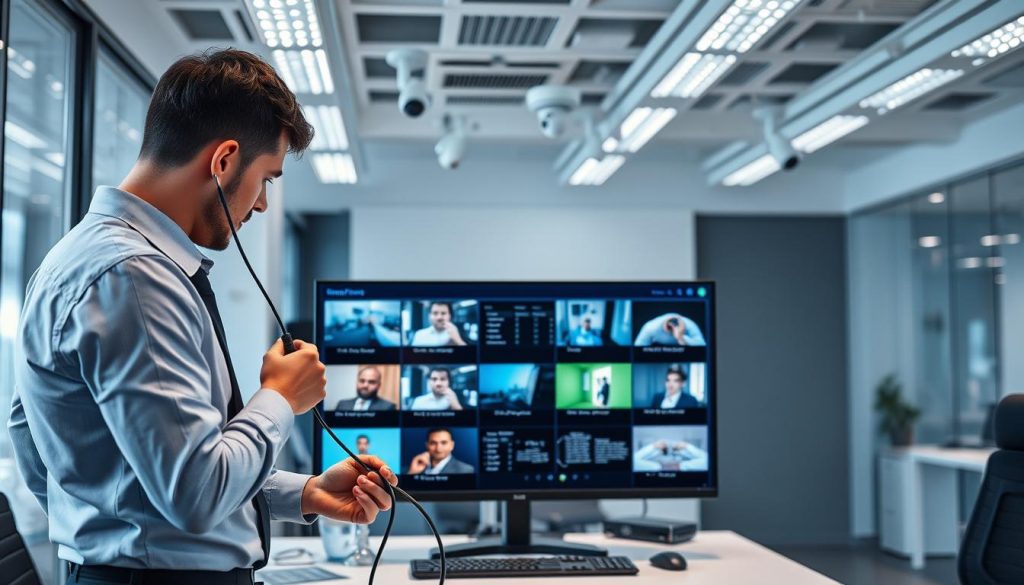
Professional Installation vs. DIY: What to Expect
Choosing your setup approach impacts results immediately. Professional installation brings certified expertise to your project. Technicians handle mounting, wiring, and configuration with precision.
Guaranteed workmanship comes with this service. Professionals ensure cameras are positioned for optimal coverage. They verify all connections and test the entire network.
Compliance with local regulations is another benefit. Installers know Singapore’s specific requirements for signage and placement. This knowledge prevents legal issues after setup.
The DIY route offers different advantages. It provides complete control over every aspect of your project. You can customize layouts and schedules according to personal preference.
Technical knowledge is essential for self-installation. You must understand network configuration and power requirements. Cable management and weatherproofing also demand careful attention.
Cost savings can be significant with DIY installing cctv. However, hidden expenses may appear if mistakes require correction. Time investment is another important factor to weigh.
Ensuring Reliable Infrastructure: Power, Connectivity, and Cabling
Your surveillance network depends on stable underlying systems. Without reliable infrastructure, even advanced cameras fail. Dedicated circuits provide consistent electricity to all components.
Consider using an uninterruptible power supply for critical areas. This backup keeps cameras recording during brief outages. It’s especially valuable for commercial security applications.
Network connectivity determines remote access capability. Wired Ethernet offers the most stable connection for IP cameras. Wi-Fi setups require strong signals throughout your property.
Power over Ethernet simplifies installing cctv systems dramatically. A single cable carries both data and electricity to each device. This approach reduces clutter and installation complexity.
Cable selection affects durability and performance. Outdoor-rated Ethernet cables withstand Singapore’s humid climate. Proper conduits protect wires from physical damage and pests.
Plan for future expansion when laying infrastructure. Extra conduit space allows adding cameras later. A scalable design protects your initial investment as needs evolve.
Integrating CCTV with Other Security Systems (Alarms, Access Control)
Standalone cameras provide basic monitoring capability. Integrated systems create a comprehensive security ecosystem. This approach multiplies the effectiveness of each component.
Connecting your cctv system with burglar alarms creates automated responses. Motion sensors can trigger specific cameras to begin recording. This saves storage space while capturing crucial events.
Access control systems work beautifully with surveillance networks. When a door or gate is accessed, nearby cameras activate automatically. This provides visual verification of all entry and exit activity.
Smart home integration adds another layer of functionality. Your surveillance can connect with lighting and audio systems. Lights can illuminate areas where motion is detected.
Centralized management simplifies daily operations. One interface controls cameras, alarms, and access points. This unified view enhances situational awareness dramatically.
For commercial properties, integration is particularly valuable. Linking surveillance with point-of-sale systems helps prevent internal theft. Time-stamped video correlates with transaction records.
Regular technical support maintains these integrated networks. Professionals can troubleshoot connections between different equipment types. They also perform software updates and hardware repairs.
Make sure your integration plan includes testing all automated responses. Verify that alarms trigger correct camera sequences. Confirm that access events generate proper recording alerts.
When you consider installing integrated systems, consult specialists familiar with multiple technologies. Companies like professional CCTV installers often provide comprehensive integration services. Their expertise ensures different components communicate effectively.
A cohesive security system delivers protection beyond simple video capture. It creates intelligent responses to potential threats. This proactive approach represents the future of property security in Singapore.
7. Ensuring Long-Term Performance and Security
A CCTV system’s true value emerges through consistent performance and ongoing care. Your security investment requires regular maintenance to remain fully effective. Simple tasks preserve recording quality and system reliability.
Clean camera lenses monthly to prevent dust buildup. Schedule firmware updates to patch vulnerabilities. Test playback functionality to verify all cameras capture clear footage.
Manage your storage according to PDPA guidelines. Establish retention periods for different data types. Securely delete old recordings when they’re no longer needed.
Review camera angles and system settings periodically. Family routines and property layouts change over time. Adjust your monitoring approach to match evolving security needs.
This proactive approach keeps your protection strong. Regular attention ensures your CCTV delivers peace of mind for years. Effective security is an ongoing commitment, not just initial setup.
FAQ
How do I know if I need professional CCTV installation or can do it myself?
A DIY setup can work for basic indoor systems. For comprehensive coverage, outdoor cameras, or complex wiring, professional installation is best. Experts ensure optimal placement, secure mounting, and proper integration with your home’s power and network. They also help you navigate local regulations in Singapore.
What are the most important legal rules for CCTV in Singapore?
A> The main law is the Personal Data Protection Act (PDPA). You must notify people with clear signage if cameras record public or common areas. Avoid pointing your equipment into neighbors’ homes. For HDB flats, check if you need a permit before starting any work.
What’s the difference between cloud and local video storage?
Local storage saves footage to a Network Video Recorder (NVR) or hard drive in your home. It’s a one-time cost. Cloud storage uploads video over the internet for a monthly fee, allowing remote access and backup if equipment is damaged. Many systems offer both for complete data protection.
Where should I never place my security cameras?
Never install them in private areas like bathrooms or bedrooms. Even in your own home, this violates privacy norms. Also, avoid angling them to capture footage inside a neighbor’s window or unit. Focus your surveillance on your property’s entry points and vulnerable zones.
How much does a good home CCTV system cost?
Budget depends on camera count, features, and installation. A basic 2-camera kit may start around a few hundred dollars. Full systems with 4K resolution, night vision, and professional setup cost more. Remember to factor in ongoing expenses for cloud services or future maintenance.
What camera features are essential for clear footage?
A> Look for high resolution (1080p or 4K) and good low-light performance with infrared LEDs. A wide field of view covers more area. For outdoors, ensure the housing is weatherproof. Features like motion detection and two-way audio add extra layers of security and control.
How can I make sure my cameras don’t have blind spots?
A> Conduct a walk-through of your property. Identify all doors, windows, gates, and dark pathways. Map out camera angles to cover these critical areas. Using different types, like wide-angle dome cameras and more focused bullet cameras, can eliminate gaps in your security coverage.
Can my CCTV system work with other security equipment?
A> Yes, modern IP cameras and systems can often integrate with smart home alarms, door sensors, and access control. This creates a unified security system. Events can trigger linked actions, like a camera recording when an alarm is tripped, providing a complete picture of any incident.


