
When Should I Replace My Security Cameras? A Guide
Modern surveillance systems form the backbone of property protection in Singapore’s evolving security landscape. Technological advancements and increasing security threats make regular system assessments essential for both homes and businesses.
Up-to-date surveillance equipment significantly contributes to crime prevention efforts. Studies show modern systems work better at deterring criminal activity than outdated models.
Proactive replacement decisions depend on equipment lifespan, performance degradation, and alignment with contemporary security requirements. Understanding optimal timing helps avoid protection gaps while potentially saving costs through improved efficiency.
Companies like Wen Hong provide specialized Singapore CCTV solutions tailored to current challenges. Proper maintenance extends camera life and ensures compliance with local regulations.
Key Takeaways
- Regular system assessments are crucial for optimal property protection
- Technological advancements demand periodic surveillance upgrades
- Modern systems significantly improve crime prevention capabilities
- Proactive replacement avoids security gaps and improves efficiency
- Proper maintenance extends equipment lifespan and ensures compliance
- Specialized solutions address Singapore’s unique security challenges
- Strategic replacement planning represents an investment in comprehensive protection
The Critical Role of Security Cameras in Modern Protection
Visual surveillance forms the foundation of comprehensive property defense strategies. These systems serve as essential components for both homes and businesses across Singapore.
Visible monitoring equipment acts as a powerful deterrent against criminal activity. Potential offenders often reconsider their actions when they know they’re being watched.
“Approximately 80% of CCTV footage used in court cases proves unhelpful due to poor quality.”
This statistic highlights the critical need for high-resolution recording capabilities. Modern technology addresses this gap with impressive clarity.
Today’s surveillance solutions offer remarkable advancements. High-definition recording at 1080p or 4K resolution captures crucial details. Night vision technology ensures clear images even in challenging lighting conditions.
Cloud storage represents a significant upgrade over traditional local options. This approach provides unlimited capacity and remote access benefits. Users can review footage from anywhere with internet connectivity.
Integration with smart home automation enhances protection capabilities. These systems work together to create comprehensive security networks. Automated alerts notify property owners of potential issues in real-time.
Regular updates maintain system integrity against cyber threats. This proactive approach prevents vulnerabilities and potential breach incidents.
High-quality surveillance supports faster emergency response times. Law enforcement agencies can utilize clear footage for effective collaboration. This partnership strengthens community safety efforts throughout Singapore.
Investment in advanced monitoring technology represents a strategic layer in property protection. These systems deliver peace of mind through reliable performance and modern features.
How Long Should Your Security Cameras Last?
Understanding equipment longevity helps property owners plan surveillance investments effectively. Different camera types offer varying operational periods before requiring upgrades.
Quality construction and environmental conditions significantly impact service life. Singapore’s tropical climate presents unique challenges for outdoor surveillance equipment.
Lifespan Expectations by Camera Type
Analog surveillance systems typically deliver reliable performance for 5-10 years. These robust devices withstand environmental challenges better than some modern alternatives.
IP-based cameras usually last 3-5 years due to complex internal components. Their advanced features come with slightly shorter operational periods.
Recording equipment demonstrates impressive durability. NVR and DVR systems can function effectively for 5-10 years depending on quality.
Commercial-grade cameras typically outperform residential models. They feature enhanced construction and superior components for extended service.
Key Factors That Influence Longevity
Environmental conditions dramatically affect surveillance equipment. Singapore’s high humidity and temperature extremes accelerate wear.
Proper installation techniques extend operational life significantly. Protective housing shields delicate components from weather damage.
Component quality determines how long cameras remain functional. Brands like Uniview and Axis Communications use premium materials.
Usage patterns impact equipment durability. Continuously operational systems may require earlier replacement than intermittently used devices.
Technological progress sometimes dictates upgrades before physical failure occurs. Older systems may lack compatibility with modern networks.
Understanding these variables enables strategic upgrade planning. Property owners can budget for replacements before protection gaps emerge.
Visible Signs Your Security Camera is Failing
Property owners can spot telltale symptoms of camera performance decline. Regular visual inspections help identify these deterioration markers before they compromise protection coverage.
Deteriorating Image and Video Quality
Declining visual performance often manifests as blurry images or pixelation. This poor image quality makes identification difficult and compromises surveillance effectiveness.
Color reproduction issues signal internal component problems. Inconsistent coloring or incorrect white balance indicates sensor or processing failures.
Wiring complications may cause strange lines or interference patterns. Flickering footage often points to connection issues requiring immediate attention.
Physical Damage and Environmental Wear
External damage includes cracked lenses and dented housings. Faded external components visibly demonstrate wear requiring professional assessment.
Singapore’s tropical climate accelerates environmental deterioration. Corrosion and weather-related damage manifest as housing degradation from prolonged exposure.
PTZ models show additional mechanical failure indicators. These include restricted movement or unusual operational noises during pan-tilt-zoom functions.
Recognizing these visible signs enables proactive maintenance planning. Early detection prevents complete system failure and maintains uninterrupted monitoring capabilities.
When Should I Replace My Security Cameras? Recognizing the Operational Red Flags
Operational performance issues often reveal deeper problems with surveillance equipment. These technical difficulties signal that your monitoring setup requires professional assessment.
Persistent problems indicate underlying hardware or software degradation. Addressing these signs early prevents complete system failure.
Persistent Connectivity and Recording Failures
Frequent disconnections disrupt continuous monitoring coverage. Delayed response times indicate network compatibility issues.
Random dropouts create security gaps during critical moments. Unstable links compromise real-time alert functionality.
Recording failures manifest as missing footage during incidents. System crashes often precede complete hardware failure.
Unexpected restarts indicate power supply or motherboard issues. These problems escalate without professional intervention.
- Dropped connections during motion detection events
- Inability to maintain stable video streaming
- Gaps in recorded timeline footage
- Automatic reboots without warning
Software glitches become more frequent with aging equipment. These issues often signal impending component failure.
Incompatibility with Modern Systems and Networks
Older surveillance technology struggles with contemporary network demands. Bandwidth requirements exceed legacy system capabilities.
Integration problems prevent connection with smart home ecosystems. Mobile application support becomes limited or unavailable.
Cloud integration platforms reject outdated firmware versions. This isolation reduces remote access functionality.
“Older surveillance systems lack current encryption standards, making them vulnerable to cyber attacks.”
Modern security protocols exceed legacy equipment capabilities. This vulnerability exposes properties to digital threats.
Performance degradation typically occurs gradually over time. Systematic monitoring helps detect these decline patterns.
Repair costs often exceed replacement value for outdated equipment. Technological advancement makes upgrades more cost-effective.
Recognizing these operational red flags determines optimal upgrade timing. Proactive replacement maintains uninterrupted protection coverage.
The Impact of Technological Advancements on Surveillance
Rapid innovation transforms how we protect properties today. New tech creates powerful reasons to upgrade monitoring equipment.
Modern solutions offer dramatic improvements over older models. These advancements address evolving security needs effectively.
From Standard Definition to High-Definition Clarity
Resolution evolution represents a quantum leap in monitoring capability. Standard definition offered limited detail capture.
High-definition 1080p brought significant clarity improvements. Now 4K ultra-HD delivers over 8 million pixels.
This crystal-clear imaging captures crucial identification details. License plates and facial features become easily recognizable.
Advanced night vision technology enables 24/7 effective monitoring. Low-light performance works better than ever before.
The Rise of Smart Features and Analytics
Intelligent capabilities revolutionize surveillance effectiveness. Motion detection triggers alerts for specific activity.
Facial recognition technology identifies known individuals automatically. This feature enhances access control systems.
Artificial intelligence enables behavior pattern recognition. The system learns normal patterns and flags anomalies.
“Modern analytics can reduce false alarms by up to 95% compared to traditional motion detection systems.”
Cloud storage provides unlimited capacity and remote accessibility. Physical maintenance requirements decrease significantly.
Enhanced cybersecurity features protect against digital threats. Regular security updates maintain system integrity.
Integration with other security systems creates comprehensive networks. Smart home automation platforms connect seamlessly.
These technological advancements improve effectiveness while reducing costs. They represent essential upgrades for contemporary protection standards.
Conducting a Thorough Security Needs Assessment
Regular evaluations ensure your protection setup matches current requirements. These assessments compare existing capabilities against modern demands.
Start by examining camera placement and coverage areas. Look for blind spots where monitoring might be insufficient. Property expansions often create new vulnerable areas.
https://www.youtube.com/watch?v=fMB467XstWU
Evaluate recording quality for identification purposes. Footage must provide clear evidence if incidents occur. Modern threats demand higher resolution capabilities.
Storage capacity requires careful consideration. Ensure your system meets footage retention needs. Longer recording periods need more robust storage solutions.
Property changes trigger reassessment requirements. Renovations, expansions, or usage alterations affect security needs. These modifications demand updated protection strategies.
New threat patterns emerge constantly. Criminal techniques evolve with technological advancements. Your assessment must account for these developing risks.
“Professional evaluations identify 47% more vulnerabilities than self-conducted assessments.”
Technological compatibility remains crucial. Modern systems integrate with other security components. This integration creates comprehensive protection networks.
Experienced providers like Wen Hong offer specialized assessment services. Their expertise identifies subtle weaknesses in current setups. Professional evaluations provide actionable upgrade recommendations.
Regular comprehensive assessments maintain alignment with actual requirements. This proactive approach ensures continuous property protection. Systematic evaluations represent smart security management.
Weighing the Decision: Repairing vs. Replacing Your Cameras
Property owners face a crucial choice when surveillance equipment shows signs of aging: repair or replace? This financial decision requires careful analysis of both immediate and long-term implications.
Multiple factors influence whether fixing existing equipment makes economic sense. A systematic approach helps determine the most cost-effective solution for your specific situation.
Cost-Benefit Analysis of an Upgrade
Repair expenses often include more than just part replacement costs. Professional labor charges add significantly to the total investment in older equipment.
Hidden expenses frequently emerge with aging surveillance technology. Recurring issues may indicate underlying system problems that require additional attention.
Modern surveillance solutions offer substantial operational advantages. New tech typically delivers better reliability and reduced maintenance requirements over time.
Energy efficiency represents another important consideration. Contemporary systems generally consume less power while providing superior performance.
Technological obsolescence sometimes makes repair economically impractical. Older equipment may lack compatibility with current network standards and software platforms.
Integration capabilities affect overall system effectiveness. New security cameras typically connect seamlessly with modern smart home ecosystems and mobile applications.
“Modern surveillance systems provide 30-40% better energy efficiency compared to models from five years ago.”
Warranty coverage differs significantly between options. Repaired equipment usually carries limited guarantees, while new camera systems offer comprehensive protection.
Calculating total cost of ownership reveals the smarter investment. This approach considers both immediate expenses and long-term operational costs.
Investing in Future-Proof Technology
Forward-thinking property protection requires adaptable surveillance solutions. Future-proof systems accommodate emerging technological standards and security requirements.
Modern equipment typically features upgradeable firmware and software. This flexibility allows systems to stay ahead of evolving security challenges.
Advanced analytics capabilities represent a significant advantage. New security cameras can process data more effectively than older models.
Cloud integration and remote access functionalities have become essential. These features provide convenience and enhanced monitoring capabilities.
Cybersecurity protections are dramatically improved in contemporary systems. Regular security updates help maintain protection against digital threats.
Strategic investment in modern surveillance technology delivers comprehensive benefits. The right time new equipment installation enhances overall property protection.
Quality systems from reputable providers like Wen Hong ensure long-term value. Their expertise helps property owners make informed decisions about surveillance investments.
Thorough cost-benefit analysis leads to economically sound security decisions. This approach balances immediate expenses against long-term protection benefits.
Proactive Maintenance to Maximize Your Camera’s Lifespan
Smart maintenance habits separate effective security systems from those that constantly require attention. Regular care ensures your monitoring equipment delivers reliable performance year after year.
Proper upkeep helps these devices last longer while maintaining optimal functionality. A well-maintained surveillance setup provides consistent protection without unexpected failures.
Essential Routine Maintenance Practices
Simple regular maintenance tasks keep your equipment working well. These practices require minimal time but deliver significant benefits.
Start with lens cleaning using appropriate materials. Gentle wiping removes dust and debris that affect image quality. Regular cleaning maintains clear visibility for identification purposes.
Connection verification represents another crucial step. Check all cables and ports for secure fittings. Loose connections cause intermittent operation and recording gaps.
Housing inspection protects against environmental damage. Look for cracks, moisture entry points, or corrosion signs. Addressing these issues early prevents internal component damage.
Firmware updates deserve special attention. These software improvements enhance performance and security features. Regular updates keep your system working well against evolving threats.
Storage system checks complete the maintenance routine. Verify recording functionality and available capacity. Implement backup procedures to prevent footage loss.
“Systems receiving regular maintenance demonstrate 40% longer operational lifespans than neglected equipment.”
The Value of Professional Inspections and Servicing
While DIY care helps, professional inspections provide comprehensive assessment. Security specialists identify issues that untrained eyes might miss.
Expert servicing includes advanced diagnostics and calibration. These technical procedures ensure optimal performance from your equipment. Professional CCTV maintenance service providers bring specialized tools and knowledge.
Singapore’s climate demands particular attention. Humidity protection and weather resistance verification require technical expertise. Professionals understand local environmental challenges.
Maintenance frequency varies by usage environment:
- General commercial use: Annual professional inspection
- Dusty or industrial environments: Every six months
- Extreme weather locations: Quarterly assessments
- High-usage systems: Quarterly checkups
- Residential setups: Biannual professional service
Proper maintenance maintains warranty coverage for your equipment. Most manufacturers require documented professional servicing. This protection ensures support if issues emerge.
Systematic care represents the most cost-effective approach to security management. Regular maintenance prevents major repairs and extends equipment life significantly. This proactive strategy keeps your investment in top shape for comprehensive property protection.
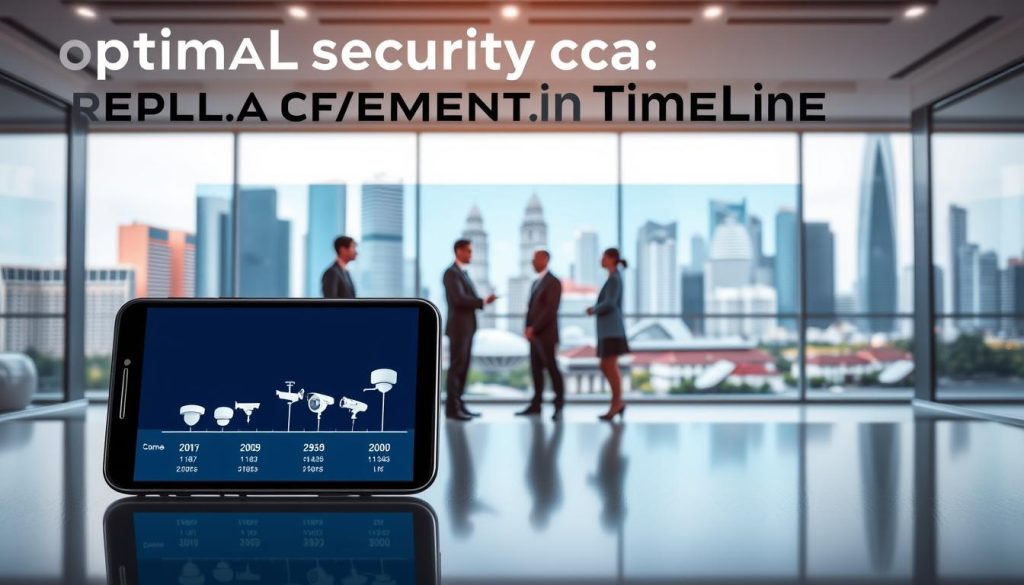
Understanding the Optimal Replacement Timeline in Singapore
Singapore property owners must navigate specific considerations when planning surveillance system upgrades. Local regulations and climate conditions significantly impact replacement timing decisions.
Aligning Upgrades with Local Regulations and Climate
Singapore’s regulatory framework requires careful attention to camera placement rules. Data retention policies dictate how long footage must remain accessible.
Privacy considerations remain paramount in residential areas. Recent HDB approvals allow corridor-facing cameras without special permission.
Singapore’s tropical climate demands robust equipment specifications. Humidity resistance becomes critical for long-term performance.
Temperature tolerance requirements exceed standard international specifications. Weatherproofing standards must address frequent heavy rainfall.
“Proper climate adaptation extends camera lifespan by 30% in tropical environments.”
Strategic Timing for Minimal Disruption
Optimal replacement timing considers operational patterns and risk factors. Scheduling during low-risk periods minimizes security coverage gaps.
Holiday periods often provide ideal upgrade windows. Off-peak seasons allow thorough system testing before high-activity periods.
Technological refresh cycles typically span 4-5 years. This timeframe balances performance improvements with investment recovery.
Coordination with property maintenance schedules enhances efficiency. Combining upgrades with other improvements reduces overall disruption.
Budget planning favors scheduled replacements over emergency upgrades. Proactive investment typically costs less than reactive solutions.
Professional security providers offer valuable timing recommendations. Local expertise helps navigate Singapore’s unique requirements effectively.
Strategic timing consideration minimizes protection gaps while optimizing investment. This approach ensures continuous security coverage throughout the upgrade process.
The Tangible Benefits of Upgrading Your Surveillance System
Investing in contemporary monitoring technology delivers measurable advantages for property protection. These improvements transform how effectively you safeguard your premises.
Modern solutions offer substantial performance enhancements over older equipment. The upgrade represents a strategic decision with multiple positive outcomes.
Enhanced Image Quality for Better Identification
Today’s monitoring technology captures exceptional visual detail. Ultra-high-definition recording provides crystal-clear imagery.
4K resolution delivers over eight million pixels per frame. This clarity enables precise identification of individuals and objects.
Advanced sensors perform excellently in challenging lighting conditions. Night vision capabilities work better than previous generations.
Clear footage serves as valuable evidence when incidents occur. Law enforcement agencies appreciate high-quality visual documentation.
Improved Reliability and Remote Monitoring Capabilities
Modern components demonstrate superior durability and consistent performance. These systems operate reliably under various environmental conditions.
Cloud connectivity revolutionizes property monitoring accessibility. Remote viewing capabilities allow real-time oversight from anywhere.
Mobile applications provide convenient control and alert management. Instant notifications keep property owners informed about activity.
“Property managers report 68% faster response times with modern remote monitoring systems compared to traditional setups.”
Artificial intelligence enhances detection accuracy significantly. Smart analytics distinguish between relevant events and false triggers.
Automated alerts focus attention on genuine security concerns. This precision reduces unnecessary distraction and improves response effectiveness.
Storage solutions have evolved dramatically with cloud integration. Unlimited capacity eliminates physical maintenance worries.
Cybersecurity protections incorporate current encryption standards. Regular updates maintain defense against digital threats.
Integration capabilities create comprehensive protection networks. These surveillance systems connect seamlessly with other security components.
Smart home automation platforms work better with contemporary equipment. This interoperability enhances overall property protection.
Operational efficiency delivers cost savings over time. Reduced maintenance requirements and improved energy consumption contribute to economic benefits.
The tangible advantages make technological upgrades a wise investment decision. These improvements significantly enhance property protection capabilities.
Ensuring Your Property Stays Protected with a Modern Security System
Contemporary monitoring solutions deliver unmatched property safeguarding in today’s security environment. These advanced systems provide comprehensive protection through cutting-edge technology and reliable performance.
Regular assessments and strategic upgrades maintain optimal security effectiveness. Professional installation by experts like Wen Hong ensures perfect system configuration.
Singapore-specific considerations include regulatory compliance and climate adaptability. Modern surveillance equipment offers superior image quality and enhanced reliability.
Investment in current technology represents proactive property protection. Contact Wen Hong at +65 60135960 for personalized assessment recommendations.
These advanced security solutions provide complete peace of mind through comprehensive, reliable property protection.
FAQ
What is the typical lifespan of a security camera?
Most modern surveillance cameras last between 5 to 10 years. Outdoor cameras may have a shorter lifespan due to weather exposure. Regular maintenance helps keep them working well longer.
How can I tell if my camera needs replacement?
Look for signs like poor image quality, frequent disconnections, or physical damage. Blurry images and system failures are clear indicators that an upgrade may be necessary.
Does new technology make older cameras obsolete?
Yes, advancements like high-definition video, smart analytics, and cloud integration often render older systems less effective. Upgrading ensures your property stays protected with current features.
Is it better to repair or replace a failing camera?
Consider cost, age, and compatibility. If repair costs approach 50% of a new unit’s price, replacement usually offers better long-term value and reliability.
How does climate affect camera longevity in Singapore?
High humidity and heat accelerate wear. Choosing weather-resistant models and scheduling regular checks can help outdoor surveillance systems last longer in tropical conditions.
Can regular maintenance extend my camera’s life?
Absolutely. Cleaning lenses, checking cables, and updating firmware are essential practices that keep cameras in top shape and delay replacement needs.
What benefits come with upgrading my surveillance system?
Newer models provide sharper image quality, better night vision, remote access, and intelligent alerts. These enhancements significantly improve overall security coverage.


