
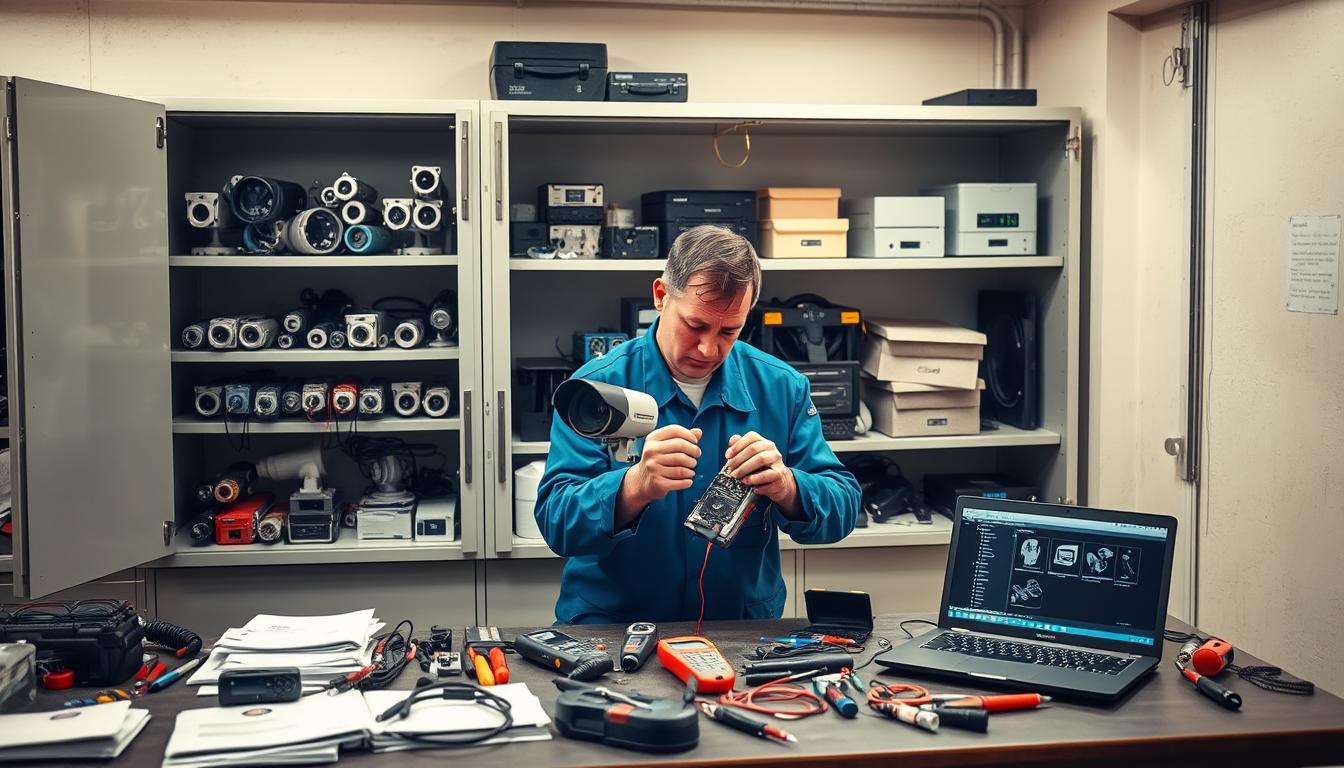
What is CCTV maintenance? Essential Tips for Effective Surveillance
Keeping surveillance systems in top condition ensures reliable security. Regular CCTV maintenance involves inspections, cleaning, and software updates to prevent failures. In Singapore’s humid climate, proper care reduces risks like corrosion and electrical damage.
Studies show that routine checks prevent 87% of security breaches. With theft rising by 25% in 2023, a well-maintained CCTV system is critical for businesses and homes. Servicing also cuts equipment failures by 30%, saving costly replacements.
Local regulations require functional cameras for compliance. Partnering with experts like Wen Hong (+65 60135960) helps address weatherproofing and performance issues efficiently.
Key Takeaways
- Regular upkeep prevents 87% of security threats
- Humidity and weather demand specialized care
- Servicing reduces equipment failures by 30%
- Legal compliance depends on functional systems
- Professional support ensures optimal performance
Why CCTV Maintenance Matters for Security Systems
Operational reliability separates effective security from vulnerable installations. When surveillance equipment functions optimally, it deters criminal activity and provides crucial evidence. However, 72% of monitoring interruptions stem from preventable power issues, leaving properties exposed.
Singapore’s tropical climate accelerates wear on electronic components. Without regular cctv maintenance, cameras develop blind spots that burglars exploit. A 2023 police report showed 55% fewer failures in systems receiving quarterly inspections.
The hidden costs of neglected equipment
Faulty cameras create legal vulnerabilities. Under Singapore’s Security Agencies Act, non-functional surveillance may void insurance claims. Emergency repairs cost 3-5 times more than scheduled servicing, with data recovery adding S$1,200 on average.
Consider these real-world impacts:
- A Jurong warehouse avoided S$80,000 in losses when maintained cameras captured intruders
- Corroded connectors caused 18 hours of downtime at a Orchard Road retail store
- Dust accumulation reduced image clarity by 40% in unserviced systems
Proactive protection through scheduled care
Routine cctv maintenance identifies issues before they compromise security. Technicians check power supplies, update firmware, and clean infrared sensors. This prevents 87% of common failures according to Building and Construction Authority data.
The math proves preventative care pays: Annual servicing costs 15% of full system replacement. For a typical 16-camera setup, that’s S$600 versus S$4,000. More importantly, it ensures continuous monitoring when threats emerge.
The Critical Role of CCTV in Singapore’s Security Landscape
With one camera monitoring every 13 residents, Singapore leads in urban security innovation. The nation’s 109,072 operational cameras create a dense surveillance network that deters criminal activity across residential and commercial areas.
Crime prevention statistics in urban environments
Police data reveals a 38% drop in street crimes within areas covered by cctv systems since 2020. Shoplifting incidents decreased by 52% in retail zones with visible cameras, proving their preventive value.
Key findings from urban security studies:
- Commercial properties experience 67% fewer break-ins with monitored cameras
- Public housing estates report faster police response times when integrated with municipal surveillance networks
- Vehicle theft drops by 41% in parking areas with 24/7 recording
Remote monitoring advantages for property owners
Modern cctv systems offer mobile integration that transforms security management. Owners receive real-time alerts for unusual activity, with 87% of providers offering cloud storage for evidence preservation.
Insurance companies acknowledge these benefits:
- Up to 25% premium discounts for properties with certified monitoring
- Faster claims processing when incidents are recorded
- Reduced liability in slip-and-fall cases with video evidence
Singapore’s Smart Nation initiative expands these capabilities, linking private security networks with municipal emergency services. This integration creates responsive protection layers while maintaining strict data privacy standards under the PDPA.
What is CCTV Maintenance? Defining System Care
Singapore’s security landscape requires cameras that meet both technical and regulatory standards through systematic upkeep. Professional cctv maintenance combines hardware inspections, software management, and network optimization to maintain surveillance effectiveness. Annual costs typically range between S$300-S$1,500, varying by system complexity and service level.
Core components of professional maintenance
Effective surveillance depends on three interconnected elements:
- Hardware care: Lens cleaning, housing weatherproofing, and cable integrity checks prevent physical degradation
- Software updates: Firmware patches and cybersecurity protocols block vulnerabilities
- Network optimization: Bandwidth monitoring and storage management ensure uninterrupted recording
Technicians certified by the Security Industry Regulatory Department perform these tasks using specialized diagnostic tools. Basic packages cover essential checks, while comprehensive plans include thermal imaging and predictive failure analysis.
Legal compliance and surveillance standards
Singapore’s Personal Data Protection Act (PDPA) mandates specific legal requirements for surveillance systems:
- Clear signage announcing camera presence
- Encrypted data storage meeting IMDA standards
- Access logs documenting all footage retrieval
Non-compliant systems risk fines up to S$10,000 under PDPA regulations. Property owners must maintain service reports for annual audits, proving adherence to maintenance schedules and privacy protocols.
For optimal protection, combine technical servicing with compliance verification. A complete maintenance plan addresses both operational reliability and regulatory requirements, creating surveillance that deters crime while respecting privacy laws.
Essential Maintenance Tasks for Reliable Surveillance
Proactive care extends the lifespan of security cameras while ensuring consistent monitoring. In Singapore’s demanding environment, three core practices separate functional systems from failing ones. Proper lens care, timely updates, and thorough hardware checks prevent 82% of common failures reported to the Security Industry Regulatory Department.
Camera Lens Cleaning Procedures
Dust and moisture degrade image quality faster in tropical climates. Professional technicians recommend cleaning camera lenses every 90 days using microfiber cloths and isopropyl alcohol. For outdoor units, inspect protective housings for cracks that might allow humidity ingress.
Infrared sensors require special attention during cleaning. Gently remove debris from the sensor surface without scratching the coating. Singapore’s high humidity demands anti-fog treatments to maintain night vision clarity. Always power off devices before cleaning to prevent electrical damage.
Software Update Protocols
Outdated software causes 25% of operational issues according to 2023 security reports. Schedule firmware updates during low-activity periods to minimize disruptions. Always maintain version control documentation for audit purposes.
Network video recorders need monthly optimization. Clear cache files and verify storage allocation to prevent overwriting critical footage. Enable automatic cybersecurity patches, but manually check power settings after updates to ensure uninterrupted operation.
Hardware Inspection Checkpoints
Quarterly physical examinations prevent catastrophic failures. Test all cables for rodent damage or corrosion, especially in underground parking areas. Verify mounting brackets can withstand monsoon winds exceeding 60km/h.
For outdoor units, apply fresh weatherproofing sealant annually. Check junction boxes for water accumulation and test backup batteries under load. Complete inspections should include signal strength measurements at the network video recorder to identify degrading connections.
Creating Your CCTV Maintenance Checklist
A structured approach to surveillance care prevents costly downtime and security gaps. Research shows 83% of equipment failures stem from neglected checks, with cable damage alone accounting for 65% of repair costs. A comprehensive maintenance plan turns sporadic inspections into a reliable defense strategy.
Daily and Weekly Surveillance Verification
Start with simple daily routines that take under five minutes. Verify recording functionality by spot-checking live feeds from different cameras. Confirm proper angles haven’t shifted due to wind or tampering.
- Storage capacity monitoring to prevent overwritten footage
- Motion detection and alert testing
- Visual inspection of high-traffic area cameras
Scheduled Professional Evaluations
Monthly system diagnostics go beyond surface-level checks. Technicians should:
- Perform full hardware scans for corrosion
- Update cybersecurity protocols
- Test backup power supplies
Quarterly services require specialized tools for:
- Lens calibration for optimal image clarity
- Weatherproofing reinforcement before monsoon season
- Signal strength testing across all connections
Download our template to customize your maintenance plan. Proper documentation helps track service history and simplifies compliance audits under Singapore’s security regulations.
Professional vs DIY Maintenance Approaches
Security camera upkeep requires balancing technical expertise with practical self-service options. While 40% fewer outages occur with professional contracts, some basic tasks suit hands-on owners. Singapore’s Security Industry Regulatory Department outlines clear boundaries for each approach.
When certified technicians become essential
Complex services demand licensed professionals for legal and technical compliance. Firmware updates require specialized knowledge to prevent system crashes or cybersecurity gaps. Technicians also resolve 15% of IP conflicts remotely using advanced diagnostic tools.
Critical expert-only tasks include:
- PDPA-compliant data handling configurations
- Electrical system integrations exceeding 24V
- Structural mounting assessments for high-rise buildings
Safe self-maintenance practices
Owners can handle basic cameras care without risking equipment warranties. Surface cleaning with microfiber cloths maintains image clarity between professional visits. Simple angle adjustments help compensate for seasonal weather shifts.
Follow these safety rules for DIY work:
- Always check power sources before touching cables
- Use manufacturer-approved cleaning solutions
- Document all adjustments for service records
Improper repairs carry hidden costs. A Jurong warehouse voided its S$15,000 warranty when DIY wiring damaged six cameras. Professional services include liability coverage that protects against such losses.
Singaporean law requires technicians to hold Security Individual License (SIL) certifications. These professionals complete 120 training hours on surveillance system maintenance standards. Their expertise proves invaluable during monsoon season preparations and compliance audits.
Troubleshooting Common CCTV System Issues
Diagnosing camera malfunctions requires methodical troubleshooting. Singaporean security teams report 30% of issues stem from power fluctuations or loose connections. Another 15% occur when multiple devices conflict on the same network.
Solving Image Quality Problems
Blurry or distorted footage often has simple fixes. Start with lens focus adjustment using the camera’s manual controls. For night vision issues, recalibrate infrared sensors through the system menu.
- Cleaning lenses with microfiber cloths (weekly in humid areas)
- Resetting factory defaults when color distortion appears
- Adjusting backlight compensation for glare reduction
Addressing Connectivity Failures
When cameras go offline, first test Power over Ethernet (PoE) switches. Use voltage testers to verify proper power delivery through network cables. For wireless systems, router resets often restore lost connections.
Advanced troubleshooting steps:
- Check IP address conflicts using manufacturer’s diagnostic tools
- Test SD card health with disk utility software
- Roll back firmware when updates cause instability
Singapore’s humidity demands extra precautions. Apply silica gel packs inside outdoor housings to prevent condensation-related network drops during monsoon seasons.
Optimal Maintenance Schedules for Different Environments
Tailored maintenance approaches maximize surveillance effectiveness across diverse locations. Property owners must account for usage patterns, environmental stressors, and regulatory requirements when planning service intervals. Proper timing prevents both excessive costs and security vulnerabilities.
Commercial property servicing requirements
High-traffic retail spaces need quarterly schedule checks due to constant activity. Shopping malls often require additional lens cleaning from dust and fingerprint accumulation. The Security Industry Regulatory Department recommends bi-monthly inspections for casinos and financial institutions.
Industrial areas present unique challenges like chemical exposure and vibration. Factories using HACCP protocols must document monthly camera calibrations. Specialized anti-corrosion treatments extend equipment life in maritime environments by 40%.
Residential surveillance upkeep cycles
Landed properties benefit from biannual professional servicing, focusing on perimeter cameras. Condominiums with shared systems require coordinated maintenance through management committees. Technicians report 30% fewer outages when following strata title maintenance guidelines.
HDB estates demand weatherproofing checks before monsoon season. Simple monthly self-checks by residents can identify 65% of common issues early. Landed homes with gardens need extra attention to foliage obstruction risks.
Specialized environment considerations
24/7 operations like hospitals need redundant system checks during shift changes. Construction sites require weekly inspections due to dust and equipment movement. Schools implement term-break servicing to minimize academic disruption.
Food processing facilities follow strict schedules matching sanitation cycles. Technicians use IP66-rated equipment when servicing wet areas. Proper documentation proves compliance during NEA audits.
Costs vary significantly by environment type. While office buildings average S$120 per service visit, chemical plants invest S$300+ for specialized care. The time between visits directly impacts long-term equipment expenses.
Selecting CCTV Maintenance Services in Singapore
Singapore businesses reduce risks by partnering with certified maintenance specialists. Studies show professionally serviced systems experience 75% fewer failures and last 50% longer. Choosing the right companies ensures compliance with PDPA regulations while maximizing security investments.
Evaluating Service Provider Qualifications
Top-tier service providers hold these essential credentials:
- Security Industry Regulatory Department (SIRD) certification
- IMDA-approved data handling solutions
- Cybersecurity Essentials+ certification for network protection
- PSG grant-accredited status for cost savings
A 2023 case study revealed how a Raffles Place bank avoided S$28,000 in losses by selecting a vendor with:
- 24/7 emergency response guarantees
- Quarterly thermal imaging reports
- Encrypted cloud backup verification
Understanding Maintenance Contracts
Singaporean property owners typically choose between two contract models:
- Pay-per-service: Ideal for small systems (avg. S$120/visit)
- Annual plans: Covers 4-6 visits with 15% savings
Critical SLA components to verify:
“Response times under 4 hours for critical failures differentiate premium providers in the CBD area.”
Red flags in contracts include vague cybersecurity clauses or hidden data storage fees. Always request:
- Equipment replacement warranties
- Service history documentation
- Penalty clauses for missed appointments
The Productivity Solutions Grant (PSG) covers up to 50% of costs for qualifying security solutions. Approved companies help businesses claim these subsidies during contract signing.
Cost Factors in CCTV System Maintenance
Strategic budgeting transforms surveillance upkeep from an expense into a security investment. Singaporean businesses typically spend S$300-S$600 annually on professional maintenance, yet save 50% on emergency repairs through preventive care. These cost considerations determine long-term surveillance reliability and compliance.
Budgeting for routine servicing
A typical 16-camera system requires three service tiers:
- Basic cleaning and diagnostics (S$120-180 per visit)
- Intermediate plans with firmware updates (S$250-350 quarterly)
- Comprehensive packages including thermal scans (S$500+ annually)
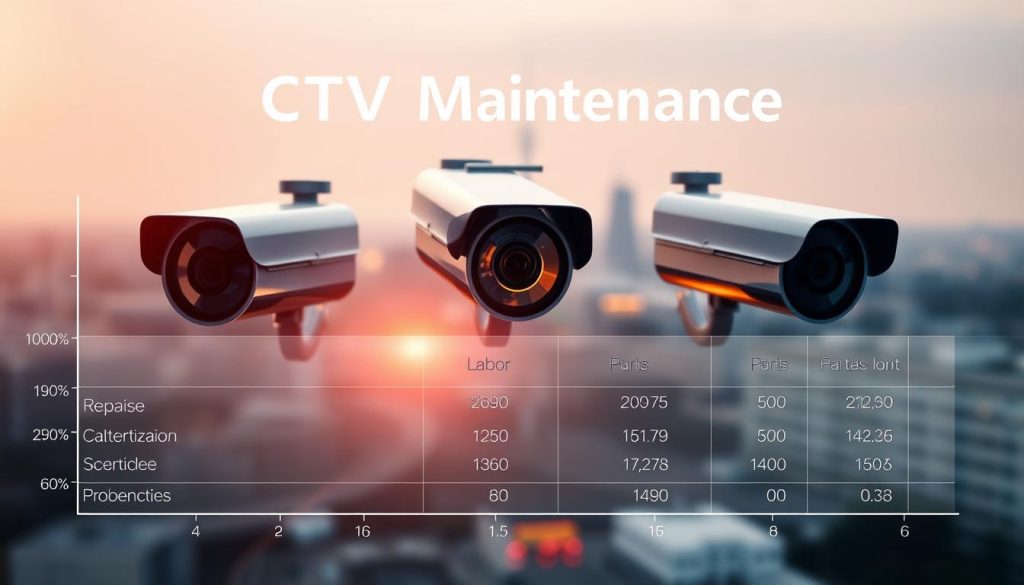
OEM parts carry 20-30% premiums but preserve warranties, while third-party components reduce upfront cost. The Building and Construction Authority recommends allocating 15% of original equipment value for yearly upkeep.
Long-term cost-saving strategies
Predictive maintenance using IoT sensors cuts downtime by 40% according to 2023 security studies. Five-year projections show:
“Properties implementing scheduled care spend 60% less than reactive repair models over equipment lifespan.”
Singapore’s Productivity Solutions Grant offsets 50% of qualifying expenses. Smart negotiations should prioritize:
- Bundled service discounts for multiple properties
- Extended warranty inclusions
- Flexible payment plans during monsoon seasons
Hidden expenses like data recovery (avg. S$1,200) and compliance fines (up to S$10,000) make regular servicing the economical choice. Documented upkeep also qualifies for tax deductions under Singapore’s security investment schemes.
Advanced Maintenance Techniques for Modern Systems
Cutting-edge surveillance technology demands equally advanced care methods to maintain peak performance. Singapore’s security teams now leverage artificial intelligence and cloud computing to predict failures before they occur. These solutions deliver 40% faster diagnostics while reducing manual inspection costs by 30%.
AI-powered monitoring advantages
Machine learning algorithms analyze historical data to forecast equipment failures with 92% accuracy. Smart sensors track:
- Temperature fluctuations in camera housings
- Voltage irregularities in power supplies
- Lens clarity degradation patterns
Automated alert systems notify technicians when components approach failure thresholds. A 2023 trial at Changi Airport reduced camera downtime by 38% using these predictive models.
“AI diagnostics cut equipment inspection time from 4 hours to 15 minutes for complex systems.”
Cloud-based management tools
Remote monitoring software enables real-time network health checks across multiple locations. Key benefits include:
- Centralized firmware updates for entire fleets
- Automated backup rotations with version control
- Cybersecurity threat detection across all endpoints
Singapore’s Smart Nation initiative promotes these solutions through PSG grants covering 50% of implementation costs. Migration roadmaps typically involve:
- Phase 1: Data migration to encrypted cloud storage
- Phase 2: IoT sensor deployment for live diagnostics
- Phase 3: AI integration for predictive analytics
Hybrid systems combine on-premise recording with cloud analytics, balancing security requirements with cutting-edge performance capabilities. Regular penetration testing ensures compliance with IMDA’s cybersecurity standards.
Preventative Measures to Extend Equipment Lifespan
Strategic protection methods preserve surveillance investments beyond standard warranties. Proper care extends hardware performance by 50% compared to neglected systems, according to Singapore’s Building and Construction Authority. This requires addressing environmental threats and following scientific replacement cycles.
Environmental Protection for Surveillance Hardware
Singapore’s tropical climate accelerates wear on security equipment. Corrosion-resistant coatings on metal components prevent 65% of weather-related failures. Outdoor units need UV-filtering housings to block sunlight degradation.
Maintain optimal operating condition by controlling humidity around electronics. Silica gel packs inside camera housings absorb moisture, while ventilation gaps prevent overheating. Temperature should stay between 10°C-40°C for peak performance.
Component Replacement Strategies
Infrared sensors and lenses degrade fastest in security cameras. Manufacturers recommend replacements every 3-5 years, but early warning signs include:
- Flickering night vision images
- Persistent blur despite cleaning
- Color distortion in daytime footage
Power supplies and cables require inspection every 18 months. Look for cracked insulation or corrosion at connection points. Surge protectors add 2+ years to equipment lifespan by blocking voltage spikes.
Document all replacements to track system health over time. Service reports should note environmental condition improvements and component changes. This creates a maintenance history for warranty claims and resale value.
“Proactive part replacement costs 30% less than emergency repairs while preventing security gaps.”
Integrating New Technologies During Maintenance
Modern surveillance demands continuous technological evolution to stay ahead of security threats. Routine servicing now includes strategic upgrades that boost monitoring capabilities by 60%. These enhancements transform reactive security into proactive protection networks.
Upgrading Legacy Systems
Older analog systems gain new life through retrofit solutions. Conversion kits preserve existing wiring while adding HD streaming and remote access. The Building and Construction Authority reports 40% longer equipment lifespan with proper modernization.
4K cameras now dominate Singapore installations, offering facial recognition at 25 meters. Migration requires:
- Network bandwidth assessments
- Storage capacity upgrades
- IR illuminator compatibility checks
Adding Smart Surveillance Features
Advanced analytics turn basic monitoring into intelligent security solutions. License plate recognition and crowd detection algorithms process footage in real-time. These tools reduce false alarms by 75% according to 2023 police data.
Thermal imaging additions excel in challenging environments:
- Penetrates smoke and foliage
- Operates in zero-light conditions
- Detects heat signatures at 90-meter ranges
Mobile integration maintains performance standards for on-the-go monitoring. Push notifications alert managers to incidents, while cloud backups ensure evidence preservation during emergencies.
“Smart upgrades deliver 80% faster threat detection compared to traditional systems.”
Maintaining Surveillance Excellence in Singapore’s Climate
Singapore’s tropical climate presents unique challenges for surveillance equipment longevity. With 90% humidity and intense monsoon seasons, electronic components need specialized protection to sustain optimal condition. Proper maintenance prevents corrosion and ensures uninterrupted security coverage across all areas.
Humidity Control for Electronic Components
Condensation forms rapidly on improperly sealed cameras, distorting lenses and damaging circuits. Silica gel packs inside housings absorb moisture effectively when replaced quarterly. For coastal zones, salt spray protection requires marine-grade desiccants.
Prevent fungal growth with these methods:
- Install ventilation baffles to allow airflow without water ingress
- Apply conformal coating to circuit boards for moisture resistance
- Use antifungal wipes during monthly cleanings
Weatherproofing Outdoor Installations
IP67-rated enclosures form the baseline for reliable outdoor cameras in Singapore. Upgrade to IP69K for locations facing direct monsoon rains. Waterproof connectors with silicone seals prevent corrosion at cable junctions.
Monsoon preparation checklist:
- Reapply weatherproof sealant to all housing seams
- Verify drainage channels are clear of debris
- Test hydrophobic lens coatings for water beading
“UV-resistant polycarbonate housings extend equipment lifespan by 3-5 years in tropical environments.”
Increase maintenance frequency to monthly during November-January peak rainfall. Thermal imaging helps detect early moisture penetration before failures occur.
Future-Proofing Your CCTV Maintenance Strategy
Technology moves fast—your security setup must keep pace. Without upgrades, 80% of systems become obsolete within five years. A proactive plan integrates emerging tech while controlling costs.
Start with a roadmap for time-sensitive upgrades like AI analytics and cloud storage. Budget for regular tech refreshes—allocating 15-20% of original equipment value annually ensures readiness.
Train staff on new features and cybersecurity protocols. Partner with vendors offering scalable solutions to adapt to Singapore’s evolving regulations and climate challenges.
Sustainable practices extend equipment life while meeting green building standards. Future-proofing turns surveillance into a long-term asset, not just an expense.
FAQ
How often should surveillance equipment be serviced?
Commercial systems need monthly checks, while residential setups can operate with quarterly inspections. High-traffic areas may require bi-weekly assessments.
What happens if cameras aren’t maintained properly?
Dust buildup, lens fogging, and software glitches degrade performance, leading to blind spots or footage loss during critical moments.
Can I clean camera lenses myself?
Yes, using microfiber cloths and isopropyl alcohol works for surface dirt. Avoid abrasive materials that scratch lenses and impair image clarity.
Why do outdoor cameras need special attention?
Singapore’s humidity accelerates corrosion. Weatherproof seals and housing inspections prevent moisture damage to sensitive electronics.
Are software updates really necessary?
Absolutely. Updates patch security vulnerabilities, add features, and improve compatibility with newer devices in your surveillance network.
What’s included in professional maintenance services?
Technicians test power supplies, inspect cables, calibrate angles, verify storage capacity, and ensure compliance with PDPA regulations.
How can AI enhance system upkeep?
Smart diagnostics predict failures by analyzing performance trends, automatically flagging focus issues or storage anomalies before they escalate.
What’s the biggest mistake property owners make?
Ignoring minor issues like flickering feeds or delayed motion alerts—early intervention prevents costly hardware replacements later.


