
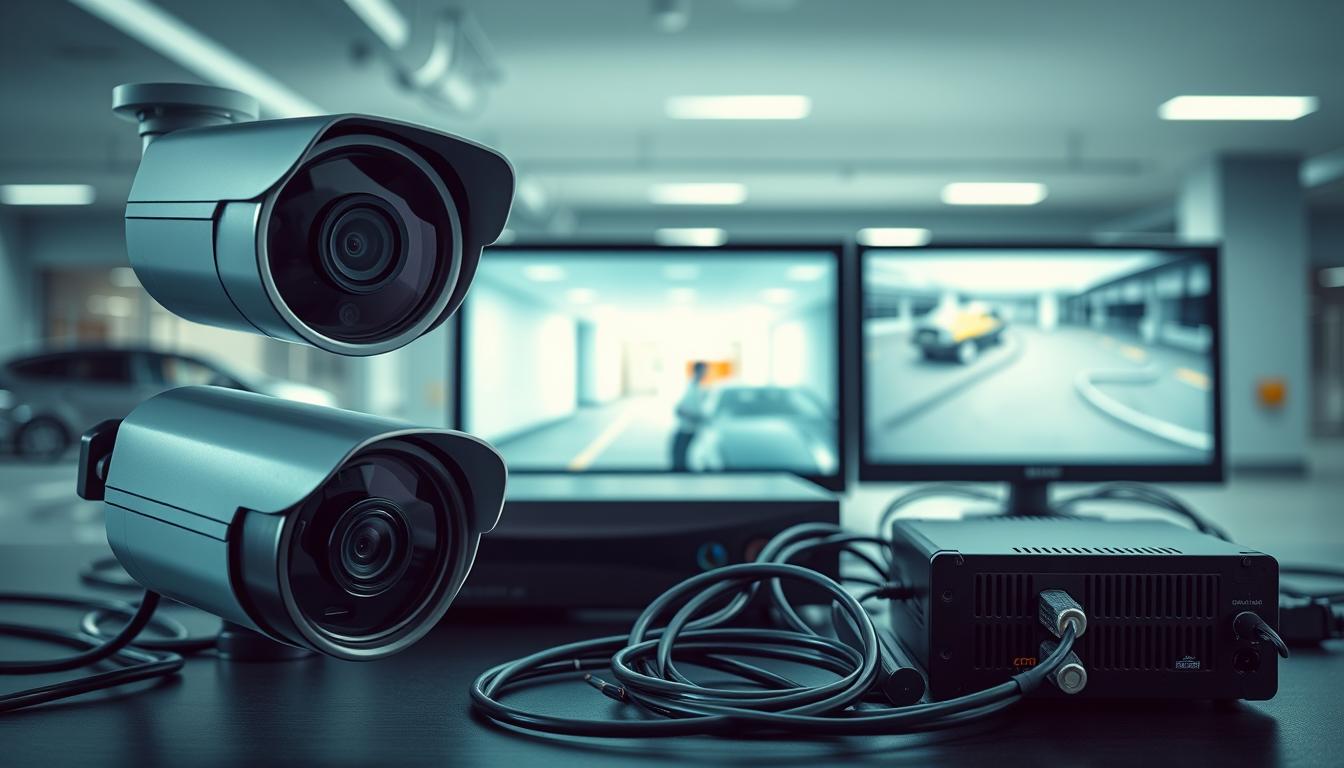
Learn About CCTV: What are the 7 components of CCTV?
Closed-Circuit Television, or CCTV, creates a private video network for monitoring specific locations. Unlike broadcast TV, this surveillance technology keeps footage within a closed system. It connects cameras to recording devices for both live viewing and later review.
These security systems have become essential in today’s world. They protect homes, businesses, and public spaces across busy urban centers. In places like Singapore, effective monitoring helps maintain order and public safety.
CCTV technology has evolved significantly. Early analog setups have given way to advanced digital and IP-based networks. Modern systems offer clearer video, remote access, and smarter features.
This guide breaks down the essential parts that make these systems work. Understanding each component helps you choose the right security solution. Whether for a HDB flat or a commercial building, knowledge leads to better protection.
A well-designed surveillance system acts as both a deterrent and an investigative tool. It can prevent incidents before they happen. It also provides crucial evidence if needed, like checking if your CCTV is recording properly.
Key Takeaways
- CCTV forms a private video network for monitoring specific areas.
- Modern security systems are vital for safety in urban environments like Singapore.
- Technology has progressed from simple analog to sophisticated digital networks.
- Knowing the core parts helps in selecting effective surveillance solutions.
- These systems serve dual purposes: preventing crime and aiding investigations.
- Each component plays a specific role in the overall security camera system.
- Proper setup and maintenance ensure reliable video monitoring and recording.
Introduction to CCTV and Modern Surveillance
The evolution of video monitoring has transformed security from a reactive practice to a proactive strategy. Modern surveillance means continuous electronic observation of spaces, assets, and people. This constant watch is primarily achieved through advanced CCTV systems.
Early security cameras were simple analog devices with limited resolution. Today’s high-definition IP cameras offer smart capabilities like motion detection. This technological leap has reshaped how we approach protection.
The operational principle of a surveillance system is straightforward yet powerful. Cameras capture video data from their environment. This information transmits through a private network to recording devices and monitors.
These security setups serve two critical functions. Real-time monitoring allows for immediate response to threats. Recorded footage provides evidence for later analysis and investigation.
Widespread adoption of surveillance technology brings clear societal benefits. Public spaces become safer when potential offenders know they’re being watched. The presence of cameras alone can deter criminal activity effectively.
Two main technological branches define today’s CCTV system landscape. Traditional analog setups still serve many applications. Modern IP-based digital systems offer superior flexibility and scalability.
Contemporary surveillance solutions integrate seamlessly with other security infrastructure. They allow remote access from smartphones and computers. This connectivity enables management from anywhere with an internet connection.
Singapore demonstrates effective deployment in a dense urban environment. The city-state utilizes extensive camera networks to maintain public order. This case study shows how proper implementation enhances community safety.
Understanding individual parts is essential to grasp any surveillance setup’s capabilities. Each component plays a specific role in the overall security solution. Knowledge of these elements helps in selecting the right protection for any location.
From residential HDB flats to commercial complexes, proper configuration matters. The right combination of cameras, recorders, and software creates a robust defense. This foundation supports both prevention and post-incident resolution.
Why Understanding CCTV Components is Crucial for Security
A robust security framework depends on more than just visible cameras. It requires a deep understanding of each interconnected part.
Effective protection means building a complete, interoperable system. Cameras alone cannot guarantee safety. They form just one piece of a larger puzzle.
Every element must work together seamlessly. The lens captures images. Cables transmit data. Recorders store footage. Software manages access.
A failure in any single piece compromises everything. Weak storage loses critical evidence. Faulty power cuts the feed during an incident. Poor cables create blind spots in coverage.
Cost implications of poor selection are significant. Cheap, incompatible parts lead to constant repairs. Systems underperform and become obsolete quickly. This wastes money and leaves vulnerabilities open.
Knowledge of individual pieces allows for tailored security solutions. You match specific threats with appropriate technology. A retail store needs different coverage than a warehouse.
Understanding camera types directly impacts evidence quality. Placement affects what areas get monitored. Lens choice determines identification capability at distance.
Component reliability connects to legal requirements. Courts demand unbroken footage chains. Investigations need clear, time-stamped video. Compliance standards often specify technical minimums.
Proper integration enables advanced features. Remote access lets managers check feeds from smartphones. Motion detection filters out empty hours. Analytics can count people or detect loitering.
For business owners in Singapore, this knowledge is power. It enables informed vendor discussions and realistic budgeting. System audits become meaningful checks rather than rubber stamps.
Consider a commercial building in the city center. Its needs differ from a residential HDB flat. The right component mix addresses specific operational risks.
Component literacy defends against oversimplified marketing. Sales pitches often focus on camera megapixels alone. Savvy buyers ask about storage duration and network bandwidth.
Investments should target a system’s foundational strength. Quality cables prevent signal loss. Enterprise-grade hard drives handle continuous writing. Professional software manages multiple streams efficiently.
This component-aware approach transforms surveillance. It moves from a generic commodity to a strategic asset. Protection becomes predictable and reliable.
Modern communities benefit from well-planned monitoring networks. Schools, malls, and public spaces stay safer. The visible presence of functioning systems deters criminal activity.
Security teams operate with greater confidence. They know their tools will perform when needed most. Evidence collection becomes systematic rather than accidental.
Ultimately, understanding the pieces creates stronger whole solutions. Each part plays its role in the protective ecosystem. Mastery of this ecosystem delivers true peace of mind.
What are the 7 Components of CCTV?
Every effective surveillance network relies on a specific set of interconnected hardware and software elements. These pieces form the complete monitoring solution that protects properties across Singapore.
Understanding each element helps you build reliable protection. From HDB flats to commercial buildings, proper configuration matters.
A complete security camera setup consists of seven essential parts:
- Security Cameras – Devices that capture visual information from monitored areas.
- Monitoring Stations – Interfaces where operators view and manage live and recorded feeds.
- Video Recording Systems – Hardware like DVRs or NVRs that encode, compress, and save footage.
- Supporting Accessories – Physical infrastructure including cables, connectors, mounts, and protective housings.
- Data Storage Solutions – Media such as hard drives where recorded video is retained for future access.
- Power Supply – Electrical infrastructure providing stable electricity to all system components.
- Video Management Software (VMS) – Applications that control the setup, enable playback, and provide analytics.
These elements create an interdependent chain. Weakness in any single link diminishes overall performance.
Faulty cables can disrupt video transmission. Inadequate storage may lose critical evidence. Unstable power cuts feeds during incidents.
Upcoming sections explore each part in detail. You will learn about camera types and their best applications.
We will examine monitoring station setups for different environments. Recording system comparisons help you choose between DVR and NVR technology.
Essential cabling and power considerations ensure reliable operation. Storage strategies protect your valuable footage.
Software features transform basic monitoring into intelligent security. Integration methods bring everything together seamlessly.
This knowledge empowers you to make informed decisions. Whether securing a retail space or residential property, understanding these seven elements is crucial.
They work together to deliver comprehensive protection and peace of mind.
The Heart of the System: Security Cameras and Their Types
Visual data collection forms the primary function of modern security infrastructure. These devices act as the eyes of any monitoring setup, capturing the raw footage that drives analysis and response.
Choosing the right imaging technology directly impacts evidence quality. The market offers diverse options to match specific environmental needs and budgets.
IP Cameras vs. Analog Cameras: Choosing the Right Technology
A fundamental technological divide separates modern security solutions. Understanding this difference guides proper equipment selection.
Analog cameras represent traditional surveillance technology. They transmit standard definition video signals through coaxial cables to Digital Video Recorders.
These systems offer simplicity and cost-effectiveness. They work well with existing legacy infrastructure across many Singaporean properties.
IP cameras utilize network protocols for data transmission. They connect via Ethernet cables and deliver high-definition megapixel image quality.
Key comparison factors include:
- Resolution: IP models provide clearer details for identification purposes.
- Installation: Analog setups may require less network configuration initially.
- Scalability: Network-based cameras integrate more easily into expanding systems.
- Remote Access: IP technology enables convenient smartphone monitoring.
- Total Cost: Consider both initial investment and long-term maintenance.
Modern cctv cameras increasingly favor IP technology. Their superior features support advanced analytics and integration.
Camera Configurations: Dome, Bullet, and PTZ
Physical design determines optimal placement and functionality. Each configuration serves distinct monitoring purposes.
Dome cameras feature discreet, hemispheric housings. Their vandal-resistant design makes them ideal for indoor retail spaces, office lobbies, and HDB corridor monitoring.
The subtle appearance provides unobtrusive surveillance. People often cannot determine where the lens is pointing.
Bullet cameras showcase long, cylindrical shapes with visible lenses. Their weatherproof construction suits outdoor perimeter security.
These devices create a strong psychological deterrent. Their prominent presence warns potential intruders at warehouse boundaries and building exteriors.
PTZ (Pan-Tilt-Zoom) cameras offer motorized directional control. Operators can remotely pan across wide areas, tilt vertically, and zoom in on details.
This flexibility makes them perfect for monitoring large spaces like parking lots or shopping mall atriums. Live operators can follow movement as it occurs.
Selection criteria should match device capabilities to environmental conditions. Consider lighting levels, coverage requirements, and specific threat profiles.
For Singaporean applications, dome types cameras work well in sheltered public housing corridors. Bullet analog cameras might protect industrial fence lines effectively.
Budget constraints influence final decisions. Sometimes a mix of camera types creates the most comprehensive security solution.
Capturing the Evidence: Video Recording Systems (DVR vs. NVR)
The recording device serves as the central archive for any surveillance operation. It transforms transient video into permanent evidence for review and compliance.
This component is the memory of your entire security setup. Choosing between a Digital Video Recorder (DVR) and a Network Video Recorder (NVR) is a critical decision.
Digital Video Recorders (DVRs) for Analog Systems
A DVR is designed specifically for traditional analog cameras. It receives raw video signals through coaxial cables.
The core function involves digitizing and compressing this analog feed. It then saves the footage onto an internal hard drive for later playback.
Typical features include multiple channel inputs, like 4, 8, or 16. These devices have defined limits on recording resolution, often matching older camera technology.
Network Video Recorders (NVRs) for IP Systems
An NVR works with modern IP cameras. It receives already-digitized video streams over a standard computer network using Ethernet cables.
This system records and manages pure digital files. The result is support for higher megapixel cameras and superior image quality.
Key advantages of NVRs include easier scalability. Adding a camera often just requires a network connection, not a direct cable run to the recorder.
Key Differences and How to Choose
Your choice is often dictated by your camera technology. The table below outlines the primary distinctions:
- Input Type: DVRs accept analog signals; NVRs handle digital data streams.
- Camera Compatibility: DVRs for analog cameras; NVRs for IP cameras.
- Typical Video Quality: DVRs are limited; NVRs support high-definition and megapixel footage.
- Cabling: DVRs use coaxial cables; NVRs use Ethernet (Cat5e/Cat6).
- Installation & Scalability: DVR setups are less flexible; NVR systems are more scalable and easier to expand.
Hybrid recorders offer a smart migration path. These devices can accept both analog and IP camera inputs, protecting your investment.
For selection, choose a DVR for existing analog infrastructure or simple, low-budget setups. Opt for an NVR for new installations, high-definition needs, or future-proof, scalable solutions.
Finally, configure your recording settings wisely. Frame rate, resolution, and motion-activated recording directly impact storage consumption and the usability of your archived video.
The Unsung Heroes: Cables, Connectors, and Power Supply
While cameras capture the spotlight, the true reliability of any surveillance network lies in its hidden infrastructure. These physical components form the nervous system and lifeblood of every installation.
Quality cables and stable power ensure data flows smoothly between all devices. Without them, even the most advanced cameras cannot function properly.
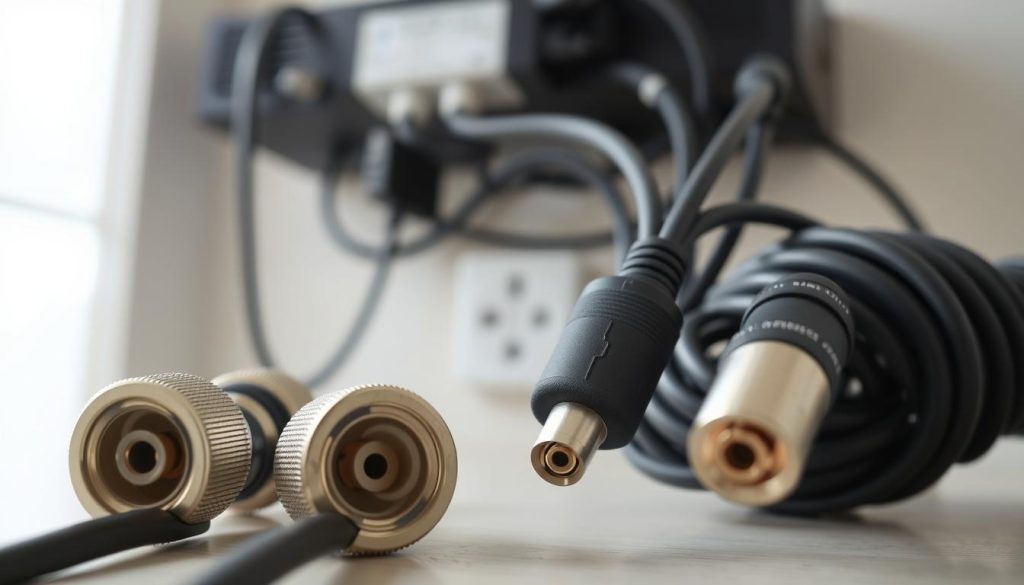
In Singapore’s humid climate, choosing the right materials matters. Proper installation prevents frustrating intermittent faults that are hard to diagnose.
Essential Cabling: Coaxial and Ethernet for Connectivity
Two main cable types serve different surveillance technologies. Your choice depends on whether you use analog or IP cameras.
Coaxial cables, like RG59, are traditional workhorses. They carry video signals in analog setups, often with integrated power conductors in a siamese design.
These cables connect to cameras using BNC connectors. Proper termination is crucial to prevent signal loss and video noise.
Their limitations include distance constraints and fixed bandwidth. For modern high-definition needs, many installers prefer network alternatives.
Ethernet cables (Cat5e, Cat6, Cat6a) power today’s IP system. They handle data transmission with greater flexibility over longer runs.
These network cables use standard RJ45 connectors. Their structured wiring supports future upgrades and advanced features.
Key advantages include:
- Higher bandwidth for clear megapixel video
- Longer maximum distances without signal boosters
- Compatibility with Power over Ethernet technology
- Neater installation with standardized connectors
Power Supply Solutions: PoE, Adapters, and Power Boxes
A consistent power supply is non-negotiable for continuous operation. Fluctuations cause cameras to reboot or produce poor footage.
Power over Ethernet (PoE) represents a transformative approach. A single Ethernet cable delivers both data and low-voltage power to compatible IP cameras.
This elegant solution reduces cable clutter dramatically. Installers run one cable instead of separate lines for video and electricity.
PoE switches or injectors serve as the source. They simplify setup and centralize power management for multiple devices.
Traditional power options remain viable for certain applications. Individual plug-in adapters provide dedicated supply for each camera.
Centralized power boxes distribute electricity to several units from one location. These require careful planning for voltage drop over distance.
For HDB flats and commercial buildings, consider accessibility during maintenance. Label all power sources clearly for troubleshooting.
AC vs. DC Power Considerations for Reliability
Understanding electrical conversion prevents equipment damage. Most surveillance components operate on low-voltage DC power.
Mains electricity arrives as Alternating Current (AC). Transformers or power supplies convert this to Direct Current (DC), typically 12V or 24V.
This conversion must happen reliably near the cameras. Long DC cable runs experience voltage drop that affects performance.
Stable, clean power prevents numerous issues. Video interference, random reboots, and premature component failure often trace back to poor electrical supply.
For critical installations, add an Uninterruptible Power Supply (UPS). This backup maintains operation during brief outages, preserving evidence collection.
Practical advice for Singaporean properties:
- Plan cable routes through conduits for protection and aesthetics
- Calculate total power draw to specify adequately rated equipment
- Use waterproof connectors for outdoor runs in tropical weather
- Test voltage at the farthest camera point during installation
- Document all connections for future maintenance teams
Investing in quality cables, proper connectors, and robust power supply units pays long-term dividends. These components ensure your surveillance system operates continuously as intended, providing peace of mind through reliable protection.
Preserving the Footage: Data Storage Solutions for CCTV
Without secure and accessible storage, even the clearest surveillance footage loses its value as protective evidence. This component serves as the permanent memory bank for your entire security operation.
Reliable archival solutions ensure critical moments remain available for review. They transform temporary video streams into lasting records for investigations and compliance.
Choosing the right storage technology directly impacts your system’s effectiveness. Capacity, durability, and retrieval speed all matter for practical security applications.
The Importance of Surveillance-Grade Hard Drives
Not all hard drives can handle continuous security camera workloads. Standard desktop models fail under the constant writing demands of multiple cameras.
Surveillance-grade drives, often labeled “Surveillance HDD” or “Enterprise HDD,” are engineered differently. They’re built for 24/7 operation with specialized firmware.
Key engineering features include better heat dissipation and vibration resistance. Their firmware prioritizes continuous writing of multiple video streams.
This optimization reduces frame loss during high-activity periods. It ensures smooth recording when you need it most.
Capacity planning requires careful calculation. Consider these factors:
- Number of cameras in your system
- Recording resolution (1080p, 4K, etc.)
- Frame rate settings
- Compression codec efficiency
- Desired retention period (30, 60, or 90 days)
Two main configurations dominate modern installations. Direct-attached storage resides inside your DVR or NVR unit.
Network-attached storage (NAS) offers scalable solutions for larger setups. It allows centralized management of footage from multiple recording devices.
Data Protection and Retention Strategies
Protecting your valuable footage requires layered strategies. A single point of failure could erase crucial evidence.
RAID configurations provide essential redundancy. RAID 1 mirrors data across two drives, while RAID 5 distributes it across three or more.
These setups prevent total loss from a single drive failure. Your surveillance continues while you replace the faulty component.
Scheduled backups create additional safety nets. Copy critical video to external drives or cloud storage regularly.
An off-site copy protects against physical damage to your premises. Fire or flooding won’t destroy your only evidence.
Retention policies should align with regulations and needs. Many businesses keep footage for 30 to 90 days before automatic overwriting.
Encryption adds a crucial security layer. It prevents unauthorized viewing or tampering with stored data.
This maintains evidence integrity for legal proceedings. Encrypted footage holds up better in court.
Singapore’s tropical climate demands special consideration. High humidity and temperature affect electronic devices.
Ensure proper ventilation around storage equipment. Monitor environmental conditions in server rooms or cabinets.
Regular maintenance checks identify potential issues early. Replace aging drives before they fail and risk data loss.
A robust storage strategy completes your surveillance investment. It ensures your recording capability matches your security objectives.
Brains of the Operation: Video Management Software (VMS)
Analysis of the -7
Bringing It All Together: Integrating Your CCTV System
Finalizing your security setup requires moving beyond component selection into the critical phase of system integration. A collection of parts becomes a reliable CCTV system only when they work as one.
The strength of modern surveillance lies in this seamless collaboration. Each of the seven essential elements must communicate perfectly.
Effective integration starts with a thorough site survey. Professionals identify blind spots, assess lighting, and map entry points.
This planning determines optimal camera placement for complete coverage. It ensures your monitoring network leaves no critical area unwatched.
The installation phase demands precision. Cameras need secure mounting to withstand weather and tampering.
Cable routing must be professional and protected. For IP-based solutions, proper network configuration is vital for data flow.
Configuration brings the system to life. Setting up the DVR or NVR involves defining recording parameters like resolution and frame rate.
User accounts are created in the Video Management Software for controlled access. Camera views are mapped, and motion detection zones are drawn.
This stage unlocks intelligent features and analytics. You can program the system to send alerts for specific events.
Testing is non-negotiable before declaring the project complete. Verify video quality from each camera feed on the monitor.
Ensure remote access via smartphone or computer works flawlessly. Test recording playback and simulate a power failure to check backup systems.
A system that isn’t tested under simulated failure may fail during a real incident.
Ongoing maintenance guarantees long-term reliability. In Singapore’s humid climate, checking cable connections for corrosion is essential.
Routine tasks include cleaning camera lenses for clear footage. Firmware and software updates patch vulnerabilities and add new features.
Regularly verify storage health to prevent unexpected data loss. A proactive maintenance schedule avoids most major failures.
Design your initial installation with future growth in mind. Scalability means leaving room in your NVR to add more cameras.
Plan your network and power infrastructure to support expansion. This foresight protects your investment as your security needs evolve.
For complex commercial CCTV systems, professional integration services are wise. Experts avoid costly mistakes in planning and execution.
They ensure optimal performance from day one. This professional management often pays for itself in avoided downtime.
Use this checklist to evaluate your own integrated solutions:
- Is camera coverage complete, with no blind spots?
- Is the live and recorded footage clear for identification?
- Can I access the system remotely without issues?
- Is it reliably recording 24/7, and is motion detection working?
- Are my storage capacity and power supply adequate for my needs?
Successful integration results in a surveillance tool that operates transparently. It becomes a single, reliable unit providing tangible security value and lasting peace of mind.
Enhancing Security with the Right CCTV Components
The true strength of any monitoring network emerges from the synergy between its individual parts. From cameras to software, each element must work seamlessly.
Understanding all pieces ensures your security investment delivers maximum protection. This knowledge helps prevent crime and provides clear evidence when needed.
For properties in Singapore, assess specific risks first. Prioritize quality cameras and reliable storage for critical evidence collection. Consider future expansion with scalable IP solutions.
Professional integration transforms separate parts into a unified defense system. Reputable installers can tailor a complete surveillance solution to your unique needs.
Looking ahead, technologies like cloud management and AI analytics will enhance monitoring capabilities. A solid grasp of core components prepares you to evaluate these advancements.
Your well-planned CCTV setup becomes a powerful investment in community safety. Use this framework as your guide for effective security planning.
FAQ
What is the most important part of a CCTV setup?
The security cameras are the most critical component, as they capture the visual data. However, the system is only as strong as its weakest link. A high-resolution camera paired with an unreliable power source or insufficient data storage will fail when needed. A balanced integration of all seven parts ensures reliable surveillance.
Can I mix analog cameras with an NVR, or IP cameras with a DVR?
No, you typically cannot mix these technologies directly. Digital Video Recorders (DVRs) are designed to process signals from analog cameras over coaxial cables. Network Video Recorders (NVRs) are built for IP cameras that send data over an Ethernet network. Using the wrong recorder will result in no video signal. Hybrid recorders from brands like Hikvision or Dahua can accept both types of inputs.
What’s the advantage of Power over Ethernet (PoE) for my security system?
Power over Ethernet simplifies installation and improves reliability. A single Ethernet cable carries both data and electrical power to compatible IP cameras. This eliminates the need for separate power adapters at each camera location, reducing clutter and potential points of failure. PoE switches, like those from Netgear, centrally manage power delivery.
How much footage can my surveillance system store?
Storage capacity depends on your recorder’s hard drive size, the number of cameras, recording resolution, frame rate, and your retention policy. For example, a 4TB surveillance-grade hard drive from Seagate SkyHawk or Western Digital Purple can store weeks of continuous footage from several cameras. Using motion-activated recording instead of 24/7 capture can significantly extend your storage timeline.
Do I need special software to view my cameras remotely?
Most modern systems include Video Management Software (VMS) or a dedicated mobile app for remote access. Platforms like Hikvision’s Hik-Connect or Dahua’s DMSS allow operators to view live feeds, review past footage, and receive push alerts directly on smartphones or tablets from anywhere with an internet connection, enhancing real-time monitoring.
Are wired systems better than wireless CCTV cameras?
Wired systems using coaxial or Ethernet cables generally offer superior reliability and stability. They provide a constant power source and are not susceptible to Wi-Fi interference or signal dropouts, which is crucial for critical security footage. Wireless cameras offer easier installation flexibility but are better suited for areas where running cables is impossible.
What is video analytics, and is it worth the cost?
Video analytics are intelligent software features that analyze footage for specific events. This includes motion detection in defined zones, people counting, or license plate recognition. These features transform passive recording into an active security tool, sending alerts for relevant activity and saving operators hours of manual monitoring. For businesses, the efficiency gains often justify the investment.


