

How Many CCTV Cameras Can I Have on My House?
Creating a safe living environment is a top priority for homeowners in Singapore. The urban landscape sees a growing reliance on surveillance for safety and peace of mind. With over a million such devices installed nationwide, visual monitoring is a common part of modern home security.
The central challenge is finding the right balance. Effective coverage must protect your property without infringing on privacy laws. A well-planned system deters crime and provides vital footage.
There is no universal answer for the ideal number. The right setup depends on your specific layout, entry points, and personal security needs. Factors like blind spots and indoor spaces all influence your plan.
Recent changes simplify installation for many residents. Homeowners in HDB flats no longer need approval for corridor-facing units. However, following all surveillance rules remains vital to avoid penalties.
This guide helps you navigate legal, technical, and strategic planning. Our goal is to empower you to build an optimized, compliant, and effective security solution tailored to your home.
Key Takeaways
- The perfect number of security devices is not a one-size-fits-all figure.
- Legal compliance with Singapore’s surveillance regulations is essential.
- Your property’s unique layout and size are the biggest factors in planning.
- Rules for installing cameras in HDB flats have recently been relaxed.
- A strategic plan balances complete coverage with respect for privacy.
- The right system provides critical evidence and enhances deterrence.
- This guide will walk you through every step of the decision process.
Understanding the Core Question: How Many CCTV Cameras Can I Have on My House?
A common starting point for homeowners is to ask about permissible limits. The real answer, however, lies in achieving effective coverage. Your goal isn’t just a number; it’s a tailored security solution.
Singapore’s regulations focus on where you point your devices, not how many you own. For private property, there is no strict legal cap on the quantity. Your true limit is defined by ethical use, privacy compliance, and practical needs.
This creates a distinction between what is permitted and what is ideal. An effective system respects neighbors while monitoring critical areas.
Typical setups provide a useful benchmark:
- Studio Apartment: Often needs just 1-2 devices.
- Average Home: A basic setup uses 3 to 4 security cameras.
- Common Range: Most homes install between 2 and 6 units.
- Large Estate/Mansion: May require 10 to 20 or more for complete oversight.
“How many” is intrinsically linked to “where.” Strategic placement maximizes each device’s view. One well-positioned camera can cover multiple entry points, reducing the total needed.
The core question is driven by a need to watch key zones. Main doors, rear gates, and first-floor windows are universal priorities. Inside, high-traffic living spaces and valuables storage areas matter.
Your property‘s unique characteristics are the biggest factors. The size, architectural layout, number of floors, and external structures like garages dictate the plan. Identifying blind spots is a crucial part of this assessment.
Answering the question fully requires three steps. You must understand legal boundaries, assess your home’s specific vulnerabilities, and plan for optimal placement. The following sections will guide you through each.
Note that for HDB flats, specific rules for corridor-facing cameras apply. These will be detailed in the legal framework section.
A thoughtful approach to this planning leads to a more efficient and cost-effective outcome. You build a security setup that is both powerful and legally sound.
The Legal Framework for CCTV Installation in Singapore
Singapore’s approach to residential surveillance is defined by two primary sets of rules. These guidelines ensure your system protects your property without infringing on the rights of others.
Key Regulations: PDPA and HDB Guidelines
The Personal Data Protection Act (PDPA) is the cornerstone law. It governs how you collect, use, and disclose personal data captured by your devices. You must have a clear purpose for recording and should notify individuals if they are within the camera’s view.
For residents in HDB flats, specific guidelines apply. A significant change in May 2023 simplified the process. Homeowners can now install corridor-facing units without prior HDB approval, provided they are responsible.
The camera must be angled to focus on your own front door. It should not capture the interiors of neighboring units. Mounts are typically advised to stay within a 45-degree angle from your doorway.
Violating these rules can lead to penalties. You may face fines of up to S$5,000 and be required to remove the improperly installed device.
Data retention is another key PDPA consideration. Keeping footage for more than 90 days may be a breach, unless required for an ongoing investigation. Remember, you can install devices inside your homes freely. External installation triggers these regulatory frameworks.
Differences for HDB Flats vs. Landed Properties
The core difference lies in the type of property. HDB residents live in a shared estate with common spaces. Therefore, cameras cannot be installed in common corridors, lift lobbies, or other communal areas without explicit Town Council permission.
Landed properties offer more flexibility. Owners have greater control over their private land. However, this freedom comes with responsibility. You must avoid pointing your security devices at public sidewalks, roads, or directly into adjacent homes.
If you need to monitor a common area for a legitimate reason, you must apply for a temporary permit from your Town Council. This process ensures community agreement.
Notifying your neighbors is a smart practice. If a camera’s field of view might incidentally capture their door or window, a simple conversation fosters goodwill. It is both a legal courtesy and a step toward community harmony.
An important ethical note concerns monitoring domestic helpers’ living spaces. Explicit consent is required. This respects their privacy and aligns with fair employment practices.
Understanding this framework today ensures your surveillance setup is robust, respectful, and legally sound from the start.
Factors That Determine Your Ideal Number of Security Cameras
Your home’s security profile is not defined by a single number. It is shaped by a combination of physical factors and potential vulnerabilities.
This section provides a clear methodology to assess your own property. We move from legal theory to practical action. Two primary categories will guide your planning.
Property Size, Layout, and Blind Spots
The physical dimensions of your home are the most obvious starting point. More square footage and additional floors naturally require more visual monitoring.
A compact apartment might be fully covered with just two devices. One watches the main door, and another monitors the balcony.
A two-story landed property, however, often needs six to eight units for complete oversight. Complex architectural layouts with L-shaped designs or long hallways increase camera requirements.
Industry guidelines offer a useful rule of thumb. Experts often suggest installing one security camera for every 20 feet of external perimeter.
Conducting a “blind spots audit” is a crucial step. Walk around your property and identify areas not visible from standard vantage points. These hidden zones are prime targets for intrusions.
Strategic angular placement can dramatically improve coverage. For multi-level homes, staggering camera angles on different floors can boost detection effectiveness by up to 40%.
This approach ensures your system watches the property comprehensively, not just the obvious spots.
Identifying High-Risk Areas and Entry Points
Think like a security assessor. Your goal is to prioritize monitoring for all potential access points.
Every external door is a critical entry point. This includes the front door, back gate, side entrances, and garage doors. Ground-floor windows are equally important, especially if they are secluded.
High-risk areas extend beyond just doors and windows. Service entrances, poorly lit corners, and detached structures like garden sheds are common targets. These spaces often lack natural oversight.
The function of an area dictates its surveillance priority. A living room containing valuables needs more attention than a utility closet.
Consider both day and night coverage. A corner that is safe by day may become a high-risk area after dark. These zones benefit from cameras with superior night vision capabilities.
Proper identification allows for a tailored security solution. You avoid wasteful over-installation while ensuring comprehensive protection.
A key technical strategy is overlapping fields of view. Aim for a 30% overlap between adjacent cameras. This minimizes gaps where motion could go undetected.
Simply having visible security cameras acts as a powerful deterrent. Studies indicate they can reduce burglary risks by approximately 31%.
By methodically evaluating your property size, layout, blind spots, and high-risk entry points, you build a plan based on evidence, not guesswork.
Common Misconceptions About CCTV Limits and Privacy
Incorrect beliefs about camera limits and privacy laws are widespread. These myths can lead to ineffective or even illegal installations in Singaporean homes.
Clarity on these rules is the foundation of a responsible security system. Let’s correct the most common false assumptions today.
A dominant myth is that more cameras always mean better protection. In reality, a cluster of poorly placed units can leave critical blind spots.
Strategic placement is far more important than sheer quantity. One well-positioned device can monitor multiple entry points, offering superior coverage.
Another dangerous idea is that your property line defines your recording rights. You cannot point a lens into a neighbor’s private areas.
The legal principle is clear: you must not intrude on a neighbor’s reasonable expectation of privacy.
Many still believe installing any external device on an HDB flat requires complex permits. This is outdated. Guidelines were simplified in 2023.
Homeowners can now install corridor-facing cameras without prior HDB approval. The device must focus on your own front door.
Indoor surveillance is often seen as having no privacy implications. This is incorrect, especially concerning domestic helpers.
Explicit consent is required to monitor their living spaces. This respects their rights and aligns with fair employment practices.
Some opt for dummy cameras as a cheap, hassle-free solution. While they may deter casual opportunists, they offer no real security.
They provide no footage as evidence. A real, integrated system is a far more valuable investment for true peace of mind.
A related misconception is that you can keep recorded footage indefinitely. Best practices, inspired by the PDPA, suggest otherwise.
Retaining data for more than 90 days may be a breach unless needed for a legitimate investigation. Regular deletion is a responsible habit.
Finally, “out of sight” does not mean “no responsibility.” Devices in secluded spots on your grounds must still comply with all rules.
All cameras, whether visible or hidden, carry the same legal and ethical obligations.
Replacing these myths with facts prevents costly mistakes. You build a setup that protects without overstepping, ensuring both safety and harmony.
Strategic Camera Placement for Maximum Coverage
The physical location of your surveillance units is the single greatest factor in their effectiveness. Intelligent placement directly influences how many devices your home needs. It turns a collection of cameras into a unified, intelligent system.
This approach maximizes visual coverage while respecting your budget. A strategic plan leaves minimal areas unmonitored.
Essential Monitoring Points for Any Home
Adopt a layered defense strategy. Start at your property perimeter and work inward to the heart of your home. This creates multiple detection zones.
Certain points are universally critical for any security plan. These zones demand priority monitoring.
- All Primary Entrances: Front, back, and side doors are the most common entry points. Position a device to capture faces approaching and exiting.
- Secondary Access Points: Ground-floor windows, especially those hidden from street view, are vulnerable. Garages and driveway gates also require attention.
- Interior Chokepoints: Main staircases, long hallways, and entryways act as natural funnels. Monitoring these spaces tracks movement inside.
- High-Value Areas: Living rooms, studies, or any areas where valuables are kept should have clear oversight.
Covering these essential points forms the backbone of a robust security layout.
Optimal Height, Angles, and Avoiding Blind Spots
Precision installation ensures each device performs at its best. Technical details make a significant difference in coverage quality.
Mount your cameras 8 to 10 feet above the ground. This height deters tampering and provides an ideal angle for facial recognition. Tilt the lens slightly downward.
This angle avoids sky glare during the day. It also captures the approach path of anyone moving toward the property.
For HDB corridors, vertical positioning at this 8-10 foot height is recommended. Ensure the unit focuses solely on your own doorway.
Avoid pointing lenses directly at bright light sources. This prevents washed-out footage at night. Test your camera’s view at different times to account for changing light.
Plan for a 30% overlap between adjacent cameras‘ fields of view. This minimizes gaps where motion could pass undetected.
In open spaces, a single 360° panoramic unit can often replace two or three standard cameras. This is a smart way to increase coverage without adding more devices.
Common placement errors create blind spots. Mounting too high can make faces unclear. Pointing at a nearby wall wastes the field of view. Overgrown foliage can also block the lens.
Conceal wiring for safety and aesthetics. Use cable conduits along eaves or walls. Ensure you maintain easy access for future maintenance or adjustments.
By mastering height, angles, and overlap, you systematically eliminate blind spots. Your security becomes seamless and far more effective.
Choosing the Right Type of CCTV Camera for Your Needs
The right camera choice can enhance detection, simplify monitoring, and potentially reduce the total number of units required. Technical specifications and design purpose are as vital as strategic placement.
Understanding the different models available helps you build a more efficient and capable security system. Your selection should directly address the unique vulnerabilities of your property.
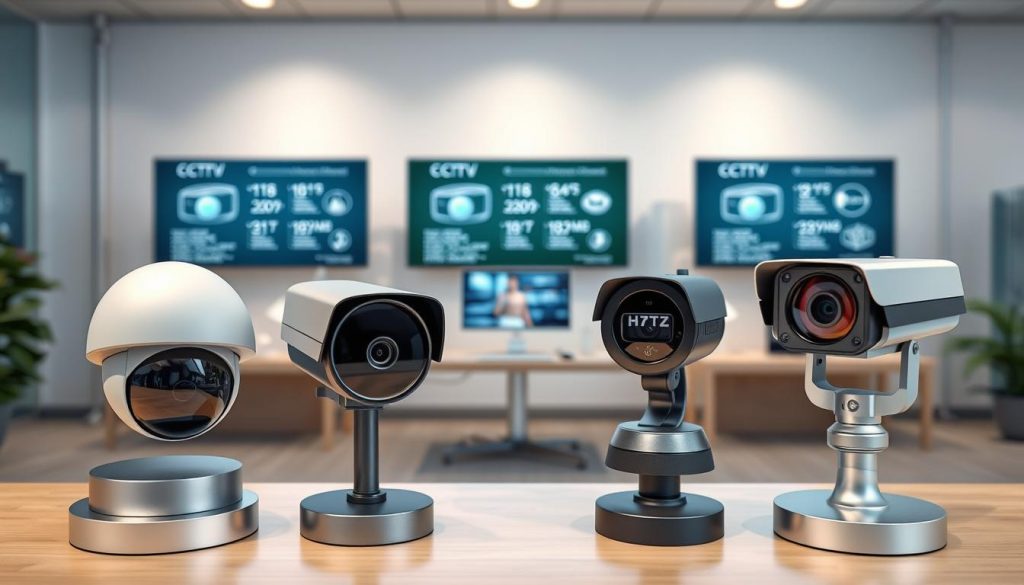
Comparing Dome, Bullet, PTZ, and Smart Cameras
Four primary designs dominate the residential market. Each offers distinct advantages for specific areas.
- Dome Cameras: These feature a discreet, vandal-resistant housing. They are ideal for indoor spaces and HDB corridors where a low-profile look is preferred.
- Bullet Cameras: Compact and visible, they act as a strong deterrent. Their cylindrical shape often houses powerful infrared LEDs for long-range night vision, perfect for monitoring gates and driveways.
- PTZ (Pan-Tilt-Zoom) Cameras: These units offer remote-controlled movement. A single PTZ device can cover a large backyard, panning across the property and zooming in on motion. This can reduce the need for multiple fixed security cameras.
- Smart Cameras: They integrate with home automation via apps. Features like AI-powered person detection and two-way audio are common. They create an intelligent surveillance network.
For example, a PTZ model in a large garden provides wide coverage that might otherwise need three fixed cameras. This is a key consideration for your overall plan.
Indoor vs. Outdoor: Features and Specifications
The installation environment dictates critical features. Using an indoor unit outside will lead to rapid failure.
Outdoor cameras require robust construction. Look for a weatherproof rating of IP66 or higher. This protects against dust and heavy rain.
Vandal-proof housing is also advisable. Superior night vision is non-negotiable. Options include infrared (IR) for clear black-and-white images or color night vision for better detail in low light.
Indoor units prioritize compact design and privacy. Many include a physical shutter or LED indicator that turns off. Two-way audio is a popular feature for communicating with family or pets.
Resolution affects image quality and storage needs. 4K offers incredible detail for identifying faces or license plates but consumes more data. 2K resolution with strong night vision is often the best balance for homes.
Consider power options. PoE (Power over Ethernet) provides a single cable for data and power, simplifying installation. Battery-powered models offer ultimate placement flexibility.
Choosing a camera with a wide field of view or excellent low-light performance can mean fewer devices are needed to monitor a challenging area. Integration is also powerful.
Smart security cameras connected to a central hub, like the SwitchBot Hub, can work with door sensors and alarms. This creates a cohesive, automated system.
Match the type to the location. A dome camera suits a HDB corridor. A weatherproof bullet security camera is perfect for the front gate.
Products like the SwitchBot Pan/Tilt Cam Plus offer indoor panoramic views. The SwitchBot Outdoor Spotlight Cam provides illuminated night coverage. For expert guidance on selecting optimal CCTV cameras for your home, professional advice is invaluable.
Your final selection should complement your placement strategy. The right technology makes your entire plan more effective and manageable.
Recent Changes to Singapore’s CCTV Laws and What They Mean for You
A significant policy shift in 2023 has reshaped the process for many residents aiming to bolster their home’s security. The regulatory environment for residential surveillance is evolving. Staying current is essential for effective and lawful planning.
These updates directly impact how you approach your security system. They clarify what is permitted and simplify steps for countless homeowners. Understanding them helps you avoid new pitfalls.
Updated HDB Corridor Camera Policies
The most notable change concerns HDB flats. Prior written approval from HDB is no longer mandatory for corridor-facing devices. This removes a major bureaucratic hurdle for enhancing doorstep protection.
This relaxation comes with specific conditions that replace the old permit process. Homeowners must install units responsibly within their own door frame areas.
- The device must focus primarily on your own front door.
- Angled mounts should stay within a 45-degree range from your doorway.
- It must not capture the interiors of neighboring units or their private points of entry.
This change is a significant simplification. It empowers HDB residents to act swiftly on their external security needs. The first and most critical external device is now easier to install.
The core principle remains: your security should not come at the cost of a neighbor’s privacy.
Consequences of Non-Compliance
The relaxed approval process does not mean a relaxation of responsibility. Violating the guidelines carries serious repercussions. Ethical installation is paramount.
Formal penalties can be severe under the PDPA. Fines of up to S$5,000 may apply for serious breaches. HDB or your Town Council can issue directives to dismantle non-compliant installations immediately.
Social and legal consequences are equally important. Neighbors who feel their privacy is violated can initiate mediation. They may even pursue legal action, leading to stressful disputes.
Unauthorized devices in common areas, like lift lobbies, will be flagged by the Town Council. Removal orders for these cameras are standard enforcement actions.
A smart practice is to document your installation. Take photos showing the camera’s angle and field of view. This serves as evidence of your good-faith compliance with the rules.
For landed property, the core rules about not intruding on others’ homes or public spaces remain strict. The updated policies mainly benefit HDB residents today.
Leverage this new flexibility correctly. It allows for faster deployment of a vital security layer. Always pair it with respect for community harmony and the law.
Balancing Security, Privacy, and Good Neighbor Relations
Building a secure home extends beyond technology into the realm of community trust and respect. Your security plan is only as strong as the social harmony it preserves. A vigilant system should protect your property without becoming a source of tension.
This ethical balance is crucial for sustainable protection. It turns your surveillance setup into a responsible community asset.
The legal concept of “reasonable expectation of privacy” applies directly here. Pointing a lens at a neighbor’s bathroom window is illegal, even from your own land. Your devices must only capture your own property and its immediate access points.
Disputes often arise from units capturing balconies or shared corridors. Proactive communication prevents an estimated 80% of these conflicts. A simple conversation fosters goodwill and understanding.
Respecting boundaries is not just good manners; it’s often legally required for harmonious living.
Here are practical steps for informing neighbors about your security cameras:
- Explain Your Concerns: Share your genuine reasons for enhancing safety.
- Show the Field of View: Use your phone or a diagram to demonstrate what the lens actually sees.
- Offer Assurance: Explicitly state your respect for their privacy and your commitment to the guidelines.
This approach is especially wise if your device could incidentally capture their entryway. For condominiums, note that common-area installations may require agreement from up to 70% of residents.
What if a neighbor’s camera seems to point at your home? Start with a polite, non-confrontational inquiry. Ask about its purpose and view. Mediation through a Town Council or condo management is a sensible next step.
Internal privacy within your home matters just as much. Place devices in shared living spaces, not private bedrooms. Obtain clear consent from all household members, including domestic helpers, for any monitoring in their areas.
A secure home is best enjoyed in a peaceful community. Responsible use of security technology today contributes directly to that goal. Your vigilance should never come at the cost of a neighbor’s comfort.
This balance is the hallmark of a thoughtful, long-term solution. It ensures your system deters crime while strengthening neighborhood bonds.
Step-by-Step: How to Legally Install Your CCTV System
Turning your security blueprint into reality involves key procedural steps. A methodical approach ensures your system is effective, compliant, and ready from day one.
This guide walks you through the entire process. We cover permits, physical setup, and community communication.
Obtaining Necessary Permits and Approvals
Your first task is understanding the approval landscape. The requirements differ based on your property type and the installation areas.
For HDB flats, the rules are now straightforward. You do not need an HDB permit for corridor-facing cameras if you follow the guidelines.
The device must focus on your own front door. It should not capture neighboring units’ interiors. Angled mounts should stay within a 45-degree range from your doorway.
For other external points, checking with authorities is essential. This includes HDB common property or the perimeter of a landed estate.
- Common Areas: Contact your Town Council for any installation on shared land.
- Landed Property Boundaries: Verify if pointing a lens at a public sidewalk requires notification.
- Temporary Setups: For special events, a permit may be needed even on private land.
Engaging a licensed security service provider is a smart move. Professionals are familiar with local codes and can handle permit applications on your behalf.
Using a certified installer guarantees your setup meets all legal rules from the start.
Best Practices for Installation and Notification
With approvals sorted, focus shifts to technical execution. Proper placement and setup maximize your system‘s potential.
Always test camera views before permanent mounting. Use a temporary stand to verify the field of view and eliminate blind spots.
For outdoor units, use weatherproof conduits to protect cables. This prevents damage from Singapore’s tropical rain and humidity.
Ensure stable power and internet connections. A PoE (Power over Ethernet) setup can simplify wiring for a cleaner look.
Configure your recording settings thoughtfully. Set appropriate motion detection zones to avoid false alerts from passing cars or trees.
Notification is a critical, often overlooked step. Post clear signage visible to visitors, stating that surveillance is in operation.
Have a courteous conversation with adjacent neighbors. Explain your security goals and show them what your cameras actually see.
This proactive communication fosters goodwill and prevents disputes. It aligns with the PDPA’s spirit of transparency.
Before activating your system, run a pre-activation checklist:
- Confirm all devices are operational and angles are correct.
- Verify that storage (NVR/cloud) is functioning properly.
- Train all household members on basic operation and footage access.
- Test remote viewing via your smartphone app.
Data management is a key responsibility. Implement automatic deletion after a set period, such as 30 days.
This practice complies with PDPA principles unless an incident requires longer retention. It also conserves storage space.
Document your entire installation process. Take photos of final camera angles and keep copies of any authority communications.
This record proves your compliance today and helps with future maintenance or upgrades.
Following these steps ensures your security solution is not only powerful but also legally and socially resilient. You gain peace of mind without unintended complications.
Budgeting for Your Home Security System: Cost vs. Coverage
Smart financial planning is as crucial as strategic placement when building a reliable home surveillance network. Your budget directly shapes the scope and sophistication of your protective measures.
A common mistake is equating a higher number of devices with better safety. The cost vs. coverage principle flips this idea. Investing in fewer, high-quality, well-placed units often outperforms a cluster of budget cameras.
This approach maximizes every dollar spent. It focuses on securing critical points with superior technology first.
Professional Installation vs. DIY Approaches
Choosing who installs your security system is a major budget decision. Each path offers distinct advantages and trade-offs.
Professional installation provides expert assurance. A licensed team handles the entire process from planning to setup.
- Expert Placement: Technicians identify optimal spots to eliminate blind spots.
- Concealed Wiring: They ensure a clean, safe setup that protects against Singapore’s humidity.
- Warranty & Compliance: Work is guaranteed and aligns with all local rules.
This service comes at a cost. Professional setup for a typical home ranges from S$900 to S$1,600.
The DIY route offers significant savings. You can slash total expenses by up to 60%. It allows for full customization and is a valuable learning experience.
Common DIY pitfalls include poor angle selection, unstable power connections, and non-compliant placement. These errors can undermine your entire security plan.
For complex layouts or multi-story homes, professional expertise often pays for itself in optimal performance.
Investing in Quality and Future-Proofing
View your security system as a long-term investment. Higher upfront costs for better features lead to greater value over time.
Durability is critical in our climate. Weatherproof cameras with an IP66 rating withstand heavy rain and humidity for years.
Resolution is a powerful efficiency tool. A 4K device provides such clear detail and digital zoom that it can reduce the number of required units by 30% for the same coverage area.
Prioritize features that offer scalability. Power over Ethernet (PoE) simplifies wiring for future additions. Smart cameras with AI person detection reduce false alerts.
Adopt a phased investment strategy. Secure main entry points first. Then, add indoor and perimeter monitoring as your budget allows.
Look for bundled packages. Purchasing a 5+ device system can save around 20% compared to buying units individually.
Remember ongoing costs. Cloud storage subscriptions average S$10 per month per camera. Local network video recorder (NVR) storage has a higher initial cost but no monthly fees.
Hidden expenses include additional electrical work, networking equipment, and periodic maintenance. Factor these into your total budget.
Future-proofing means choosing a system that can grow. Select cameras and hubs with open API support or compatibility with platforms like Google Home. This protects your investment against rapid technological change.
Budgeting wisely ensures your security solution is both effective and sustainable. You build a foundation that deters threats and can be enhanced confidently over time.
Implementing Your Optimized Home Security Plan
Transforming your strategic security blueprint into a functional system requires careful execution. Begin installation at high-priority entry points, such as doors and ground-floor windows.
Test each security camera’s view during day and night before permanent mounting. This confirms optimal angles and eliminates blind spots for complete coverage.
Complete a final implementation checklist for your home security system. Confirm all connections, set motion detection zones, and secure wiring. Notify your neighbors and train every household member on monitoring procedures.
After activation, schedule a 30-day audit period. Review footage quality, false alarms, and coverage gaps. Adjust placements as needed to ensure all key areas are monitored.
Your security setup is a dynamic asset for your property. It enhances deterrence, provides reliable evidence, and enables remote monitoring. Most importantly, it delivers lasting peace mind through effective surveillance.
For professional guidance on customized solutions, contact Wen Hong at +65 60135960.
FAQ
Are there legal limits on the number of security cameras I can install?
In Singapore, there is no specific legal number limit. Your total is governed by privacy laws like the PDPA and, for HDB flats, specific HDB guidelines. The key principle is that your surveillance must not intrude on your neighbors’ private spaces or public common areas.
What factors determine how many cameras my property needs?
The ideal number depends on your property’s size and layout. Key factors include the number of entry points like doors and ground-floor windows, the presence of blind spots, and identifying high-risk areas such as side gates or secluded backyard spaces. A larger, more complex layout typically requires more units for full coverage.
Is it true I can’t point a camera anywhere beyond my own front door?
This is a common misconception. While you cannot film inside a neighbor’s home or dedicated private areas, monitoring a general public corridor or your own driveway is often permissible. The rule is about privacy intrusion, not direction. Always check current HDB corridor camera policies for the latest rules.
Where are the most critical places to install outdoor cameras?
Essential monitoring points include all primary entrances (front and back doors), garage or gate entrances, and first-floor windows. Also, consider covering side alleys or backyard spaces. Placement should provide a clear view while minimizing blind spots in your system’s overall coverage.
What type of security camera is best for home use?
For most homes, modern smart cameras with high resolution, night vision, and motion detection are excellent. Bullet cameras are durable for outdoor use, while dome cameras are discreet. The best choice balances features with your specific property needs and budget.
Have the rules for HDB corridor cameras changed recently?
Yes, HDB policies have been updated. Residents must now register corridor cameras with their town council and ensure they comply with strict placement and data handling rules. Non-compliance can result in being asked to remove the equipment.
What are the steps to install a system legally?
First, review HDB guidelines or condo management rules. For landed properties, ensure your plan respects neighbor privacy. Notify adjacent neighbors as a courtesy. For complex setups, consider professional installation to ensure optimal placement and safety compliance.


