

Guide on How to Write CCTV Maintenance Report Effectively
Proper documentation keeps your surveillance systems running smoothly. A well-crafted record of inspections ensures your security cameras work when needed most. This is especially true in Singapore, where businesses must follow strict regulations.
Clear records help technicians spot problems early. They track the health of every camera and recording device. This guide provides a step-by-step approach to creating effective documentation.
You will learn to structure inspection findings with precision. We cover essential tools and the right mindset before starting. The process includes routine checks and detailed maintenance tasks.
Understanding your system’s components is crucial. This knowledge leads to accurate, useful records. Our guide explains how to customize templates for your needs.
Key Takeaways
- Effective documentation ensures optimal surveillance system performance
- Regulatory compliance is essential for Singapore businesses using security cameras
- Understanding system components leads to more accurate inspection records
- Proper tools and preparation streamline the documentation process
- Customizable templates maintain consistency while saving time
- Clear formatting makes reports readable for different audiences
- Regular tracking of repairs improves long-term system reliability
The Critical Role of CCTV Maintenance Reports in Security
Effective asset security demands regular servicing and comprehensive logging of all observation devices. These documents form the backbone of a reliable surveillance operation. They provide essential insights into equipment health and performance.
Why Regular Maintenance and Documentation are Non-Negotiable
Scheduled upkeep prevents unexpected system failures. It ensures cameras continue monitoring your property without interruption. Consistent checks identify minor issues before they escalate.
Detailed records create a valuable history for each piece of equipment. This historical data reveals patterns in performance degradation. Technicians can predict when components might fail.
Well-serviced surveillance systems last significantly longer. Research shows proper care extends equipment lifespan by up to 40%. This represents substantial cost savings over time.
Systematic documentation creates accountability within security teams. It ensures consistent standards across all monitoring equipment. Supervisors can verify work quality meets established protocols.
Regular logging helps optimize camera placement and image quality. Over time, this data improves overall security effectiveness. Teams make better decisions about upgrades and replacements.
Legal and Compliance Benefits for Businesses in Singapore
Singapore has specific regulations for surveillance in public spaces. Businesses must demonstrate due diligence through documented upkeep. Proper records serve as proof of regulatory compliance.
These documents protect organizations during audits or legal proceedings. They provide evidence that security measures meet required standards. Insurance claims often require this verification.
Maintenance records are not just operational tools—they’re legal safeguards that demonstrate an organization’s commitment to security standards and regulatory requirements.
Local regulations require properly maintained observation systems. Documentation shows adherence to these rules. It helps avoid penalties and legal complications.
Supervisor verification ensures compliance with both internal and external standards. This dual-layer protection strengthens an organization’s legal position. It creates a culture of responsibility and attention to detail.
Proper tracking enables accurate budgeting for future security investments. Organizations can plan upgrades based on actual performance data. This proactive approach supports long-term security planning.
- Prevents system failures through early issue detection
- Extends equipment lifespan by up to 40% with proper care
- Meets Singapore’s specific regulatory requirements
- Provides evidence for insurance claims and legal protection
- Enables data-driven decisions about equipment upgrades
- Creates accountability and consistent service standards
- Supports accurate budgeting and long-term security planning
These benefits make thorough documentation essential for any security operation. They transform routine servicing into a strategic asset protection tool.
Understanding Key CCTV System Components for Accurate Reporting
The foundation of precise inspection records lies in comprehensive knowledge of observation system parts and their functions. Technicians must recognize how different elements work together. This expertise ensures service documentation addresses specific operational needs.
Each piece of surveillance equipment serves a distinct purpose. Proper identification leads to targeted service actions. Clear records then reflect the exact condition of every component.
Types of Cameras and Their Specific Functions
Dome units excel in indoor environments. Their discreet design and wide viewing angles provide excellent coverage. These cameras blend into ceilings for unobtrusive monitoring.
Bullet-style cameras feature weather-resistant housing. They perform well in outdoor settings with long-range capabilities. Their visible presence often acts as a deterrent.
PTZ (Pan-Tilt-Zoom) models offer remote control movement. Operators can track subjects and zoom for detailed views. This flexibility makes them ideal for active surveillance areas.
Infrared cameras provide night vision through IR illuminators. They capture clear footage in complete darkness. These devices are essential for 24-hour security operations.
Understanding these specifications is crucial for effective service documentation. Each camera type has unique requirements. Accurate records must reflect these differences.
Recording Equipment: DVRs vs. NVRs
Digital Video Recorders process analog signals through coaxial cables. They represent traditional surveillance systems. DVRs work with established camera networks.
Network Video Recorders connect with IP cameras over network links. They support higher resolutions and easier remote access. NVRs form the core of modern digital surveillance.
The choice between these systems affects service requirements. Network-based equipment typically offers better scalability. Integration capabilities differ significantly between the two technologies.
Storage devices need regular performance testing. Adequate capacity ensures reliable operation. Technicians must verify recording quality during every inspection.
Modern surveillance relies on the seamless interaction between capture devices and recording hardware. Understanding this relationship transforms routine checks into strategic system optimization.
Camera lenses demand regular cleaning and inspection. Different lens types have specific care needs. Optimal image quality depends on transparent, scratch-free surfaces.
Proper camera angles require verification during each service visit. Complete coverage of critical areas prevents blind spots. Adjustments may be needed as environments change.
Lighting conditions around cameras significantly impact video quality. Regular assessment during inspections is essential. Supplemental lighting might be necessary in some locations.
Power supplies and cabling need systematic checking. These critical components prevent unexpected failures. Secure connections ensure continuous system operation.
This component knowledge helps create detailed service records. Technicians can pinpoint issues to specific system parts. Faster resolution results from accurate problem identification.
Essential Tools and Mindset Before You Start Writing
Successful documentation requires both physical resources and the right mental approach. Technicians need specific equipment to perform thorough evaluations. They also require a mindset focused on accuracy and detail.
Gathering Historical Data and System Information
Review previous service visits to identify recurring patterns. Look for unresolved concerns from past documentation. This historical analysis reveals trends in equipment performance.
Collect comprehensive system specifications and installation dates. Include past repair records for accurate comparison. Performance benchmarks help measure current equipment health.
Equipment specifications provide essential context for current evaluations. Installation dates help determine expected lifespan. Past repair history shows which components need extra attention.
Document the current state of recording equipment thoroughly. Note any performance issues observed during testing. Storage systems require careful evaluation for capacity and reliability.
Environmental conditions significantly impact surveillance equipment. Record temperature extremes around each unit. Moisture levels and physical obstructions need documentation.
The difference between adequate and exceptional documentation lies in preparation. Technicians who systematically gather information before evaluation produce records that truly enhance security operations.
The Importance of a Systematic Inspection Approach
Standardized checklists ensure no component gets overlooked. These guides lead technicians through each evaluation step. Consistency across multiple visits creates reliable performance data.
Follow a logical sequence during the inspection process. Typically start with cameras and their immediate surroundings. Move through recording equipment, storage systems, and power supplies.
Understanding operational needs helps prioritize tasks. Different surveillance areas have varying security importance. Documentation should reflect these priority differences.
Historical data analysis predicts potential failure points. This enables preventive scheduling before critical components fail. Proactive care extends equipment lifespan significantly.
Technicians must verify access to all necessary tools beforehand. Cleaning supplies and testing equipment are essential. Documentation forms should be ready for immediate use.
A systematic approach benefits organizations in multiple ways:
- Consistency across technicians: Different team members produce comparable documentation
- Predictive capabilities: Historical patterns inform future maintenance scheduling
- Comprehensive coverage: Standardized processes ensure nothing gets missed
- Efficiency gains: Logical sequences reduce inspection time while improving quality
- Data reliability: Systematic methods produce information suitable for long-term analysis
This preparation transforms routine checks into strategic security management. Proper groundwork before documentation creates records with lasting value. The right mindset combined with systematic processes yields exceptional results.
How to Write a CCTV Maintenance Report: A Step-by-Step Process
A systematic approach transforms routine surveillance checks into valuable security intelligence. Following established procedures ensures nothing gets overlooked during equipment evaluation. This methodology creates documents that serve both technical teams and management.
The process begins long before the first observation gets recorded. Preparation involves reviewing past documentation and understanding current operational needs. Each step builds upon the previous one for comprehensive coverage.
Structuring Your Report: From Summary to Recommendations
Every document needs a clear framework that guides the reader logically. Start with identification details at the very beginning. Include the service date, technician’s name, and specific location.
List all equipment covered during the inspection visit. This creates immediate context for anyone reviewing the documentation. Managers can quickly understand what systems were evaluated.
The executive summary provides a high-level overview of completed work. It should highlight key findings and any urgent concerns. This section allows busy supervisors to grasp essential information rapidly.
Detailed findings come next, organized by equipment type or physical location. Describe each component’s condition using precise, accessible language. Note both normal operations and any discovered problems.
Include specific metrics where applicable for objective assessment. Image quality measurements and storage capacity percentages offer valuable data. Performance test results document the actual state of surveillance devices.
The recommendations section turns observations into actionable steps. Prioritize items based on security importance and repair urgency. Clear guidance helps organizations allocate resources effectively.
Always include space for supervisor verification and follow-up actions. This creates accountability for addressing identified needs. It ensures concerns get proper attention after the inspection.
Documenting Findings with Clarity and Precision
Technical accuracy must balance with readability for diverse audiences. Use industry terminology while explaining complex concepts simply. Avoid jargon that might confuse non-specialist readers.
Describe visual inspection results with specific, observable details. Note lens cleanliness, housing condition, and mounting stability. Document any physical damage or environmental concerns around equipment.
Calibration adjustments require careful recording of before-and-after states. Include the specific settings changed and reasons for modification. This information helps during future servicing visits.
Precision in documentation isn’t about using the most technical language—it’s about providing the exact information needed to understand equipment condition and make informed security decisions.
Component testing should cover all critical system elements. Check camera functionality, recording reliability, and storage performance. Network connectivity and power supply stability need verification.
Incorporate photographic evidence to visually support written descriptions. Images can show physical damage, installation issues, or proper equipment condition. Visual documentation often communicates problems more effectively than text alone.
Use consistent formatting across all findings for easy comparison. Bullet points and numbered lists improve scanability. Headers should clearly separate different equipment categories.
This step-by-step methodology ensures consistency across multiple inspection visits. Organizations can track performance trends and maintenance history reliably. The structured process ultimately strengthens overall security operations through better documentation.
Conducting Effective Routine CCTV Checks
Establishing a rhythm of periodic assessments ensures observation devices operate at peak efficiency. These evaluations form the operational backbone of reliable visual monitoring networks. Consistent verification prevents degradation in security capabilities over time.
Different components require attention at specific intervals. A structured approach to servicing maximizes equipment lifespan. It also maintains optimal system performance for security operations.
Monthly Inspection Procedures for Optimal Performance
Visual evaluations each month focus on basic functionality. Technicians examine all camera lenses for dirt, smudges, or physical damage. Clean surfaces ensure clear video capture without distortion.
Cable connections require thorough checking for wear or corrosion. Loose links can disrupt power and data transmission. Physical inspection of housing integrity prevents environmental damage.
Lighting conditions around each unit need regular verification. Proper illumination supports daytime surveillance effectiveness. Infrared illuminators must function correctly for night operations.
Camera angles demand monthly confirmation for optimal coverage. Changes in the environment might create blind spots. Adjustments ensure critical areas remain under constant observation.
Basic recording functions require testing during every visit. Verify that storage devices capture footage properly. Playback quality should meet established standards.
Monthly checks are not just about cleaning lenses—they’re preventive measures that catch small issues before they become system failures.
Mounting stability affects long-term positioning accuracy. Secure installations withstand weather and vibration. Housing integrity protects internal components from moisture.
Regular cleaning extends equipment lifespan significantly. Different camera types need specific procedures. Dome units require different care than bullet-style devices.
Quarterly and Annual Maintenance Tasks
Every three months, more comprehensive system evaluations occur. These assessments verify camera angles across all monitoring points. Image quality gets checked on every unit in the network.
Quarterly tasks include performance testing of integrated components. Network connections require verification for data transmission reliability. System integrations must function seamlessly together.
Infrared illuminators need specific testing during these visits. Low-light capabilities determine night surveillance effectiveness. Proper functioning ensures 24-hour security coverage.
Annual professional evaluations provide complete system health assessments. Technicians review the overall setup against original specifications. Focus accuracy gets verified for every observation point.
Firmware upgrades typically happen during yearly servicing. These updates improve functionality and security features. Compatibility testing follows every software modification.
Comprehensive performance testing establishes updated baselines. Metrics should be recorded for trend analysis. This data helps predict when replacements might become necessary.
Servicing schedules should be documented and followed consistently. Different components have varied frequencies based on criticality. Vulnerability assessments inform these timing decisions.
Each inspection task needs clear procedures and expected outcomes. Consistency across different technicians ensures reliable results. Standardized methods produce comparable data over time.
Performance metrics create valuable historical records. Organizations can identify trends in equipment behavior. This information supports data-driven replacement planning.
Documentation of routine evaluations builds preventive servicing history. This proactive approach helps predict failures before they occur. Scheduled replacements then happen during planned downtime.
Utilizing a CCTV Maintenance Report Template
The right documentation framework elevates routine equipment checks from simple tasks to strategic security management tools. Structured forms ensure every evaluation follows consistent protocols. This standardization transforms observations into organized intelligence for security teams.
Professional templates guide technicians through comprehensive system assessments. They prevent overlooked components during busy service visits. Consistent formatting makes information accessible to various stakeholders.
Digital forms with drag-and-drop builders simplify customization. Platforms like Joyfill allow easy template modifications. Mobile-optimized designs support on-site completion using smartphones.
Key Elements Every Professional Template Must Include
Identification sections form the foundation of any effective documentation. These areas capture service dates, technician details, and specific locations. Equipment serial numbers and installation dates provide essential context.
An executive summary offers managers quick insight into completed work. This high-level overview highlights urgent concerns and key findings. Busy supervisors appreciate this condensed information format.
Detailed findings sections require careful organization by device type or location. Each component’s condition needs precise description using accessible language. Both normal operations and discovered problems deserve equal attention.
Recommendations transform observations into actionable security steps. Prioritized items help organizations allocate resources effectively. Clear guidance supports informed decision-making for system improvements.
Verification signatures create accountability for addressing identified needs. Supervisor approval ensures concerns receive proper follow-up attention. This formal acknowledgment completes the documentation cycle.
A comprehensive template doesn’t just record what was done—it guides the entire inspection process, ensuring technicians evaluate all critical components while producing documentation that serves technical, managerial, and compliance needs.
Predefined checklists guarantee consistent evaluation of security devices. Common service tasks appear in logical sequences. These guides prevent missed steps during time-constrained visits.
Photographic evidence attachments visually support written descriptions. Images can show physical damage or proper equipment condition. Visual documentation often communicates problems more effectively than text alone.
Customizing Your Template for Brand and Operational Needs
Brand elements add professional polish to security documentation. Company logos and contact information establish organizational identity. Consistent branding across all reports reinforces corporate standards.
Specific compliance requirements vary across Singaporean industries. Templates should accommodate regulatory documentation needs. Custom fields can capture jurisdiction-specific information.
Mobile optimization enables real-time completion during site visits. Technicians using tablets or smartphones improve data accuracy. Timely documentation prevents memory gaps between inspections and reporting.
Conditional logic streamlines the documentation process for different scenarios. Sections can appear or disappear based on specific findings. This dynamic approach reduces form complexity while maintaining comprehensiveness.
Audience-specific variations serve different stakeholder groups. Technical teams need detailed component specifications. Management prefers summarized performance metrics and cost implications.
Standardized templates ensure consistent information capture across multiple locations. Comparable data supports analysis of equipment performance trends. Organizations can identify patterns in system behavior over time.
Quantitative and qualitative data sections balance objective measurements with observational notes. Metrics like storage capacity percentages offer concrete performance indicators. Condition descriptions provide context for numerical data.
Well-designed forms balance comprehensiveness with usability. Enough structure ensures thorough documentation without burdening technicians. The ideal template guides rather than restricts the evaluation process.
Operational procedures unique to each security setup deserve custom fields. Different surveillance configurations have specific testing requirements. Tailored sections address these specialized evaluation needs.
Regular template reviews ensure continued relevance as systems evolve. Security technology advances require documentation form updates. Periodic revisions maintain alignment with current operational practices.
Formatting Tips for Professional and Readable Reports
The visual presentation of inspection documentation significantly impacts how information gets processed and acted upon by different stakeholders. A well-formatted document guides readers through complex technical details with ease. It transforms raw observations into structured intelligence that supports security decisions.
Professional layout choices determine whether service records become useful tools or forgotten paperwork. Managers need to scan quickly for urgent issues. Technicians require detailed specifications for follow-up work. Auditors look for compliance evidence in organized formats.
Ensuring Clarity and Readability with Headers and Lists
Clear hierarchical headings create a roadmap through complex documentation. Consistent styling for different section levels establishes visual harmony. Readers immediately understand the relationship between main topics and supporting details.
Strategic white space improves comprehension by separating information logically. Consistent font choices maintain professional appearance throughout the document. Information should flow from most critical findings to general observations.
Bulleted lists effectively present checklists and key action items. They break down complex technical information into digestible pieces. Different audiences appreciate this accessible format for quick reference.
Numbered lists work best for sequential procedures and priority actions. Maintenance tasks often require specific step-by-step sequences. This format ensures nothing gets missed during follow-up work.
Tables provide the most effective format for presenting comparative data. Performance metrics across multiple cameras become easy to analyze. Maintenance schedules for different equipment types display clearly in grid formats.
Professional formatting isn’t about decoration—it’s about creating documents that communicate effectively with every stakeholder, from technicians needing precise specifications to managers requiring executive summaries.
Incorporating Data, Metrics, and Visual Evidence
Visual evidence powerfully supports written findings in surveillance documentation. Photographs demonstrate actual equipment conditions and verified issues. Screen captures show video quality and system interface problems.
Diagrams of system layouts help readers understand physical installation contexts. These visual elements often communicate problems more effectively than text descriptions alone. They provide undeniable proof of conditions observed during inspections.
Charts and graphs illustrate performance trends over extended periods. Equipment degradation patterns become immediately apparent. Improvement following servicing shows clearly in visual formats.
Consistent formatting across all documents creates brand professionalism. Readers develop familiarity with your organization’s documentation style. They can find specific information quickly without relearning layout patterns.
Digital documents must maintain formatting integrity when exported. PDF and Word versions should present identical information structures. All stakeholders receive consistent presentation regardless of viewing platform.
Effective formatting considers how different audiences use these documents. Managers typically scan for urgent issues and cost implications. Technicians need detailed component specifications and test results.
Auditors look for compliance evidence in organized, verifiable formats. Each audience has unique information needs within the same document. Strategic formatting addresses all these requirements simultaneously.
Quantitative data sections should include concrete measurements and percentages. Storage capacity metrics and image quality scores offer objective performance indicators. These numbers provide benchmarks for future comparisons.
Qualitative observations add necessary context to numerical data. Descriptive notes explain why certain metrics matter for security operations. This combination creates comprehensive understanding of system health.
Proper formatting ultimately enhances the value of every inspection visit. It transforms routine checks into strategic security management tools. Organizations gain clearer insights into their surveillance investments.
Writing Effective CCTV Maintenance Reports: Best Practices
Strategic documentation practices elevate equipment servicing from administrative tasks to security intelligence generation. The difference between adequate and exceptional records lies in applying proven methodologies. These approaches ensure your visual monitoring documentation serves multiple stakeholders effectively.
Organizations in Singapore benefit from standardized documentation that meets both operational and regulatory needs. Well-structured records provide clear evidence of due diligence. They transform routine checks into valuable assets for security planning.
Achieving Clarity and Conciseness in Technical Writing
Clear communication begins with language accessible to diverse audiences. Technical teams and management stakeholders have different information needs. Effective documentation bridges this gap without sacrificing precision.
Simple terminology works best for broad understanding. Define necessary technical terms when first introduced. Avoid industry jargon that might confuse non-specialist readers.
Conciseness eliminates redundant information while preserving essential details. Focus on actionable findings rather than excessive background. Each sentence should contribute directly to understanding equipment condition.
Structure your documentation with logical section progression. Begin with identification details and executive summaries. Progress through detailed findings before concluding with recommendations.
Bulleted lists effectively present checklists and key action items. They break complex technical information into digestible pieces. Different audiences appreciate this accessible format for quick reference.
Numbered sequences work best for procedural steps and priority actions. Maintenance tasks often require specific step-by-step execution. This format ensures nothing gets missed during follow-up work.
The most effective documentation tells a clear story about system health, guiding readers from identified issues through analysis to logical recommendations for resolution.
Consistent terminology throughout all records establishes professional standards. Readers develop familiarity with your organization’s documentation style. They can find specific information quickly without relearning patterns.
Regular review and refinement of reporting practices ensures continuous improvement. Solicit feedback from different stakeholder groups. Update documentation approaches based on operational experience.
Including Relevant Data and Performance Metrics
Meaningful metrics transform subjective observations into objective assessments. Select measurements that truly indicate surveillance equipment health. These indicators provide concrete evidence of system performance.
Key performance indicators should align with organizational security goals. Camera uptime percentages reveal reliability across monitoring points. Storage utilization rates indicate recording capacity status.
Network connectivity statistics demonstrate data transmission reliability. Equipment temperature readings help identify potential hardware issues. Image clarity scores quantify visual monitoring effectiveness.
Present metrics with proper context for accurate interpretation. Compare current readings to established baselines or manufacturer specifications. Reference regulatory requirements where applicable for compliance verification.
Historical performance data reveals trends in equipment behavior. Reference past measurements to show improvements or deteriorations. This longitudinal analysis supports predictive maintenance scheduling.
Tables provide the most effective format for presenting comparative data. Performance metrics across multiple cameras become easy to analyze. Consider this example structure for equipment evaluation:
- Camera Uptime: Percentage of operational time versus scheduled downtime
- Image Quality Score: Numerical rating based on clarity and detail
- Storage Utilization: Current capacity used versus available space
- Network Stability: Connection reliability measurements over time
- Temperature Range: Operating temperatures within specified limits
Visual evidence powerfully supports numerical data in surveillance documentation. Photographs demonstrate actual equipment conditions and verified issues. Screen captures show video quality and system interface problems.
Diagrams of system layouts help readers understand physical installation contexts. These elements often communicate problems more effectively than text alone. They provide undeniable proof of conditions observed during inspections.
Charts and graphs illustrate performance trends over extended periods. Equipment degradation patterns become immediately apparent. Improvement following servicing shows clearly in visual formats.
Effective documentation distinguishes between different information types. Observations describe what was seen during inspections. Analysis explains what these findings mean for security operations.
Recommendations specify what actions should follow the evaluation. This clear separation helps different audiences extract needed information. Managers focus on recommendations while technicians study observations.
For comprehensive guidance on developing exceptional documentation practices, explore our detailed guide to creating effective maintenance records. This resource provides additional insights tailored to Singapore’s regulatory environment.
Maintaining Camera and Recording Equipment
A structured regimen for cleaning and testing observation gear delivers optimal performance over time. This proactive approach combines physical care with digital verification. It ensures every component functions as intended for reliable security monitoring.
Regular attention prevents the gradual decline in video clarity and system reliability. Technicians follow specific procedures for different types of devices. This work supports the overall health of your surveillance investment.
Cleaning and Physical Upkeep Best Practices
Begin with lens care using appropriate microfiber cloths. Gently wipe surfaces to remove dust, smudges, and moisture residue. These elements can significantly blur video quality if left unattended.
Specific techniques protect delicate optical surfaces from scratches. Avoid harsh chemicals that might damage special coatings. Proper cleaning restores crystal-clear image capture immediately.
Check for physical obstructions like spider webs or foliage. These block critical views and compromise security coverage. Trim vegetation and clear debris during each service visit.
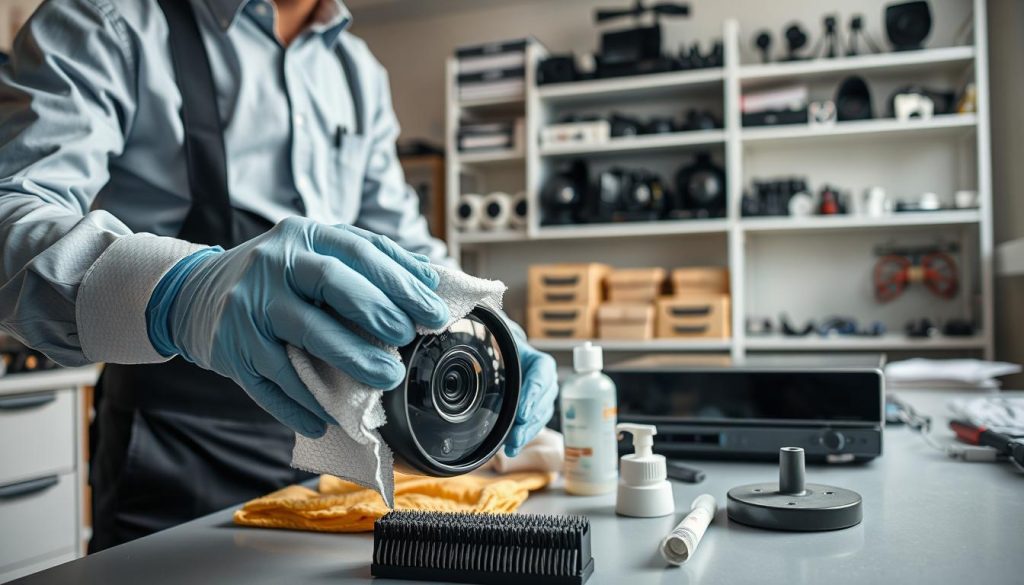
Inspect all cables and connectors for wear or corrosion. Loose links disrupt power and data transmission. Secure, weatherproof connections are vital for continuous operation.
Physical upkeep includes verifying mounting stability and housing integrity. Ensure environmental protection seals remain intact. Proper cable management prevents weather-related damage and vandalism.
Physical maintenance isn’t optional—it’s the foundation that determines whether your surveillance equipment survives Singapore’s climate and delivers the evidence you need.
Recording equipment requires verification of storage device health. Test backup systems to confirm data redundancy works. Ensure adequate capacity meets required footage retention periods.
Prioritize tasks based on equipment criticality. High-security areas deserve more frequent attention and testing. This focused approach maximizes protection for your most valuable assets.
Software Updates and Systematic Performance Testing
Schedule regular firmware upgrades for all devices. These updates provide enhanced features and crucial security patches. They often include performance improvements that extend hardware usefulness.
Systematic deployment prevents compatibility issues across your network. Test updates on a single device before full implementation. This verification step avoids widespread system disruption.
Conduct diagnostic checks on motion detection settings. Ensure sensitivity levels match your security requirements. Adjust parameters based on environmental changes and false alarm patterns.
Test night vision capabilities during actual low-light conditions. Verify infrared illuminators provide adequate coverage. This ensures reliable 24-hour monitoring regardless of lighting.
Performance testing should simulate real-world operational scenarios. Include varying light levels, motion patterns, and network loads. This comprehensive approach confirms reliable operation under all expected conditions.
Check recording playback for smooth operation without glitches. Confirm footage retrieves properly from storage devices. Corruption or retrieval failures defeat the entire purpose of surveillance.
Document all activities with before-and-after metrics. Show the impact of cleaning, adjustments, or updates on system performance. This data proves the value of your servicing work.
Technician training must cover specific procedures for different equipment types. Provide regular updates as new technologies get implemented. Skilled personnel are your most important maintenance asset.
Adapt schedules for seasonal variations in Singapore’s climate. Increase weatherproofing checks before monsoon seasons. Perform cooling system verification before extended hot periods.
This combined approach delivers significant benefits for any organization:
- Extended Equipment Lifespan: Proper care reduces wear and prevents premature failure
- Reduced Unexpected Downtime: Proactive servicing catches issues before they cause outages
- Consistent Video Quality: Clear footage supports both monitoring and evidence collection
- Optimized Security Investment: Well-maintained systems deliver full value over their operational life
- Regulatory Compliance: Documented upkeep meets Singapore’s standards for security systems
Implementing these practices transforms reactive fixing into strategic asset management. Your surveillance infrastructure becomes more reliable and cost-effective. The result is enhanced safety and protection for your premises.
Tracking Repairs and Tailoring Reports for Your Audience
Tailoring documentation to different audience needs ensures information drives appropriate action. Comprehensive tracking of all service interventions builds a complete history for each surveillance component. This detailed logging includes serial numbers, installation dates, and every repair performed.
Analyzing this historical data reveals patterns in equipment behavior. Technicians can spot recurring issues before they cause system failures. Predictive maintenance becomes possible, extending device lifespan and improving reliability.
Reports for technical teams require detailed specifications and diagnostic information. Management needs cost implications and strategic recommendations. Client versions should focus on security effectiveness and value preservation.
Effective communication about equipment health requires understanding each stakeholder’s priorities. This tailored approach ensures compliance documentation meets Singapore’s regulatory standards while supporting informed decision-making across your organization.
FAQ
What is the main purpose of a surveillance system maintenance report?
The primary purpose is to create a formal record of a system’s health. This document details the condition of all equipment, notes any faults found, and lists actions taken. It serves as vital proof of due diligence for security audits and insurance compliance, especially for businesses in Singapore adhering to strict regulations.
What are the most critical items to check during routine service?
Technicians must verify several key components. They check camera housings for damage, clean lenses for clear video, and confirm correct angles and lighting. Inspecting recording devices like DVRs or NVRs for storage capacity and software updates is also essential. Power supplies and cable connections are tested to prevent failures.
How does using a standardized template improve the reporting process?
A professional template ensures consistency and saves time. It guides the technician through a systematic inspection, preventing missed checks. Templates from providers like Hikvision or Dahua include fields for serial numbers, test results, and recommendations, making information easy to find for facility managers and security teams.
What performance metrics should be included in the documentation?
Effective reports go beyond “working” or “not working.” They include specific data like hard drive storage remaining, network bandwidth usage for IP systems, and image clarity tests. Noting frame rates, motion detection sensitivity settings, and the status of infrared LEDs for night vision provides a complete picture of system performance.
Why is it important to tailor these documents for different audiences?
The information needs of a security director differ from those of a building manager. A technical audience needs detailed data on signal strength and firmware versions. Executive summaries should focus on overall system reliability, compliance status, and any required budget for upgrades or repairs, ensuring the document is actionable for every reader.


