

Do CCTV cameras need maintenance?
In Singapore, keeping CCTV systems in top shape is key. Regular checks are vital for smooth surveillance. Without them, you might miss important details or face system failures.
These systems are critical for protecting homes and businesses. Regular upkeep keeps them running well and meets local laws. Singapore’s weather can be harsh, so it’s important to stay on top of your camera’s maintenance.
Key Takeaways
- Regular maintenance is key for CCTV systems to work well.
- Ignoring upkeep can cause system failures and security risks.
- Keeping systems in good shape extends their life.
- Maintenance helps follow local surveillance laws.
- It ensures your video quality stays high.
Importance of Regular CCTV Maintenance
Regular maintenance of CCTV systems is key to better security and efficiency. A well-kept system makes sure cameras work their best. This boosts the overall performance of your CCTV system.
Enhancing System Performance
Regular service stops common problems that slow down your system. Clear video is vital for good surveillance. Keeping lenses clean and tech up to date is part of the job.
By focusing on your surveillance, you improve your security. This makes your system more efficient.
Prolonging Equipment Lifespan
Right maintenance keeps your equipment running longer. Ignoring it can cause damage that’s hard to fix. Regular checks by pros catch small issues before they get big.
This way, you extend the life of your investment. It’s a smart move for your security setup.
Reducing Costs on Repairs
Regular upkeep saves you money on repairs. Finding problems early saves you from big repair bills. Being proactive with maintenance means you won’t have to replace expensive gear.
This approach makes your security solution more affordable. It’s a smart way to save money in the long run.
What are the Types of Maintenance of CCTV?
Knowing the types of CCTV maintenance is key for good surveillance management. Each type is important for keeping CCTV systems working well. By understanding these three main types, users can pick the right approach for their needs.
Preventative Maintenance
Preventative maintenance aims to stop equipment problems before they start. It involves regular checks and replacing parts to keep things running smoothly. This approach helps avoid unexpected downtime and fixes issues early on.
Corrective Maintenance
Corrective maintenance fixes problems after they happen. It includes repairs and replacements as needed, which can be more expensive. Knowing when you might need this helps prepare for the costs of unplanned repairs.
Predictive Maintenance
Predictive maintenance uses advanced data to predict when maintenance is needed. It helps use resources better and cuts down on downtime. By using real-time data, CCTV systems can last longer and work more efficiently.
Do CCTV Cameras Need Maintenance?
Maintaining CCTV cameras is key to their performance and life span. It’s important for both home and business users. Regular care helps avoid system failures that could harm security.
Understanding the Necessity of Upkeep
Regular maintenance is very important. It helps spot problems early and keeps the system running well. These checks are essential for clear images, longer equipment life, and continuous service.
Ignoring maintenance can cause blurry images, data issues, and equipment failure. By focusing on upkeep, users can make their systems more reliable and avoid expensive repairs.
CCTV Maintenance Checklist: Essential Components
Keeping your surveillance system in top shape starts with a good CCTV maintenance checklist. Regular checks help your equipment work its best for longer. By following a routine, you can catch problems early and keep your system running smoothly.
Key Areas to Inspect
- Camera lenses: Check for clarity and cleanliness to ensure optimal image quality.
- Power supply connections: Ensure all connections are secure and functioning correctly.
- Storage capacity: Monitor available storage space to avoid disruptions in recording.
- Wiring: Inspect for signs of damage or wear that could affect system performance.
Recommended Frequency of Checks
It’s important to know how often to check your surveillance system. You should check camera lenses and wiring every month. Do a full system check every six months. This regular care boosts your system’s reliability and prevents unexpected failures.
Understanding Different Types of CCTV Systems
Exploring CCTV systems shows us many options. Each is made for different needs and places. Knowing about these systems helps us make better choices, thinking about upkeep, connection, and how well they work.
Wired CCTV Systems
Wired CCTV systems are reliable and always connected. They give high-quality video, unlike wireless ones. To keep them working well, you need to check the cables and connections often.
Wireless CCTV Systems
Wireless CCTV systems are easy to set up. They let you put cameras in places you can’t reach with wires. But, you must watch the battery and network to keep them running. Also, watch out for things that might mess with the video.
IP-based CCTV Systems
IP-based systems use digital tech for better video and remote access. They need updates to stay safe from hackers. Keeping them updated is key to protecting your footage and keeping it accessible.
Knowing the differences between these types of CCTV systems helps us choose the right one. If you’re setting up or fixing these systems, getting help from experts is a good idea. For more on CCTV installation and repair, check out CCTV Maintenance.
Common Issues Faced During CCTV Maintenance
CCTV systems can face many common problems. These issues can make them less effective. It’s important to fix these problems quickly to keep security strong.
Camera Lens Problems
Camera lens issues are a big problem. Dirt and dust can block the view, making images unclear. If the lens is not aligned right, footage can be blurry. It’s key to clean and adjust camera lenses often to keep them working well.
Wiring Issues
Wiring problems are another big issue. If cables are frayed or connections are loose, video feeds can be broken. This can create blind spots in surveillance. It’s important to check wiring regularly to keep connections tight and signals strong.
Storage Problems
Storage issues can also be a problem. If there’s not enough space, important footage might get lost. Managing storage well ensures that all important recordings are saved. This lets us review security events effectively.
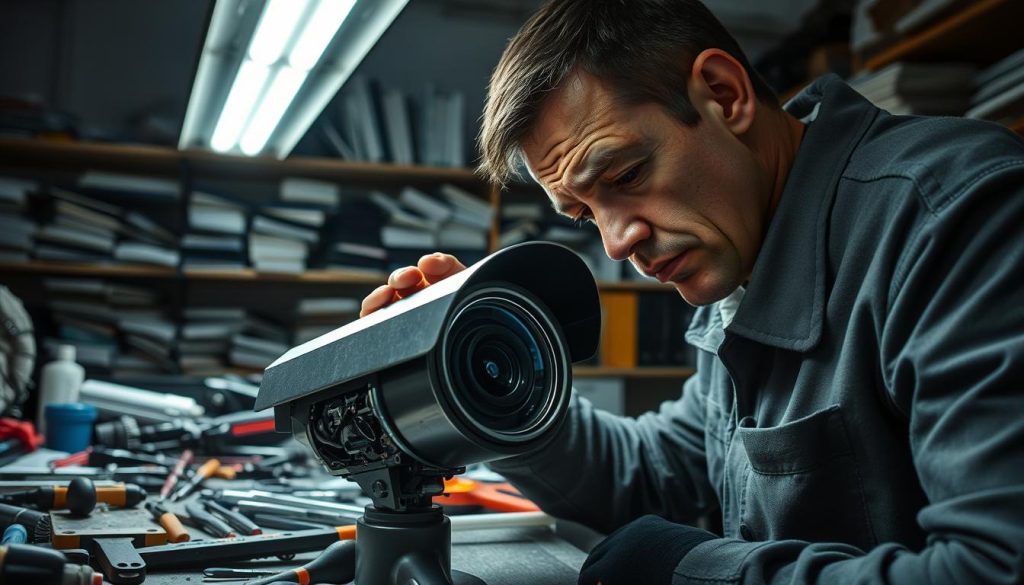
Creating a CCTV Maintenance Schedule
Creating a good CCTV maintenance schedule is key for your security system’s best performance. Regular checks help find problems early and make monitoring better.
Weekly Checks
Weekly monitoring is very important. Here’s what to do during these checks:
- Make sure camera angles and views are right for full coverage.
- Look for anything that might block the view.
- Check if recordings are working right and data is saved correctly.
Monthly Checks
Monthly inspections are for deep cleaning and system tests. You should:
- Clean camera lenses for clear images.
- Check and fix any damaged cables.
- Look at stored footage to see if it meets security needs.
Annual Professional Services
Annual professional services give a detailed system check. They include:
- Checking the whole system for technical problems.
- Advice on upgrading for better performance.
- Reviewing footage and system performance against security goals.
Following a good CCTV maintenance schedule helps your system work better and last longer.
CCTV Maintenance Best Practices
Keeping your CCTV system in top shape is key for its best performance and life span. A well-kept system gives clearer images and is more reliable. Here are important steps to take during regular upkeep.
Regular Cleaning of Lenses
Cleaning the camera lenses regularly is a must. Dust, rain, and other debris can harm image quality. Using the right cleaning solutions and soft cloths keeps your cameras working well.
Inspecting Cables for Damage
Checking cables is a big part of CCTV care. Cables can get damaged over time. Look for frayed or exposed wires to avoid problems. Fixing cable issues early saves time and money.
Monitoring Power Supply
Keeping an eye on power is essential for smooth operation. Cameras need a steady power source to work right. Checking power sources often helps catch issues early. This keeps your system running smoothly.
Choosing a Professional CCTV Servicing Provider
Choosing the right CCTV servicing provider is key to keeping your security system working well. A good provider has the skills to make sure your cameras and monitors are in top shape. Look for a company with lots of experience in the field.
It’s also important to know the local laws about using CCTV. A provider who knows these laws can help you stay legal. They can also offer maintenance plans that fit your system’s needs.
Checking out what other customers say can help you choose. Companies with good reviews are less likely to have problems and make your system work better. By focusing on these points, you can find a reliable CCTV provider that will keep your system running smoothly.
FAQ
Do CCTV cameras require maintenance?
Yes, CCTV cameras need regular care to work well. This is true in Singapore’s changing weather. Without upkeep, they might fail or show poor video.
What is the importance of regular CCTV maintenance?
Keeping CCTV systems in check boosts their performance and life span. It also saves money on repairs. Regular maintenance ensures they work right and follow local laws.
What types of maintenance are available for CCTV systems?
There are three main types of CCTV maintenance. Preventative maintenance involves regular checks. Corrective maintenance fixes problems as they arise. Predictive maintenance uses data to predict when maintenance is needed.
Why is it necessary to maintain CCTV cameras?
CCTV cameras need upkeep to stay in good shape. It keeps their images clear and prevents big problems from small issues.
What should be included in a CCTV maintenance checklist?
A good CCTV maintenance checklist covers camera lenses, power, storage, and wiring. It also includes regular inspections to catch issues early.
What are the differences between wired, wireless, and IP-based CCTV systems?
Wired systems offer solid connections and clear video but need cable checks. Wireless systems are flexible but need battery and network checks. IP systems need software updates for best performance.
What common issues can occur during CCTV maintenance?
Issues like dirty lenses, bad wiring, and storage problems are common. Regular checks can help avoid these problems.
How can I create a CCTV maintenance schedule?
Create a schedule with weekly checks for camera angles and monthly cleanings. Also, do annual professional audits and upgrades.
What are the best practices for CCTV maintenance?
Clean lenses often to keep video clear. Check cables for damage and ensure power supplies work well to keep cameras running.
How do I choose a professional CCTV servicing provider?
Look for a provider with experience and local knowledge. They should offer custom plans that fit your system’s needs.


