
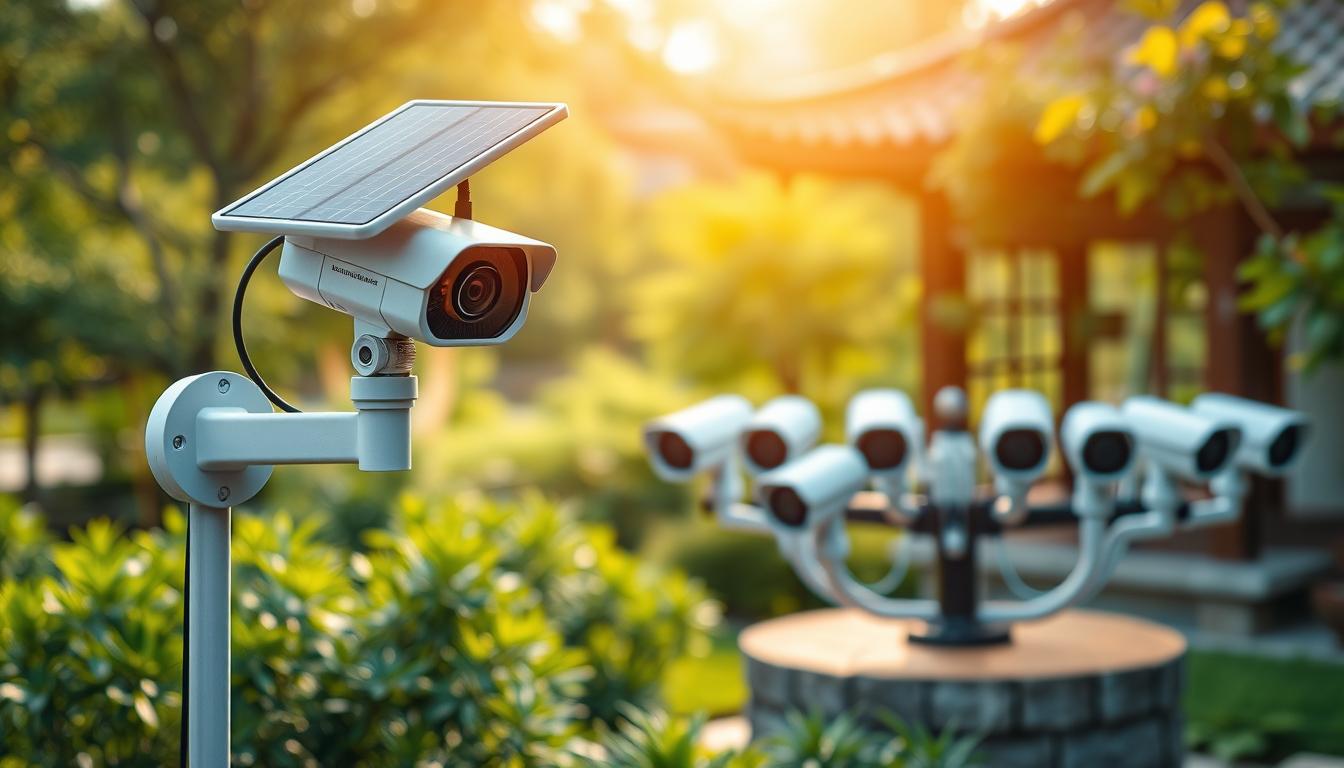
Buy Wireless Solar Powered Night Vision Security Cameras Online
Modern surveillance solutions have evolved to offer seamless, eco-friendly protection. In Singapore’s sunny climate, solar-powered options provide reliable performance without complex wiring. Top brands like Hikvision and Tapo lead the market with advanced features for round-the-clock monitoring.
These systems are ideal for homes, businesses, and temporary setups. With no wiring needed, installation is quick and hassle-free. Verified by 322 Amazon.sg reviews averaging 4.1/5 stars, these devices deliver trusted performance.
Available for immediate purchase online, they combine convenience with cutting-edge technology. Whether for property safety or remote monitoring, these solutions adapt to diverse needs effortlessly.
Key Takeaways
- Singapore’s climate is perfect for solar surveillance systems.
- Leading brands offer reliable, wire-free installation.
- 24/7 protection with zero wiring requirements.
- Ideal for residential, commercial, and temporary use.
- Highly rated by verified buyers on Amazon.sg.
Why Choose Solar-Powered Security Cameras?
Singapore’s abundant sunshine powers a new generation of security solutions. These solar powered security systems deliver reliable protection while reducing environmental impact. They’re particularly effective in our tropical climate with consistent sunlight year-round.
Eco-Friendly Surveillance Solutions
Modern security camera technology now minimizes carbon footprints through renewable energy operation. By harnessing Singapore’s average 5.1 kWh/m²/day solar irradiance, these systems operate completely off-grid. This makes them perfect for eco-conscious property protection without compromising performance.
Hikvision models demonstrate this sustainability with 50% energy savings compared to wired alternatives. The systems maintain operation even during power outages, with built-in batteries providing up to 7 days of backup.
Cost-Effective Operation
Solar powered surveillance eliminates monthly electricity costs for continuous monitoring. Users report 50-75% long-term savings versus traditional wired systems.
Tapo’s C425 model exemplifies this efficiency, operating 300 days on a single 10,000mAh charge. Temporary installations for events become financially viable without infrastructure investments.
Wireless Convenience
The absence of wiring allows installation in remote locations where power access is limited. This flexibility makes security camera placement simpler for challenging areas like perimeter fences or construction sites.
With reliable battery life and weather-resistant designs, these systems provide solar powered security without maintenance hassles. They’re equally effective for residential gardens and commercial properties alike.
Key Features of Wireless Solar Security Cameras
Advanced surveillance systems now integrate renewable energy for uninterrupted protection. These solutions excel in Singapore’s climate, combining durability with smart energy management. Below are the standout features that ensure reliability.
High-Efficiency Solar Charging
Monocrystalline panels deliver 22–24% efficiency, like Tapo’s 45-minute quick-charge design. Solar powered models harness sunlight even on cloudy days, ensuring consistent power. Smart algorithms optimize energy absorption, reducing dependency on grid electricity.
Extended Battery Performance
Hikvision’s 20Ah lithium batteries last 1–6 months per charge. Battery life extends further with automatic sleep modes during inactivity. This performance is ideal for remote locations or extended monitoring needs.
Weatherproof Construction
IP66/67 ratings defend against tropical storms and heavy rain. Anti-corrosion coatings protect coastal installations, while dust-proof sensors maintain clarity. Built for -20°C to 45°C, these systems thrive in Singapore’s humidity.
“The integration of solar tech with rugged designs sets a new standard for security in challenging environments.”
Superior Night Vision Capabilities
Clear visibility after dark is critical for effective property monitoring. Modern systems capture detailed images even in complete darkness, providing reliable protection when it matters most. This technology eliminates blind spots that compromise traditional surveillance.
Infrared Technology Explained
High-performance 850nm IR LEDs deliver black-and-white visibility up to 40 meters. These invisible beams create crisp night vision without disturbing ambient lighting. Hikvision’s Starlight+ sensors require just 0.0005 lux illumination – less than moonlight.
Color Night Vision Options
The Tapo C425 revolutionizes nighttime monitoring with 30-meter color view using supplemental spotlights. Smart exposure control prevents washed-out images while maintaining true-to-life colors. Some models offer thermal imaging for absolute darkness scenarios.
Low-Light Performance Metrics
Advanced systems automatically adjust to mixed lighting conditions. Dynamic range optimization balances bright and dark areas in the same frame. Privacy zones ensure sensitive areas remain obscured in recordings without compromising overall security coverage.
“Today’s night vision technology delivers daytime clarity around the clock, redefining expectations for after-dark monitoring.”
Top Wireless Solar Powered Night Vision Security Cameras
Leading brands are redefining property monitoring with self-sustaining designs. Hikvision and Tapo dominate Singapore’s market, offering feature-rich outdoor security cameras that excel in performance and ease of use. Below, we break down their flagship models and key differences.
Hikvision Solar-Powered Series
The DS-2XS2T47 delivers 4K resolution at 30fps with radar detection for pinpoint accuracy. Its modular battery system allows hot-swapping, ideal for 24/7 surveillance. Storage options include SSD support, catering to heavy data needs.
Unlike competitors, Hikvision offers paid analytics like license plate recognition. This suits commercial users needing advanced metrics. The trade-off? A steeper price tag (S$899) but with a 3-year warranty.
Tapo C425 Solar Kit Features
Tapo’s 150° field of view and free AI motion tracking make it a residential favorite. The integrated 10,000mAh battery lasts 45 days per charge, while 512GB SD storage ensures ample local backups.
At S$299, it’s a budget-friendly pick. The catch? No 4G support—Wi-Fi-only connectivity limits remote locations.
Premium Camera Comparison
Choosing between 1080p and 4K depends on detail needs. Hikvision’s radar detection outperforms in low light, while Tapo’s AI reduces false alerts.
- Storage: Hikvision’s SSD vs. Tapo’s SD card
- Connectivity: 4G (Hikvision) vs. Wi-Fi (Tapo)
- Price: S$299–S$899 range
“These solar cameras prove that sustainability doesn’t compromise performance—whether for a condo balcony or construction site.”
Installation Made Simple
Setting up your surveillance system doesn’t have to be complicated. With the right approach, you can optimize performance while minimizing effort. Follow these guidelines to ensure seamless operation from day one.
Optimal Placement Guidelines
Positioning is critical for effective monitoring. Mount devices 2.5–4 meters high for a balanced angle that covers entry points. South-facing panels at a 1–15° tilt maximize energy absorption in Singapore’s latitude.
Avoid obstructions like trees or walls. For pole-mounted units like Hikvision’s 14kg models, ensure sturdy anchoring to withstand wind loads.
Sunlight Exposure Requirements
At least 30 minutes of direct sunlight daily powers Tapo systems efficiently. Clear any shading objects near panels. In cloudy conditions, lithium batteries provide backup for uninterrupted security.
Wireless Connectivity Setup
Boost Wi-Fi signals by placing routers within 10 meters of cameras. For rural areas, 4G antennas should face the nearest cell tower. Use weatherproof cable conduits to protect connections.
“Proper installation isn’t just about mounting—it’s about maximizing every component’s potential.”
- Grounding: Install lightning arrestors for surge protection.
- Mobile Apps: Tapo and Hikvision offer step-by-step setup guides.
- Testing: Verify night vision and motion alerts post-installation.
Smart Home Integration
Connectivity transforms how we monitor our properties. Modern systems sync with existing smart ecosystems, creating unified protection networks. This seamless integration elevates both convenience and control.
Mobile App Control
Hikvision’s Hik-Connect app organizes multiple feeds with drag-and-drop layouts. Receive instant alerts with snapshot previews when motion triggers occur. Remote pan-tilt-zoom functions work smoothly even on 4G connections.
Tapo’s companion app simplifies user management with tiered access levels. Temporary guest permissions can be set for contractors or housekeepers. Both platforms support scheduled arming for automated home security routines.
Voice Assistant Compatibility
“Alexa, show me the front gate” activates live views on Echo Shows. Google Home integration allows verbal commands for recording clips. These hands-free options prove invaluable during emergencies or when multitasking.
IFTTT automation links cameras with other smart devices. Example: Flashing lights when motion is detected after dark. Such custom scenarios adapt protection to individual lifestyles.
Automated Alert Systems
Advanced filters distinguish between pets, vehicles, and human movement. Push notifications include thermal imaging snapshots during total darkness. Email alerts with timestamped videos create audit trails for incidents.
“Smart integration turns reactive security into proactive protection, with systems that learn your patterns over time.”
Firmware updates occur automatically overnight, ensuring peak performance every day. Cloud backups preserve settings during device replacements. These features combine to create intelligent, self-maintaining ecosystems.
Motion Detection Technology
Advanced algorithms have transformed motion detection from basic alerts to precise threat identification. Modern systems analyze movement patterns, heat signatures, and object characteristics to minimize false notifications while maintaining vigilant security.
AI-Powered Recognition
Hikvision’s AcuSense technology filters 95% of non-human alerts using deep learning. The system classifies objects into categories like people, vehicles, and animals with 98.7% accuracy.
Tapo models ignore pets under 25kg through 3D motion analysis. Continuous cloud updates refine recognition patterns based on your environment’s unique characteristics.
Customizable Detection Zones
Create virtual boundaries where movement triggers alerts using drag-and-drop mapping. Adjust sensitivity per zone—higher for entry points, lower for busy sidewalks.
Thermal sensors outperform PIR in windy conditions, while pixel-based analysis excels in defining exact trigger areas. Some models allow setting minimum object sizes to ignore small wildlife.
Reducing False Alarms
Smart scheduling silences notifications during known activity periods. Historical analytics help identify recurring false triggers for automatic filtering.
“Next-gen detection isn’t about seeing more—it’s about seeing what matters with surgical precision.”
Choose between instant SMS or detailed email alerts with timestamped images. Most systems now include environmental filters that account for swaying trees or heavy rain.
Storage and Data Management
Efficient data handling is the backbone of any reliable monitoring system. Modern solutions offer flexible retention options to balance accessibility with privacy concerns. Whether storing footage locally or remotely, each method has distinct advantages for Singaporean users.
Local vs Cloud Storage
On-device storage like Tapo’s 512GB microSD retains footage for 28 days without subscriptions. This avoids monthly fees but risks physical damage. Cloud alternatives provide off-site backups with real-time alerts, ideal for high-risk properties.
Hikvision’s edge storage encrypts data before transmission, adding an extra security layer. NAS systems suit businesses needing centralized management across multiple cameras.
Capacity Considerations
Standard 128GB cards store approximately 7 days of 1080p footage at 15fps. High-end models support 1TB capacities for extended retention. Key factors affecting storage needs:
- Resolution (4K uses 4x more space than 1080p)
- Frame rate settings
- Motion-activated vs continuous recording
Advanced Privacy Protocols
Modern systems employ AES-256 encryption equivalent to bank-level security. Two-factor authentication prevents unauthorized access, while GDPR-compliant handling ensures legal compliance.
“Private blockchain recording creates tamper-proof audit trails, revolutionizing evidence preservation for legal cases.”
Automatic overwrite cycles manage space efficiently, prioritizing recent events. For maximum control, on-premise servers keep data within physical premises.
Durability in Singapore’s Climate
Singapore’s tropical environment demands rugged surveillance equipment that stands up to extreme conditions. From relentless humidity to torrential downpours, outdoor security camera systems must exceed standard durability benchmarks. Leading brands engineer their products specifically for equatorial performance.
Military-Grade Weather Resistance
IP66/67 ratings ensure complete protection against dust and powerful water jets. Hikvision’s 96-hour salt spray testing proves resistance to coastal corrosion—critical for seaside properties. Drainage channels prevent water pooling during extended rain periods.
Tapo’s -20°C cold start capability handles rare temperature drops. UV-resistant polycarbonate housings prevent yellowing over time. These features combine to deliver reliable operation in any season.
Heat and Humidity Defense
Conformal coating on circuit boards prevents moisture damage in 90% humidity. Condensation prevention systems use silica gel packs and vented designs. The solar security camera models maintain optimal charging efficiency even at 45°C ambient temperatures.
Typhoon-grade brackets withstand 150km/h winds, while weighted bases prevent toppling. Annual maintenance should include checking these mounts after severe storms.
“Our stress tests simulate 10 years of Singaporean weather in 6 months—only then do we certify a product for market release.”
Monsoon Season Readiness
Flood detection alerts warn when water levels approach sensitive components. Enhanced waterproofing at cable entry points prevents seepage during prolonged exposure. Key preparation steps include:
- Clearing debris from drainage channels monthly
- Verifying silicone seals every quarter
- Testing backup batteries before rainy seasons
These precautions ensure uninterrupted monitoring when tropical storms hit. Properly maintained systems can last 5+ years despite Singapore’s challenging climate.
Energy Efficiency Breakdown
Energy-efficient surveillance systems combine smart technology with sustainable power solutions. These innovations maximize performance while minimizing environmental impact. Understanding these components helps users optimize their monitoring setup.
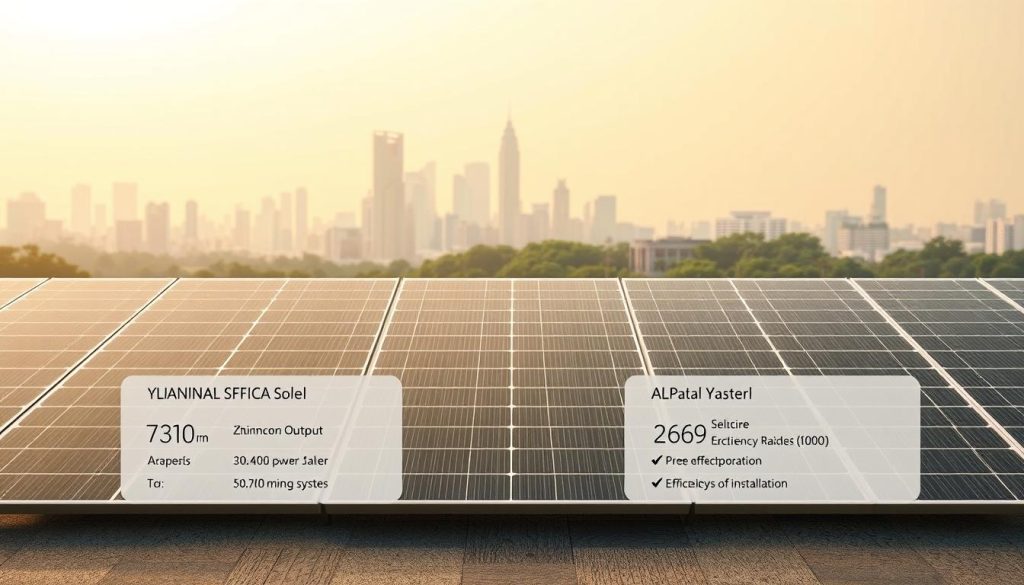
Solar Panel Specifications
Modern photovoltaic cells achieve 22-24% efficiency in Singapore’s climate. Tapo’s 4.5W charging rate outperforms competitors, harvesting energy even on cloudy days. Key specifications include:
- Monocrystalline silicon construction for maximum light absorption
- 30° optimal tilt angle for Singapore’s latitude
- Anti-reflective coating to capture diffuse sunlight
Battery Life Expectations
Hikvision’s 7-day backup capability sets industry standards for reliability. Lithium-ion technology maintains stable performance through charge cycles. Factors affecting battery longevity:
- Depth of discharge (DoD) kept below 80%
- Temperature-regulated charging circuits
- Smart sleep modes during inactivity
Power Management Systems
Advanced algorithms prioritize energy distribution to critical functions. Load balancing ensures continuous operation during low-light periods. These systems feature:
- Real-time consumption analytics
- Automatic yield forecasting
- Emergency USB-C charging ports
“Our power management software extends operational life by 40% compared to conventional systems.”
Security Camera Resolution Options
Visual clarity determines effectiveness in modern monitoring systems. Choosing the right resolution balances detail capture with practical considerations like storage and bandwidth. From 1080p to 4K, each option serves distinct surveillance needs.
Comparing 1080p, 2K and 4K
Tapo’s 4MP 2K resolution captures license plates within 15 meters—ideal for residential gates. Hikvision’s 8MP 4K models reveal facial features at 25 meters, perfect for commercial properties.
Key differences include:
- Pixel density: 4K offers 4x more detail than 1080p per square meter
- Bandwidth: 4K requires 8Mbps vs 2K’s 4Mbps
- Storage: H.265+ compression reduces file sizes by 50%
Field of View Considerations
Wider angles (150°+) cover more area but distort edges. Narrower views (90°) provide better identification at distance. Consider these factors:
Digital zoom degrades quality faster than optical zoom. WDR (Wide Dynamic Range) maintains balanced exposure in mixed lighting. For perimeter monitoring, multiple cameras often outperform single ultra-wide units.
Performance in Various Conditions
Low-light situations benefit from larger pixels (2.8μm+) that gather more light. During heavy rain, higher resolutions maintain usable images where 1080p might blur.
Infrared illumination works best with 2K resolution—enough detail without overwhelming night vision sensors. License plate recognition requires minimum 1080p at 10 meters or 2K beyond that range.
“Resolution isn’t just about pixels—it’s about delivering actionable intelligence when reviewing footage.”
Most outdoor security cameras now offer adjustable bitrates. This optimizes recording quality based on motion detection triggers and available storage space.
4G/Wi-Fi Connectivity Options
Flexible connection options adapt to diverse monitoring needs. Modern systems offer multiple transmission methods to ensure reliable operation in various environments. Choosing the right setup depends on location, bandwidth requirements, and installation constraints.
Network Requirements
Hikvision’s dual SIM slot design provides automatic failover between carriers. This ensures continuous operation during network outages. For Wi-Fi setups, Tapo’s dual-band support (2.4/5GHz) optimizes signal strength.
Key considerations include:
- 4G speeds: Cat-6 delivers 300Mbps vs Cat-4’s 150Mbps
- Data compression: H.265 codecs reduce usage by 50%
- Mesh compatibility: Extends range for large properties
Remote Viewing Capabilities
Real-time access works best with minimum 2Mbps upload speeds. Hikvision’s app maintains stable connections even at 200ms latency. For critical monitoring, dedicated 4G plans ensure priority bandwidth.
Performance benchmarks show:
- HD streaming uses ~700MB/hour on 4G
- Motion alerts consume
- Local networks enable zero-data viewing
Data Usage Estimates
Continuous 1080p recording consumes ~60GB monthly. Smart scheduling can reduce this by 80%. Singaporean providers offer tailored SIM plans starting at 5GB/month for basic needs.
“Our adaptive bitrate technology automatically adjusts quality based on available bandwidth, maximizing efficiency without compromising security.”
For temporary setups, prepaid options provide cost control. Always verify coverage maps before finalizing installation locations.
Maintenance and Care Guide
Proper maintenance ensures long-term reliability for your surveillance system. Regular care prevents performance issues and extends equipment lifespan. Follow these best practices to keep your security solution operating at peak efficiency.
Solar Panel Cleaning
Hikvision’s self-cleaning coating reduces maintenance needs, but occasional care is still essential. Clean panels every 3 months using isopropyl alcohol and microfiber cloths. This prevents the 0.5% annual efficiency loss from dirt buildup.
Address water spots immediately with distilled water rinses. For hard-to-reach installations, telescopic cleaning tools maintain safety. Always check manufacturer guidelines before applying any cleaning solutions.
Software Updates
Tapo’s automatic firmware updates ensure you always have the latest features. Schedule these during off-peak hours to avoid monitoring interruptions. Key update benefits include:
- Enhanced motion detection algorithms
- New integration capabilities
- Security vulnerability patches
Troubleshooting Common Issues
Start with a factory reset for persistent glitches. Check signal strength if experiencing connectivity drops—relocating the router often helps. For warranty claims, document the issue with photos and error codes.
“Preventive care saves 80% of repair costs by catching small issues before they escalate.”
Keep a maintenance log to track service times and component replacements. This history proves valuable for diagnostics and resale value. Most systems require only 1-2 hours of annual hands-on care.
Cost Analysis and Value Proposition
Smart property protection requires balancing upfront costs with long-term value. Modern surveillance systems offer diverse financial models to suit Singaporean budgets. Understanding these helps buyers make informed decisions about their security investments.
Breaking Down Initial and Recurring Costs
Tapo’s entry-level kits start at S$299, while Hikvision’s premium models reach S$899. The 5-year total cost of ownership often surprises buyers:
- Wired systems average 35% higher lifetime costs due to installation
- Solar powered models eliminate monthly electricity bills
- Battery replacements needed every 3-5 years (S$120-200)
ROI calculators show payback periods of 18-24 months for most residential setups.
Subscription Service Comparisons
Cloud storage options range from free basic plans to premium packages. Tapo Care offers 30-day video history for S$4.90/month. Key differences include:
- Free plans: 3-day rolling storage with basic alerts
- Mid-tier: Advanced analytics and shared access (S$8-12/month)
- Enterprise: Unlimited cameras and priority support
Protection Plans and Support
Hikvision’s 3-year warranty covers parts and labor—uncommon in the industry. Extended plans add 2 more years for 15% of device cost. Consider these factors:
“Comprehensive warranties reduce long-term risk, especially for commercial installations with multiple units.”
On-site service packages start at S$150/year per camera. Remote troubleshooting is typically included for the first 12 months.
Ideal Applications in Singapore
Singapore’s diverse landscapes demand tailored monitoring solutions for every scenario. From compact HDB corridors to sprawling industrial estates, each environment presents unique security challenges. Modern systems adapt seamlessly to these varied needs while complying with local regulations.
Residential Property Protection
Condominium common areas benefit from discreet outdoor security camera placements that respect privacy. The best models blend with architecture while covering stairwells and lifts. HDB corridor installations require careful positioning to meet building guidelines.
Landed properties need wider coverage for gates and perimeter walls. Weatherproof designs withstand tropical storms, with smart alerts differentiating between visitors and intruders. Many homeowners combine visible deterrents with hidden units for comprehensive protection.
Commercial Security Solutions
Retail shopfronts require high-resolution cameras with wide dynamic range. This captures clear images despite bright signage and dark alleys. Industrial estates deploy thermal imaging for perimeter monitoring across large, poorly lit areas.
Marine parks use specialized housings to resist saltwater corrosion. Banking institutions often integrate facial recognition with their surveillance networks. The right system depends on business hours, foot traffic, and asset value.
Temporary Installation Needs
Construction sites utilize portable units with rugged mounting options. These track equipment and monitor unauthorized access after hours. COVID quarantine facilities benefited from rapid-deployment kits during the pandemic.
Temporary hawker centers use wireless models during renovation periods. Event organizers deploy temporary systems with crowd analytics. All share the need for quick setup without infrastructure changes.
“The most effective systems solve specific problems rather than offering generic coverage.”
Whether protecting a boutique hotel or monitoring a community garden, Singapore’s varied environments demand customized approaches. Professional assessment ensures optimal camera selection and placement for each unique situation.
The Future of Solar Security Technology
Emerging technologies are reshaping how we protect properties sustainably. Hikvision’s AI-powered solar trackers maximize energy harvest, while graphene batteries promise 3x longer life.
Perovskite solar cells could soon boost efficiency by 30%. 6G networks will enable real-time analytics across vast areas. Autonomous drones may recharge mid-air using built-in panels.
Predictive algorithms will analyze patterns to prevent incidents. Blockchain verifies footage authenticity, and self-healing materials reduce maintenance. Satellite links ensure uptime during outages.
These innovations make solar security smarter and more reliable. Soon, cameras will anticipate threats before they happen, redefining property security entirely.
FAQ
How long do solar security cameras last on a single charge?
Most models offer 3-7 days of operation without direct sunlight, depending on usage and battery capacity. High-efficiency panels can extend this further.
Can these cameras work during heavy rain or cloudy days?
Yes, quality models feature weatherproof construction and maintain performance even in Singapore’s monsoon season, though charging may slow during prolonged cloudy periods.
What’s the difference between infrared and color night vision?
Infrared provides black-and-white images in total darkness, while color variants use ambient light for more detailed footage but require minimal light sources.
Do I need professional installation for solar-powered cameras?
No, wireless models like the Tapo C425 feature tool-free mounting and intuitive app-guided setup for DIY installation in under 30 minutes.
How often should I clean the solar panels?
A> For optimal performance, wipe panels every 2-3 months in Singapore’s humid climate. More frequent cleaning may be needed near construction sites or coastal areas.
Can I access footage remotely without WiFi?
A> Yes, 4G-enabled models like the Hikvision Solar Series allow mobile viewing anywhere with cellular coverage, ideal for construction sites or rural properties.
What storage options are available for recorded footage?
A> Most systems support both local storage via microSD cards (up to 256GB) and cloud subscriptions with encrypted backup options.
How do motion detection zones improve security?
A> Smart cameras allow customizing sensitive areas (gates/windows) while ignoring pets or passing traffic, reducing false alerts by up to 90%.
What resolution is best for home security?
A> 2K resolution balances detail (1440p) with efficient data usage, though 4K models like premium Arlo systems provide superior facial recognition.
Are these cameras compatible with smart home systems?
A> Leading brands integrate with Google Assistant, Amazon Alexa, and IFTTT for voice control and automated lighting triggers.


