
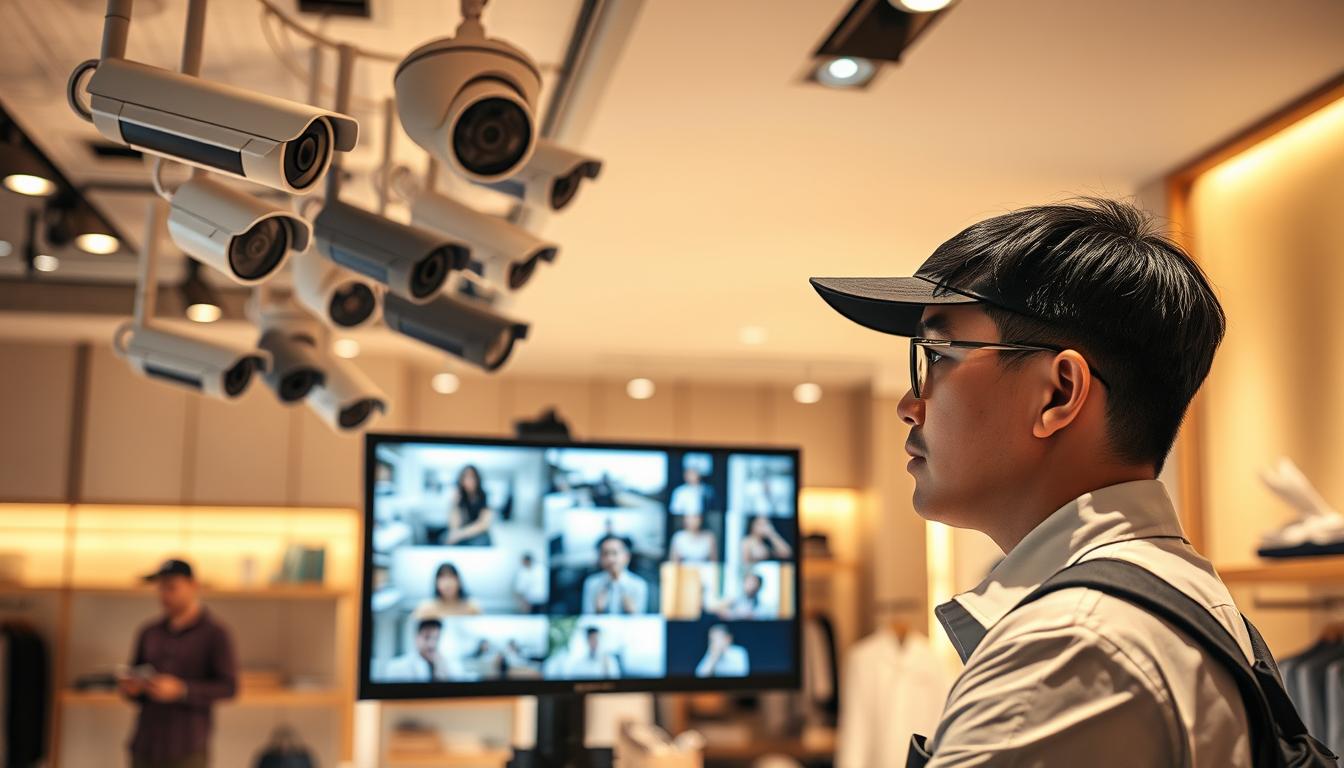
Best Security Camera System for Retail Store: Top Picks
Singapore’s retail sector is evolving rapidly, with businesses prioritizing advanced surveillance solutions. Over 500 cameras were updated in local warehouses last year, reflecting a growing trend toward enhanced security. This shift is driven by the need to address challenges like retail theft, which costs regional markets over $1 billion annually.
In Singapore, 93% of retailers rely on CCTV systems to safeguard their operations. Companies like Hikvision and Dahua lead the market, offering cutting-edge technology with mobile monitoring capabilities. These features allow business owners to stay vigilant and protect their assets effectively.
For those seeking reliable solutions, ED Viston stands out as a trusted technical partner. Their expertise ensures seamless integration of security cameras, helping retailers combat theft and improve operational efficiency. As Thomas Jefferson once said, “Eternal vigilance is the price of liberty.” In today’s retail environment, this vigilance is more critical than ever.
Key Takeaways
- Singapore’s retail sector is adopting advanced surveillance systems to combat theft.
- 93% of local retailers use CCTV systems for enhanced security.
- Hikvision and Dahua are market leaders in surveillance technology.
- Mobile monitoring capabilities provide real-time protection for businesses.
- ED Viston is a trusted technical partner for seamless system integration.
Why Retail Stores Need Advanced Security Camera Systems
The retail industry faces significant challenges, with theft and operational inefficiencies topping the list. In the APAC region, theft alone costs retailers over $1 billion annually. This staggering figure highlights the need for robust solutions to protect assets and ensure smooth operations.
Visible surveillance tools can reduce shoplifting by up to 64%. When potential thieves see these devices, they are less likely to attempt theft. This not only safeguards inventory but also creates a safer environment for employees and customers alike.
Employee safety is another critical factor. With 24/7 monitoring, staff members feel more secure, especially during late shifts. A study by Vivint found that 80% of crimes occur after midnight, making round-the-clock surveillance essential.
Motion detection technology plays a vital role in after-hours security. It alerts store owners to any unusual activity, allowing for quick response. This feature is particularly useful in preventing break-ins and vandalism.
Surveillance systems also serve as legal evidence in disputes. High-quality footage can help resolve conflicts, whether involving theft, accidents, or employee misconduct. This added layer of protection is invaluable for retailers.
In Singapore, initiatives like warehouse security upgrades demonstrate the growing importance of advanced monitoring. These efforts not only combat theft but also enhance operational efficiency by providing valuable insights into customer behavior.
The pandemic has further underscored the need for reliable security measures. With shifting shopping patterns and increased online orders, retailers must adapt to new challenges. Advanced systems offer the coverage and flexibility needed to navigate these changes.
“Investing in advanced surveillance is not just about preventing theft; it’s about creating a safer, more efficient retail environment.”
By integrating these tools, retailers can address both immediate threats and long-term operational goals. The result is a more secure, productive, and customer-focused business.
Top Features to Look for in the Best Security Camera System for Retail Store
Modern retail environments demand advanced tools to ensure safety and efficiency. When selecting a surveillance solution, certain features stand out as essential. These include night vision, remote access, and high-resolution video quality.
Night Vision Capabilities
Effective monitoring doesn’t stop when the sun goes down. Night vision is a critical feature for round-the-clock protection. AvaEye’s IP4KBEYE4, for example, offers 100ft visibility in low-light conditions.
There are two main types of sensors: IR and starlight. IR sensors provide clear images in complete darkness, while starlight sensors deliver color footage in low light. Both options ensure detailed detection during nighttime hours.
Remote Access and Mobile Connectivity
Staying connected is crucial for modern retailers. With mobile apps like ED Viston’s, you can receive real-time alerts and monitor your store from anywhere. This feature is especially useful for multi-location businesses.
Bandwidth requirements vary depending on the number of devices. Singapore’s preference for encrypted data streams ensures secure remote viewing without compromising performance.
High-Resolution Video Quality
Crystal-clear footage is essential for identifying details like facial features or license plates. Hikvision’s 8MP cameras, for instance, can capture license plates from 50ft away. This level of resolution is invaluable for investigations.
When comparing 1080p and 4K, consider storage needs. While 4K offers superior detail, it requires more storage space. ZOSI’s C289 series supports multi-cam monitoring, making it a versatile choice for larger setups.
“Investing in advanced surveillance features is not just about technology; it’s about peace of mind.”
Integration with POS systems is another advantage. This allows retailers to correlate sales data with video footage, providing deeper insights into operations. Whether it’s aisle monitoring or theft prevention, the right features can make all the difference.
Types of Retail Surveillance Camera Systems
Retailers today have a variety of surveillance options to meet their specific needs. From wired to wireless setups, each type offers unique advantages. Understanding these differences can help you choose the right solution for your business.
Wired vs. Wireless Cameras
Wired systems are known for their reliability and stability. They often require professional installation, with costs ranging from $3,000 to $5,000. These setups are ideal for large warehouses, where Power over Ethernet (PoE) technology ensures seamless connectivity.
On the other hand, wireless camera systems are more flexible and easier to install. They typically cost between $500 and $2,000, making them a budget-friendly choice. However, in dense urban areas like Singapore, wireless signals can face interference, affecting performance.
HD and 4K Camera Options
High-definition (HD) cameras are a popular choice for their balance of quality and affordability. These devices have a lifespan of 5-7 years, outperforming older analog models. They are widely used in retail spaces for their clear footage and reliability.
For those seeking superior detail, 4K cctv cameras are the way to go. Brands like Dahua dominate the Singapore market with their 8MP models. These cameras are especially effective in high-traffic areas like Orchard Road, where detailed monitoring is essential.
When choosing between HD and 4K, consider storage needs. While 4K offers unmatched clarity, it requires more storage space. Cloud-based solutions can help manage this, but local storage remains a compliant and secure option.
“The right surveillance system not only protects your assets but also enhances operational efficiency.”
Other factors to consider include vandal resistance and advanced features like Pan-Tilt-Zoom (PTZ) capabilities. Dome designs are often more resistant to tampering, while PTZ cameras provide excellent coverage for large-format retailers. With Singapore’s robust fiber optic infrastructure, integrating these options has never been easier.
Top Retail Surveillance Camera Brands in Singapore
In Singapore, choosing the right surveillance brands can make a significant difference in protecting retail assets. Two names stand out in the market: Hikvision and Dahua. Both offer cutting-edge technology and reliable solutions tailored to the needs of modern retailers.
Hikvision: A Leader in Security Technology
Hikvision dominates the APAC market with a 38% share. Their security systems are known for advanced features like Deep Learning algorithms. These tools enhance object detection and reduce false alarms, making them ideal for busy retail environments.
Another standout feature is Hikvision’s thermal imaging. This technology is particularly useful for monitoring large spaces like warehouses. With five service centers in Singapore, Hikvision ensures prompt support and maintenance.
Hikvision also excels in government tenders, thanks to its NDAA compliance. This makes it a trusted choice for public and private sectors alike. Their three-year warranty further adds to the appeal, offering long-term reliability.
Dahua: High-Quality Video Solutions
Dahua’s WizMind series is a favorite among Singaporean retailers, especially at Jewel Changi. The S3E model boasts 4K resolution and crowd control analytics. These features are perfect for high-traffic areas, ensuring detailed monitoring and efficient management.
Dahua’s solutions also include vandal-resistant designs and Pan-Tilt-Zoom (PTZ) capabilities. These additions provide comprehensive coverage, even in challenging environments. However, their warranty terms are slightly shorter at two years.
Despite this, Dahua remains a strong contender due to its competitive pricing and innovative features. Their focus on analytics, like people counting and heat mapping, adds value for retail businesses.
“The right surveillance brand not only enhances security but also drives operational efficiency.”
A case study of Mustafa Centre’s upgrade highlights the effectiveness of these brands. By integrating Hikvision and Dahua systems, the store improved both safety and customer experience. This example underscores the importance of choosing the right brands for your needs.
Benefits of Installing Security Cameras in Retail Stores
Installing surveillance tools in retail spaces offers a range of benefits that go beyond just monitoring. These systems help reduce theft, enhance safety, and improve operational efficiency. With faster incident response times and increased staff confidence, retailers can create a safer environment for everyone.
Retail Theft Prevention
One of the most significant advantages is the reduction in theft. Stores with surveillance tools report a 27% decrease in theft incidents, as seen in NTUC outlets. Visible cameras act as a deterrent, discouraging potential thieves from attempting theft.
Surveillance systems also provide valuable data for investigations. High-quality footage can identify suspects and resolve disputes quickly. This not only protects inventory but also reduces financial losses for businesses.
Enhanced Customer and Staff Safety
Safety is a top priority for both customers and employees. With 24/7 monitoring, staff members feel more secure, especially during late shifts. A study found that 78% of employees feel safer when surveillance is in place.
These systems also help resolve customer-related incidents. For example, slip-and-fall claims can be quickly addressed with clear video evidence. This ensures fair resolutions and maintains trust between the store and its customers.
- Faster incident response times improve overall safety.
- Emergency evacuations can be monitored for better coordination.
- Harassment incidents are documented, ensuring accountability.
- Staff productivity metrics improve with a secure environment.
- Insurance premiums can be reduced by 15-20% with proper surveillance.
“A well-monitored store is not just safer; it’s more efficient and customer-friendly.”
Advanced features like facial recognition and contact tracing have also proven useful. During the COVID-19 pandemic, these tools helped monitor compliance with safety protocols. This added layer of protection ensures a safer shopping experience for everyone.
For more insights on how to secure your shop, explore our detailed guide. Investing in the right tools can transform your retail space into a safer, more efficient environment.
Costs and Considerations for Retail Video Monitoring
Investing in video monitoring for retail spaces involves careful planning and budgeting. Understanding the financial aspects ensures you get the most value for your money. From installation expenses to ongoing maintenance, every detail matters.
Understanding Installation Costs
The initial setup of a monitoring system includes several components. Hardware typically accounts for 40% of the total costs, while labor makes up 30%. Software and licensing fees cover the remaining 30%.
For example, basic systems in Singapore start at $1,500 SGD. Wired setups cost around $120 per camera to install, while wireless options are cheaper at $80. However, hidden expenses like storage upgrades and software licenses can add up.
Cloud subscriptions offer flexibility but may incur higher long-term costs. Upfront investments in IP systems often have a lower 5-year total cost of ownership (TCO) compared to analog systems.
Potential Grants for Retail Security Systems
Singapore’s Productivity Solutions Grant (PSG) covers 50% of eligible security systems expenses. This grant is a significant help for small and medium-sized enterprises (SMEs) looking to upgrade their monitoring tools.
To apply, businesses must submit a detailed proposal outlining their needs and expected outcomes. Additionally, IRAS tax deductions are available for security upgrades, further reducing financial burdens.
Other opportunities include the SME Digitalization Grant, which supports the adoption of advanced technologies. These initiatives make it easier for businesses to enhance their operations without overspending.
- Hardware: 40% of total costs
- Labor: 30% of total costs
- Software: 30% of total costs
- PSG grant covers 50% of eligible expenses
- Wired installation: $120 per camera
- Wireless installation: $80 per camera
“Proper budgeting and grant utilization can make advanced monitoring systems accessible for businesses of all sizes.”
Maintenance contracts are another consideration. Regular upkeep ensures your system operates efficiently, reducing downtime and repair costs. Energy efficiency certifications can also lower operational expenses over time.
For more information on retail video monitoring solutions, explore our detailed guide. Investing wisely in these tools can protect your assets and improve operational efficiency.
How to Choose the Right Shop Security System
Selecting the right surveillance setup for your shop requires careful evaluation of specific needs. With 64% of retailers overspending on unnecessary features, it’s essential to focus on what truly matters. ED Viston’s free site audits can help streamline this process, ensuring you invest in the right system.
Start with a 5-step selection matrix. Consider factors like store size, budget, and essential features. For example, aisle width plays a crucial role in determining the field of view (FOV) for your camera systems. A wider aisle may require a higher FOV to ensure comprehensive coverage.
Integration with existing fire systems is another key consideration. Ensure your new setup works seamlessly with current infrastructure. This not only enhances efficiency but also reduces installation costs.
Staff training is equally important. Properly trained employees can maximize the benefits of your monitoring tools. Focus on teaching them how to use features like remote access and real-time alerts effectively.
When comparing protocols, weigh the pros and cons of ONVIF versus proprietary options. ONVIF offers greater compatibility, while proprietary protocols may provide advanced features. Choose based on your long-term goals.
Cybersecurity certifications are non-negotiable. Ensure your system meets industry standards to protect against potential breaches. Additionally, conduct a vandalism risk assessment to identify vulnerable areas.
In Singapore, CCTV placement regulations must be followed. These guidelines ensure optimal coverage while complying with local laws. Dummy cameras can also be effective deterrents, but their use should be strategic.
“Future-proofing your investment ensures your setup remains relevant as technology evolves.”
By following these steps, you can choose a setup that meets your needs without overspending. Focus on scalability, integration, and compliance to create a robust monitoring solution for your shop.
Strategic Placement of Security Cameras in Retail Stores
Effective monitoring in retail spaces begins with strategic placement of surveillance tools. Proper positioning ensures comprehensive coverage and maximizes the impact of your setup. Let’s explore key strategies to optimize placement for better results.
Start by mapping high-risk areas such as fitting rooms, stock exits, and checkout counters. Studies show that checkout coverage alone can reduce cashier theft by 58%. These zones require focused attention to deter potential incidents.
Use a camera density formula of one device per 200 square feet for balanced monitoring. This ensures no area is overlooked while avoiding unnecessary overlaps. Vertical mounting angles are ideal for capturing facial features, while horizontal angles provide broader views.
Avoid reflective surfaces like glass or mirrors to prevent glare and ensure clear vision. Anti-tampering mounting solutions, such as dome enclosures, protect devices from vandalism. Eliminate blind spots by positioning cameras at optimal heights of 8-10 feet.
- Ensure ADA compliance by avoiding obstructions in accessible pathways.
- Use decorative camouflage to blend devices seamlessly into the store’s design.
- Check lighting compatibility to maintain clear footage in all conditions.
- Place signage to inform customers and employees of monitoring in real time.
“Strategic placement transforms surveillance from passive monitoring to active prevention.”
By following these guidelines, retailers can create a robust monitoring setup that enhances safety and operational efficiency. Proper placement not only deters theft but also provides valuable insights into store operations.
Latest Technological Advancements in Retail Surveillance
The landscape of retail monitoring is being reshaped by cutting-edge innovations. With 78% of new systems featuring AI analytics, businesses are gaining deeper insights into operations. Hikvision’s AcuSense, for example, reduces false alerts by 90%, ensuring more accurate monitoring.

AI-powered heat mapping is one of the standout features in modern systems. It helps retailers analyze customer movement patterns, optimizing store layouts for better sales. Facial recognition adoption is also on the rise, with 65% of businesses using it for enhanced detection and personalized experiences.
IoT integration is another game-changer. By connecting surveillance tools with inventory systems, retailers can track stock levels in real time. This reduces shrinkage and improves operational efficiency. The rollout of 5G networks further enhances remote monitoring, offering faster data transmission and seamless connectivity.
Multispectral imaging is proving invaluable for fraud prevention. This technology captures details beyond the visible spectrum, identifying counterfeit items with precision. Smart shelf integration, as seen in Jewel Changi, combines weight sensors with video analytics to detect theft instantly.
“Predictive analytics is transforming how retailers address shrinkage, offering proactive solutions rather than reactive measures.”
Blockchain-based video authentication ensures data integrity, making footage tamper-proof. AR-enabled monitoring interfaces provide intuitive controls, allowing staff to manage systems effortlessly. Cybersecurity encryption benchmarks are also rising, with 256-bit AES becoming the standard for secure data transmission.
These advancements are not just about improving detection; they’re about creating smarter, more efficient retail environments. By embracing these innovations, businesses can stay ahead in an increasingly competitive market.
Case Studies: Successful Retail Security Implementations
Real-world examples highlight the transformative impact of advanced monitoring solutions in the retail sector. Mustafa Centre, for instance, reduced shrinkage by 37% after upgrading to Dahua’s advanced systems. Similarly, Tangs reported a 29% faster incident response time, showcasing the effectiveness of modern tools.
Luxury boutiques at Marina Bay Sands (MBS) have also benefited from these innovations. By integrating AI-powered analytics, they achieved a 25% reduction in user errors. This improvement not only enhanced operational efficiency but also boosted customer satisfaction.
Sheng Siong, a leading supermarket chain, implemented a comprehensive monitoring setup. The integration with loss prevention teams led to a 20% drop in theft incidents. Staff buy-in strategies, including training and clear communication, played a crucial role in this success.
“Investing in advanced monitoring solutions is not just about reducing losses; it’s about creating a safer and more efficient environment for everyone.”
Post-installation audits revealed significant improvements in coverage and data accuracy. Insurance claim success rates increased by 15%, further validating the value of these systems. Competitor benchmarking also showed that businesses with advanced monitoring tools outperformed their peers in key metrics.
ROI timelines for these implementations typically range from 14 to 18 months. This quick return on investment makes advanced monitoring a smart choice for businesses of all sizes. By focusing on integration, staff training, and continuous improvement, retailers can maximize the benefits of their monitoring systems.
Investing in the Best Security Camera System for Your Retail Store
Investing in advanced monitoring tools is a strategic move for modern businesses. With an average lifespan of 5-7 years, these systems offer long-term value. ED Viston provides free lifetime support, ensuring your setup remains efficient and up-to-date.
Consider a 3-year upgrade cycle to stay ahead of technological advancements. Sustainability is also key—opt for energy-efficient cameras and eco-friendly practices. Singapore’s Smart Retail 2025 initiatives further encourage the adoption of innovative solutions.
Surveillance isn’t just about protection; it enhances customer experience by creating a safer environment. A cost-benefit analysis reveals significant ROI, especially with PSG grants covering up to 50% of eligible expenses.
Emerging trends like biometric authentication are shaping the future of monitoring. As vigilance remains crucial, partnering with experts like ED Viston ensures your security strategy evolves with your needs.
FAQ
Why do retail stores need advanced surveillance systems?
Advanced systems help prevent theft, ensure safety, and provide clear footage for monitoring activities in and around the store.
What features should I prioritize in a surveillance system for my store?
Focus on night vision, remote access, and high-resolution video quality to ensure comprehensive coverage and clarity.
What are the differences between wired and wireless options?
Wired systems offer stable connections, while wireless options provide flexibility and easier installation.
Which brands are known for reliable retail surveillance solutions?
Hikvision and Dahua are trusted brands offering high-quality video and advanced technology for retail environments.
How can these systems enhance safety in my store?
They deter theft, monitor employee and customer behavior, and provide evidence in case of incidents.
What are the costs involved in setting up a video monitoring system?
Costs vary based on installation, equipment, and storage needs. Some regions may offer grants to offset expenses.
Where should I place cameras in my retail space?
Position them at entrances, exits, cash registers, and high-traffic areas to maximize coverage and effectiveness.
What are the latest advancements in retail surveillance technology?
Innovations include AI-powered motion detection, cloud storage, and real-time mobile alerts for enhanced monitoring.
How do I choose the right system for my store?
Assess your store’s size, layout, and specific needs, then compare features and brands to find the best fit.
Are there successful examples of retail security implementations?
Many stores have reduced theft and improved safety by strategically installing advanced systems tailored to their needs.


