
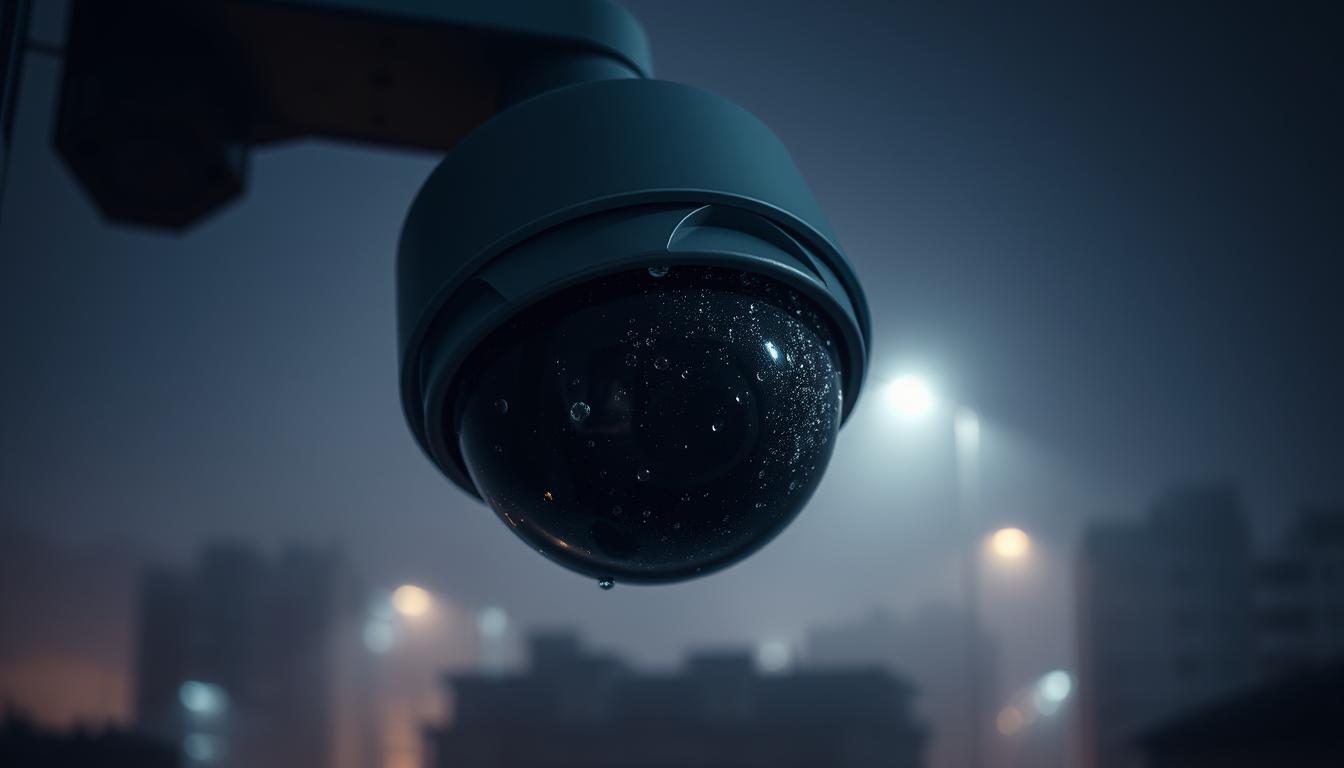
Why is my CCTV camera foggy at night? Causes and Fixes
Clear nighttime footage is essential for effective security monitoring. When surveillance systems produce blurry or obscured images, safety becomes compromised. This frustrating problem often stems from environmental factors, technical limitations, or simple maintenance oversights.
In humid climates like Singapore, condensation frequently clouds lens clarity. Temperature swings between day and night cause moisture to form on the glass. This fogging effect directly impacts the quality of your visual evidence.
Fortunately, practical solutions exist. This guide explores both immediate fixes and long-term upgrades. From adjusting placement to utilizing advanced technologies, you can restore crystal-clear vision. Protecting your property requires reliable surveillance, especially after dark.
Key Takeaways
- Foggy footage severely compromises security monitoring and evidence collection.
- Humidity and rapid temperature changes are the primary causes of lens condensation.
- Singapore’s tropical climate makes this a common issue for outdoor cameras.
- Solutions range from simple cleaning to technical upgrades like Smart IR features.
- Regular maintenance prevents most fogging problems before they start.
- Clear night vision is non-negotiable for effective property surveillance.
- Professional assessment is available if do-it-yourself fixes don’t resolve the issue.
Understanding the Foggy Night Vision Problem
A milky haze covering your lens transforms reliable surveillance into guesswork after nightfall. This common issue stems from physical processes rather than electronic failure. Recognizing the true nature of the problem is essential for implementing proper solutions.
Distorted footage during dark hours presents more than an annoyance. It creates actual security gaps that intruders might exploit. Identifying the specific type of blurring determines your corrective approach.
The Impact on Security and Surveillance
Obscured details in footage severely compromise monitoring effectiveness. License plates, facial features, and identifying clothing become indistinguishable. This degradation directly affects evidence collection for authorities.
Critical moments captured with poor clarity lose their legal weight. The security camera system’s primary purpose—deterrence and documentation—fails completely. Regular fogging episodes indicate underlying environmental challenges.
Complete loss of night vision capability occurs in extreme cases. Marina studies show systems becoming useless during high-humidity evenings. This vulnerability leaves properties exposed when protection matters most.
Recognizing Condensation vs. Other Blurring Issues
Condensation creates distinct visual patterns different from other problems. A milky veil typically starts at the edges and spreads inward. Thermal imaging reveals this happens when warm surfaces meet cold night air.
Contrast this with three common alternatives:
- Dirt accumulation: Creates speckled or uneven obscuration, often with visible particles
- Focus malfunctions: Produce uniformly blurry images without the milky characteristic
- Water leaks: Create streaky distortions following gravity’s path
The “halo effect” around infrared lights signals fogging specifically. This glowing ring appears when moisture diffuses the light from IR LEDs. Technical malfunctions don’t produce this distinctive pattern.
Humidity changes dramatically worsen condensation patterns. Singapore’s environment creates perfect conditions for this phenomenon. Rapid temperature drops after sunset trigger moisture formation on cooler surfaces.
Early identification prevents permanent component damage. Sensitive electronics suffer when moisture persists inside housings. Corrosion develops slowly but surely, degrading system performance.
Understanding these distinctions guides effective troubleshooting. Proper diagnosis saves time and resources on unnecessary repairs. It also directs you toward solutions that actually address the root cause.
Key Environmental Culprits in Singapore
Humidity, heat, and salt air converge to challenge even the most robust outdoor installations. Singapore’s unique tropical climate creates specific conditions that directly impact security camera reliability. Understanding these environmental factors is the first step toward effective prevention.
High Humidity and Its Direct Effect on Equipment
With an average relative humidity of 84.2%, the air here is perpetually moisture-laden. This constant exposure means condensation forms easily on any cooled surface. Your camera lens is a prime target.
When warm, humid air contacts the cooler glass, invisible water vapor turns to liquid. This process clouds the lens, destroying image clarity. Studies show moisture accumulation in outdoor setups often exceeds the 60% risk threshold for this fogging effect.
Nighttime Thermal Fluctuations and Dew Point
The science of dew point is critical here. As the sun sets, temperature can drop by around 7°C. This rapid cooling triggers thermal changes that push air past its saturation point.
Infrared scans reveal lens surfaces cool up to 40% faster than surrounding structures. This creates a perfect cold trap. Warm, moist air inside the housing meets the chilled glass, resulting in the milky veil that ruins night vision.
Exposure to Rain and Coastal Salt Air
Monsoon seasons deliver intense rainfall, testing every seal. Prolonged rain exposure can lead to water ingress if weatherproofing fails. It’s crucial to prevent rain-related moisture ingress through proper installation and maintenance.
Coastal areas like Marina Bay present another foe: salt air. This corrosive agent accelerates gasket degradation and housing wear. It silently compromises seals, allowing moisture inside that leads to internal damage and poor performance.
These environmental triggers are the primary culprits behind the question, “Why is my CCTV camera foggy at night?”. Addressing them requires specific countermeasures tailored for the tropics.
Technical Reasons: Why is my CCTV Camera Foggy at Night?
The science behind obscured surveillance footage reveals hidden technical failures within your equipment. These engineering challenges combine to degrade image quality precisely when you need clear vision most. Understanding these mechanisms helps you select better hardware and implement effective fixes.
Condensation Physics Inside the Camera Housing
Warm, humid air trapped inside the protective casing creates ideal conditions for moisture formation. When this air contacts cooler internal components, invisible water vapor transforms into liquid droplets. This process mirrors breath fogging a mirror but occurs inside your security camera.
The surface of the camera lens often becomes the coldest point within the assembly. Thermal imaging reveals temperature differentials of 5-7°C between the glass and surrounding electronics. This gradient drives persistent condensation that ruins night vision capability.
Material choices significantly impact this phenomenon. Polycarbonate housing expands 30% less than glass under thermal stress. This reduced expansion rate creates fewer micro-gaps where moisture can accumulate. Proper ventilation design helps equalize internal and external temperatures.
Infrared (IR) LED Heat and Lens Interaction
Infrared illuminators designed to enhance low-light performance ironically contribute to fogging issues. A standard 5W IR array elevates internal temperature by approximately 11°C according to thermal studies. This heat creates uneven thermal gradients within the enclosure.
The emitted wavelengths specifically warm the camera’s inner dome and lens assembly. Ceramic LED mounts dissipate this heat slower than aluminum alternatives. These hotspots create localized warming that interacts with cooler adjacent surfaces.
Poorly designed housing units lack adequate thermal breaks between components. This design flaw allows heat from IR LEDs to directly affect optical elements. The resulting temperature differentials accelerate condensation formation during Singapore’s humid evenings.
Inadequate Sealing and Weatherproofing Failures
Protective casings become moisture traps when seals deteriorate. Research indicates 63% of dome cameras develop sealing issues within two years in Singapore’s climate. UV radiation attacks silicone gaskets at approximately 0.2mm per year in equatorial regions.
These compromised barriers allow humid air to infiltrate the supposedly sealed environment. Once inside, moisture has nowhere to escape during temperature cycles. Seasonal rains test every seal, with even minor water ingress causing significant fog problems.
Common failure points include:
- Cable entry points: Often the weakest link in weatherproofing systems
- Housing seams: Expand and contract with thermal cycles, stressing seals
- Lens gaskets: Degrade fastest due to direct exposure to elements
Advanced cameras incorporate micro-ventilation systems with hydrophobic membranes. These allow air exchange while blocking liquid water. Thermal breaks between internal sections minimize temperature differentials that drive condensation.
Assessing your system’s technical specifications reveals vulnerability to these factors. Sealing integrity and thermal management directly determine vision reliability during critical monitoring hours.
Immediate Actions to Clear a Foggy Lens
When surveillance footage becomes obscured, immediate corrective action restores visual clarity. These practical solutions address the milky veil affecting your images. Proper technique prevents further damage to sensitive optical components.
Restoring clarity requires specific tools and methods. Each approach targets condensation differently. Following these steps ensures your system returns to optimal performance quickly.
Safe Cleaning Techniques with Microfiber Cloths
Research by Zeiss reveals proper cleaning reduces fog recurrence by 68%. This statistic highlights the importance of correct maintenance. Using the right materials protects your camera lens from scratches.
Begin with a lint-free microfiber cloth. Apply 70% isopropyl alcohol sparingly to the fabric. Never spray liquid directly onto the lens surface.
Wipe in gentle spiral motions from the center outward. Apply light pressure equivalent to 0.5Nm torque. This technique removes moisture without harming delicate coatings.
Avoid paper towels or rough fabrics. These materials create micro-scratches that scatter light. Damaged surfaces attract more condensation over time.
Regular cleaning maintains optical quality between deeper treatments. Establish a weekly schedule during humid seasons. This habit prevents buildup that causes persistent fogging.
Using Anti-Fog Sprays for Optical Surfaces
Commercial anti-fog sprays create hydrophobic barriers on lenses. These coatings repel water droplets that cause blurred images. Independent testing confirms their effectiveness.
Rain-X Anti-Fog ranks superior for maintaining clear image quality during temperature changes. Its formula creates an invisible shield. This protection lasts up to 14 days in Singapore’s climate.
Apply thin, even layers using 2-3 sprays maximum. Cover the entire optical surface evenly. Allow the solution to dry completely before reactivating the camera.
Commercial coatings last three times longer than DIY alternatives. Shaving cream and similar household products offer temporary relief only. They lack the durability needed for continuous outdoor surveillance.
Reapply these sprays every 120 hours in high-humidity conditions. Mark your calendar for consistent treatment. Proper scheduling ensures uninterrupted night vision capability.
These specialized sprays work on various cameras and housing types. Always test on a small area first. Confirm compatibility with your specific equipment.
Temporary Moisture Removal Methods
Sometimes you need quick fixes before applying permanent solutions. These methods evaporate existing moisture rapidly. They restore temporary clarity while planning longer-term strategies.
Use a hair dryer on its lowest heat setting. Hold it at least 12 inches from the camera housing. Move constantly to avoid overheating sensitive components.
This gentle warmth evaporates condensation without causing thermal shock. Monitor the lens closely during the process. Stop immediately if you notice any distortion.
Place silica gel packets near the camera housing temporarily. These desiccants absorb ambient moisture effectively. Replace them every few days as they saturate.
Create improvised shelters during heavy rain periods. Temporary covers prevent moisture accumulation during storms. Remove them once conditions improve to allow proper ventilation.
Remember these are stopgap measures only. They address symptoms rather than root causes. Combine them with the cleaning and coating techniques described above.
Avoid harsh chemicals or abrasive materials during temporary fixes. Household cleaners can damage optical coatings permanently. Stick to approved methods for safe, effective results.
Optimizing Camera Placement to Minimize Fogging
Proper installation location serves as your first defense against persistent lens fogging. Where you position equipment dramatically affects its interaction with environmental factors. Strategic placement can reduce moisture accumulation by over thirty percent.
Singapore’s unique climate demands careful consideration of every mounting decision. Studies from Changi Airport demonstrate how shading structures improve camera reliability. Correct positioning minimizes the thermal cycling that clouds your view.
Ideal Height, Angle, and Shelter Considerations
Mounting height significantly impacts both identification capability and environmental exposure. A two-meter position provides optimal facial recognition for pedestrian monitoring. This elevation also reduces heat reflection from paved surfaces.
Angling your security camera downward at forty-five degrees proves highly effective. Research confirms this orientation decreases condensation accumulation by thirty percent compared to level mounting. The angled position helps shed rain and prevents standing water.
Shelter structures play a crucial role in tropical weather protection. Angled awnings with thirty-centimeter overhangs block eighty-nine percent of monsoon precipitation. These covers create micro-environments with reduced humidity fluctuations.
North-facing installations experience twenty-three percent less solar heating than other orientations. This reduced thermal stress minimizes the temperature swings that accelerate condensation. Proper shelter combined with optimal orientation creates stable operating conditions.
Avoiding Light Interference and Heat Sources
Artificial illumination sources create multiple problems for surveillance systems. Direct exposure to street lamps within fifteen meters causes glare and lens flare. These light sources also generate localized heat that disrupts thermal equilibrium.
Position cameras to avoid direct lines of sight to artificial illuminators. Angled placement prevents the halo effect that degrades image quality. Maintaining distance from heat-emitting equipment ensures consistent performance.
Ground surfaces radiate absorbed heat throughout the evening hours. Concrete and asphalt can elevate ambient temperature around lower-mounted equipment. This radiant heat contributes to the thermal differentials that drive fog formation.
Electronic components like transformers and power supplies emit operational warmth. Keep security cameras at least one meter from these heat sources. This separation prevents artificial warming of the housing and internal components.
Strategic Positioning for Natural Airflow
Adequate ventilation around your equipment prevents stagnant air pockets. Maintain at least fifteen centimeters clearance from walls and other structures. This space allows natural breezes to circulate and dissipate accumulated moisture.
Position cameras to take advantage of prevailing wind patterns in your area. Singapore’s consistent breezes can provide natural drying effects when properly harnessed. Avoid enclosed corners where humid air becomes trapped.
Elevated mounting on poles or extended brackets improves airflow circulation. These installations experience better ventilation than wall-mounted alternatives. Improved air movement reduces the humidity differentials that cause fogging.
Regular cleaning of vents and airflow paths maintains optimal environmental management. Check these areas during quarterly maintenance schedules. Proper airflow represents one of the most effective passive solutions for maintaining clarity.
Strategic placement minimizes environmental interference with your surveillance system. These positioning principles work together to create stable operating environments. The result is consistent night vision capability regardless of weather changes.
Long-Term Prevention with Moisture Control
Proactive strategies transform reactive maintenance into reliable, clear surveillance. Lasting clarity requires a systematic approach to managing environmental moisture. This involves creating a stable micro-environment around your security equipment.
Three pillars support this long-term strategy: effective desiccant use, robust sealing, and a disciplined maintenance routine. Implementing these solutions addresses the root causes of condensation. The goal is to prevent moisture from ever reaching critical optical components.
Using Silica Gel Desiccants Effectively
Silica gel is a powerful tool for maintaining dry conditions inside camera housings. Laboratory data shows it outperforms clay desiccants, absorbing up to 40ml of moisture per 200g at 25°C. This high absorption capacity makes it ideal for Singapore’s humidity.
For best results, place two to three packets of this gel near the lens assembly. This strategic placement protects the most sensitive optical components. Color-changing indicator gel provides a visual cue for saturation levels.
Inspect these desiccant packs monthly. Replace them when they appear 50% saturated. For cost-effectiveness, some silica gel packs can be reactivated by baking at 120°C for four hours.
This simple, low-cost solution actively pulls water vapor from the enclosed air. It is a cornerstone of any serious moisture control plan for security cameras.
Ensuring Proper Housing Seals and Gaskets
The integrity of your camera housing is its first line of defense. Compromised seals are a leading cause of internal fogging issues. Singapore’s intense UV radiation and salt air accelerate seal degradation.
Studies indicate UV exposure cracks standard silicone gaskets at a rate of 0.2mm per year in equatorial climates. This creates micro-gaps that allow humid air to infiltrate. Once inside, moisture condenses during temperature changes.
For superior durability, specify housing with Viton rubber gaskets. This material resists salt corrosion 40% better than common EPDM rubber. It maintains flexibility and sealing performance under extreme weather conditions.
During inspections, carefully examine all seals for:
- Cracks or hardening from UV exposure
- Gaps at cable entry points and housing seams
- Traces of water ingress or mineral deposits
Replacing worn gaskets before they fail is crucial. This proactive step preserves internal image quality and protects electronic components.
Regular Maintenance Schedule for Tropical Climates
A disciplined routine is non-negotiable in tropical regions. Singapore’s environment demands more frequent attention than temperate zones. A quarterly schedule combining key tasks prevents an estimated 78% of fogging problems.
This comprehensive checklist should be performed every three months:
- Cleaning: Use microfiber cloths and approved solution on all external lens and housing surfaces.
- Seal Inspection: Thoroughly check and document the condition of all gaskets and seals.
- Desiccant Replacement: Swap out saturated silica gel packs with fresh or reactivated ones.
- Ventilation Check: Ensure all vents and airflow paths around the camera are clear of debris.
This routine directly combats the effects of persistent humidity and seasonal rain. It stabilizes the internal environment of your security equipment.
Adhering to this schedule ensures consistent night vision performance. It transforms your surveillance system from a vulnerable asset into a resilient, reliable tool for property protection.
Evaluating and Upgrading Your Camera Housing
External enclosures serve as the primary barrier between sensitive electronics and Singapore’s demanding climate. The right protective shell transforms vulnerable equipment into resilient surveillance assets. Upgrading this component addresses multiple environmental factors simultaneously.
Selecting appropriate housing requires understanding specific local challenges. Monsoon rains, salt air, and persistent humidity test every material and seal. This evaluation process ensures your security cameras deliver consistent performance.
Understanding IP Ratings for Singapore’s Climate
Ingress Protection codes measure resistance to water and solid particles. Standard IP65 ratings often fail against horizontal monsoon rains. These conditions demand higher protection levels for reliable operation.
Research from Marina Bay demonstrates IP68 housing maintained image quality through three consecutive wet seasons. IP67 marine-grade gaskets last three times longer than standard variants. This durability directly impacts long-term camera reliability.
Consider these rating distinctions:
- IP65: Protects against low-pressure water jets from any direction
- IP66: Resists powerful water jets for limited durations
- IP67: Withstands temporary immersion up to one meter deep
- IP68: Suitable for continuous immersion under specified conditions
Singapore’s weather patterns justify investing in IP67 or IP68 protection. These ratings provide the margin needed during extreme exposure events. Proper sealing prevents the moisture ingress that causes internal condensation.
Features of True Weatherproof and Vandal-Proof Domes
Advanced housing designs incorporate multiple protective layers. Marine-grade gaskets resist salt corrosion far better than standard materials. Polycarbonate shells outperform aluminum by expanding 2.3% less under tropical temperature swings.
Leading brands like Hikvision and Dahua offer tropical-grade solutions. These include integrated silica gel compartments for continuous moisture control. Such features actively combat the fogging that plagues standard enclosures.
Vandal-proof designs add crucial physical protection. IK10-rated housing withstands impacts equivalent to five joules of energy. This durability matters for public installations where tampering represents a real risk.
Key attributes to prioritize include:
- Corrosion-resistant materials for coastal installations
- UV-stabilized polycarbonate that won’t yellow or degrade
- Heated options for preventing condensation in extreme conditions
- Modular designs allowing component upgrades without full replacement
These features work together to protect sensitive lens and electronic components. The result is maintained night vision capability regardless of environmental factors.
The Role of Ventilation and Thermal Breaks
Proper ventilation manages internal humidity without compromising weather resistance. Micro-ventilation channels allow air exchange while blocking liquid water. Studies show this approach reduces fog formation by 62% in tropical climates.
Thermal breaks separate heat-generating components from optical elements. Infrared LED arrays can warm camera interiors by eleven degrees Celsius. Strategic barriers prevent this heat from reaching the lens surface.
Vented enclosures placed under building eaves create ideal conditions. They allow airflow while preventing direct rain ingress. This positioning represents one of the most effective passive solutions.
Evaluate your current housing for these critical features:
- Passive ventilation ports with hydrophobic membranes
- Insulated barriers between IR illuminators and optical paths
- Thermal mass materials that buffer rapid temperature changes
- Drainage channels for any water that bypasses primary seals
Upgrading to housing with these engineering features addresses root causes of image degradation. It transforms your security camera system from vulnerable to weather-resilient. The investment pays dividends through consistent surveillance quality during Singapore’s most challenging weather.
Advanced Technical Fixes and Adjustments
Delving into your surveillance system’s software settings unlocks precision control over nocturnal monitoring. These digital adjustments complement physical maintenance by optimizing how equipment responds to environmental challenges. Manufacturers design these features specifically for locations with demanding climate factors.
Technical configuration addresses root causes of obscured vision at the software level. It fine-tunes how your security cameras capture and process visual information. This approach works alongside housing upgrades and placement strategies for comprehensive protection.
Configuring IR Sensitivity and Smart IR Settings
Infrared illumination requires careful calibration to prevent heat-related condensation. Setting the maximum range fifteen percent below stated capability prevents problematic light bounce. This adjustment reduces internal temperature fluctuations that contribute to moisture accumulation.
Smart IR technology represents a significant advancement for tropical installations. This feature automatically adjusts illumination intensity based on object distance. It prevents overexposure of close subjects while maintaining clarity for distant areas.
Enable this function through your camera’s configuration menu. Look for “Smart IR” or “Adaptive IR” in the illumination settings. Advanced models from Axis and Bosch include environmental sensors that further refine output.
These sensors monitor ambient humidity and temperature conditions. The system then modulates IR intensity to minimize thermal impact on internal components. This proactive approach reduces the heat buildup that accelerates lens fogging.
Manual adjustments still offer valuable control for specific scenarios. Reduce IR power during periods of high humidity to decrease thermal stress. Increase it slightly during clearer nights for extended surveillance range without compromising image quality.
Optimizing Exposure for Low-Light Clarity
Exposure settings directly determine how your security system captures challenging scenes. Maintaining gain below forty-five decibels prevents excessive noise in humid conditions. Combine this with a shutter speed of one-thirtieth second for optimal light balance.
These parameters work together to capture clear footage without artificial amplification artifacts. Excessive gain creates grainy images that obscure important details. Proper exposure preserves evidence quality during critical monitoring periods.
Wide Dynamic Range technology enhances performance in Singapore’s variable lighting. WDR compensates for bright backgrounds and dark foregrounds in the same scene. Enable this feature to maintain detail in both shadowed and illuminated areas.
Three-dimensional noise reduction represents another powerful tool. This advanced processing distinguishes between actual motion and digital artifacts. It cleans up footage without sacrificing the responsiveness needed for security applications.
Most manufacturers provide preset profiles optimized for tropical performance. These configurations automatically adjust multiple parameters for local conditions. Select “High Humidity” or “Tropical Climate” modes when available in your camera’s menu system.
Regularly review footage to verify exposure settings remain effective. Seasonal changes in vegetation and artificial lighting require occasional adjustments. This ongoing optimization ensures consistent vision quality throughout the year.
Addressing Power Supply Stability Issues
Voltage fluctuations rank among the top causes of degraded night vision performance. Unstable power affects infrared illuminators and image processors simultaneously. These components require consistent electrical input for reliable operation.
Using twenty-two AWG wire creates a significant voltage drop over distance. Measurements show approximately 1.2 volts lost per hundred feet of cable. This reduction often disrupts sensitive surveillance electronics during peak operation.
Professional installers recommend eighteen AWG copper cabling for most applications. This thicker gauge minimizes resistance and maintains voltage integrity. It ensures your security cameras receive stable power regardless of installation distance.
Power over Ethernet switches offer a modern solution to traditional wiring challenges. Research indicates PoE systems reduce power-related issues by seventy percent. They deliver both data and electricity through a single, standardized cable.
These switches provide consistent voltage regulation across entire surveillance networks. They automatically compensate for cable resistance and distance factors. This technology simplifies installation while improving overall system reliability.
Measure voltage at the camera connection point during nighttime operation. This identifies any drops occurring when infrared illuminators activate at full power. Address discrepancies immediately to prevent ongoing performance degradation.
Uninterruptible power supplies add another layer of protection for critical installations. They filter electrical noise and provide backup during brief outages. This ensures continuous surveillance capability through minor grid disturbances.
Advanced cameras incorporate power monitoring within their diagnostic systems. These features alert you to voltage irregularities before they affect image quality. Regular review of these logs helps prevent problems before they compromise security.
When DIY Isn’t Enough: Seeking Professional Help
Certain equipment failures require specialized diagnostic tools and certified repair techniques beyond consumer capabilities. When persistent condensation resists all standard cleaning methods, underlying issues often demand expert assessment. Industry statistics reveal that 90% of humidity-related damage cases need professional intervention.
Singapore’s challenging climate accelerates wear on even robust security cameras. Microscopic seal breaches invisible to the naked eye can compromise entire systems. Recognizing when to call professionals prevents costly replacements and maintains reliable surveillance.
Identifying Signs of Internal Water Damage
Internal water infiltration manifests through specific visual and operational clues. Recurring fog that clears temporarily then returns indicates sealed lens compartment failure. This pattern suggests moisture trapped behind optical elements.
Advanced diagnostics like infrared thermography pinpoint problem areas where water accumulates invisibly. These tools detect temperature variations caused by evaporative cooling on circuit boards. Professional assessments often reveal corrosion beginning on sensitive electronic components.
- Circuit board corrosion visible as green or white crystalline deposits
- Moisture droplets visible behind the sealed lens assembly
- Intermittent operation during high-humidity periods
- Image distortion that worsens after rainfall
PSA technicians discovered that 58% of failures originate at cable entry points during port inspections. These vulnerable areas allow gradual moisture ingress that eventually reaches critical components. Early detection preserves system performance and prevents complete failure.
Understanding Warranty Limitations on Moisture Issues
Manufacturer warranties frequently contain specific exclusions for water-related damage. Research indicates 79% of coverage becomes void after unauthorized desiccant insertion attempts. Major brands like Hikvision and Dahua explicitly prohibit housing modifications in their policy terms.
These limitations exist because internal condensation often results from installation errors or environmental exposure beyond design specifications. Warranty claims require proof that cameras operated within published environmental parameters.
Common warranty voiding actions include:
- Adding aftermarket desiccant packs inside sealed compartments
- Modifying weatherproofing gaskets or seals
- Using non-approved cleaning chemicals on optical surfaces
- Attempting internal repairs without manufacturer authorization
Professional technicians document installation conditions before performing any work. This documentation can sometimes support warranty claims by proving proper initial setup. Always consult your warranty documentation before attempting invasive repairs on affected equipment.
Finding Certified CCTV Technicians in Singapore
Locating qualified professionals ensures proper diagnosis and repair of persistent fogging issues. IMDA-certified technicians resolve 78% of such cases through systematic approaches. These experts combine specialized equipment with manufacturer-approved methodologies.
Reputable service providers offer free damage assessments with transparent cost estimates. They utilize pressure testing to identify microscopic seal breaches. Thermal calibration restores optimal night vision performance after moisture removal.
When selecting a technician, verify these credentials:
- IMDA certification for telecommunications equipment servicing
- Manufacturer partnerships with brands like Axis, Bosch, or Hanwha Vision
- Specialized equipment including thermal imaging cameras and pressure testers
- Proven track record with local security camera systems
Case studies from Marina Bay installations demonstrate how professional diagnostics revealed hairline cracks in polycarbonate domes. These defects measured less than 0.1mm but caused persistent internal condensation. Only specialized equipment could detect such minute failures.
Professional solutions typically include complete seal replacement using manufacturer-specified materials. Technicians also perform comprehensive cleaning of internal components affected by moisture. This restores original image quality and extends equipment lifespan.
Seeking expert help represents a smart investment when faced with recurring vision problems. Certified technicians provide lasting solutions that DIY methods cannot achieve. Their work ensures your surveillance system delivers consistent, clear monitoring despite Singapore’s demanding climate.
Upgrading Your System for Tropical Resilience
Advanced surveillance systems incorporate specialized features that maintain optical clarity despite Singapore’s challenging environmental conditions. Investing in purpose-built technology addresses the root causes of moisture-related image degradation. These engineered solutions transform persistent problems into reliable monitoring capability.
Essential Features in Humidity-Resistant Cameras
Modern security cameras designed for tropical regions include specific protective elements. The Reolink CX810 demonstrates how proper engineering maintains 4K quality at 95% humidity. Its key specifications feature IP68-rated waterproof seals with UV-resistant gaskets.
This model operates across a wide temperature range from -26°C to 60°C. Such tolerance handles Singapore’s dramatic thermal changes effectively. The eufyCam S330 also performs well in these demanding conditions.
Corrosion-resistant materials protect internal electronic components from salt air exposure. These specialized cameras prevent moisture ingress that clouds standard equipment. Their construction ensures consistent night vision capability regardless of weather patterns.
Smart Thermal Management and Heated Housings
Intelligent temperature regulation systems actively combat condensation formation. These mechanisms use heaters or PTC elements to keep lens surfaces above dew point. Field data from Jurong Industrial Estate installations shows remarkable results.
Heated housing units reduce fogging incidents by an impressive 91%. This technology maintains optical surfaces 2-3°C warmer than the surrounding air. Such regulation prevents water droplet formation during rapid cooling periods.
Smart systems modulate infrared intensity based on real-time humidity readings. This adaptive approach minimizes internal heat buildup. Balanced thermal management preserves both image quality and equipment longevity.
Solar-powered units with battery backups offer uninterrupted operation during power fluctuations. These resilient systems maintain surveillance during monsoon seasons. They represent a comprehensive solution for tropical installation challenges.
The Benefits of Advanced Defogging Technologies
Artificial intelligence algorithms now correct haze in real-time surveillance footage. These systems analyze image data and restore up to 90% of lost detail automatically. The technology works continuously without manual intervention.
Dual-spectrum infrared illumination provides balanced coverage in humid environments. Combining 850nm and 940nm wavelengths improves night vision performance. This approach reduces the halo effect common in moist air.
Field tests along Orchard Road proved these innovations’ effectiveness. Advanced systems reduced condensation-related alerts by 73% compared to standard equipment. The data confirms significant improvements in reliable monitoring.
These technological advancements prepare your security camera system for long-term clarity. They address environmental factors that standard equipment cannot handle. Investing in resilient technology ensures consistent surveillance throughout Singapore’s climate cycles.
Proactive Maintenance for Year-Round Clarity
A structured maintenance routine protects your investment in security monitoring throughout the year. This approach transforms reactive fixes into systematic prevention of fogging issues. Consistent clarity emerges from regular attention to equipment and environmental factors.
Singapore’s tropical climate demands more than occasional attention. Data shows quarterly schedules combining key tasks prevent moisture-related problems in 78% of cases. This disciplined approach ensures reliable surveillance regardless of seasonal weather patterns.
Creating a Quarterly Inspection Checklist
A comprehensive checklist guides effective maintenance for all camera installations. This systematic approach covers optical components, sealing integrity, and environmental controls. Each item addresses specific vulnerabilities in Singapore’s humid conditions.
The essential quarterly tasks include:
- Lens cleaning using microfiber cloths and approved cleaning solutions
- Seal inspection for cracks or gaps in housing gaskets
- Desiccant replacement of saturated silica gel packs
- Cable and connection point examination for water ingress signs
- Ventilation path clearance around equipment mounting areas
Emerging solutions like hydrophobic nanocoatings reduce maintenance frequency significantly. These advanced treatments cut required cleaning time by 40% according to field studies. They create durable barriers against moisture accumulation on optical surfaces.
Document each inspection with date stamps and condition notes. This record helps identify recurring issues before they affect image quality. Systematic tracking reveals patterns related to specific weather events or temperature changes.
Monitoring Environmental Conditions
Tracking local humidity levels provides early warning of potential fog formation. Weather applications deliver real-time data for your specific location. This information helps anticipate condensation risks before they impact night vision performance.
Install moisture alarms near camera clusters for immediate alerts. These devices trigger notifications when ambient humidity exceeds safe thresholds. Early detection allows preventive measures before images become obscured.
Monitor temperature differentials between day and evening periods. Rapid cooling after sunset often triggers dew point crossings. Understanding these patterns helps schedule maintenance during lower-risk periods.
Seasonal rain patterns require adjusted monitoring strategies. Monsoon periods demand more frequent seal inspections and drainage checks. Dry seasons allow extended intervals between comprehensive maintenance sessions.
Balancing Cost of Upkeep vs. System Reliability
Cost analysis reveals smart investments in maintenance deliver significant returns. Basic cleaning kits save approximately $120 annually per camera unit. These savings come from avoided service calls and extended equipment lifespan.
Premium weatherproof housing units demonstrate excellent return on investment. Their enhanced sealing and materials typically pay back within 18 months. This calculation considers reduced maintenance needs and improved performance reliability.
Professional maintenance contracts offer compelling value for complex installations. Studies show these agreements reduce system failures by 63% compared to irregular DIY approaches. They provide scheduled expertise without unexpected expense surprises.
Changi Business Park’s optimized system achieved 98% uptime over two years through disciplined maintenance. Their approach combined quarterly inspections with thermal-regulated housing upgrades. This case demonstrates how proper upkeep ensures consistent security monitoring.
Evaluate your specific needs when choosing maintenance strategies. Consider installation complexity, environmental conditions, and required image quality. Each factor influences the optimal balance between cost and reliability for your surveillance network.
Ensuring Crystal-Clear Surveillance Every Night
Achieving consistent visual clarity transforms security monitoring from vulnerable to dependable. This journey begins by understanding local environmental conditions like humidity and rapid temperature changes.
Implement both immediate cleaning techniques and long-term prevention strategies. Regular maintenance of lens surfaces and housing seals prevents most fogging problems before they start.
For reliable night vision, balance DIY care with expert servicing when needed. The right strategy keeps your surveillance sharp through monsoon seasons and beyond.
Schedule a professional security audit today to assess your current system. Ensure your night vision remains sharp year-round with tailored solutions for Singapore’s climate.
FAQ
What causes a surveillance lens to get foggy after dark?
The main culprit is condensation. When warm, humid air hits the cooler surface of your security camera’s lens or housing, moisture forms. This is very common in places like Singapore with high humidity and nighttime temperature changes.
How can I quickly clear a foggy security camera lens?
For a safe, immediate fix, gently wipe the exterior dome with a dry, clean microfiber cloth. For internal fogging, placing silica gel packets inside the housing can absorb moisture. Avoid using harsh chemicals or excessive force.
Can I use a product to prevent this fogging issue?
A> Yes, specially formulated anti-fog sprays for optical surfaces can be effective. For a more permanent solution, ensure your device has a proper IP rating, tight seals, and consider using built-in heaters or desiccants for long-term moisture control.
Does the infrared night vision feature make fogging worse?
It can contribute. The heat from powerful IR LEDs may create a temperature difference that encourages condensation on the lens. Adjusting the IR sensitivity or using cameras with “Smart IR” technology helps manage this problem.
When should I call a professional for a foggy surveillance system?
Seek help if you see water droplets inside the lens, notice corrosion on components, or if DIY cleaning and desiccants fail. Persistent internal moisture often signals a broken seal or housing damage that needs expert repair.


