
Why is my CCTV camera blurry at night? Fixes & Solutions
Clear nighttime footage is essential for effective security monitoring. Many security camera users experience frustrating blurry night vision that compromises their surveillance system’s effectiveness.
Singapore’s unique climate conditions often worsen these night vision problems. High humidity and frequent rain can affect camera lens performance and infrared lighting effectiveness.
This comprehensive guide provides practical solutions for homeowners and businesses. We’ll explore technical adjustments, environmental factors, and maintenance practices that significantly improve image quality.
Proper camera settings and regular maintenance can transform blurry footage into clear images. Both existing systems and new installations can benefit from these implementable solutions.
Key Takeaways
- Nighttime surveillance presents unique challenges different from daytime monitoring
- Environmental factors significantly impact night vision quality and clarity
- Regular maintenance is crucial for optimal security camera performance
- Proper settings adjustments can dramatically improve image quality
- Singapore’s climate conditions can exacerbate common night vision issues
- Equipment upgrades may resolve persistent blurry footage problems
- Clear night vision is essential for complete 24/7 security coverage
Understanding How CCTV Night Vision Technology Works
Modern surveillance systems transform darkness into visible images through specialized technology. This process involves three key components working in perfect harmony.
The Role of Infrared (IR) LEDs and Illumination
Infrared LEDs serve as invisible light sources for security cameras after sunset. These special bulbs emit light at specific wavelengths undetectable to human eyes.
Most systems use 850nm wavelength LEDs that produce a faint red glow. Higher-end security cameras may use 940nm wavelength LEDs that remain completely invisible.
These infrared illuminators typically cover distances between 30-100 feet. The quality of IR LEDs directly impacts night vision clarity and performance.
Image Sensors: Capturing Light in the Dark
Specialized image sensors detect both visible and infrared light reflections. They convert captured light into digital signals for processing.
In low-light conditions, these sensors become extremely sensitive. They amplify available light to create visible images from minimal illumination.
The sensor’s quality determines how well it performs in darkness. Better sensors produce clearer footage with less noise and distortion.
The Critical Function of the IR Cut Filter
This clever mechanism automatically adjusts between day and night modes. During daylight hours, it filters out infrared light for accurate color reproduction.
When darkness falls, the filter retracts to allow maximum infrared sensitivity. This switching action happens automatically based on light level detection.
The entire system activates seamlessly when ambient light decreases. Infrared LEDs turn on, sensors adjust sensitivity, and the filter moves aside.
This coordinated effort creates visible surveillance footage from invisible light. Understanding this process helps identify where problems might develop.
Why is My CCTV Camera Blurry at Night? Common Culprits
Several factors can degrade your security system’s after-dark performance. Understanding these elements helps identify and address image quality problems effectively.
IR Reflection from Windows and Shiny Surfaces
Infrared light bounces off reflective materials, creating glare and distortion. Glass windows and metallic surfaces are particularly problematic for night vision systems.
Different surfaces interact with infrared illumination in unique ways. Glass reflects approximately 4% of IR light, while polished metal can reflect up to 90%.
This reflection creates bright spots and washed-out areas in surveillance footage. Proper camera placement minimizes these frustrating visual artifacts.
Environmental Factors: Humidity, Fog, and Dust
Singapore’s tropical climate presents unique challenges for outdoor security equipment. The 84% average humidity significantly impacts optical performance.
Airborne moisture particles scatter infrared light, reducing clarity by up to 40%. Dust accumulation further degrades image quality over time.
According to NIST research, environmental conditions dramatically affect a camera’s light-capturing ability. Regular maintenance becomes essential in such demanding environments.
Lens Condensation and Internal Fogging
Condensation forms when warm, moist air contacts cooler camera surfaces. This creates water droplets that distort and blur captured images.
Thermal shock during sudden tropical rainstorms accelerates this process. The 850nm wavelength commonly used in security systems interacts strongly with moisture particles.
Internal fogging occurs within sealed camera housings due to temperature differentials. This problem requires specific preventive measures and occasional professional intervention.
Recognizing Symptoms of Night Vision Deterioration
Early detection of surveillance system problems prevents complete security failures. Environmental conditions cause nearly 70% of nighttime feed disruptions according to industry research.
Proper symptom identification helps pinpoint specific issues. This enables targeted solutions rather than guesswork approaches.
Haziness, White Spots, and Glare in Footage
Haziness patterns directly correlate with humidity levels and environmental factors. Circular halos around infrared light sources indicate reflection problems.
White spots typically form from lens contaminants or IR reflection issues. These artifacts reduce image quality and compromise surveillance effectiveness.
Glare phenomena occur when external light sources interfere with infrared illumination. This creates washed-out areas in critical surveillance zones.
Research shows digital zoom exacerbates visibility issues, while optical zoom maintains 37% better clarity in foggy conditions.
Intermittent Visibility or Complete Blackouts
Intermittent visibility often relates to power fluctuations or supply problems. These issues create unreliable surveillance coverage during critical hours.
Complete blackouts indicate more serious system failures. Internal condensation reaching critical levels can cause infrared illumination to fail completely.
Time-lapse studies reveal predictable patterns in visibility drops. At 84% humidity, condensation appears within minutes, reducing visibility by 50% in 23 minutes.
Inconsistent Focus and Poor Image Quality
Focus inconsistency problems stem from various technical causes. Thermal changes and moisture accumulation affect lens performance significantly.
Poor image quality manifests as pixelated zones in high-moisture areas. Streaky condensation trails across the camera lens create persistent blurring effects.
Documenting symptom patterns facilitates effective troubleshooting. Note timing, weather conditions, and specific artifact types for professional diagnosis.
For comprehensive troubleshooting guidance, visit our nighttime CCTV issues resource.
Environmental and Placement Factors in Singapore
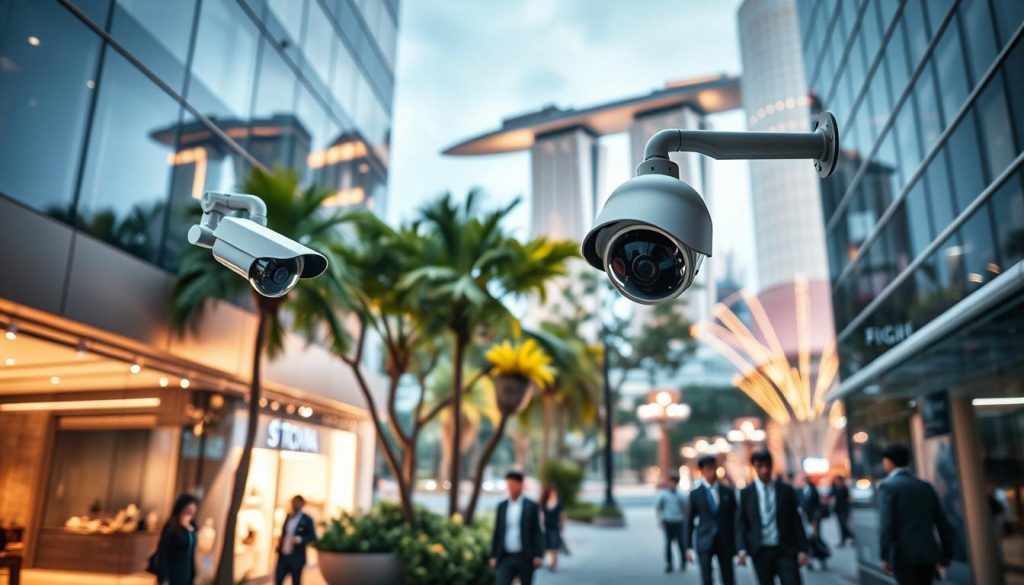
Singapore’s unique climate demands specific installation strategies for optimal surveillance performance. Proper placement and environmental considerations dramatically affect your security system’s effectiveness after dark.
Combating High Humidity and Thermal Shock
Singapore’s 84% average humidity creates constant moisture challenges for outdoor equipment. Morning dew forms rapidly at 80% relative humidity in typical 26°C temperatures.
Metal camera housings lose heat 40% faster than plastic equivalents during night cooling. This thermal shock accelerates condensation formation on critical optical components.
Choose weatherproof housings with IP67 or IP68 ratings for reliable performance. IP67 protects against temporary immersion, while IP68 withstands continuous submersion during heavy rains.
Optimal Camera Height, Angle, and Distance from Surfaces
Mounting height significantly impacts surveillance effectiveness and image clarity. For facial recognition, 2-meter heights provide ideal identification capabilities.
Research shows a 45° downward angle decreases moisture accumulation by 30% compared to level mounting. Angle cameras 15-20 degrees downward for optimal coverage and environmental protection.
Maintain 2-3 feet distance from reflective surfaces to prevent infrared bounce-back. This distance minimizes glare and ensures clear night vision performance.
Avoiding Light Pollution and IR Interference
Singapore’s urban environment creates significant light pollution challenges. Street lighting and building illumination can interfere with infrared night vision systems.
Position cameras away from direct light sources to prevent washout effects. Analyze your specific location’s light patterns during different nighttime hours.
During monsoon seasons with 280mm monthly rainfall, ensure proper housing protection. Regular maintenance becomes essential for maintaining clear surveillance footage in challenging conditions.
Technical Issues: Power Supply and Hardware Problems
Many security system failures stem from overlooked technical components rather than environmental factors. Electrical infrastructure and hardware configurations significantly impact surveillance effectiveness during darkness hours.
These technical challenges often manifest as inconsistent performance rather than complete failure. Understanding power requirements and hardware specifications prevents many common night vision problems.
Voltage Drop from Long Cable Runs or Low-Quality Wires
Voltage drop represents a critical concern for extended security installations. This phenomenon reduces infrared LED output by up to 58% according to industry measurements.
Using 22AWG wire causes approximately 1.2v drop per 100 feet of cable length. Professional installers recommend measuring voltage at both cable ends during nighttime operation.
Any voltage drop exceeding 0.5v requires immediate correction for optimal performance. Copper conductors outperform aluminum alternatives by 37% in tropical conditions.
Use minimum 18AWG copper wiring for runs exceeding 50 feet. This ensures consistent power delivery to your surveillance equipment.
Inadequate IR Illuminator Range or Malfunction
Infrared illuminator specifications directly affect night vision capabilities. Different security models feature varying IR illumination distances and patterns.
Malfunctioning IR LEDs create dark spots or completely black surveillance footage. Regular testing ensures all infrared elements function correctly.
PoE switches reduce power supply issues by 70% compared to traditional wiring methods. This technology provides more stable electricity for consistent night performance.
Match illuminator range with your specific surveillance area requirements. Underpowered systems cannot provide adequate infrared lighting for larger spaces.
Outdated Firmware and Incorrect Camera Settings
Modern surveillance systems rely heavily on software for image processing capabilities. Regular firmware updates improve night vision through enhanced algorithms and bug fixes.
Incorrect settings configuration dramatically affects after-dark performance. Proper adjustment of IR sensitivity and exposure parameters ensures optimal image quality.
Many users overlook firmware updates that address specific night vision issues. These updates often include improved noise reduction and contrast enhancement features.
Document your camera’s current settings before making adjustments. This allows easy restoration if changes negatively impact surveillance performance.
Professional installers recommend comprehensive voltage testing during initial setup and seasonal maintenance checks. This proactive approach prevents most power-related night vision problems.
Practical Fixes and Maintenance for Clearer Footage
Practical solutions exist to transform fuzzy nighttime footage into sharp surveillance images. Regular maintenance and proper configuration dramatically improve your security system’s after-dark performance.
Singapore’s humid environment demands specific care routines for optimal results. These practical approaches address both technical settings and physical maintenance needs.
Optimizing Camera Settings: IR Sensitivity, Exposure, and WDR
Adjusting infrared sensitivity settings significantly enhances night vision clarity. Most systems allow manual control over IR intensity and activation thresholds.
Proper exposure settings prevent washed-out images during darkness hours. Wide Dynamic Range (WDR) technology helps balance bright and dark areas in challenging lighting conditions.
Follow these steps for optimal configuration:
- Set IR sensitivity to medium level initially, then adjust based on testing
- Enable WDR function for environments with mixed lighting sources
- Adjust exposure settings to match your specific surveillance environment
- Test different configurations during actual nighttime conditions
- Document successful settings for future reference and troubleshooting
Routine Cleaning and Weatherproofing Your Camera Housing
Monthly maintenance prevents most common night vision problems. Singapore’s high humidity accelerates dirt accumulation on optical surfaces.
Alcohol-based cleaning solutions provide superior streak-free results compared to vinegar mixtures. They reduce streaking by 23% according to maintenance studies.
Essential monthly tasks include:
- Cleaning camera lens and IR sensors with appropriate solutions
- Checking for spider webs and insect nests around housing
- Verifying weather sealing integrity at all connection points
- Clearing vegetation that might contact the equipment
- Testing IR illumination functionality after cleaning
Enhancing Ambient Lighting and Using Anti-Fog Solutions
Supplemental lighting complements infrared illumination for better image quality. Strategic placement of additional light sources reduces reliance on IR alone.
Anti-fog solutions combat Singapore’s high humidity effects effectively. Nano-coating treatments reduce internal fogging by up to 80% in tropical conditions.
Effective environmental management strategies:
- Install silica gel packs inside housing to absorb excess moisture
- Apply premium anti-fog films that last approximately 18 months
- Use marine-grade stainless steel fasteners for corrosion resistance
- Apply silicone sealant to cable entry points for complete weatherproofing
- Install rubber gaskets on all access panels and covers
Professional maintenance technicians recommend comprehensive seasonal checks before monsoon periods. This proactive approach prevents most weather-related vision issues.
For temporary visibility improvement, a glycerin-water mixture (1:3 ratio) applied with microfiber cloth can help. This DIY solution provides short-term clarity enhancement during emergency situations.
Regular maintenance following these guidelines ensures consistent performance. Your security investment deserves proper care for reliable nighttime protection.
When to Upgrade Your CCTV System for Reliable Night Vision
Modern security technology offers significant improvements over older surveillance systems. When persistent night vision problems continue despite maintenance, consider upgrading your equipment.
Look for cameras with 4K resolution and large image sensors. Advanced IR arrays with smart adjustment provide superior illumination in challenging conditions.
Thermal imaging technology detects heat signatures instead of relying on visible light. This eliminates fog interference completely in Singapore’s humid environment.
AI-powered defogging algorithms automatically correct haze in real-time. These systems restore up to 90% of lost detail during high humidity periods.
Dual-spectrum illumination combines different IR wavelengths for balanced coverage. Professional installation ensures optimal performance in tropical climates.
Upgrading provides long-term reliability and reduced maintenance needs. Modern systems deliver consistent clear images regardless of environmental factors.
FAQ
What causes blurry footage in security cameras at night?
Blurry images often result from infrared reflection, lens condensation, or environmental factors like humidity. Power supply issues and incorrect settings can also degrade night vision performance.
How does infrared light affect my camera’s night vision?
Infrared light provides illumination for cameras in darkness. However, reflection from glass or shiny surfaces can cause glare and hazy images, reducing clarity in your surveillance footage.
Can weather conditions impact my camera’s image quality?
Yes. High humidity, fog, or dust accumulation on the lens can scatter light and create blurry conditions. Thermal shock from temperature changes may also cause internal fogging.
What maintenance helps prevent blurry night vision?
Regular cleaning of the camera lens and housing, checking power connections, and updating firmware maintain optimal performance. Using anti-fog solutions and proper weatherproofing also helps.
When should I consider upgrading my surveillance system?
Upgrade if your current security cameras struggle with consistent focus, have outdated image sensors, or cannot handle your environment’s lighting conditions and specific challenges.


