
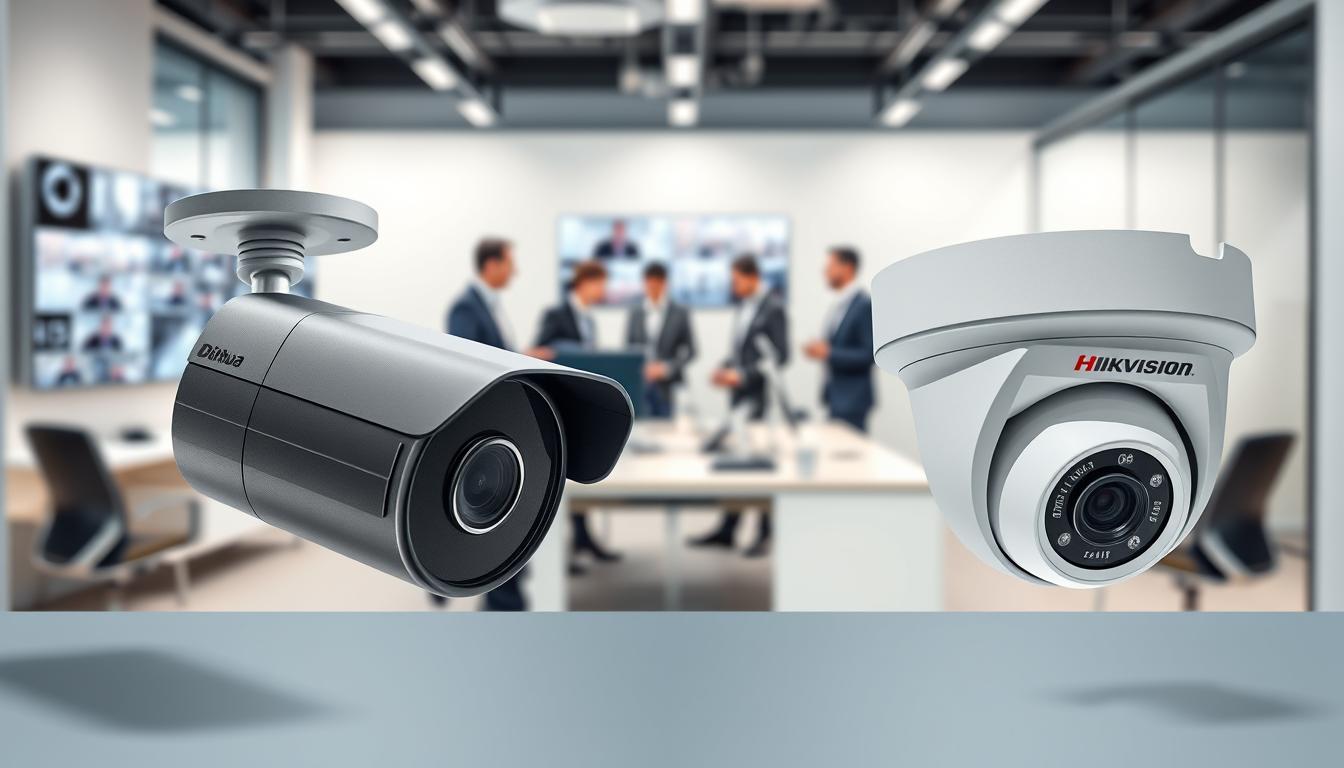
Which is better Dahua or Hikvision? A Detailed Comparison
Choosing the right security camera system can be tough. Two big names stand out in the surveillance market. These brands lead in innovation and affordability.
Hikvision ranked first globally in 2021. Dahua took the third spot. Both companies started in 2001. They offer cost-effective, high-quality products.
U.S. federal rules limit these brands’ use. This may not affect Singapore consumers. Our guide explores key features for home and business needs.
We compare low-light performance, AI tech, and resolution. Software, price, and support matter too. This helps you pick what fits your security goals.
Learn more about specific models at our detailed comparison page.
Key Takeaways
- Hikvision and Dahua are top global security camera brands.
- Both offer high-quality, affordable surveillance equipment.
- U.S. restrictions may not impact Singapore users.
- Key comparison areas include night vision and AI features.
- Resolution and software support vary between brands.
- Products are sold worldwide under different names.
- Choose based on specific home or business needs.
Introducing the Security Camera Giants: Dahua and Hikvision
Two dominant forces shape the global surveillance landscape. These companies have revolutionized security technology over the past two decades. Both offer comprehensive solutions for various protection needs.
Their products span from basic home monitoring to advanced enterprise systems. Understanding each brand’s strengths helps make informed decisions. This section explores their unique approaches to security innovation.
Hikvision: The Market Leader in Innovation
Hikvision stands as a true pioneer in surveillance technology. The company dedicates 8% of its annual revenue to research and development. This substantial investment drives continuous innovation across their product lines.
Their extensive range includes IP cameras, NVRs, and DVR systems. These devices feature remarkable integration capabilities with third-party equipment. Many commercial operations prefer Hikvision for large-scale installations.
The brand’s recorders offer adjustable storage capacity and cloud support. Users enjoy multi-channel live viewing and customizable playback options. These features make monitoring flexible and user-friendly.
Hikvision provides diverse lens options for various viewing requirements. Their equipment delivers reliable performance in demanding environments. This reliability makes them a top choice for professional applications.
Dahua: A Powerhouse in Low-Light and Affordable Tech
Dahua has carved its niche with exceptional night vision capabilities. Their Starlight technology enables clear imaging in near-total darkness. This advantage makes their cameras ideal for 24/7 surveillance.
The company structures its offerings into three distinct tiers. The LightSeries serves residential and small business needs. ProSeries addresses mid-range requirements with enhanced features.
UltraSeries represents their premium line for high-end applications. All series come in multiple form factors like dome and bullet styles. This variety ensures solutions for every security scenario.
Dahua’s network video recorders support advanced ePoE technology. They handle 4K resolution streams efficiently. The included video management software simplifies system operation.
Both companies manufacture products for global rebranding. Their core technologies remain consistent across different markets. This OEM approach demonstrates their manufacturing prowess and quality standards.
Each brand brings distinct advantages to security solutions. Hikvision excels in cutting-edge innovation and commercial applications. Dahua shines in low-light performance and cost-effective protection.
Which is Better Dahua or Hikvision? The Core Question
Determining the superior security solution requires careful evaluation of specific needs. The answer depends entirely on your application, budget, and desired functionality.
There is no universal winner in this comparison. Each brand carves out a distinct position in the surveillance market.
https://www.youtube.com/watch?v=vm2Du2ph7tU
Dahua typically delivers exceptional value for residential and small business applications. Their equipment shines in low-light conditions and offers competitive pricing.
This makes their products ideal for homeowners seeking reliable protection without excessive cost.
Hikvision often becomes the preferred choice for large commercial operations. Their advanced features and superior software integration support complex security systems.
Recent testing reveals interesting developments in AI performance. Dahua’s TiOC technology has made significant strides in reducing false alerts.
Independent tests show Dahua’s AI algorithms now achieve higher accuracy in motion detection compared to previous generations.
This improvement challenges the historical dominance of Hikvision’s AcuSense technology in smart alert systems.
Local support becomes crucial when selecting your surveillance equipment. Singapore consumers enjoy extensive service networks for both brands.
Warranty coverage and technical assistance should factor into your final decision.
Key differentiators include motion detection accuracy, low-light technology, and mobile app performance. These elements dramatically affect daily operation and reliability.
Brand loyalty often influences choices, but objective assessment based on recent advancements proves more valuable.
The decision ultimately balances price, functionality, and local support. Dahua offers outstanding value while Hikvision provides cutting-edge features.
Our following sections explore specific technologies to help you evaluate these factors objectively.
Comparing Key Technologies and Performance
Technical specifications reveal meaningful differences between these security leaders. Understanding these distinctions helps buyers select the optimal equipment for their specific environment.
Each brand excels in particular aspects of surveillance technology. Performance metrics vary across low-light imaging, AI capabilities, and optical components.
Low-Light Performance: Starlight vs. ColorVu
Night vision capabilities separate these security camera systems. Dahua’s Starlight technology delivers superior performance in near-dark conditions.
Some models feature larger image sensors for enhanced light capture. This provides clearer footage with greater detail at longer distances.
Hikvision’s ColorVu offers full-color imaging during nighttime hours. This technology requires constant LED lighting to maintain color reproduction.
The visible LEDs may not suit residential applications where discretion matters. Both solutions provide reliable surveillance after dark with different approaches.
AI and Motion Detection: Acusense vs. TiOC
Smart detection capabilities minimize false notifications. Dahua’s TiOC technology demonstrates remarkable accuracy in distinguishing real threats.
Environmental factors like rain or insects trigger fewer false alerts. This reduces notification fatigue and improves response efficiency.
Hikvision’s Acusense provides facial recognition and object classification. Some models still experience occasional false alarms despite these advanced features.
Recent testing shows Dahua’s algorithms achieve higher motion detection accuracy. This reliability makes their cameras particularly effective for home security.
Resolution and Image Bitrate
Both companies utilize similar 1/3-inch CMOS sensors in most products. Image quality remains consistently high across their camera lines.
Hikvision supports higher maximum bitrate settings up to 12Mbps. This allows for potentially sharper video streams under ideal conditions.
Dahua typically caps at 10Mbps, which proves sufficient for most applications. Maximum bitrate settings are rarely utilized in practical installations.
Both brands support H.264 and H.265 compression standards. Hikvision maintains a slight edge in compression efficiency for network video recorders.
Lens Options and Field of View
Optical components determine coverage area and detail level. Hikvision offers more fixed lens choices ranging from 2.8mm to 12mm.
This variety allows precise focal length selection based on environment needs. Wider lenses cover broad areas while narrower options capture distant details.
Dahua provides 2.8mm, 3.6mm, and 6mm fixed lens options. Their selection adequately serves most residential and business requirements.
Lens selection directly impacts surveillance effectiveness. Proper focal length ensures optimal coverage without blind spots.
Dahua leads in low-light performance and AI reliability for reducing false alerts. Their technology provides consistent operation in challenging conditions.
Hikvision offers greater lens variety and higher bitrate potential. These features benefit specialized installations requiring specific optical configurations.
The choice depends on which technical advantages align with your security priorities. Both companies deliver professional-grade surveillance equipment.
Software, Applications, and System Integration
The digital interface determines how effectively users interact with their security equipment. Modern surveillance systems rely heavily on intuitive software and mobile applications. These tools transform complex technology into accessible daily management solutions.
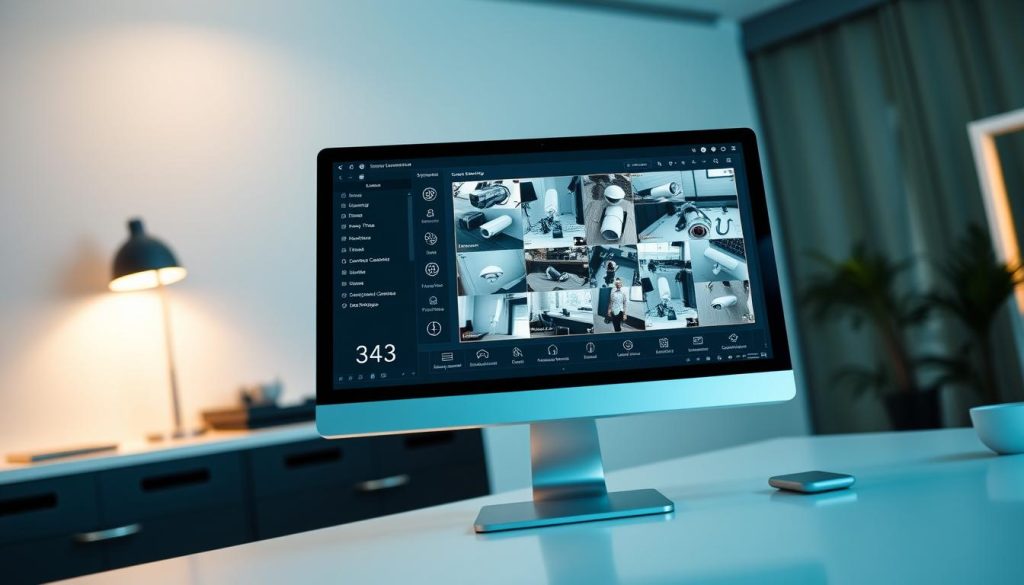
Mobile Apps: Hik-Connect vs. DMSS
Both companies offer robust mobile applications for remote monitoring. Hikvision’s Hik-Connect and Dahua’s DMSS provide essential functions through iOS and Android platforms.
Users receive real-time alerts and can view live footage from anywhere. Configuration changes and system adjustments happen through simple mobile interfaces. This convenience makes security management accessible to all skill levels.
Dahua’s DMSS application demonstrates superior reliability in challenging conditions. The app reconnects faster after internet outages and maintains stable connections. This resilience ensures continuous protection without interruption.
Hikvision’s software supports three simultaneous video streams with different resolutions. Dahua typically handles two streams, though newer models may offer triple streaming capability. Multiple streams allow flexible viewing options for various devices.
Both apps integrate alarm systems and advanced detection features. Facial recognition and motion detection work seamlessly across mobile platforms. Reduced false alerts make notifications more meaningful and actionable.
Independent testing reveals Dahua’s event playback and scheduling functions outperform competitors in user experience.
Video Management and Platform Features
Enterprise-level solutions showcase each brand’s software capabilities. Hikvision’s HikCentral and Dahua’s DSS Pro manage large-scale security systems effectively.
These platforms support multi-channel management and flexible licensing options. Advanced features cater to complex business security requirements. Both systems handle extensive camera networks with professional-grade tools.
Hikvision excels at integrating with third-party security products. Their equipment combines more easily with other brands in mixed systems. This flexibility benefits operations using diverse security equipment.
Dahua provides more accessible firmware updates through their official website. Hikvision’s firmware can be challenging to obtain and may vary between distributors. Consistent updates ensure optimal performance and security patches.
Both brands support ONVIF and RTSP protocols for standard compatibility. However, ONVIF suspended official support for both companies in 2019 due to geopolitical considerations. This doesn’t affect basic functionality but may limit certification benefits.
Dahua’s software ecosystem offers superior user experience for daily operation. Their applications provide intuitive navigation and reliable performance. Home and business users appreciate the consistent responsiveness.
Hikvision maintains advantages in unusual behavior detection algorithms. Their software identifies left objects and other atypical activities effectively. This capability benefits high-security environments requiring advanced monitoring.
The choice between software platforms depends on specific operational needs. Dahua delivers exceptional reliability and user-friendly design. Hikvision offers broader integration capabilities and specialized detection features.
Practical Considerations: Price, Support, and Regulations
Beyond technical specifications, practical factors significantly influence your security investment. Budget constraints, local assistance, and regulatory awareness all play crucial roles in decision-making.
These elements determine long-term satisfaction with your surveillance equipment. Smart buyers consider both upfront costs and ongoing maintenance requirements.
Cost Analysis and Value Proposition
Dahua’s tiered pricing structure offers clear options for different budgets. The LightSeries provides affordable protection for residential applications.
ProSeries delivers enhanced features for growing businesses. UltraSeries represents premium performance for demanding environments.
Hikvision typically commands slightly higher prices across comparable models. This premium reflects their advanced innovation and software integration capabilities.
Price differences remain relatively minor for most consumers. Both brands deliver exceptional value within their respective market segments.
Dahua excels in cost-effectiveness for low-light performance and recent AI advancements. Their technology provides professional-grade protection at accessible price points.
Hikvision justifies higher costs through cutting-edge features and superior integration. Their products often serve complex commercial installations better.
Support and Warranty in Singapore
Singapore consumers enjoy robust support networks for both security brands. Local distributors provide comprehensive service and technical assistance.
Standard warranties typically cover two years for most security products. Many providers offer onsite service and lifetime support commitments.
Reputable installers often hold BizSafe certification for professional installation services. This ensures proper setup and optimal system performance.
Free DDNS services simplify remote access configuration. Local availability remains strong through authorized dealers and online channels.
Choosing established suppliers guarantees reliable after-sales support. Service quality can vary between different providers.
Both companies maintain strong presence in the Singapore security market. Consumers benefit from competitive pricing and local expertise.
Understanding the NDAA and Global Regulations
The U.S. National Defense Authorization Act restricts federal use of certain security equipment. This legislation affects products with specific government affiliations.
These regulations primarily impact American government installations. Singapore consumers face no such restrictions on their security choices.
International businesses should remain aware of global regulatory differences when expanding operations.
Local availability and installation services prove more relevant for Singapore users. After-sales support outweighs geopolitical considerations for most applications.
Both brands continue operating successfully in markets worldwide. Their products meet international standards for performance and reliability.
Practical considerations ultimately guide smart security decisions. Budget needs and local support requirements should drive your final choice.
Dahua offers outstanding affordability while Hikvision provides feature-rich solutions. Both deliver professional protection with solid Singapore support.
Making the Right Choice for Your Needs
The final decision between these industry leaders comes down to application specifics. Each brand excels in different security scenarios.
Dahua cameras deliver outstanding value for residential use. Their Starlight technology provides superior night vision. Recent AI advancements reduce false alerts effectively.
Hikvision suits complex commercial installations better. The brand offers wider lens options and advanced integration capabilities. Their systems handle large-scale operations seamlessly.
Testing confirms Dahua’s mobile app reconnects faster after internet issues. Motion detection accuracy also favors their recent models. Both companies provide reliable service in Singapore.
Consider your specific needs for price, performance, and future scalability. Review our detailed product comparison for specific models.
Contact local security experts for personalized recommendations. They can design the perfect system for your home or business.
FAQ
What are the main differences between Hikvision and Dahua cameras?
Hikvision often leads in AI-driven features and innovation, while Dahua excels in low-light performance and affordability. Their technologies, like ColorVu versus Starlight, also differ in approach to night video quality.
Which brand offers better low-light camera performance?
Dahua’s Starlight technology is renowned for superior low-light clarity, though Hikvision’s ColorVu provides full-color footage at night. Your choice depends on whether you prioritize brightness or color accuracy in darkness.
How do their motion detection systems compare?
Hikvision uses Acusense for accurate alerts by filtering false alarms, while Dahua employs TiOC which combines active deterrence with smart detection. Both reduce unnecessary notifications effectively.
Are Hikvision and Dahua products compliant with international regulations?
Certain models from both companies face restrictions under regulations like the NDAA. Always verify compliance based on your region and intended use to avoid legal issues.
Which brand provides better mobile app support?
Hik-Connect from Hikvision is widely praised for its user-friendly interface, whereas Dahua’s DMSS app offers robust features but can have a steeper learning curve for new users.
Is there a significant price difference between the two brands?
Dahua generally provides more budget-friendly options with strong value, while Hikvision products often come at a premium due to advanced features and market position.
How is the warranty and technical support for these brands?
Both offer solid warranties and support networks globally. Local service quality can vary, so check with authorized dealers in your area for reliable assistance and maintenance.
Can I mix Dahua and Hikvision equipment in one security system?
While possible through ONVIF compatibility, mixing brands may limit access to proprietary features. For optimal performance, it’s best to stick with one ecosystem.


