
What’s the Difference Between CCTV Technician and CCTV Operator?
Singapore’s focus on safety and smart city development fuels a booming security industry. This growth creates many stable job opportunities for skilled professionals. Two core roles stand out in the surveillance field: the CCTV technician and the CCTV operator.
While both jobs are vital for public and private safety, their day-to-day work is very different. One role deals with hardware, cables, and network setup. The other focuses on live video feeds and incident response.
Knowing this distinction is crucial for your career path. Required skills, daily tasks, and training courses are not the same. This article provides a clear comparison to guide your decision.
We will explore specific responsibilities, required certifications, and salary expectations in Singapore. The impact of new technology, like AI analytics, on both professions is also covered.
Key Takeaways
- The security and surveillance sector in Singapore offers strong career growth due to high demand.
- CCTV technicians primarily handle the physical installation and maintenance of security systems.
- CCTV operators specialize in the real-time monitoring and analysis of surveillance footage.
- These roles require distinct skill sets, training pathways, and certifications.
- Understanding the difference is essential for choosing the right career path in this field.
- Both positions are integral to a complete and effective security solution.
- Emerging technologies are shaping the future demands and opportunities for both professions.
Introduction: Two Pillars of Modern Security
Contemporary safety measures form an ecosystem where technical installation and live monitoring are equally critical. This security infrastructure depends on specialized professionals working in harmony.
CCTV Technicians and CCTV Operators are the fundamental pillars. One role ensures the physical hardware is present and perfectly operational. The other ensures the live feeds are actively used for protection and response.
In Singapore, this partnership is vital. National projects like the Smart Nation initiative integrate advanced surveillance technology into urban management. This pushes demand for skilled talent in both areas of the field.
Their daily functions and work environments are distinct. Technicians work on-site with tools and cables. Operators work in control rooms, focused on screens. Yet, their shared goal is a seamless security outcome.
A high-tech camera system is useless without proper setup and repair. Likewise, a perfectly installed cctv network fails without vigilant oversight. Both roles are non-negotiable for a complete solution.
Choosing a path depends on your natural aptitude. Do you prefer hands-on, technical problem-solving? Or are you drawn to focused observation and analysis? The growing industry in Singapore offers stable, promising careers for both skill sets.
What is the Difference Between CCTV Technician and CCTV Operator?
At the heart of every effective security operation lies a clear division of labor between two specialized functions. One builds and maintains the physical infrastructure. The other actively uses that infrastructure to protect people and property.
A CCTV technician serves as the engineer and handyman for surveillance networks. This certified professional handles electrical systems, cabling, and IP networking. Their expertise is entirely tangible.
They mount cameras, configure recording devices, and manage power supplies. The technician’s primary output is a functioning, reliable physical cctv system. They ensure all equipment operates correctly before handing it over.
In contrast, a cctv operator acts as the analyst and first responder. This specialist focuses on real-time surveillance and live video feeds. Their work happens after installation is complete.
Operators monitor multiple camera streams simultaneously. They analyze footage for security breaches and maintain detailed incident logs. A key ability is assessing threats and deciding when to alert on-site personnel or law enforcement.
Work environments highlight another major contrast. Technicians are mobile professionals. They travel between sites for installations, repairs, and maintenance checks.
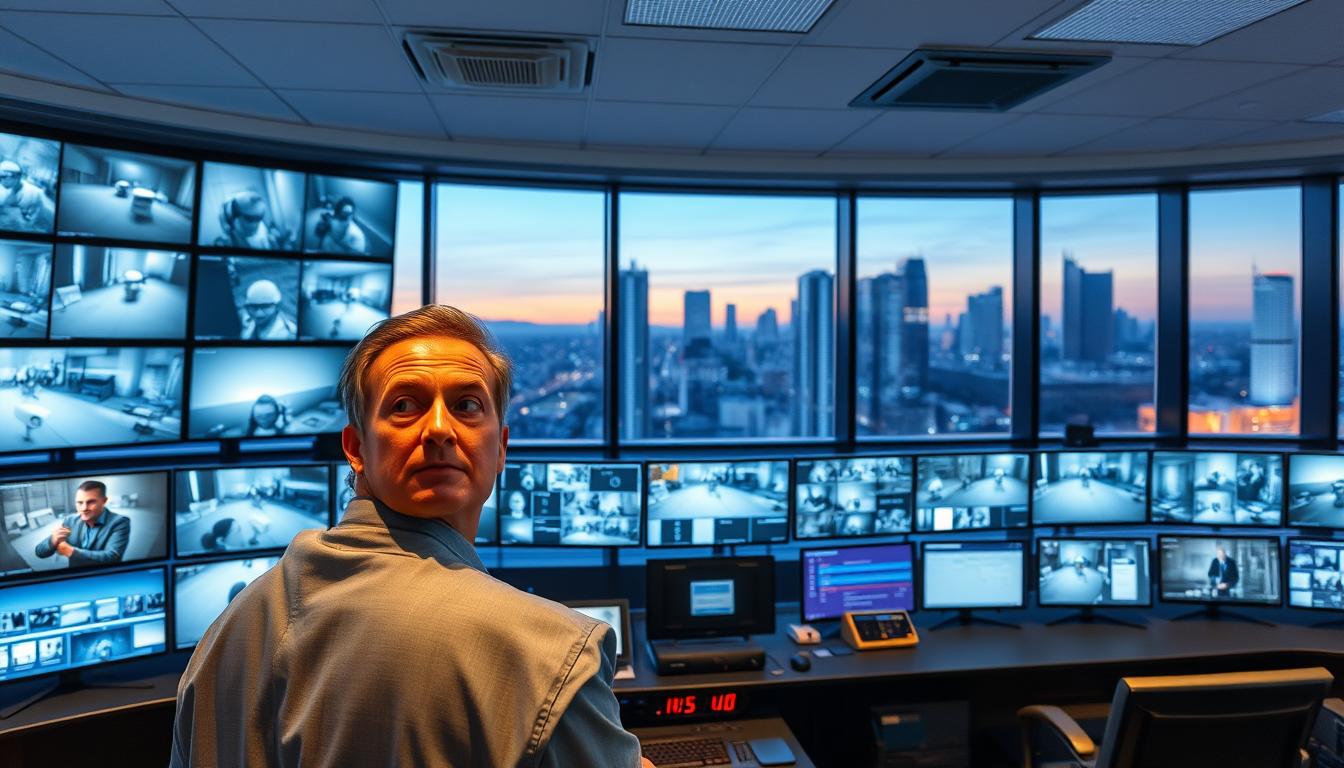
Operators typically work from a centralized Security Operations Centre. They remain stationed in a control room surrounded by monitoring screens. Their role demands constant, focused attention.
Required qualifications also diverge significantly. Technicians need formal certifications in electrical work and networking. Operators require training in surveillance law, communication protocols, and monitoring software.
Understanding this fundamental distinction is crucial. It helps you evaluate which security career path aligns with your personal skills and interests. Do you prefer hands-on technical problem-solving or vigilant observation and analysis?
Core Responsibilities: A Day in the Life
Moving beyond job titles reveals the concrete, hands-on work that defines each security position. Daily tasks show how theoretical roles translate into practical action. This section breaks down the specific duties that fill a typical shift.
Primary Duties of a CCTV Technician
A technician’s day often starts with a site survey. This involves assessing a location to plan optimal camera placements. Technical calculations ensure complete coverage with minimal blind spots.
Understanding client security needs guides this process. The professional must consider lighting conditions and potential obstructions. Testing night vision capabilities during surveys is standard practice.
Physical installation forms the core of the work. This includes mounting various camera types like dome, bullet, or PTZ models. Running and terminating coaxial or Ethernet cables requires precision.
Configuring recording equipment is another key duty. Setting up Digital Video Recorders or Network Video Recorders involves storage management. Installing Uninterruptible Power Supply backups ensures system reliability during outages.
Maintenance and troubleshooting are constant responsibilities. Routine tasks include cleaning camera lenses and updating firmware. These actions preserve image quality and system security.
Diagnosing problems demands technical knowledge. Using multimeters and cable testers helps identify signal loss or power issues. Network connectivity problems require systematic investigation to resolve.
This work is project-based and involves frequent travel between sites. Each assignment presents unique challenges that test practical skills. Success depends on adapting solutions to different environments.
Primary Duties of a CCTV Operator
The cctv operator begins with a shift handover briefing. This ensures continuity in monitoring operations. A system check verifies all cameras and monitors in the control room function properly.
Continuous scanning of multiple video feeds demands sustained focus. The professional must watch several screens simultaneously. Sharp attention to detail helps spot unusual activity quickly.
Using software tools enhances monitoring effectiveness. Operators zoom in on suspicious movements for closer inspection. Adjusting image settings improves clarity in different lighting conditions.
Managing recorded footage is a critical administrative duty. Tagging and exporting clips of incidents creates an organized archive. This supports legal requirements and internal audit processes.
Maintaining a detailed logbook documents all observations and actions. This record provides accountability and supports incident investigations. Proper documentation ensures regulatory compliance with laws like Singapore’s PDPA.
Threat assessment requires careful judgment. The operator must distinguish between false alarms and genuine security breaches. This knowledge prevents unnecessary responses while ensuring real threats get immediate attention.
Communication protocols guide emergency actions. Alerting on-site security teams via radio happens when motion detection triggers. Direct contact with law enforcement occurs during serious incidents.
These cctv operators work fixed shifts to maintain 24/7 surveillance coverage. Their role demands swift decision-making under pressure. Each day tests their observational skills and procedural knowledge.
Essential Skill Sets for Success
While both positions are crucial for security, the core competencies required for each are distinct and specialized. Excelling in one role does not automatically translate to success in the other. Employers in Singapore look for a very specific blend of hard and soft skills.
This clear delineation helps you assess your natural aptitudes. It also guides targeted training for career advancement. Understanding these skill sets is the first step toward professional mastery.
Technical Proficiency for CCTV Technicians
A technician’s expertise is deeply rooted in physical and digital systems. Core knowledge spans electrical safety protocols and IP networking for modern cameras. Calculating data storage needs and configuring RAID arrays are essential skills.
Practical, hands-on ability is non-negotiable. Professionals must be adept with power tools for mounting equipment. Cable crimping, using diagnostic testers, and reading system schematics are daily tasks.
Each installation site presents unique puzzles. Troubleshooting might involve weatherproofing an outdoor camera or integrating with a building’s management system. Problem-solving and adaptability are therefore critical.
In Singapore, many pursue certifications in advanced areas like fiber optic cabling. This technical depth ensures cctv systems are robust, reliable, and future-proof.
Monitoring and Analytical Skills for CCTV Operators
Cctv operators rely on a completely different toolkit. Their primary ability is sustained attention to detail over long shifts. Monitoring multiple screens requires spotting subtle anomalies in real-time.
Analytical thinking drives behavioral pattern recognition. Operators learn to differentiate normal activity from potential threats. This judgment is sharpened by experience and specific training.
Effective communication is a cornerstone of the role. Writing concise, factual reports for law enforcement is a key duty. Operators must also relay information calmly during high-pressure incidents.
Legal knowledge, especially of Singapore’s PDPA, governs how footage is handled. Software proficiency is evolving, with AI analytics generating automated alerts. Modern operators must skillfully interpret these alerts, not just watch screens.
Success in the control room hinges on this blend of vigilance, analysis, and clear procedure. It transforms raw video feeds into actionable security intelligence.
Training and Certification Pathways in Singapore
A successful career in Singapore’s security sector begins with the right formal training and recognized credentials. The local market highly values accredited qualifications that meet strict industry standards.
These structured programs provide the essential experience and knowledge employers demand. Choosing an approved course is your first critical step toward securing stable positions.
Courses and Certs for Aspiring CCTV Technicians
Aspiring technicians should pursue technical diplomas and vendor-specific certifications. The WSQ Diploma in Security Systems Integration is a nationally recognized benchmark.
This program delivers hands-on training in live site installations. Modules cover IP network configuration, fiber optic cabling, and DVR setup.
Advanced topics include thermal imaging calibration and RAID storage configuration. Practical sessions simulate real-world challenges technicians face daily.
Vendor programs from brands like Hikvision or Dahua are also valuable. They provide deep knowledge of specific product ecosystems and troubleshooting.
Institutions like Singapore Polytechnic and Temasek Polytechnic offer these courses. Certification is often mandatory for projects involving government or high-security facilities.
It validates your skills and signals professionalism to potential employers. This formal pathway is designed for tangible, technical growth.
Training Programs for CCTV Operators
Operator training focuses on legal frameworks and control room procedures. The key requirement is completing an approved program for a security license.
Specialized Security Operations Centre (SOC) Management programs are typically three months long. They prepare candidates for the modern monitoring environment.
Curriculum includes PDPA-compliant report writing and crisis communication drills. Simulated monitoring scenarios build behavioral pattern recognition skills.
A major component is mastering Video Management Software (VMS). Modern programs incorporate technology like AI-driven analytics tools.
Operators learn to interpret software-generated alerts, not just watch screens. This training transforms a candidate into a competent control room analyst.
Effective communication protocols and legal knowledge are emphasized over hardware. This focus ensures graduates can handle real-time incidents responsibly.
Both career paths stress the importance of accredited programs. In Singapore’s competitive market, the right qualifications unlock the best opportunities.
They ensure your training meets industry demand and enhances long-term employability. Investing in these certifications is investing in your professional future.
Career Progression and Growth Opportunities
Progression beyond entry-level roles is well-defined for surveillance specialists in the local market. Both technical and operational career paths offer structured advancement. This creates long-term stability for dedicated professionals.
Singapore’s security sector values documented experience and specialized skills. Employers actively promote from within their teams. Clear trajectories exist for increased responsibility and compensation.
Continuous learning fuels this professional growth. New technology creates fresh opportunities for specialization. The field rewards those who invest in their development.
Advancement Routes for Technicians
Technical staff begin as installation assistants or junior technicians. Hands-on experience builds competency over several years. A typical first promotion leads to a Senior Technician role.
This position involves mentoring juniors and handling complex installations. The next step often involves team leadership. Supervisors coordinate groups on large commercial projects.
Further advancement opens project management positions. These roles plan security deployments for entire complexes. Systems Engineers design integrated networks with access control.

Specialization offers another growth avenue. Experts in networked IP systems command higher salaries. Cybersecurity integration for surveillance networks is particularly valuable.
Senior technical roles can earn between S$4,500 and S$6,000 monthly. Some technicians transition into consultancy for smart city initiatives. Others focus on government security projects with advanced requirements.
Regular cctv camera maintenance work provides steady income while building client relationships. This foundation supports business development for ambitious professionals.
Career Ladder for Operators
Control room staff start as monitoring operators. Demonstrated vigilance and procedural knowledge lead to quick advancement. Many become Shift Supervisors within two years.
Supervisors manage teams during their rotation periods. They ensure smooth Security Operations Centre functioning. This role develops crucial leadership abilities.
The next progression step is SOC manager. This position oversees multiple sites and develops monitoring protocols. Budgeting and staffing responsibilities come with this promotion.
Some operators branch into investigative roles. Their frontline monitoring experience proves valuable for loss prevention. Others establish training academies to share their expertise.
Cybersecurity certifications create additional opportunities. Operators can transition into digital forensics analysis. This specialization merges surveillance knowledge with IT security.
Security manager roles represent the peak for many operators. These positions coordinate entire protection programs. They develop response protocols for various threat scenarios.
Both paths emphasize certification as career fuel. Advanced training unlocks higher-level job openings. Singapore’s market rewards documented expertise with better growth prospects.
Industry Demand and Job Outlook in Singapore
National initiatives and commercial expansion are fueling sustained demand for skilled monitoring and installation specialists. The local security industry is not just stable—it’s actively growing.
This creates excellent opportunities for qualified professionals. Understanding these trends helps you position yourself for long-term growth.
Current Employment Trends
Recent government data highlights a 38% surge in security tech roles from 2020 to 2023. This spike reflects a broad-based need across the economy.
Private sector hiring is particularly strong in retail and healthcare. Large chains need to protect inventory and ensure customer safety. Hospitals require advanced surveillance for patient welfare and asset security.
Logistics hubs and commercial buildings are also major employers. They rely on comprehensive cctv systems to oversee operations.
Public sector demand is driven by programs like SG Secure. This national effort upgrades surveillance infrastructure in public spaces.
Transport hubs and HDB towns are integrating smarter cameras and systems. A notable trend is the search for hybrid specialists.
Employers increasingly value individuals who understand both technical and operational aspects. This blended experience commands a higher salary in today’s market.
The Future of CCTV Professionals
The outlook for professionals is tightly linked to technological adoption. Industry forecasts suggest a major shift by 2026.
An estimated 60% of new systems will require smart city tech certifications. This changes the required courses and skills for newcomers.
Emerging technology is redefining the role. AI video analytics for facial recognition and crowd behavior is becoming standard. Cloud-based video management allows remote access and storage.
The Internet of Things (IoT) means cameras will interact with other smart devices. This integration creates more complex, intelligent security networks.
This shift spawns new specialties. Cybersecurity skills are now critical to protect IP surveillance networks from hacking. Data analytics ability is needed to interpret intelligence from smart systems.
Operators will move from passive monitoring to managing AI-generated alerts. Technicians will install and maintain interconnected IoT technology.
The industry offers long-term career stability. This stability depends on a commitment to upskilling. Adapting to new tools and regulations is the key to future success.
Launching Your CCTV Career in Singapore
Your journey into the security field begins with understanding your personal strengths and industry needs. Start with honest self-assessment. Do you enjoy hands-on technical work with cameras and systems? Or do you prefer focused monitoring and analysis?
Next, invest in accredited training and certifications. Singapore’s security industry highly values qualified professionals. Consider foundational courses in both technical and operational areas. This flexibility makes you more attractive to employers.
Actively network at Security Association Singapore events. These connections reveal job opportunities and industry trends. With 84% job satisfaction reported, these career paths offer rewarding growth.
Technicians earn S$2,800 to S$4,500 monthly. Operators earn S$2,500 to S$3,800. Both roles provide meaningful work in public safety. Your path to success starts with this first strategic step.
FAQ
What are the main job functions for each role?
A CCTV technician focuses on the physical and digital infrastructure. Their day involves installing cameras, running cables, configuring software, and performing maintenance. A CCTV operator works in a control room, actively monitoring live video feeds and recorded footage to identify security incidents and ensure safety compliance.
Which position requires more technical knowledge?
The technician role demands deeper technical proficiency. Professionals need hands-on skills in electronics, networking, and system troubleshooting. Operators require strong analytical abilities and attention to detail to interpret surveillance footage effectively, though they also need operational knowledge of the specific software used in their control room.
What kind of training is available in Singapore for these careers?
A> Singapore offers specialized pathways. For technicians, courses in security system installation and certifications from brands like Hikvision or Bosch are valuable. For operators, training programs often cover surveillance law, incident reporting, and control room operations, sometimes provided by employers like Certis or Sats.
How does the career progression differ?
Experienced CCTV technicians can advance to senior technician, project manager, or systems designer roles. Skilled CCTV operators may progress to shift supervisor, control room manager, or move into security coordination positions. Both paths offer growth within the expanding security industry.
Is there a high demand for these professionals in Singapore?
A> Yes, demand is strong. The need for integrated security systems in smart buildings and public areas drives growth for technicians. For operators, demand remains steady in sectors like retail, hospitality, and facilities management, where real-time monitoring is crucial for asset protection and public safety.


