
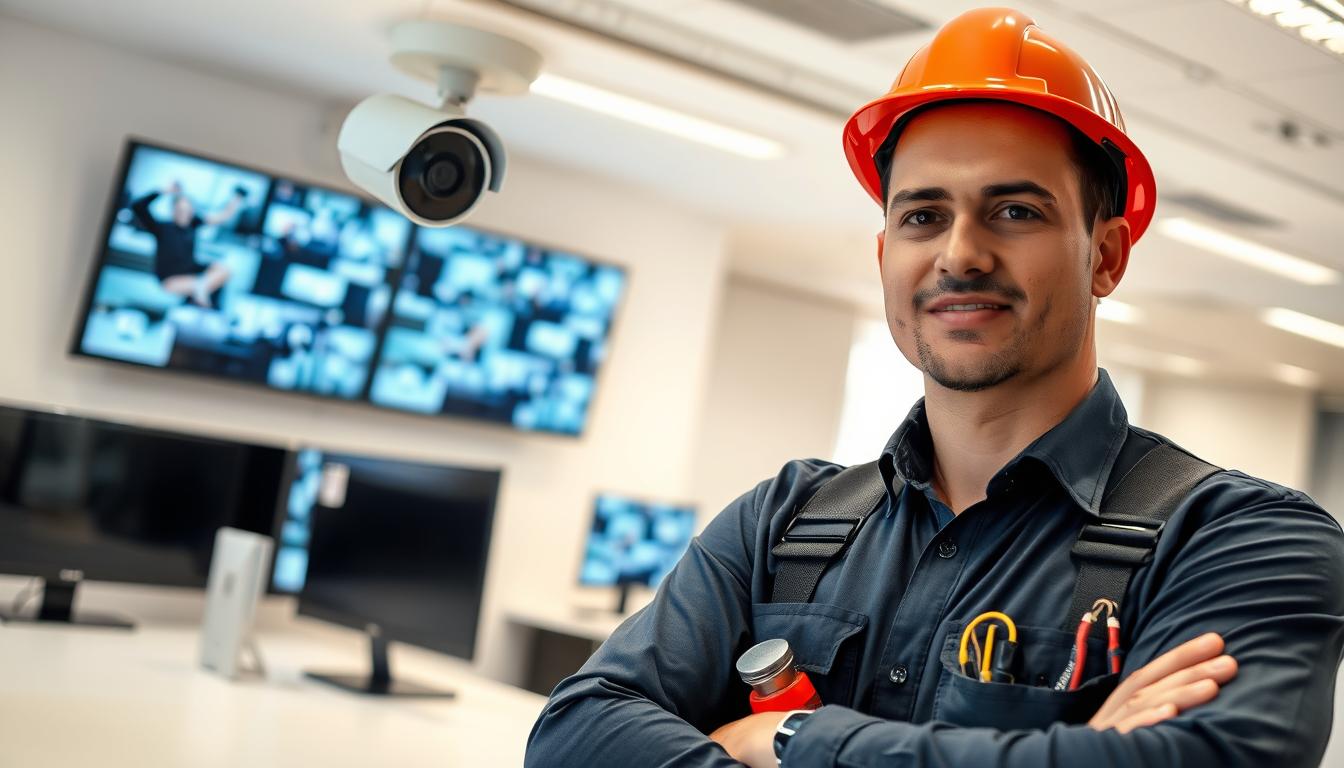
What Qualifications Do I Need to Be a CCTV Installer?
Singapore’s security sector is booming. The demand for skilled professionals in surveillance systems keeps growing. This creates excellent career opportunities in the security industry.
Proper training is essential for success. Technical skills and industry knowledge form the foundation. Many training programs offer hands-on experience with security systems.
Eversafe Academy provides a premier Certificate in CCTV Installation. Their CCISS course spans 16 hours. It covers camera setup and network configuration thoroughly.
Financial support makes certification accessible. SkillsFuture funding reduces course fees significantly. Eligible participants pay just S$97.50 for quality training.
This guide explores the pathway to becoming a qualified technician. We will examine required certifications and available courses. Understanding these requirements is crucial for entering this field.
Key Takeaways
- Singapore’s security industry shows rapid growth and high demand for surveillance professionals
- Technical skills and proper training are fundamental for CCTV installation careers
- Eversafe Academy offers a comprehensive 16-hour CCISS certification program
- SkillsFuture funding reduces course costs to as low as S$97.50 for eligible students
- Hands-on training in camera setup and network configuration is essential
- Certifications significantly enhance job prospects in the security sector
- This field offers promising career opportunities with various specializations
Understanding the Role of a CCTV Installation Technician
Modern security infrastructure relies heavily on surveillance professionals. These technicians form the backbone of protection systems across Singapore. Their work extends far beyond simple equipment setup.
CCTV installation technicians design complete security solutions. They assess client needs and create customized surveillance networks. This requires both technical knowledge and customer service skills.
These professionals handle multiple responsibilities daily. They mount cameras in optimal positions for maximum coverage. System configuration follows careful planning and testing.
Technicians integrate surveillance with other security systems. Access control and alarm systems often connect to CCTV networks. This creates comprehensive protection for various environments.
- System design and camera placement optimization
- Hardware installation and software configuration
- Network integration and troubleshooting
- Compliance with Singapore’s privacy regulations
- Ongoing maintenance and client support
Nearly half of all positions require regular system maintenance. Technicians address issues like night vision failures and connectivity problems. Strong problem-solving abilities prove essential for this work.
Professionals in this field use various job titles. Security Systems Technician and Surveillance Engineer describe similar roles. IP Camera Specialist indicates more focused expertise.
Singapore’s technicians must follow IMDA standards carefully. Privacy laws and PDPA compliance form crucial aspects of the job. Legal knowledge complements technical skills in this career.
Employers prioritize practical experience highly. Over 90% value hands-on skills when hiring new technicians. This makes quality training programs particularly valuable.
Understanding this role’s full scope helps aspiring professionals. The position offers diverse challenges and rewarding opportunities. It represents a growing field within Singapore’s security industry.
Core Educational Pathways to Get Started
Building a successful career in surveillance technology begins with the right educational foundation. The security industry values structured learning that combines theory with practical application. Various pathways exist for aspiring professionals to gain essential knowledge.
High School Diploma or Equivalent: The Basic Foundation
A high school diploma serves as the fundamental entry requirement for this field. This basic qualification demonstrates the ability to learn technical concepts. Many employers consider it the minimum standard for training programs.
Mathematics and physics provide crucial background knowledge for security systems work. These subjects help understand electrical principles and camera positioning. Strong analytical skills developed in high school prove valuable throughout a security career.
Vocational Training and College-Level Courses
Specialized training programs offer targeted education for surveillance professionals. Vocational courses in electronics and IT networks provide practical skills. These programs typically focus on hands-on learning with actual equipment.
Level 3 Diplomas in Electronic Fire and Security Systems deliver comprehensive training. They cover both theoretical concepts and real-world applications. Many institutions partner with security companies to ensure curriculum relevance.
College courses in electronic engineering provide advanced technical knowledge. Students learn about system integration and network configuration. These programs often include internships with established security firms.
“Quality education forms the backbone of competent security professionals. The right training combines technical knowledge with practical experience.”
Modern educational pathways include both analog and digital technologies. Students learn about traditional systems and IP-based solutions. This comprehensive approach ensures graduates can handle diverse installation scenarios.
Singapore’s training programs incorporate local regulatory requirements. Students learn about IMDA standards and PDPA compliance considerations. This local knowledge proves essential for working within Singapore’s security industry.
Continuous learning remains crucial in this evolving field. Technology advances require ongoing education through workshops and advanced courses. Many professionals pursue additional certifications throughout their careers.
Essential Technical Skills for Effective Installation
Technical proficiency separates competent surveillance professionals from amateurs. Mastering core competencies ensures reliable system performance and client satisfaction. These essential skills form the foundation of every successful installation project.
Modern surveillance demands diverse expertise across multiple technical domains. Professionals must understand both hardware and software components. This comprehensive knowledge enables effective troubleshooting and system optimization.
Electrical Wiring and Power Supply Fundamentals
Electrical knowledge forms the backbone of reliable surveillance systems. Technicians must understand voltage requirements and power distribution. Safe installation practices comply with Singapore’s PSB standards for all security work.
Cable selection proves critical for system longevity. Professionals choose between coaxial and network cables based on project needs. Proper termination techniques prevent signal degradation and connection failures.
Multimeters become indispensable tools for diagnosing power issues. These devices verify voltage levels and identify wiring problems. Technical skills in electrical diagnostics prevent system failures and ensure continuous operation.
Networking and IP Configuration Knowledge
IP-based surveillance systems demand strong networking expertise. Technicians calculate bandwidth requirements for multiple camera setups. This knowledge prevents network congestion and ensures smooth video transmission.
PoE switch configuration enables efficient power delivery to cameras. Professionals troubleshoot IP conflicts using packet sniffers and network analyzers. These technical skills maintain network integrity and prevent downtime.
Cybersecurity measures protect surveillance data from unauthorized access. Encrypted transmission and network protocols safeguard sensitive footage. This expertise becomes increasingly vital as systems connect to broader networks.
Camera, DVR, and NVR System Expertise
Camera selection requires understanding different types and their applications. Dome cameras offer discreet monitoring while bullet cameras provide long-range coverage. PTZ units deliver flexible viewing options for large areas.
Lens specifications determine coverage quality and clarity. Varifocal lenses allow adjustable focal lengths unlike fixed alternatives. IR illumination calculations ensure proper night vision performance in low-light conditions.
Recording system configuration manages footage storage and retrieval. DVR and NVR systems require proper setup for motion-triggered recording and storage retention. Remote access capabilities enable comprehensive surveillance management from any location.
System integration expertise combines CCTV with other security solutions. Access control and alarm systems often connect to surveillance networks. This creates comprehensive protection environments for various Singaporean facilities.
Continuous skill development keeps pace with technological advancements. 4K camera systems, AI analytics, and cloud-based solutions represent emerging trends. Ongoing training ensures technicians remain valuable in the evolving security industry.
Gaining Crucial Hands-On Experience
Real-world application separates competent technicians from classroom learners. Practical exposure to actual security systems builds confidence and technical mastery. This experience transforms theoretical knowledge into marketable professional skills.
The Value of Apprenticeships and Entry-Level Roles
Apprenticeships provide invaluable learning directly from experienced surveillance professionals. These programs combine earning with education, typically offering salaries while developing essential installation skills. Many security companies in Singapore offer structured training programs for newcomers.
Entry-level positions like Assistant Installation Technician provide immediate practical experience. These roles typically start around S$2,400 monthly while working with various surveillance systems. Beginners gain exposure to residential, commercial, and industrial installation environments.
Local trade associations and technical colleges frequently list apprenticeship opportunities. These programs follow industry standards and provide networking connections with established professionals. Many apprentices transition directly into full-time positions after completion.
Developing Troubleshooting and Problem-Solving Abilities
Hands-on experience develops crucial diagnostic skills for system maintenance. Technicians learn to identify connectivity problems and camera malfunctions quickly. Real equipment training prepares professionals for diverse installation challenges.
Practical training addresses common issues like WiFi interference and positioning limitations. Eversafe Academy reports an 89% pass rate with most graduates securing jobs within three months. Their CCISS course emphasizes real-world scenarios and equipment handling.
Problem-solving skills grow through exposure to system integration complexities. Technicians learn to combine CCTV with access control and alarm systems effectively. This comprehensive approach creates well-rounded security professionals capable of handling complex projects.
“The combination of theoretical knowledge and practical experience creates technicians who can troubleshoot any surveillance challenge they encounter on the job.”
Field experience remains the most effective teacher for security system installation. Each project presents unique challenges that develop adaptive thinking and technical creativity. This hands-on approach ensures professionals can handle Singapore’s diverse security requirements.
Navigating Licensing and Legal Requirements in Singapore
Operating legally within Singapore’s surveillance sector demands strict adherence to regulatory frameworks. Professionals in this field must understand both national and regional compliance requirements. This knowledge ensures ethical operations and protects both clients and technicians.
Singapore’s security landscape features specific licensing protocols. These measures maintain industry quality and consumer protection standards. Every surveillance professional should familiarize themselves with these essential regulations.
Overview of Regional CCTV Installation Licensing
Singapore mandates specific licensing for surveillance system professionals. The Infocomm Media Development Authority (IMDA) sets technical standards for all security installations. These regulations ensure system reliability and interoperability across different platforms.
Licensing often involves registration with relevant authorities. Background checks verify technician credibility and trustworthiness. Proof of adequate insurance coverage demonstrates professional responsibility.
Commercial projects typically demand stricter compliance protocols. Multi-system integrations require additional certifications and approvals. Residential installations follow slightly different but equally important guidelines.
Camera placement regulations prevent privacy violations while maintaining effective coverage. Technicians must understand legal boundaries for surveillance operations. Proper documentation of all installations meets regulatory standards.
Compliance with PDPA and IMDA Standards
The Personal Data Protection Act (PDPA) governs surveillance data collection and usage. This legislation protects individual privacy while allowing necessary security monitoring. Professionals must understand data handling and storage requirements.
IMDA standards cover technical specifications for surveillance equipment. These include transmission protocols, image quality standards, and system integration requirements. Compliance ensures reliable performance and system compatibility.
“Proper licensing demonstrates professional credibility and commitment to ethical standards in surveillance operations.”
Maintenance records and data handling procedures require careful documentation. Technicians must stay updated with evolving regulations in Singapore’s security landscape. Continuous education ensures ongoing compliance with changing standards.
Regional variations exist within Singapore’s licensing framework. Professionals working across different areas must understand local requirements. This knowledge prevents legal issues and ensures smooth project completion.
Proper licensing enhances professional credibility in the security industry. It demonstrates commitment to legal and ethical standards. Clients value technicians who prioritize regulatory compliance in their surveillance solutions.
What Qualifications Do I Need to Be a CCTV Installer? Getting Certified
Professional credentials elevate surveillance technicians from basic installers to trusted security experts. Certification validates your technical competence and industry knowledge. It demonstrates commitment to quality work and professional standards.
https://www.youtube.com/watch?v=xfUERcUMDRI
Key Certification Programs for Career Advancement
Several respected programs enhance your technical skills and industry standing. These certifications are recognized across the security sector.
The Certified Alarm Technician Level I credential focuses on fundamental installation techniques. It covers basic security systems and troubleshooting methods. This certification establishes core competency for entry-level professionals.
Electronic Security Technician Certification validates advanced technical knowledge. It includes network configuration and system integration testing. This credential demonstrates comprehensive understanding of modern surveillance technology.
Advanced CCTV and Video Surveillance Certification specializes in complex monitoring systems. It covers high-resolution cameras and analytics software. This program develops expertise in sophisticated security solutions.
Eversafe Academy’s CCISS program offers Singapore-specific training. Their 16-hour course combines theoretical knowledge with practical application. This local certification meets regional industry standards perfectly.
How Certification Enhances Job Prospects and Credibility
Certified technicians enjoy significant career advantages. Employers recognize validated skills and professional commitment.
- Higher earning potential – Certified professionals often command better salaries
- Preferred hiring status – Many employers prioritize credentialed applicants
- Government project eligibility – Certifications often required for public sector work
- Client confidence – Credentials demonstrate reliability and expertise
- Career advancement – Certification opens doors to supervisory roles
Industry recognition from organizations like ESA and IFPO carries substantial weight. These groups maintain rigorous testing standards and ongoing education requirements. Their certifications ensure technicians stay current with evolving technologies.
“Professional certification separates competent technicians from truly exceptional security professionals. It demonstrates both technical mastery and commitment to ethical standards.”
Renewal requirements ensure continuous learning in this dynamic field. Most certifications demand periodic updates through additional training. This maintains high industry standards across all security installations.
The certification process standardizes industry practices effectively. It creates consistent quality levels across different projects and companies. This benefits both professionals and their clients through reliable service delivery.
Finding the Right Training Program for You
Selecting the ideal educational path requires careful consideration of multiple factors. The right program balances theoretical foundations with practical application. This ensures graduates possess both knowledge and hands-on abilities.
Quality courses cover essential technical aspects comprehensively. They include camera selection, wiring standards, and network configuration. Cybersecurity basics form another critical component of modern training.
Prospective students should evaluate program success rates carefully. Institutions like Eversafe Academy report impressive 89% pass rates. Their graduates often secure employment within three months of completion.
Reviewing Course Content: From Theory to Practical Labs
Effective training programs combine classroom instruction with laboratory exercises. This dual approach develops both conceptual understanding and practical skills. Students learn to handle real surveillance equipment confidently.
Comprehensive courses cover electronics fundamentals and advanced network configuration. They include hands-on experience with various camera types and recording systems. Installation techniques and troubleshooting methodologies receive thorough attention.
Singapore-specific content ensures compliance with local regulations. Programs incorporate IMDA standards and PDPA requirements. This local knowledge proves invaluable for working within Singapore’s security industry.
Flexible scheduling options accommodate diverse student needs. Part-time courses and weekend classes suit working professionals. Career switchers appreciate these adaptable learning formats.
SkillsFuture and UTAP Funding Opportunities
Financial support makes quality education accessible to Singaporean residents. SkillsFuture subsidies significantly reduce course fees for eligible participants. This program brings quality training within reach for many aspiring professionals.
Eligible students pay approximately S$97.50 for comprehensive programs. This represents a substantial reduction from standard course fees. The subsidy demonstrates Singapore’s commitment to workforce development.
NTUC members access additional funding through UTAP. This program covers up to 75% of remaining costs after SkillsFuture subsidies. Union support further reduces financial barriers to career advancement.
“Financial assistance programs transform career aspirations into achievable goals. They make quality training accessible to dedicated professionals.”
Many institutions provide career support services alongside training. Job placement assistance and industry networking opportunities benefit graduates. These services enhance the overall value of educational programs.
Certification upon completion validates acquired skills effectively. It demonstrates professional competence to potential employers. This credential enhances career prospects within the security sector.
The Importance of Soft Skills in Security Installation
Technical expertise alone doesn’t guarantee success in the security installation field. Interpersonal abilities often determine long-term career growth and client satisfaction. These non-technical competencies complement your technical knowledge perfectly.
Modern security professionals need balanced capabilities. Technical skills handle equipment while soft skills manage relationships. This combination creates truly effective surveillance solutions.
Client Communication and Needs Assessment
Clear communication forms the foundation of successful security projects. Technicians must translate complex technical concepts into understandable terms for clients. This skill ensures clients fully understand their surveillance systems.
Thorough needs assessment identifies appropriate security solutions. Asking targeted questions reveals specific protection requirements. Different environments demand customized approaches to surveillance.
Active listening captures subtle client concerns and preferences. This attention to detail builds trust and demonstrates professional commitment. Strong relationships often lead to referral business and repeat clients.
Cultural sensitivity matters greatly in Singapore’s diverse market. Technicians work with clients from various backgrounds and languages. Respectful communication ensures positive experiences for everyone involved.
Teamwork and Adaptability on the Job
Complex installations require coordinated effort among multiple professionals. Security technicians collaborate with electricians, IT specialists, and other experts. Teamwork capabilities ensure smooth project execution.
Adaptability handles unexpected challenges effectively. Job sites present structural limitations and technical compatibility issues. Flexible professionals find creative solutions to these obstacles.
Problem-solving extends beyond technical issues to logistical challenges. Scheduling coordination and project management require organizational skills. These abilities keep installations on track and within budget.
“The best security technicians combine technical mastery with emotional intelligence. They solve both equipment problems and human concerns effectively.”
Professional demeanor influences client confidence significantly. Appearance and conduct reflect service quality in the security industry. These elements contribute to overall customer satisfaction.
Continuous soft skill development creates well-rounded professionals. These abilities complement technical expertise for comprehensive service delivery. The complete CCTV installation career path requires both technical and interpersonal excellence.
Tools of the Trade: Equipment You Must Master
Professional surveillance work demands complete mastery of specialized equipment. The right tools transform complex installations into efficient, reliable security solutions. Every successful technician develops deep familiarity with their essential gear.
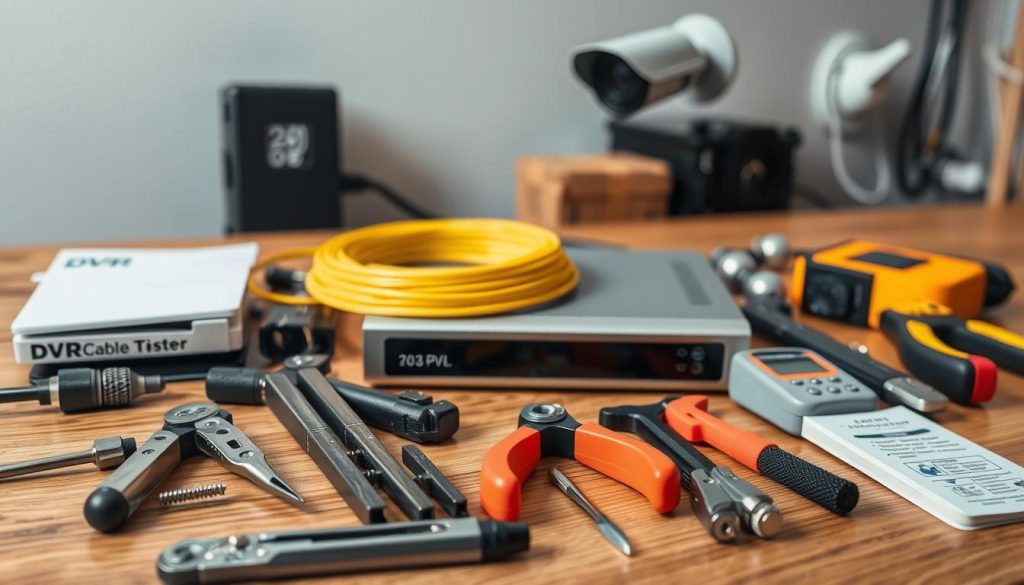
Drilling and mounting equipment forms the foundation of physical installations. Different surfaces require specific tools for secure camera placement. Concrete demands hammer drills while drywall needs specialized anchors.
Cable testing equipment ensures flawless connectivity throughout surveillance networks. Toners identify wiring issues in both coaxial and network installations. These diagnostic tools prevent costly troubleshooting after system completion.
Crimping tools create reliable connections for various cable types. RJ45 connectors terminate network cables while BNC handles coaxial lines. Proper termination prevents signal loss and connection failures.
Configuration software manages camera settings and system customization. Different brands require specific programs for optimal performance. Technicians must master multiple software platforms for diverse installations.
Electrical testing equipment includes multimeters and voltage testers. These tools verify power supply stability and identify electrical issues. Proper testing ensures system reliability during power fluctuations.
Safety equipment protects technicians during installation work. Ladders and lifts provide secure access to elevated mounting points. Personal protective equipment meets Singapore workplace standards.
Cable management tools create professional, concealed installations. Fish tapes and conduit benders route wires through walls and ceilings. These tools maintain aesthetic appeal while ensuring security.
Mobile testing devices verify system functionality during installation. Portable monitors check camera feeds without full system setup. This saves time and ensures proper operation before project completion.
Power supply testers validate backup systems and battery performance. These tools ensure continuous operation during outages. Reliability testing forms a critical part of professional installations.
Tool organization systems maintain efficiency on job sites. Proper inventory management prevents delays and missing equipment. Organized technicians handle diverse installation scenarios effectively.
“Mastering professional tools separates amateur attempts from quality surveillance installations. The right equipment handled correctly ensures lasting security solutions.”
Continuous learning about new tools keeps technicians competitive. Technology evolves with improved testing equipment and installation methods. Staying current demonstrates professional commitment to quality work.
Proper tool maintenance extends equipment lifespan significantly. Regular cleaning and calibration ensure accurate performance. Well-maintained tools reflect professional standards in security work.
Launching Your Career as a CCTV Professional
Singapore’s security industry offers rewarding career paths for surveillance professionals. The field combines technical challenges with excellent growth potential. Skilled technicians enjoy strong market demand across various sectors.
Entry-level positions typically start with salaries around S$2,400 monthly. Rapid advancement occurs for certified professionals with proven skills. Senior roles like Lead Systems Integrator can exceed S$4,800 monthly.
Specialization areas significantly boost earning potential. Marine surveillance for port facilities requires specific expertise. Government projects for LTA or HDB estates offer stable opportunities. Retail security solutions demand customized approaches.
Singapore’s security sector needs approximately 1,200+ technicians annually. This strong demand ensures consistent job availability. Growing surveillance needs drive continuous hiring.
Career conversion programs support mid-career transitions effectively. They provide structured pathways into the security industry. Mentorship and placement assistance ease the switching process.
Entrepreneurship opportunities exist for experienced professionals. Establishing maintenance firms can service 300+ cameras monthly. Business ownership offers additional income potential.
Professional networking through industry associations creates valuable connections. Events and meetings lead to specialized project assignments. Building relationships opens advanced career opportunities.
“Continuous skill development separates average technicians from industry leaders. Advanced certifications enable progression to supervisory roles.”
The expanding Smart Nation initiative drives ongoing demand. Surveillance professionals with current technical skills remain highly valued. Government investments ensure long-term career stability.
Career advancement often follows a clear progression path:
- Technical installation roles provide foundational experience
- System design positions require deeper technical knowledge
- Project management demands organizational skills
- Security consulting offers expert advisory opportunities
This field rewards dedication and continuous learning. Technical mastery combined with business acumen creates exceptional professionals. The security industry values both installation skills and strategic thinking.
Your Pathway to a Rewarding Career in Security
Starting a career in security systems installation provides meaningful work protecting Singapore’s communities. Eversafe Academy graduates achieve a 97% employment rate within three months, with SkillsFuture-funded courses available at Jalan Besar and Pioneer centers.
The security sector offers stable advancement with 6.8% annual growth through 2026. Many professionals from diverse backgrounds successfully transition into managing complex surveillance networks.
Continuous development through advanced certifications ensures ongoing relevance. This combination of technical skills and industry knowledge creates comprehensive professionals.
Singapore’s Smart Nation initiative ensures sustained demand for skilled surveillance experts. The journey offers rewarding opportunities for career advancement and community safety contribution.
FAQ
What education is required to become a CCTV installer?
A high school diploma or equivalent is the basic foundation. Many professionals also pursue vocational training or college-level courses in electronics, IT, or security systems to build essential knowledge.
Are certifications necessary for CCTV installation jobs?
While not always mandatory, certifications from recognized programs greatly enhance job prospects and credibility. They validate your expertise in surveillance systems, networking, and compliance standards.
What technical skills are most important for this role?
Key technical skills include electrical wiring, networking and IP configuration, and expertise with cameras, DVRs, and NVRs. Mastery of these areas ensures effective installation and maintenance.
How can I gain hands-on experience in CCTV installation?
Seek apprenticeships or entry-level roles with security companies. These opportunities provide practical experience and help develop crucial troubleshooting and problem-solving abilities.
What soft skills are valuable for a CCTV installer?
Strong client communication, teamwork, and adaptability are essential. These skills help in assessing customer needs and working efficiently on various projects.
Are there funding options for training in Singapore?
Yes, SkillsFuture and UTAP provide funding opportunities for relevant courses, making it easier to access quality training and advance your career in the security industry.
What tools and equipment should I master?
Installers must be proficient with drills, cable testers, network configuration tools, and software for system management. Familiarity with these tools ensures efficient and professional work.
What legal standards must I follow in Singapore?
Compliance with PDPA (Personal Data Protection Act) and IMDA (Infocomm Media Development Authority) standards is crucial. These regulations govern data privacy and equipment standards in surveillance systems.


