
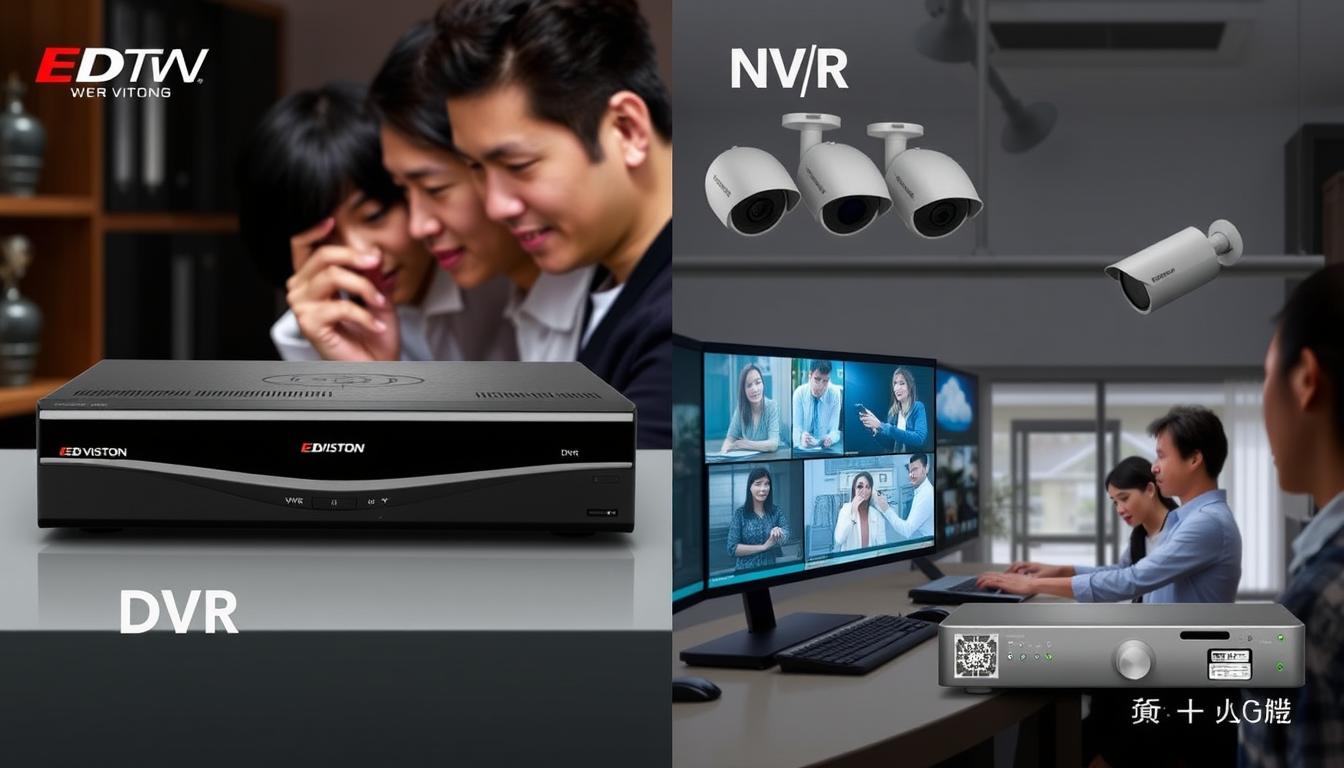
DVR vs. NVR: Key Differences Explained
Have you thought about the big differences between DVR and NVR systems for your video surveillance? Knowing the difference between DVR and NVR is key to meeting your security needs. Both record and store footage, but they do it in different ways. This article will explain the main points of each system, helping you choose the right one for you.
Key Takeaways
- DVR systems use analog cameras and coaxial cables.
- NVR systems use IP cameras with ethernet or WiFi, giving better video quality.
- NVR is great for growing your system because it’s easy to add cameras.
- Installing NVR is simpler with Power over Ethernet (PoE).
- NVR has advanced features like AI analytics, making it more versatile than DVR.
If you want to improve your CCTV or learn about new offers, call Wen Hong at +65 60135960 today.
Understanding DVR and NVR Technologies
DVR and NVR technologies are key parts of today’s security systems. A DVR (Digital Video Recorder) changes analog video into digital. It works with old CCTV cameras and uses coaxial cables. DVRs are easy to use and great for small places because they’re cheaper and simple to set up.
An NVR (Network Video Recorder) gets video from IP cameras through digital streams. NVRs can handle high video quality, like 5MP and 4K. They use Ethernet cables, making them flexible in where you can place them. Even though they cost more, their advanced features like remote access and cloud storage are worth it for many.
When choosing between DVR vs NVR, think about your budget, the size of your property, and your security needs. Each technology has its own benefits, helping you decide what’s best for your security system. For more information and the latest deals, call Wen Hong at +65 60135960 today.
What is the difference between DVR and NVR?
It’s important to know the differences between DVR and NVR systems if you’re setting up a surveillance system. The main differences come from how they process data and what hardware they work with. Let’s look at these differences to understand what makes them unique.
Data Processing Methods
DVRs handle video data after it’s captured from analog cameras. They convert the footage for storage at the recorder. NVRs, by contrast, process data at the camera before sending it. This makes NVR systems better at high resolutions, like 4K, while DVRs usually have lower resolutions.
Hardware Compatibility
Another big difference is in hardware compatibility. DVR systems use coaxial cables and work only with analog cameras. This makes them less flexible. NVR setups, on the other hand, use RJ45 ports for digital IP cameras. This allows for more advanced features and growth in NVR systems compared to DVRs.
For custom solutions or to explore the latest CCTV options, contact Wen Hong today at +65 60135960.
DVR System Components
The parts of a DVR system show what it can do and what it can’t. Knowing this is key for anyone looking at DVR vs NVR. This part explains the main parts of DVR systems and how they work.
Analog Cameras
DVR systems mostly use analog cameras. These cameras send lower-quality video than digital ones. They are cheaper but might not give the clear video needed for good surveillance.
As digital tech gets better, sticking with analog systems could make video quality worse. This makes the choice between DVR and NVR more important.
Coaxial Cables and Limitations
Coaxial cables connect cameras in DVR systems. But, they have limits like how far they can go without losing signal quality. They also can’t send audio, so you need extra wiring for sound.
This makes DVR setups less flexible than NVR systems. NVRs can handle audio better, showing a big plus of choosing NVR over DVR.
Audio Integration Issues
Adding audio to DVR systems is hard. Coaxial cables can’t send audio, so you need extra wiring. This makes DVR systems less flexible than NVRs.
NVRs make adding audio easy, showing why they’re better than DVRs for this feature.
Understanding DVR systems helps when choosing a security solution. Call Wen Hong today at +65 60135960 to check out the latest CCTV options and get advice for your needs.
NVR System Components
NVR systems are a big step forward in surveillance tech. They use advanced parts to boost security. Key parts include IP cameras and how they connect, making them better than DVR systems.
IP Cameras and Advantages
IP cameras in NVR systems offer better sound and video quality. They beat analog cameras in DVR systems in many ways. Businesses love them for their high-definition footage.
IP cameras also have cool features like remote control and license plate reading. These features make them very useful.
Ethernet Connectivity
NVR systems use Ethernet cables, which are thinner and more flexible than DVR cables. This makes them easier to install in tight spots. They work well over long distances without losing video quality.
They also use Power over Ethernet (PoE) for easier power setup. This makes installation simpler.
Scalability and Storage Capacity
NVR systems are great because they can grow with your needs. They support adding more IP cameras as needed. They also have big storage options with multiple hard drives.
They can even use cloud solutions for more storage. This is a big plus over traditional methods.

Want to learn more about these advanced systems? Check out CCTV solutions for your needs. Contact Wen Hong today at +65 to see the latest offers and tech in Singapore.
DVR vs NVR Comparison: Pros and Cons
Choosing between DVR and NVR systems involves several factors. These include cost, video quality, and how easy they are to maintain. Understanding these aspects helps users make the right choice for their needs.
Cost Analysis
DVR systems are often cheaper at first, which makes them appealing for those with limited budgets. NVR systems, though pricier, offer better features and higher image quality. This is true, even at higher resolutions.
Video and Audio Quality Comparison
NVR systems excel in video quality. They support resolutions like 5MP or 4K. DVR systems, on the other hand, have lower resolutions and frame rates. This might not meet the needs of those who want clear details.
Maintenance and Flexibility
Maintenance differs between DVR and NVR systems. DVRs need more manual work, like handling wired connections and limited camera numbers. NVRs, by contrast, offer more flexibility. They allow for cloud-based storage, which boosts their DVR vs NVR storage capacity. This makes NVRs easier to use, with features like automatic camera detection. This reduces setup time.
To learn more about CCTV solutions and find the best fit for you, contact Wen Hong at +65 60135960 today.
DVR vs NVR Resolution
The quality of surveillance systems is key to clear footage. NVR systems outshine DVRs in this area.
Resolution Capabilities of NVRs
NVRs offer resolutions from 2MP to 12MP or more. This means images are sharp and detailed. They work well with IP cameras, making video quality better for security.
Limitations of DVR Resolutions
DVRs have lower resolution due to analog cameras. This results in grainy images that miss important details. For top-notch footage, the NVR is the better choice.
| Feature | DVR Resolution | NVR Resolution |
|---|---|---|
| Resolution Range | Up to 1080p (2MP) | 2MP to 12MP+ |
| Image Clarity | Lower clarity; grainy images | High clarity; detailed images |
| Camera Type | Analog Cameras | IP Cameras |
| Transmission Method | Coaxial Cables | Ethernet or Wireless |
| Usage Recommendation | Basic and budget-friendly | Advanced security solutions |
For the best security, choose NVR systems for better image quality. For more on CCTV, call Wen Hong at +65 60135960.

DVR vs NVR Storage Capacity
When looking at video surveillance, storage is key. Knowing the difference between DVR and NVR storage helps choose the right one. DVRs have less storage on site, while NVRs offer cloud options for more video storage.
On-Premise vs Cloud Storage
DVRs use local storage, which can hold less footage. They rely on hard drives that fill up fast. On the other hand, NVRs offer cloud storage for more space. This means you can keep high-quality video for longer.
Storage Management Systems
Good storage management is important for keeping video useful. NVRs are better at this, with features for organizing and finding video. They let you choose what to save first, making them better for security.
| Feature | DVR Storage | NVR Storage |
|---|---|---|
| Type of Storage | On-Premise | Cloud-Based & On-Premise |
| Storage Capacity | Limited | Higher Capacity |
| Footage Retention | Restricted by HDD Size | Extended due to Cloud Options |
| Data Retrieval | Basic Management | Advanced Management Systems |
It’s important to know the differences in DVR and NVR storage. For more info on CCTV solutions, call Wen Hong at +65 60135960.
DVR NVR Compatibility Considerations
Switching from DVR to NVR systems requires understanding key compatibility issues. The main challenge is the wiring and setup differences. DVRs use coaxial cables, while NVRs need Ethernet connections. This means you can’t just use your old wiring with NVRs, often needing new equipment.
Wiring and Setup Issues
Coaxial cables in DVR setups can reach 500 meters but have power and audio limits. NVR systems, on the other hand, offer more flexibility with IP cameras and Ethernet. They can cover up to 1,000 feet without losing signal quality. Plus, they support Power over Ethernet (PoE) for easier installations.
Upgrading from DVR to NVR
Switching to an NVR system is not simple. You need to think about hardware compatibility, maintenance, and total cost. NVRs might cost more upfront but offer long-term benefits like advanced analytics and better storage. For help with the transition, a detailed DVR NVR installation guide is essential. For expert advice on CCTV solutions, contact Wen Hong at +65 60135960!
FAQ
What is the primary difference between DVR and NVR?
DVRs convert analog video to digital at the recorder. NVRs process video at the camera before sending it to the recorder.
Which system, DVR or NVR, offers better video quality?
NVRs have better video quality. They use digital IP cameras, which have higher resolutions than DVR’s analog cameras.
Can DVR and NVR systems be installed using the same wiring?
No, they can’t. DVRs use coaxial cables, while NVRs need Ethernet cables. This makes installation tricky.
What are the storage capacity differences between DVR and NVR systems?
DVRs have limited on-premise storage. NVRs can use cloud solutions for more storage.
Are there any maintenance challenges with DVR systems compared to NVR systems?
Yes, DVRs are harder to maintain. They have limited scalability and flexibility, making camera management tough.
How does the cost of DVR and NVR systems compare?
DVRs are cheaper upfront. NVRs cost more but offer advanced features and better performance.
What audio integration issues are associated with DVR systems?
DVRs struggle with audio. They need extra connections for audio, unlike NVRs which support audio from IP cameras.
What makes NVR systems more scalable than DVR systems?
NVRs can add more cameras and storage easily. They use cloud solutions for scalability without big changes.
What resolution capabilities do NVRs typically support?
NVRs support high resolutions. They can handle video from 2MP to 12MP or more, making footage clearer.
What should I consider when upgrading from a DVR to an NVR system?
Think about compatibility when upgrading. You’ll need to rewire and invest in new equipment. DVRs and NVRs use different systems.
Source Links
- https://solink.com/resources/dvr-vs-nvr-which-is-better/
- https://www.dtiq.com/resources/dvr-vs-nvr-whats-the-difference-and-what-do-i-need
- https://www.versitron.com/blogs/post/nvr-or-dvr-which-video-surveillance-system-is-right-for-you?srsltid=AfmBOoruCKv5jvd2MUKtNBn0sbytUlxyW1n2hxCaV-EZx1eaOx19IoPW
- https://www.versitron.com/blogs/post/nvr-or-dvr-which-video-surveillance-system-is-right-for-you?srsltid=AfmBOooDKatyFeCITdqsin_7llXnAEulCy8fioG-7ZfDy8G9–VF7ySX
- https://reolink.com/blog/dvr-vs-nvr-which-one-is-better/?srsltid=AfmBOopFgX6zMfwMlbfEp9DpARfBibjTjGBdtiOaobfqKrM4-JSUfFIH
- https://ajax.systems/blog/nvr-vs-dvr-key-differences/
- https://www.versitron.com/blogs/post/nvr-or-dvr-which-video-surveillance-system-is-right-for-you?srsltid=AfmBOop11huo7hZbZ8aTCYH3AQ487RXPlmumvbXO57bbLX7u8L3RKjuc
- https://www.nordencommunication.com/en/blog/difference-between-nvr-and-dvr-systems
- https://www.versitron.com/blogs/post/nvr-or-dvr-which-video-surveillance-system-is-right-for-you?srsltid=AfmBOooMKFVflJPXra5OsQ42tRDmxIHQ0dmLBVV3c_DZefUjDgdwBLZF
- https://www.davantis.com/en/blog/technology/nvr-dvr/
- https://www.securitycameraking.com/securityinfo/what-is-the-difference-between-a-dvr-and-nvr/?srsltid=AfmBOorI2qCHHZ7ZHSjVtwrbar28KDPg9aPbtNObJI-NQCj6jin3Bw2B
- https://www.pelco.com/blog/nvr-dvr-guide
- https://www.avigilon.com/blog/nvr-vs-dvr
- https://www.coram.ai/post/dvr-vs-nvr-key-difference
- https://blog.zositech.com/whats-the-difference-between-nvr-and-dvr/
- https://www.a1securitycameras.com/blog/which-is-better-nvr-or-dvr/?srsltid=AfmBOorv8bBLs6-6TQHogj2T8vRR8DCprWs92-fuVESyqQdC3DiWSD0L
- https://reolink.com/blog/dvr-vs-nvr-which-one-is-better/?srsltid=AfmBOoqGmZZqKTsokyw7hgTmi48AhxOsj78HCciB9Cfdr1v4BmWdxkMQ
- https://nellyssecurity.com/blogs/articles/whats-the-difference-between-an-nvr-and-a-dvr?srsltid=AfmBOoroiHqDQvOTmpuy-t0h4C-ZSNBQwyiY8o1ndNfuWoiiEWOmkgre
- https://blog.swann.com/dvr-vs-nvr-whats-the-difference/
- https://www.versitron.com/blogs/post/nvr-or-dvr-which-video-surveillance-system-is-right-for-you?srsltid=AfmBOoq5_Z_zAWnyqritvg2Ow6aMb7EZVr4hGh5osYfZhqtFX16UCFhV
- https://www.westerndigital.com/en-in/solutions/cctv/blog/dvr-vs-nvr-video-storage-device-technologies
- https://info.verkada.com/compare/dvr-vs-nvr/
- https://mammothsecurity.com/blog/nvr-vs-dvr


