

DVR vs NVR: Key Differences Explained
When it comes to security technology, a big question is: What is the difference between DVR and NVR? Both systems help monitor and record video. But they work in different ways, affecting your security plan. This article will explain their unique features and help you choose the right one for your needs.
It’s important to know the differences for security experts, businesses, and homeowners. DVR systems use analog cameras, which can have lower video quality and limit growth. On the other hand, NVR systems use IP cameras for better video and advanced features like AI analytics and better security. We’ll look at these differences to help you make the best choice for your surveillance needs.
If you’re looking for the latest in CCTV solutions and offers, contact Wen Hong today at +65 for more information!
Key Takeaways
- NVR systems offer superior video quality compared to DVR systems.
- DVR systems are typically more budget-friendly upfront, while NVRs provide long-term savings.
- NVR setups are more scalable, allowing for easier integration of additional cameras.
- Remote access capabilities are significantly better in NVR systems.
- Installation processes differ: NVRs benefit from streamlined wiring through Power over Ethernet technology.
Introduction to DVR and NVR Technologies
DVR and NVR technologies are key in video recording and surveillance systems. DVR, or Digital Video Recorder, works with analog cameras. It captures and stores video, making it a good choice for older equipment.
NVR, or Network Video Recorder, handles IP cameras. These cameras offer high-definition footage. NVR systems provide better image quality and features like remote access and cloud storage.
Choosing between DVR and NVR depends on several factors. These include image quality, ease of installation, and system capabilities. NVR systems are often preferred for their flexibility and high-quality video.
For custom surveillance solutions, contact Wen Hong at +65 60135960. Learn about the latest CCTV advancements.
What is the difference between DVR and NVR?
DVR and NVR systems have key differences that affect their use in surveillance. Knowing these differences helps pick the best technology for your needs. The main difference lies in how they handle data and work with camera technology.
Understanding Data Processing Methods
DVR systems process data at the recorder. They turn analog signals from cameras into digital formats. This limits DVR’s abilities, needing specific hard disk storage for footage.
NVR systems, on the other hand, process data at the camera level. They support higher resolutions like 5MP or 4K video. This makes NVR systems offer better image quality and more features.
Camera Types Used in Each System
DVR setups use analog cameras, which can be outdated. NVR systems, though, work with advanced IP cameras. These cameras can do smart video analytics and more.
NVRs use RJ45 ports for connections, making them handle these high-quality cameras well. This means better images and more features. While DVRs might be cheaper, NVRs have more advanced technology.
If you’re looking to improve your surveillance system or want the latest tech, contact Wen Hong today. Call +65 60135960 to learn more about the latest CCTV solutions and offers.
DVR System Components
DVR systems are popular for their cost and simplicity. Knowing what makes them work helps us see their strengths and weaknesses.
Analog Cameras and Their Role
Analog cameras are the core of DVR systems. They send analog signals to the DVR for processing. This makes DVRs cheaper than NVRs, but they don’t offer the best image quality.
Coaxial Cabling Considerations
Coaxial cables connect cameras to DVRs. They can stretch up to 500 meters but don’t carry power. This means you need extra cables for power, making setup more complex. The cables’ rigidity can also limit where you can place cameras.
Audio Limitations in DVR Systems
DVR systems struggle with audio. Analog cameras usually can’t record sound. This means you need extra steps for audio, adding to the setup’s complexity. DVRs are great for video but fall short when it comes to audio, unlike NVRs.
If you’re thinking about upgrading to a full CCTV system, knowing these details is key. Reach out to Wen Hong at +65 60135960 for the latest CCTV options and deals in Singapore.
NVR System Components
NVR systems use advanced IP camera technology, a big step up from old DVR setups. They have many features that make video surveillance better. IP cameras are key, as they process video before recording, ensuring top quality and adding features like audio.
IP Cameras Capabilities
IP cameras are a top pick for NVR systems. They offer better resolution than analog cameras, reaching up to 5MP and 4K. This means clearer images and more flexibility in security setups.
Advantages of Ethernet Cabling
Using Ethernet cabling in NVR systems has many perks, thanks to Power over Ethernet (PoE). It cuts down on the number of cables needed, making setup easier. With cables like Cat5e or Cat6, connecting cameras to the NVR is smooth and efficient.
Higher Storage Capacity of NVRs
NVR systems have a big advantage: they can store more data. They often connect to the cloud, allowing for more storage than DVRs. This means you can keep more video for longer, making NVRs great for detailed surveillance.
Want to know more about the latest CCTV solutions? Contact Wen Hong today at +65 60135960 for the best deals.
DVR vs NVR: Key Features Comparison
The comparison between DVR and NVR shows clear differences in image and audio quality, and installation. Each system has unique features that meet different user needs. This analysis explains why many prefer NVR over traditional DVR systems.
Image and Audio Quality Analysis
NVR systems offer better image quality, starting from 5MP and going up to 4K. This means clearer images and better monitoring. Unlike DVRs, which have lower quality and FPS, NVRs support native audio and video. This gives you complete coverage with both sound and sight.
Installation and Wiring Differences
NVR systems have easier installation thanks to Ethernet cables. This allows for more flexible camera placement. DVR systems use coaxial cables, making installation harder and limiting coverage to about 100 feet. NVRs also support wireless connectivity or single-cable setups, making installation simpler.
Knowing the differences in image, audio, and installation is key to choosing the right surveillance system. For personalized help and the latest CCTV solutions, contact Wen Hong at +65 60135960 today.
Scalability of DVR and NVR Systems
When looking at scalability in DVR and NVR systems, it’s key to see their differences. NVR systems are flexible and can add more cameras easily. They use the network you already have. This is great for growing your video system without big changes or new wiring.
DVR systems, on the other hand, have big limits when it comes to growing. They can’t always work with new cameras. You need new hardware and lots of wiring to add more. This makes it hard to keep up with changing security needs.
Choosing between DVR and NVR affects how your system can grow. DVRs are good for high-security places. But, scalability in NVR systems is better for those who want to add more tech later. NVRs are better for those who want high resolution and can change their system easily.
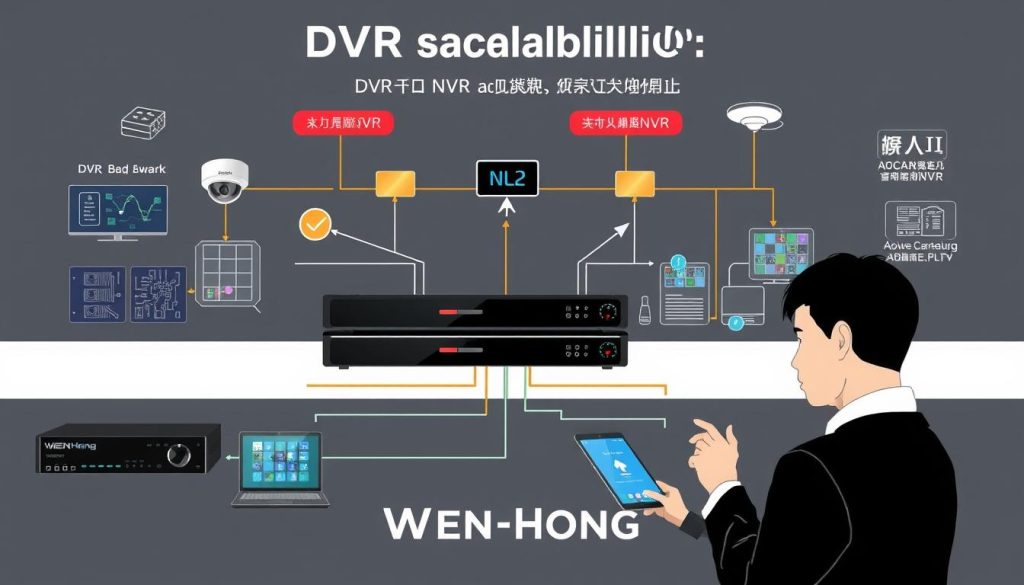
It’s important to understand scalability. As businesses grow, so do their security needs. NVR systems can connect cameras over longer distances with Ethernet cables. They also have advanced features like video analytics. These make security better.
If you need a custom solution, talking to an expert is a good idea. Contact Wen Hong at +65 60135960 for the latest in CCTV solutions. They can help make sure your security system fits now and in the future.
Cost Considerations for DVR and NVR
Choosing between DVR and NVR systems has financial implications. A detailed DVR NVR cost analysis shows upfront costs and long-term savings. DVRs are cheaper upfront because they use analog cameras and simpler tech. NVRs, with their advanced features and high-resolution imaging, cost more at first.
Upfront Costs Compared
DVR systems are often seen as the cheaper option at first. They use analog cameras and coaxial cables, which are cheaper. Here’s a quick comparison of the costs:
| System Type | Typical Cost Range | Camera Type | Installation Complexity |
|---|---|---|---|
| DVR | $100 – $500 | Analog | Simple |
| NVR | $300 – $1,500 | IP | Complex |
Long-term Value Analysis
DVRs might seem cheaper at first, but their long-term value is limited. They lack the scalability and advanced features of NVRs. NVRs support higher resolutions and use network-based storage, which is better for storing data over long distances.
NVRs also offer better imaging and audio recording, adding to their long-term value. Investing in NVR technology might be worth it, as it can be upgraded in the future. This makes it a smart choice for modern security needs.
If you’re looking for the best video surveillance solutions, contact Wen Hong today at +65 60135960. Discover the latest CCTV options and offers.
Security Features and Remote Access
When picking between DVR and NVR, knowing about security features is key. NVRs are great for their remote access, letting users watch live and recorded footage from anywhere. This makes monitoring your property easy and secure, no matter where you are.
NVR Remote Access Capabilities
NVRs are easy to use for remote access, perfect for big setups with many cameras. They use network cables and offer advanced security like alerts and encrypted data. This lets users quickly respond to any issues, making them ideal for those who value security.
DVR Limitations in Remote Access
DVRs, on the other hand, have big drawbacks for remote access. They don’t use modern encryption, making them open to hackers. You need to be there to see footage, which can slow down responses to problems. While DVRs are easy to set up and cheaper, their lack of remote access limits their usefulness.

If you’re looking to upgrade, the benefits of a remote access NVR are huge. Call Wen Hong at +65 60135960 to learn more about top-notch CCTV solutions and how they can meet your security needs.
Who Should Choose DVR and NVR?
Choosing between DVR and NVR systems depends on your needs and budget. Each system has its own strengths, making them better for certain situations. It’s important to know what you need before making a decision.
Best Use Cases for DVR Systems
DVR systems are great for those on a tight budget. They’re perfect for upgrading from old analog systems. They’re also good for small surveillance needs.
- Cost-effective solution for those already using analog cameras.
- Ideal for small-scale surveillance needs with limited camera counts.
- Simple installations, even with old cabling.
- Works well with older systems.
The NSDV-208QK is a great example. It’s an 8-channel DVR that supports many analog signals. It’s perfect for basic surveillance.
Ideal Situations for NVR Systems
NVR systems are best for advanced setups. They’re great for those who want to grow their system in the future.
- Recommended for new installations with high-resolution cameras.
- Best for advanced features like motion detection and AI.
- Scalable, so you can add more cameras without losing quality.
- Includes cloud storage for better security.
The NSN-608(4K)-8P is a top NVR choice. It uses IP cameras for better image quality. This system is more future-proof than DVRs.
Deciding between DVR and NVR depends on your needs. DVRs are good for cost-effective security. NVRs offer high quality and scalability.
For the latest in CCTV solutions and offers, contact Wen Hong today at +65 60135960. Learn how these systems can meet your surveillance needs.
Future of Video Surveillance Technology
The future of video surveillance technology is exciting. New emerging technologies are changing how we see security. Cloud-based and hybrid systems are making security better and easier to manage.
NVR systems are at the forefront. They can handle more frames per second and resolutions like 5MP or 4K. This makes video much clearer than old DVR systems. With more IP cameras, NVRs offer flexible solutions for different needs.
Network-based storage in NVRs means more space for videos. This is great for businesses that want better security. Moving to NVRs can make your security setup more reliable and flexible.
It’s worth looking into the new features of surveillance tech. For more info on CCTV and to find out about deals, contact Wen Hong today at +65.
| Technology Type | Image Quality | Cost | Storage Capacity | Installation Complexity |
|---|---|---|---|---|
| DVR | Lower resolution | Budget-friendly | Lower capacity | Less complex |
| NVR | 4K / higher resolution | More expensive | Higher capacity | More complex |
Video surveillance needs to keep getting better. To stay safe and up-to-date, investing in strong tech is key. Contact us today to see how the latest tech can boost your security.
Conclusion
In this summary of DVR vs NVR, we see each technology meets different needs. DVR systems are cost-effective and easy to set up. They work well with traditional analog cameras but have limitations in flexibility and video quality.
NVRs, on the other hand, are great for modern surveillance. They offer high-definition video quality and more flexibility in installation. This makes NVRs a top choice for businesses needing extensive monitoring.
Key takeaways show DVRs are good for those on a budget or with simple setups. But NVR systems are more future-proof with advanced features like cloud storage and AI. It’s important to consider your specific needs when choosing.
For advice on the best CCTV solution, contact Wen Hong at +65 60135960. Learn about the latest surveillance technology offers. Ensure your security system meets your needs now and in the future.
FAQ
What is the primary difference between DVR and NVR systems?
DVR systems process video data locally. They convert analog footage from cameras. NVR systems, on the other hand, process data at the camera itself. They use IP cameras for better digital footage.
Which camera type is compatible with DVR and NVR systems?
DVR systems work with analog cameras. NVR systems are for IP cameras. IP cameras offer advanced features like intelligent video analytics and high resolutions.
What are the installation challenges associated with DVR systems?
DVR systems use coaxial cables, which are hard to install. They also need separate connections for audio. This is because most analog cameras don’t have built-in audio.
How do NVR systems enhance video quality?
NVR systems use IP cameras that process video before sending it to the recorder. This improves video quality. It allows for higher resolutions and better image clarity, plus integrated audio recording.
Can NVR systems provide remote access to surveillance feeds?
Yes, NVR systems offer remote access. This lets users watch and manage their systems from anywhere with internet. DVR systems usually need you to be there to manage them.
What factors should be considered when choosing between DVR and NVR?
Consider your current setup, how much you need to grow, video quality, budget, and if you need remote access. These factors help decide between DVR and NVR.
Are there any long-term cost differences between DVR and NVR systems?
DVR systems are cheaper upfront but might cost more in the long run. They have fewer features and can’t grow as much. NVR systems are pricier at first but save money over time due to their efficiency and lower maintenance.
What trends are shaping the future of video surveillance technology?
New technologies like cloud solutions, hybrid systems, and better video analytics are changing surveillance. These advancements make NVR systems more important for future security needs.
Source Links
- https://solink.com/resources/dvr-vs-nvr-which-is-better/
- https://mammothsecurity.com/blog/nvr-vs-dvr
- https://www.nordencommunication.com/en/blog/difference-between-nvr-and-dvr-systems
- https://engalaxy.com/difference-between-nvr-and-dvr-in-cctv-systems/
- https://www.spot.ai/articles/nvr-vs-dvr
- https://info.verkada.com/compare/dvr-vs-nvr/
- https://www.versitron.com/blogs/post/nvr-or-dvr-which-video-surveillance-system-is-right-for-you?srsltid=AfmBOop11huo7hZbZ8aTCYH3AQ487RXPlmumvbXO57bbLX7u8L3RKjuc
- https://nellyssecurity.com/blogs/articles/whats-the-difference-between-an-nvr-and-a-dvr?srsltid=AfmBOoo_1zIFHCLMyaeMHFxZvuZGW2OHbcrPHG1PIZrydaFlii7ny_be
- https://blog.swann.com/dvr-vs-nvr-whats-the-difference/
- https://www.versitron.com/blogs/post/nvr-or-dvr-which-video-surveillance-system-is-right-for-you?srsltid=AfmBOoq8ijLvu4nfRUkjZJCRPm2CfdrO19UB-k0O-UEW-Grf4V1hgVeu
- https://www.pelco.com/blog/nvr-dvr-guide
- https://www.avigilon.com/blog/nvr-vs-dvr
- https://reolink.com/blog/dvr-vs-nvr-which-one-is-better/?srsltid=AfmBOooxSxSac1qn_5Q9ULSrS8w4PPvAiAW8lXKcCA733VZDsGBFkWaJ
- https://www.dtiq.com/resources/dvr-vs-nvr-whats-the-difference-and-what-do-i-need
- https://www.coram.ai/post/dvr-vs-nvr-key-difference
- https://www.videoexpertsgroup.com/nvr-vs-dvr/
- https://www.versitron.com/blogs/post/nvr-or-dvr-which-video-surveillance-system-is-right-for-you?srsltid=AfmBOoqQJWuKTIhBWbNNP4Izj4A9jLUrf1lFgNLPlY8x4l6TVtOKyrEt
- https://www.a1securitycameras.com/blog/which-is-better-nvr-or-dvr/?srsltid=AfmBOooGfZ_9eeMGYNRUTlG64ehKmiZp6uSC6skzwJjT_Twe0T7ZXG-k
- https://butterflymx.com/blog/nvr-vs-dvr/
- https://www.linkedsecurityny.com/blog/nvr-vs-dvr-security-systems/
- https://www.revlightsecurity.com/blog/understanding-the-differences-between-nvr-and-dvr-security-systems/
- https://www.firstsolution.com.sg/blog/dvr-vs-nvr-which-is-better-for-cctv-surveillance/
- https://reolink.com/blog/dvr-vs-nvr-which-one-is-better/?srsltid=AfmBOoq8goLc2CIQIrkS7v6rNItlf4AA3EAj-pTbXkkKJspE90yIddCb
- https://nellyssecurity.com/blogs/articles/whats-the-difference-between-an-nvr-and-a-dvr?srsltid=AfmBOorvV7zuceVuhE04SyKFFixrftZXzTJMm9R7CAjJHBJcmCOMIBJ5
- https://impulsecctv.com/blog/choosing-between-nvr-and-dvr-for-your-security-camera-system/
- https://www.versitron.com/blogs/post/nvr-or-dvr-which-video-surveillance-system-is-right-for-you?srsltid=AfmBOoo9eYh5td_4vvhzVBi7OM4hEb3PJmW7QZkEXqhcIEY52IFTijEq
- https://nellyssecurity.com/blogs/articles/whats-the-difference-between-an-nvr-and-a-dvr?srsltid=AfmBOorL1ZTbzfuqUJrvxpOmRKsGBJ9X6fKLv2as0S2TU7TKgCwHQ_IJ
- https://www.taylored.com/blog/whats-the-difference-between-nvr-and-dvr/
- https://reolink.com/blog/dvr-vs-nvr-which-one-is-better/?srsltid=AfmBOopfvqQ-lRDbqlKQYicDnFq9ZUOY9Q9txy53UffI0f1iP2Glyamr
- https://blog.zositech.com/whats-the-difference-between-nvr-and-dvr/


