
What is the average life of a camera?
For anyone who loves photography, knowing how long a camera lasts is important. It helps understand how durable and reliable a camera can be. On average, a camera can last from 5 to 10 years if taken care of well.
But, this time frame can change based on how much you use it, how you take care of it, and where you use it. Looking into what makes a camera last longer, like the brand and how it’s built, helps us get a better picture of its lifespan.
Key Takeaways
- The average camera life generally ranges from 5 to 10 years.
- Usage patterns significantly influence the camera lifespan.
- Environmental conditions play a key role in camera durability.
- Brand and model differences can affect longevity.
- Maintenance and care are key to making a camera last longer.
Understanding Camera Lifespan
Camera longevity depends on several lifespan factors. These include how often you use it, the environment it’s in, and its purpose. Cameras from well-known brands tend to last longer because of their quality.
How often you use your camera matters a lot. Cameras that get used a lot wear out faster than those used less. Also, the type of camera affects its lifespan. High-end cameras usually last longer than cheaper ones because they’re built better.
Environmental conditions also impact a camera’s lifespan. Things like humidity, heat, and dust can shorten its life. Knowing these factors helps photographers keep their cameras working longer.
What is the average life of a camera?
Knowing how long a camera lasts helps both buyers and users. The life of a camera depends on how it’s used. People think cameras last from three to ten years. Each situation affects how long a camera works well.
General Lifespan Estimates
Users share their experiences on camera life. Some say cameras last three years with daily use. Others claim they can last up to ten years with less use. This shows how care and use affect a camera’s life.
Variability Based on Usage
How much you use a camera greatly affects its life. Pro photographers need new gear often because of heavy use. Hobbyists, on the other hand, might keep their cameras for years. This shows different views on a camera’s best life span.
Factors Influencing Camera Longevity
Knowing what affects a camera’s life is key for photographers. The materials and design can make a big difference. Brands use different parts and shutter designs, which can impact how long a camera lasts.
People often find that certain brands last longer. This is because these brands focus on making their cameras durable.
Brand and Model Differences
Brands like Canon, Nikon, and Sony have many cameras with different durability levels. Professional models usually have better materials and tech, lasting longer. The design of the shutter is also important for a camera’s life.
Users of certain brands might see big differences in their cameras’ performance. This is true when they shoot in different places.
Environmental Conditions
The environment can really affect a camera’s life. Things like temperature, humidity, and exposure to elements matter a lot. Extreme weather can slow down electronics, and too much moisture can damage the inside.
Photographers should think about where they shoot. They should also use protection, like cases, to keep their cameras working well.
The Role of Shutter Count in Camera Life
The shutter count significance is key to understanding a camera’s lifespan. It shows how many photos a camera has taken. This number helps predict when a camera might need to be replaced.
Every camera model has its own durability rating based on shutter count. This rating changes a lot between different brands and types.
For both pros and hobbyists, knowing a camera’s shutter count is very helpful. It helps manage photography equipment usage better. It tells photographers when to get their camera serviced or when it’s time to get a new one.
Thanks to new tech, many cameras today can last longer. This means they can take more photos before needing a break.
Typical Shutter Counts for Different Brands
Knowing about camera brands’ shutter counts helps photographers make better choices. Different makers have set their own standards for how long shutters last. This leads to big differences in how long a shutter can last, depending on the brand.
Understanding these differences helps users pick the best camera for their needs.
Shutter Life of Canon vs. Nikon
Canon Nakamura cameras usually last about 100,000 shots. On the other hand, Nikon cameras can go up to 400,000 shots. This shows how different Canon and Nikon are in their design and what they expect from users.
Consistency in Pentax and Sony
Pentax and Sony cameras are known for being reliable and consistent. They often match Canon in shutter count. These brands offer solid performance, making them great for both hobbyists and pros.
This consistency helps users know what to expect and makes choosing a camera easier.
How to Find Your Camera’s Shutter Count
Finding your camera’s shutter count is key to knowing how much use it’s gotten. There are a few ways to read camera data to find this out. One easy method is through Exif data access.
When you take a photo, your camera adds metadata to the image file. This metadata, called Exif data, often includes the shutter count. To see this data, open your image file with software like Adobe Photoshop or free tools like ExifTool.
Look for the line that shows the shutter count. It’s usually under tags like “Shutter Count” or “Image Count”.
If you find Exif data hard to access, don’t worry. There are third-party services that can read shutter counts from your images. Sites like CameraShutterCount.com let you upload images to find out the shutter count easily. These tools make it simple to find out how many shots your camera has taken.
Using these methods helps photographers keep track of their camera’s performance. It also helps when deciding to buy a new camera. Knowing the shutter count gives you a clear picture of your camera’s life and how it’s been used.
Normal Usage: How Long Can a Camera Last?
The lifespan of a camera depends on how often and for what purpose it’s used. Professionals and hobbyists have different needs, leading to different camera lifespans. Knowing these differences helps set realistic expectations for how long a camera will last.
Average Lifespan for Professionals
Professionals use their cameras a lot, taking many photos every day. Their cameras may last 3 to 5 years or less. This is because they take thousands of photos, wearing out the camera faster.
Lifespan for Hobbyists
Hobbyists take fewer photos, so their cameras last longer. Often, their cameras can last 5 to 10 years or more. With fewer photos, the camera stays in better shape, lasting longer. This means hobbyists can enjoy their hobby without needing new cameras often.
Understanding Shutter Mechanisms
Shutter mechanisms are key in cameras, letting light reach the sensor. They control how long and when light hits the sensor, affecting photo quality. Knowing how they work helps us understand camera performance and how long they last.
Cameras use different shutter types, like focal-plane and leaf shutters. Focal-plane shutters are in digital and film cameras, using two curtains for fast shots. Leaf shutters are inside the lens, found in compact cameras and some medium-format systems. Each type has its own benefits for camera performance.
How often you use your camera affects its shutter mechanism. Heavy use, like in tough shooting conditions, can wear it down. Knowing this helps photographers take better care of their gear and make it last longer.
Signs of a Camera Wearing Out
Every photographer needs to know when their camera is wearing out. Spotting malfunction indicators early can prevent a lot of trouble. As a camera ages, it may start to show signs of wear, affecting your photos.
By catching these issues early, you can decide if fixing or replacing your camera is best.
Common Issues to Look Out For
- Inconsistent focusing: Trouble getting sharp focus could mean the autofocus is failing.
- Mechanical noise: Strange sounds when using the camera might show wear in parts.
- Failure to power on: A camera that won’t turn on often has big problems.
- Image quality deterioration: Poor image quality or color issues point to sensor or lens problems.
- Erratic shutter behavior: Shutter issues like lag or missed shots are signs of wear.
How to Extend Your Camera’s Life
Keeping your camera in top shape needs careful attention. Using good camera care tips ensures your gear works well for a long time. Cleaning regularly, storing wisely, and using protective gear can make your camera last longer.
Proper Care and Maintenance
Regular upkeep is key for a long-lasting camera. Here are some tips to keep your camera in great condition:
- Clean the lens often with a microfiber cloth to avoid scratches and dust.
- Use a blower to remove debris from the camera body and sensors.
- Check the battery contacts for a good connection and replace old batteries quickly.
- Keep your camera in a cool, dry spot when not using it to avoid moisture.
Protective Gear Recommendations
Protective accessories are vital to keep your camera safe from damage. Here are some good choices:
- A sturdy camera bag protects it during transport and storage.
- Get a quality camera strap to lower drop risks.
- Use lens caps and UV filters to protect your lenses from scratches and dirt.
- Choose weather-sealing gear for shooting in different weather.
When to Consider Upgrading Your Camera
Photography technology is changing fast. This makes photographers wonder when to get a new camera. Knowing when to buy a new camera can improve your photos and your experience.
When checking your camera, think about a few things:
- Image Quality: Are your photos not good enough in resolution or clarity?
- Functionality: Is your camera missing features you need?
- Compatibility: Does your camera work with the latest accessories and lenses?
- Repair Costs: Are fixing costs too high compared to keeping your camera?
Looking at these points helps you decide if you need a new camera. Keeping up with new tech can boost your creativity and work flow. Make a smart choice based on your photography needs and the signs that it’s time for a new camera.
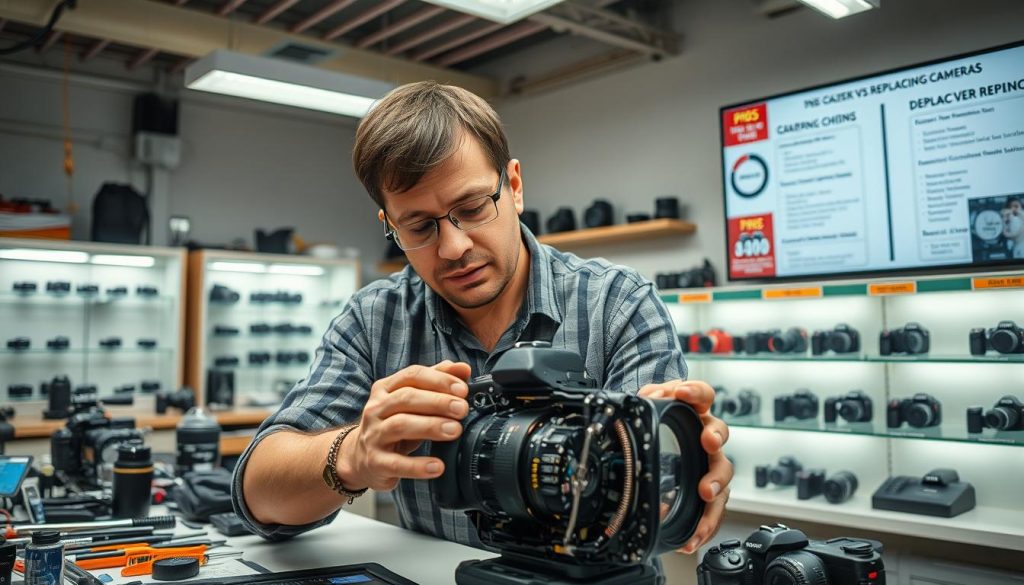
Repair vs. Replacement: Making the Right Choice
When your camera breaks, you face a tough decision. Should you fix it or get a new one? This choice affects your photography a lot. It’s about how urgent the problem is and how much it will cost to fix.
Many things matter beyond the cost of fixing it. Think about how old your camera is and how well it works. If your camera has been good for years and fixing it is cheap, it might be worth it. A good repair can make your camera work like new again.
But, camera tech changes fast. New cameras have cool features that can improve your photos. You might wonder if buying a new camera is better than fixing the old one. Sometimes, the latest tech is worth the extra money.
Knowing what you need and what you can afford helps make the right choice. Looking at the cost of fixing versus buying new helps you decide. This way, you can choose what’s best for your photography and budget.
The Importance of Keeping an Eye on Your Gear
For photographers, keeping their equipment in top shape is key. Regular checks help spot wear and tear early. Good camera care can make your gear last longer.
It’s important to watch how your camera works. Simple steps like cleaning the lens and checking batteries can help a lot. Taking care of your camera prevents big problems later.
Being active with your camera is essential for photographers. It ensures you capture many special moments. For tips on camera care, check out this resource on solar security cameras. Taking care of your camera now means better photos later.
FAQ
What is the average life of a camera?
Cameras usually last between 5 to 10 years. This depends on how often you use it, the type of camera, and the brand.
What factors influence a camera’s lifespan?
Several things affect a camera’s life. These include how often you use it, the brand, the environment, and the camera’s design.
How does usage differ for professionals versus hobbyists?
Pros use their cameras a lot, taking thousands of photos a year. Hobbyists use theirs less, so their gear lasts longer.
What is shutter count, and why is it important?
Shutter count is the total photos taken. It helps guess how long a camera will last, as different models last differently.
How do the shutter life expectations vary among brands?
Brands like Canon and Nikon have different shutter life expectations. Canon’s is around 100,000 shots, while Nikon’s can go up to 400,000. The brand’s reputation affects this.
How can I check my camera’s shutter count?
You can check your camera’s shutter count by looking at Exif data in your photos. Or use third-party tools that can read it directly.
What symptoms indicate a camera is wearing out?
Signs include inconsistent focusing, strange noises, and not turning on. These mean your camera might be nearing the end.
How can I extend the life of my camera?
To make your camera last longer, take care of it. Do regular checks, keep it clean, and use protective gear like cases and straps.
When should I consider upgrading my camera?
Upgrade if your camera no longer meets your needs or is worn out from heavy use.
Should I repair or replace my malfunctioning camera?
Think about the repair costs and your camera’s future life. Also, consider new camera tech that might make a new one better.
Why is it important to monitor the health of my camera?
Checking your camera regularly helps catch problems early. This way, you can fix them quickly and get the most from your camera.


