

What is Annual Maintenance Service? Benefits Explained
Keeping your business running smoothly requires proper care of your valuable assets. A yearly maintenance program provides this essential protection for your equipment and systems.
This proactive approach involves scheduled inspections, adjustments, and necessary repairs. It helps prevent unexpected equipment failures that can disrupt your operations.
For Singapore businesses, this regular upkeep is particularly valuable. The tropical climate and strict regulations make consistent maintenance even more important.
Companies across various industries benefit from this structured approach. Manufacturing plants, IT systems, and HVAC installations all require reliable performance year-round.
By investing in preventive care, you save money over time. You avoid expensive emergency repairs and reduce operational downtime significantly.
Key Takeaways
- Proactive maintenance prevents unexpected equipment breakdowns and operational disruptions
- Regular servicing extends the lifespan of your business assets and systems
- Scheduled maintenance reduces long-term costs by avoiding emergency repairs
- Proper upkeep ensures compliance with safety regulations and standards
- Maintenance contracts provide structured support from qualified service providers
- Consistent care improves overall equipment performance and efficiency
- Businesses in Singapore benefit from climate-appropriate maintenance strategies
What is Annual Maintenance Service?
Effective asset management transforms how companies handle their critical systems. A structured approach to upkeep keeps everything running at peak levels.
Defining Proactive Asset Management
Proactive care means staying ahead of potential equipment failures. Instead of waiting for something to break, you schedule regular check-ups.
This strategy involves systematic inspections and timely adjustments. Technicians identify small issues before they become big problems.
Many businesses use maintenance contracts to ensure consistent care. These agreements provide scheduled support from qualified professionals.
“Preventive care turns maintenance from an expense into an investment that pays dividends in reliability and performance.”
The Core Objective: Longevity and Performance
The primary goal is extending your assets‘ lifespan while maintaining optimal performance. Regular care reduces wear and tear significantly.
Well-maintained systems operate more efficiently. They consume less energy and require fewer emergency repairs.
Key benefits include:
- Extended equipment life through reduced stress on components
- Consistent operational efficiency and output quality
- Lower long-term costs by avoiding major breakdowns
- Reduced operational downtime through planned servicing
Companies in manufacturing and technology sectors particularly benefit from this approach. Their complex systems demand reliable performance to meet production targets.
Proper documentation of all maintenance tasks creates valuable records. These help in tracking asset history and planning future work.
This strategic approach to asset care ensures compliance with industry standards. It also enhances workplace safety while protecting your investment.
Understanding Annual Maintenance Contracts (AMC)
Structured agreements form the backbone of reliable equipment care. These contracts provide predictable support for your critical assets.
The Structure of a Standard AMC Agreement
A well-crafted contract clearly defines all covered services. It specifies visit frequency and exact maintenance tasks.
Key components typically include:
- Routine inspections to catch potential problems early
- Emergency repair support for unexpected equipment failures
- Parts replacement coverage to control repair costs
- Software updates for digital systems and automation
- Technical assistance from qualified service providers
The agreement outlines response times and coverage limits. It establishes escalation procedures for unresolved issues.
Customization options let businesses tailor contracts to their needs. This ensures optimal performance for specific operations.
Key Industries That Rely on AMCs
Information technology depends heavily on these agreements. Server and network maintenance prevents costly downtime.
Data security remains paramount in this sector. Regular software updates protect against emerging threats.
Manufacturing operations require consistent equipment performance. Production halts can devastate output and profits.
Quality output depends on properly calibrated machinery. Preventive care maintains manufacturing efficiency.
HVAC installations in commercial buildings need regular servicing. Proper upkeep ensures occupant comfort and energy efficiency.
Climate control systems work harder in Singapore’s tropical environment. This makes consistent maintenance particularly valuable.
“A good maintenance contract turns operational uncertainty into predictable performance and controlled costs.”
These legal frameworks define service levels and accountability. They provide clarity for both customers and providers.
Businesses gain expert support without managing individual repairs. This streamlined approach saves time and money.
The Critical Importance of Regular Maintenance
Systematic care protocols transform how organizations approach asset reliability and workplace safety. This disciplined method ensures continuous operations while protecting valuable investments.
Consistent upkeep prevents minor issues from becoming major operational crises. It creates a culture of responsibility throughout the organization.
Preventing Catastrophic Equipment Failures
Routine inspections catch small problems before they escalate. Technicians identify wear patterns and potential failure points during scheduled visits.
Early detection saves significant money on emergency repairs. It also minimizes operational downtime that affects productivity.
Common issues addressed include:
- Component wear and corrosion identification
- Mechanical misalignment corrections
- Performance degradation analysis
- Preventive parts replacement
This proactive approach extends equipment lifespan dramatically. Well-maintained systems operate more efficiently and reliably.
Upholding Safety and Compliance Standards
Proper upkeep ensures adherence to strict regulatory requirements. Singapore businesses must follow local safety and environmental regulations.
Regular maintenance tasks include safety device testing and verification. Equipment guarding and operational standards receive consistent attention.
“Compliance isn’t just about avoiding fines—it’s about protecting people and preserving operational integrity.”
Documented maintenance activities provide proof of regulatory compliance. This documentation helps during audits and inspections.
Key compliance benefits include:
- Reduced accident and injury risks
- Avoidance of legal penalties and fines
- Warranty protection through proper care
- Enhanced workplace safety culture
Employees work more confidently with well-maintained equipment. This boosts morale and productivity throughout the organization.
Overall, systematic upkeep creates a foundation of operational excellence. It combines technical care with regulatory compliance for comprehensive protection.
Top Benefits of an Annual Maintenance Service
Strategic upkeep delivers powerful advantages that go beyond basic repairs. Organizations gain multiple competitive edges through disciplined asset care programs.
These comprehensive programs transform how companies manage their operational infrastructure. They create predictable performance while controlling expenses.
Significant Long-Term Cost Savings
Preventive care dramatically reduces emergency repair expenses. Small issues get addressed before becoming major financial burdens.
Budgeting becomes more predictable with scheduled upkeep. Companies avoid unexpected cash outflows that disrupt financial planning.
Well-maintained systems operate more efficiently. They consume less energy and require fewer replacement parts over time.
“The most expensive maintenance is the repair you didn’t plan for—proactive care eliminates these budget surprises.”
Maximized Operational Efficiency and Uptime
Properly serviced equipment performs at peak levels consistently. This reliability ensures continuous production and service delivery.
Regular calibration maintains optimal system performance. Machines operate within specified tolerances for quality output.
Unplanned stoppages decrease significantly with scheduled upkeep. Production schedules remain intact without disruptive interruptions.
Extended Lifespan of Critical Assets
Preventive measures reduce wear and tear on valuable equipment. This care delays the need for costly replacements.
Routine lubrication, adjustments, and parts replacement keep systems functioning like new. Assets maintain their value and performance longer.
Proper documentation of all maintenance activities creates valuable asset histories. These records help in future planning and decision-making.
Businesses benefit from enhanced resale values for well-maintained equipment. This financial advantage adds to the overall return on investment.
Overall, structured upkeep transforms maintenance from reactive expense to strategic advantage. It delivers compounding returns through improved reliability and controlled costs.
Key Components of Annual Maintenance Activities
Effective upkeep programs rely on three core elements working together. These elements form a complete strategy for asset protection and performance optimization.
Each component addresses specific needs within your operational framework. Together, they create a robust defense against unexpected equipment failures.
Comprehensive Equipment Inspections
Thorough examinations form the foundation of any successful program. Technicians perform detailed checks on all critical components.
These inspections identify early signs of wear or potential damage. Visual checks combine with precise measurements against manufacturer specifications.
Common inspection activities include:
- Component wear pattern analysis and documentation
- Performance testing under normal operating conditions
- Safety feature verification and functionality testing
- Environmental factor assessment for tropical climate adaptation
Early detection prevents minor issues from becoming major operational problems. This proactive approach saves significant money over time.
System Servicing and Calibration
Regular cleaning and adjustment maintain optimal performance levels. These tasks ensure systems operate at peak efficiency.
Proper lubrication reduces friction and extends component life. Calibration maintains accuracy for precision-dependent equipment.
Manufacturing and IT systems particularly benefit from precise calibration. Even slight deviations can affect output quality and performance.
“Regular calibration turns good equipment into great performers—consistency becomes your competitive advantage.”
Software updates form part of modern system servicing. These updates enhance functionality and security for digital infrastructure.
Scheduled Repairs and Parts Replacement
Planned interventions address identified issues before they cause breakdowns. Timing these activities during low-production periods minimizes downtime.
Proactive parts replacement prevents unexpected failures. Worn components get swapped before they affect overall system performance.
Key benefits of scheduled interventions:
- Controlled costs through planned budgeting
- Reduced operational disruption through strategic timing
- Enhanced safety through preventive component replacement
- Extended asset life through systematic care
All activities receive detailed documentation in maintenance logs. These records support warranty claims and future planning decisions.
This structured approach transforms reactive repair into strategic asset management. Businesses gain predictability while maximizing their investment returns.
How Annual Maintenance Drives Equipment Reliability
Building operational confidence starts with predictable performance from your critical assets. This reliability transforms how companies approach production schedules and quality control.
Consistent upkeep creates a foundation of trust in your operational infrastructure. Teams can focus on output rather than worrying about unexpected interruptions.
The Shift from Reactive to Proactive Care
Traditional approaches often wait for equipment failures before taking action. This reactive model creates unpredictable downtime and emergency repair scenarios.
Proactive maintenance completely changes this dynamic. Scheduled inspections identify potential problems before they affect operations.
This strategic shift involves:
- Regular assessments based on manufacturer recommendations
- Preventive parts replacement before failure occurs
- Systematic lubrication and calibration procedures
- Documentation of all maintenance tasks for trend analysis
Manufacturing facilities particularly benefit from this approach. Their complex systems require consistent performance to maintain production targets.
“Proactive care transforms maintenance from crisis management to strategic advantage—reliability becomes your competitive edge.”
Ensuring Consistent Performance and Output
Well-maintained equipment delivers predictable results shift after shift. This consistency directly impacts product quality and customer satisfaction.
Regular servicing maintains optimal operating condition across all systems. Machines perform within specified tolerances without degradation.
Key reliability benefits include:
- Reduced product defects through consistent machine performance
- Stable output levels that support just-in-time manufacturing
- Lower waste generation from properly calibrated equipment
- Enhanced safety through reliable safety system operation
Singapore businesses gain additional advantages from this approach. The tropical climate demands extra attention to environmental factors affecting equipment.
Overall, structured upkeep programs build operational confidence. They transform maintenance from necessary expense to strategic advantage.
Achieving Cost Predictability with an AMC
Financial planning becomes remarkably straightforward with structured upkeep agreements. These contracts transform unpredictable expenses into manageable operational costs.
Companies gain clear visibility into their yearly upkeep budgets. This clarity supports better resource allocation and strategic decision-making.
Budgeting for Maintenance vs. Emergency Repairs
Planned upkeep involves predictable spending through fixed fees. You know exactly what your maintenance costs will be each year.
Emergency repairs create financial uncertainty. They often include premium charges for urgent service and expedited parts delivery.
Key differences include:
- Predictable monthly or quarterly payments versus unexpected large bills
- Scheduled work during normal business hours versus overtime charges
- Preventive servicing that avoids major breakdowns
- Volume discounts on parts and labor through contract agreements
This approach eliminates budget surprises that strain financial resources. Companies can focus on growth rather than crisis management.
The Financial Advantage of a Fixed Annual Fee
A set yearly fee spreads costs evenly across all months. This smoothing effect helps cash flow management tremendously.
Businesses avoid large, unplanned expenditures that disrupt operations. The fixed fee covers all scheduled services, parts, and labor.
“Predictable upkeep expenses transform maintenance from a financial variable into a strategic advantage.”
Additional financial benefits include:
- Better negotiation power with suppliers and investors
- Resources freed for innovation and expansion projects
- Reduced total costs through preventive care and volume discounts
- Enhanced equipment performance that improves operational efficiency
Singapore businesses particularly benefit from this financial predictability. The tropical climate demands consistent servicing that fits within planned budgets.
Overall, structured agreements turn upkeep from an unpredictable expense into a manageable investment. This approach supports sustainable growth and operational excellence.
Minimizing Operational Downtime through Scheduling
Strategic timing transforms upkeep from a disruptive event into a seamless operational process. Smart scheduling ensures your equipment receives necessary care without interrupting workflow.
https://www.youtube.com/watch?v=SyRNGWsBBqA
This approach maximizes productivity while maintaining asset reliability. It creates a balanced rhythm between operational demands and essential care.
Planning Maintenance Around Production Cycles
Aligning upkeep with operational patterns prevents workflow disruption. Businesses schedule essential work during natural production lulls.
Manufacturing facilities often plan their maintenance during weekends or holiday periods. This timing matches low demand cycles perfectly.
Key advantages include:
- Zero impact on regular production output
- Full team availability for complex repair tasks
- Reduced overtime costs through strategic timing
- Enhanced safety during comprehensive system inspections
This proactive planning keeps your operations flowing smoothly. It turns potential disruptions into planned productivity enhancements.
Reducing the Impact of Unplanned Stoppages
Predictive measures prevent unexpected equipment failures before they occur. Regular inspections identify issues that could cause future breakdowns.
Advanced preparation includes stocking critical spare parts before scheduled work. This readiness dramatically shortens repair times when interventions occur.
“Strategic scheduling transforms maintenance from operational interruption to competitive advantage—keeping your business running while others face unexpected stoppages.”
Benefits of this approach extend beyond immediate time savings:
- Consistent meeting of customer delivery deadlines
- Enhanced reputation for reliability and dependability
- Reduced stress on operational teams and management
- Improved workplace safety through properly functioning equipment
Singapore businesses particularly benefit from this structured approach. The tropical climate demands consistent attention to prevent weather-related failures.
Overall, intelligent scheduling creates a foundation of operational excellence. It maximizes equipment availability while supporting overall business efficiency.
Access to Expert Technical Support
Professional technical assistance transforms how organizations handle equipment upkeep. This specialized support elevates your maintenance program beyond basic repairs.
Skilled technicians bring deep knowledge of specific systems and components. They understand intricate operational details that general staff might miss.
Leveraging Vendor Expertise and Experience
Maintenance contracts connect you with specialists who know your equipment intimately. These professionals have trained on specific brands and models.
Their extensive experience helps identify potential issues before they become major problems. They’ve seen countless scenarios across various industries.
Key advantages include:
- Specialized knowledge not typically available in-house
- Familiarity with manufacturer specifications and requirements
- Insights into optimal maintenance practices and upgrade opportunities
- Understanding of industry best practices and emerging technologies
This expertise ensures your equipment receives the highest quality care. It maintains peak performance while extending asset lifespan.
Rapid Response for Troubleshooting and Repairs
Quick intervention minimizes operational disruptions when issues arise. Contracts specify guaranteed response times for emergency situations.
Technicians provide immediate remote assistance for many common problems. They can often resolve issues without visiting your facility.
“Fast expert response turns potential disasters into minor inconveniences—keeping your operations running smoothly.”
For complex situations requiring hands-on attention, skilled technicians arrive prepared. They bring proper tools and often carry common replacement parts.
This rapid support system offers multiple benefits:
- Minimized downtime through quick problem resolution
- Reduced burden on internal staff for maintenance tasks
- Access to professional guidance for complex operational challenges
- Peace of mind knowing expert help is always available
Many providers offer training sessions for your team during routine visits. This knowledge transfer helps staff handle minor issues between professional visits.
Overall, expert technical support enhances equipment reliability and operational efficiency. It’s a crucial component of any comprehensive maintenance program for Singapore businesses.
Ensuring Legal Compliance and Warranty Protection
Proper upkeep protocols serve dual purposes: meeting legal obligations and preserving warranty coverage. This strategic approach safeguards your business from financial penalties and unexpected repair expenses.
Singapore companies face specific regulatory demands for equipment care. Consistent documentation proves adherence to these requirements during inspections.
Meeting Singapore’s Regulatory Requirements
Local authorities enforce strict standards for business operations. The Ministry of Manpower and environmental agencies set clear guidelines.
Regular inspections ensure equipment meets safety specifications. Emissions testing and safety checks prevent regulatory violations.
Key compliance activities include:
- Workplace Safety and Health Act adherence through documented checks
- Environmental regulation compliance via emission control verification
- Regular safety device testing and certification renewal
- Comprehensive record-keeping for audit preparedness
Industries like healthcare and manufacturing face particularly stringent rules. Proper upkeep maintains operational permits and licensing validity.
“Compliance isn’t optional—it’s the foundation of sustainable business operations in regulated environments.”
Maintaining Manufacturer Warranty Validity
Equipment warranties require specific care protocols for continued coverage. Deviation from manufacturer guidelines can void protection.
Authorized parts and certified technicians preserve warranty terms. Scheduled servicing according to prescribed intervals is mandatory.
Documentation serves as proof of proper care. Maintenance records support warranty claims during equipment failures.
Benefits of warranty preservation include:
- Coverage for component replacements and major repairs
- Reduced out-of-pocket expenses for unexpected issues
- Access to manufacturer technical support and resources
- Extended protection through compliance with care requirements
Proper record-keeping also supports legal disputes if needed. Detailed logs demonstrate due diligence in equipment care.
This comprehensive approach protects your investments while ensuring regulatory adherence. It transforms upkeep from simple repairs to strategic risk management.
Creating an Effective Annual Maintenance Schedule
Strategic planning transforms upkeep from random activities into a coordinated program. A well-designed schedule ensures your assets receive proper care at optimal intervals.
This systematic approach maximizes resource utilization while preventing operational disruptions. It creates a rhythm that balances preventive care with production demands.
Assessing Equipment Criticality and Needs
Begin by identifying which assets demand priority attention. Critical equipment directly impacts production output and safety standards.
Evaluate potential failure consequences across multiple dimensions. Consider production loss, repair expenses, and safety risks for each piece of equipment.
This assessment determines appropriate maintenance frequency and resource allocation. High-priority assets receive more frequent attention and comprehensive care.
Key evaluation factors include:
- Impact on production continuity and customer delivery commitments
- Safety implications for operators and workplace environment
- Repair complexity and associated costs for different failure scenarios
- Replacement value and lead time for critical components
Incorporating Manufacturer Guidelines and Seasonal Factors
Manufacturer recommendations provide essential guidance for proper equipment care. These specifications ensure optimal performance while preserving warranty coverage.
Singapore’s tropical climate introduces unique seasonal considerations. High humidity and temperature variations affect equipment differently throughout the year.
“The most effective schedules blend manufacturer wisdom with local environmental intelligence—creating care plans that work in real-world conditions.”
Climate-specific adjustments might include:
- Enhanced corrosion protection during monsoon seasons
- HVAC system intensification before peak temperature periods
- Electrical system checks before high-humidity months
- Drainage and waterproofing verification before heavy rainfall
Balance preventive tasks with predictive approaches based on actual equipment condition. Usage data and monitoring results should influence scheduling decisions.
Spread maintenance activities evenly throughout the year to avoid resource overload. This distribution ensures continuous coverage without service gaps.
Historical records provide valuable insights for schedule optimization. Analyze past performance data to identify patterns and improvement opportunities.
Include time for staff training on new procedures and technologies. Enhanced skills improve overall maintenance capabilities and program effectiveness.
A well-structured schedule delivers multiple advantages:
- Maximized equipment reliability through consistent, appropriate care
- Optimized resource allocation based on actual operational needs
- Reduced emergency repairs through proactive intervention
- Enhanced compliance with regulatory and manufacturer requirements
This strategic approach transforms maintenance from reactive expense to value-creating activity. It supports sustainable operations while protecting your valuable business investments.
Annual Maintenance Service vs. One-Time Repairs
Strategic asset management decisions separate thriving operations from reactive ones. This choice between structured programs and emergency fixes impacts every aspect of business performance.
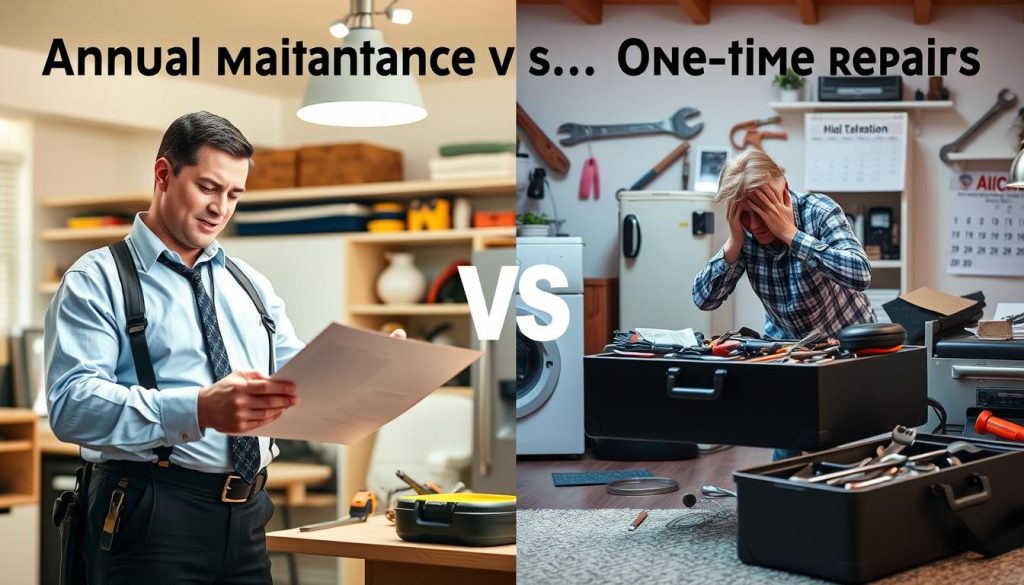
Structured programs provide ongoing protection through scheduled visits. Emergency approaches only address problems after they disrupt your operations.
A Comparative Analysis of Value and Outcome
Preventive care through contracts stops issues before they begin. Reactive repairs merely fix existing damage without preventing future problems.
Regular programs spread costs predictably across the budget. Emergency interventions create unpredictable financial spikes that strain resources.
“Investing in prevention costs less than repairing failure—both financially and operationally.”
Equipment reliability improves dramatically with consistent care. Temporary fixes often lead to repeated breakdowns and additional expenses.
Key differences emerge in these critical areas:
- Cost predictability versus unexpected emergency expenses
- Scheduled downtime versus unplanned operational stoppages
- Comprehensive system care versus isolated problem-solving
- Long-term asset protection versus short-term temporary solutions
Why AMCs are the Superior Choice for Businesses
Structured agreements transform equipment management from crisis response to strategic advantage. They provide framework for excellence rather than temporary solutions.
Singapore companies benefit particularly from this approach. The tropical climate demands consistent attention to prevent weather-related equipment failures.
Financial advantages include volume discounts on parts and labor. Emergency repairs often carry premium charges for urgency and after-hours service.
Operational benefits extend beyond immediate cost savings:
- Enhanced productivity through reliable equipment performance
- Reduced stress on management teams from unexpected breakdowns
- Improved safety through properly maintained systems and components
- Better resource allocation through predictable scheduling
Expert support becomes integrated into your operations with contracts. This professional guidance helps optimize equipment performance and lifespan.
Customized services address your specific operational needs. Generic repairs often miss underlying issues that affect overall system efficiency.
Manufacturing facilities gain particular advantages from structured programs. Their complex systems require consistent performance to maintain production targets and quality standards.
Overall, preventive approaches support sustainable business growth. They create foundations for operational excellence rather than temporary problem-solving.
Choosing the Right AMC Provider in Singapore
Selecting a reliable partner for your upkeep needs requires careful consideration. The right choice ensures your equipment receives expert care while supporting operational goals.
Singapore businesses face unique challenges that demand specialized attention. The tropical climate and strict regulations require providers with local expertise.
Evaluating Experience and Industry Specialization
Look for providers with proven track records in your specific sector. HVAC specialists differ significantly from IT infrastructure experts.
Manufacturing operations need technicians who understand production equipment. Office environments require different skills for climate control and network systems.
Key evaluation criteria include:
- Years of experience with similar equipment and operational environments
- Technical certifications relevant to your industry requirements
- Understanding of Singapore’s regulatory compliance demands
- Familiarity with tropical climate impacts on system performance
Request case studies from similar clients within your industry. These examples demonstrate practical problem-solving abilities.
Key Questions to Ask Potential Service Partners
Prepare specific inquiries that reveal their capabilities and approach. Response time guarantees indicate their commitment to minimizing downtime.
Essential questions should cover:
- Average emergency response time for critical system failures
- Availability of genuine replacement parts for quick repairs
- Technician training programs and certification requirements
- Customization options for unique operational needs
“The right questions reveal more than polished sales pitches—they uncover genuine capability and commitment.”
Discuss their communication protocols during service visits. Regular reporting keeps you informed about equipment condition and performance.
Inquire about their spare parts inventory and sourcing relationships. Quick access to components prevents extended operational disruptions.
Evaluate their willingness to provide references from current clients. Speaking with existing customers offers valuable insights into real-world performance.
Consider their approach to documentation and record-keeping. Proper records support warranty claims and compliance requirements.
Assess their flexibility in scheduling around your production cycles. Providers should accommodate your operational rhythms without compromising care.
The ideal partner combines technical expertise with responsive customer service. They become an extension of your team rather than just a vendor.
This careful selection process ensures long-term reliability and performance. It transforms upkeep from a necessary task into a strategic advantage.
Investing in Annual Maintenance for Sustainable Operations
Forward-thinking companies recognize that consistent upkeep creates lasting value. This approach transforms equipment care into a strategic advantage.
Well-maintained systems operate with greater efficiency and reliability. They consume less energy while delivering optimal performance.
Structured contracts support environmental responsibility through reduced waste. Preventive care extends asset lifespan significantly.
Singapore businesses benefit from this sustainable model. It ensures compliance with evolving regulations while protecting investments.
This proactive strategy builds resilient operations for future challenges. It represents smart business planning that pays long-term dividends.
Explore our comprehensive maintenance solutions to begin your sustainability journey today.
FAQ
What exactly does an annual maintenance service cover?
An annual maintenance service includes thorough inspections, system servicing, calibration, and scheduled repairs. It ensures assets operate efficiently and reliably throughout the year.
How does an annual maintenance contract help control costs?
These contracts offer a fixed annual fee, making budgeting easier. They help avoid expensive emergency repairs and reduce unexpected financial strain.
Why is regular upkeep critical for manufacturing equipment?
Regular upkeep prevents catastrophic breakdowns, maintains safety standards, and ensures consistent performance. It extends equipment lifespan and supports continuous production.
Can an AMC help with compliance and warranty requirements?
Yes, adhering to a scheduled plan helps meet regulatory standards and keeps manufacturer warranties valid. This is especially important in regulated industries.
What should I look for in a maintenance provider?
Choose a provider with strong experience, industry specialization, and a proven track record. Ensure they offer responsive support and use quality parts.
How does proactive care improve operational efficiency?
Proactive care minimizes unplanned downtime, optimizes performance, and enhances overall productivity. It keeps systems running smoothly with fewer interruptions.


