
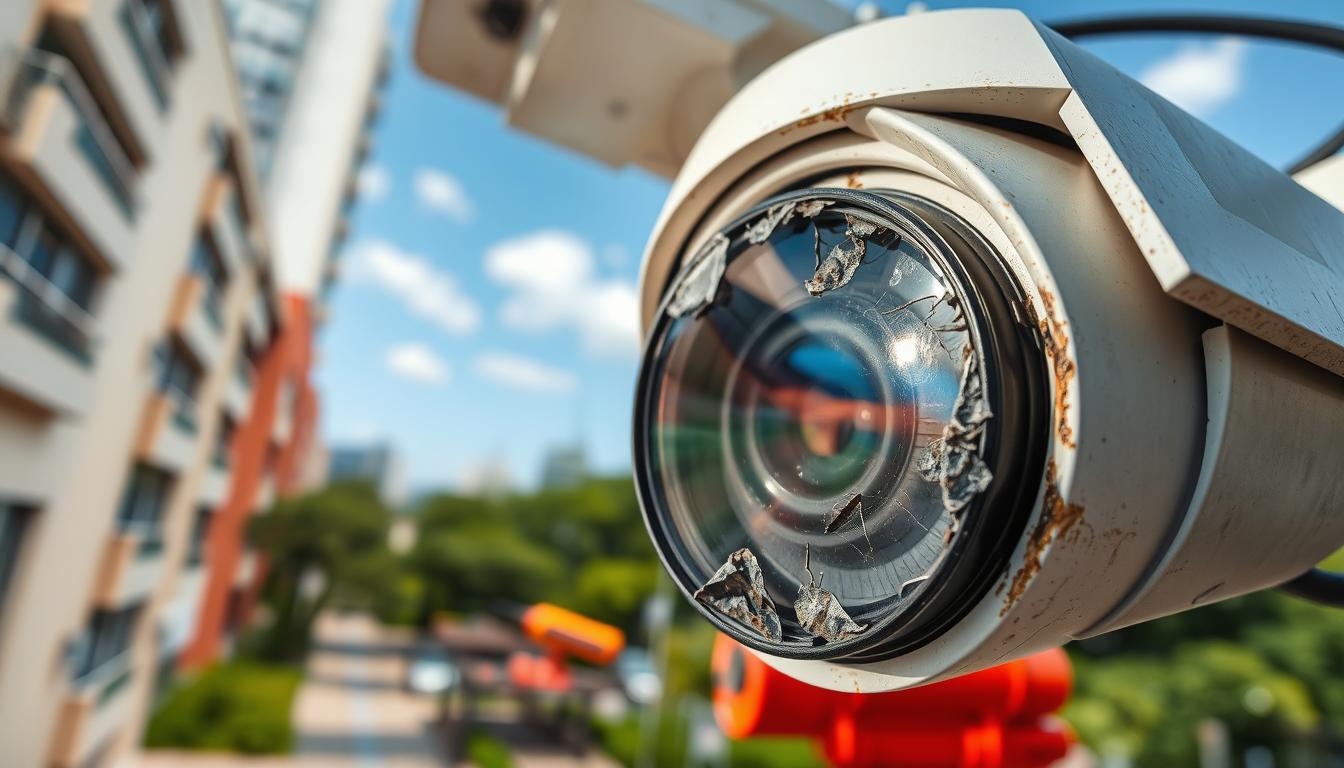
What can damage a CCTV camera? Prevention Guide
Your surveillance system forms a critical layer of protection for any property in Singapore. Understanding the various threats to this technology is essential for both residential and commercial security.
When monitoring equipment fails, it creates dangerous gaps in your safety net. Compromised footage and poor performance lead directly to financial losses and vulnerable premises.
This comprehensive guide explores the environmental, physical, and technical hazards facing modern surveillance setups. We examine everything from Singapore’s tropical weather to cyber vulnerabilities that could disrupt your operation.
Proactive knowledge represents your first and strongest defense. Identifying potential problems before they become serious issues saves time, money, and maintains peace of mind.
Key Takeaways
- Recognize that multiple environmental and technical factors threaten surveillance equipment integrity.
- Compromised systems result in security gaps and potential financial consequences.
- Regular maintenance schedules are crucial for long-term reliability and performance.
- Selecting appropriately rated hardware for your specific location prevents many common failures.
- A layered security strategy protects against both physical and digital threats to your cameras.
- Immediate attention to minor issues prevents them from escalating into major system problems.
- Professional installation and configuration form the foundation of durable surveillance solutions.
Introduction: Safeguarding Your Surveillance Investment
Modern security infrastructure increasingly relies on visual monitoring technology to safeguard assets and ensure safety. These electronic sentinels provide constant vigilance, protecting both property and people across Singapore.
The investment in a surveillance setup extends beyond mere financial cost. It represents a commitment to peace of mind and operational continuity for homes and businesses alike.
Protecting this investment requires understanding that monitoring equipment is not a “set and forget” solution. Like any sophisticated technology, these devices face continuous threats from multiple directions.
Four primary categories of risk threaten monitoring equipment integrity. Environmental forces, human interference, digital intrusion, and internal technical decay all pose significant challenges.
Regular maintenance forms the backbone of reliable operation. For instance, backup batteries in many units require replacement every one to three years to ensure uninterrupted performance during power outages.
Network configuration presents another common trouble area. Power over Ethernet (PoE) simplifies installation but can develop glitches that disrupt the entire setup.
A simple switch restart often resolves PoE issues, restoring connectivity quickly. Incorrect IP address assignments create similar headaches, causing live feeds to drop or become inaccessible.
These practical examples highlight why proactive stewardship matters. Transitioning from reactive fixes to preventive care saves both time and resources in the long term.
The following guide provides a comprehensive roadmap for this essential transition. It delivers the knowledge every monitoring system owner needs to maintain optimal security coverage.
Understanding potential vulnerabilities before they escalate into major failures is crucial. This proactive approach ensures your visual monitoring solution remains effective for years to come.
Understanding CCTV Camera Vulnerabilities
Visual security technology, while advanced, possesses specific vulnerabilities that require strategic management. These weak points exist in every surveillance setup, from residential monitoring to complex commercial security systems.
Recognizing these inherent limitations forms the foundation of effective protection. Proactive identification prevents minor issues from escalating into major system failures.
Critical Components at Risk: Lenses, Sensors, and Housings
The most delicate parts of any monitoring device face constant threats. Lenses represent the eye of your operation, capturing clear footage for analysis.
Scratches, fogging, and dirt accumulation degrade image quality significantly. Even minor obstructions can render critical details useless during review.
Image sensors inside the housing are equally sensitive to environmental stress. Prolonged exposure to intense heat or bright lights causes permanent degradation.
External housings serve as the first line of defense against physical elements. These protective shells withstand weather, debris, and minor impacts in outdoor installations.
Compromised seals allow moisture infiltration, leading to internal corrosion. Choosing housings with appropriate IP ratings for your specific environment is essential.
Environmental factors affect outdoor units dramatically in Singapore’s climate. Regular inspection of these three components prevents unexpected performance problems.
Why Installation Location is a Key Factor in Longevity
Surveillance equipment durability depends more on placement than on internal technology. Strategic positioning minimizes exposure to harmful elements and human interference.
High-risk locations include easily accessible public zones and areas with direct sun exposure. These spots experience higher vandalism rates and accelerated wear from weather.
Protected installations feature covered mounting points with limited public access. They benefit from natural shading and reduced physical contact risks.
Poor installation practices create immediate vulnerabilities from day one. Insecure mounting allows movement that disrupts camera alignment and focus.
Faulty cabling leads to intermittent signal loss and power fluctuations. These technical issues often mimic more serious equipment failures during troubleshooting.
Loose connections remain a leading cause of surveillance downtime across many installations. Professional experts recommend secure conduit routing and weatherproof junction boxes.
Keeping current with technology updates addresses emerging security threats. Modern firmware patches often resolve compatibility problems with newer network equipment.
This understanding of physical and operational weak points informs better decision-making. It creates a logical bridge between inherent vulnerabilities and specific external threats.
What Can Damage a CCTV Camera? A Comprehensive Threat Overview
A multitude of threats, both visible and unseen, actively work to compromise the integrity of your surveillance equipment. Recognizing these hazards is the first step toward building a resilient security system.
Failures rarely have a single cause. They often result from a combination of environmental stress, human error, and technical decay.
We categorize the primary risks into five distinct groups. Each poses a unique challenge to your system’s performance and longevity.
Environmental and Weather Hazards represent a constant battle in Singapore’s climate. Torrential rain, extreme humidity, and salty air relentlessly attack external housings and lenses.
This persistent assault leads to fogging, corrosion, and eventual water ingress. The consequence is distorted footage or complete unit failure during critical moments.
Physical Attacks and Vandalism are deliberate acts to disable your security. Spray paint, blunt force, and tampering aim to create blind spots.
Such interference results in immediate physical damage and costly replacements. It also creates dangerous security gaps that criminals exploit.
Cybersecurity Intrusions are invisible but equally destructive. Hackers target weak passwords and unsecured networks to gain access.
This digital threat can lead to data theft, ransomware attacks, or unauthorized live feed access. Your private footage becomes a liability instead of an asset.
Technical Failures and Power Issues often stem from internal component decay or external supply problems. Voltage fluctuations and surge events silently fry delicate circuitry.
Faulty cabling and poor connections cause intermittent signal loss. The outcome is unexpected system downtime and missed recordings.
Operational Errors and Configuration Mistakes are surprisingly common sources of trouble. Incorrect settings directly sabotage image quality and system function.
For example, relying on automatic white balance can produce wildly inaccurate, psychedelic colors in mixed lighting. Manual calibration is essential for color fidelity.
Similarly, improper video configuration or insufficient ambient light may force a unit into monochrome mode. You might see only black and white images when color detail is crucial.
Neglecting routine maintenance accelerates all these problems. Dust accumulation, outdated firmware, and failing storage drives are operational issues that slowly degrade performance.
Each threat category connects directly to a real-world consequence: lost evidence, financial loss, or compromised safety. The following sections will dissect each category in detail, providing the specific knowledge needed for effective prevention.
The Assault of the Elements: Environmental and Weather Damage
Environmental forces represent the most persistent threat to surveillance hardware longevity. These natural factors work constantly to degrade outdoor monitoring installations.
Singapore’s tropical climate accelerates wear on security equipment. Understanding these specific hazards helps you select proper protective measures.
Monsoon Mayhem: Rain, Humidity, and Flooding in Singapore
Heavy monsoon rains test every outdoor installation in Singapore. Torrential downpours can overwhelm inadequately sealed housings.
Persistent high humidity promotes internal condensation and corrosion. This moisture attacks circuit boards and electrical connections relentlessly.
Flooding presents the ultimate challenge for ground-level equipment. Submersion leads to immediate short circuits and permanent failure.
Ingress Protection (IP) ratings determine a camera’s weather resistance. The first digit represents solid particle protection.
The second digit indicates liquid ingress protection. For Singapore’s climate, IP66 serves as the absolute minimum standard.
This rating guarantees protection against powerful water jets. Flood-prone locations demand IP67 or IP68 rated equipment.
These higher ratings ensure temporary or prolonged immersion survival. Waterproof casings provide additional security layers.
Fiber optic cabling offers superior moisture resistance compared to copper. Professional installers use sealed conduits and junction boxes.
Regular inspection of housing seals prevents gradual degradation. For detailed guidance on water-related risks, consult our resource on water damage prevention for CCTV systems.
Extreme Heat and Cold: Thermal Stress on Components
Temperature fluctuations cause physical stress on monitoring equipment. Singapore experiences both intense heat and occasional cooler periods.
Thermal expansion and contraction affect different materials at varying rates. This differential movement strains solder joints and connections.
Prolonged heat exposure accelerates component aging dramatically. Image sensors may develop permanent hot pixels or reduced sensitivity.
Plastic housings can become brittle and crack over time. Internal fogging occurs when temperature differentials cause condensation.
Direct sunlight creates localized overheating spots on equipment surfaces. These hot zones degrade materials faster than shaded areas.
Thermal management solutions include sunshades and ventilated housings. Strategic placement in naturally shaded areas extends product lifespan.
Selecting equipment with wide operating temperature ranges is crucial. Quality manufacturers specify both storage and operational limits.
Lightning Strikes and Power Surges: The Silent Killers
Electrical disturbances represent invisible but devastating threats. Lightning-induced surges travel through power lines and data cables.
These voltage spikes can fry sensitive electronics instantly. The damage often occurs without visible external signs.
General power fluctuations also degrade equipment over time. Brownouts and voltage sags stress power supplies and components.
Surge protectors are essential first-line defenses. They divert excess voltage away from connected equipment.
Lightning arresters provide specialized protection for direct strikes. These devices should be installed at service entrances.
Uninterruptible Power Supplies (UPS) offer multiple benefits. They regulate incoming power and provide backup during outages.
Professional grounding establishes safe paths for electrical discharge. Proper earthing prevents potential differences that cause damage.
Network equipment requires protection just like the cameras themselves. PoE switches and network video recorders are equally vulnerable.
Implementing layered electrical protection safeguards your entire surveillance investment. This proactive approach prevents unexpected system failures.
Environmental challenges demand thoughtful equipment selection from the start. Choose hardware with appropriate IP and temperature ratings for your location.
Professional installation establishes proper waterproofing and electrical protection. These foundational decisions determine long-term reliability and performance.
Vandalism and Physical Attacks: Defending Against Human Threats
Deliberate sabotage of surveillance hardware poses unique challenges that require specialized defensive strategies. Unlike environmental wear, these intentional acts aim to create immediate security gaps.
Human threats to monitoring installations demand both physical hardening and psychological deterrence measures. Effective protection combines robust equipment with smart environmental design principles.
Malicious interference typically follows predictable patterns. Understanding these methods helps property owners implement targeted countermeasures.
Common Types of Camera Vandalism: Spraying, Smashing, and Tampering
Attackers employ several direct methods to disable visual monitoring equipment. Spray-painting lenses represents the most frequent act of interference.
This simple technique blocks the view completely with minimal effort. Opaque paint renders the unit useless until cleaned or replaced.
Physical impact with tools like hammers or bats causes immediate physical damage. Such strikes can shatter protective domes and bend mounting brackets.
Tampering targets vulnerable connection points and cables. Would-be intruders may cut wires or loosen mounting screws to disrupt operation.
More sophisticated attacks use lasers or powerful lights to blind image sensors temporarily. This approach seeks to create recording gaps without leaving evidence.
Covering devices with bags or cloth creates similar blind spots. Each method presents distinct problems for security personnel.
Strategic Placement to Deter and Delay Attackers
Crime Prevention Through Environmental Design (CPTED) principles offer powerful solutions. Proper positioning makes interference difficult and conspicuous.
Install monitoring units at significant height, ideally nine feet or higher. This placement keeps them beyond easy reach while maintaining clear sightlines.
Position cameras in well-lit area with minimal cover for approaching individuals. Bright illumination exposes suspicious behavior to other observers.
Ensure each unit has clear visibility of adjacent units. This creates overlapping coverage that deters tampering attempts.
Use conspicuous mounting that signals robust protection. Visible anti-vandal features discourage would-be attackers before they attempt interference.
Integrate surveillance alerts with your overall security system. Motion-activated notifications bring immediate attention to tampering events.
Investing in Vandal-Proof Housings and IK-Rated Equipment
The IK rating system measures impact resistance for electrical equipment. This international standard classifies protection against mechanical impacts.
IK10 represents the highest rating, withstand impacts equivalent to five joules of energy. This corresponds to protection against strikes from a one kilogram mass dropped from forty centimeters.
Vulnerable locations demand IK10-rated housings as standard protection. These enclosures survive direct blows from most handheld tools.
Metal cages provide additional shielding for particularly exposed installations. Polycarbonate domes offer excellent impact resistance while maintaining clear images.
Tamper-proof screws prevent easy disassembly by unauthorized persons. Anti-graffiti films create protective layers that simplify cleaning.
These practical solutions address common vandalism problems effectively. They maintain lenses clarity and equipment functionality under attack.
Modern cctv cameras often include built-in tamper detection features. These alert security teams when units are moved, covered, or sprayed.
Combining robust hardware with smart monitoring creates a layered defense. This approach balances passive protection with active response capabilities.
Property owners can implement these measures across their cctv systems. The result is enhanced resilience against deliberate damage attempts.
Singapore’s urban environment particularly benefits from these strategies. Dense settings require thoughtful placement of all cctv cameras.
Professional installers assess vulnerability points during initial planning. They recommend appropriate IK ratings for each monitoring position.
This proactive approach to surveillance protection saves replacement costs. It also maintains continuous coverage for your property’s safety.
Cybersecurity Threats: The Invisible Danger to Your Footage
Cyber threats present a silent but severe risk to the integrity of your recorded and live video feeds. Unlike physical attacks, these digital intrusions can compromise an entire surveillance system remotely without any visible signs.
This digital battlefield requires a different defense strategy. Protecting your footage means securing the network and technology that powers your cameras.
How Hackers Exploit Default Passwords and Weak Networks
Attackers often begin with the simplest entry point: unchanged factory settings. Default usernames and passwords for cameras and recorders are publicly available online.
Unsecured Wi-Fi networks provide another easy gateway. Hackers can intercept data or gain network access from outside your property.
Real-world incidents highlight this vulnerability. For example, a widespread issue with some Hikvision products in 2021 demonstrated how default credentials could lead to unauthorized access.
These breaches typically start with automated bots scanning the internet for devices with known default logins.
Other common methods include phishing emails targeting staff and Man-in-the-Middle attacks on data streams. Denial-of-Service (DoS) attacks can also overwhelm your system, causing it to fail.
Ransomware, Data Theft, and Unauthorized Access
The consequences of a breach are serious and multifaceted. Ransomware can encrypt your recorded footage, holding it hostage until a payment is made.
Theft of sensitive video data is another major risk. This stolen footage can be used for blackmail, corporate espionage, or planning further crimes.
Perhaps most dangerously, hackers can gain unauthorized live access to your feeds. This allows them to monitor your property in real-time or disable cameras during a physical intrusion.
These issues directly sabotage the primary purpose of your security investment. They create invisible blind spots and turn your surveillance tools against you.
Building a Digital Fortress: Network Segmentation and Encryption
Effective solutions start with isolating your surveillance equipment. Create a separate Virtual Local Area Network (VLAN) dedicated only to your cameras.
This network segmentation limits an attacker’s movement if one device is compromised. It protects your main business or home network from intrusion.
Enforce a strict password policy immediately after installation. Use long, complex passwords and enable two-factor authentication (2FA) wherever possible.
Implement end-to-end encryption for your video data streams. This ensures that intercepted footage remains unreadable to unauthorized parties.
Regular firmware updates are non-negotiable for maintaining security. Manufacturers release patches to fix vulnerabilities as they are discovered.
Consult your device manufacturer’s website for update schedules. Perform quarterly vulnerability scans on your network to identify potential weaknesses.
These steps transform cybersecurity from an IT concern into a fundamental pillar of modern physical security. A resilient digital foundation ensures your surveillance system performs its vital role without compromise.
Technical Failures and Operational Errors
Behind many apparent hardware failures lie simple configuration mistakes and power supply issues that could have been avoided. These internal technical problems quietly sabotage system reliability more often than external threats.
Operational oversights create frustrating gaps in coverage. They lead to missed recordings and degraded video quality when you need clear evidence most.
Understanding these preventable issues transforms troubleshooting from guesswork to systematic diagnosis. This knowledge helps you maintain continuous surveillance protection.
Power Supply Issues and Voltage Fluctuations
Electrical instability represents a fundamental threat to surveillance hardware. Beyond dramatic surges, subtler power problems cause intermittent failures.
Under-voltage conditions strain components constantly. They force cameras to operate outside designed parameters, shortening their lifespan.
Dirty power with electrical noise introduces interference into video signals. This results in distorted images and unexplained system reboots.
Failing Power over Ethernet injectors or switches create particularly confusing issues. Units may work intermittently or drop connection without warning.
Practical solutions start with regulated power supplies. These devices maintain consistent voltage levels despite input fluctuations.
Uninterruptible Power Supply units offer layered protection. They provide clean power conditioning and backup during outages to keep system running.
Point-of-use surge protectors defend individual devices. Whole-house protection handles larger electrical events before they reach sensitive equipment.
Signal Loss from Faulty Cabling and Connectors
The physical infrastructure of your surveillance setup demands regular attention. Compromised connections represent a leading cause of “no signal” errors.
Corrosion develops in outdoor connectors exposed to Singapore’s humidity. This gradual degradation increases electrical resistance until signals fail completely.
Rodent damage to cables creates unexpected breaks in transmission lines. These pests chew through insulation, causing short circuits and data loss.
Poor-quality coaxial or Ethernet cables cannot maintain signal integrity over distance. They introduce noise that corrupts video data before it reaches the recorder.
Loose terminations allow moisture ingress and intermittent contact. They produce flickering feeds that come and go unpredictably.
Regular cable inspection prevents these connectivity problems. Check for physical damage, corrosion, and secure connections during maintenance cycles.
Use weatherproof junction boxes for all outdoor terminations. Quality cabling with proper shielding maintains signal strength over longer runs.
Professional installation includes secure conduit routing. This protects cables from environmental stress and physical damage.
Configuration Mistakes: IP Conflicts and Incorrect Settings
Software configuration errors paralyze surveillance networks without physical symptoms. These digital problems require different troubleshooting approaches.
IP address conflicts occur when multiple devices share the same network identifier. This confusion prevents proper communication with your recording system.
Incorrect resolution or frame rate settings overload Network Video Recorders. They consume excessive storage and processing resources, degrading overall performance.
Improper motion detection zones generate false alarms or miss critical events. Overly sensitive settings flood your alerts with irrelevant notifications.
Systematic troubleshooting resolves these configuration issues. Follow these steps when cameras disappear from your network:
- Verify each device has a unique IP address within your subnet range
- Check Address Resolution Protocol tables for duplicate entries
- Reboot affected cameras and networking equipment in proper sequence
- Inspect cctv system configuration for conflicting parameters
Manual IP assignment prevents automatic address conflicts. Document all device addresses to maintain clear network mapping.
Optimize recording settings based on surveillance priorities. Balance image quality with storage capacity and processing capabilities.
Regular configuration audits catch errors before they cause failures. These preventive measures ensure your cctv setup operates reliably over time.
Most technical solutions involve quality installation from the start. Careful planning prevents the majority of these operational headaches.
Your cctv investment deserves this level of technical attention. Proper configuration and power management deliver consistent security monitoring.
The Nuisance of Obstructions and Debris
The creeping menace of environmental debris systematically degrades surveillance image quality over time. These slow-forming accumulations create blind spots that compromise security monitoring effectiveness.
Unlike sudden failures, these threats develop gradually. They often go unnoticed until critical footage becomes unusable.
Regular attention prevents minor issues from becoming major security gaps. This section explores the most common obstruction challenges and their practical solutions.
Spider Webs and Insect Nests: Blurring Your View
Monitoring equipment provides ideal shelter for small creatures. The warmth from electronic components attracts spiders and insects seeking protected nesting sites.
These pests weave webs directly across camera lenses and infrared LEDs. The result is persistent blurring that distorts captured images.
Night vision performance suffers particularly from this interference. Infrared light reflects off silk strands, creating glowing halos that obscure details.
Monthly visual inspections catch these problems early. Look for webbing around housing edges and across the lens surface.
Gentle removal preserves delicate optical components. Use soft brushes to dislodge webs without scratching protective domes.
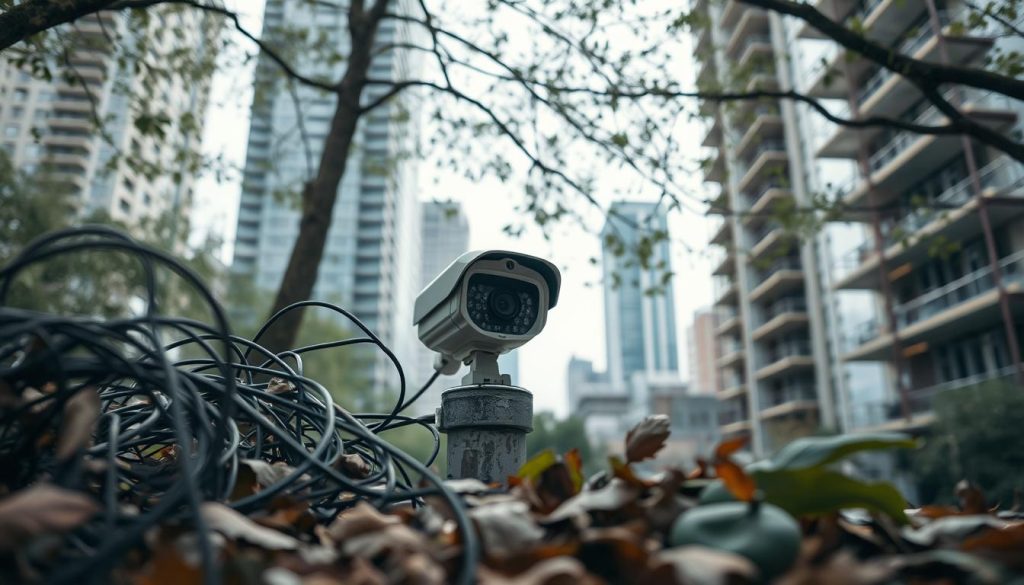
Dust, Salt, and Pollution: Gradual Lens Degradation
Urban environments expose surveillance equipment to abrasive contaminants. Singapore’s coastal location adds corrosive salt spray to this mix.
Dust particles scatter incoming light, reducing image contrast and clarity. A thin film develops on lenses, acting like a permanent filter.
Salt accumulation accelerates metal corrosion on housings and mounts. It can also etch glass surfaces over extended periods.
Pollution creates stubborn residues that require specific cleaning solutions. These films reduce light transmission significantly.
Proper cleaning techniques prevent damage during maintenance. Always use microfiber cloths with mild, lens-safe cleaners.
Avoid abrasive materials that scratch optical coatings. Compressed air removes loose debris before wet cleaning.
Foliage Overgrowth and Accidental Blockages
Environmental changes create dynamic obstruction challenges. Plant growth represents the most common natural blockage issue.
Tree branches and shrubs expand into camera sightlines seasonally. What was clear during installation becomes obscured months later.
Human activity introduces unexpected visual barriers. Parked vehicles, new signage, or construction materials can create temporary blind spots.
These accidental blockages often escape notice until an incident occurs. Regular perimeter checks identify developing problems.
Trim vegetation maintaining a clear buffer zone around each unit. Establish sightline protocols for any new construction or parking changes.
Effective maintenance combines regular attention with professional expertise. Establish a monthly cleaning schedule for accessible cameras.
Use appropriate tools for different contamination types. Soft brushes work for dust and webs, while specialized cleaners handle pollution films.
Schedule professional servicing one to two times annually. Technicians perform deep cleaning and inspect internal components.
Visual checks after major weather events catch new debris accumulation. This proactive approach maintains optimal surveillance performance.
Clear footage depends on this consistent maintenance commitment. Treat lens care as a critical operational requirement, not optional upkeep.
Image Quality Saboteurs: Glare, Reflection, and Lighting
Even perfectly functioning hardware can produce useless footage when confronted with challenging lighting conditions. Optical interference creates deceptive artifacts that corrupt visual evidence.
These electronic distortions require different solutions than physical maintenance. Understanding light behavior transforms frustrating problems into manageable adjustments.
Infrared Glare and Overexposure at Night
Night vision often suffers from self-inflicted blindness. Infrared illuminators bounce off nearby surfaces, creating blinding white spots.
Windows, signs, and glossy walls reflect this invisible light back to the lens. The result is overexposed areas that obscure critical details.
Repositioning monitoring units solves most infrared glare issues. Angle them away from reflective surfaces within their field of view.
Remove or cover shiny objects near the camera’s infrared LEDs. This simple step prevents light bounce-back at the source.
Flickering images indicate mismatched shutter speed and light frequency. Adjust these camera settings to match local electrical cycles.
Singapore uses 50Hz AC power, requiring specific synchronization. Proper configuration eliminates distracting strobe effects in footage.
Challenges with Direct Sunlight and Window Reflections
Natural light presents constant challenges for outdoor surveillance. Direct sun causes lens flare and washes out image details.
Overexposure turns important features into featureless white blobs. Strategic placement minimizes these frustrating issues.
Position units with the sun behind them when possible. Use built-in sunshades or install external hoods for additional protection.
Internal reflections from windows create ghostly duplicates of the scene. These overlapping images confuse motion detection algorithms.
Wide Dynamic Range settings handle extreme contrast situations. This technology balances bright and dark areas in the same frame.
Enable WDR when monitoring entrances with mixed lighting. It preserves details both inside and outside simultaneously.
Regular lens cleaning maintains optimal light transmission. Dust and pollution films scatter incoming light, reducing contrast.
Correcting White Balance for Accurate Color Representation
Color distortion makes identification difficult and footage unreliable. Auto White Balance often fails in mixed or artificial lighting.
Outdoor units pointed at expansive sky produce unnatural blue tints. Reposition cameras to minimize sky within the frame.
Follow this systematic approach to resolve persistent color issues:
- Disable Auto Tracking White or AWB in your camera settings
- Point the lens at a neutral white or gray reference card
- Activate manual white balance calibration in the system menu
- Test the adjustment under different lighting conditions
- Fine-tune hue and gamma settings if available
Manual calibration ensures consistent color across all recording periods. It prevents psychedelic shifts when lights change.
Test settings during both day and night operation cycles. Artificial lights at night require different white balance than daylight.
Proper configuration transforms confusing images into reliable evidence. These adjustments optimize system performance without hardware changes.
Blurry footage often stems from incorrect focus rather than dirty lenses. Access the focus adjustment in your unit’s configuration menu.
Overexposure and underexposure require exposure compensation adjustments. Modern surveillance equipment offers manual control over these parameters.
Add supplemental lighting in consistently dark areas. This improves image quality more effectively than extreme gain settings.
Regular testing verifies that your solutions remain effective over time. Lighting conditions change with seasons and renovations.
The Critical Role of Proactive Maintenance
Transforming threat awareness into durable protection requires a disciplined, routine maintenance strategy. This structured regimen is the cornerstone of your surveillance system’s longevity and reliability.
Consistent upkeep prevents minor issues from escalating into major failures. It ensures your investment delivers continuous security and peace of mind.
A proactive approach involves scheduled checks, electrical testing, and data verification. This blueprint turns theoretical knowledge into practical, actionable steps.
Establishing a Regular Cleaning and Inspection Schedule
Visual and physical inspections form the first line of defense. A regular schedule catches problems before they impact performance.
For outdoor units in Singapore’s climate, conduct monthly visual checks. Indoor cameras typically require a thorough inspection every six months.
Always perform an additional assessment after severe weather events. This post-storm check identifies any new vulnerabilities quickly.
Use a detailed checklist during each inspection:
- Lens cleanliness: Look for dust, salt film, spider webs, or water spots.
- Housing integrity: Check for cracks, compromised seals, or corrosion.
- Field-of-view obstructions: Trim foliage and remove any accidental blockages.
- Mounting stability: Ensure brackets are secure and alignment is correct.
- Conduit and wiring: Look for signs of pest damage or weathering.
Gentle cleaning with a microfiber cloth and lens-safe solution preserves optical clarity. Log all findings to track the health of each unit over time.
Testing Power Supplies and Backup Systems
Electrical stability is non-negotiable for reliable operation. Your maintenance plan must include verifying all power sources and backups.
Test Uninterruptible Power Supply (UPS) units at least twice a year. Simulate a power outage to confirm they switch over seamlessly and provide adequate runtime.
Check the health of Power over Ethernet switches and injectors. Look for warning lights and ensure they are delivering stable voltage to all connected cameras.
For wireless or battery-backed units, adhere to the manufacturer’s replacement guideline. Backup batteries typically need replacement every one to three years.
Failing to refresh these components risks total system failure during a blackout. A simple voltage meter can verify output from transformers and adapters.
This electrical diligence prevents one of the most common causes of surveillance downtime.
Verifying Recording Integrity and Storage Health
Your surveillance is only as good as the recorded evidence. Regularly confirm that your data capture and storage systems are functioning perfectly.
First, verify that all cameras are recording according to their schedule. Check live feeds and review recent playback to ensure continuous video capture.
Next, inspect the health of your primary storage. For Network Video Recorders (NVRs) and Digital Video Recorders (DVRs), check the hard drives for errors or warnings.
Most systems have a built-in health status menu. Replace drives that show signs of degradation to prevent catastrophic data loss.
If you use cloud storage, perform periodic test uploads. Confirm that footage is being transmitted and is accessible from your remote portal.
Finally, ensure any local backup drives or Network Attached Storage (NAS) devices are operational. Your data must exist in more than one location to be truly secure.
Firmware updates are a critical part of this digital maintenance. Check for updates monthly or quarterly to patch security vulnerabilities and improve performance.
Log every maintenance activity—cleaning dates, battery changes, drive tests. This history helps predict component failures before they occur.
Implementing this turn-key maintenance blueprint transforms reactive fixes into proactive care. It is the definitive solution for ensuring long-term system performance and reliability.
Prevention in Practice: Building a Resilient CCTV System
Building a surveillance setup that withstands Singapore’s diverse threats requires intentional design from the ground up. This practical approach transforms awareness into durable protection for your property.
Resilient security systems emerge from matching specifications to environmental demands. Every component selection and installation decision contributes to long-term reliability.
This section provides a concrete action plan for new installations or retrofits. Follow these guidelines to create monitoring solutions that perform consistently.
Selecting the Right Camera: IP Ratings, IK Ratings, and Build Quality
Your equipment choices form the foundation of any durable surveillance system. Match camera specifications directly to the threats identified at each installation site.
Start with Ingress Protection ratings for weather resistance. Singapore’s climate demands IP66 as a minimum for outdoor units.
Flood-prone areas need IP67 or IP68 rated equipment. These ratings guarantee protection during heavy monsoon rains.
Impact resistance matters just as much for physical security. The IK rating system measures protection against mechanical impacts.
Choose cameras with IK10 rating for maximum vandal resistance. This highest rating withstands significant force from tools or strikes.
Build quality extends beyond these certifications. Look for robust housings with corrosion-resistant materials.
Specialized cameras address specific coverage challenges effectively. Fisheye models provide 360-degree views that eliminate blind spots.
PTZ units cover large areas with pan, tilt, and zoom capabilities. They offer flexible monitoring for expansive properties.
Low-light performance depends on sensor technology. Larger image sensors capture more light for clearer night footage.
Design your overall system with redundancy in mind. Include extra cameras at critical locations to maintain coverage.
Professional Installation: Conduits, Weatherproofing, and Secure Mounting
Expert installation transforms quality equipment into reliable security solutions. Proper techniques address vulnerabilities at their source.
Cable protection begins with sealed conduits for all wiring runs. These protective channels shield cables from environmental stress.
Use waterproof junction boxes for all outdoor connections. These prevent moisture ingress at vulnerable termination points.
Secure mounting requires robust brackets and proper fasteners. Tamper-resistant Torx screws deter unauthorized removal attempts.
Bury wiring at appropriate depths for ground-level installations. This protects cables from accidental damage and weather exposure.
Strategic placement considers both visibility and protection. Position units high enough to deter tampering while maintaining clear sightlines.
Professional experts like ED Viston or Wen Hong in Singapore provide tailored solutions. Their local experience addresses region-specific challenges effectively.
These installation best practices prevent common problems before they occur. They ensure your technology performs as designed for years.
Implementing Surge Protection and Uninterruptible Power Supplies (UPS)
Electrical protection represents a critical layer in resilient system design. A layered approach safeguards your entire surveillance investment.
Start with whole-house surge suppressors at the main electrical panel. These devices handle large voltage spikes from external sources.
Add point-of-use protectors for individual camera lines. This secondary defense catches smaller surges that bypass primary protection.
Uninterruptible Power Supply units ensure continuous operation during outages. They provide clean power conditioning and temporary backup.
Size your UPS to support the central recorder and essential cameras. This maintains recording during short power interruptions.
Regular testing verifies all protection components remain functional. Check surge protectors and UPS batteries according to manufacturer guidelines.
Network equipment requires similar electrical safeguards. Protect PoE switches and routers with appropriate surge suppression.
Proper grounding establishes safe paths for electrical discharge. This prevents potential differences that can damage sensitive electronics.
These power solutions work together to create a stable operating environment. They prevent one of the most common causes of system failure.
Consult with security experts to design comprehensive protection for your specific needs. Their knowledge ensures all components work harmoniously.
Building resilient surveillance requires this holistic approach to planning and implementation. Each decision contributes to long-term performance and peace of mind.
Ensuring Long-Term Performance and Peace of Mind
Peace of mind in security comes from knowing your system will perform when needed most, through all conditions. This reliability stems from informed equipment choices and consistent care.
Different monitoring units have varying lifespans. Fixed-lens models typically last 5-10 years, while PTZ cameras offer 3-7 years of service. Professional installation and quality brands extend these timelines significantly.
View your surveillance setup as a dynamic asset requiring ongoing management. Regular updates and proactive maintenance prevent most common issues. They keep your entire operation running smoothly.
Stay informed about new threats and technological advancements. For a comprehensive review of your current setup’s vulnerabilities, consult with security experts who specialize in risk. This forward-looking approach ensures lasting protection.
FAQ
How does Singapore’s weather specifically threaten my security cameras?
The local climate poses unique risks. High humidity can cause condensation inside housings, leading to foggy lenses and internal corrosion. Frequent, heavy rain tests the waterproof seals of your equipment. Constant exposure to salty, coastal air accelerates wear on metal parts and can cloud lenses over time. Choosing cameras with a high IP rating, like IP66 or IP67, is essential for reliable performance here.
Can a power surge really destroy my entire surveillance system?
A> Absolutely. Voltage spikes from lightning or grid fluctuations are a leading cause of failure. They can fry sensitive electronics in the cameras, the Network Video Recorder (NVR), and even the network switch. Installing a dedicated surge protector for your CCTV system and using an Uninterruptible Power Supply (UPS) are critical, cost-effective defenses. These devices absorb excess voltage and provide backup power during outages.
What makes a camera truly "vandal-proof"?
Look for two key specifications. First, an IK rating—this measures resistance to physical impacts. An IK10 rating means the housing can withstand a 20-joule impact, equivalent to a 5kg mass dropped from 40cm. Second, a durable, tamper-resistant design with a protective dome, reinforced glass, and securely recessed screws. Brands like Axis, Hikvision, and Dahua offer robust models built for high-risk areas.
Are wireless security systems more vulnerable to hacking?
They can be if not configured properly. The wireless signal itself can be intercepted if weak encryption is used. The greater risk, however, is often the network they connect to. Using default usernames and passwords, having an unsecured Wi-Fi router, or failing to update firmware creates openings for cyberattacks. Always change default credentials, use strong WPA2/WPA3 encryption, and keep all device software up to date, regardless of connection type.
How often should I perform maintenance on my CCTV setup?
A quarterly check is a good standard. This includes physically cleaning lenses and housings to remove dust, spider webs, and salt buildup. Inspect all cables and connectors for wear or damage. Log into the system to verify recording is active, check storage capacity, and test any motion detection or alert settings. After severe storms, a quick visual inspection is also wise to ensure no water ingress or physical damage occurred.


