

What are the types of maintenance of CCTV?
CCTV maintenance is key to keeping your surveillance systems running well. In Singapore’s climate, regular checks can prevent breakdowns and make your cameras last longer. Knowing about preventive, corrective, and predictive maintenance helps businesses protect their investments.
By focusing on security camera care, companies can boost safety and keep their security strong.
Key Takeaways
- CCTV maintenance is vital for your surveillance system’s performance.
- Regular upkeep can make your security cameras last longer.
- Understanding different maintenance types helps in planning effective strategies.
- Preventive measures can greatly reduce equipment failures.
- Consistent care boosts overall safety and security posture.
The Importance of Regular CCTV Maintenance
Regular CCTV maintenance is key to keeping surveillance systems working well. A consistent maintenance plan helps equipment last longer and work better. It also lowers the chance of system failures, keeping your security strong.
Boosting Equipment Lifespan
Regular checks and care are essential for security cameras. Early detection of problems means quick fixes. This saves money and keeps your system reliable.
Preventing Security Breaches
Regular maintenance helps avoid security issues. It catches problems before they get worse. This keeps your place safe and secure.
Maintaining Legal Standards
Following maintenance rules keeps you legal with surveillance systems. It makes sure video is good for court, protecting your business. Proper care is vital for your safety and reputation.
What are the types of maintenance of CCTV?
Keeping a CCTV system in top shape is key for good security. There are three main types of CCTV maintenance: preventive, corrective, and predictive. Each one has its own role in keeping surveillance systems running well.
Overview of Maintenance Types
Preventive maintenance involves regular checks and cleanings. It’s all about catching problems early to avoid big issues later. By testing equipment often, you make sure everything is working right, boosting security.
Corrective maintenance is for when you find a problem. It fixes or replaces broken parts to get the system back to normal fast. This type of maintenance is all about fixing issues as they happen.
Predictive maintenance uses data to guess when something might break. It looks at trends to know when maintenance is needed, cutting down on unexpected stops. This way, you manage resources better and keep your CCTV system running smoothly.
Preventative Maintenance
Preventive maintenance is key to keeping CCTV systems running well. It involves regular checks and cleaning. These steps help keep the system working right and prevent problems.
Regular System Checks
Regular checks help spot issues early. Important parts of these checks are:
- Inspecting cameras for proper functionality
- Checking image quality to ensure clear footage
- Verifying infrared (IR) capabilities for night vision
Keeping up with these inspections makes the system more reliable. This leads to better surveillance without interruptions.
Scheduled Cleaning Tasks
Camera cleaning is a big part of preventive maintenance. A cleaning schedule includes:
- Wiping camera lenses to remove dust and debris
- Checking seals to prevent moisture infiltration
- Maintaining environmental enclosures to enhance durability
Regular cleaning stops image distortion and keeps cameras working well. Together, checks and cleaning make CCTV systems last longer.
Corrective Maintenance
Corrective maintenance is key in managing CCTV systems. It kicks in when problems show up. The goal is to fix issues fast and keep security strong. Finding and fixing faults quickly is a big part of this.
Identifying Faults Post-Issue
When a problem happens, finding the fault fast is critical. Technicians check cameras and cables first. They also look at system logs for errors.
Spotting the problem right away helps keep monitoring going without a hitch.
Repairing or Replacing Components
After finding the fault, fixing or replacing parts is next. This keeps the surveillance system running well. Quick action and regular checks are important for good maintenance.
Working with experts makes this process smoother and saves money in the long run.
Predictive Maintenance
Predictive maintenance is key in today’s fast world. It uses data from CCTV to predict failures and fix them early. This keeps systems running smoothly without surprises.
Utilizing Data Analytics
Data analytics in CCTV is essential for predictive maintenance. It collects data from sensors and cameras. This helps spot trends and plan maintenance.
Using these insights, businesses can run more smoothly. It’s a big win for them.
Minimizing Downtime
Predictive maintenance is great at cutting downtime. System failures cost a lot, in repairs and lost work. With quick maintenance, systems stay up and running.
Starting a predictive maintenance plan can change how you handle CCTV systems. For more on maintenance, check out CCTV maintenance services. They offer detailed advice on keeping your systems in top shape.
CCTV Maintenance Checklist: Essential Components
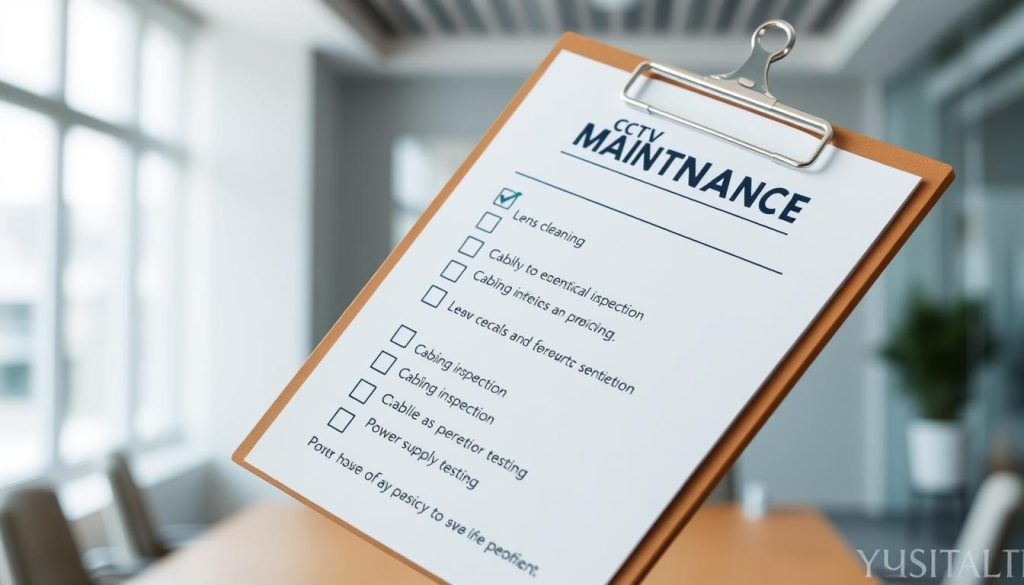
A detailed CCTV maintenance checklist is key for keeping security systems running smoothly. It helps ensure everything works well and avoids problems. Regular checks in important areas make the system more effective.
Camera Functionality Checks
It’s important to check cameras often to make sure the video is clear. Look at the camera’s view, focus, and lighting. Keeping track of these checks helps spot problems early.
Cable and Wiring Inspection
Checking wiring is vital for keeping the system working right. Damage to cables can cause big problems. Regular inspections for damage help avoid security issues. Keeping a record of these checks helps fix problems fast.
Firmware and Software Updates
Updating software regularly is important for security and performance. It keeps the system safe and improves how it works. Make sure to include this in your maintenance plan.
Common Issues Faced During CCTV Maintenance
CCTV systems are key in security management. But, operators face common problems that slow things down. Knowing about power, storage, and network issues helps with better upkeep.
Power Supply Failures
Power supply failures are a big problem. They can happen due to loose or bad connections. This causes downtime and weakens surveillance. Checking power connections regularly helps keep systems running smoothly.
Storage Capacity Problems
Storage issues affect how long video can be kept. Not enough storage means important footage gets lost. It’s important to have enough storage to keep security records complete.
Network Connectivity Hurdles
Network problems, like in IP systems, can break camera and storage links. This creates gaps in coverage at key times. Fixing these issues is key to a reliable system. Regular checks can spot and fix network problems fast.
For help with these common CCTV issues, look into professional CCTV maintenance services.
Creating a CCTV Maintenance Schedule
Creating a CCTV maintenance schedule is key to keeping systems running smoothly. A mix of daily, weekly, and monthly checks is essential. This approach helps extend the life and reliability of your CCTV setup.
Daily, Weekly, Monthly Checklists
Daily tasks are important for CCTV systems. They include:
- Checking camera functionality
- Looking over recorded footage for oddities
Weekly checks focus on:
- Examining connection integrity
- Testing power and signal strength
Monthly checks are for deeper analysis. They cover:
- Thorough hardware inspections
- Applying software updates and security patches
Incorporating Professional Inspections
Adding professional maintenance to your schedule boosts confidence. Experts offer detailed assessments. They ensure your systems are thoroughly checked.
Their knowledge helps spot issues not caught in routine checks. This leads to better system performance.
CCTV Maintenance Best Practices
To keep CCTV systems working well, it’s important to follow best practices for maintenance. Cleaning cameras regularly helps remove dust and debris that can blur images. Also, checking for wear and tear early helps fix problems before they get worse.
Keeping software and firmware up to date is another key step. Updates from manufacturers can improve how systems work and keep them safe. Keeping records of maintenance helps businesses track their systems’ health and ensures nothing is missed.
Regular maintenance and staying up to date with new technologies help businesses in Singapore improve their security. This effort not only protects investments but also builds trust in surveillance systems. Following these practices makes environments safer for everyone involved.
FAQ
What are the main types of CCTV maintenance?
There are three main types of CCTV maintenance. Preventive, corrective, and predictive maintenance each play a key role. They help keep systems running smoothly and last longer.
How does regular CCTV maintenance benefit equipment lifespan?
Regular maintenance boosts CCTV equipment lifespan. It involves routine checks and cleaning. This reduces malfunctions and costly repairs over time.
Why is preventing security breaches an important aspect of CCTV maintenance?
Preventive maintenance helps spot issues before they become big problems. This reduces the risk of security breaches. It keeps safety and security intact.
How can businesses comply with legal standards through CCTV maintenance?
Following a structured maintenance schedule is key. It ensures video footage is clear and functional. This meets legal standards for surveillance systems and protects against legal challenges.
What tasks are involved in preventive maintenance?
Preventive maintenance includes regular system checks. This includes inspecting camera functionality and image quality. It also involves scheduled cleaning to prevent dust and moisture.
What steps should be taken during corrective maintenance?
Corrective maintenance involves quickly identifying faults. Troubleshooting cameras and assessing cable connections are essential. Repairing or replacing faulty components keeps the system running.
How does predictive maintenance work?
Predictive maintenance uses data analytics to forecast failures. It allows businesses to manage resources proactively. This minimizes system downtime by addressing issues before they happen.
What are the essential components of a CCTV maintenance checklist?
A maintenance checklist should include regular camera checks. It should also cover cable and wiring inspections. Ensuring firmware and software are up to date is also important for optimal performance.
What common issues arise during CCTV maintenance?
Common issues include power supply failures and storage capacity problems. Network connectivity hurdles can also disrupt system functionality and surveillance coverage.
What should a typical CCTV maintenance schedule look like?
A maintenance schedule should include daily camera checks. Weekly assessments of connections are also necessary. Monthly deeper inspections of hardware components are recommended.
What best practices should be followed for effective CCTV maintenance?
Best practices include regular camera cleaning and proactive checks for wear and tear. Consistent software updates and clear maintenance documentation are also important.


