

What are the 7 components of CCTV?
CCTV systems are key in today’s world. They boost security in homes, businesses, and public areas. Knowing the parts of a CCTV system is key for top-notch surveillance.
The seven main CCTV components are cameras, monitoring stations, recording systems, accessories, storage solutions, power supply, and video management software. These parts work together to capture and manage video. It’s important to understand how they work together for effective security.
Key Takeaways
- CCTV systems enhance security in various environments.
- Understanding each component is vital for effective surveillance.
- The seven components include cameras, recording systems, and more.
- Each part plays a critical role in video management.
- Investing in quality components is essential for reliable security.
Introduction to CCTV Technology
CCTV technology has greatly changed how we manage security. This introduction to CCTV shows how it works on a private network, unlike TV. It lets users watch and record events live, making places safer.
In Singapore, where security is a big issue, knowing about CCTV technology overview is key. New tech has brought analog and digital (IP) cameras, each with special features. These systems are flexible and offer better image quality, helping users pick the right one for their needs.
Understanding CCTV technology and its parts is important. It helps users make smart choices. From picking the right cameras to knowing how they work, knowledge is power in security.
Understanding CCTV Systems and Their Importance
CCTV systems are key to keeping places safe and secure. They do more than just watch; they help stop crime and gather evidence. In cities, cameras are set up in schools, malls, and public areas to keep an eye on things all the time.
Today’s surveillance tech makes our communities safer. Just knowing they’re being watched can stop some crimes. It also makes people feel safer, building a sense of community where everyone looks out for each other.
A good CCTV system has many parts working together. Knowing how these parts work is important for security teams. From picking the right cameras to setting them up, understanding CCTV systems makes security better.
What are the 7 components of CCTV?
A typical CCTV system has many key parts that work together. They help provide effective surveillance. Knowing the seven components of CCTV is important for both setting up and keeping the system running. These surveillance system essentials include:
- Security Cameras: The core of any CCTV setup, capturing video footage.
- Monitoring Stations: Where the video feeds are watched and managed.
- Video Recording Systems: Devices like DVRs or NVRs that save the recorded footage for later.
- Supporting Accessories: Important CCTV parts like cables and power supplies for connectivity.
- Video Storage Solutions: Systems for keeping video data safe over time.
- Power Supply: Equipment that gives the system the electricity it needs.
- Video Management Software: Tools that make video processing and management more efficient.
Each part is vital for a smooth-running surveillance system. By understanding the role of these seven components of CCTV, users can improve their security. This helps protect their properties well.
Security Cameras: The Heart of CCTV
Security cameras are the core of any good CCTV system. They capture video that’s key for watching over places and keeping things safe. There are many types of cameras, so people can pick what works best for them.
Types of Security Cameras
There are several kinds of security cameras out there:
- Analog Cameras: These old-school cameras are dependable but are being replaced by newer models.
- IP Cameras: These cameras have better video quality and are flexible, making them great for many uses.
Camera Configurations: Dome, Bullet, and PTZ
Different setups meet different security needs:
- Dome Cameras: These cameras are quiet and work well indoors, making them popular in stores and offices.
- Bullet Cameras: Built for the outdoors, they’re weather-proof and cover big areas.
- PTZ Cameras: These cameras can move to focus on certain spots, giving you a closer look at what’s happening.
Monitoring Stations: Overseeing Surveillance Efforts
CCTV monitoring stations are key to surveillance operations. They let operators manage the video feed actively. These stations can be simple or have many screens for detailed control.
The design of a monitoring station is very important. It affects how well operators can handle incidents. Good displays help see and analyze data better.
New tech has made these stations better. Now, operators can manage feeds from anywhere. This makes it easier to stay alert and respond quickly, no matter where they are.
Video Recording Systems: Capturing and Storing Footage
Video recording systems are key in security and surveillance. They help capture and store important footage. These systems let users watch different places effectively. The choice between DVRs and NVRs is now more important with new tech.
DVR vs. NVR: Key Differences
The differences between DVR and NVR systems affect your CCTV storage. Here are the main differences:
- DVRs take video signals from analog cameras. They use coaxial cables to capture footage.
- NVRs handle digital video streams. They connect with IP cameras over a network, giving better quality footage.
- NVRs are better for big setups because they support many cameras over a network.
- For storing footage, NVRs are more efficient. They often use cloud services or advanced hard drives.
Supporting Accessories: Essential Components for Connectivity
Supporting accessories are key for connecting CCTV systems. Good cabling ensures data flows well between cameras, recorders, and monitors. The right cables boost your system’s performance and efficiency.
Types of Cabling Used in CCTV Systems
There are many cabling options for CCTV systems. The most common is the RG59 Siamese coaxial cable. It’s great for video and power, fitting many setups. For IP cameras, use ethernet cables like Cat5e or Cat6 for better long-distance connections.
Choosing the Right Router for Your CCTV
Choosing the right router is vital for CCTV systems, mainly for IP cameras. A good router helps data move smoothly, making video streaming and remote access easy. Look for routers with Wi-Fi 6 for better bandwidth and connectivity. Make sure the router covers your area well and can handle all your devices.
Video Storage Solutions: Ensuring Data Retention
Keeping a reliable surveillance system is key. With more security needs, picking the right storage is vital. High-performance systems are made for storing and quickly finding footage, so important info is ready when needed.
Standard drives can’t handle the constant recording demands. That’s why surveillance-grade hard drives are needed. They are built for top performance, keeping video records safe and without delay. It’s important to pick drives that can handle the amount of footage your system generates.
Importance of Surveillance Grade Hard Drives
Surveillance-grade hard drives bring many benefits, such as:
- Enhanced durability for non-stop use.
- Special writing for big video files.
- More reliability, less downtime.
Data Protection Strategies
Good data protection keeps footage safe. Strategies include:
- Regular backups to avoid losing data.
- RAID setups for extra safety.
- Encryption to protect sensitive data.
These steps are key to a strong and effective surveillance system.
Power Supply: Keeping Your CCTV System Operational
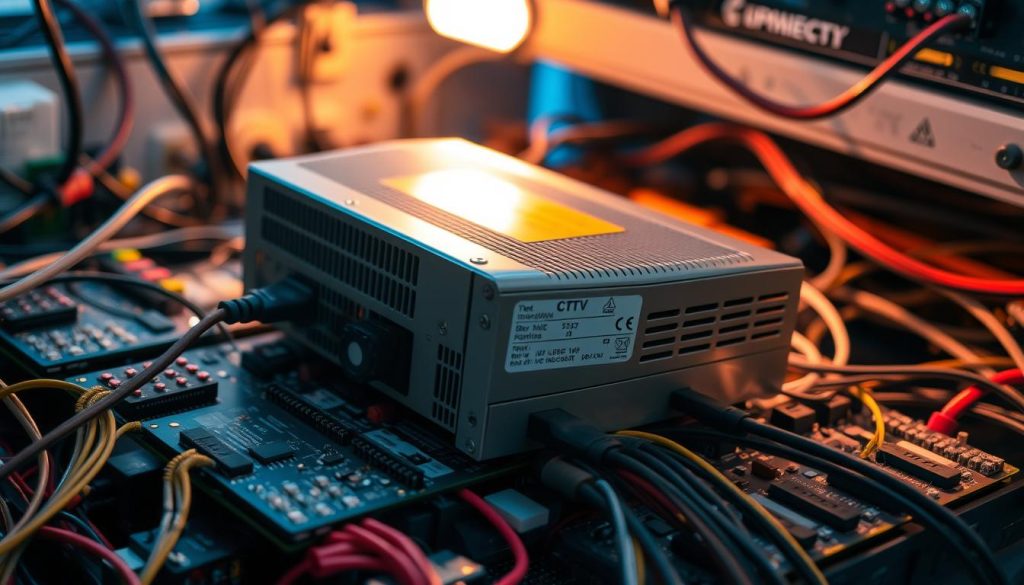
A good CCTV power supply is key for your surveillance system’s performance. Without enough power, even top-notch cameras and recorders can’t work right. This shows how vital stable electricity is for your system’s smooth operation.
There are many power solutions for different setups. You can use dedicated power supply units for a steady current. Or, Power over Ethernet (PoE) makes things easier by carrying both data and power in one cable. This option is getting more popular because it’s easy and efficient.
To ensure reliability in CCTV, picking the right power solution is important. Think about how far the power source is, how much power you need, and if there’s already infrastructure there. Also, check your power supply often to catch any problems early.
Video Management Software: Enhancing System Efficiency
Video Management Software (VMS) is key for CCTV systems, making them more efficient. This surveillance software helps users manage and analyze video feeds easily. It offers simple interfaces for both new and experienced users.
It allows users to manage their surveillance better and stay on top of security issues. VMS makes it easier to handle video footage, saving time during investigations. It also includes advanced video analytics to help organizations deal with security threats early on.
Choosing the right video management software is important today. It boosts system efficiency and ensures reliable surveillance. For example, using a solar-powered CCTV system can save energy while keeping video quality high. This shows how custom VMS solutions can greatly improve system performance.
Learn more about solar-powered CCTV systems here: link.
FAQ
What are the essential components of a CCTV system?
A CCTV system has seven key parts. These include security cameras, monitoring stations, and video recording systems. It also has supporting accessories, video storage solutions, and a power supply. Lastly, video management software is a must.
How do security cameras differ in a CCTV system?
Security cameras are mainly analog or IP. Analog cameras are being replaced by IP cameras for better quality. There are dome, bullet, and PTZ cameras for different needs.
What distinguishes DVRs from NVRs in video recording systems?
DVRs handle analog camera feeds, while NVRs work with IP cameras. NVRs offer better image quality and easier setup. Knowing this helps choose the right system.
Why are supporting accessories important in a CCTV setup?
Accessories like cables and connectors keep CCTV systems connected. RG59 Siamese coaxial cable is often used. It ensures reliable data and power transfer over long distances.
What are the best video storage solutions for CCTV footage?
Standard hard drives aren’t enough for CCTV. Use surveillance-grade hard drives for better recording and security. They handle large video files well.
How does the power supply affect CCTV operation?
A good power supply keeps CCTV systems running. Options like Power over Ethernet (PoE) and dedicated units offer efficiency and reliability.
What is the role of video management software in a CCTV system?
Video Management Software (VMS) boosts system efficiency. It offers easy-to-use interfaces for managing video. It also simplifies data storage and retrieval, and adds features like video analytics.


