

Essential 7 Components of CCTV Explained | Singapore
Ever wondered what makes a CCTV system effective? In today’s world, knowing about CCTV technology is key. It helps you pick the right surveillance for your safety needs.
Singapore’s busy streets need strong security, and CCTV systems are key. This article covers the main parts of a CCTV system, from cameras to storage. Knowing these parts helps you choose the best for your needs. If you want to learn more, contact Wen Hong at +65 to see the latest CCTV options for Singapore.
Key Takeaways
- Understanding the components of CCTV can enhance surveillance effectiveness.
- IP cameras are favored for their device compatibility and ease of use.
- Video management software (VMS) is critical for controlling CCTV systems.
- Cabling quality, like RG59 Siamese coaxial, greatly affects system performance.
- The choice between DVR and NVR impacts recording abilities.
Introduction to CCTV Technology
CCTV, or closed-circuit television, has changed how we manage security. It records footage for monitoring, unlike regular TV. It uses a private channel for its transmissions. CCTV technology has evolved into analog and digital (IP) cameras, each with its own benefits.
In Singapore, CCTV systems are used in many places like shops, schools, and small businesses. They help prevent crime. These systems are found in stores, parking lots, and offices to watch over them and stop crime.
For CCTV to work well, it needs good design, installation, and use. Modern systems have cameras, monitors, and digital recorders for clear images. They are key in keeping places like banks and stores safe.
Businesses often choose IP cameras for their high quality and advanced features. But, analog cameras are good for older systems. Using network video recorders (NVRs) can make IP camera systems work better than digital video recorders (DVRs).
To see how CCTV technology can help your security, call Wen Hong at +65 60135960. Find out about the latest CCTV solutions and deals.
Understanding the Role of CCTV in Security
The importance of CCTV in today’s world is huge. These systems are key in security and surveillance. They let us watch and record things as they happen. More and more people use CCTV to keep their stuff safe, stop crime, and make sure they’re protected.
CCTV technology comes in many types, like analog and IP-based systems. Analog systems are simple and cheap but might not have the best quality. On the other hand, IP cameras have better quality, cool features like motion detection, and can send video over the internet.
Putting CCTV in the right place is important. Doing a site survey helps find the best spots for cameras. It also helps keep intruders away. Also, keeping the system in good shape is key. This means cleaning the cameras, checking cables, and updating the software.
CCTV systems are a top choice for boosting security and surveillance at home and work. Reach out to Wen Hong today at +65 60135960 to learn more about CCTV solutions and deals.
CCTV System Components Overview
A complete CCTV system has key parts that work together well. Knowing these CCTV system components is key for better security. The main parts are:
- Security Cameras: These are essential for capturing video and come in types like analog and IP cameras.
- Video Recorders: DVRs and NVRs are important for saving video from cameras.
- Data Storage Solutions: These keep footage safe and make it easy to find later.
- Display Units: These monitors are key for watching and analyzing video in real-time.
- Cabling and Connectivity: This is the backbone of the system, connecting all parts.
- Supporting Technology Integration: Technologies like video analytics make the system better and more efficient.
Every surveillance system component is vital for a smooth surveillance experience. For example, cameras are key for clear images, and recorders save and manage footage well. Power supplies also keep the system stable, protecting cameras from power issues and ensuring they keep working.
To create a custom CCTV solution, understanding how these parts work together is important. If you want to see the latest CCTV options and deals, call Wen Hong at +65 60135960 today.
What are the 7 components of CCTV?
Modern CCTV systems have many parts, each key to security. Knowing these parts helps you set up a good surveillance system in Singapore.
Camera Types: Analog vs IP Cameras
Choosing camera types is the first step. Analog cameras send video signals to DVRs, making them cheaper and simpler to install. On the other hand, IP cameras send high-definition video over networks. They offer more flexibility and remote access, perfect for detailed surveillance.
For clear images, Full HD video is a good choice. For advice, visit this link.
Camera Placement and Coverage
Where you place cameras affects how well you can monitor. Dome cameras are great indoors for their wide view and stealth. Bullet cameras are tough for outdoor use, standing up to weather.
PTZ cameras let you zoom in on areas you need to see closely. Place them right to cover all areas and avoid blind spots.
Knowing the 7 components of CCTV helps you follow security best practices. Each part, from cameras to power supplies, is important for good surveillance. Think about wired vs wireless systems for ease of setup and reliability.
For custom solutions, contact Wen Hong at +65 60135960. Learn more about CCTV solutions and offers.
Security Cameras: The First Component
Security cameras are key in any CCTV system. They record video, which is essential for security. Knowing the different types helps choose the right cameras for your needs.
Types of Security Cameras
There are many types of security cameras, each for different uses. Here are a few:
- Dome Cameras: Great for indoors because they are sleek and offer 360-degree coverage.
- Bullet Cameras: Best for outdoors, they can see far and are weatherproof.
- PTZ (Pan-Tilt-Zoom) Cameras: These can be moved to watch different areas, perfect for big spaces.
Factors Influencing Camera Selection
Choosing the right camera takes thought. Important things to consider are:
- Installation Environment: Where the camera goes matters. Indoor and outdoor cameras are different.
- Angles of Coverage: Knowing what you need to see helps pick the right camera.
- Specific Surveillance Needs: Things like night vision, motion alerts, and resolution are key.
Looking for the best CCTV system? Contact Wen Hong at +65 60135960 to see what’s available.
Video Recorders: Capturing the Footage
Video recorders are key in CCTV tech, capturing and storing important footage. Choosing between digital video recorders (DVR) and network video recorders (NVR) impacts performance and storage. Knowing the differences helps businesses pick the right gear for their security needs.
Differences Between DVR and NVR
DVRs are for analog cameras, converting signals to digital for local storage. NVRs handle IP cameras, keeping digital footage without conversion, for better quality and flexibility. Here are the main differences:
| Feature | DVR (Digital Video Recorder) | NVR (Network Video Recorder) |
|---|---|---|
| Camera Type | Analog Cameras | IP Cameras |
| Video Quality | Standard Resolution | Higher Resolution Options |
| Installation | More Complex Wiring | Simpler with Network Connectivity |
| Scalability | Limited Increase | Highly Scalable |
How Video Clip Storage Works
Good video storage is key for CCTV systems. Storage options depend on the recorder type. High-quality hard drives are needed for constant recording.
Choosing the right storage means considering camera count, resolution, and how long you need to keep footage. This ensures a reliable security setup.

For top-notch CCTV solutions, contact Wen Hong at +65 60135960. Discover the latest in security tech for your business.
Data Storage Solutions for CCTV Systems
Keeping CCTV systems running smoothly is key. They handle a lot of footage, which needs special care. Surveillance-grade hard drives are made for this, lasting longer and storing more than regular drives.
The Importance of Surveillance Grade Hard Drives
Surveillance-grade hard drives are vital for CCTV systems. They keep footage safe and sound, protecting important evidence. With commercial places more at risk, reliable storage is a must for good surveillance.
Options for Data Backup and Security
There are many ways to back up and secure your data:
- Cloud storage for safe, remote access.
- External hard drives for physical backups.
- Redundancy setups to prevent data loss.
Using these methods helps keep your footage safe. For custom CCTV solutions, call Wen Hong at +65 60135960. Explore the latest in security tech.
Display Units: Monitoring the Activity
Display monitors are key in surveillance systems, helping to watch security footage. They let users see live and recorded videos from CCTV cameras. This improves awareness in different places. Choosing the right monitor is critical for a CCTV system’s success, ensuring clear and detailed footage.
Choosing the Right Monitor for Your Setup
When picking display monitors for CCTV, consider a few things:
- Resolution: High-resolution monitors show clearer images, making it easier to spot objects and people.
- Size: Bigger screens can show more feeds at once, which is great for control rooms.
- Technology: LCD and LED monitors have different benefits, like color accuracy and power use.
Today, you can choose from simple monochrome displays to advanced Full HD color monitors. The latter greatly improves the quality of security footage, essential in many uses.
Multiple Monitor Configurations
For extensive coverage, using multiple monitors is a good idea. It lets you watch from different angles and places at once. This setup is very useful in commercial settings where security is a big concern. Here’s how you can set it up:
| Configuration Type | Description | Benefits |
|---|---|---|
| Single Monitor | A basic setup with one display for individual viewing. | Cost-effective and simple. |
| Dual Monitors | Two screens for showing different camera feeds at the same time. | More detail and less clutter. |
| Matrix Display | Multiple screens in a grid to show many feeds at once. | Perfect for large areas needing full surveillance. |
Choosing the right setup can make monitoring tasks more efficient. Contact Wen Hong today at +65 60135960 to learn more about CCTV solutions and offers that fit your security needs.
Cabling and Connectivity: The Backbone of CCTV
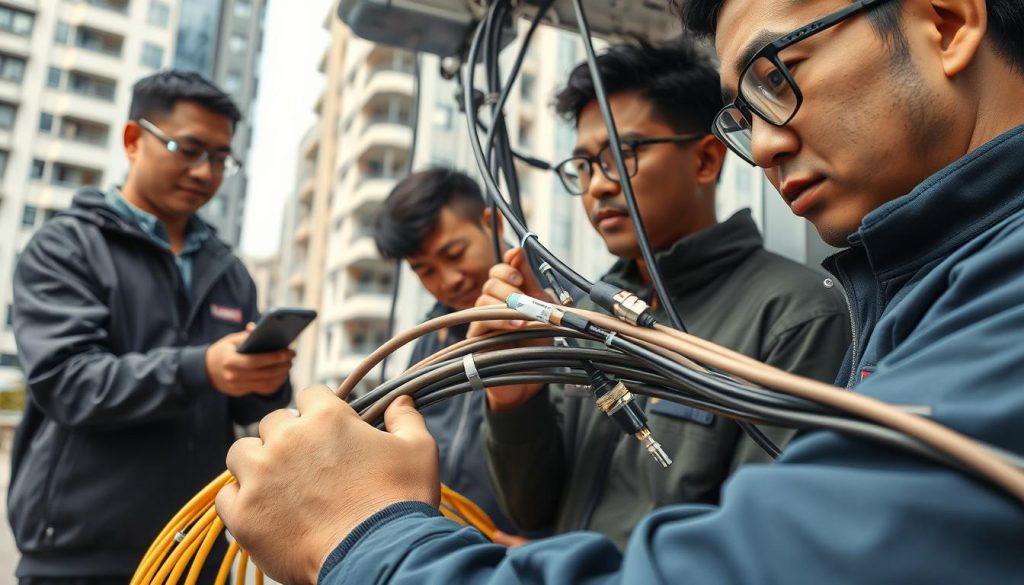
Effective CCTV systems need strong cabling and connectivity. It’s key to know the different cables and their uses. Structured cabling is vital for a CCTV system’s function, fitting various settings.
Different Types of Cables Used
CCTV cabling connects cameras, recorders, and displays smoothly. There are several cable types used:
- Twisted-pair cabling: Used for IP cameras, like Cat5e, Cat6, or Cat6a. It transfers data over long distances well.
- Coaxial cables: Best for analog cameras. RJ59 cables are reliable for video signal transmission.
- Fiber optic cabling: Great for backbone cabling. It handles big data without losing signals. You can choose single-mode or multi-mode fiber.
Wireless vs Wired Systems: Pros and Cons
Deciding between wired and wireless systems affects a CCTV setup. Each has its own benefits and drawbacks.
| System Type | Pros | Cons |
|---|---|---|
| Wired Systems |
|
|
| Wireless Systems |
|
|
Choosing between wired or wireless systems depends on the installation site’s needs. For expert advice on CCTV solutions, contact Wen Hong at +65 60135960.
Integration of Supporting Technologies
Supporting technologies in CCTV systems are key to better security. Things like routers, power supplies, and extra sensors make systems work better. They add features like remote access, smart alerts, and video analysis, giving users a full surveillance experience.
Working with experienced providers ensures all parts work well together. This teamwork makes CCTV systems more effective, helping businesses stay safe. Also, new trends in CCTV tech, like cloud solutions and AI, make systems more efficient and useful.
Many CCTV installers offer a variety of services. These include:
- Inspection and evaluation
- Recommendations and planning
- Integration and compliance
- Maintenance and upgrades
The cost of installing CCTV systems varies. A four-camera system can cost between $600 and $1600. A single camera usually costs between $100 and $400. ButterflyMX’s Dome and Bullet Security Cameras, used in over 10,000 buildings, show how reliable and effective modern CCTV is.
The following table summarizes key features of different CCTV systems available:
| Type of System | Features | Typical Use Case |
|---|---|---|
| Digital Video Recording (DVR) | Stores footage on a hard drive, allows for playback. | Small businesses and homes. |
| Network Video Recording (NVR) | Records footage over a network, supports HD cameras. | Larger enterprises with extensive monitoring needs. |
| IP Cameras | Provides remote viewing, typically high-definition video. | Flexible setups in varied environments. |
As tech gets better, using edge computing and cloud solutions is key. It helps reduce delays and improve data storage. AI also helps businesses analyze video better, following laws and making security stronger.
To learn more about the latest CCTV solutions and offers, contact Wen Hong today at +65 60135960.
Maintaining Your CCTV System for Optimal Performance
Keeping your CCTV system in top shape is key for its performance and reliability. An annual check by your CCTV vendor is a must. It tests both live and recorded data, ensuring everything works well and spotting issues early.
Regular checks of CCTV cameras and their housings are also important. They help find problems before they get worse. This way, you avoid big system failures.
Having a yearly maintenance plan helps prevent security problems. Sticking to this plan means you can fix issues quickly. It keeps all parts, like cables and connections, working right.
It’s also important to make sure the system runs at the right voltage. Avoiding power surges is key to keeping equipment safe. Checking cables regularly helps stop problems like breaks or defects.
Good CCTV maintenance means updating software and hardware when needed. This keeps your system running smoothly and adds new features. Wired systems are reliable, while wireless ones are easy to install. IP systems offer high resolution and remote access, and analog systems are cost-effective.
Following a regular maintenance plan boosts your CCTV system’s performance:
| Task Frequency | Tasks |
|---|---|
| Weekly | Verify date/time, review recorded footage, check system logs, inspect equipment. |
| Monthly | Clean camera lenses, inspect cables, check storage, update software. |
| Quarterly | Full system check, camera housing inspection, power supply unit cleaning. |
| Annually | Professional service visit, camera setup review, focus/alignment checks. |
Regular monitoring and upkeep of your CCTV system greatly improves security. It also reduces the chance of system failures. For more on CCTV solutions and maintenance plans, call Wen Hong at +65 60135960 today.
Conclusion
Knowing what CCTV systems have is key for good security in homes and businesses in Singapore. A good CCTV setup includes cameras, recorders, and storage. This helps a lot in watching over places.
High-quality images and features like infrared help a lot. They make sure you can see clearly day or night. Also, how you install your system matters a lot. The right camera spots and cables make it work better.
Want to see the best CCTV options for you? Call Wen Hong at +65 60135960. It’s time to make your security better with top-notch CCTV systems in Singapore.
FAQ
What are the 7 essential components of CCTV systems?
The key parts of CCTV systems are security cameras, video recorders (DVR/NVR), and data storage solutions. Also, display units, cabling, monitoring equipment, and control interfaces are important. Each part is vital for good surveillance.
How do analog and IP cameras differ?
Analog cameras send images to DVR systems. IP cameras stream video to digital networks. This makes IP cameras easier to access and offer better quality.
Why is data storage important for CCTV systems?
Data storage keeps recorded footage for later use. High-quality surveillance-grade hard drives are needed. They ensure the system works well and stores lots of data.
What factors should I consider when choosing a security camera?
Think about where you’ll install the camera and what angles you need. Also, consider the camera’s features like night vision or motion detection. Your budget is also important.
What is the difference between DVR and NVR systems?
DVRs handle analog signals from traditional cameras. NVRs work with digital inputs from IP cameras. This makes NVRs more flexible and offer better video quality.
How do display units enhance CCTV surveillance?
Display units let you see recorded footage or live feeds. Choosing the right monitors, based on resolution and size, improves monitoring effectiveness.
What types of cables are typically used in CCTV systems?
RJ45 cables are used for IP cameras, and RJ59 for analog systems. The type of cable affects connection reliability and system performance.
How can supporting technologies improve my CCTV setup?
Adding technologies like routers and power supplies can add features. These include remote access and smart alerts. This makes your surveillance system better.
What maintenance is necessary for a CCTV system?
Regular maintenance includes updating software and cleaning camera lenses. Also, check for damage and review stored footage. This keeps your system working well.
Source Links
- https://www.bcdvideo.com/blog/components-of-cctv-security-systems/
- https://cctvcamera.com.sg/how-cctv-camera-work/
- https://www.gensecurity.com/blog/understanding-cctv-components-the-4-parts-every-system-requires
- https://static.aviva.io/content/dam/document-library/risk-solutions/aviva_security_-_an_introduction_to_cctv_systems_lps.pdf
- https://www.sannytelecom.com/what-is-cctv-comprehensive-guide/
- https://kigalismartsolutions.com/7-essential-components-of-cctv-camera/
- https://security360.pk/components-of-cctv-camera/?srsltid=AfmBOooFv3sPwwc5yDyZkHITX82E_MWN4XeDLD0mGkNoOvE4AO6Chkjd
- https://security360.pk/components-of-cctv-camera/?srsltid=AfmBOoqdjlTwuotVb68y07gvOvQUTFiBC_WuYwmFXTgLFDskNDGj708K
- https://www.dhs.gov/sites/default/files/publications/CCTV-Tech-HBK_0713-508.pdf
- https://edgebusinesssecuritycameras.com/the-different-parts-of-a-cctv-system
- https://security360.pk/components-of-cctv-camera/?srsltid=AfmBOoo03PuCFnZX5s3I5Ot9Te8hSxvNusAYgI1o647kti3sf285-FRj
- https://www.paessler.com/it-explained/cctv
- https://www.cctvsecuritypros.com/blog/the-hardware-devices-used-in-a-cctv-system/?srsltid=AfmBOor3rsWZh7JjuVPSt2ZOSqHeRqRQM4uO4D1r0U3-cr4QtcfQiYUt
- https://medium.com/@sauvrin.app/cctv-101-learn-the-basics-of-cctv-66d8d77f1869
- https://sirixmonitoring.com/blog/what-is-cctv-monitoring-and-how-does-it-work/
- https://www.cctvsecuritypros.com/articles/what-is-cctv-and-how-does-it-work/?srsltid=AfmBOorLBuOqHkeWIHK6oW5ujjhUzXzXgah_IAA7yBTLuJCZcCoPRAMt
- https://www.pelco.com/blog/types-of-cctv-cameras
- https://mammothsecurity.com/blog/cctv-camera-equipment-list
- https://www.cctvsecuritypros.com/articles/what-is-cctv-and-how-does-it-work/?srsltid=AfmBOop7R2hu8Pyh-bWu8E3UFYqivWAJqDmjc1YExEUYSzao08E7MpMX
- https://csijax.com/the-components-of-a-cctv-system/
- https://stealthmonitoring.com/crime-prevention/cctv-meaning-a-complete-guide
- https://www.techtarget.com/searchnetworking/answer/What-are-the-6-components-of-structured-cabling
- https://electricalinstallationservices.co.uk/structured-cabling-system-components/
- https://www.nordencommunication.com/en-nl/blog/what-are-the-components-of-structured-cabling
- https://butterflymx.com/blog/cctv-installation/
- https://www.pelco.com/blog/cctv-and-video-security-camera-trends
- https://en.wikipedia.org/wiki/Closed-circuit_television
- https://www.cctv-camera.com.sg/articles/cctv-maintenance-checklist.html
- https://bas-ip.com/articles/cctv-maintenance/
- https://www.faultfixers.com/blog/comprehensive-cctv-system-preventive-maintenance-checklist
- https://www.cctvsecuritypros.com/articles/what-is-cctv-and-how-does-it-work/?srsltid=AfmBOoqnQQBvSNeItCWcMlvEqOmESUk4mcHTY0466RAcLLlvqCuzdX1R
- https://www.linkedin.com/pulse/7-cctv-installation-guidelines-home-ayodeji-adekeye
- https://www.slideshare.net/slideshow/cctv-components/109159260


